How to Build a Qualified Audience of Buyers for Your Consulting Business
This video presents a comprehensive strategy for building a qualified audience of buyers for a consulting business, emphasizing a shift from merely attracting an Ideal Client Profile (ICP) to engaging "dream followers" who resonate on a deeper level. Key takeaways include:
- Focus on Influence and Reach: Prioritize getting your message seen by a wider audience before optimizing for conversions.
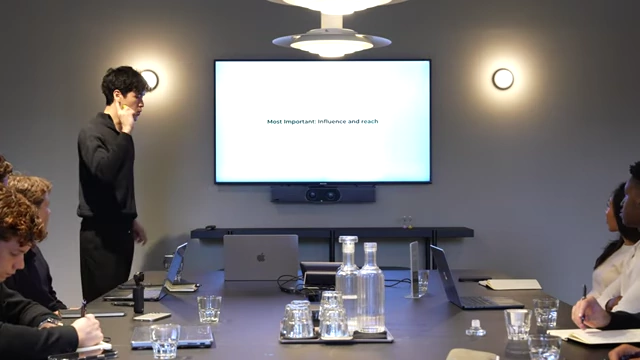
Key principle: Prioritize influence and reach. [ 00:01:50 ] - Target Dream Followers: Broaden your content beyond just your ICP to attract a larger, more resonant audience, which naturally includes your ICP.
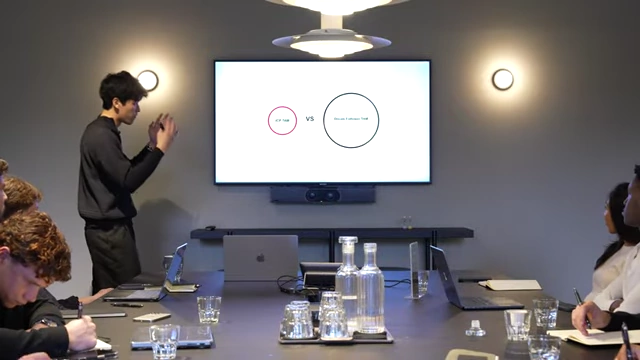
Visual representation of how targeting "dream followers" expands the total addressable market (TAM) beyond just your ICP. [ 00:02:50 ] - Leverage Onboarding Forms: Use specific questions after a sale to understand what made clients buy, identifying your unique edge and effective content.
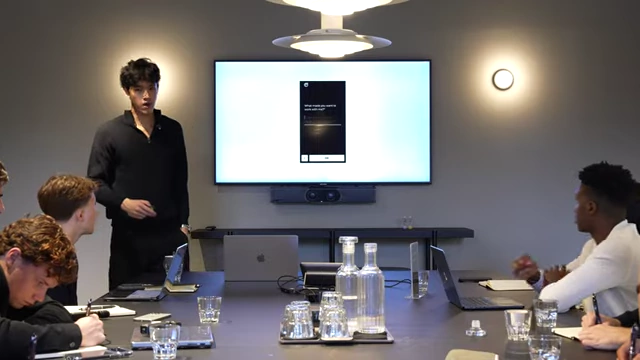
Essential questions to ask new clients in an onboarding form to understand their buying motivations. [ 00:05:50 ] - Gather Sales Team Insights: Utilize data from appointment setters and closers to uncover common objections and questions, turning them into middle-of-funnel content ideas.
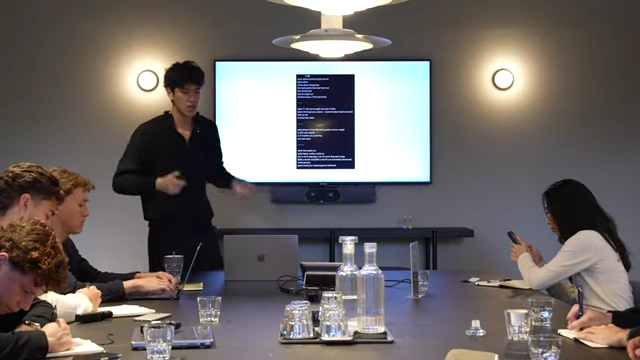
Insights from the sales setter reveal common prospect questions and popular content themes for middle-of-funnel strategy. [ 00:13:18 ] - Solve Objections with Content: Create videos and posts that directly address and nullify common sales objections before clients even get on a call.
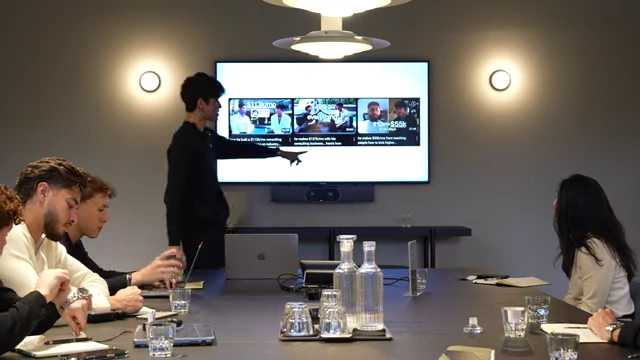
Showcasing diverse client interviews across various niches helps address the "not for my niche" objection. [ 00:27:06 ] - Employ the 7-11-4 Rule: Understand that consumers need 7 hours of engagement, 11 touchpoints, and exposure across 4 platforms to convert.
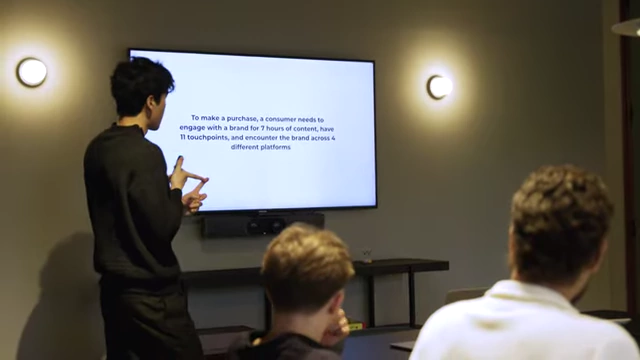
The "7-11-4 rule" for consumer conversion: 7 hours of engagement, 11 touchpoints, and 4 platforms. [ 00:28:55 ] - Build a Content Infrastructure: Establish a dedicated team (creative director, editors) and systems for content creation, tracking, and incentivization.
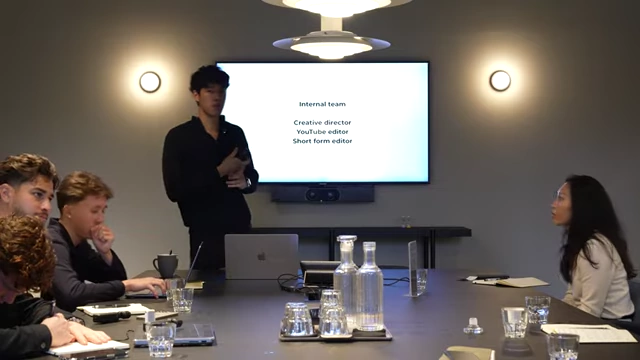
Key roles within an internal content team for consistent production. [ 00:30:45 ] - Disrupt the Industry: Differentiate by providing immense free value, like a comprehensive free course, to position yourself as an industry leader.
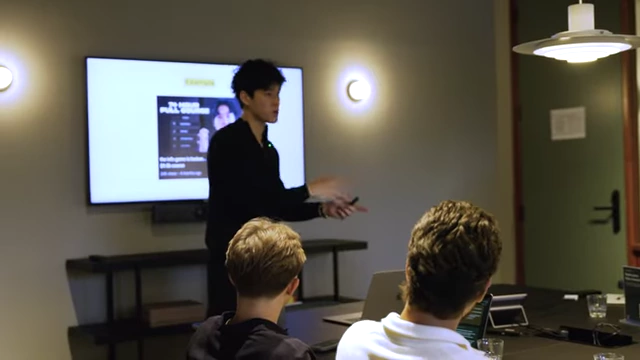
A comprehensive free course can position you as an industry leader and build significant trust. [ 00:38:02 ] - Shift Mindset for Scale: Recognize that scaling beyond $30K/month relies on your team's competence, not just your own.
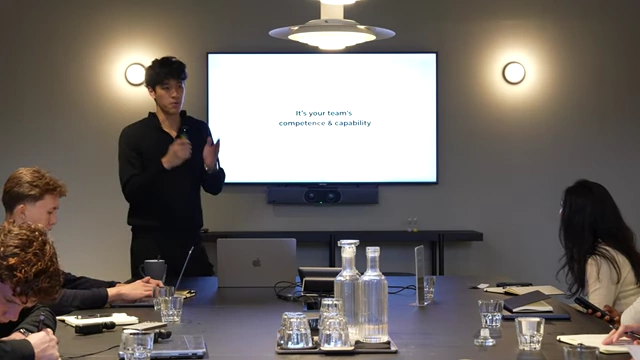
Scaling beyond $30K/month shifts from individual founder competence to the team's overall capability. [ 00:40:34 ]
Introduction to Building a Qualified Audience [00:00:00]
The video outlines a personal branding strategy for 2025-2026, focusing on how to build a qualified audience of buyers that has led to significant financial success and client engagement. The speaker emphasizes that building a qualified audience is the hardest problem in business, but once solved, client acquisition becomes easy.
Foundation of Audience Reach: Dream Followers vs. ICP [00:01:49]
The core idea is to prioritize influence and reach before anything else, as even the best message is ineffective if no one sees it.
Stop Targeting Only Your Ideal Client Profile (ICP):
- A common mistake is solely creating content for a narrow ICP, which limits total addressable market (TAM).
- Instead, create content for your "dream follower," someone you want to connect with on a deeper, more personal level, beyond just business needs.
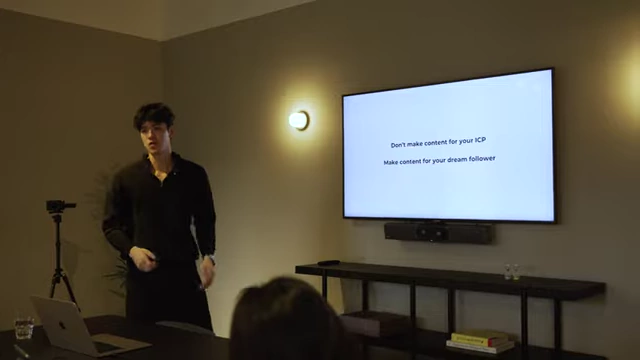
Shift from targeting Ideal Client Profile (ICP) to "dream followers." [ 00:02:26 ] - The dream follower market is always larger than the ICP market, and your ICP is a subset of your dream followers. By resonating with dream followers, you naturally attract more ICPs due to increased TAM.
Targeting "dream followers" expands your reach, as your ICP is a subset of this broader, more resonant audience.
Visual representation of how targeting "dream followers" expands the total addressable market (TAM) beyond just your ICP. [ 00:02:50 ]
Understanding Your Unique Edge [00:04:58]:
- The real foundation of your personal brand is what makes you different, not just the value you provide.
- Your unique edge is why clients choose you over hundreds of competitors.

Your "unique edge" is the foundation of your personal brand. [ 00:05:38 ]
5 Key Onboarding Questions for Sales Insights [00:05:39]:
- To identify your unique edge and client motivations, ask newly signed clients these questions in an onboarding form:
- What made you want to work with me? [00:05:45] - Understand their initial pull.
- What finally pushed you to book a call? [00:05:55] - Identify the critical moment that led to commitment.
- What were your biggest hesitations before joining? [00:06:14] - Uncover objections to address in future content. Examples include price, trust, or timing.
- There are hundreds of other online coaches. Why did you choose me? [00:06:41] - This reveals your unique differentiator beyond just "value." It often highlights personal connection, shared interests, or lifestyle alignment.
- In your opinion, what are the most valuable aspects of the program that you didn't realize were included until our call? [00:07:37] - Helps you highlight underestimated program benefits in marketing content.
These five questions help uncover a client's specific motivations and hesitations, providing valuable insights for content strategy.
Essential questions to ask new clients in an onboarding form to understand their buying motivations. [ 00:05:50 ]
Client Goals, Dreams, Desires, and Passions [00:08:11]:
- Understanding these deeply helps in crafting top-of-funnel content that resonates broadly.
- Goals/Dreams/Desires: Clients often want to feel successful, be the most successful in their bloodline, make family proud, work less, and be faster than competitors.
- Passions: Shared interests like personal development, fitness, or a sense of community can be powerful content themes.
Understanding client aspirations allows for the creation of broadly appealing content that attracts dream followers.
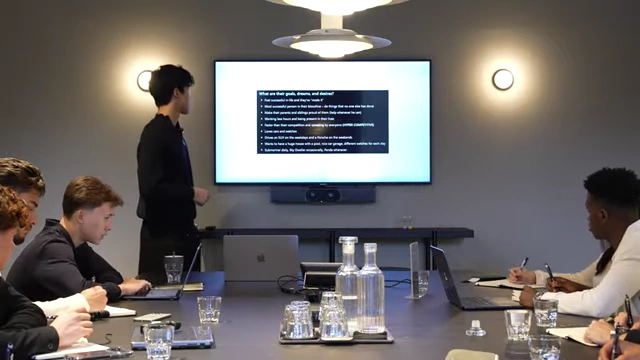
Common client goals, dreams, and desires to inform top-of-funnel content. [ 00:08:09 ] - Content Examples: Showing calls with family after achieving success, showcasing luxury items like watches, demonstrating fitness routines, or highlighting community events resonate with these deeper desires.
Creating content that aligns with client desires, like making parents proud, builds deep trust and connection.
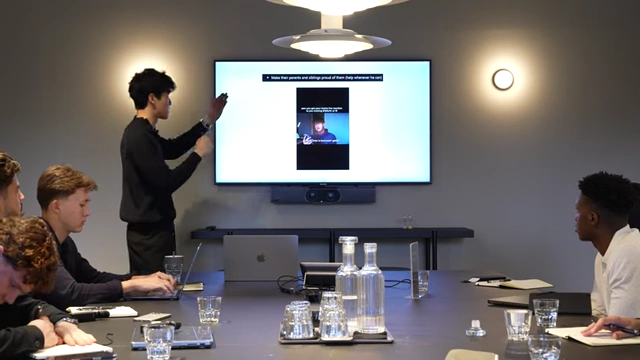
Content example: A social media reel depicting calling a parent after achieving success, resonating with client desires. [ 00:09:59 ] 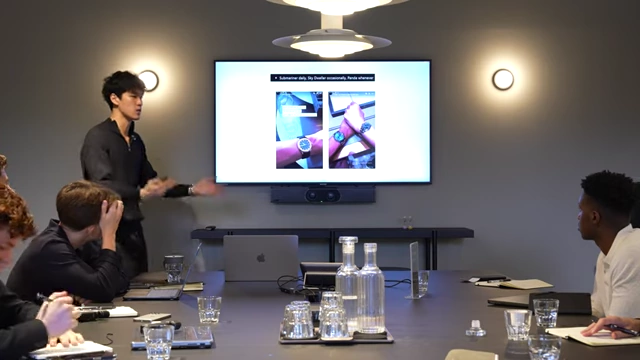
Demonstrating personal interests like watches can appeal to a broader demographic of dream followers. [ 00:10:34 ]
Middle Funnel Content: Building Trust and Credibility [00:11:45]
Once attention is gained, the focus shifts to nurturing followers through the stages of awareness: unaware, problem aware, solution aware, product aware, and most aware.
Goal of Middle-Funnel Content: Move prospects from "solution aware" to "most aware" by building brand credibility, increasing problem awareness, and fostering trust.
Middle-funnel content aims to guide prospects through the stages of awareness, building credibility and trust.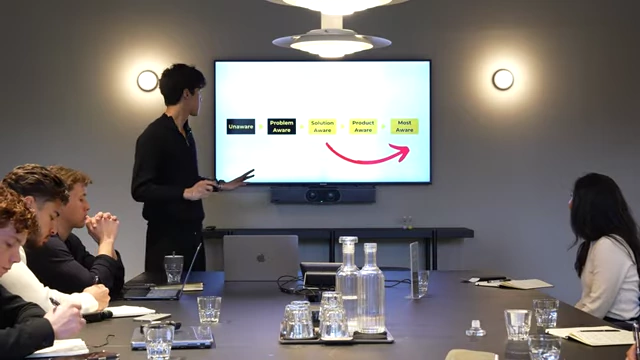
The five stages of awareness, illustrating the progression from unaware to most aware. [ 00:12:18 ] 
Top-of-Funnel (TOF) content aims for brand awareness, while Middle-of-Funnel (MOF) focuses on credibility and trust. [ 00:12:39 ] Leveraging Sales Team Insights for Content Ideas [00:13:16]:
- The sales team (setters and closers) is a "content goldmine." They interact directly with prospects and know their most common questions and objections.
- Most Asked Questions (from a setter's data): Bad setters, stress about delegating, low lead quality, low closing rate, how to target ICP, and mindset issues/limiting beliefs.
- Popular YouTube Videos mentioned in DMs: Masterminds, mindset videos, etc.
- Common Business Phase of Prospects: Often making $5-20K/month, 6-12 months into coaching, and operating as a one-person team. This insight can inform content on outsourcing and leverage.
Sales team data provides invaluable insights into common prospect challenges, directly informing middle-funnel content.
Insights from the sales setter reveal common prospect questions and popular content themes for middle-of-funnel strategy. [ 00:13:18 ] - You must have an amazing understanding of your ICP to dial in the middle of funnel content.
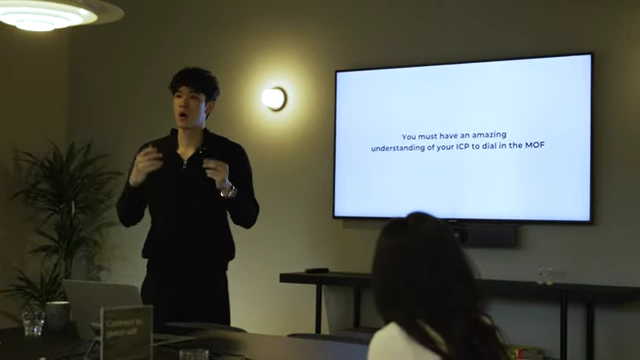
A strong understanding of your ICP is crucial for effective Middle-of-Funnel (MOF) content. [ 00:14:54 ] - Example content to solve common questions:
- For "What sales funnel do I implement?": A video showcasing a successful sales funnel.
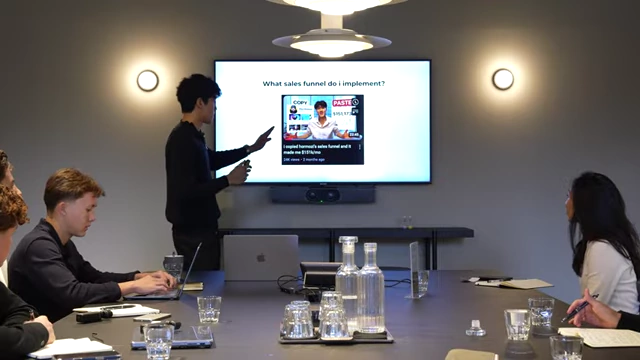
Example of a high-performing YouTube video using a "copied X, achieved Y" format to attract views. [ 00:16:53 ] - For "What type of lifestyle can I attain?": Vlogs showing the lifestyle benefits of success.
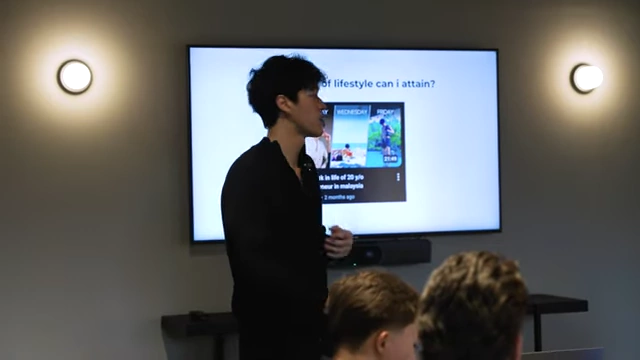
Lifestyle vlogs offer a glimpse into the desired outcomes and behind-the-scenes, fostering connection. [ 00:18:23 ] - For "What kind of results can I expect?": Client interviews and case studies.
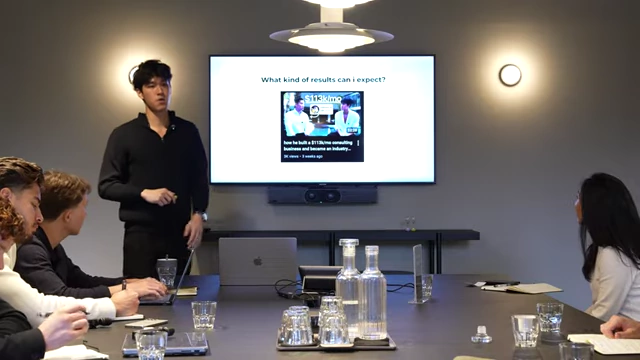
Client success stories and interviews serve as powerful proof, addressing prospect hesitations. [ 00:18:38 ]
- For "What sales funnel do I implement?": A video showcasing a successful sales funnel.
Solving Sales Objections with Targeted Content [00:21:15]:
- Every objection heard on a sales call signifies a gap in your marketing.
- Hundreds of prospects likely share the same objection.
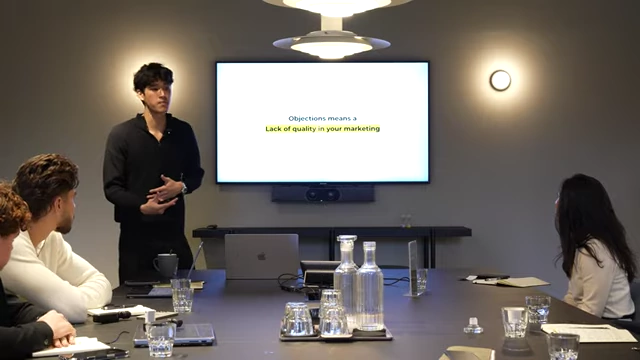
Objections on sales calls indicate a gap or lack of quality in your marketing content. [ 00:28:09 ] - Common Objections and Content Solutions:
- Lack of Capital: Create extensive free value (e.g., a free course) that helps them generate capital, so by the time they're ready to scale, they trust you.
- Lack of Time: Create content showing done-for-you systems, client interviews of busy CEOs succeeding, or detailed breakdowns of efficient content systems.
- Lack of Knowledge on Pathway (e.g., high-ticket sales): While this might indicate an unaware market (less ideal for targeting), a video explaining "what is high-ticket sales" could address it.
- "I need to think about it": This objection primarily stems from a lack of proof. Post numerous client interviews across various niches and situations to demonstrate success and remove doubt.
- An AI prompt can be used with sales call recordings to pinpoint objections.
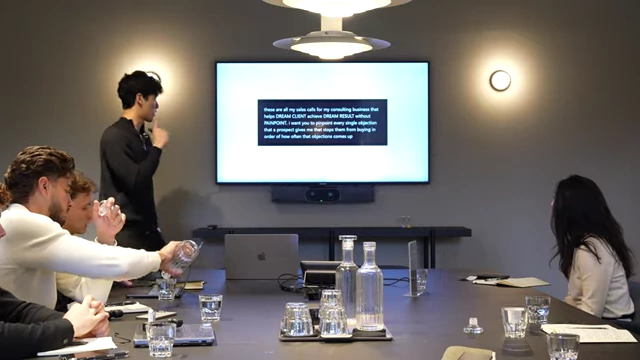
An AI prompt to analyze sales call recordings and extract common prospect objections. [ 00:26:16 ] - "I'm not sure if this can work for my niche": Create dozens of client interviews in every niche and vertical imaginable.
By creating content that directly addresses frequent sales objections, businesses can pre-qualify leads and build stronger trust.
Showcasing diverse client interviews across various niches helps address the "not for my niche" objection. [ 00:27:06 ]
The 7-11-4 Rule for Conversions [00:28:43]
To make a purchase, a consumer needs to:
- Engage with a brand for 7 hours.
- Have 11 touchpoints.
- Encounter the brand across 4 different platforms.
The 7-11-4 rule highlights the extensive engagement required for a consumer to make a purchase, emphasizing the need for multi-platform content and consistent interaction. This rule underscores the importance of a long-term content strategy and cross-platform presence (e.g., Instagram Reels/Stories/DMs and YouTube long-form videos) to create a continuous "flywheel" of engagement.
The "7-11-4 rule" for consumer conversion: 7 hours of engagement, 11 touchpoints, and 4 platforms. [ 00:28:55 ] 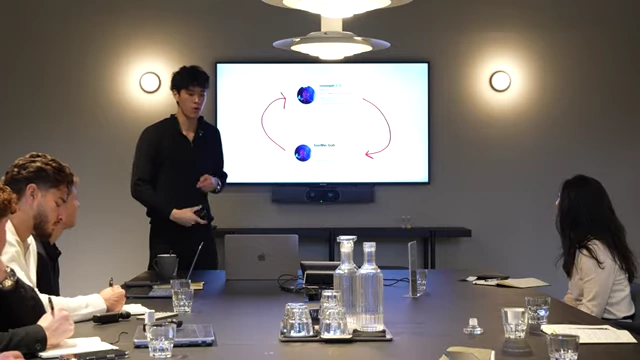
A content "flywheel" showing continuous engagement between Instagram and YouTube to maximize touchpoints. [ 00:29:35 ]
Building Your Content Machine: Team and Systems [00:30:33]
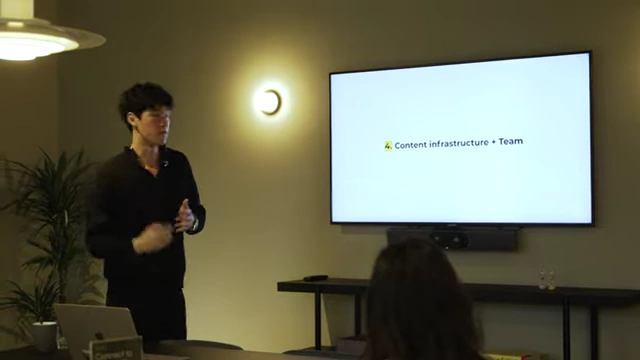
- Internal Team Structure: A typical content team includes a Creative Director, YouTube Editor, and Short Form Editor.
A structured content team is essential for consistent and high-quality output.
Key roles within an internal content team for consistent production. [ 00:30:45 ] - Weekly Content Calls: Led by the Creative Director, these calls cover weekly performance summaries and brainstorm content ideas from the sales team. The founder's role is not to decide everything but to act on insights from the team.
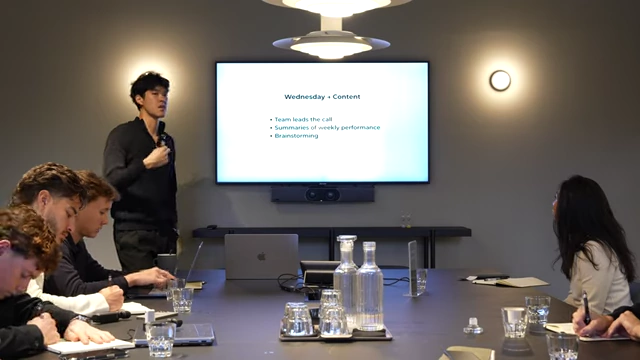
Weekly content calls summarize performance and brainstorm ideas from sales team insights. [ 00:31:14 ] - Content Tracking and Incentives:
- Track metrics like views, followers gained, and "followers per thousand views" to identify effective content.
- Categorize content by funnel stage (top, middle) and type (business, documentation, sales call).
- Track "qualified followers" specifically.
Detailed tracking of content performance helps identify what resonates and drives qualified followers.
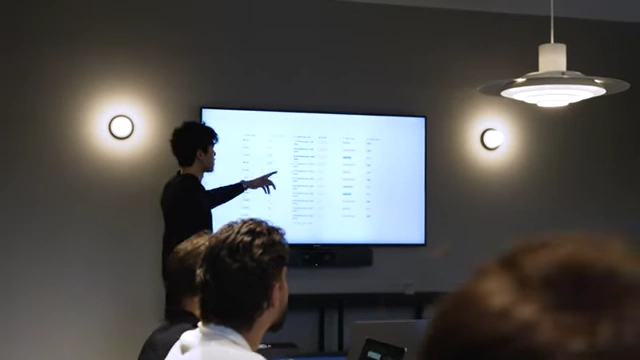
Tracking content metrics like "followers per 1000 views" helps identify effective content that drives engagement. [ 00:31:48 ] - Incentivize editors with bonuses (e.g., $50 per qualified inbound sale, $500 for hitting monthly reach goals) to ensure they are invested in producing effective content based on strategic direction, not just clipping.
- Automated Systems: Utilize AI-powered content research bots and other automations to streamline the content creation process.
- Team Initiative: Encourage team members to proactively suggest new content formats and topics, as they possess daily insights from the sales process.
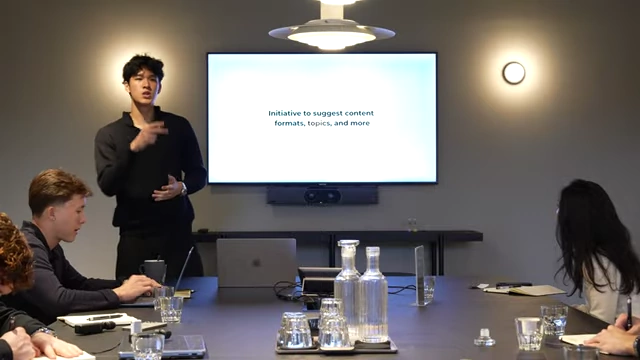
Encourage the team to suggest content formats and topics, leveraging their daily insights. [ 00:34:53 ]
Disrupting Your Industry and Becoming a Leader [00:35:11]
- The Power of a Free Course Video:
- Be so ahead that you dictate where the industry goes.
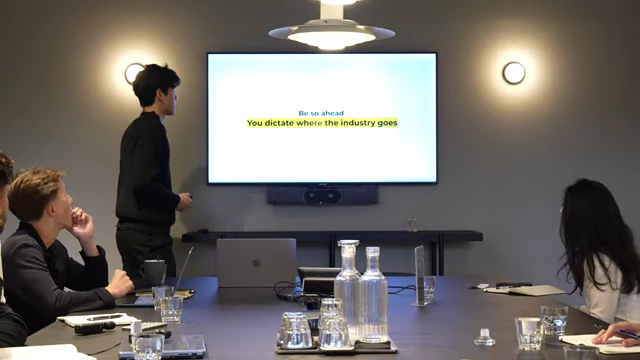
Aim to be an industry leader by dictating market trends through your content. [ 00:35:34 ] - Releasing a long, valuable free course disrupts the industry by positioning you as an industry leader.
- It forces competitors to also release free courses, but if your fulfillment and content quality are superior, you will stand out.
- This is a strategic move to build immense trust and a "foot in the door" for sophisticated clients.
Offering a comprehensive free course can strategically position you as an industry leader and build significant trust with potential clients.
A comprehensive free course can position you as an industry leader and build significant trust. [ 00:38:02 ] - Examples of entertaining and competent content: Sales call videos dealing with live objections and showing parent reactions to financial success.
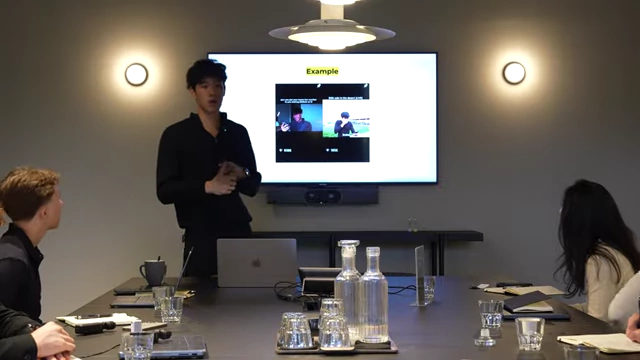
Examples of engaging content, like live sales calls or emotional reactions, that resonate with a broad audience. [ 00:38:32 ] - Posting high-quality content leads to highly qualified leads and industry recognition.
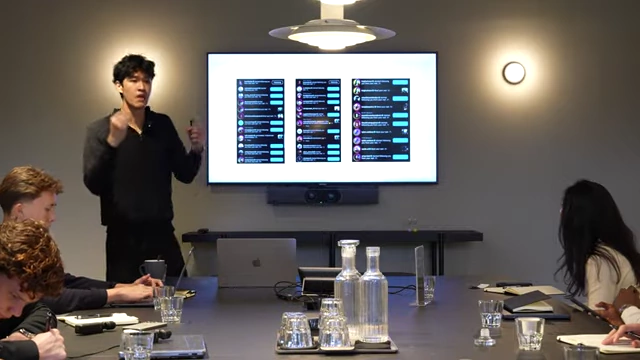
Positive comments and DMs from highly qualified leads demonstrate the effectiveness of strategic content. [ 00:40:20 ]
- Be so ahead that you dictate where the industry goes.
Mindset Shift for Scaling to $100K+ [00:40:34]
- From Founder's to Team's Competence:
- Scaling from $0 to $30K/month is largely about the founder's competence.
- Scaling from $30K to $100K/month and beyond is about your team's competence.
Scaling past initial revenue targets depends on shifting from individual founder competence to the collective competence of the team.
Scaling beyond $30K/month shifts from individual founder competence to the team's overall capability. [ 00:40:34 ] - A deep understanding of client struggles, combined with data-driven insights, empowers a team to scale to new levels.