China's Economic Paradox: Consumer Slump Meets Manufacturing Boom Amid State-Backed Lending
Summary:
China's economy exhibits a puzzling duality: a domestic crisis alongside robust industrial growth. Key points:
- Despite signs of "Japanification"—including deflation, high youth unemployment, and government stimulus—China's GDP growth remains high.
- Recent research confirms China's reported GDP figures are likely accurate, making the co-existence of these two narratives unique.
- Like Japan, China initially relied on an investment-led model, fostering a property bubble that temporarily sustained growth when the model reached its limits.
- However, China diverged from Japan's post-bubble stagnation. Following the burst of its housing bubble, the state directed its banks to funnel massive loans into strategic industries like green technology and electric vehicles.
- This state-backed industrial lending fueled an export boom and a "second economic miracle," offsetting domestic consumer weakness.
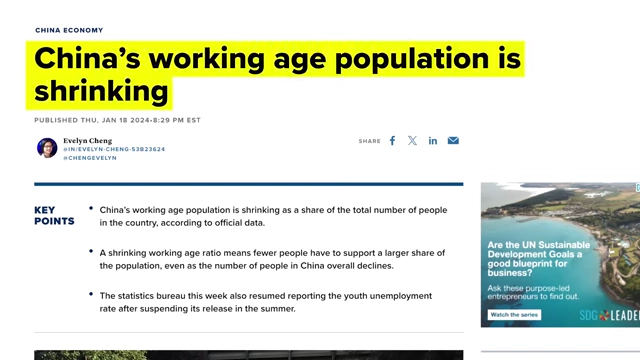
- This model, heavily reliant on exports and rapidly increasing debt-to-GDP ratios, is highly risky. It faces growing global backlash against subsidized Chinese firms and raises long-term sustainability concerns, despite the Communist Party's stated aim for "high quality growth" and a shrinking working-age population.

A side-by-side comparison illustrating China's simultaneous economic crisis (deflation, youth unemployment, government stimulus) and economic boom (high growth, manufacturing miracle). [ 00:11:54 ]
Intro [00:00]

- The Chinese economy presents a paradox:
- Signs of a Japan-style slowdown are evident:
- Deflation [00:19]
- Stubbornly high youth unemployment [00:21]
- Increasing government stimulus measures to encourage spending [00:25]

A visual representing an economic crisis with a downward arrow, listing deflation, youth unemployment, and government stimulus. [ 00:00:30 ] - Simultaneously, it's experiencing a "second economic miracle":
- It was the second fastest-growing major economy last year [00:39]
- It dominates advanced industries like electric vehicles, clean tech, and AI [00:44]

An article headline discusses China's dominance in EVs as a warning for US automakers. [ 00:00:51 ] 
An article headline mentions an AI-driven platform for customized learning paths in China. [ 00:00:55 ] - In a normal economy, these two stories cannot both be true simultaneously.
- If consumers are not spending, firms lack revenue and cannot invest or produce on a large scale [00:01:11]

A diagram illustrating the flow from consumer spending to firm revenue and then to firm production. [ 00:01:16 ] - China, however, is not a "normal economy." [00:01:24]
What is going with China’s economy? [01:36]
- Investigating the paradox:
- Initial potential explanation: China is lying about its GDP numbers [01:43]
- Previously, Chinese provinces were known to overstate GDP growth to hit targets [01:53]

A YouTube video thumbnail suggests that China's economy might be 60% smaller than thought due to overreported GDP. [ 00:01:57 ] - Current findings: Recent research by US Federal Reserve economists suggests China's GDP numbers are honest [02:02]
- Researchers used alternative metrics like retail sales and industrial production indices.
- Conclusion: No current red flags regarding China's GDP growth numbers [02:19]
- This means the crisis and boom stories must be explored in detail to understand the reality. [02:32]
- Previously, Chinese provinces were known to overstate GDP growth to hit targets [01:53]
China’s Japanification [02:46]

- The Core of the Japanification Story [02:49]
- The prediction was that China's economy would follow Japan's path, experiencing stagnation after a massive property bubble burst in the early 1990s.

A graph showing Japan's GDP per person, highlighting a period of stagnation after 1990. [ 00:03:00 ] - Shared Investment-Led Growth Model [03:03]
- Both Japan (1960s-70s) and China (1990s-early 2000s) achieved extraordinary economic growth.

A graph showing China's GDP per person, illustrating rapid growth from the 1990s to 2025. [ 00:03:13 ] - Growth was driven by colossal bank-funded investments across the country.
- This led to rapid development of infrastructure, housing, factories, and education systems [03:24]
- Strategies used to catch up to the West:
- Wage suppression [03:34]
- Keeping currencies low [03:34]

A map of China and Japan outlines "The Masterplan" for economic growth, including wage suppression and weak currency. [ 00:03:38 ] - These measures allowed both nations to become manufacturing powerhouses.
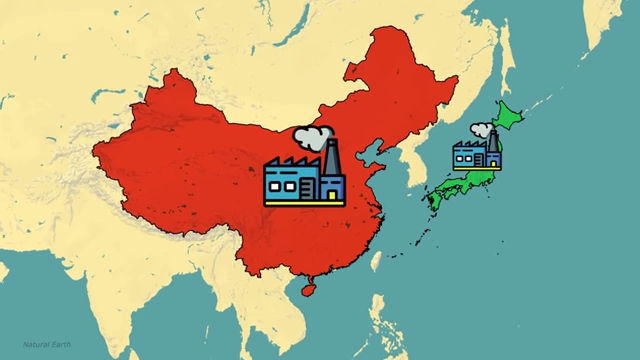
A map of China and Japan with factory icons, illustrating their status as manufacturing powerhouses. [ 00:03:46 ]
- These measures allowed both nations to become manufacturing powerhouses.
- Manufacturing is crucial as a first step in economic development, enabling a country to earn foreign currency to pay for essential imports like oil [03:52]
- Limits of the Investment-Led Model [04:02]
- According to economists like Michael Pettis, investment-heavy economic miracles eventually reach a saturation point where sufficient infrastructure is built.
- At this stage, economies need to transition to a consumption-based model.
A screenshot from a blog post by Michael Pettis, a Nonresident Senior Fellow at Carnegie China. [ 00:04:07 ] - This involves abandoning wage and currency suppression to increase disposable income for the populace [04:26]
- A balanced economy emerges, with businesses (especially in the service sector) catering to people's needs [04:35]
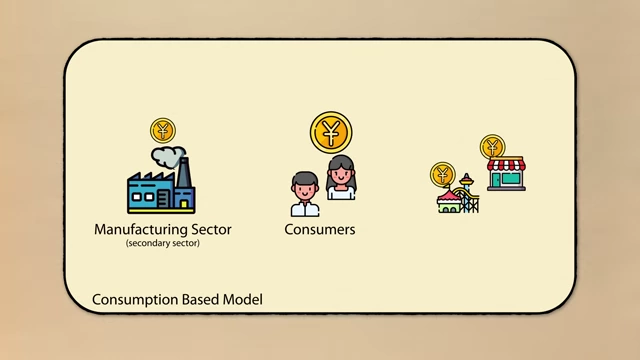
A diagram illustrating a consumption-based economic model, with manufacturing, consumers, and a thriving service sector (theme parks and cafes). [ 00:04:43 ] - The service sector is vital for employment; for example, in the UK, 95% of workers are in services [04:50]

Text overlay indicating that 95% of UK workers are in the service sector, accounting for 78% of the economy. [ 00:05:18 ] - Economic development typically progresses from agrarian, to industrial, and then to a service-based economy [05:01]

A diagram illustrating the three steps of economic development: agrarian, then industrial with a smaller agrarian component, and finally service-based with much smaller industrial and agrarian components. [ 00:05:08 ]
- Economic development typically progresses from agrarian, to industrial, and then to a service-based economy [05:01]
- Resistance to Economic Transition [05:23]
- Governments often grant privileges (tax exemptions, subsidies) to the sector targeted for development.
- Transitioning to a new stage requires removing privileges from the previously dominant sector.
- Owners of the established, powerful sector often possess significant political capital and resist such transitions [05:48]
- Example: Argentinian farmer oligarchs resisted industrialization [05:56]

A YouTube video thumbnail discussing why Argentina's economy is struggling, highlighting farmer oligarchs. [ 00:05:58 ] - Similarly, China's powerful industrialists, many being high-ranking CCP members, resist a consumption-based economy as it would reduce their relative power [06:02]
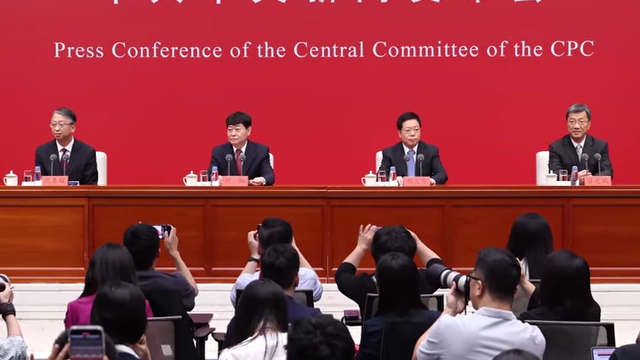
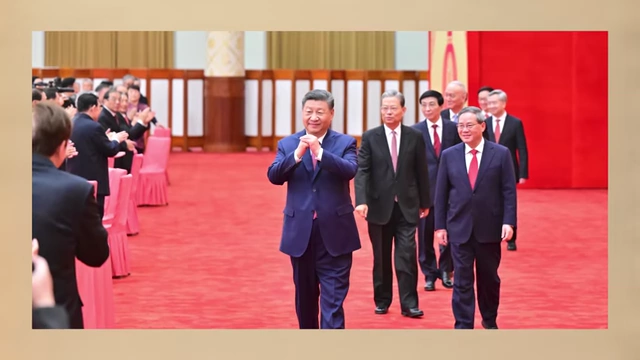
High-ranking members of the Chinese Communist Party are shown at a press conference. [ 00:06:03 ] 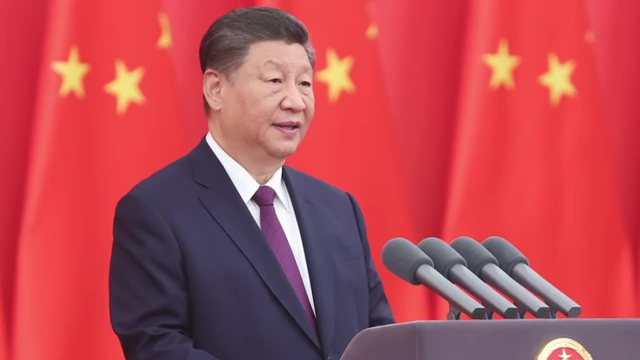
Chinese President Xi Jinping speaking at an event. [ 00:06:08 ]
- Example: Argentinian farmer oligarchs resisted industrialization [05:56]
Blowing a housing bubble? [06:39]
- An Alternative: The Housing Bubble [06:15] - A housing bubble offers a "simpler option" to make people feel richer and sustain economic growth without taking wealth from government and manufacturing elites.
- How to Start a Housing Bubble (Three Steps) [06:43]
1. Remove conservative regulations that hinder the housing market.
2. Make it easier for banks to supply mortgages to households.
3. Allow a positive feedback loop to generate wealth.
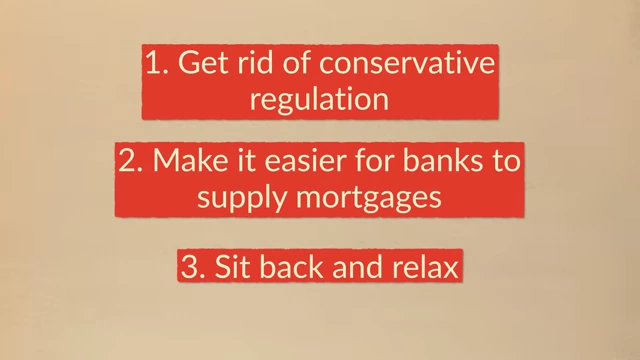
A red background slide listing three steps to start a housing bubble: "1. Get rid of conservative regulation", "2. Make it easier for banks to supply mortgages", and "3. Sit back and relax." [ 00:06:56 ] - The Positive Feedback Loop [07:00]
- More households borrow from banks to speculate on the housing market, pushing up house prices [07:06]
- Homeowners feel richer, encouraging further borrowing and speculation [07:14] - Banks are willing to lend, as loans are collateralized by ever-increasing house values [07:20]
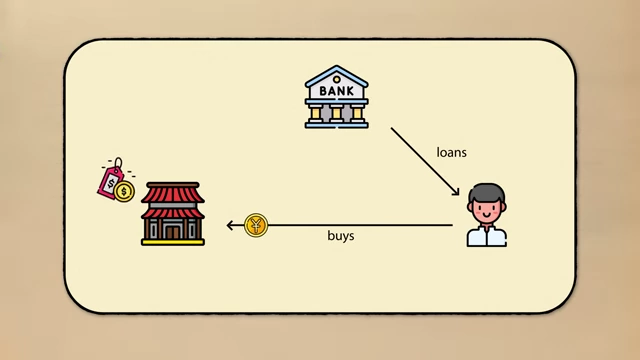
A diagram showing a bank lending money to a person who then buys a house with a price tag. [ 00:07:20 ] - Crucially, rising home prices made Japanese and Chinese consumers feel wealthier, enabling them to spend more freely [07:34]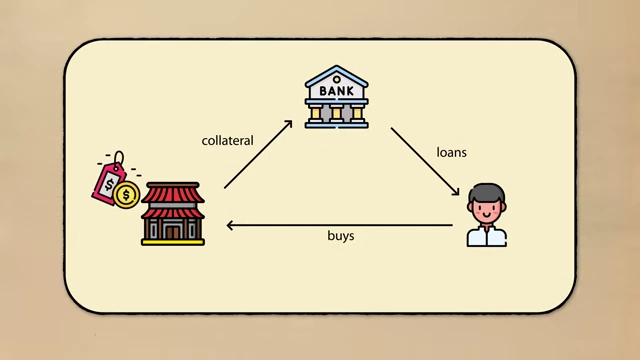
A diagram showing a bank lending to a person, who then buys a house, and the house value serves as collateral for the bank, creating a loop of increasing value and lending. [ 00:07:26 ] - This sustained high economic growth after most productive investments were complete (Japan in the 1980s, China in the 2010s) [07:51]
- The Unsustainability of the Bubble [08:05] - While mortgages boosted GDP, debt-to-GDP rose much faster.
- The "Doom Loop" (When the Bubble Bursts) [08:26]
1. House prices fall.
2. Banks demand their money back.
3. Consumers cannot fully repay loans and reduce spending.
4. Reduced spending leads to fewer orders for industries.
5. Banks stop lending to anyone, including industry, due to reduced home values and increasing bad borrowers.
6. Industrial firms cease investing, lose their competitive edge, and lower prices, making debt repayment even harder.
- In Japan, the Bank of Japan intervened with low interest rates to support banks, consumers, and firms, hoping to restart spending and lending [09:10] - This was the path many economists, including the speaker, predicted for China [09:22]

A diagram illustrating the "Doom Loop": house prices fall, banks demand money back, consumers stop spending, leading to fewer orders and banks refusing to lend to industry. [ 00:08:55 ]

China’s second economic miracle [10:21]
- China's Divergence from Japan's Path [09:29]
- China did experience a persistent property slump and consumer issues (deflation, youth unemployment) mirroring Japan.
- The central bank also intervened with stimulus [09:44] - However, unlike Japan, this did not translate into a recession in Chinese manufacturing [09:55]

An article headline asks "Why aren't Chinese consumers spending enough money?" citing stagnant income and a shift to lower-priced products. [ 00:09:38 ] - The "Great Rotation" [10:24]
- After the housing bubble burst, Chinese banks (predominantly state-owned) dramatically shifted their lending.
- They reduced loans to the real estate market [10:33]
- They started "pumping massive amounts of money into industry" [10:40]

A line graph illustrating "China's great rotation," showing a decline in real estate loans and a sharp increase in industrial loans from 2013 to 2023. [ 00:10:24 ] - This is the key difference from Japan and Western economies.
- In Japan and the West, private banks did not undertake risky industrial lending sprees after their housing crises [10:47]
- State Power and Intervention [11:01]
- China's state is significantly more powerful than in Japan or the West.
- The government "ordered its state-owned banks to pivot hard" and open lending taps to industries deemed essential for further economic development [11:08]
- Despite Chinese consumers being in trouble and domestic deflation, massive state support gave Chinese manufacturers a significant edge over foreign firms [11:23] - This led to an explosion in China's export growth, allowing the economy to continue growing rapidly and its industry to gain global dominance [11:40]

A diagram showing the negative feedback loop of a housing crisis, with an added image of Xi Jinping saying "Keep Lending!" and an arrow pointing to the bank lending to industry. [ 00:11:14 ]
Conclusion [12:02]
- Both the crisis and boom narratives for China's economy are correct, and its economic numbers are not being faked. [12:01]
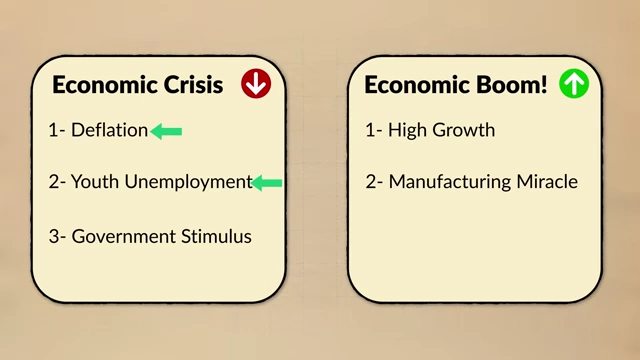
A diagram contrasting "Economic Crisis" (deflation, youth unemployment, government stimulus) with "Economic Boom!" (high growth, manufacturing miracle), indicating both are simultaneously occurring. [ 00:09:47 ] - China's consumer and property markets are struggling, similar to Japan's experience in the 1990s. [12:09]
- However, China's industries are thriving due to massive state support, creating an unprecedented economic model. [12:16]
- Risks of China's New Economic Model [12:27]
1. Increased Dependence on Foreign Markets [12:31]
- China's economic growth is now even more reliant on global demand for its products.
- The US is already closing its markets [12:40]
- China is facing increasing backlash worldwide from countries (e.g., Brazil, Indonesia, India) concerned about their own industries being unable to compete with heavily subsidized Chinese firms [12:47]

A world map depicts China with factories facing trade restrictions from the US and increasing competition concerns from countries like Brazil, Indonesia, and India. [ 00:12:51 ] - Rapidly Rising Debt-to-GDP Ratio [13:03]
- China's total debt-to-GDP (households, corporate, government) is again rising rapidly and cannot continue indefinitely.
- China is now more indebted than the United States.
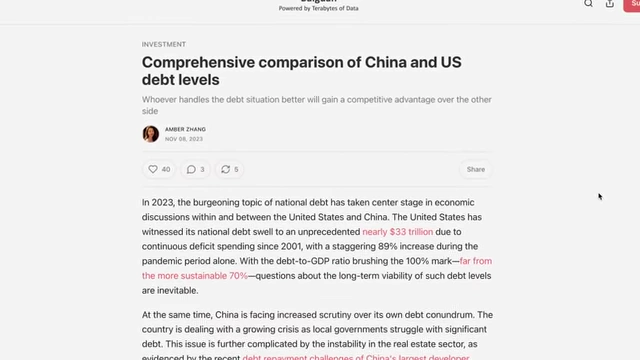
An article headline compares China and US debt levels, highlighting challenges for both. [ 00:13:16 ] - While still lower than Japan's total debt-to-GDP, the rapid increase is a concern [13:16]

A line graph shows total debt-to-GDP for China (red line) and Japan (green line), with China's line rising sharply in recent years, though still below Japan's higher and more stable levels. [ 00:13:23 ]
- Long-Term Outlook [13:30] - This model is not sustainable, though it doesn't imply an imminent collapse of China's economy. - For more stable growth, China should transition to a consumption-based economic model.