What Truly Matters in Your 20s: Building Identity, Capacity, and Energy for Long-Term Success
This video addresses the common anxiety of feeling "behind" in your 20s, highlighting that societal markers of success often diverge from what truly matters for long-term fulfillment. It argues that what society glorifies about your 20s has almost nothing to do with what actually matters for long-term fulfillment and success.

- Identity Formation involves excavating genuine values, exposing oneself to controlled failure to build resilience, and conducting a relationship inventory to prioritize energy-giving connections.
- Capacity Building focuses on developing deep work ability, discomfort tolerance, and learning agility through skill sprints.
- Energy Protection emphasizes attention hygiene, establishing recovery rhythms, and minimizing repetitive decisions. Additionally, the video outlines four critical identity investments often overlooked: psychological flexibility (provisional identities), relationship depth over breadth, focusing on process over outcomes, and prioritizing longer time horizons. The core message is to invest in internal foundations for exponential returns and lasting success, ultimately becoming the kind of person who inevitably succeeds over time.
Intro [0:00]
The video begins by addressing the pervasive anxiety felt by many in their 20s when comparing themselves to peers' seemingly perfect lives on social media. It argues that society's glorified markers of success in this decade are often disconnected from what truly leads to long-term fulfillment and success.
Societal glorification versus actual fulfillment
- Many individuals chase visible achievements and external validation.
- This often leads to neglecting the invisible internal foundations crucial for future success and well-being.
- The video aims to reveal the "unsexy, high-leverage work" that truly pays off in later decades.

Societal markers of success, such as promotions, engagements, and homeownership, often distract from what truly matters. [ 00:00:54 ]
Personal experience and narrative conformity
- The speaker shares feeling like a failure due to "narrative conformity," judging personal progress by cultural scripts rather than genuine long-term well-being.

A mental scorecard of external achievements like money, property, and recognition. [ 00:01:12 ] - Research indicates that the 20s are a critical developmental period where the brain's prefrontal cortex (for planning, decision-making, self-regulation) is still being refined, making it a highly malleable and consequential time.
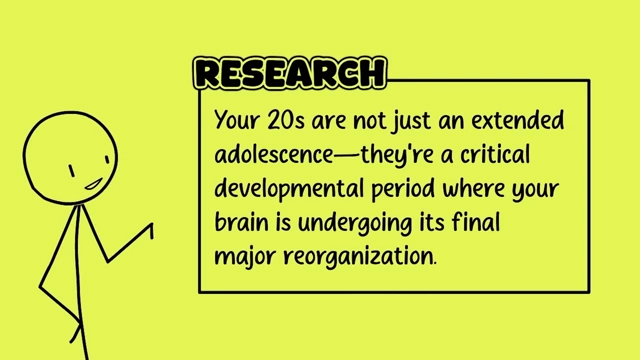
Research indicates that your 20s are a critical developmental period where your brain undergoes its final major reorganization. [ 00:01:40 ] 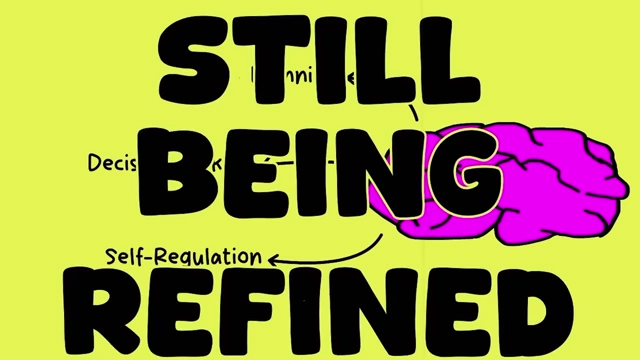
The prefrontal cortex, responsible for planning and self-regulation, is still being refined in your 20s. [ 00:01:50 ]
- The speaker shares feeling like a failure due to "narrative conformity," judging personal progress by cultural scripts rather than genuine long-term well-being.
The invisible opportunity cost
- Chasing external validation in the 20s carries an invisible opportunity cost.
- Each year spent on external appearances is a year not invested in building internal foundations like discipline, diligence, resilience, and humility.
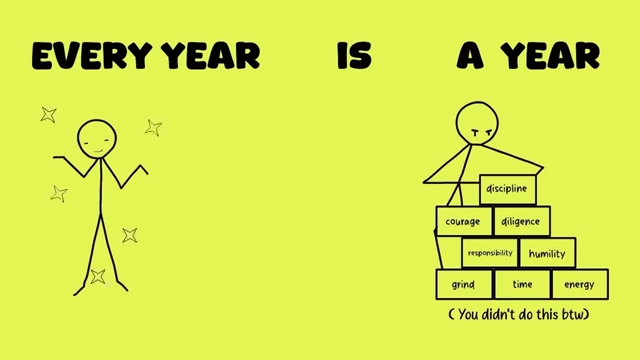
Every year spent optimizing for external validation is a year not spent building internal foundations like discipline, courage, and diligence. [ 00:02:10 ]
Markers versus makers of success
- A core problem is confusing the "markers of success" (titles, relationship status, material possessions) with the "makers of success" (internal capacities).
We confuse markers of success with makers of success. [ 00:02:50 ] - This leads to the "early achievement paradox": desperately chasing external markers in your 20s often leads to compromises that undermine long-term trajectory (e.g., taking a hated job, staying in toxic relationships, accumulating debt for an image).
The Early Achievement Paradox illustrates how chasing external markers in your 20s can undermine long-term success. [ 00:03:06 ]
- A core problem is confusing the "markers of success" (titles, relationship status, material possessions) with the "makers of success" (internal capacities).
The I.C.E. Method: Identity, Capacity, and Energy Management [3:50]
The video introduces the I.C.E. Method, a framework comprising three foundational elements for building "identity capital"—invisible internal assets that appreciate over time and cannot be taken away.
Defining the I.C.E. Method
- I - Identity Formation [4:00]: The process of discovering and solidifying your authentic self, separate from external expectations and cultural programming.
- C - Capacity Building [4:11]: Developing your ability to produce value, manage complexity, and navigate uncertainty through compounding skills.
- E - Energy Protection [4:24]: Creating boundaries and systems to preserve your physical, mental, and emotional energy.
Typical pitfalls in the 20s
- Most people's approach to their 20s often fails in all three I.C.E. areas.
- Taking jobs based on status or salary rather than skill-building or authentic interests.
- Adopting peer group lifestyles and beliefs without question.
- Saying "yes" to every opportunity out of FOMO, leading to overextension and lack of focus.
- Ignoring burnout and relying on short-term fixes.
The Unsexy Work That Changes Everything [6:18]
This section details practical implementation strategies for each component of the I.C.E. Method.
Identity Formation (Separating authentic self from conditioned self)
- This requires three specific practices.

Identity formation requires three specific practices. [ 00:06:31 ]
- Value Excavation [6:30]:
- Identify what genuinely matters by asking "why five times" for each goal.
- This reveals if goals stem from internal values or external pressure.
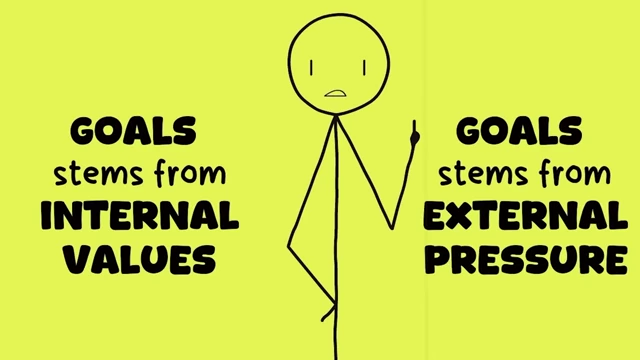
Differentiating between goals that stem from internal values versus external pressure. [ 00:06:49 ] - Example: Discovering a desire for respect and financial security (internal) rather than the profession of law (external).

The underlying desire for respect and financial security, not the profession itself. [ 00:07:02 ]
- Controlled Failure Exposure [7:10]:
- Deliberately put yourself in low-stakes situations where failure is acceptable.
- This helps separate identity from outcomes and builds resilience.
- Example: Taking a stand-up comedy class where bombing is expected, which then builds willingness to take calculated risks in higher-stakes areas.
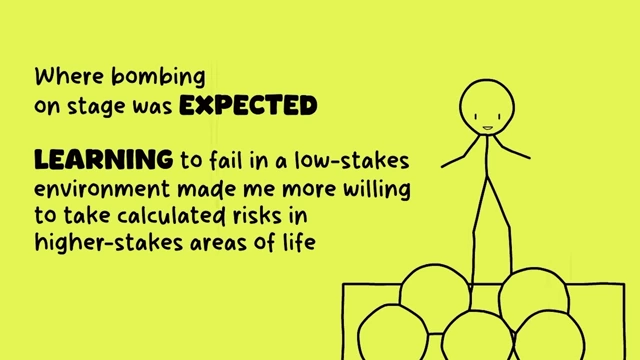
Learning to fail in a low-stakes environment like stand-up comedy builds resilience for higher-stakes risks in life. [ 00:07:29 ]
- Relationship Inventory [7:33]:
- Evaluate relationships: which energize you versus which deplete you.

Relationship inventory is about gaining clarity on where to invest your relational energy, not cutting people off. [ 00:07:47 ] - Create a two-column list of "energy givers" and "energy takers" and review it quarterly.
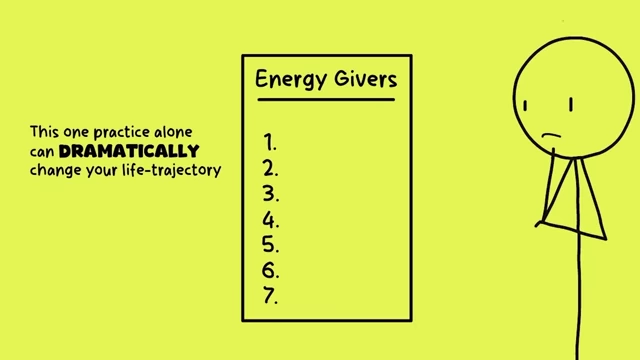
Create a two-column list for "Energy Givers" and "Energy Takers" and review it quarterly. [ 00:07:59 ]
- Evaluate relationships: which energize you versus which deplete you.
- This requires three specific practices.
Capacity Building (Developing three meta-skills)
- Deep Work Capacity [8:05]:
- Ability to focus intensely on challenging tasks without distraction.
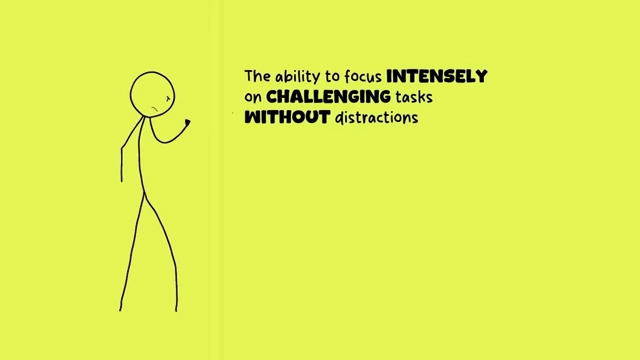
Deep work capacity is the ability to focus intensely on challenging tasks without distractions. [ 00:08:12 ] - Start with 30 minutes of undistracted work daily (no phone, email, social media).
- Gradually increase by 15 minutes weekly to sustain 2-3 hours of deep focus.
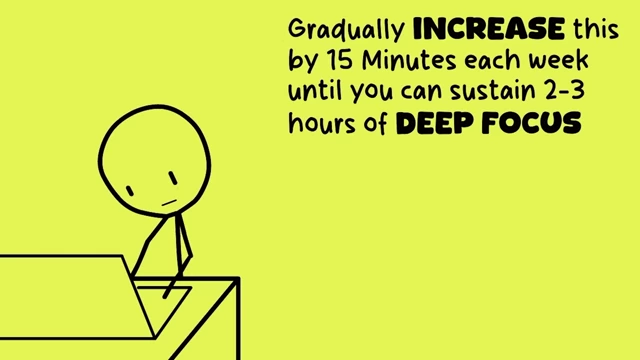
Gradually increase deep focus time by 15 minutes each week until you can sustain 2-3 hours. [ 00:08:29 ]
- Ability to focus intensely on challenging tasks without distraction.
- Discomfort Tolerance [8:34]:
- Ability to engage with difficult emotions and situations instead of avoiding them.
- Begin with small daily discomfort practices (e.g., cold showers, difficult conversations, reaching out to intimidating people).

Engage in small daily discomfort practices like cold showers or difficult conversations. [ 00:08:51 ] - The willingness to move toward discomfort is key.

What matters is your willingness to move toward discomfort rather than away from it. [ 00:08:59 ]
- Learning Agility [9:04]:
- Ability to rapidly acquire new skills and adapt to changing conditions.
- Adopt a "skill sprint" approach: dedicate 30 days to intensively learning one new, stretching skill (e.g., coding, public speaking, new language, financial modeling).
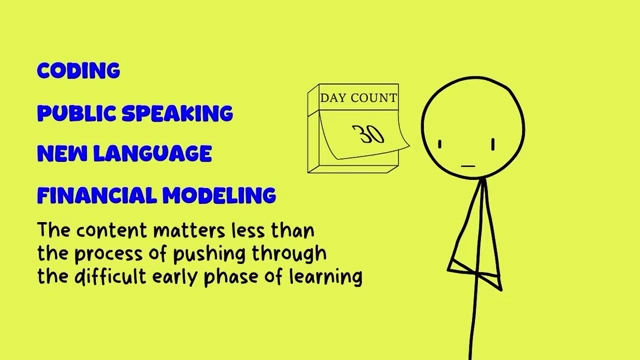
Develop learning agility by adopting a skill sprint approach, dedicating 30 days to intensively learning one new, stretching skill. [ 00:09:29 ]
- Deep Work Capacity [8:05]:
Energy Protection (Implementing three systems)
- This is the final and most neglected component of the I.C.E. method.

Energy protection is the final and most neglected component of the I.C.E. method. [ 00:09:42 ]
- Attention Hygiene [9:47]:
- Ruthlessly eliminate inputs that create noise, comparison, or confusion.
- Examples: Deleting social media apps from your phone, consuming news only once a week ("low-information diet"), unsubscribing from irrelevant newsletters.
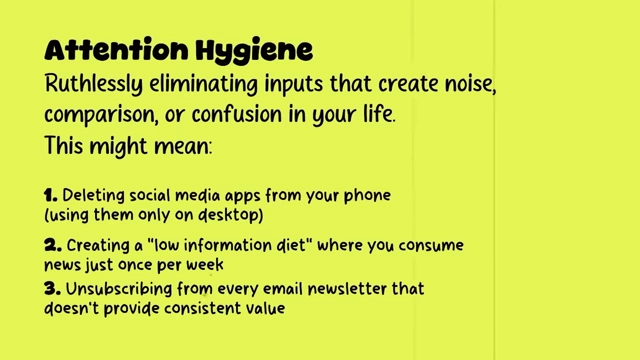
Attention hygiene involves ruthlessly eliminating inputs that create noise, comparison, or confusion in your life. [ 00:10:09 ]
- Recovery Rhythm [10:19]:
- Establish consistent patterns of rest and renewal before burnout occurs.
- Design an ideal weekly recovery rhythm: one daily renewal practice (meditation, exercise, reading), one mid-week reset evening (no work/screens), one full weekend day for complete disconnection.
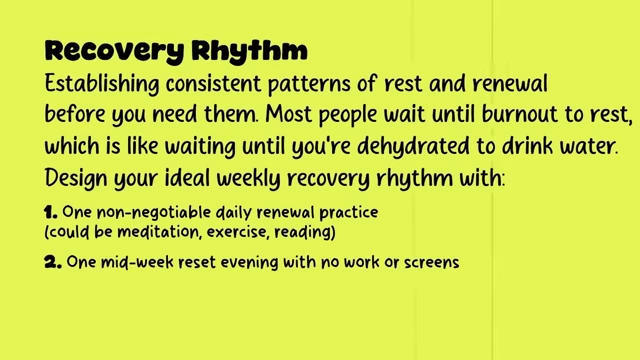
Design an ideal weekly recovery rhythm with a daily renewal practice, a mid-week reset, and a full weekend day for disconnection. [ 00:10:39 ]
- Decision Minimization [10:46]:
- Reduce low-impact choices to free up mental energy for what truly matters, as decision fatigue erodes capacity for important choices.
- Create systems to eliminate repetitive decisions.
- Examples: Meal templates, capsule wardrobe, automated savings/investments, consistent morning/evening routines.
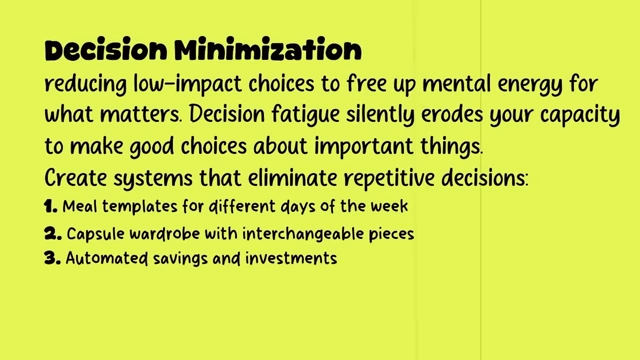
Decision minimization involves reducing low-impact choices to free up mental energy for what matters. [ 00:11:09 ]
- This is the final and most neglected component of the I.C.E. method.
The 4 Identity Investments Most People Miss [11:48]
Beyond the ICE method, there are four crucial investments often overlooked in the 20s.
Investing in Psychological Flexibility [12:05]
- Most people seek certainty about "who they are" and "what they want," creating rigid identities that can become restrictive.
- The most valuable skill is not certainty, but the ability to adapt and thrive amidst uncertainty.
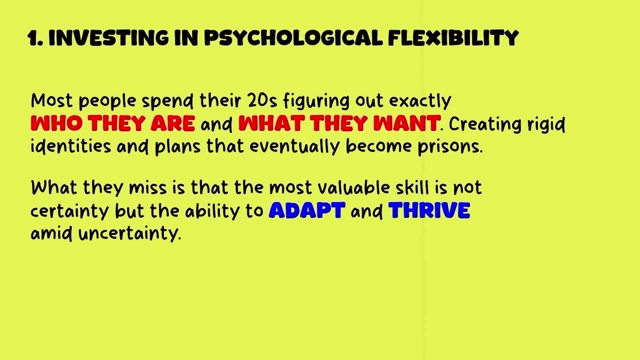
The most valuable skill is not certainty but the ability to adapt and thrive amid uncertainty. [ 00:12:18 ] - Solution: Develop "provisional" rather than "permanent" identities. Focus on exploration ("What am I curious about now?") instead of declarations ("What is my passion forever?").
Investing in Relationship Depth Over Breadth [13:05]
- Pressure to network and maintain large social circles often leads to shallow connections.
- Research consistently shows that quality, not quantity, of relationships determines well-being and professional success.
- Solution: Identify the 5-10 relationships that bring the most value and deliberately deepen these at the expense of superficial connections. "One ally is worth a hundred acquaintances."
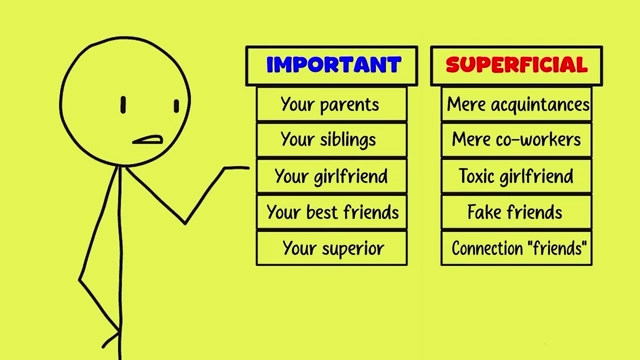
Prioritize relationship depth over breadth by identifying and nurturing important connections over superficial ones. [ 00:13:48 ]
Investing in Process Over Outcomes [14:00]
- Many in their 20s obsess over achievements and milestones, neglecting the systems and habits that produce results over time.
- This leads to cycles of initial enthusiasm and inevitable disappointment.
- Solution: Reverse the focus by identifying the daily process that will create your desired outcome. Make the process your primary focus, not the outcome; "fall in love with the routine rather than the result."
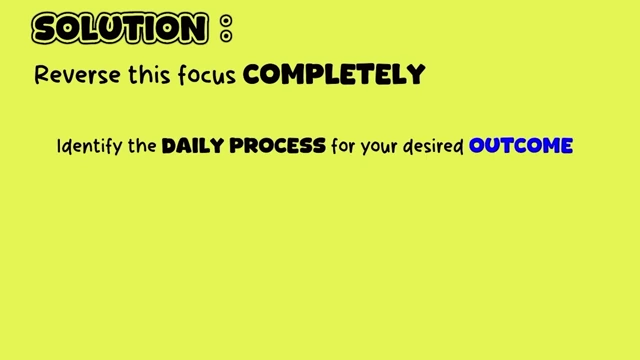
Reverse your focus completely by identifying the daily process for your desired outcome and making it your primary focus. [ 00:14:38 ]
Investing in Longer Time Horizons [14:50]
- A significant mistake is optimizing for immediate rewards instead of playing long-term games.
- In a culture of instant gratification, the ability to make decisions with 5, 10, or 20-year horizons is rare and valuable.
- Example: Turning down a higher-paying job for one with a broader skill set development, leading to significantly higher earnings and autonomy later.
- Remedy: Regularly ask, "What would my future self thank me for investing in right now?" Allocate at least 20% of resources (time, money, energy) to investments that may not pay off for years but will eventually create exponential returns.
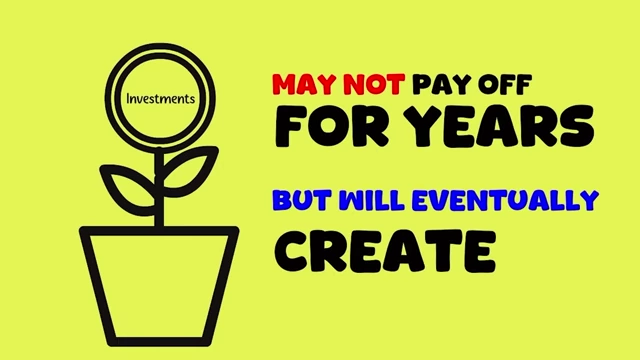
Allocate resources to investments that may not pay off for years but will eventually create exponential returns. [ 00:15:48 ]
Conclusion [15:52]
By focusing on building identity, capacity, and energy management in your 20s—prioritizing invisible inner work over visible outer achievements—you establish a powerful foundation for extraordinary results in the decades to come.
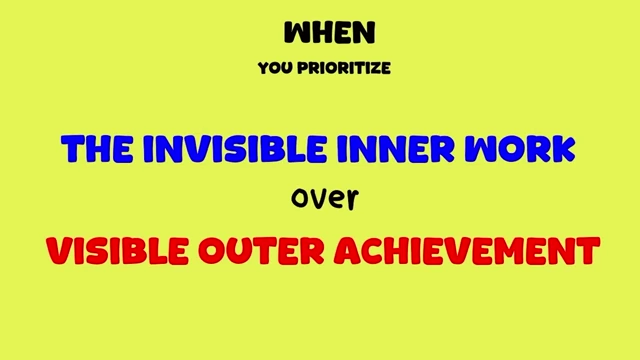
- This approach is about finding deeper satisfaction and development rather than mere display.
- The challenges and discomforts faced in your 20s become sources of advantage later in life, as Ryan Holiday states, "The obstacle is the way."
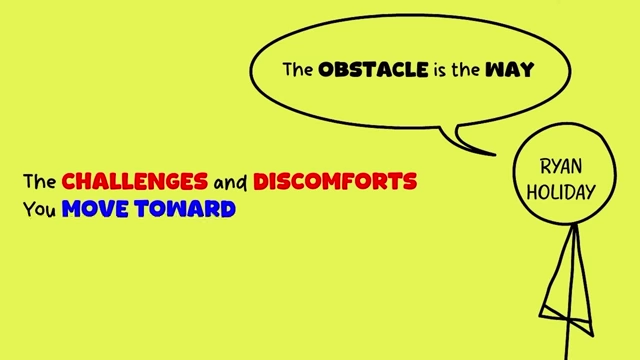
As Ryan Holiday puts it, "The obstacle is the way," highlighting that challenges become advantages. [ 00:16:15 ] - The video encourages viewers to choose one element of the ICE method to implement with a small action this week (e.g., a 30-minute deep work session, a difficult conversation, deleting a social media app).
- The true power move is becoming the kind of person who inevitably succeeds over time, regardless of external observation.
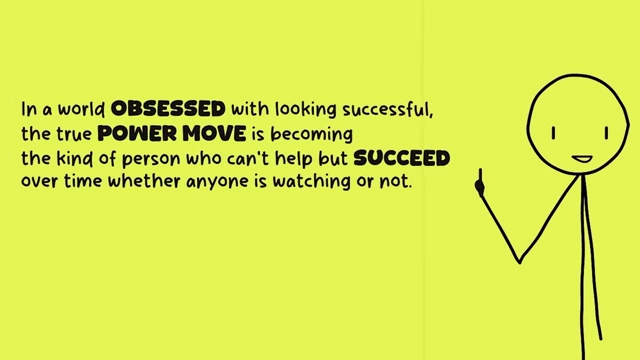
The true power move is becoming the kind of person who inevitably succeeds over time, regardless of external observation. [ 00:16:53 ]