Understanding the Complexities of Military Aircraft Interceptions and Rules of Engagement
Summary:
This video delves into the intricate process and potential consequences of military aircraft interceptions, especially in light of rising NATO-Russia tensions.
- Interceptions involve five main stages: detection by radar, scrambling of Quick Reaction Alert (QRA) aircraft, identification (visual or optronic), reporting and escort, and return to base.
- Historically, incidents like the Greek Mirage shooting down a Turkish F-16 or Syrian forces downing a Turkish F4 demonstrate that such events, while serious, don't always lead to full-scale war.
- The decision to open fire is complex, typically not delegated to junior pilots, and involves a chain of command considering factors like territorial violations, warning shots, and the risk of collateral damage.
- Modern AESA radar technology, while effective in combat, paradoxically reduces the "deterrent" effect of radar lock during peacetime interceptions, as adversaries may not clearly perceive being targeted.
- The video outlines five interception scenarios, highlighting the dangers of non-cooperative maneuvers, splitting formations, and sudden aggressive actions, which can quickly escalate to self-defense engagements.
- The geopolitical context profoundly influences rules of engagement, making previously acceptable aggressive maneuvers now highly risky, emphasizing the importance of multiple intercepting aircraft and non-escalatory behavior.

Interception scenarios illustrating various flight paths and potential outcomes. [ 00:00:40 ]
Introduction to Interceptions and Escalation Risks [00:00:00]
- As tensions rise between NATO and Russia, the destruction of Russian aircraft entering NATO airspace is a topic of concern.
- The video aims to provide a pilot's perspective on the realities of such an interception.
- Shooting down an aircraft does not automatically trigger World War III, as historical precedents have shown.
- The decision to engage and potentially destroy an aircraft rests with the general staff and political leadership, not solely on the shoulders of the individual pilot.
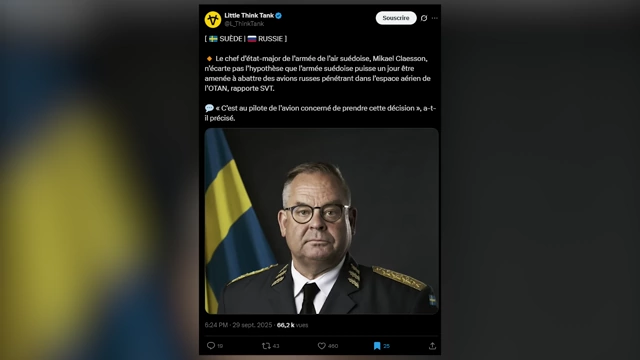
Swedish General Mikael Claesson's statement on pilots making the decision to shoot down aircraft. [ 00:01:03 ]
The 5 Stages of a Standard Interception Mission [00:03:28]
- NATO publicly discloses five main stages for an interception mission:
- Detection [00:03:32]
- Radars identify an unknown radar contact that is not transmitting a transponder code or following a flight plan.
- Scramble (Quick Reaction Alert - QRA) [00:03:53]
- Combined Air Operations Centers (CAOC), such as CAOC UE in Germany, coordinate detection and task QRA assets.
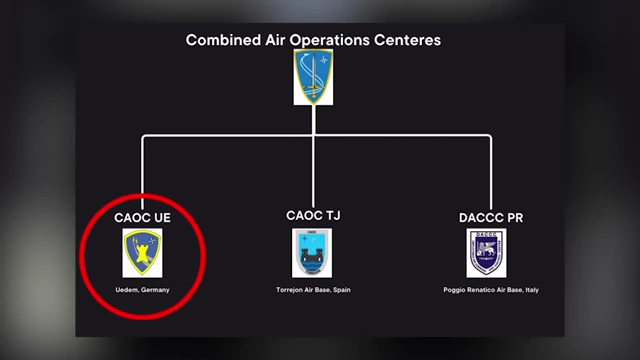
Combined Air Operations Centers (CAOC) hierarchy, showing CAOC UE in Uedem, Germany. [ 00:03:59 ] - Aircraft on alert from one of the 32 NATO bases are required to take off within 15 minutes to intercept the unidentified aircraft.
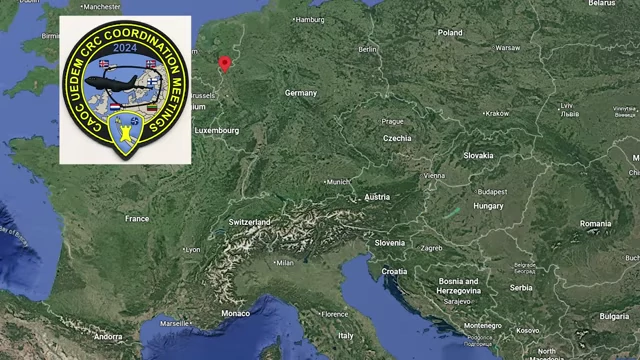
Location of the CAOC UE (Combined Air Operations Centre Uedem) in Germany. [ 00:03:52 ] 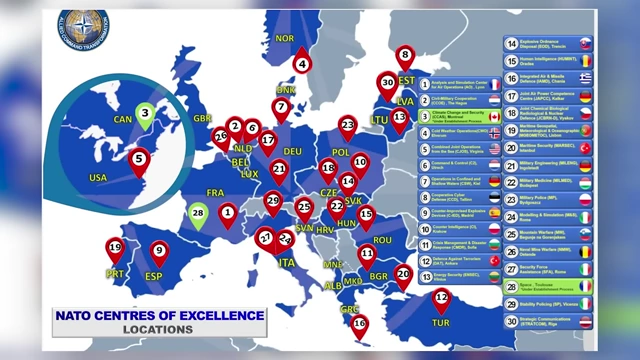
Map of NATO Centres of Excellence locations across Europe and North America. [ 00:04:09 ]
- Combined Air Operations Centers (CAOC), such as CAOC UE in Germany, coordinate detection and task QRA assets.
- Identification [00:04:13]
- Traditionally, identification is done visually (VIID).
- Modern aircraft utilize advanced optronic systems (e.g., Rafale's OSF or air-to-ground pods adapted for air-to-air use) to identify aircraft from a safe distance, determining if it's an IL20, Su-27, or another type.

The OSF (Optronique Secteur Frontal) system on a Rafale aircraft for long-range identification. [ 00:04:29 ] - The classic situation involves approaching the aircraft to fly alongside it for visual confirmation.
- Reporting and Escort [00:04:50]
- The pilot reports details like armament and takes photographs.
- The intercepting aircraft may provide a transponder code to civil air traffic control to deconflict airspace, as military aircraft are permitted to operate without transponders in international waters (beyond 12 nautical miles from the coast) but are responsible for avoiding civilian traffic.

Graphical representation of maritime zones, including territorial waters (12 nautical miles). [ 00:05:19 ]
- Return to Base [00:05:30]
- Once the mission is completed, the pilot receives clearance to return to base for debriefing.
- Detection [00:03:32]
Historical Precedents and Airspace Disputes [00:05:49]
- Greece and Turkey [1996] [00:05:49]
- On October 8, 1996, a Greek Mirage 2000 shot down a Turkish F-16D during an interception near the islands of Chios and Samos, resulting in the death of one crew member.
- This incident was kept secret from the public for years until it leaked, leading to an apology from Greece.
- The region is complex due to historical treaties (Treaty of Paris 1947, Treaty of Lausanne 2023) and hundreds of reported airspace violations by Turkish aircraft over Greece.

Map of disputed airspace between Greece and Turkey, with images of the F-16D and Mirage 2000 involved in the 1996 incident. [ 00:05:59 ] 
Representatives at the signing of the Treaty of Paris in 1947, which defined post-WWII borders. [ 00:06:36 ]
- Turkey and Syria [2012] [00:06:41]
- In 2012, a Turkish F4 fighter jet was shot down by Syrian forces.
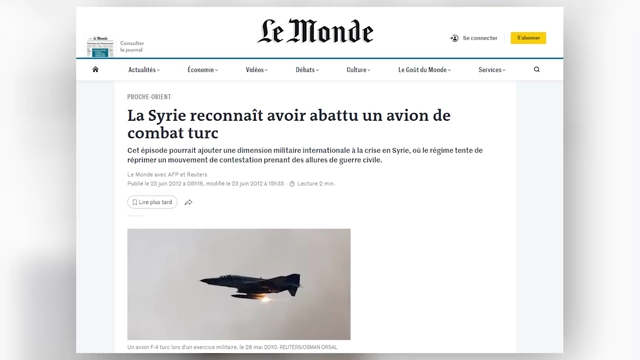
News headline confirming Syria's downing of a Turkish F-4 fighter jet in 2012. [ 00:06:43 ]
- In 2012, a Turkish F4 fighter jet was shot down by Syrian forces.
- Distinction between FIR Violations and Territorial Waters [00:06:46]
- Violations of Flight Information Regions (FIR) are permissible under international law.
- However, entering another nation's territorial waters (within 12 nautical miles of the coast) is prohibited.
- An example cited is an Estonian L410 aircraft that reportedly violated Turkish airspace in 2009.
Rules of Engagement and the Decision to Fire [00:07:19]
- Interception Strategy [00:07:19]
- Intercepting aircraft anticipate the trajectory of the unidentified plane to intercept it before it enters territorial waters.
- The interceptor then flies alongside, monitoring the aircraft's actions.
- Escalation and Communication [00:08:18]
- If the intercepted aircraft continues towards or enters territorial waters, various methods of communication and deterrence are employed:
- Radio interrogations: Attempts to contact the aircraft, though frequencies may not be monitored by the other side (e.g., Russian planes not listening on military backup 243 MHz).
- Visual signals: The intercepting pilot may use gestures like "Follow me" or wing flapping.
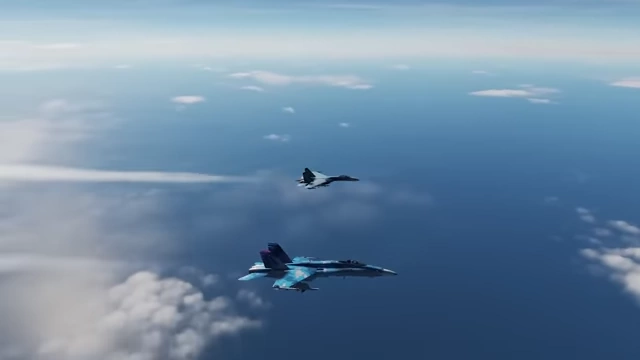
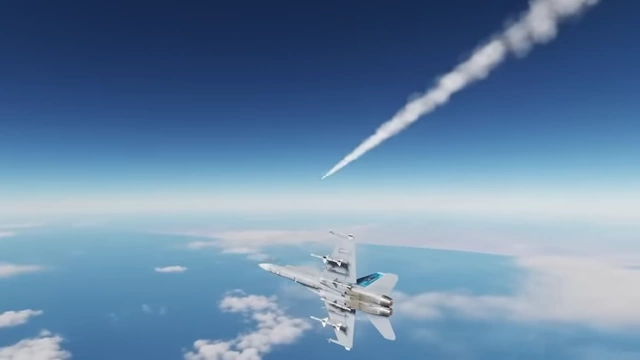
An intercepting aircraft signaling 'follow me' to another jet. [ 00:08:48 ] - Warning shots: If the aircraft continues to advance, a warning shot might be fired, ensuring no risk to populated areas.
A fighter jet firing a warning shot, indicating a last resort before engagement. [ 00:08:18 ] - Flares: Flares can be deployed as another visual warning.
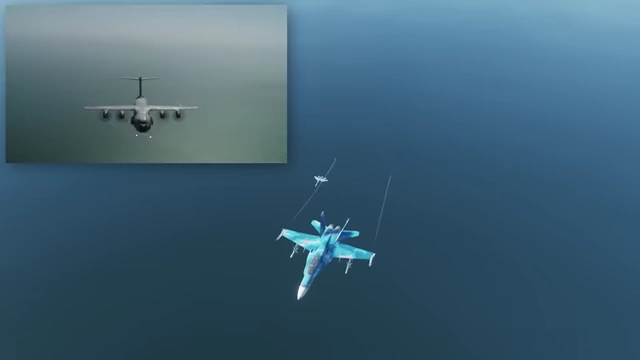
A fighter jet deploying flares as a visual warning to an intercepted aircraft. [ 00:09:31 ]
- If the intercepted aircraft continues towards or enters territorial waters, various methods of communication and deterrence are employed:
- Decision to Open Fire [00:09:46]
- Opening fire is a complex decision, typically requiring authorization from the highest levels of command, including political leadership.
- Junior officers (lieutenants or captains) rarely have direct authorization for such a decision in an interception scenario, unlike some specific operations like no-fly zones.

Map of the No-Fly Zone (NFZ) over Libya during Operation Unified Protector, an example of specific operations with different rules of engagement. [ 00:10:07 ] - Risks include wreckage falling on populated areas if the aircraft is shot down over land.
Modern Radar and Deterrence Capabilities [00:10:52]
- Evolution of Radar Lock [00:10:52]
- The traditional "radar lock" (tracking on continuous information, often heard as a "beep" in movies) is no longer as prevalent or necessary with modern aircraft.
- Older aircraft, like the Mirage 2000C, required switching to continuous information tracking (psique) to fire a missile.
- Active Electronically Scanned Array (AESA) Radars [00:11:38]
- Modern aircraft with AESA radars use continuous scan (tracking on discontinuous information).
- This means the enemy's electronic warfare sensor cannot definitively tell if they are being actively targeted for missile launch or just being tracked for situational awareness.
- This capability is beneficial in wartime for stealthy engagement but paradoxically reduces the "deterrent" effect of a clear radar lock during peacetime interceptions.
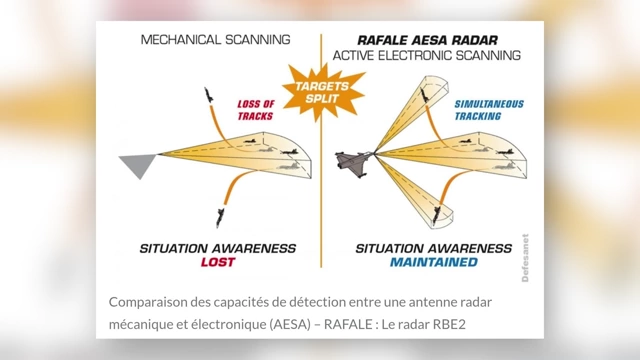
Comparison of mechanical scanning radar with AESA (Active Electronically Scanned Array) radar, showing AESA's ability to maintain situational awareness with multiple targets. [ 00:11:48 ]
Scenarios of Interception and Escalation [00:12:24]
- The video outlines five potential outcomes during an interception:
- Cooperative Interception [00:12:24]
- The intercepted aircraft is cooperative, turns around, and leaves the area without incident.
- Non-Cooperative Maneuvering [00:12:33]
- The intercepted aircraft performs maneuvers, turns around, or splits into multiple contacts, potentially setting a trap.
- Example: A single interceptor, after numerous successful benign interceptions, is sent alone against a single contact that then splits into two, with one engaging the interceptor from an unexpected angle.
- Hostile Maneuvering and Engagement by Intercepted Aircraft [00:13:25]
- The intercepted aircraft maneuvers aggressively and fires at the interceptor, catching it within its "no escape zone" (NES).
- This scenario emphasizes the critical importance of sending multiple intercepting aircraft (e.g., patrols of two or three) to avoid being outnumbered and to ensure witnesses if an engagement occurs.
- Aggressive Maneuver During Escort [00:14:15]
- While flying alongside, the intercepted aircraft suddenly makes an aggressive maneuver towards the interceptor.
- Depending on the rules of engagement and the pilot's briefing, this could be perceived as a hostile act, leading the interceptor to fire in self-defense.
- Persistent Non-Cooperation without Direct Threat [00:14:58]
- The intercepted aircraft remains non-cooperative and does as it pleases, but does not directly endanger the local population or carry air-to-ground weapons, nor does it act hostilely towards the interceptor.
- In such cases, the interceptor would likely continue to escort and monitor, reporting the activity, but without opening fire unless a direct threat or self-defense situation arises.
Visual representation of various interception scenarios, from cooperative compliance to aggressive engagement and splitting tactics. [ 00:00:40 ]
- Cooperative Interception [00:12:24]
The Geopolitical Impact on Rules of Engagement [00:18:42]
- Historical Context of "Doc Fights" [00:18:19]
- In the past, "dogfights" or aggressive maneuvers without actual firing were sometimes tolerated during interceptions (e.g., Baltic Air Policing against Russians, or Greece vs. Turkey).
- These were seen as training exercises or aggressive posturing rather than immediate threats of engagement.
- Current Geopolitical Climate [00:18:42]
- The current geopolitical tensions (e.g., between NATO and Russia) significantly alter these dynamics.
- Aggressive maneuvers by an intercepted aircraft are now far more likely to be interpreted as hostile acts, increasing the probability of immediate engagement and opening fire.
- Political Implications of Shooting Down Aircraft [00:17:42]
- The political decision to shoot down a manned aircraft is much more complex than shooting down a drone, as it involves potential loss of human life.
- While history shows localized skirmishes don't always escalate into full-scale war, the current environment makes crews more nervous and prone to interpret maneuvers as justification for self-defense.
- It is advisable for intercepted aircraft to maintain horizontal flight and avoid maneuvers to prevent escalation.