This video explains the "power-to-the-powerful" dynamic through game theory, where resources, decision-making, and reality definition flow to those already in power, terming it the "dragon political economy."
Overview of the Power-to-the-Powerful Dynamic
[
00:00:20
]
It defines power as being networked around collective decision nodes and the ability to define rules for others (vertical game theory). Game theory is presented as the study of relational dynamics, the living out of values, and the intertwining of competition and cooperation. The video emphasizes that competition and cooperation are often combined, as seen in in-group/out-group dynamics and the "technostructure" (corporate-government collaboration). Cooperation is noted as more powerful but can be used for negative outcomes, and it's often easier for those already in power to cooperate. Seven actionable steps are provided to counter this dynamic, focusing on cultivating cooperative relationships, understanding public discourse as strategic, reframing "enemies," cultivating skills and virtue, and being prepared for opportune moments for collective action.
Introduction to the Power-to-the-Powerful Dynamic and Game Theory [0:00]
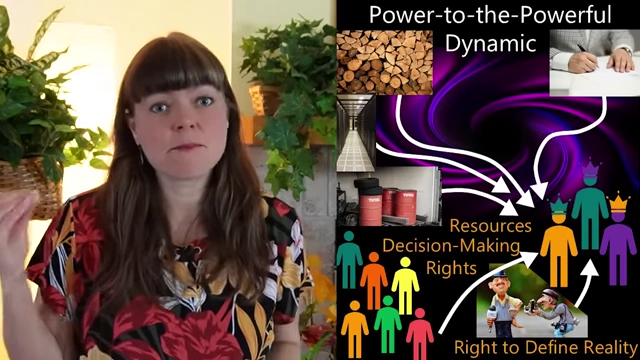
The system is characterized by a "power-to-the-powerful" dynamic, where resources, decision-making rights, and the right to define reality increasingly flow to those already powerful.
The "Power-to-the-Powerful" Dynamic showing resources, decision-making, and definition of reality flowing to those already with power
[
00:00:20
]
This is termed the "dragon political economy" [0:22].
Understanding this dynamic requires understanding game theory.
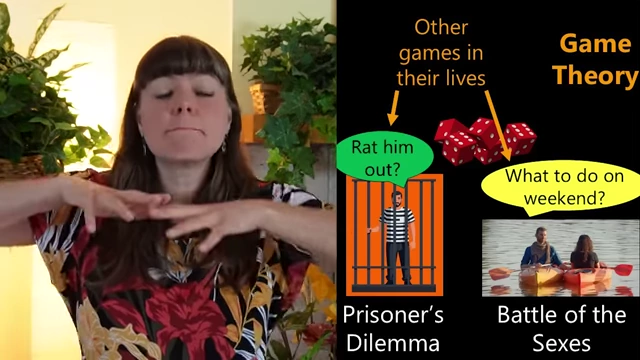
Traditional game theory examples like the Prisoner's Dilemma and Battle of the Sexes typically feature:
Symmetric elements: Players have equal roles [0:54].
Isolation from context: Games are considered in isolation from other life dynamics [1:00].
Classic Game Theory examples (Prisoner's Dilemma, Battle of the Sexes) as isolated games within a larger context
[
00:01:14
]
The video introduces the concept of the "tapestry of game theory" [1:18], where all games are woven together.
"Game switching" [1:36] is crucial, meaning moving between different games or levels, like a child choosing to exit a board game to preserve a friendship [1:40].
Strategic action often occurs through this game switching [2:36].
Different types of power (money, technology, administrative, military, media) [2:44] can be translated into each other through game switching.
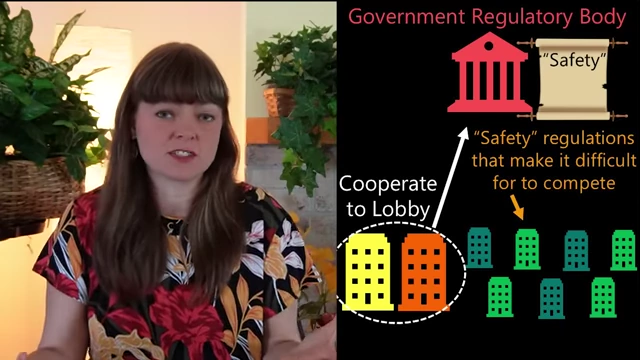
Example 1: Large corporations cooperate to lobby regulatory bodies for "safety" regulations that hinder small businesses (money power to administrative power) [3:00].
Corporations cooperating to lobby a government regulatory body for "safety" regulations that hinder small businesses
[
00:03:28
]
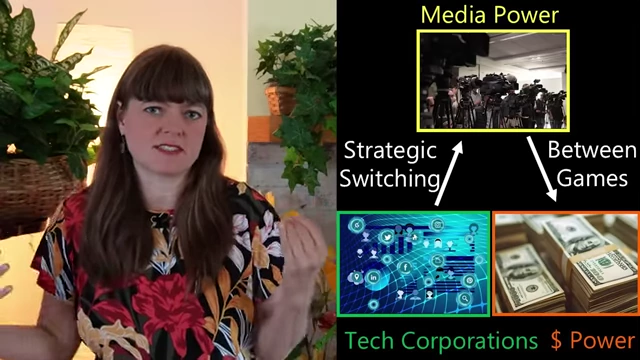
Example 2: Tech corporations use technology power to influence media through algorithms (upregulating/downregulating content) [3:56], which can then be sold for money power [4:11].
Strategic switching between Technology Power, Media Power, and Money Power by tech corporations
[
00:04:31
]
The goal is to answer:
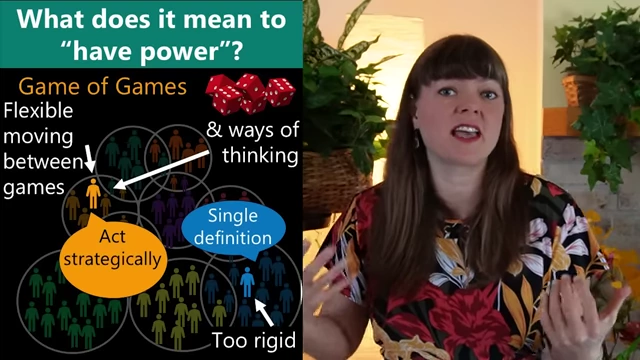
What does it mean to "have power" in our system? [4:45]
Flexibility in thinking and multiple definitions are essential for playing the "game of games."
Rigidity in thinking or adherence to a single definition can be exploited strategically [5:37].
Strategic actors exploiting rigid thinking by those stuck on a single definition in the "Game of Games"
[
00:05:45
]
Public discourse and rhetoric are part of the strategic landscape [5:51].
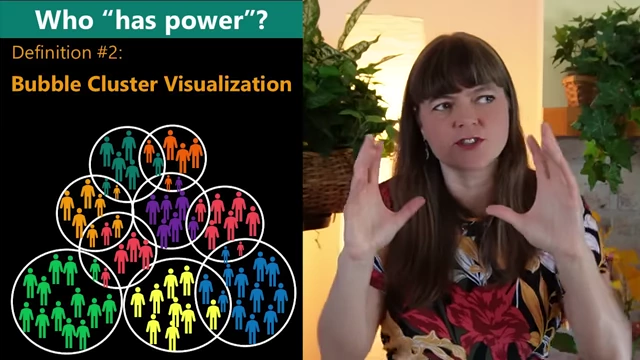
Definition 1: A person has power if they are networked around node clusters where collective decisions get made [6:13].
This definition evokes a network model of the system [6:51].
Collective decisions include who controls social media algorithms, what pesticides are allowed, or what Medicare covers [6:30].
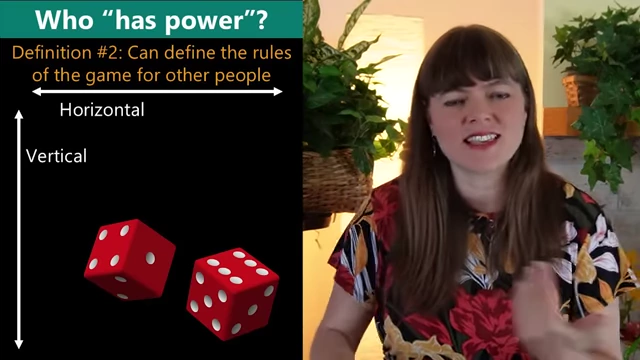
Definition 2: A person has power if they can define the rules of the game for other people [7:38].
This uses a more hierarchical model, similar to a corporate organizational chart [7:01].
Bubble Cluster Visualization as a hierarchical model of who has power by defining rules
[
00:07:29
]
Horizontal Game Theory: Players have roughly equal status and operate under the same rules (e.g., Prisoner's Dilemma, Battle of the Sexes) [7:47].
Vertical Game Theory: The game of defining rules for others to operate within (e.g., corporate executives defining salary structures, government defining rules for firms, college defining classroom rules) [8:07].
Distinction between Horizontal and Vertical Game Theory
[
00:07:52
]
The boundary between vertical and horizontal game theory can blur (e.g., voters and congresspeople) [8:51].
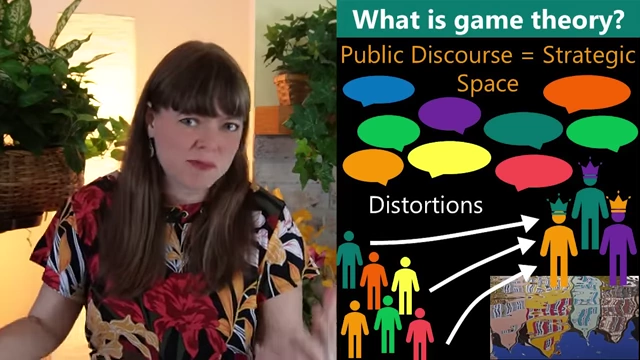
The public discourse is a strategic space with distortions that benefit the powerful; therefore, a flexible understanding of game theory is needed to counter this.
Public discourse as a strategic space with distortions that channel influence to the powerful
[
00:10:03
]
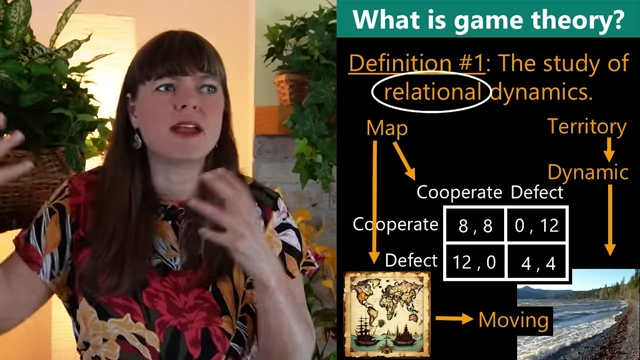
Definition 1: The study of relational dynamics [10:36].
Classic games are archetypes of relational dynamics [10:51], similar to character archetypes in storytelling [10:59].
Game theory is dynamic and moving, not static; the "map" is not the "territory" [11:46].
Game theory as the study of dynamic relational archetypes, not a static map or territory
[
00:11:58
]
The "dragon political economy" is a moving system built on many relationships, each with inherent instability that can be disrupted by strategic actors [12:20].
Definition 2: The study of the way people live out their values in context with other people, intuiting and taking into account those other people's values, drives, and likely responses [12:53].
This definition avoids the common misconception that "strategic behavior" is inherently conniving or self-seeking [13:09].
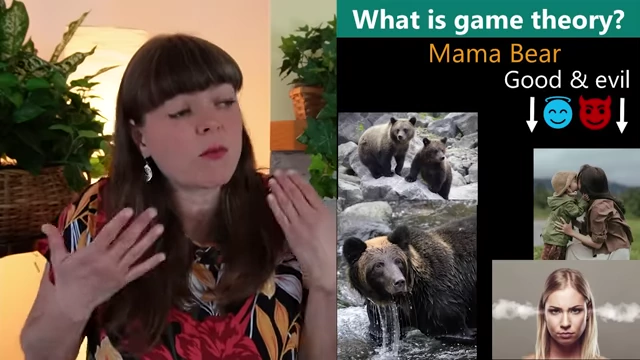
Game theory applies beyond human economics, including evolutionary biology (e.g., animal "strategies" like being aggressive or nice) [13:48].
It's crucial to resist the impulse to categorize human actions as simply "good" or "evil" within game theory models [14:37].
The model itself is not the right place to determine good and evil [15:26]; a mature understanding requires ambiguity [15:47].
Mama Bear example showing how game theory models encompass both "good" and "evil" manifestations of behavior
[
00:15:12
]
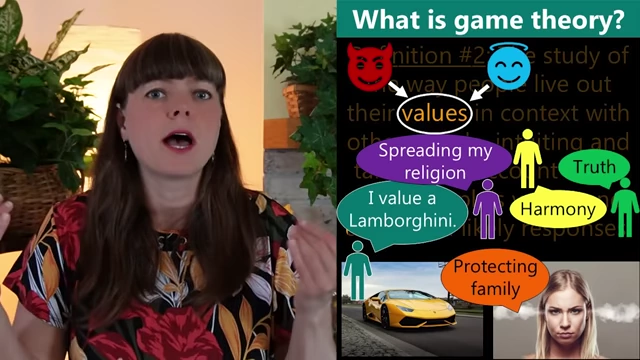
"Values" in this context is an ambiguous term, encompassing selfish desires (e.g., status, Lamborghini) and altruistic ones (e.g., truth, harmony) [16:10].
The ambiguous nature of "values" in game theory, encompassing both selfish and altruistic motivations
[
00:16:37
]
Sociopaths often rise to power by feigning cooperative values [16:54].
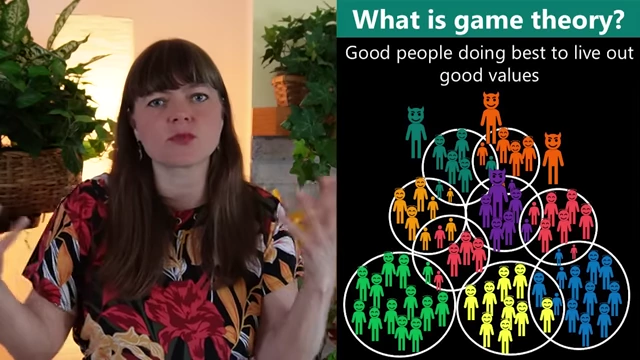
An inflexible, purely self-seeking view of game theory blinds one to other motivations in the system, giving strategic advantage to those who understand the full spectrum [17:20].
The bubble cluster model illustrating good people living out good values in the system
[
00:17:18
]
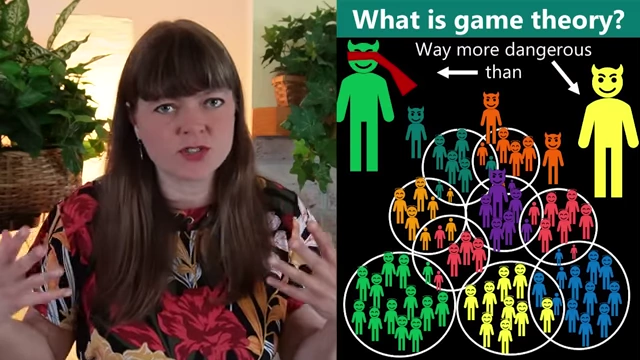
A sociopath with a flexible understanding of game theory is more dangerous than one who only sees conniving behavior [17:44].
A sociopath with a flexible understanding of game theory being more dangerous than one with a limited, self-seeking view
[
00:17:47
]
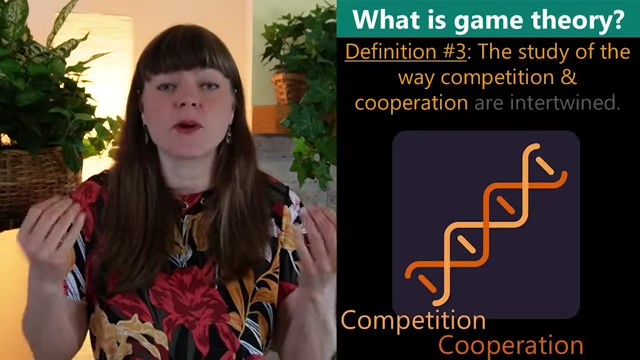
Definition 3: The study of the way competition and cooperation are intertwined [17:57].
Game theory as the study of the intertwined nature of competition and cooperation
[
00:18:02
]
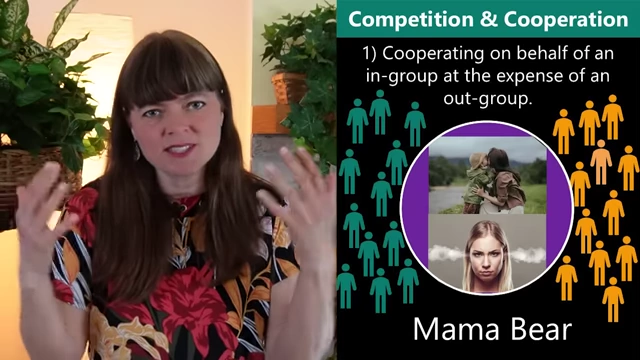
Intertwining 1: Cooperating on behalf of an in-group at the expense of an out-group [18:08].
Examples: A "mama bear" protecting her family [18:18], activists working for their cause [18:26].
In-group cooperation (e.g., Mama Bear) happening at the expense of an out-group
[
00:18:17
]
Firms colluding to keep prices high (cooperation among them, but competition against consumers) [18:53].
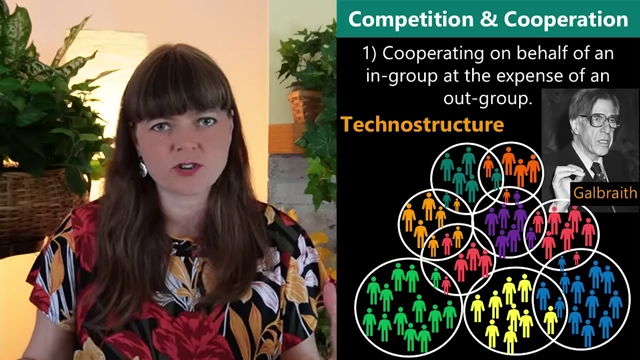
The "technostructure" [19:17]: A networked collaboration between corporate and government sectors (e.g., shared social relationships) [19:27].
The "Technostructure" as a networked collaboration between corporate and government sectors, as conceptualized by Galbraith
[
00:19:26
]
From an in-group perspective, actions may appear altruistic, while from an out-group, they may seem selfish [20:01].
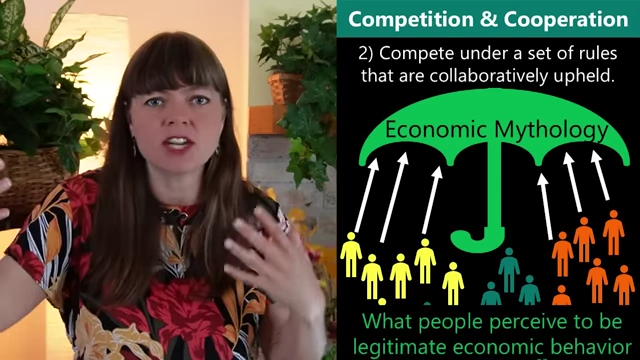
Intertwining 2: Competing under a set of rules that are collaboratively upheld [20:44].
Example: A soccer league where teams compete, but all uphold the rules of the league [20:56].
Society operates under an "economic mythology" [21:23] – collective perceptions of legitimate economic behavior – that is collaboratively upheld.
The "Economic Mythology" as an umbrella representing collaboratively upheld rules for competition in society
[
00:21:27
]
All forms of competition (business, social, religious) occur within these shared, overarching rules [21:46].
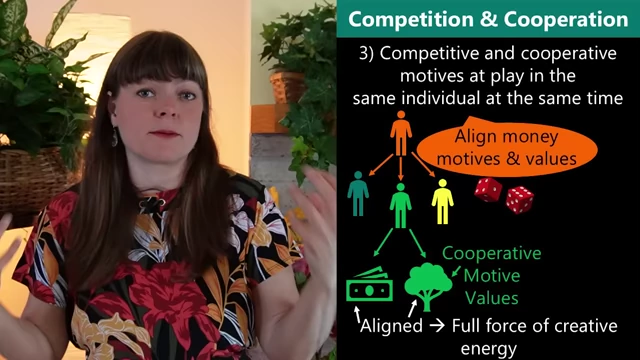
Intertwining 3: Competitive and cooperative motives at play in the same individual at the same time, driving the same behavior [22:13].
Example: Donating to charity (cooperative) for social status (competitive) [22:21].
Strategic actors designing systems know to align people's money-based (selfish) motives with their values (cooperative/altruistic) to unleash full creative energy [23:11].
Aligning money motives with values to unleash the full force of creative energy
[
00:23:26
]
This leads to strategic manipulation of the "moral frame" and public discourse to shape values and perceptions of social cooperation [23:36].
The reality of values is a mixture of deep spiritual origins and influences from powerful actors [24:21]; both extreme views are naive [24:55].
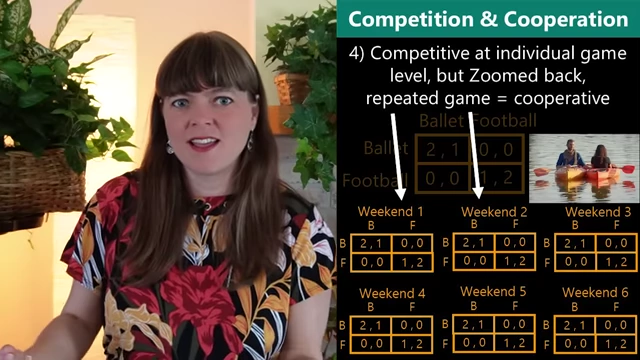
Intertwining 4: A game can be competitive at an individual level but becomes cooperative when viewed as a repeated game [25:01].
Example: Battle of the Sexes - individual decisions are competitive, but over many weekends, a cooperative pattern emerges (alternating choices) [25:08].
A series of competitive individual games (Battle of the Sexes) revealing a cooperative pattern when viewed as a repeated game
[
00:25:06
]
This relates to game switching: A mature economic thinker is flexible in moving between games, recognizing how competition and cooperation combine at different levels [25:49].
Cooperation is generally more powerful than competition (referencing Robert Axelrod's "The Evolution of Cooperation") [26:08].
However, "more powerful" does not mean "good" (e.g., colluding firms using cooperation for harmful outcomes) [26:23].
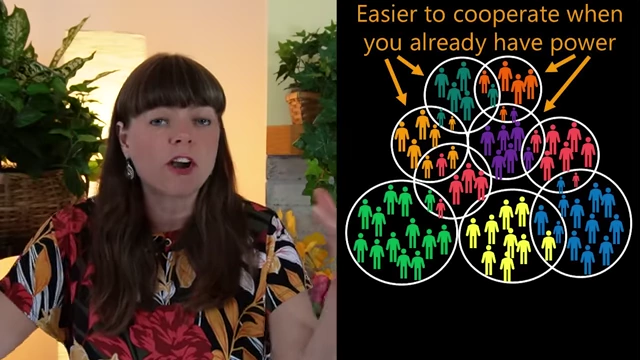
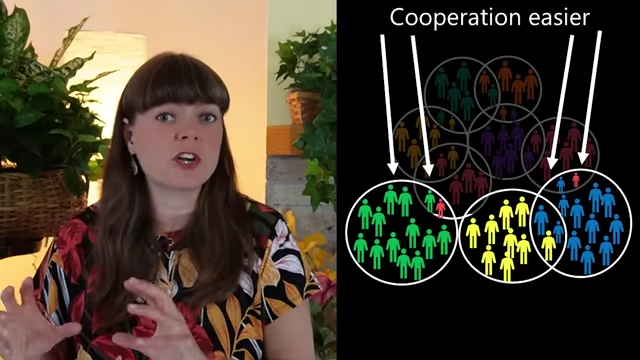
A major force behind "power-to-the-powerful" is that it's easier for those with existing power to cooperate (they have bargaining chips) [26:47].
Cooperation being easier for those who already have power, as illustrated by the bubble cluster model
[
00:26:46
]
Cooperation at lower levels is strategically thwarted through fear (e.g., of protest), polarization (viewing each other as enemies), and controlled digital platforms [27:06].
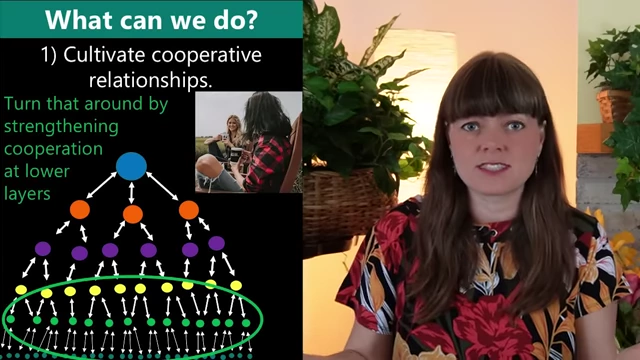
The key to turning around the dynamic is to make cooperation easier and more validated at lower levels [27:42].
Making cooperation easier and more validated at the lower layers of the system
[
00:27:49
]
What Can We Do About Power-to-the-Powerful? [27:56]
Strengthen cooperation among the many people at the lower layers of the system [28:14].
Strengthening cooperation at the lower layers of the system
[
00:28:15
]
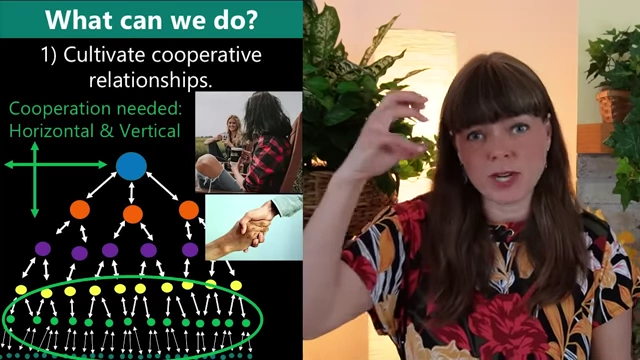
Cooperation is needed horizontally (among peers) and vertically (between those with some power and those without) [28:22].
Cultivating both horizontal and vertical cooperative relationships
[
00:28:30
]
Understand that the rhetorical landscape is strategic [28:35]:
Recognize the distortions in how we think about the economic system, valid/invalid activities, and in-groups/out-groups, which are shaped by public discourse [28:38].
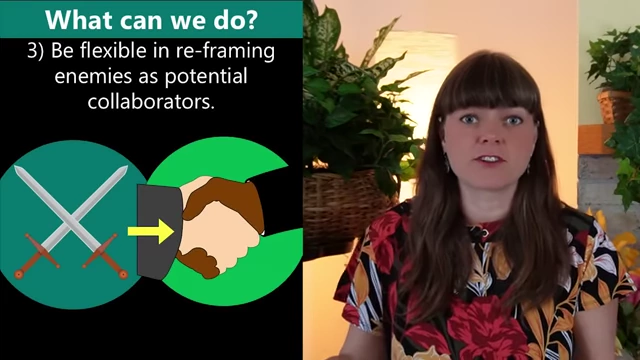
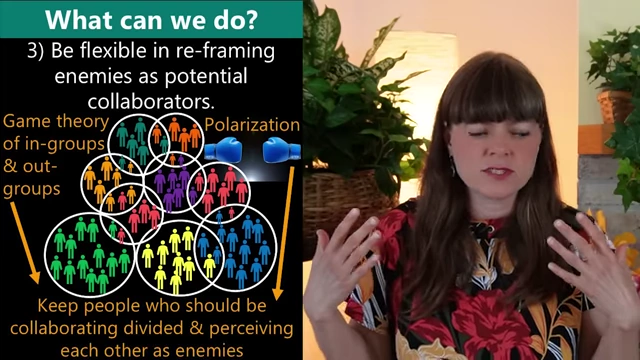
Be flexible in reframing enemies as potential collaborators [29:05]:
Counter the polarization that divides people who should be collaborating [29:12].
Reframing enemies as potential collaborators
[
00:29:05
]
Recognize shared problems that hurt everyone, fostering collaboration against the powerful dynamic [29:27].
Polarization as a strategic mechanism to keep potential collaborators divided
[
00:29:22
]
Be aware that realities invisible to you from your position may be clear to others (e.g., how groups you participate in are perceived externally) [29:46].
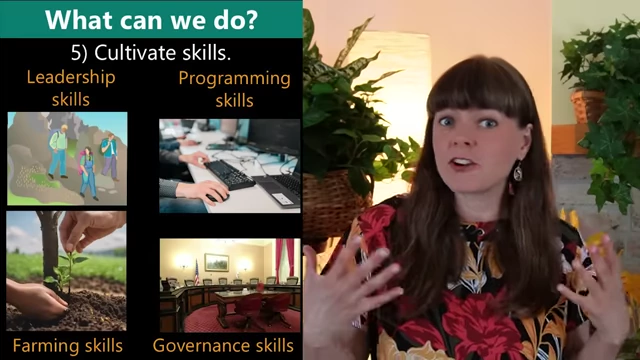
Develop leadership, programming, farming, and governance skills. These skills are often concentrated in powerful layers, making collaboration easier for them [30:17].
Cultivating diverse skills such as leadership, programming, farming, and governance
[
00:30:15
]
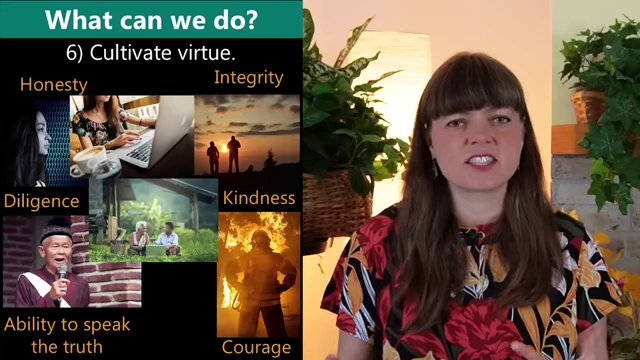
Practice honesty, integrity, truth-speaking, courage, kindness, and diligence. While virtue shouldn't be pursued solely for power, these traits empower individuals against the "power-to-the-powerful" dynamic [30:58].
Cultivating virtues like honesty, integrity, and courage
[
00:31:05
]
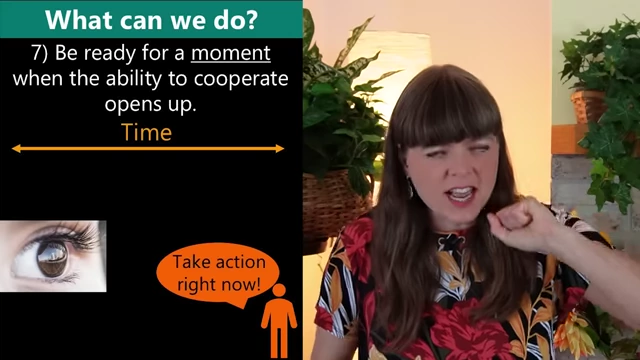
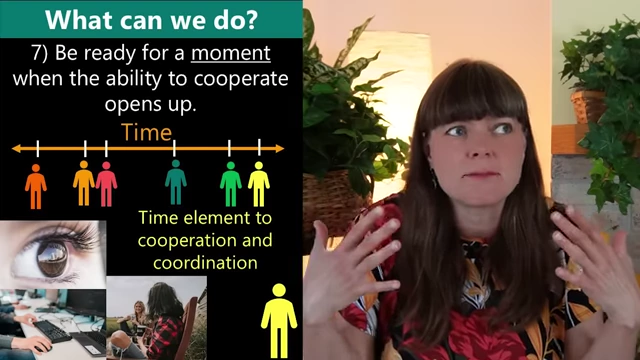
Be ready for a moment when the ability to cooperate with others opens up [31:31]:
Avoid taking immediate, individual action when you "wake up" to an issue, as this is a weak force [31:39].
Avoiding immediate, individual action as a weak force
[
00:31:45
]
Instead, develop skills and relationships, and wait for the opportune moment when collective action can make a significant difference [31:59].
Being ready for the opportune moment to exert collective force through cooperation and coordination
[
00:32:25
]