Eric Trump and Asher Genut Discuss the Future of Finance, Politics, and Crypto, Including Bitcoin and the US Dollar
Summary:
Eric Trump and Asher Genut discuss the future of finance, politics, and cryptocurrency.
- Eric Trump shares his investing philosophy, emphasizing passion and focus over broad diversification, drawing from his family's real estate background and successful ventures like turning a distressed Rich Carlton property into a profitable asset.
- He criticizes the lack of competence and alleged corruption in politics, citing personal experiences with "debanking" by major financial institutions and numerous legal challenges faced by his family due to political affiliations.
- The discussion highlights the direct impact of the national debt on average citizens through higher taxes and explores potential solutions like economic growth and energy independence, including nuclear power.
- Both emphasize the critical need for financial literacy and practical trade skills in schools, criticizing the current educational system for its incompetence and inflated tuition costs.
- Asher Genut introduces American Bitcoin, a company focused on energy infrastructure for Bitcoin mining, explaining its high profitability and the inherent advantages of Bitcoin as a decentralized, limited-supply asset.
- They advocate for Bitcoin and blockchain technology as the future of finance, offering transparency, efficiency, immediate liquidity, and protection against government overreach and debanking, citing personal experiences where traditional banks shut down their accounts.

Eric Trump and Asher Genut on the Iced Coffee Hour podcast [ 00:55:17 ]
What Separates Great Investors from Good Investors [00:02:41]
- Seeing the Future and Passion
- Great investors are able to foresee future trends and are deeply passionate about their chosen field.
- Diversification is not always the path to immense wealth; sometimes, deep focus on a single, high-growth area is more effective, as exemplified by the Trump family's focus on real estate.
- Avoiding the "Pack" Mentality
- Spreading investments too thin across various asset classes (bonds, stocks, crypto) will likely yield average market returns, making it hard to "break out of the pack."
- The future of finance lies in crypto due to its 24/7 nature, efficiency, lower fees, transparency, and role as "digital gold."
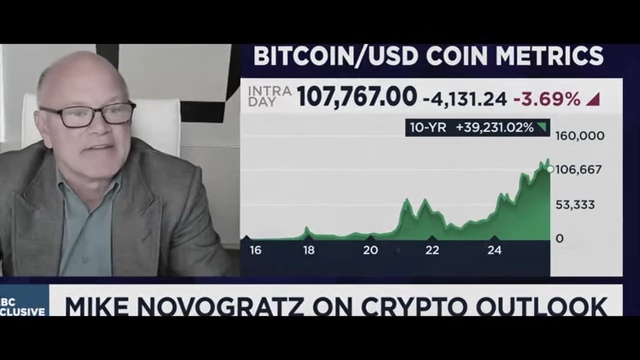
Bitcoin's 10-year price performance and market metrics [ 00:00:32 ]
Crypto vs. Stock Investing and Best Investing Advice [00:04:13]
- Savings Strategy vs. Career Path
- Saving more than you spend is fundamental to have capital for investment.
- True wealth creation often comes from investing in oneself and one's career, or in projects where one can directly influence outcomes.
- Betting on Yourself and Your Talents
- The Trump family's success came from identifying distressed real estate properties, reinvesting, reinvisioning them, and turning them into profitable assets.

An aerial view of a large golf course property with a grand building, representing successful real estate development [ 00:06:52 ] - This approach is akin to venture capital but in the hard asset space, focusing on fixing and improving things that others have mismanaged.
- Example: The speaker mentions buying a Rich Carlton property that was losing money and turning it cash-positive within nine months by applying common sense and meticulous attention to detail.
- The Trump family's success came from identifying distressed real estate properties, reinvesting, reinvisioning them, and turning them into profitable assets.
Most Surprising Thing About Politics [00:08:13]
- Lack of Competence and Binary Thinking
- Many politicians lack real-world experience, having spent their careers in "yes/no" voting scenarios rather than building or running businesses.
- This can lead to binary thinking and a lack of understanding of complex economic and societal issues.
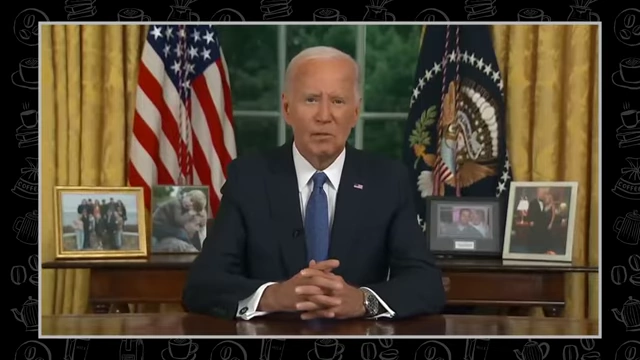
President Joe Biden speaking, illustrating his long career in politics [ 00:08:35 ]
- Misguided Policies
- Policies like doubling or tripling minimum wage, without understanding the broader economic impact, can lead to automation and job losses.
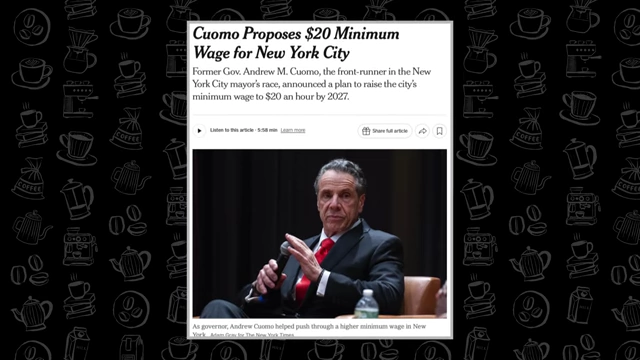
News article about Andrew Cuomo's proposal for a $20 minimum wage in New York City [ 00:09:18 ] - Politicians who have never run a business, made payroll, or experienced a recession often make decisions without a full comprehension of consequences.
- Policies like doubling or tripling minimum wage, without understanding the broader economic impact, can lead to automation and job losses.
When You Realized Politics Was Corrupt [00:11:00]
- Personal Experiences with Weaponization of Government
- Eric Trump recounts being called by the FBI about a "cyber threat" against his company, only to find out the FBI's press office leaked his visit to ABC News while he was still in the building, revealing a systemic issue of weaponized government for political purposes.
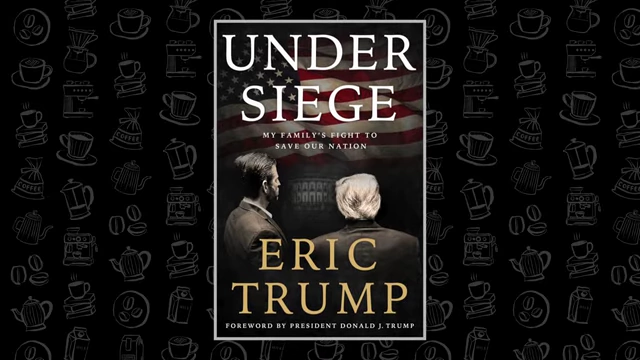
The cover of Eric Trump's book, "Under Siege: My Family's Fight to Save Our Nation" [ 00:11:14 ] - The constant attacks against his father, including two impeachments, "dirty dossiers" (allegedly paid for by Hillary Clinton), and the "Russia hoax," demonstrated the depth of political corruption.

News article reporting on FEC fines against Hillary Clinton's campaign and the DNC for Trump-Russia dossier research [ 00:13:36 ] - The family faced 112 subpoenas (Eric Trump becoming the most subpoenaed person in American history without a single traffic ticket) and 91 indictments against his father.

News article detailing the subpoena of Eric Trump and Kimberly Guilfoyle's phone records by the January 6 committee [ 00:14:00 ] - "Debanking": The family was "debanked" by major financial institutions like Capital One, Bank of America, JP Morgan Chase, and First Republic, as well as e-commerce platforms like Shopify, due to their political views, with banks allegedly pressured by government regulators.
- Eric Trump recounts being called by the FBI about a "cyber threat" against his company, only to find out the FBI's press office leaked his visit to ABC News while he was still in the building, revealing a systemic issue of weaponized government for political purposes.
- Fighting Back Against a Rigged System
- The Trump family's response to these attacks was to "fight back relentlessly."
- He believes their financial resources and public platform were crucial in resisting attempts to bankrupt, imprison, or silence them.
- The media (ABC, NBC, CNN) is criticized for acting as a "PR arm of the Democratic party."
Biggest Misconceptions About the Trump Family [00:18:43]
- Family Closeness and Resilience
- The biggest misconception is underestimating the strength and closeness of the family, which remained unbreakable despite immense political and legal pressure.
- They spent over $400 million in legal fees fighting against what they considered false allegations and weaponized government actions.
Lessons Learned from Your Father [00:20:03]
- Myopically Focused Passion
- The most important lesson is to be myopically focused on whatever you do, dedicating 95% of your time and thoughts to it.
- This intense focus, whether on building real estate, producing "The Apprentice," or engaging in politics, leads to success.
- Work Ethic and Self-Motivation
- People who are "weekend warriors" or lazy (showing up late, leaving early) will not succeed against those who are driven and willing to overcome any obstacle.
- A strong work ethic was instilled from a young age, with Eric and his siblings working on construction sites to earn money for personal items.
Why Some People Aren’t Self-Motivated [00:23:07]
- Attitude and Opportunity
- Lack of self-motivation can stem from a negative attitude or a feeling of hopelessness, believing their efforts won't yield results (e.g., housing too expensive, markets overvalued).
- It's crucial to find an industry one is good at and passionate about, and then "sprint toward" that opportunity.
- Success stories exist of people who started with nothing and built significant wealth by harnessing their unique skills and passions.
- The "Ejection Seat" Philosophy
- If you are bored, not moving forward, or lack passion for your work, it's time to "pull the ejection seat" and find something you genuinely love and can monetize.
Does National Debt Affect the Average Person? [00:26:48]
- Direct Impact Through Taxes
- A national debt of $37 trillion directly affects every American through higher taxes.
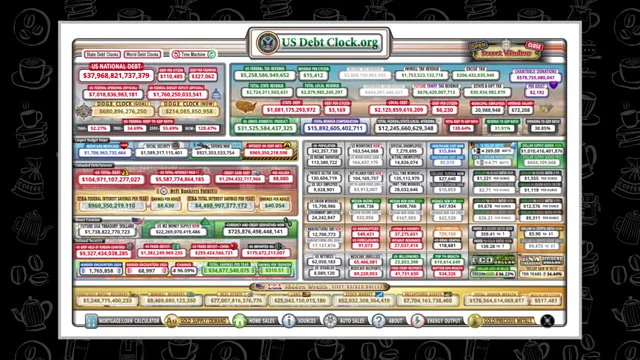
A screenshot of the US Debt Clock website, displaying the constantly increasing national debt [ 00:26:59 ] - Without this debt, taxes would be substantially lower, allowing people to afford more and improve their quality of life.
- The government's unchecked spending and resistance to cuts exacerbate the problem, citing instances like the demand for $2.7 trillion for illegal immigrant healthcare causing government shutdowns.
- A national debt of $37 trillion directly affects every American through higher taxes.
Can the U.S. Pay Off Its Debt? [00:28:01]
- Growth, Not Just Cuts
- The national debt is too large to simply cut; sustained economic growth is necessary to overcome it.
- Growth requires low energy costs (championing oil, gas, nuclear power, solar) and being the most business-friendly country on Earth.
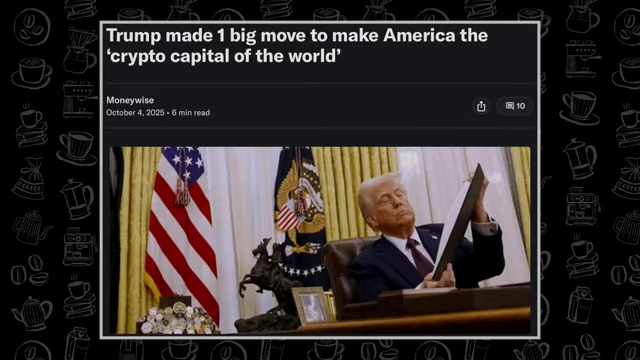
News article highlighting a move by Donald Trump to position America as the "crypto capital of the world" [ 00:28:47 ]
- Maintaining Global Leadership
- America must be number one in every sector (energy, AI, space) and maintain its status as the reserve currency and a beacon of rule of law.
- Foreign investors park assets in the U.S. due to its stability and transparent legal system compared to corrupt governments elsewhere.
- Nuclear Energy
- The U.S. should invest heavily in nuclear energy, especially small modular reactors (SMRs), as a stable, efficient power source.
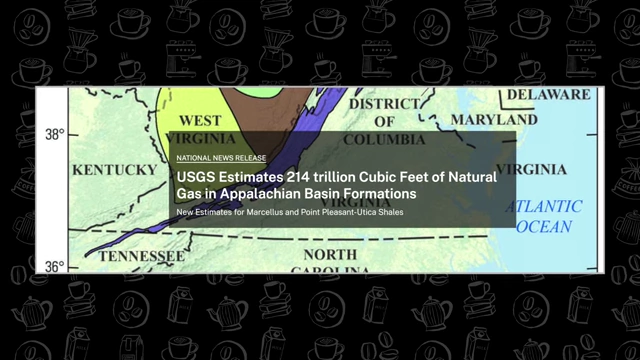
A map showing USGS estimates of natural gas in Appalachian Basin Formations [ 00:31:08 ]
- The U.S. should invest heavily in nuclear energy, especially small modular reactors (SMRs), as a stable, efficient power source.
Why Financial Literacy Isn’t Taught in Schools [00:31:58]
- Broken Educational System
- Financial literacy, credit scores, mortgages, compound interest, and basic economics are not taught due to an "incompetent educational system."
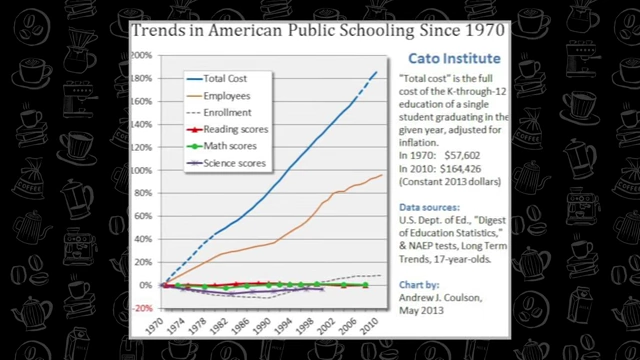
Chart illustrating trends in American public schooling since 1970, showing rising costs despite stagnant scores [ 00:35:58 ] - Colleges charge exorbitant tuition for degrees that may not lead to good employment, burdening students with debt they can't repay.
- There's a call to replace half the current curriculum with financial literacy and practical trade skills, criticizing "nonsense classes" and "revisionist history" (e.g., DEI curriculum).
- Financial literacy, credit scores, mortgages, compound interest, and basic economics are not taught due to an "incompetent educational system."
- Correlation with Government Subsidies
- The increase in student loans and government aid directly correlates with rising college tuition, creating an inflated market.
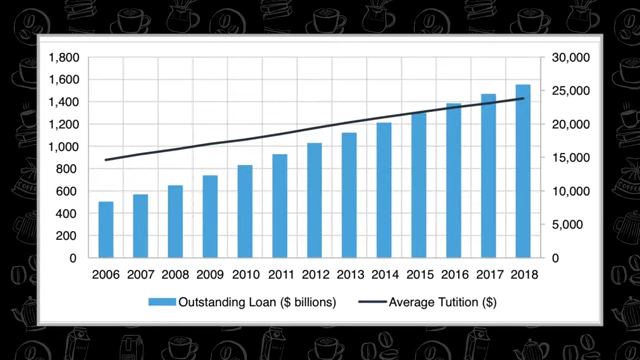
Graph showing the correlation between outstanding student loans and average tuition over the years [ 00:36:18 ] - Housing prices also appear correlated with conforming loan limits.

Chart comparing new home prices against conforming loan limits, showing a strong correlation [ 00:37:29 ]
- The increase in student loans and government aid directly correlates with rising college tuition, creating an inflated market.
How Your Quality of Life Has Changed [00:39:48]
- Shift to Purpose-Driven Fight
- Eric Trump's life transformed from a focus on monetary success and building (real estate) to fighting for non-monetary causes like the "American spirit," the Constitution, and the nation.
- This shift brought unexpected personal attacks and immense legal battles but also a sense of purpose.
- "How Many Steaks Can You Eat?"
- His grandmother's saying highlights that beyond a certain point, wealth ceases to be the primary motivator; doing "the right thing" becomes paramount.
- He now has multiple purposes: his company and fighting for the American people in a powerful political movement.
Does Money Buy Happiness? [00:41:34]
- Money Provides Tools, Not Happiness
- Money does not buy happiness, but it provided the "tool" (monetary means and a voice) to fight back against a "rigged system" that sought to imprison, bankrupt, and silence his family.
- Wealthy individuals can be miserable, especially if they lose passion or have idle time.
- Sources of Happiness
- True happiness comes from being a "great person," being mission-driven, loving what you do, and having meaningful relationships (e.g., his children Luke and Carolina, and his wife Lara).

Eric Trump pictured with his wife, Lara, and their two children, Luke and Carolina [ 00:43:13 ] - He enjoys building, outdoor activities (shooting sports, dirt bikes, fishing, skiing), and a busy, driven life, believing "to retire is to expire."
- True happiness comes from being a "great person," being mission-driven, loving what you do, and having meaningful relationships (e.g., his children Luke and Carolina, and his wife Lara).
Would You Ever Run for President? [00:44:46]
- Retired from Politics, with a Condition
- Eric Trump "retired from politics" on November 6th, the morning his father won, to focus on the family company.
- His father's political journey stemmed from a sense of necessity when the country was in dire straits.
- Eric Trump would only consider running if the country reached such a critical point again, and there was no other choice.
- He has witnessed both the positive "transformational change" his father brought and the severe negative consequences of engaging in politics (attempts to destroy his family, assassinations).
- He also criticizes bureaucrats in politics, mentioning AOC.

Representative Alexandria Ocasio-Cortez (AOC) speaking during a CNN Town Hall [ 00:46:18 ] - He mentions New York's tax rates and politicians like Mamdani.
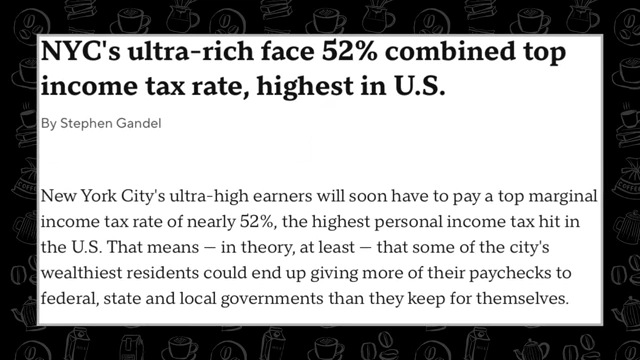
News article detailing New York City's ultra-high income tax rate of nearly 52% for the ultra-rich [ 00:49:41 ] 
News article on NYC mayoral hopeful Mamdani's controversial vow to arrest Benjamin Netanyahu [ 00:51:19 ]
American Bitcoin [00:56:08]
- Partnership with Asher Genut and HUT 8
- Eric Trump partnered with Asher Genut, CEO of HUT 8, to create American Bitcoin.
Eric Trump and Asher Genut on the Iced Coffee Hour podcast [ 00:55:17 ] 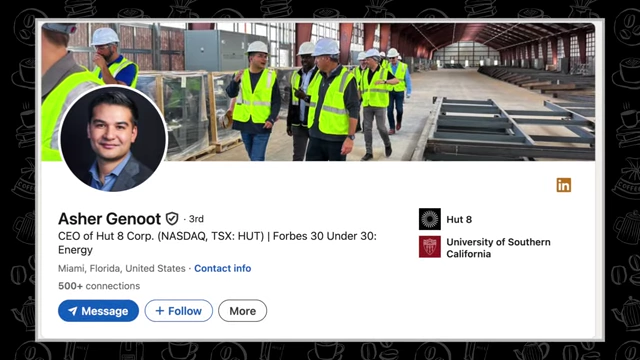
LinkedIn profile of Asher Genoot, CEO of Hut 8 Corp. [ 00:55:34 ] - Asher Genut's company, HUT 8, is an energy infrastructure firm that builds and operates data centers for Bitcoin and AI compute.
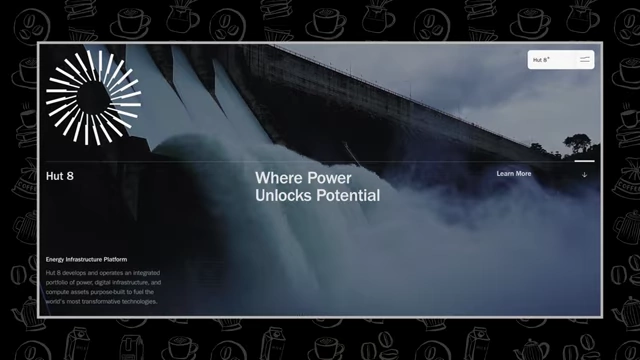
The Hut 8 website, describing it as an energy infrastructure platform that harnesses power for transformative technologies [ 00:56:30 ] - American Bitcoin owns the servers that mine Bitcoin, effectively offering a "Bitcoin yield" to shareholders by accumulating more Bitcoin per share.
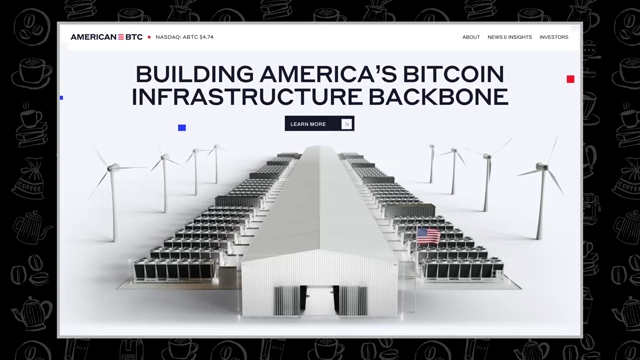
The American Bitcoin website, showcasing a large-scale Bitcoin mining infrastructure [ 00:01:50 ]
- Eric Trump partnered with Asher Genut, CEO of HUT 8, to create American Bitcoin.
How Profitable is Bitcoin Mining? [00:57:21]
- High Margins with Low Energy Costs
- Bitcoin mining is highly profitable, with American Bitcoin achieving over 50% margins by utilizing cheap energy in West Texas.
- Unlike traditional commodity mining (gold, copper) which often operates at near-par and relies on complex financial instruments, Bitcoin mining offers substantial direct profit.
- Early engagement with crypto assets like Ethereum are mentioned.
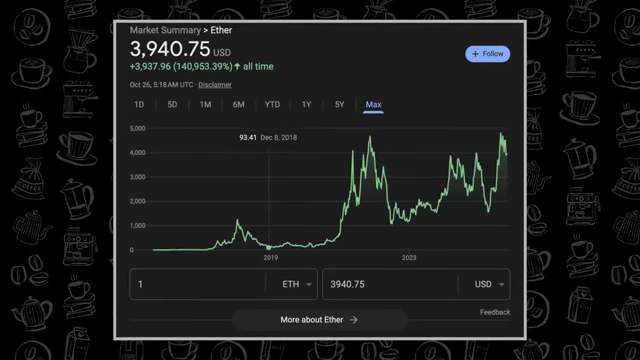
Google market summary chart showing Ether's price history, including its sub-$100 period [ 00:58:40 ]
- Limited Supply and Digital Gold
- Bitcoin has a fixed supply of 21 million (slightly less due to lost coins), making it a unique, non-inflationary asset akin to "digital gold."
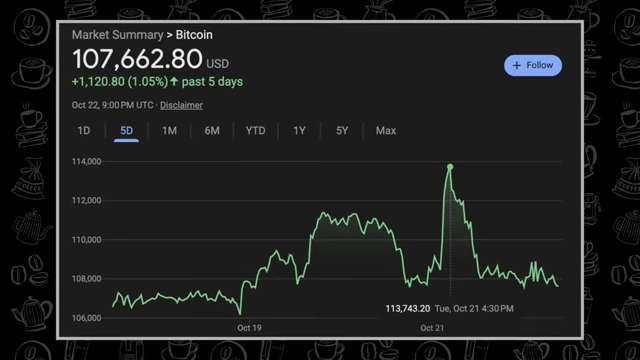
Google market summary chart displaying Bitcoin's price over 5 days, showing its current valuation [ 01:01:37 ] - Unlike physical commodities, its supply cannot increase with price, ensuring its scarcity.
- It offers global, 24/7 immediate liquidity, making it superior to traditional assets for international transactions and wealth preservation in corrupt economies.
- The example of Zimbabwe's hyperinflation highlights the need for a stable asset.
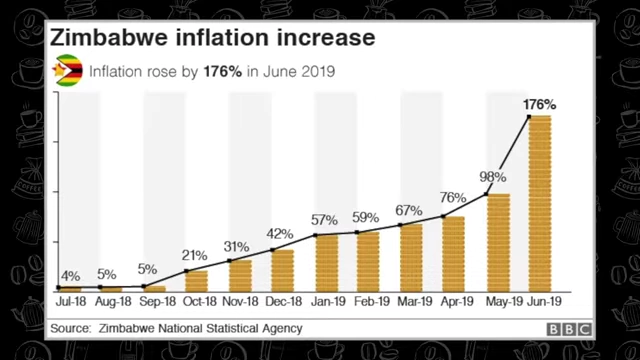
Chart showing the drastic increase in Zimbabwe's inflation rate over several months [ 01:03:03 ] - The development of stablecoins, like World Liberty Financial's USD1, is also discussed for efficient digital transactions.
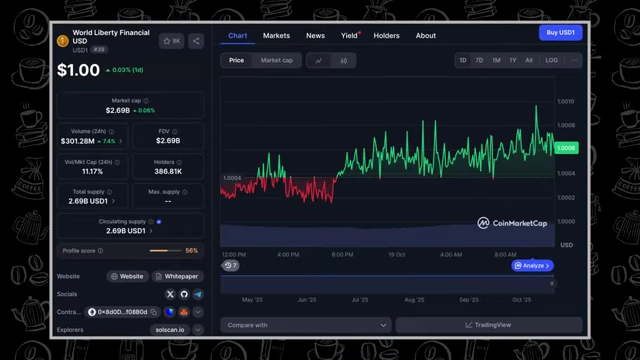
World Liberty Financial's USD1 stablecoin chart, showing its 1:1 peg with the US dollar [ 01:05:09 ]
- Bitcoin has a fixed supply of 21 million (slightly less due to lost coins), making it a unique, non-inflationary asset akin to "digital gold."
What Being “Debanked” Means [01:06:42]
- Sudden Account Closure Due to Political Views
- "Debanking" involves financial institutions unilaterally closing accounts, often with little notice, due to political affiliations or perceived threats to their business model (e.g., crypto companies).
- Asher Genut's company, US Bitcoin Corp, had its Bank of America account shut down abruptly, delaying payments and jeopardizing operations.
- Trump Family's Experience
- Eric Trump's family experienced widespread debanking from major institutions (Capital One, Bank of America, JP Morgan Chase, First Republic) and even e-commerce platforms (Shopify) due to their political views.
- This was perceived as a coordinated effort by bureaucrats and government regulators to weaponize the financial system against conservatives, aiming to bankrupt and silence them.
- Account managers were personally affected, losing their jobs, and the organization faced immense challenges managing thousands of accounts and payments.
Should the U.S. Gov Buy Bitcoin? [01:14:44]
- A Top-Performing Asset
- Yes, governments should buy Bitcoin because it has been the single greatest performing asset over the last decade, increasing in value by an average of 70% year-over-year.
- Germany, for example, missed out on significant profits by selling its forfeited Bitcoin.
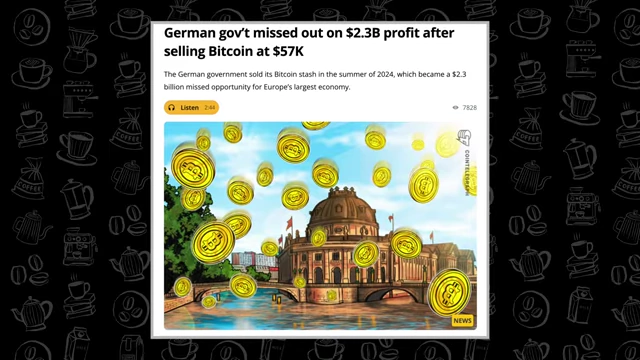
News article about the German government missing out on a significant Bitcoin profit by selling too early [ 01:15:16 ]
- Current Holdings and International Trends
- The U.S. government already holds Bitcoin through forfeitures and has wisely chosen not to sell it.
- Many countries (e.g., UAE) and major corporations, sovereign wealth funds, and wealthy individuals are actively "hoarding" Bitcoin.
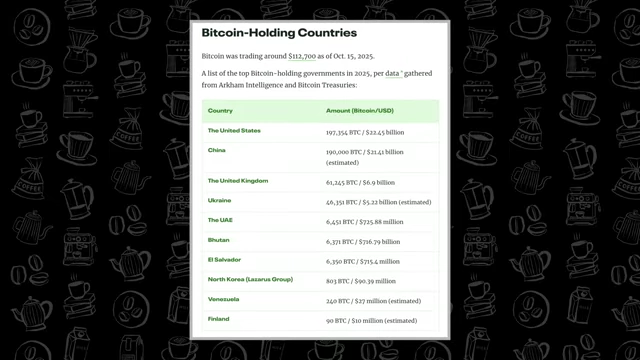
A table listing top Bitcoin-holding countries and their approximate Bitcoin amounts as of October 2025 [ 01:15:46 ]
- America's Approach to Investments
- While other countries use sovereign wealth funds to make direct investments, the U.S. traditionally relies on a more myopic approach: tax revenue covers expenses, and capitalism in the private sector reigns.
- Eric Trump expresses a wish for America to have a sovereign wealth fund to capitalize on such opportunities.
How Much Bitcoin Should Avg Person Own? [01:16:49]
- Investment Horizon and Risk Tolerance
- For a passive investor with a long investment horizon and no immediate need for liquidity, a small percentage (5-10%) of their portfolio in Bitcoin is recommended.
- Younger, more risk-tolerant individuals aiming for generational wealth can consider a higher percentage.
- Volatility and "Diamond Hands"
- Bitcoin is a volatile asset, experiencing significant pullbacks. Investors must be prepared to "withstand those pull downs and not sell," developing "diamond hands."
- Dollar-cost averaging and "buying the dips" have historically proven successful strategies.
Best Place to Store Crypto [01:18:12]
- Ease of Access and Diversified Options
- The cryptocurrency market has matured, making it much easier to acquire Bitcoin compared to five years ago.
- Options include traditional financial institutions like Fidelity and Schwab (for digital asset wallets and ETFs), dedicated crypto exchanges like Coinbase, Kraken, and Binance, or direct ownership on a hardware wallet (ledger) for cold storage.
- Direct investment in Bitcoin mining companies like American Bitcoin (listed on NASDAQ) is another option.
How Bitcoin’s Price is Manipulated [01:20:34]
- High Liquidity Limits Manipulation
- While memecoins can be easily manipulated, Bitcoin's high daily liquidity (around $60 billion) makes it difficult for individual "whales" to significantly move the price with large trades.

News article discussing crypto market manipulation schemes becoming increasingly coordinated [ 01:20:46 ] - Speculation about coordinated market influence (shorting and buying dips) often oversimplifies the dynamics.
- While memecoins can be easily manipulated, Bitcoin's high daily liquidity (around $60 billion) makes it difficult for individual "whales" to significantly move the price with large trades.
- Leverage and Volatility
- Many individuals engage in high-leverage trading on Bitcoin, leading to liquidations even with small price movements. This is not the recommended way to "play this game."
- Long-Term Vision for Finance
- Eric Trump is serious about Bitcoin and blockchain replacing traditional finance due to its efficiency, transparency, and resistance to debanking and deplatforming.
- He emphasizes the significant infrastructure being built (e.g., liquid-cooled mining computers) as a testament to the tangible and real future of this technology, differentiating it from mere "meme warriors" or gambling.
- He also addresses memes about his family and crypto.

A viral tweet speculating about Barron Trump being a "crypto whale" based on a large investment [ 01:21:59 ] 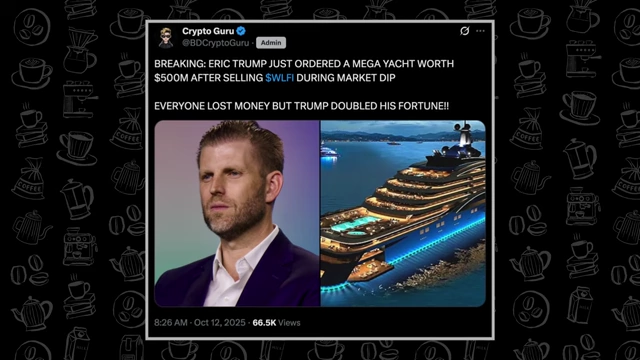
A viral tweet claiming Eric Trump ordered a $500M mega yacht after a crypto market dip [ 01:22:12 ] 
Donald Trump and Barron Trump looking at a computer screen, a photo often used in online memes [ 01:22:50 ]