A 3-Layer Scientific Guide to Effectively Losing Belly Fat
This video explains a scientific 3-layer approach to losing belly fat, suitable for both men and women, using the case study of Nimesh who reduced his belly fat significantly over 275 days.
- Belly Fat Science: Men tend to store more fat in the belly, which is slower to lose initially, while women store less belly fat and lose it faster from this area.
- Layer 1 (Outer Soft Fat): Focuses on establishing foundational habits like 3 weekly workouts, simple diet rules (protein, home-cooked meals, core foods), 8,000 steps/day, and tracking weight loss (~1 lb/week). Mentally challenging as visible belly changes are slow despite overall fat loss.
- Layer 2 (Fat Loss Slows): Addresses metabolic adaptation where the body fights back. Strategies include increasing steps to 10,000/day, bumping strength training to a 4-day split, and introducing calorie tracking (2000-2200 kcal/day for Nimesh), while being mindful of "spendthrift" vs. "thrifty" metabolisms.
- Layer 3 (Stubborn Fat): The hardest layer, characterized by more alpha-2 receptors (slower fat release), increased hunger, and stress. Strategies involve precise food selection (satiety foods like potatoes, cutting liquid calories) and strategic diet breaks to manage cortisol and hunger.
- Results: Nimesh reduced his total body fat from 29.5% to 16.7% and belly fat from 34.4% to 13%, gaining almost 7 lbs of lean mass over 275 days, proving a slow and steady approach is effective.
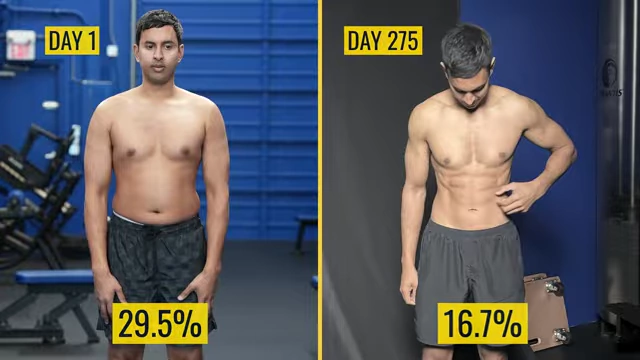
Nimesh's transformation from Day 1 to Day 275, showing a significant reduction in overall body fat and prominent abdominal definition. [ 00:19:20 ]
Belly Fat Science [0:00]
The video begins by introducing Nimesh, who significantly reduced his belly fat over a year, attributing his success to a unique 3-layer approach to fat loss.

- DEXA Scan Insights [0:29]
- DEXA scans provide regional body fat percentages (arms, legs, hips, belly).
- Nimesh started with 34.4% belly fat, higher than other areas.

Nimesh's starting belly fat percentage on Day 1, highlighted at 34.4%, indicating a higher concentration of fat in this area compared to his overall body fat of 29.5%. [ 00:00:44 ] - Analysis of nearly 18,000 DEXA scans over 8 years revealed gender-specific fat storage patterns.
- A study indicates that every few centimeters gained around the waist increases the risk of metabolic disease and death.
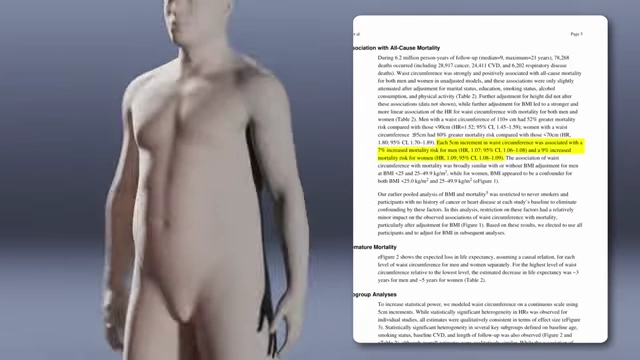
A document outlining the association of waist circumference with all-cause mortality and metabolic disease, highlighting increased risk with increased waist size. [ 00:01:11 ]
- Fat Storage Patterns for Men [1:31]
- Men above 25% body fat tend to store fat preferentially in the belly.
- At higher body fat levels, fat loss is faster from arms, legs, and hips, while belly fat lags behind.
- Around 30% body fat, belly fat loss accelerates, catching up to other areas.

A graph showing the rate of fat loss from different body parts (belly, arms, hips, legs) as total body fat percentage decreases, with the belly (red line) showing a slower initial decline at higher body fat levels before accelerating at lower levels. [ 00:02:00 ]
- Fat Storage Patterns for Women [2:32]
- Women typically store less fat in the belly to begin with and more in hips, legs, and arms.
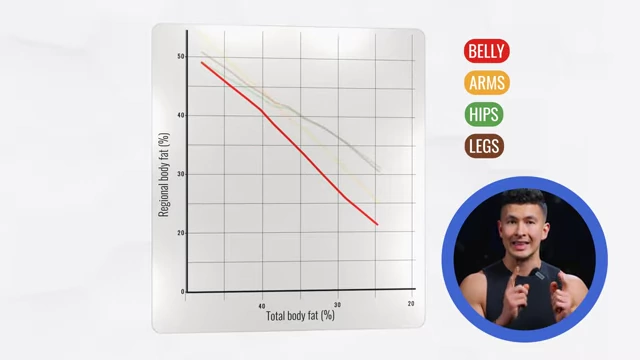
A graph illustrating the rate of fat loss from different body parts for women, showing that belly fat (red line) tends to decrease more steadily across body fat percentages compared to men. [ 00:02:37 ] - For example, Nicole, starting at 33% total body fat, had nearly identical belly fat at 33.7%, meaning she often sees belly changes sooner than a guy at the same starting point.
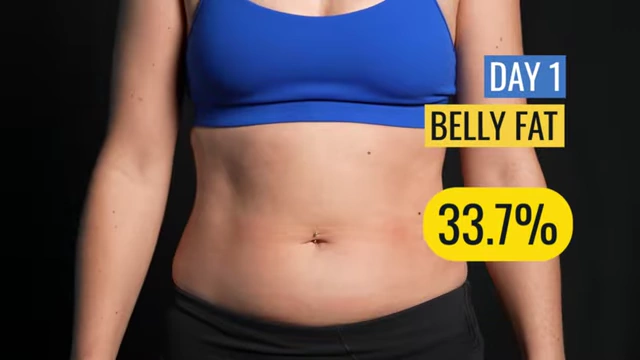
Nicole's Day 1 belly fat percentage is displayed as 33.7%, providing a female example for initial fat distribution. [ 00:02:49 ]
- Women typically store less fat in the belly to begin with and more in hips, legs, and arms.
Layer 1 [3:20]
This is the soft outer belly fat that hides abdominal definition, typically "gone" around ~20% body fat for men and ~28% for women, and is the easiest physically to burn off.

- Defining Layer 1 Fat Loss [3:14]
- For men, expect some upper abs and general ab shape.
- For women, expect a tighter waist and smoother rolls, but no clear ab definition yet.
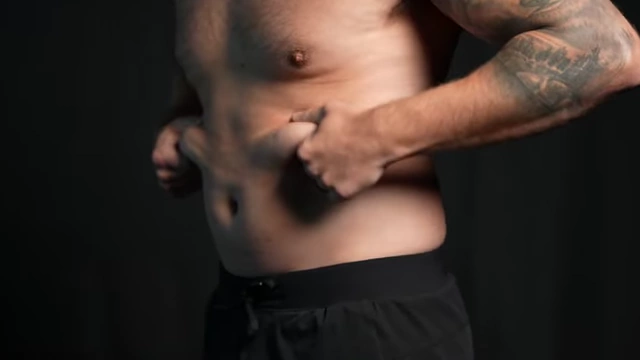
A person pinching the soft outer layer of belly fat, visually representing Layer 1 that hides ab definition. [ 00:03:16 ] 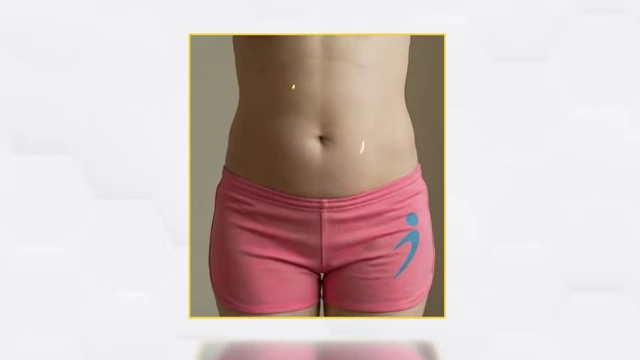
A female torso showing a tightened waist and smoother rolls with some upper ab definition, representing the typical outcome for women after burning through Layer 1. [ 00:03:28 ]
- 4 Core Habits for Layer 1 [3:41]
- Workout Plan: 3 full-body workouts per week to ensure weight loss is from fat and potentially gain muscle.
- Diet Rules:
- Include a palm-sized portion of lean protein at every meal.
- Prepare most meals at home for better control over portions and ingredients.
- Build meals around core foods without strict calorie counting initially.
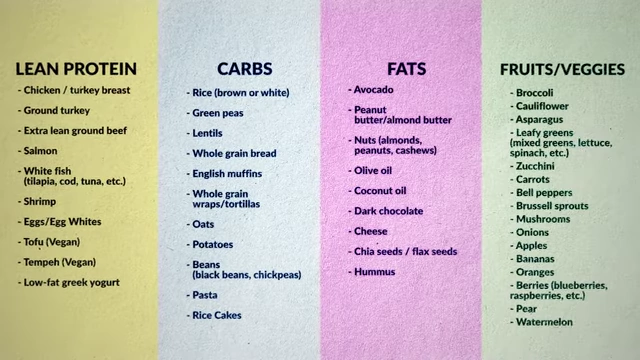
A table listing core foods categorized by lean protein, carbs, fats, and fruits/veggies to guide meal preparation. [ 00:04:13 ]
- Daily Steps: Aim for 8,000 steps per day to increase daily calorie burn.
- Track Weight: Monitor morning weight with a goal of ~1 lb (0.45 kg) loss per week.
- Mental Challenges and Progress Tracking [4:41]
- Layer 1 is mentally the hardest because visible belly changes are slow due to fat being lost from other "easier" areas first.
- Nimesh, despite losing 7 lbs in 30 days, felt his belly hadn't changed, but waist measurements showed a 3cm reduction.
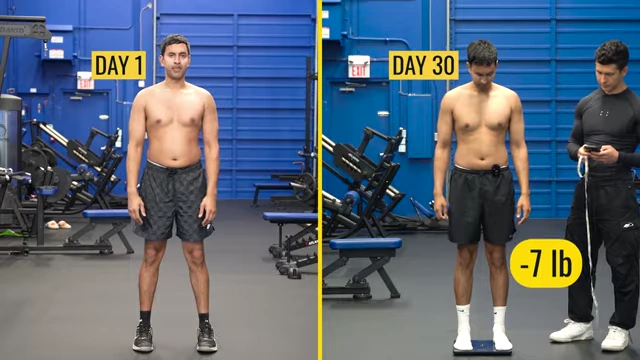
A side-by-side comparison of Nimesh on Day 1 versus Day 30, showing a visible reduction in his overall body size despite his feeling that his belly hadn't changed, with a -7lb weight loss indicated. [ 00:04:49 ] - Comparatively, his chest and arms showed more significant leaning.
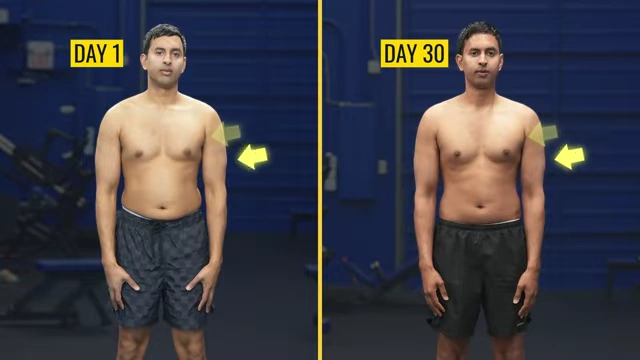
A front-facing comparison of Nimesh on Day 1 and Day 30, highlighting areas like the shoulders and arms with yellow arrows to show visible leaning in these "easier" areas. [ 00:04:58 ] - By Day 60, Nimesh had lost another 3cm around his waist, confirming fat loss.
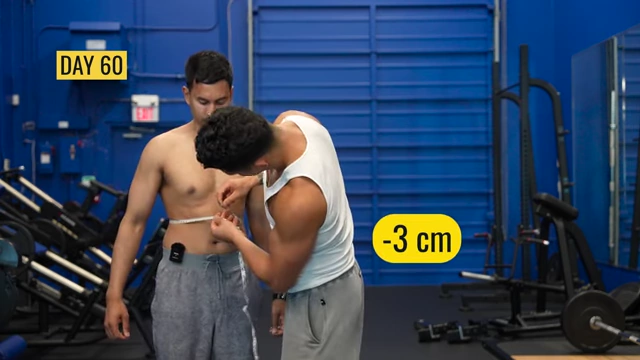
Jeremy measuring Nimesh's waist at Day 60, indicating a 3 cm reduction, confirming ongoing fat loss. [ 00:05:23 ] - For women, Nicole lost 8 cm around her waist and started showing ab definition by Day 60.
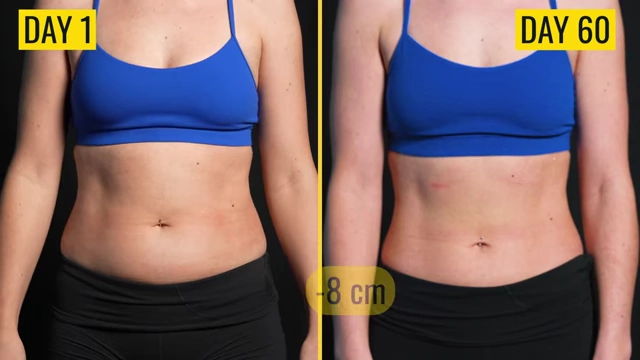
A side-by-side comparison of Nicole on Day 1 versus Day 60, showing an 8 cm reduction around her waist and the beginning of ab definition. [ 00:05:38 ] - The abdominal muscles are relatively small and flat, requiring significant fat loss before they become visible.
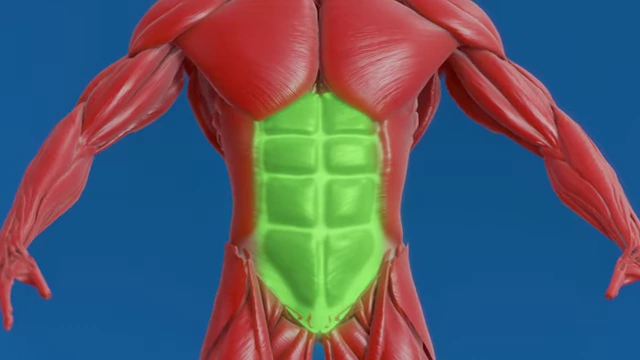
An anatomical diagram highlighting the rectus abdominis muscles (abs) in green, illustrating their relatively small and flat nature compared to other muscle groups. [ 00:05:47 ] - By Day 90, Nimesh had lost 12 lbs of fat, successfully clearing Layer 1 and revealing some upper ab definition.
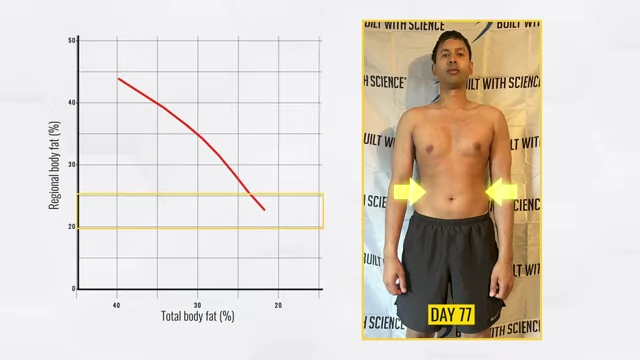
A graph depicting regional body fat percentage against total body fat percentage for men, with a box highlighting the point (around 25% body fat) where belly fat loss accelerates, shown alongside a progress photo of Nimesh on Day 77 where belly fat progress is picking up. [ 00:06:37 ] - At this point, Nimesh was leaner than about 84% of men.
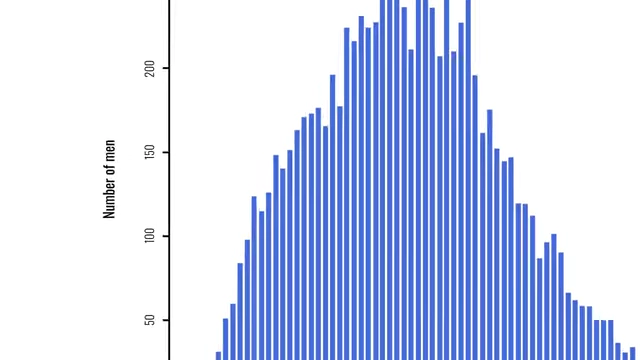
A bar chart representing the distribution of body fat percentages among men, with a specific point highlighted to show that Nimesh, at the end of Layer 1, was leaner than about 84% of men. [ 00:06:55 ]
Layer 2 [6:58]
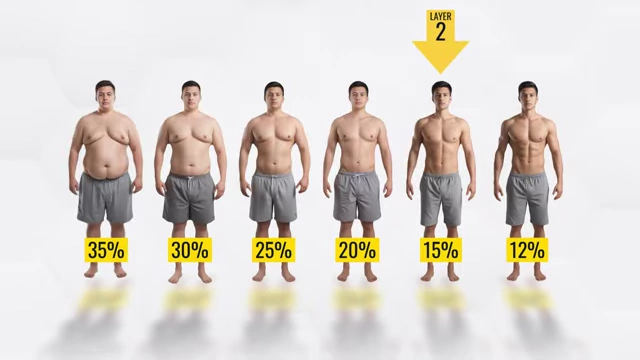
This is where fat loss typically slows down or stalls, as the body starts to adapt and resist further weight loss, aiming to get men to around 15% body fat and women to 23%.

- Physiological Adaptations [7:40]
- Decreased Calorie Burn: Carrying less weight reduces the daily calorie burn.
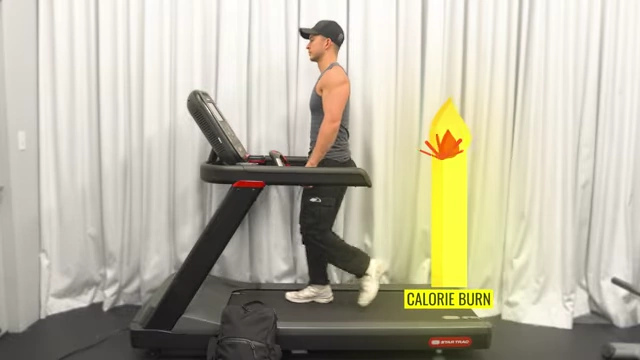
A man walking on a treadmill with a backpack removed, next to a dwindling flame labeled "CALORIE BURN," illustrating how less body mass reduces daily calorie expenditure. [ 00:07:49 ] - Energy Conservation: The body senses fat loss and subtly conserves energy, leading to less movement without conscious awareness.
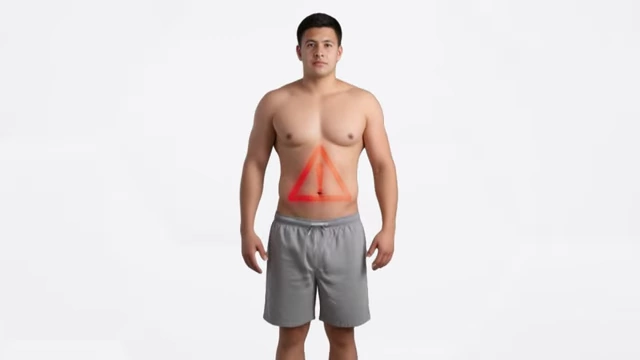
A visual representation of a body with a red triangle on the abdomen, symbolizing the body's subtle energy conservation efforts as fat loss progresses. [ 00:07:55 ]
- Decreased Calorie Burn: Carrying less weight reduces the daily calorie burn.
- Updated Strategies for Layer 2 [8:17]
- Increased Daily Steps: Bump daily steps from 8,000 to 10,000 as an "insurance policy" to maintain calorie burn without spiking hunger or burnout.
- Increased Strength Training Volume: Shift from a 3-day full-body split to a 4-day split, focusing more volume on target muscle groups to potentially build muscle during fat loss.
- Calorie Tracking: Introduce precise calorie targets, as a consistent deficit becomes non-negotiable. Nimesh's target was 2100-2300 calories per day, built around a structured meal plan.
- A general guideline for calorie targets is body weight in pounds multiplied by 10-12.

A formula for estimating daily calorie targets: Bodyweight (lbs) x 10-12, providing a quick calculation for individuals. [ 00:09:43 ] - Nimesh's meal plan included specific calorie counts for each meal and snacks to ensure compliance.
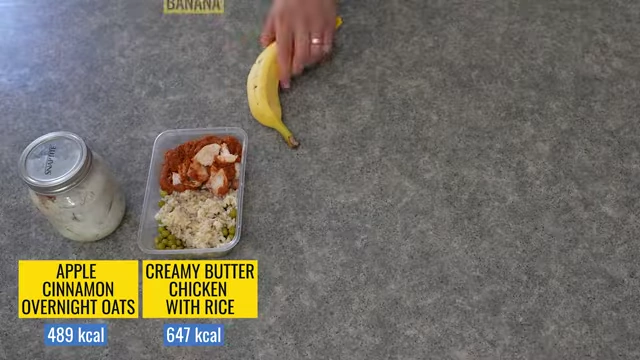
A sample daily meal plan showing Apple Cinnamon Overnight Oats (489 kcal) and Creamy Butter Chicken with Rice (647 kcal), illustrating calorie-controlled structured meals. [ 00:10:10 ]
- A general guideline for calorie targets is body weight in pounds multiplied by 10-12.
- Metabolic Differences [10:41]
- Spendthrift Metabolism: Individuals whose metabolism stays high during calorie restriction, continuing to lose weight steadily.

An illustration of a person with a "spendthrift" metabolism, characterized by a high calorie burn (flame on stomach) even with reduced calorie intake (red bar). [ 00:11:00 ] - Thrifty Metabolism: Individuals whose bodies adapt by reducing calorie burn, slowing weight loss. These individuals may need to restrict calories further or increase activity.
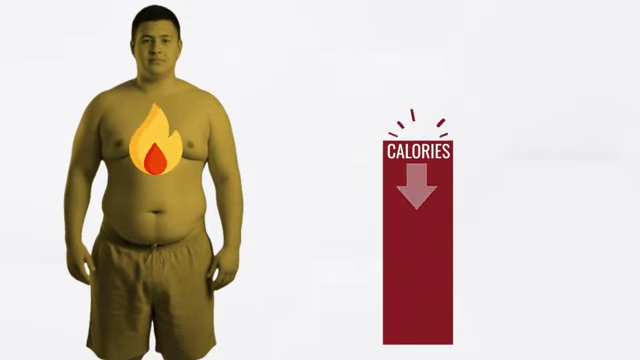
An illustration of a person with a "thrifty" metabolism, where the body adapts to reduced calorie intake by lowering its calorie burn, represented by a smaller flame and a reduced calorie intake bar with a downward arrow. [ 00:11:07 ]
- Spendthrift Metabolism: Individuals whose metabolism stays high during calorie restriction, continuing to lose weight steadily.
- End of Layer 2: Nimesh's body responded well, with visible definition in his upper abs and obliques.
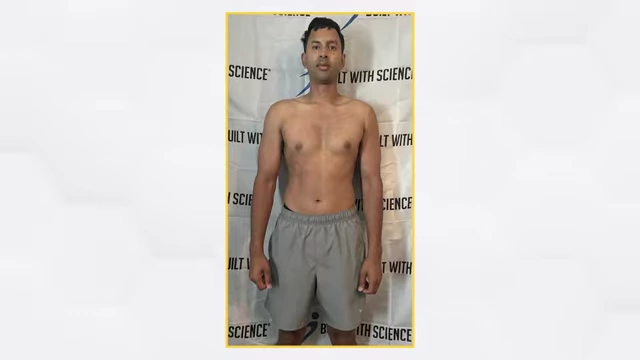
Nimesh showing visible definition in his upper abs and obliques, illustrating the progress made at the end of Layer 2. [ 00:11:53 ] - By the end of Layer 2, women's stomachs will look visibly tighter, with potential definition in the upper abs and down the middle.
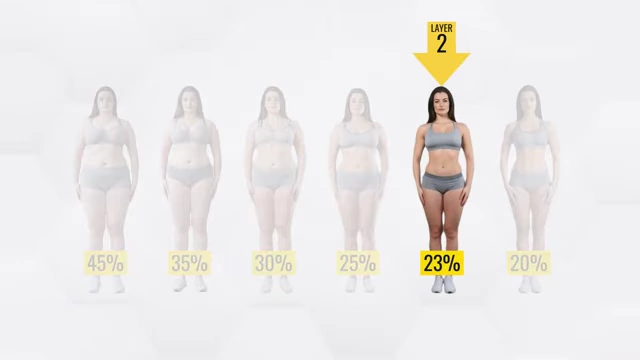
A progression of female body types at different body fat percentages, with an arrow pointing to 23% body fat as the target for women after Layer 2, showing a visibly tighter stomach and some ab definition. [ 00:12:12 ]
Layer 3 [12:31]
This is the most stubborn layer of belly fat, where less than 1% of people succeed. Visually, progress can appear fastest as there's less fat covering the abs, but every pound feels like a battle.

- Challenges of Stubborn Fat [12:54]
- Receptor Distribution: Stubborn fat areas (lower abs, love handles, hips) have more alpha-2 receptors (which act like a "brake" on fat release) and fewer beta receptors (which act like a "gas pedal").
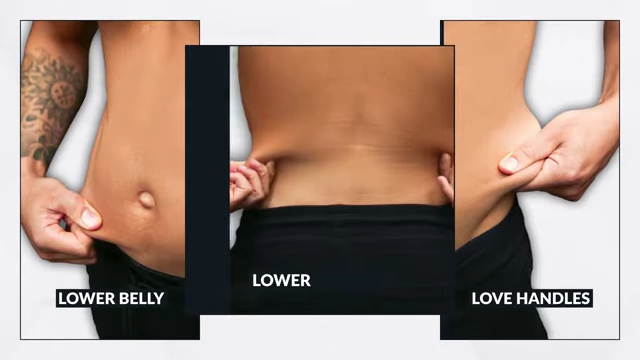
An illustration highlighting the lower belly and love handle areas as "stubborn fat" regions, where fat is harder to lose due to receptor distribution. [ 00:13:26 ] - Hormonal Response: As leanness increases, hunger ramps up, energy drops, and stress hormones like cortisol rise.
- Water Retention: Higher cortisol levels can cause the body to hold onto more water, making the belly appear softer and more bloated even when fat is being lost.

An illustration of a person's torso showing water retention around the midsection (blue area), indicating how higher cortisol levels can make the belly appear bloated despite fat loss. [ 00:15:00 ] 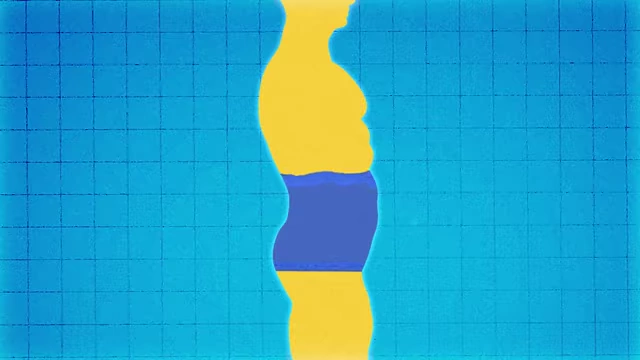
A continued illustration showing increased water retention in the midsection, emphasizing how even small amounts of water can be noticeable at this lean stage. [ 00:15:07 ] - Panic reactions (more cardio, lower calories) only worsen the situation by increasing stress and potentially leading to muscle loss.
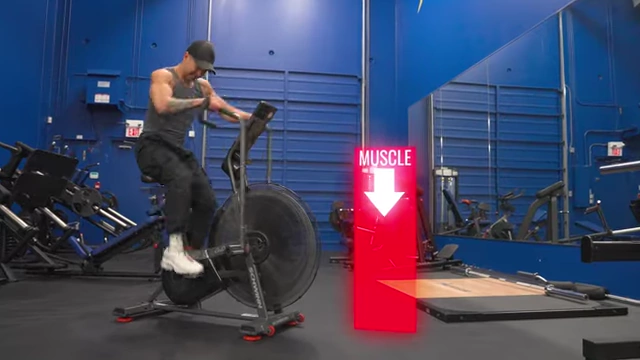
An animation of a person cycling intensely with a large red downward arrow labeled "MUSCLE," illustrating how excessive cardio and calorie restriction can lead to muscle loss during aggressive dieting. [ 00:15:31 ]
- Receptor Distribution: Stubborn fat areas (lower abs, love handles, hips) have more alpha-2 receptors (which act like a "brake" on fat release) and fewer beta receptors (which act like a "gas pedal").
- 2 Strategies for Layer 3 [13:54]
- Food Selection: Make every calorie count by choosing satiety-promoting foods.
- Eliminate liquid calories (e.g., cream in coffee, sugary drinks).
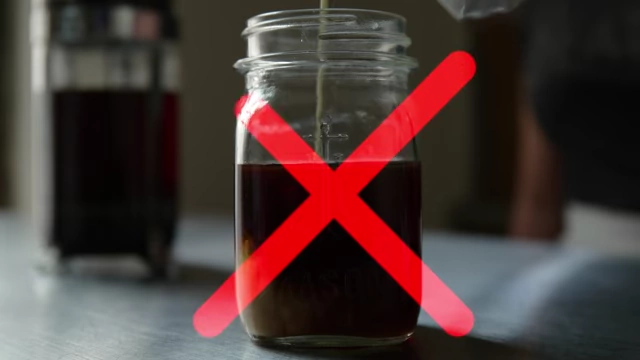
An image of a coffee mug with a red 'X' over it, symbolizing the elimination of liquid calories like cream in coffee. [ 00:14:16 ] - Strategically swap foods (e.g., rice for yellow potatoes, which are highly filling).

A meal featuring chicken, mushrooms, and yellow potatoes, demonstrating a strategic food swap for increased satiety. [ 00:14:23 ] - Potatoes scored as the most filling food in a well-known satiety index study.
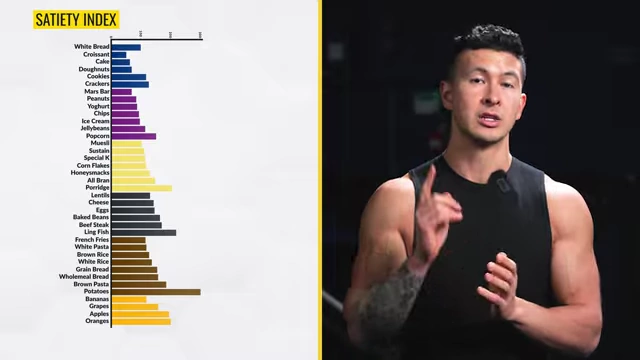
A bar chart showing the satiety index of various foods, with potatoes ranking highest, indicating they are the most filling food. [ 00:14:27 ]
- Eliminate liquid calories (e.g., cream in coffee, sugary drinks).
- Diet Breaks: Temporarily increase calories (usually 500 kcal higher than dieting intake) for 5-14 days, primarily by adding carbs.
- This helps lower cortisol, improve sleep, reduce hunger signals, and reduce water retention, allowing fat loss to resume more effectively.
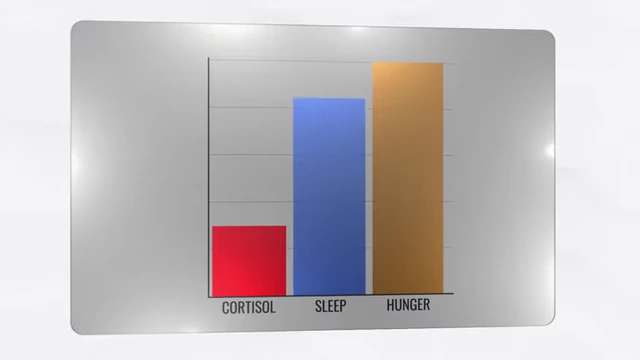
A bar chart illustrating changes during a diet break: cortisol levels decrease (red), sleep quality increases (blue), and hunger satisfaction improves (orange). [ 00:16:05 ] - Nimesh found that 5 days was sufficient to sharpen his abs and boost energy.

Nimesh showcasing his sharper abdominal definition after a 5-day diet break, demonstrating the positive impact on body composition. [ 00:16:16 ]
- This helps lower cortisol, improve sleep, reduce hunger signals, and reduce water retention, allowing fat loss to resume more effectively.
- Food Selection: Make every calorie count by choosing satiety-promoting foods.
- Considerations for Extreme Leanness [16:20]
- Pushing to 10% body fat can take an additional 8 weeks of intense dieting.
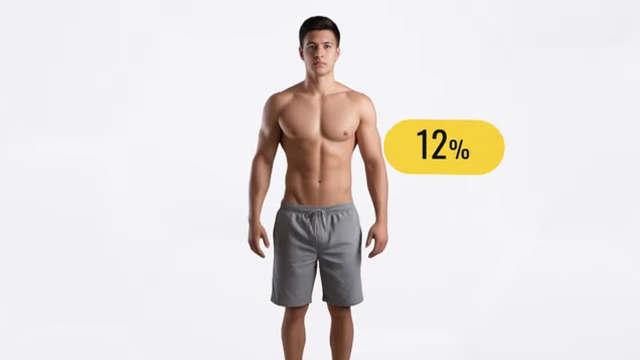
A visual representation of a man at 12% body fat, illustrating the lean physique often targeted in Layer 3. [ 00:16:28 ] - Extreme leanness isn't for everyone; some bodies resist heavily, leading to potential crash diets and weight regain, as seen with Dayton who paused his fat loss at 18% body fat.
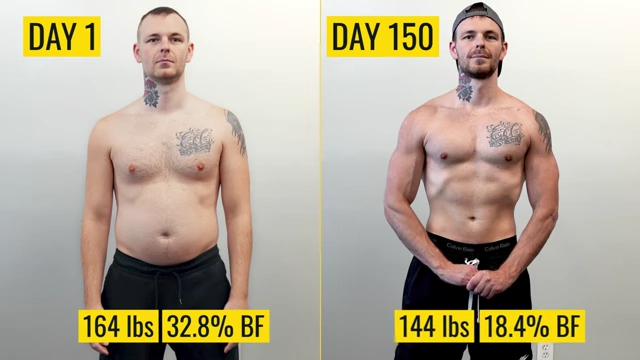
A before-and-after comparison of Dayton on Day 1 (32.8% body fat) and Day 150 (18.4% body fat), illustrating a significant transformation but also the point at which maintaining progress before further loss is advisable. [ 00:16:45 ] - Many overestimate their muscle mass and underestimate the fat they need to lose, potentially leading to a "skinny" rather than muscular appearance if starting with low muscle.
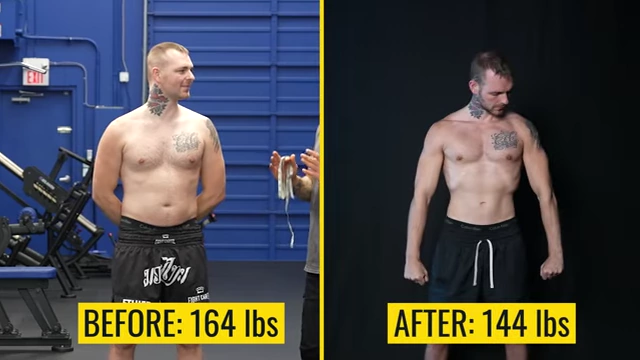
A side-by-side comparison of Dayton before (164 lbs) and after (144 lbs) weight loss, illustrating how much weight one might need to lose to achieve leanness, which can be surprising if muscle mass is overestimated. [ 00:17:29 ] - Nimesh focused on making small, consistent improvements.
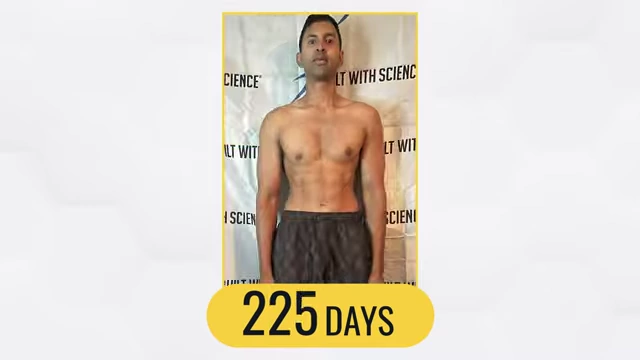
A sequence of Nimesh's progress photos at 30 days and 225 days, illustrating the gradual and steady nature of his fat loss journey. [ 00:17:57 ]
- Pushing to 10% body fat can take an additional 8 weeks of intense dieting.
Final Result [18:40]
Nimesh's complete journey took 275 days, including a 5-week trip where he focused on maintenance.
- Overall Progress [19:11]
- Total body fat dropped from 29.5% to 16.7%.
- Belly fat dropped even more dramatically, from 34.4% to 13%, a 20 percentage-point reduction.
- He successfully gained almost 7 lbs of lean mass, with a significant portion being muscle.

Nimesh showcasing his visible abdominal muscles as the instructor points to them, highlighting the successful outcome of his fat loss journey. [ 00:18:53 ]
A side-by-side comparison of Nimesh on Day 1 with 29.5% body fat and Day 275 with 16.7% body fat, showcasing his significant physical transformation and final result. [ 00:19:20 ]