Social Creativity: The Cognitive Bias for Building Cult-Like Fandom by Redefining Social Perceptions
Top personal brands achieve "cult-like" fandom by leveraging the cognitive bias of "social creativity," a vital strategy for organic content and algorithmic visibility. This approach helps audiences feel seen and validated, driving high engagement and click-through rates (CTR) that algorithms reward. Influencer authority is built on understanding psychological drivers like Maslow's Hierarchy of Needs and Social Identity Theory, particularly focusing on the desire for belonging and self-esteem. Social creativity empowers individuals by redefining social norms and perceptions, offering a new "game" for those feeling isolated or misunderstood. This can be implemented by introducing new valued traits, reframing perceived flaws as strengths, or challenging competitive comparisons. However, it must inspire action (mobility) rather than passivity and the creator must embody their message with "main character energy."
What Top Personal Brands Have [00:00]
- Leading personal brands like Taylor Swift, Beyonce, Drake, Mel Robbins, Matthew Hussey, and The Skinny Confidential command highly engaged audiences.
- These audiences eagerly anticipate and consume any content or offerings from these personalities.
- This strong engagement is attributed to their ability to build "cult-like brands."
- The video aims to uncover the specific cognitive bias these successful brands utilize to achieve such devoted followings.
Why the Algorithm Rewards Cult-Like Fandom (on screen walkthrough) [01:35]
- Algorithm's Priority: Modern content algorithms, particularly for platforms like YouTube, prioritize content based on Click-Through Rate (CTR).
- CTR measures how many viewers click on content after seeing its impression (e.g., in their feed).
- Two Ways to Improve CTR:
- Packaging Clickability for Cold Audiences: Creating highly engaging thumbnails, titles, and video concepts that attract new viewers who don't know the creator.
- Loyal Audience Engagement: Cultivating an existing viewer base so loyal that they click on new content regardless of its packaging.
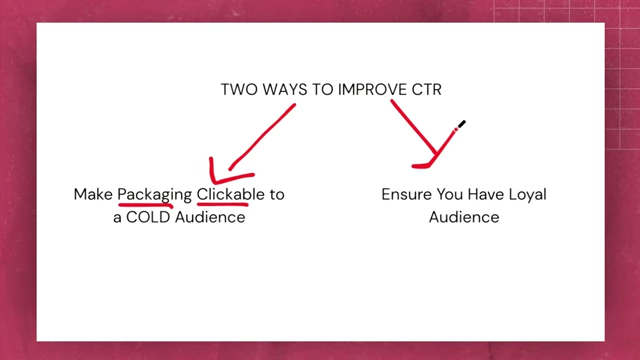
Two ways to improve Click-Through Rate (CTR) [ 00:02:45 ]
- Content Distribution Process:
- New content is initially shown to the creator's existing audience (subscribers, past viewers).
- If this initial audience exhibits a high CTR, the algorithm gains confidence and distributes the content to wider "new" and "fringe" audiences.
- A low CTR from the existing audience indicates disinterest, leading the algorithm to cease further distribution.

Algorithm's content distribution strategy: Existing, New, and Fringe audiences [ 00:03:00 ]
- Importance of Loyal Fandom: Building a cult-like fandom ensures a consistently high CTR from the existing audience, which is essential for the algorithm to push content to a broader reach.
Influencer Authority (one way to stand out in competitive niches) [03:50]
- To achieve "influencer authority" and stand out in crowded niches, creators must make a strong impression.
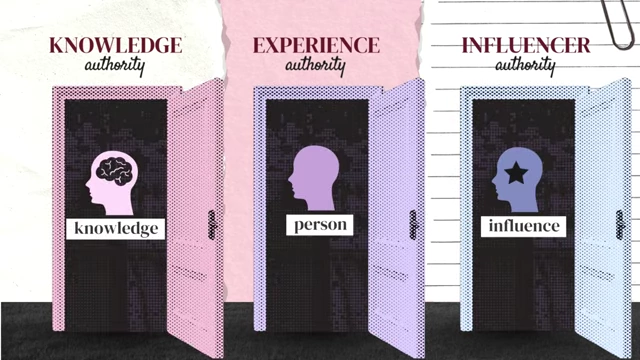
Three types of authority: Knowledge, Experience, and Influence [ 00:03:56 ] - This strong impression is rooted in leveraging fundamental psychological theories.
Psychological Principle 1 [04:15]
- Abraham Maslow's Theory of Human Motivation [1943]: Maslow's Hierarchy of Needs.
- This theory outlines that human behavior is driven by a hierarchy of needs, progressing from basic physiological needs to self-actualization.
- Needs must generally be fulfilled from the bottom (e.g., shelter, food, water) upwards before individuals can focus on higher-level needs.
- For people in first-world countries, basic needs (physiological, safety, and security) are often met.
- This leads to a focus on "first-world problems," which are primarily driven by the unmet needs of love, belonging, and self-esteem.
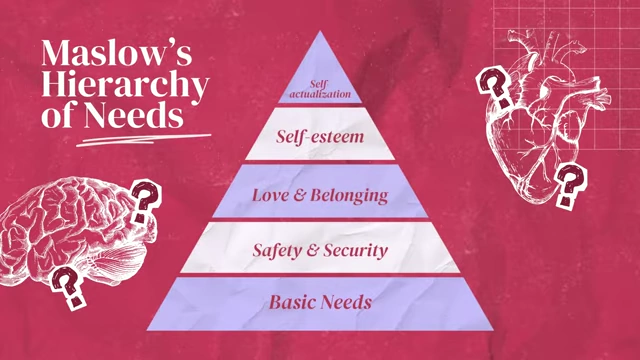
Maslow's Hierarchy of Needs: Basic Needs, Safety & Security, Love & Belonging, Self Esteem, Self-Actualization [ 00:04:26 ]
Psychological Principle 2 [05:25]
- Henry Tajfel and John Turner's Social Identity Theory (1970s).
- This theory posits that individuals interpret their self-concept through the lens of the social groups they identify with.
- Belonging and self-esteem are intrinsically tied to how one perceives their social identity.
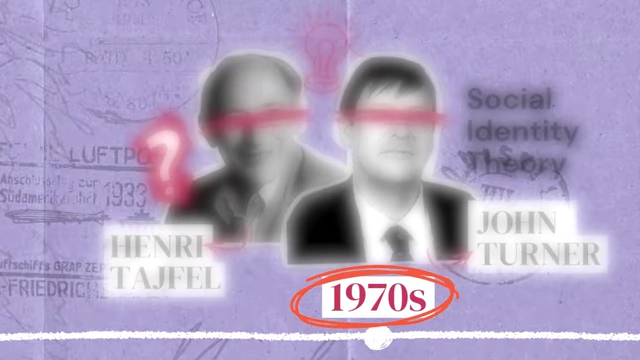
Henri Tajfel and John Turner, creators of Social Identity Theory [ 00:05:30 ]
- A critical question arises: What happens when the social group an individual identifies with fails to make them feel good about themselves?
The Cognitive Bias [06:15]
- The cognitive bias central to building cult-like fandom is Social Creativity.
Quick Disclaimer: cult-like ≠ manipulation [06:20]
- The term "cult-like" is used to describe a loyal and passionate community, not a group formed through manipulation.
- The aim is to create a space where individuals feel empowered, inspired, and genuinely belong, fostering authenticity rather than control.
Why the Cognitive Bias Exists [07:20]
- Perception of Value: Esteem isn't gained merely by being in a category; "good" or "bad" is subjective and dependent on an individual's perception and their social environment.
- This aligns with the adage, "You are the sum of the five people you hang out with."
- Two Paths When Exposed to Social Values:
- Path of Molding: Individuals subconsciously adapt to or compete for traits that their social group esteems, aiming to avoid being at the "bottom of the social totem pole."
- For instance, if a group values humility and family over career, individuals will subconsciously adopt these values and may look down upon career-driven people.
- This often results in a subtle shift in personal values to align with the group.
- Path of Refusal to Mold: If an individual refuses to conform to a group's esteemed values, their self-esteem will likely suffer.
- This can lead to internal tension and negative emotions (anger, sadness).
- At best, the group may misunderstand or feel confused by the individual, leading to feelings of being unseen, unheard, and isolated.
- At worst, the individual may face active judgment and criticism.

The two paths: Mold or Refuse to Mold [ 00:07:25 ]
- Path of Molding: Individuals subconsciously adapt to or compete for traits that their social group esteems, aiming to avoid being at the "bottom of the social totem pole."
- Impact of Isolation: Feeling isolated, disrespected, or misunderstood directly impacts Maslow's Hierarchy of Needs, preventing upward progression and breeding feelings of anger and unfulfillment.
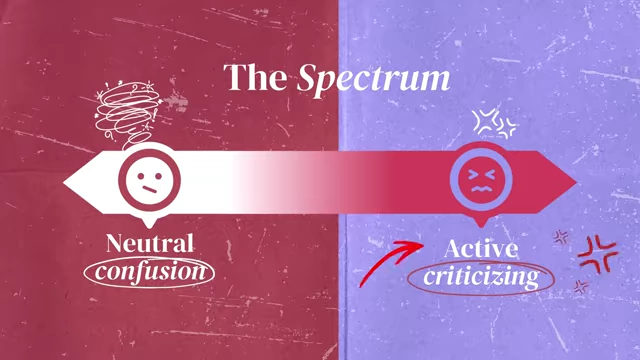
The spectrum of social group reactions: Neutral confusion to Active criticizing [ 00:10:38 ] 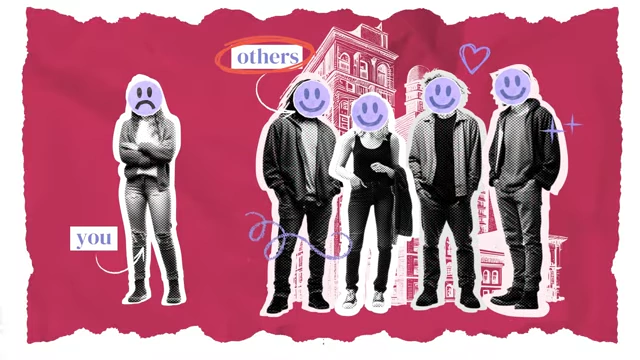
An individual feeling isolated from a social group [ 00:10:58 ] - Definition of Social Creativity: It is the innovative redefinition of social norms and perceptions.
- People engage in social creativity when they want to change the rules by which they perceive things to feel empowered.
- Opportunity for Cult-Like Fandom: Individuals experiencing isolation, misunderstanding, or a hit to their self-esteem are most receptive to a person or movement that can redefine their situation and offer a sense of belonging.
- This "low point" makes them open to latching onto something that fills their void.
- Role of the Leader: A leader in this context offers a "shakeup," presenting a new "game" or perspective to replace a perceived "rigged" or unfulfilling one.
- Successful historical movements and leaders empowered people by validating their experiences and redefining existing narratives to make them feel seen, heard, and sane.
- Examples include Martin Luther King Jr. redefining "black," Brené Brown redefining "failing forward," and Volkswagen redefining their "ugliness" with the Beetle.
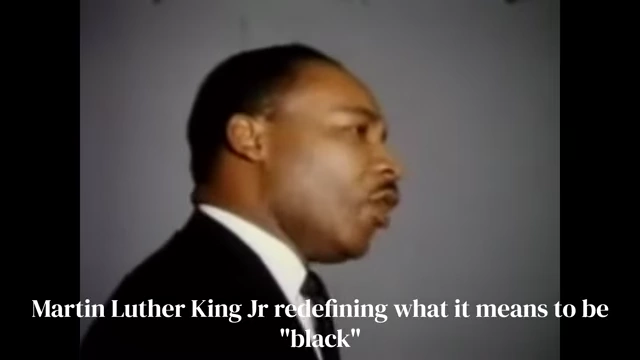
Martin Luther King Jr. redefining "black" [ 00:14:08 ] 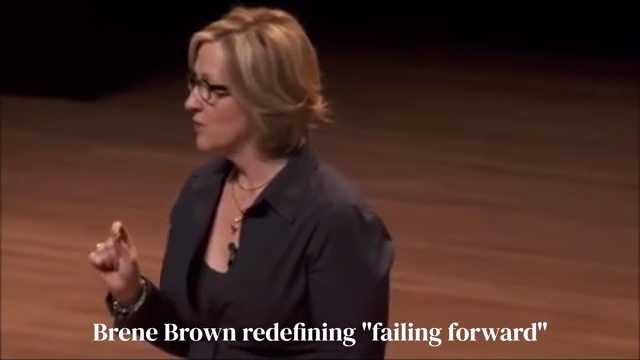
Brené Brown redefining "failing forward" [ 00:14:21 ] 
Volkswagen redefining their "ugliness" [ 00:14:29 ]
How this All Relates to Messaging [12:00]
- Effective brand messaging in this context involves helping individuals accept their current situation by creatively redefining a game or societal perception.
- The target audience is looking for a transformative message that tells them they've been playing a rigged game and offers a new, empowering framework.
Why “polarization” alone isn’t what makes you memorable [14:35]
- Polarization is often a byproduct of social creativity, not its core mechanism.
- True impact comes from the deep nuance or underlying trigger that necessitates polarization, rather than polarizing for its own sake.
- It's the "why" behind the polarization—the fundamental redefinition—that incites passion and rallies people.
Method 1: how to implement [15:25]
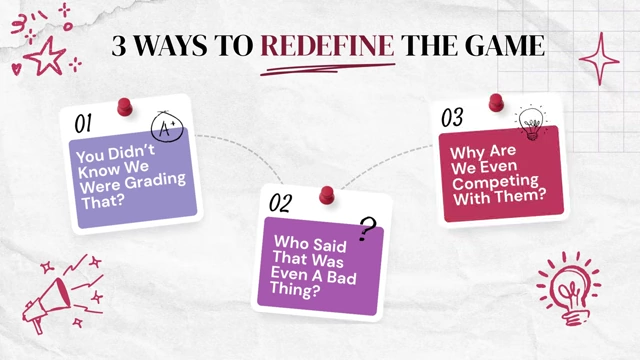
- "You Didn't Know We Were Grading That?"
- This method involves introducing a new, previously unacknowledged trait (Trait B) as the true measure of esteem, replacing an old, established trait (Trait A).
- Example: Instead of valuing "looking busy" or outwardly appearing smart/successful (Trait A), redefine success as quietly and internally building for the long-term, focusing on "winning the war" rather than short-term battles (Trait B).
- This strategy resonates deeply with individuals who already embody Trait B, making them feel profoundly understood and validated.
Method 2: how to implement [16:55]
- "Who Said That Was Even a Bad Thing?"
- This method involves taking a trait generally perceived as negative and redefining its perspective, turning it into a "flex" or a strength.
- Example: Brian Johnson, known for extreme health practices that many deem "crazy" or "obsessed," reframes his obsession as a necessary drive for his mission to crack the code of human immortality.
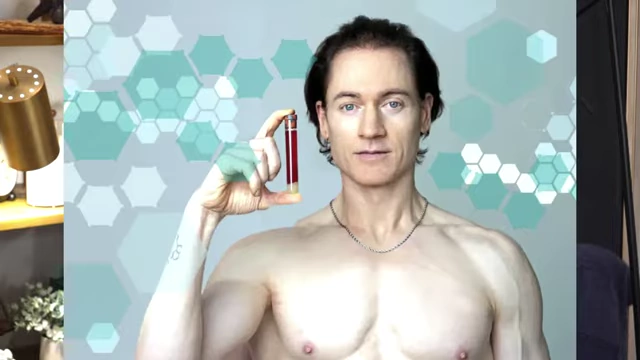
Brian Johnson, a figure in the health and wellness space [ 00:17:28 ] 
Brian Johnson in his "longevity room" [ 00:18:27 ] - He embraces the "crazy" label, demonstrating that such extreme dedication is essential to achieve extraordinary goals, attracting followers who share similar "obsessions" in their own crafts.
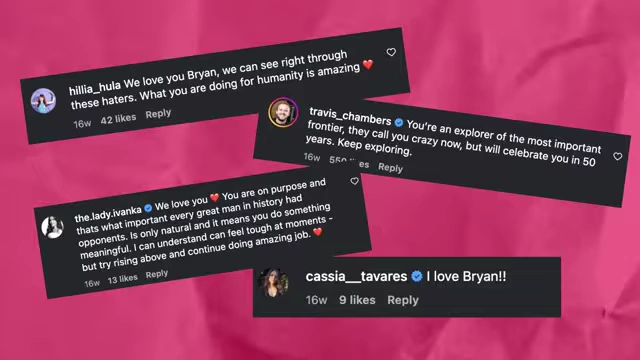
Instagram comments showing fan loyalty and defense of Brian Johnson [ 00:19:45 ]
Method 3: how to implement [20:30]
- "Why Are We Even Competing With Them?"
- This method challenges the very notion of competition by redefining the "game" being played.
- It's about recognizing that different creators or businesses operate under different rules and objectives.
- Example: A content creator focused on education (the "expert game") might compare themselves negatively to an entertainer (the "entertainment game") who garners massive views. This method encourages the educational creator to acknowledge they are playing an entirely different game, with different metrics and rules, thus invalidating direct comparison.
- This redefinition helps individuals avoid self-doubt and validates their unique path and achievements.
Three ways to redefine the game [ 00:20:26 ]
2 ways this breaks down (passivity vs mobility) [22:05]
- 1. Inspires Passivity vs. Mobility:
- The redefinition might create a sense of belonging and empowerment but fail to incite action (mobility).
- For businesses looking to monetize through offers or products, inspiring passive agreement without active engagement is problematic. The goal is to move people to action, not just comfort.
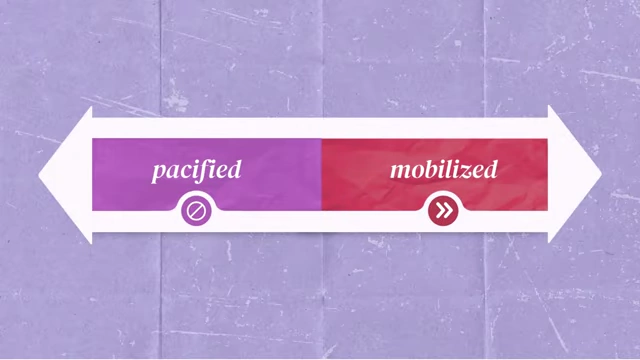
Spectrum of audience engagement: Pacified vs. Mobilized [ 00:22:06 ] 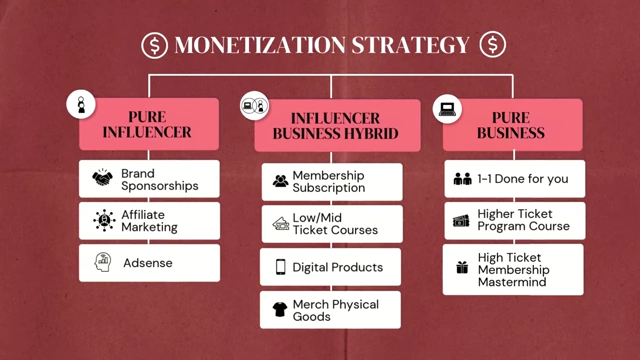
Monetization strategy breakdown for influencers and businesses [ 00:22:32 ]
- 2. Lack of "Main Character Energy":
- The creator themselves must authentically embody and champion the redefined message and energy.
- If the leader doesn't fully step into this role, the movement or brand's message may lack the necessary conviction and influence to attract and mobilize a cult-like following.