The Financial Architects of World War II: How Unpaid WWI Debts, American Banking, and Corporate Interests Fueled Global Conflict
This video argues that World War II was primarily a financial conflict, driven by unpayable World War I debts and designed to consolidate banking power.
- The 1919 Versailles Treaty imposed unpayable reparations on Germany, leading to a circular debt system managed by American banks.
- The 1929 stock market crash halted American loans to Germany, causing economic collapse and paving the way for Hitler's rise, funded by German industrialists using continued American money.
- American corporations (IBM, Ford, GM, Standard Oil) and banks (including Prescott Bush's firm and Chase Bank) actively invested in and supplied Nazi Germany's rearmament, prioritizing profits and debt collection.
- The Bank for International Settlements (BIS) facilitated financial transactions and Nazi gold transfers between Allied and Axis powers throughout the war, maintaining its critical role in the international financial system without consequence.
- World War II functioned as a debt collection mechanism, with German conquests looting resources to service debts, while Allied borrowing from the U.S. cemented American financial dominance through the Bretton Woods system.
- The post-war financial order ensured continued U.S. control, demonstrating a repeating pattern where global conflicts serve to transfer wealth from taxpayers to international creditors, a pattern visible even in modern geopolitical tensions.
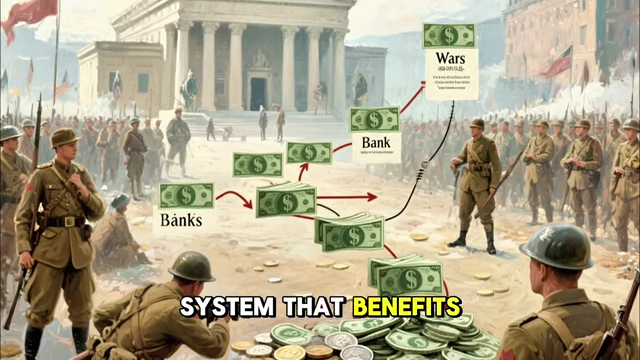
A diagram illustrating how wars create debt that flows to banks, benefiting creditors [ 00:21:09 ]
The Financial Time Bomb of World War I [0:46]
World War II's origins are deeply rooted in the financial aftermath of World War I, rather than solely ideological motives.
- The Treaty of Versailles [1919] established an impossible financial burden on Germany.
- Article 231, the "war guilt clause," made Germany responsible for all war damages.
- Reparations were set at 132 billion gold marks, equivalent to $400 billion today, designed as a permanent debt extraction mechanism.
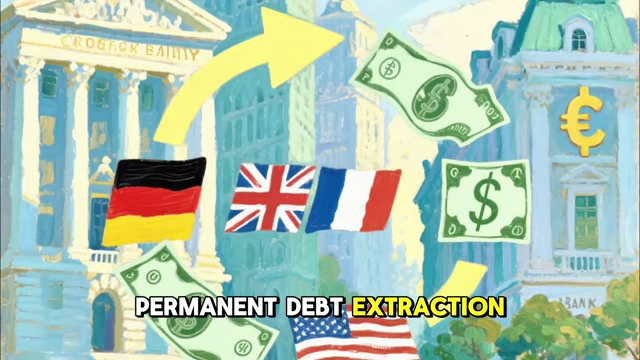
A diagram showing money flowing from Germany to Britain and France for reparations, and then to American banks for war debts [ 00:01:27 ]
- A circular debt arrangement ensured American banks profited from Germany's reparations.
- Germany borrowed from American financial institutions to pay reparations to Britain and France.
- Britain and France then used these payments to service their war debts to the United States.
- This system funneled money back to American creditors with added interest at each stage.
- The Dawes Plan [1924]: Officialized this arrangement, restructuring German reparations and providing massive American loans, led by JP Morgan.
-
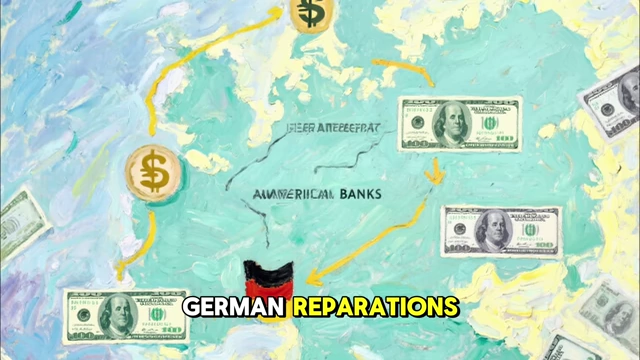
A diagram illustrating American loans flowing into Germany to fund reparation payments [ 00:02:07 ] - Loans came with conditions, placing American financial advisors in supervision roles over German government spending and tax collection.
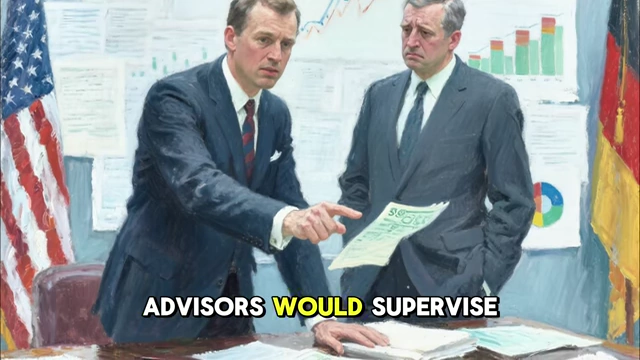
American financial advisors supervising German government spending [ 00:02:23 ] - German assets like railways, industrial facilities, and customs revenues were pledged as collateral.
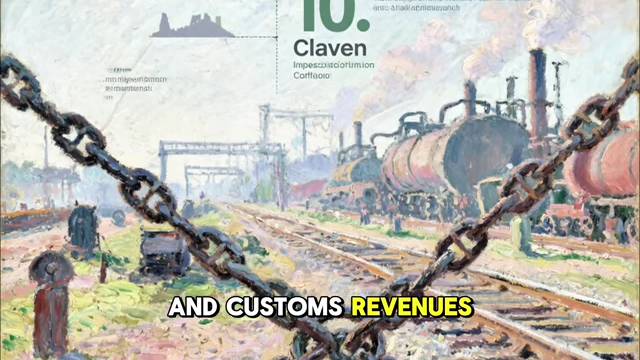
Chains binding German industrial assets as collateral for loans [ 00:02:32 ] - A sovereign nation found itself under financial receivership to the same banks that had funded its enemies.
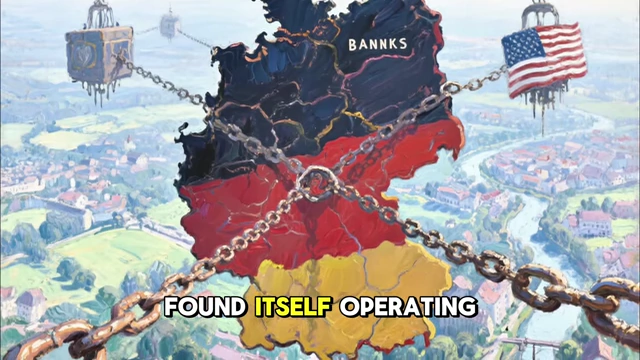
A map of Germany chained to banks, illustrating financial receivership [ 00:02:40 ] - German citizens' tax revenues were automatically transferred to American creditors.
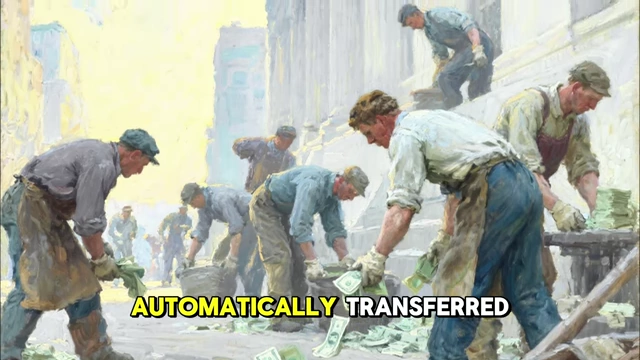
German citizens shoveling money that is transferred to American creditors [ 00:02:49 ]
-
- The Young Plan [1929]: Extended the repayment period to 59 years (until 1988), ensuring generations would pay for the war.
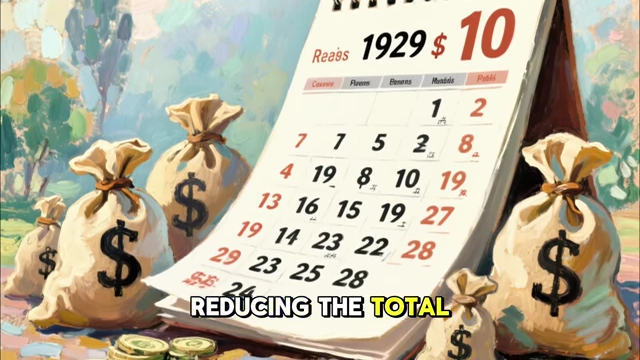
A calendar for 1929 with bags of money, indicating long-term debt payments [ 00:03:09 ] - Children born in 1929 would spend their entire working lives paying for a war that ended before they were born.

An adult and a child surrounded by debt documents and money, symbolizing generational debt [ 00:03:18 ] - It also created the Bank for International Settlements (BIS) in Basel, Switzerland [1930], to manage international debt flows, operating above national laws with secret meetings.
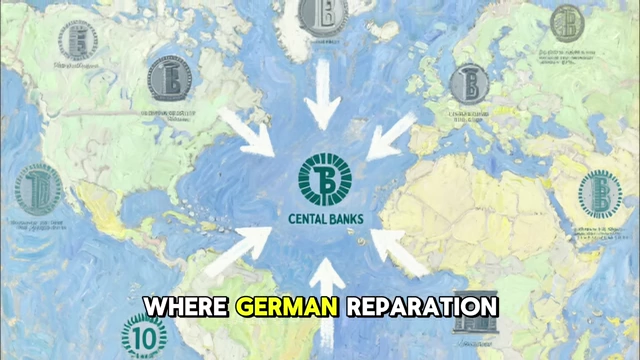
A diagram illustrating the Bank for International Settlements (BIS) as a central hub for various central banks [ 00:03:35 ] - Between 1924 and 1930, American investors loaned Germany 27 billion marks, while Germany paid 19 billion marks in reparations, indicating a primary goal of establishing financial control rather than direct repayment.
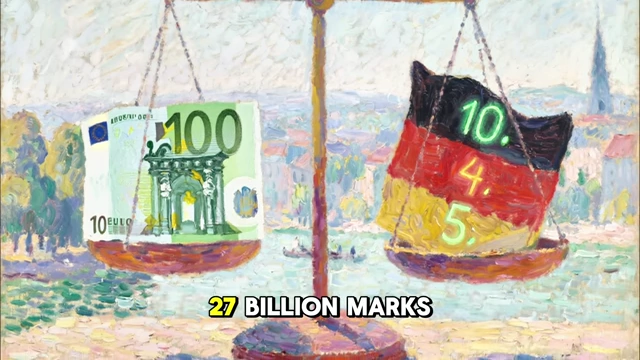
Scales comparing 27 billion marks loaned to Germany with 19 billion marks paid in reparations [ 00:03:43 ] - The debt system was designed for permanent financial control.
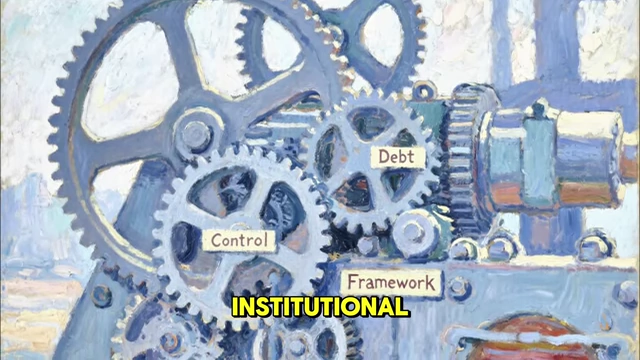
Gears labeled "Debt," "Control," and "Framework," illustrating the financial system [ 00:03:53 ]
- Children born in 1929 would spend their entire working lives paying for a war that ended before they were born.
- The Dawes Plan [1924]: Officialized this arrangement, restructuring German reparations and providing massive American loans, led by JP Morgan.
Economic Catastrophe and Hitler's Rise (1929-1933) [4:03]
The global economic crisis following the 1929 stock market crash had a profound and deliberate impact on Germany, creating conditions ripe for extremist leaders.
- The cessation of American loans led to Germany's economic collapse.
- When the American stock market crashed, the flow of American loans to Germany dried up almost overnight.

A financial chart showing a sharp decline, representing the 1929 stock market crash [ 00:04:08 ] - The circular debt machine stopped, leading to a domino effect of defaults.
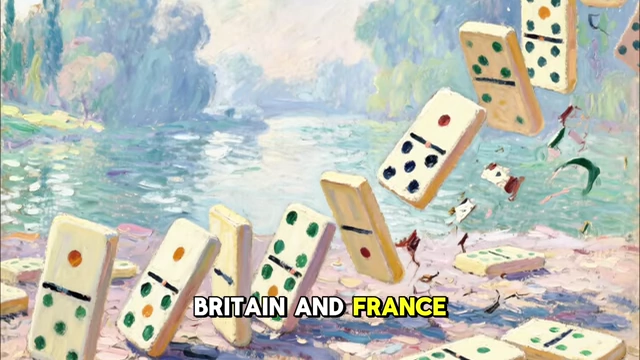
Dominoes falling, illustrating the chain reaction of debt defaults across nations [ 00:04:22 ] - Unemployment skyrocketed from 1.3 million [1929] to over 6 million [1932].
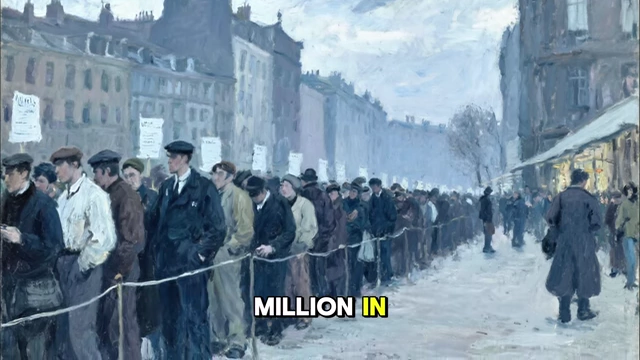
A long queue of unemployed people on a city street in Germany [ 00:04:32 ] - The banking system faced total failure.
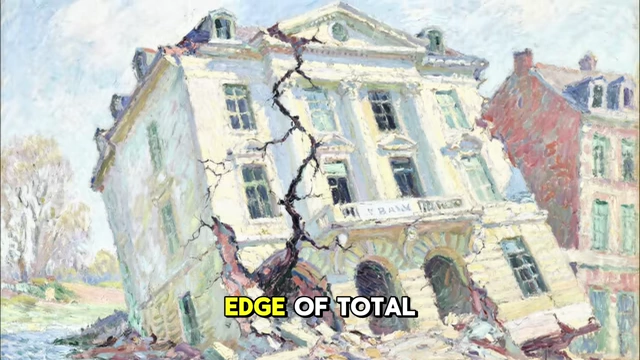
A cracked and crumbling bank building, symbolizing economic collapse [ 00:04:39 ] - The Weimar government became deeply unpopular due to its association with the economic disaster.
- When the American stock market crashed, the flow of American loans to Germany dried up almost overnight.
- While ordinary Germans suffered, American and British banks faced a crisis of their own.
- They needed Germany stable enough to make payments, but not so stable it could challenge the debt arrangements.
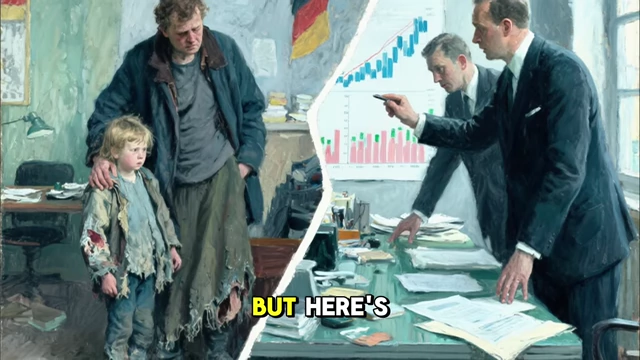
A split image showing a poor German family on one side and wealthy bankers discussing charts on the other [ 00:05:00 ] 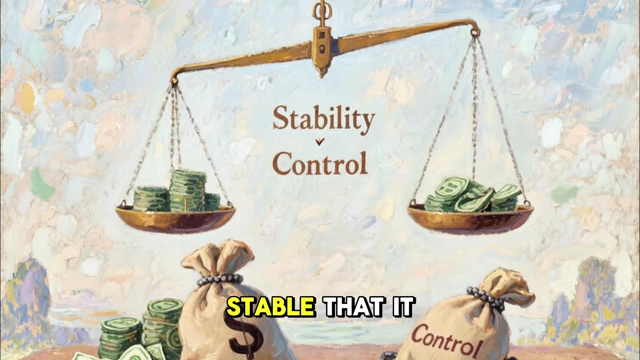
Scales balancing "Stability" and "Control" with money bags, illustrating the banks' objectives [ 00:05:24 ]
- They needed Germany stable enough to make payments, but not so stable it could challenge the debt arrangements.
- German industrialists funded the Nazi Party as a solution to the crisis.
- Corporations like IG Farben, Krupp, and Thyssen provided systematic financial support to the Nazis.
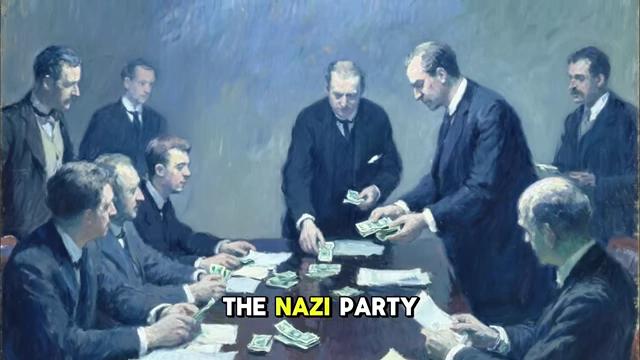
Men exchanging money at a table, representing German industrialists funding the Nazi party [ 00:05:59 ] - These companies received continued American loans and investments even as general lending dried up.
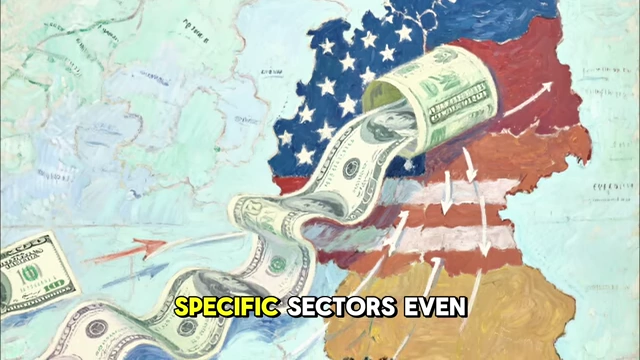
A diagram showing money flowing from American banks into German industrial sectors [ 00:06:24 ] - The BIS served as a channel for these financial flows, maintaining Germany's stability enough to honor debts.
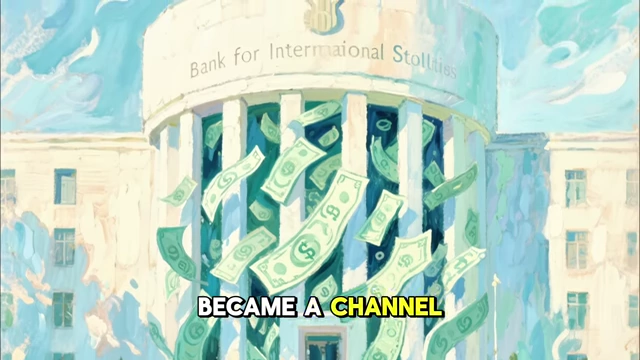
Money flowing into the Bank for International Settlements building [ 00:06:32 ] - The BIS operated above national laws, with transactions not subject to government oversight and secret meetings.
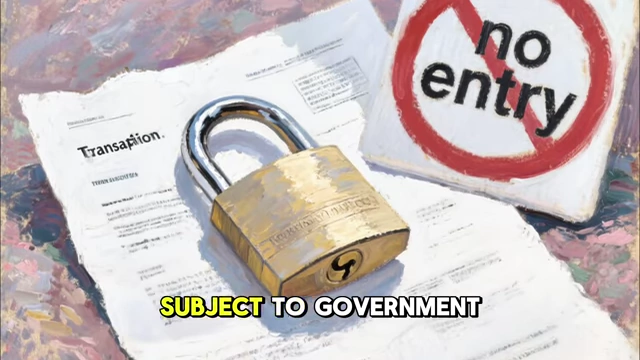
A document with a lock and a "no entry" sign, symbolizing the BIS's secrecy and lack of oversight [ 00:06:40 ] 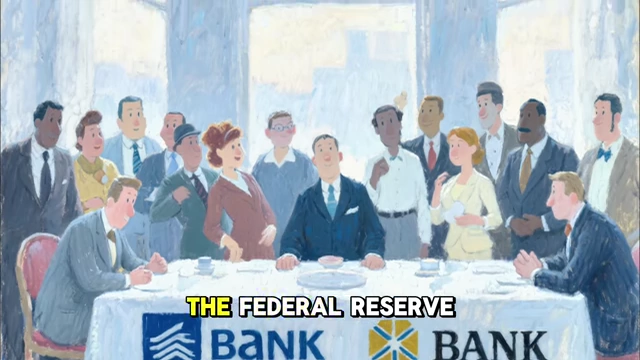
A group of international central bankers, including German representatives, meeting at a large table [ 00:06:47 ] - American investment in Germany increased dramatically between 1933 and 1939.
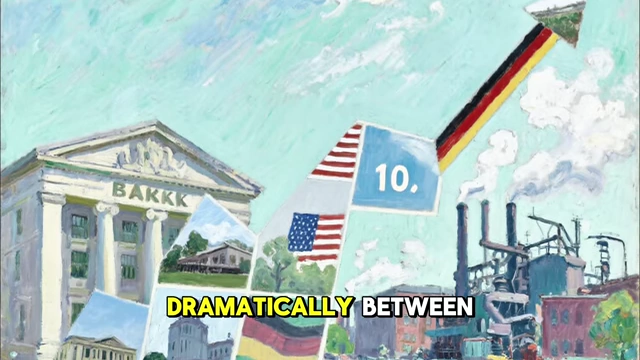
A chart showing a sharp increase in American investment flowing into German industry [ 00:07:05 ] - Hitler's promises to restore order, suppress labor unions, and honor international debts made him a favorable option for American creditors over a communist or collapsed Germany.
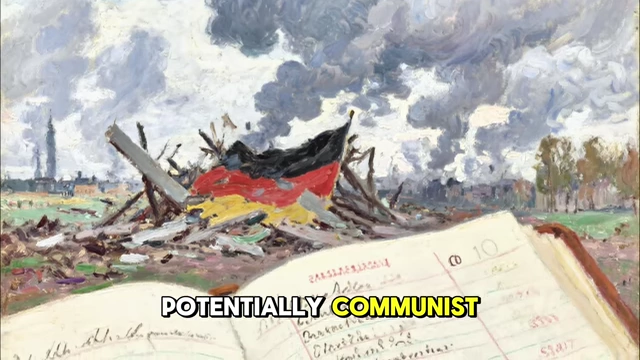
A destroyed German city and a book of financial records, symbolizing the preference for a stable, debt-honoring regime [ 00:07:23 ]
- Corporations like IG Farben, Krupp, and Thyssen provided systematic financial support to the Nazis.
American Corporate and Banking Collaboration with Nazi Germany (1933-1939) [7:02]
American corporations and banks maintained significant relationships with Nazi Germany, playing a crucial role in its rearmament and operations.
- IBM (through its German subsidiary Dehomag) provided punch card technology for Nazi census operations and the organizational systems used in the Holocaust.
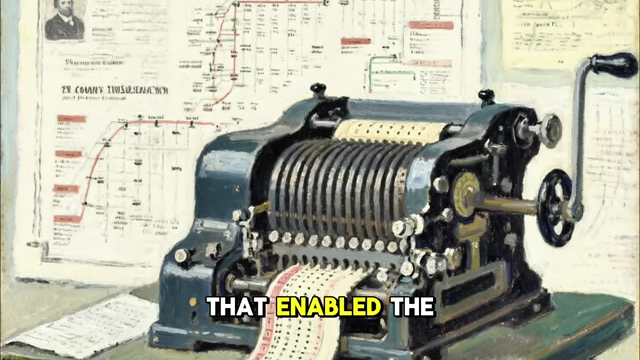
A vintage punch card machine, representing IBM's technology used by the Nazis [ 00:07:36 ] - IBM President Thomas Watson received a German eagle medal from Hitler in 1937 and maintained business ties.
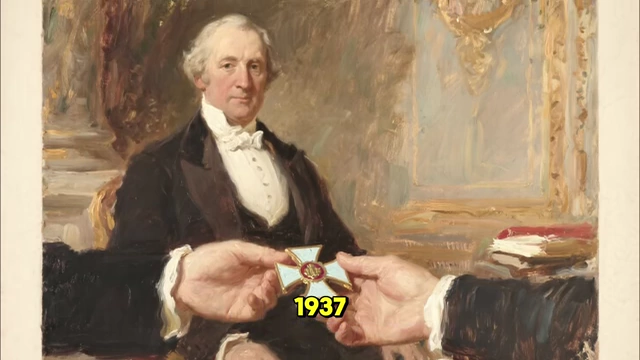
IBM President Thomas Watson receiving a medal from Hitler [ 00:07:46 ]
- IBM President Thomas Watson received a German eagle medal from Hitler in 1937 and maintained business ties.
- General Motors (through Opel) and Ford Motor Company became integral to Nazi military rearmament, producing trucks for the Wehrmacht by 1938.
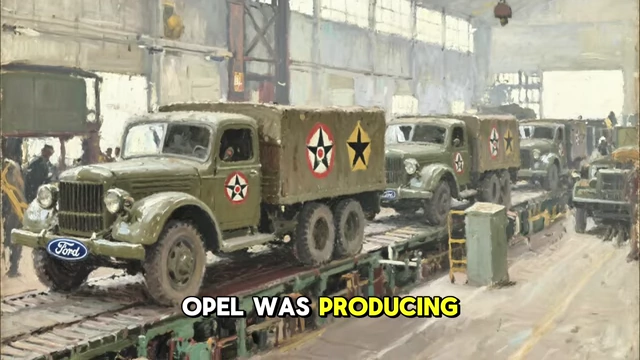
Ford military trucks on a production line [ 00:07:58 ] - Standard Oil (Rockefeller family) maintained extensive relationships with IG Farben, the producer of Zyklon B.
- Shared patents for synthetic rubber and fuel were crucial for Germany's war efforts despite limited natural resources.
Hands exchanging patent documents, symbolizing the technology transfer between Standard Oil and IG Farben [ 00:08:20 ] - These business relationships were essential for Germany's rapid military buildup from 1933 to 1939.
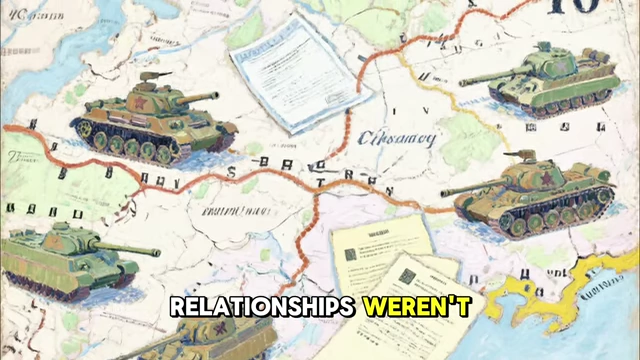
A map showing tanks and documents, illustrating corporate involvement in Germany's rearmament [ 00:08:28 ] - The rapid rebuild of German military capacity was substantially supported by American corporations.
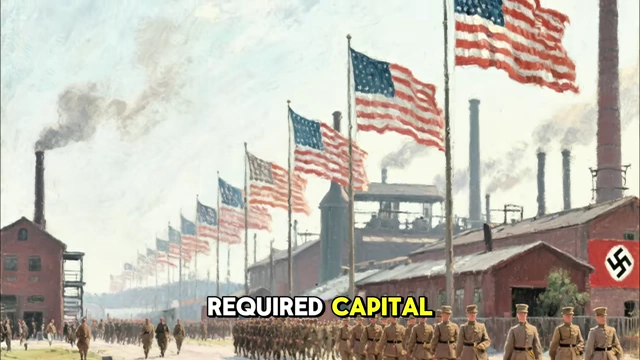
American flags lining a factory where soldiers march, symbolizing US corporate involvement in German rearmament [ 00:08:40 ]
- Shared patents for synthetic rubber and fuel were crucial for Germany's war efforts despite limited natural resources.
- Prescott Bush, father and grandfather to U.S. Presidents, was a director at Union Banking Corporation, which financed German industrialists, including Fritz Thyssen, an early Nazi backer.
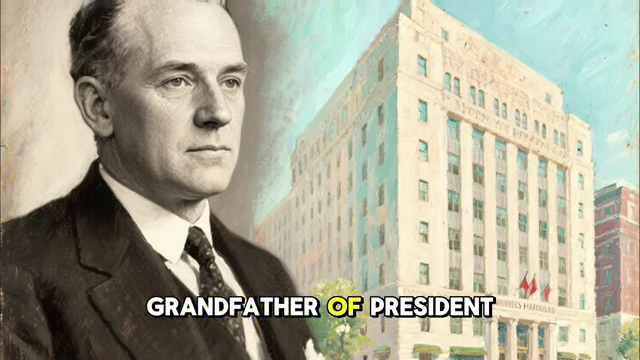
Prescott Bush pictured next to a bank building [ 00:08:52 ] 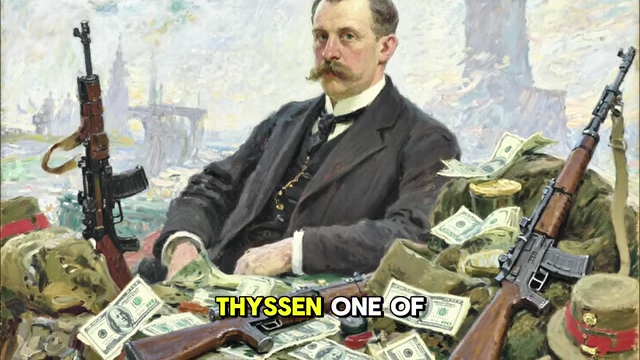
Fritz Thyssen sitting at a table surrounded by money and weapons [ 00:09:01 ] - Union Banking Corporation's assets were seized by the U.S. government in 1942 under the Trading with the Enemy Act due to its Nazi connections.
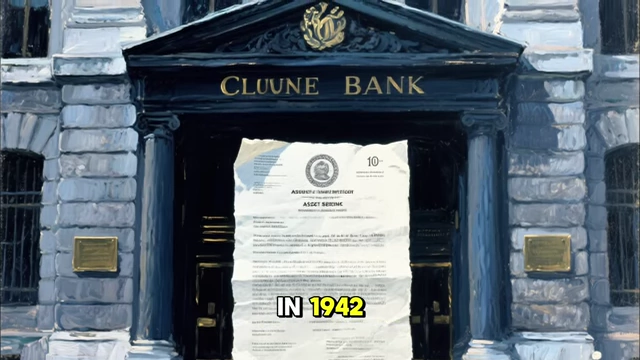
A bank building with an official "Asset Seizure" document on its doors [ 00:09:11 ]
- Union Banking Corporation's assets were seized by the U.S. government in 1942 under the Trading with the Enemy Act due to its Nazi connections.
- Chase Bank, a JP Morgan commercial arm, continued operating its Paris branch under Nazi occupation.
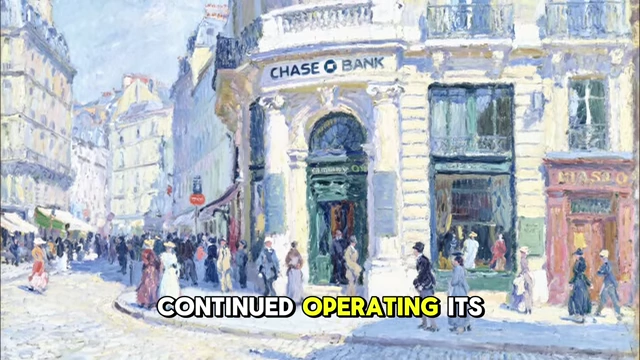
Chase Bank's branch in Paris, remaining open during Nazi occupation [ 00:09:25 ] - It froze accounts of Jewish individuals and collaborated in the seizure of Jewish property, a voluntary act to maintain market access.
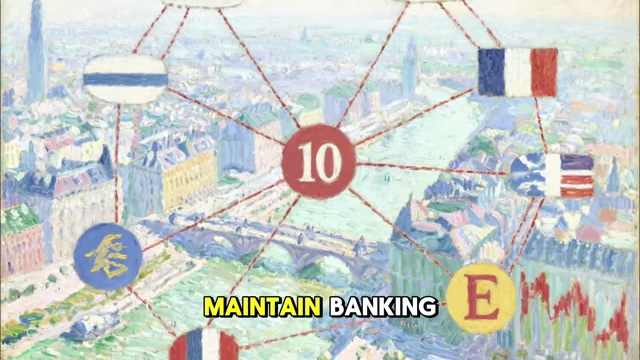
A network map over Paris showing connections between various flags and financial nodes, illustrating Chase Bank's collaboration [ 00:09:39 ]
- It froze accounts of Jewish individuals and collaborated in the seizure of Jewish property, a voluntary act to maintain market access.
- The Bank for International Settlements (BIS) continued to function throughout WWII, acting as a financial clearing house for Allied and Axis central banks.
- The BIS facilitated the transfer of Nazi gold, including gold seized from Holocaust victims.
Piles of gold bars and coins inside a bank vault, symbolizing Nazi gold transactions [ 00:10:02 ] - American and British board members attended meetings with German and Italian counterparts throughout the war.
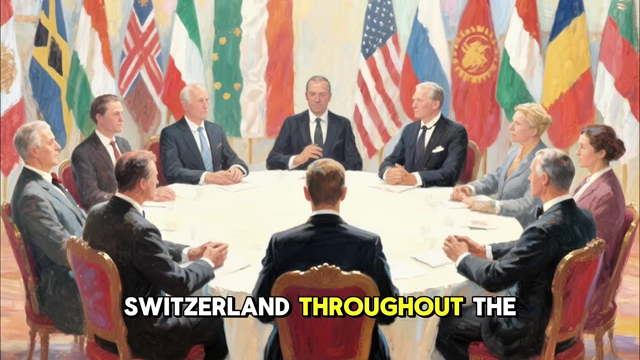
Allied and Axis bankers meeting at a table in neutral Switzerland during World War II [ 00:10:11 ]
- The BIS facilitated the transfer of Nazi gold, including gold seized from Holocaust victims.
World War II as a Debt Collection and Power Consolidation Operation (1939-1945) [10:26]
The war itself was framed as a mechanism to resolve outstanding debts and establish new financial hierarchies.
- German expansion into Eastern Europe was driven by financial motives.
- By 1939, Germany had substantial debts to American banks and corporations, but also held debts from Eastern European countries (Poland, Czechoslovakia, Romania).
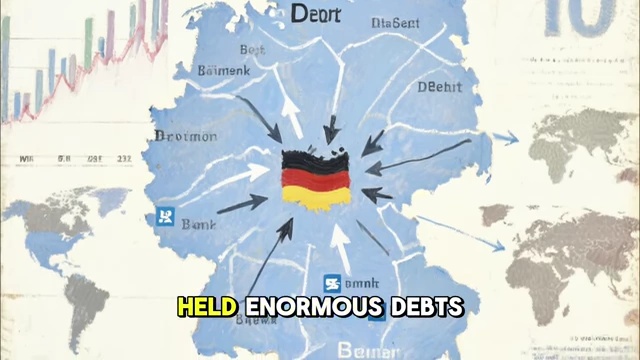
A map of Germany with arrows depicting debts owed and debts held from surrounding nations [ 00:10:30 ] - When Germany invaded Poland in September 1939, military action had a financial dimension.
Soldiers marching in front of a financial chart, connecting military aggression with economic motives [ 00:10:47 ] - Conquest of these resource-rich territories allowed Germany to extract wealth and service its international obligations.
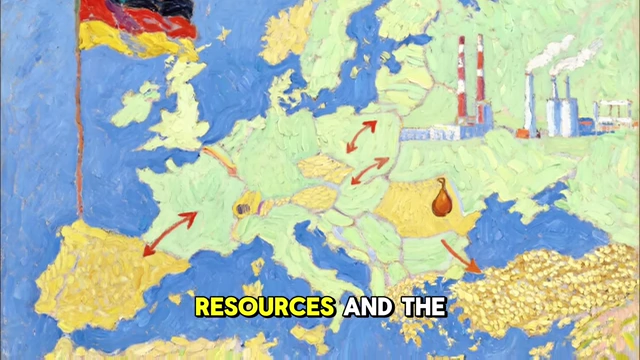
A map of Europe with arrows showing resources flowing from conquered territories to Germany [ 00:10:54 ] - Military expansion was actually the solution that best served the interests of Germany's international creditors.
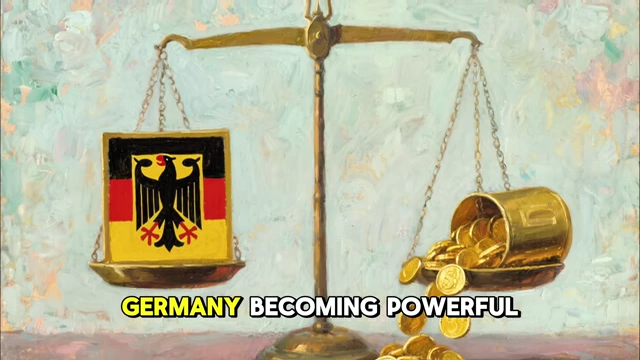
Scales balancing a strong German state with piles of gold, illustrating creditors' interest in Germany's power [ 00:11:45 ] - German occupation costs imposed on nations like France generated significant surplus revenue, flowing to Berlin to fund military operations and pay debts.
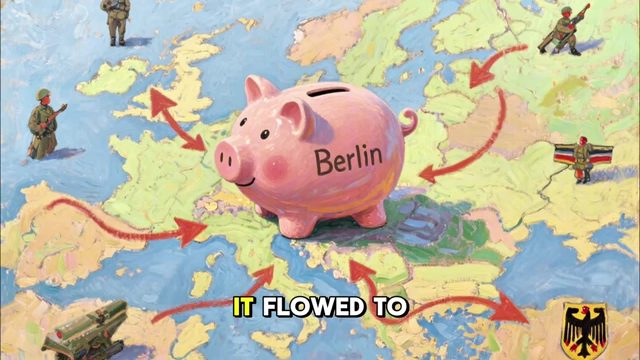
A map of Europe with arrows pointing from various territories to a "Berlin" piggy bank, symbolizing the flow of extracted resources [ 00:12:19 ]
- By 1939, Germany had substantial debts to American banks and corporations, but also held debts from Eastern European countries (Poland, Czechoslovakia, Romania).
- American entry into World War II further consolidated its financial power.
- The Lend-Lease program extended over $50 billion ($700 billion today) in loans to allies, transforming Britain from a creditor to the world's largest debtor.
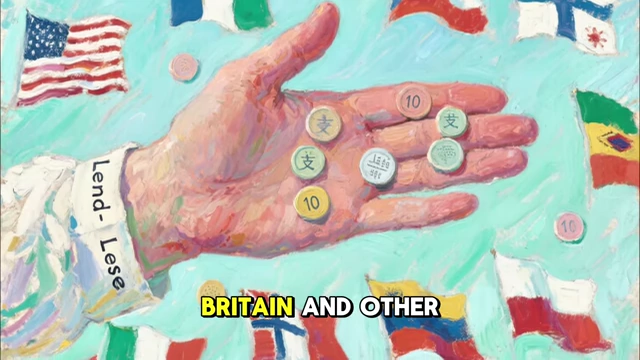
A hand extending money with "Lend-Lease" written, surrounded by flags of allied nations [ 00:12:37 ] - Britain, which had entered the war as a creditor nation, would emerge as the world's largest debtor.
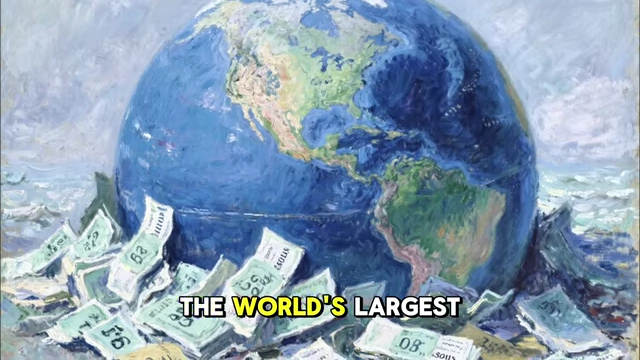
A globe submerged in money, symbolizing Britain's transition to the world's largest debtor [ 00:12:51 ] - This mirrored WWI, where European conflicts created borrowing needs, allowing American financial institutions to establish dominant creditor positions.
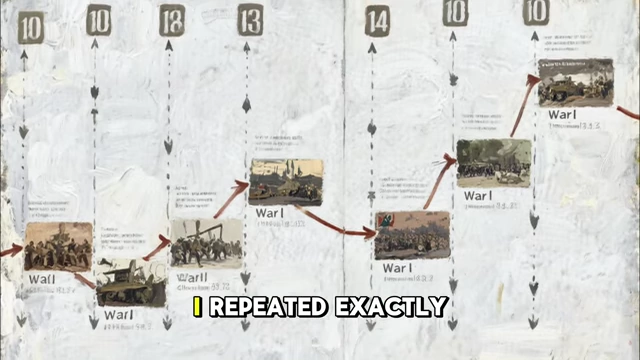
A timeline showing the repeating pattern of World War I and World War II creating financial obligations [ 00:12:57 ] - The longer the war lasted, the more Europe borrowed, and the more dominant America's financial position became.
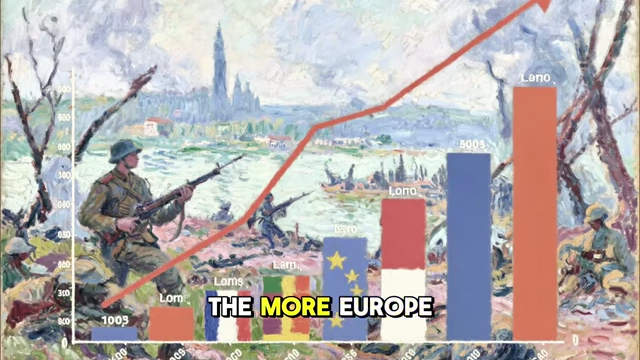
A bar chart showing increasing loans to European nations over time, set against a backdrop of war [ 00:13:19 ]
- The Lend-Lease program extended over $50 billion ($700 billion today) in loans to allies, transforming Britain from a creditor to the world's largest debtor.
The Bretton Woods System and Enduring American Financial Dominance (1944-Present) [13:24]
The conclusion of World War II did not end the financial reordering, but formalized it, creating a lasting global economic structure.
- The Bretton Woods Agreement (July 1944) formalized American financial dominance.
- Delegates from 44 allied nations gathered to establish a new international monetary system.
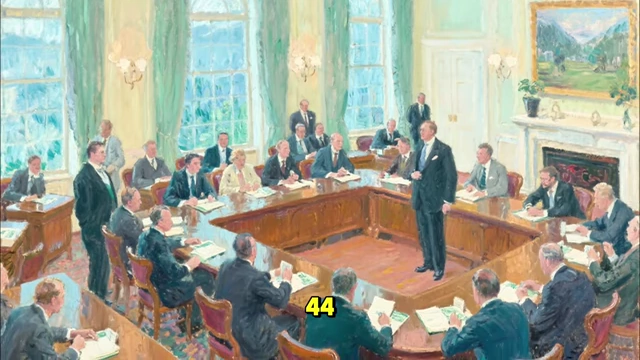
Delegates gathered around tables at the Bretton Woods conference [ 00:13:30 ] - The agreement formalized American financial dominance over the post-war world.
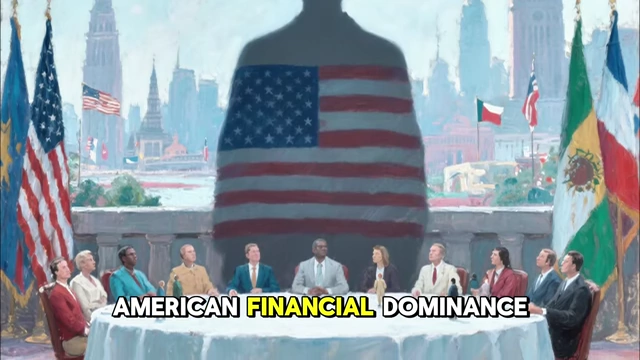
A silhouette of the United States flag overseeing a meeting, symbolizing American financial dominance [ 00:13:42 ] - The U.S. dollar became the world's reserve currency, backed by gold ($35/ounce), with other currencies pegged to it.
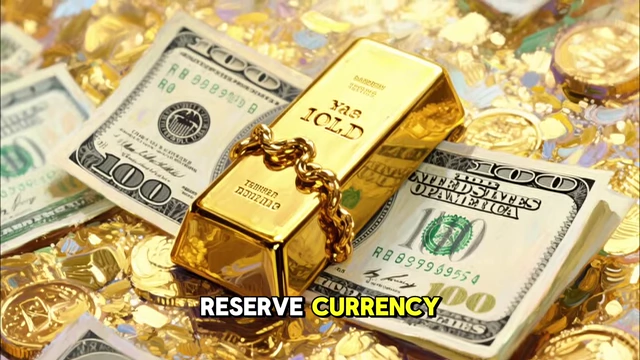
A gold bar chained to US dollar bills, representing the dollar's role as the world's reserve currency [ 00:13:48 ] - International trade would be conducted in dollars, creating demand for American currency.
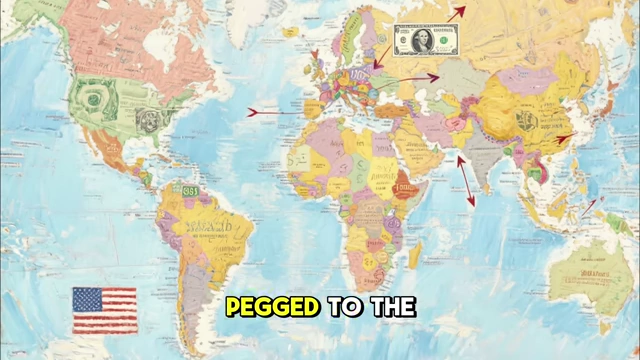
A world map with US dollar bills flowing across trade routes, illustrating dollar dominance in global trade [ 00:13:53 ] - The International Monetary Fund (IMF) and World Bank, headquartered in Washington, were established to manage international loans and development aid.
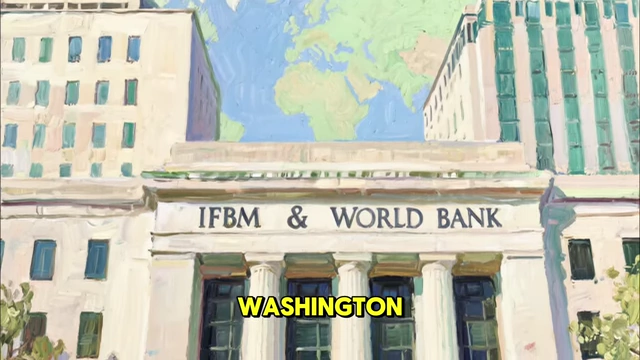
The exterior of the International Monetary Fund and World Bank buildings [ 00:13:59 ] - The U.S. emerged with the majority of the world's gold reserves, controlling the reserve currency, and acting as the primary creditor for post-war reconstruction.
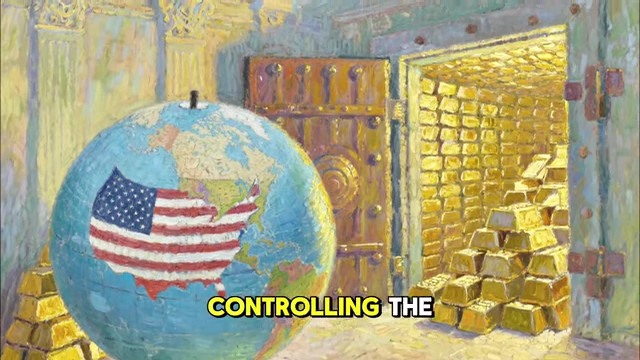
A globe with the USA highlighted next to an open vault filled with gold, symbolizing American financial power and gold reserves [ 00:14:09 ] - Europe and Japan became indebted to American institutions for rebuilding, with loans denominated in dollars.
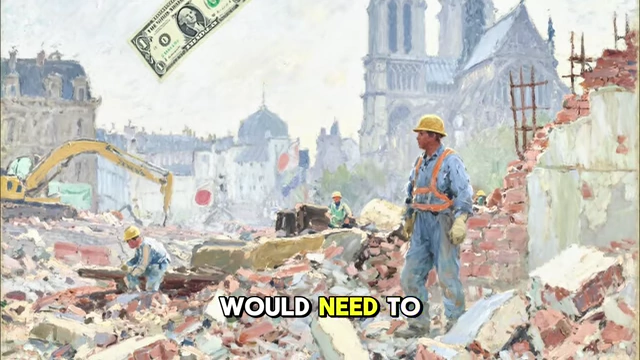
A post-war reconstruction scene in Europe or Japan, with a US dollar bill floating down [ 00:14:17 ] - The dollar's role as reserve currency meant the United States could essentially print money for imports.
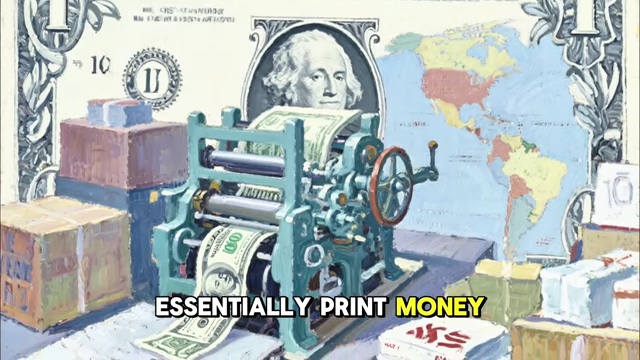
A printing press generating US dollar bills, symbolizing America's ability to print money as the reserve currency nation [ 00:14:29 ] - America achieved the ability to extract wealth from the global economy, similar to what Britain had lost after WWI.
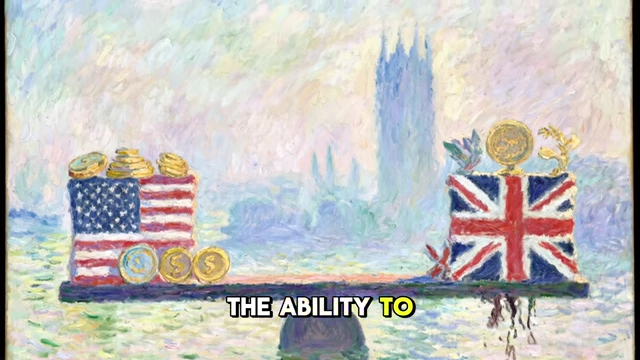
Scales balancing US wealth against a diminished British position, illustrating the shift in global financial power [ 00:14:38 ]
- Delegates from 44 allied nations gathered to establish a new international monetary system.
- The Marshall Plan [1947], while presented as generosity, reinforced American economic dominance.
- $13 billion in aid to Western Europe was structured as loans with favorable terms.
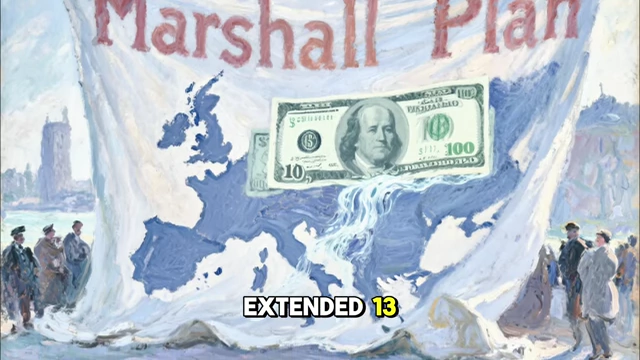
A large banner with "Marshall Plan" over a map of Europe and a dollar bill [ 00:14:45 ] - Recipient nations agreed to open markets to American goods, offer preferential treatment to U.S. investors, and align foreign policies.
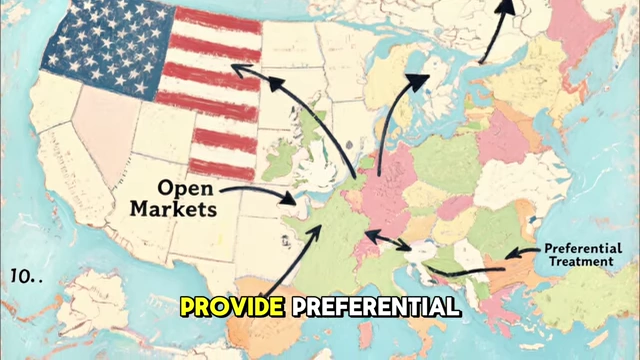
A map showing arrows from the USA to Europe, indicating conditions like "Open Markets" and "Preferential Treatment" tied to the Marshall Plan [ 00:15:01 ]
- $13 billion in aid to Western Europe was structured as loans with favorable terms.
- Germany's post-WWII debt restructuring showed a strategic shift.
- West Germany received Marshall Plan aid, and its debts were restructured on manageable terms, integrated into the American-led system.
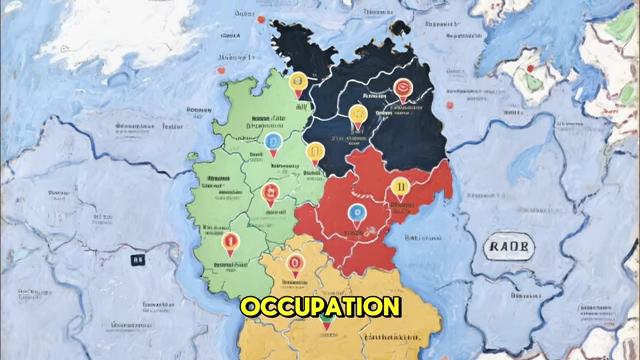
A map showing Germany divided into occupation zones [ 00:15:20 ] 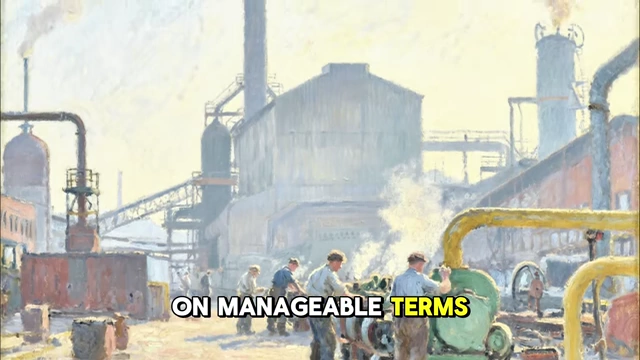
An industrial scene with workers, symbolizing the rebuilding of West Germany [ 00:15:38 ] - East Germany, under Soviet control, was systematically looted.
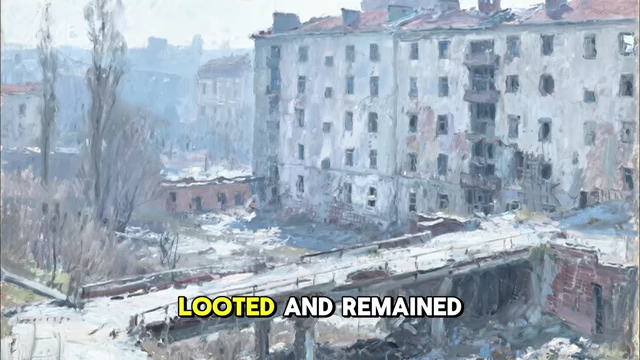
A devastated city with destroyed buildings, symbolizing the looting of East Germany [ 00:15:46 ] - This reflected the lesson that manageable debt was more profitable than unpayable debt that creates instability.
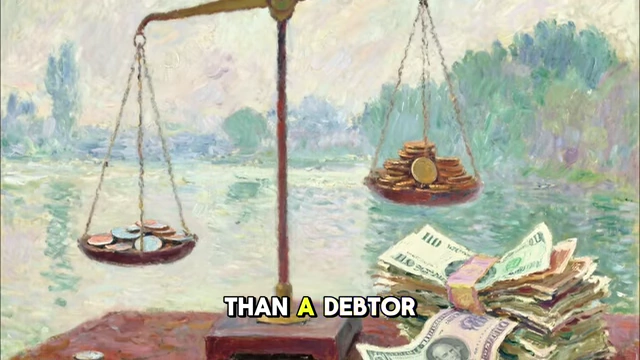
Scales illustrating that a debtor who can pay indefinitely is more valuable than one who collapses and defaults [ 00:16:40 ]
- West Germany received Marshall Plan aid, and its debts were restructured on manageable terms, integrated into the American-led system.
- The Bank for International Settlements (BIS) continued operating post-1945 without prosecution, remaining a crucial, opaque venue for central bank cooperation.
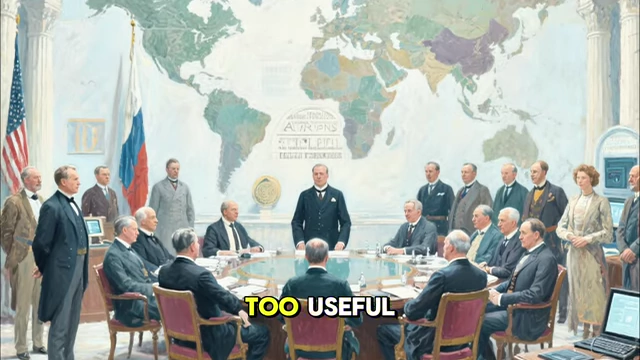
A meeting of international central bankers at the BIS, indicating its continued function after the war [ 00:16:00 ] - The pattern of war-driven debt and control continues into the present.
- Britain finished paying its Lend-Lease obligations in 2006; Germany's final WWI reparations payment was in 2010.
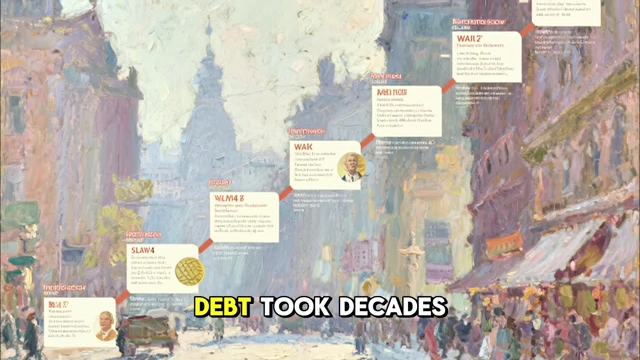
A timeline showing various historical events and debt repayments, including Britain's Lend-Lease payment in 2006 [ 00:16:16 ] 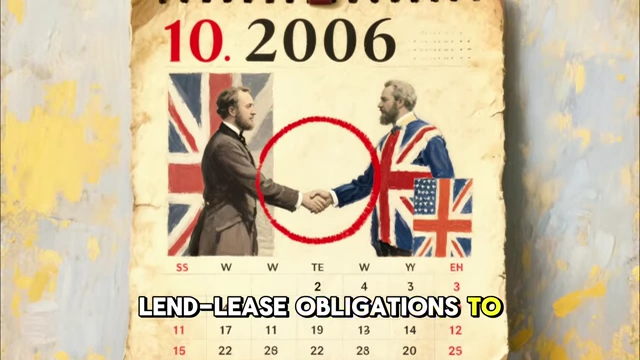
A calendar for 2006 showing a handshake between British and American figures, marking the end of Lend-Lease obligations [ 00:16:20 ] 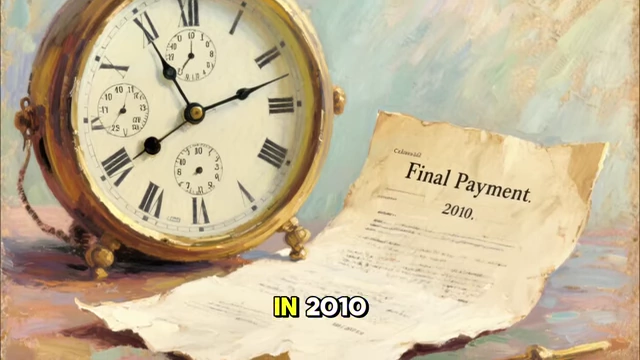
A clock next to a "Final Payment 2010" document, indicating Germany's final WWI reparations payment [ 00:16:25 ] - The Cold War was presented as an ideological conflict, but financially, the Soviet Union's alternative system challenged dollar dominance.
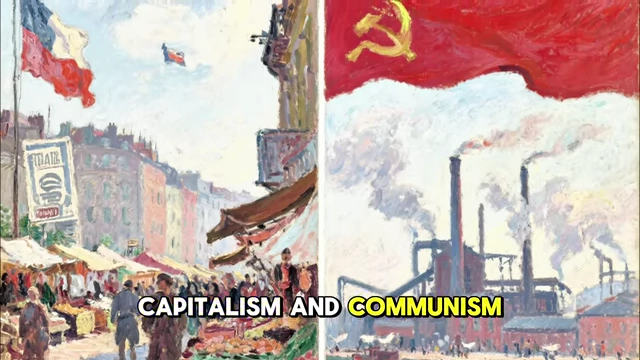
A split image contrasting a capitalist market scene with a communist industrial scene under the USSR flag [ 00:16:47 ] - The Cold War arms race created borrowing needs that ultimately bankrupted the USSR.
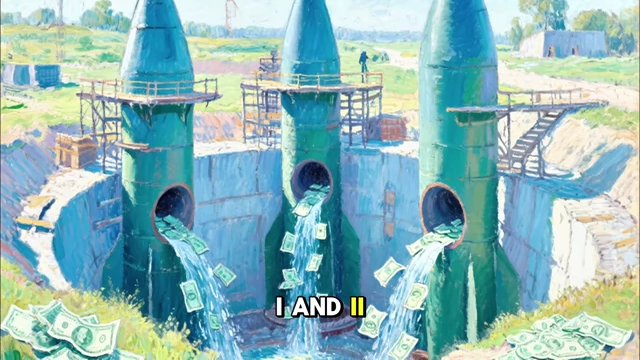
Rockets being filled with money, symbolizing how the Cold War arms race generated massive debt [ 00:17:13 ] - The Soviet Union borrowed billions from Western banks, creating debt dependencies that contributed to its collapse in 1991.
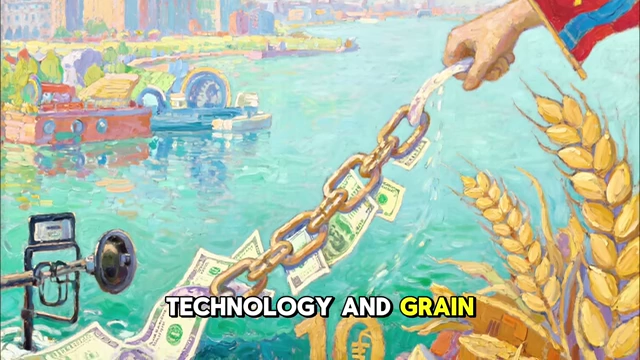
A chain of money connecting a hand (Western banks) to wheat (Soviet Union), illustrating debt dependency [ 00:17:27 ] 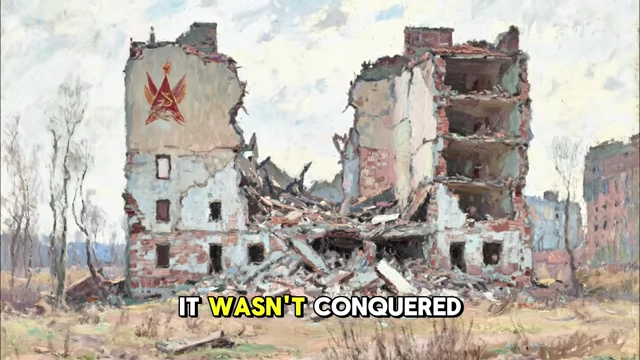
A destroyed building with Soviet symbols, symbolizing the financial bankruptcy and collapse of the USSR [ 00:17:34 ] - The pattern from 1919 and perfected by 1945 continues operating today.

A timeline charting the repeating pattern of financial systems from 1919 to 1945 and beyond [ 00:17:44 ] - International conflicts and crises consistently benefit financial institutions.

A figure controlling the globe with strings, representing financial institutions' control over national economies [ 00:17:50 ] - The 2008 financial crisis resulted in trillion-dollar bailouts for banks, making them more powerful and profitable.
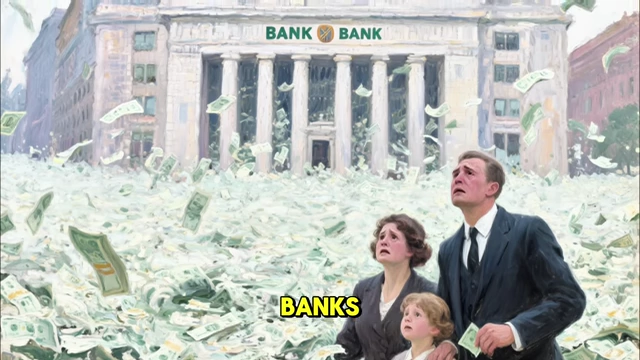
People looking up at money falling from a bank, symbolizing bank bailouts during the 2008 financial crisis [ 00:17:59 ] 
A bank vault overflowing with gold and money, representing the increased power and profitability of banks after crises [ 00:18:07 ] - Major banks like JP Morgan Chase, Bank of America, Citigroup, and Wells Fargo still dominate global finance.
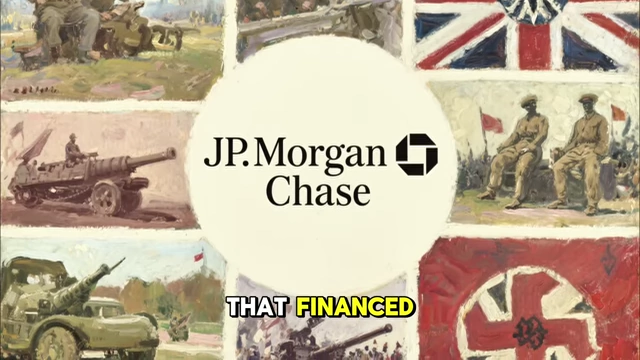
The JP Morgan Chase logo surrounded by war-related imagery, connecting the bank to its historical role in financing wars [ 00:18:18 ] - The international monetary system still revolves around dollar dominance.
A globe with a prominent dollar sign on top, symbolizing the continued dominance of the US dollar in the international monetary system [ 00:18:30 ] - IMF and World Bank still impose austerity policies prioritizing creditor repayment.
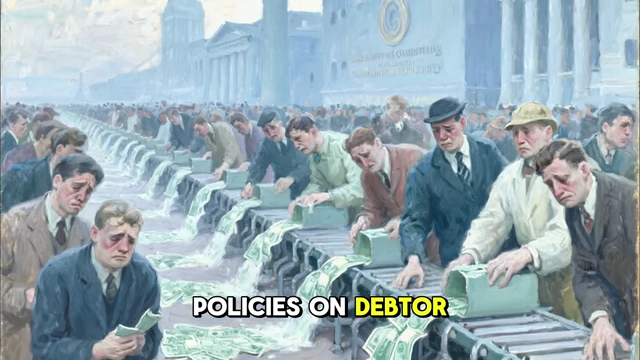
Workers on a conveyor belt of money, illustrating the impact of austerity policies on debtor nations [ 00:18:35 ] - Current geopolitical tensions, like US-China competition, are largely about control of the international financial system.
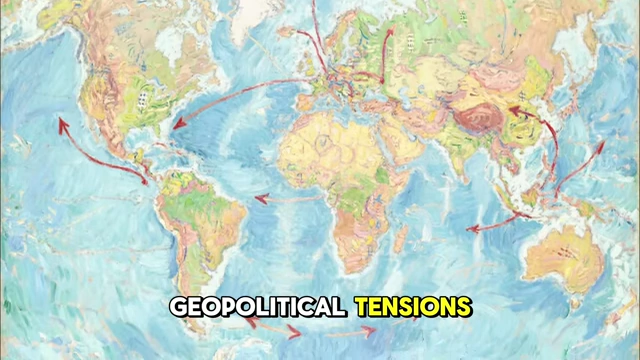
A world map with red arrows indicating areas of geopolitical tension, connecting conflicts to financial flows [ 00:18:41 ] 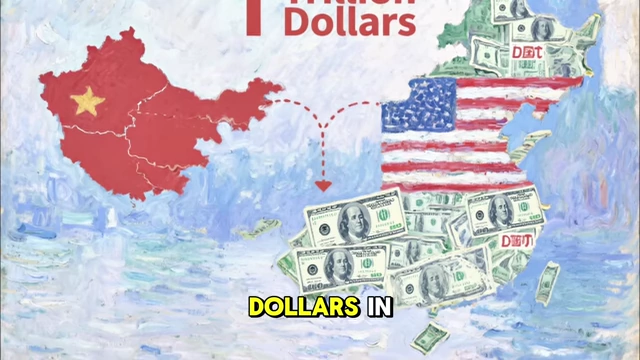
A map illustrating China holding US government debt and the US using financial sanctions through dollar dominance [ 00:18:53 ] - Wars serve to establish and maintain a debt-based financial system that profits creditors.
A battlefield scene with money flowing from soldiers and conflict areas towards banks [ 00:21:09 ] - Every life lost represented interest payments flowing to banks that created the financial conditions, making war more profitable than peace.
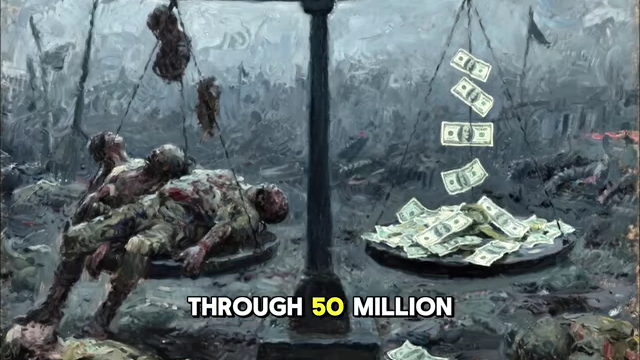
Scales balancing dead bodies against piles of money, illustrating the human cost of debt collection through war [ 00:22:13 ]
- Britain finished paying its Lend-Lease obligations in 2006; Germany's final WWI reparations payment was in 2010.