Increase Your Chances of Success: How to Cultivate "Luck Surface Area" for Career Growth and Job Opportunities
This video explains that luck isn't random but a cultivable "surface area" of opportunities. Key takeaways include:
- Success comes from a high rate of experimentation and learning from failures, rather than relying on initial genius. The speaker shares his own startup failures before unexpectedly succeeding with T3 Chat.
- Building your "luck surface area" involves accumulating resources like a strong network, financial stability, and low expenses, which provide a longer "runway" to take risks and learn from failures.
- Engaging with the world through genuine curiosity, rather than transactional requests, leads to valuable connections and unexpected opportunities.
- Being proactive by initiating conversations, hosting low-pressure events, and sharing your authentic interests can organically expand your network and lead to unforeseen benefits.
- It's crucial to adopt a growth mindset, constantly learning and adapting, and being open to having assumptions challenged by new information and interactions.
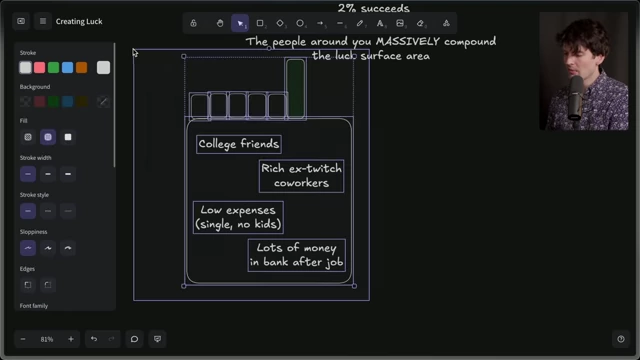
Luck Surface Area Diagram showing compounding factors [ 00:13:00 ]
Luck is a Cultivable Surface Area [0:00]
The speaker, Theo, emphasizes that luck is not merely a random occurrence but a function of opportunity and preparation. He argues that individuals can actively increase their "surface area for luck" by being deliberate about their actions and where they invest their time and energy. This concept is derived from an article titled "How to Increase Your Surface Area for Luck" by Cate Hall.
The Power of Experimentation and Embracing Failure [3:07]
A distinguishing feature of unusually successful people is their high rate of experimentation across social, intellectual, and professional spheres.
- Quantity over Quality (Initially): Success comes from the sheer number of attempts ("shots on goal"), not necessarily a high percentage of immediate successes. Even established entrepreneurs like Levels.io have a high failure rate for new projects.
- The article highlights that the percentage of successes might be very low at first.
- Personal Experience with Startups: Theo shares his journey, highlighting numerous failed or capped projects (e.g., Ping.gg, WebhookThing, PicThing, MarkerThing, UploadThing) before T3 Chat unexpectedly became profitable.
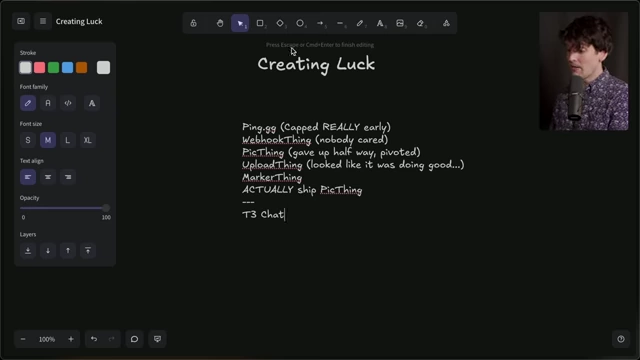
A list of Theo's startup projects, many of which capped early or failed. [ 00:05:23 ] - T3 Chat's success was not a stroke of genius but a result of continuously building various products to keep the business afloat.

The T3 Chat user interface, displaying various AI models available for conversation. [ 00:08:56 ] - Success often comes from unexpected avenues, not always from the most obvious or seemingly "best" products.
- T3 Chat's success was not a stroke of genius but a result of continuously building various products to keep the business afloat.
- Failures as Learning Opportunities: Each "failure" is not merely a setback but an opportunity for learning, gaining new insights, making connections, and increasing the overall chance of future success.
- Statistically, repeating an attempt with a 1% success rate 10 times increases the cumulative success chance to 9.5%.
- Each attempt also improves future attempts by providing lessons and connections, effectively increasing the underlying success probability.
- Skateboarding Analogy [7:18]: Skaters are not considered lucky because their process of repeated falling and trying is visible. This direct correlation between effort, failure, and eventual success should be applied to other fields like software development.
Compounding Luck Surface Area with Your Network [10:51]
The people and circumstances around you significantly compound your luck surface area.
- The Role of Privilege and Resources: Theo acknowledges that personal factors like having college friends, financially stable ex-coworkers, low expenses (being single with no kids), and savings provided a substantial "runway" to take risks with startups.
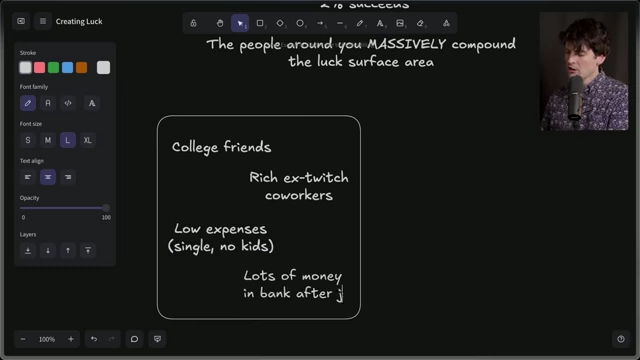
A diagram listing factors that contribute to a person's "luck surface area," including college friends, financial stability, and low expenses. [ 00:12:16 ] - This runway allows for multiple attempts without immediate severe consequences.
A larger diagram emphasizing how various factors like college friends, financial stability, and low expenses create a substantial "luck surface area." [ 00:13:00 ]
- This runway allows for multiple attempts without immediate severe consequences.
- Building Your Runway: If you lack these initial advantages, the solution is to actively build them.
- Strategic Employment: Get a decent job with a good team to build valuable connections and gain experience.
- Networking: Engage with peers at coding bootcamps or industry events.
- Financial Prudence: Save money to create a financial buffer, allowing you to safely pursue opportunities.
- The Importance of Peer Groups: Surround yourself with like-minded individuals who are striving for improvement. Peers help maintain pace, provide feedback, and offer motivation.
- The article notes that individuals who stay in a relatively contained peer group for a long time without mixing it up tend to have fewer shots on goal and longer feedback loops.
- College is emphasized as a place to be surrounded by ambitious peers who can serve as a "pacing partner."
- Most of Theo's early investors and connections came from college and his first job.
- The "Luck" of Y Combinator [16:58]: Theo's acceptance into YC was a result of his accumulated network mentioning him to the right people, demonstrating how existing connections multiply opportunities.
Cultivating Luck Through Action and Mindset [18:56]
The core idea is not just to do things, but to engage with the world with the right mindset.
- The Velocity of Action: The frequency of your attempts significantly impacts your likelihood of success. Taking action twice a day, even with a low success rate, leads to success much faster than acting twice a week.
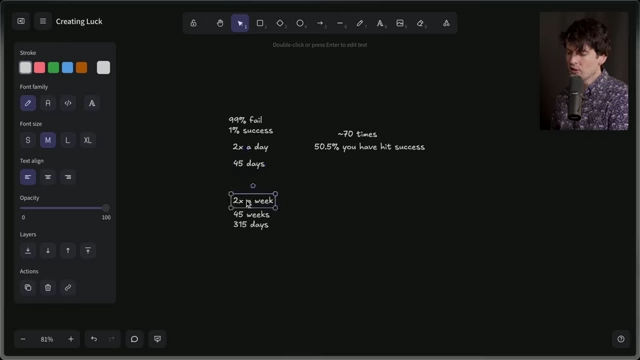
A comparison showing that performing an action twice a day leads to success significantly faster than twice a week, illustrating the importance of action velocity. [ 00:20:00 ] - Beyond Building Apps: "Trying" isn't just about building new products. It's about making the right connections, attending relevant events, and spending time in the right circles to gain insights and opportunities.
- Mindset Shift: Don't approach opportunities with a transactional "bullet point list" mentality. Instead, cultivate a mindset of genuine engagement and continuous learning.
- The article emphasizes that one cannot undertake these goals with the wrong attitude.
- Cart Before the Horse Analogy [21:30]: Don't mistake correlation for causation. Being a good developer leads to open-source contributions, not the other way around. Similarly, popularity follows from creating valuable content, rather than popularity guaranteeing success.
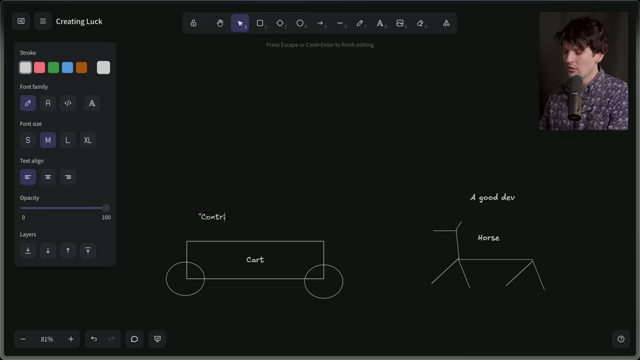
A simple drawing depicting a cart and a horse, illustrating the "cart before the horse" fallacy regarding causation and correlation in skill and opportunity. [ 00:22:41 ] - Gardening Analogy [24:21]: Success is like gardening; you can't force growth, but you can engineer the conditions for flourishing.
Give Before You Take [37:31]
Building strong professional networks relies on generosity and reciprocity.
- The Power of Giving: People notice and remember when you put in effort or offer help without immediate self-interest.
- The article states that people really notice when you show up despite it not being a matter of duty or obviously in your self-interest, and people remember it.
- Theo's Examples:
- A student gained a talk opportunity by knowing Theo's preference for Waterloo students.
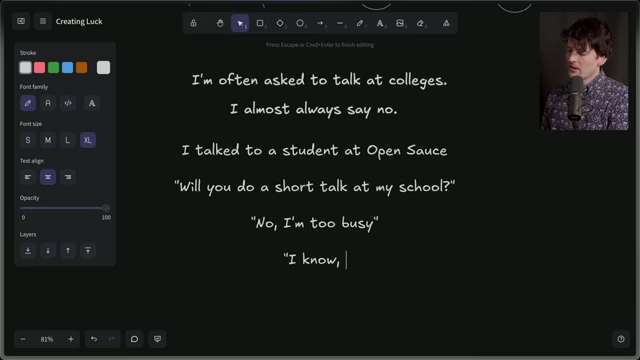
Theo's notes on a student from OpenSauce who successfully got him to agree to a talk by showing knowledge of his preference for Waterloo students. [ 00:31:05 ] - Chris became a moderator and friend through mutual dedication to Advent of Code, increasing his industry success likelihood.
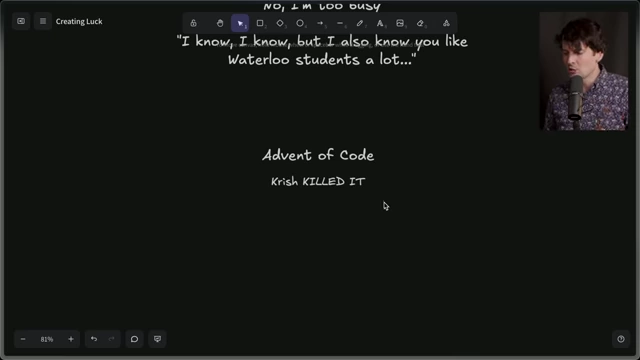
Theo's notes on "Advent of Code" and how his interaction with Chris through this programming challenge led to a valuable connection. [ 00:33:09 ] - Simon Willison (Django creator) became friends with Theo because Simon wrote about Theo's SnitchBench, which was a passion project for Theo. This led to Theo helping Simon monetize his blog.
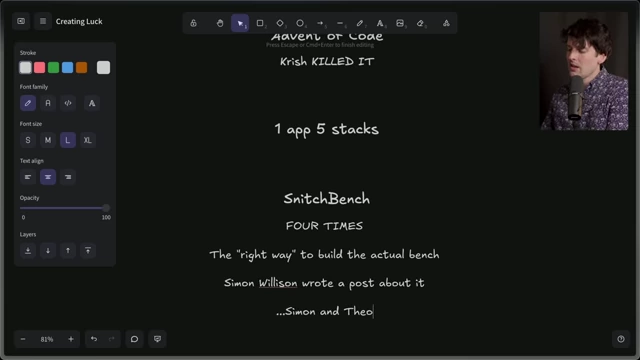
Theo's notes illustrating the journey of his SnitchBench project, from multiple iterations to its recognition by Simon Willison, leading to their friendship. [ 00:35:26 ] - An engineer who built a useful Excalidraw extension for Theo was offered investment when he started a company, because he had previously provided value without asking for anything.

A screenshot of the Tweakcn website, showcasing a tool to design themes. [ 00:40:48 ] 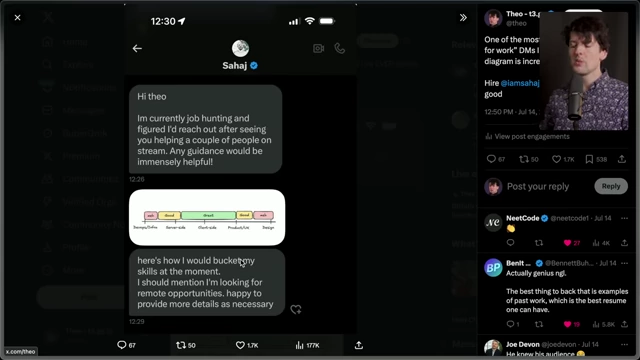
A direct message conversation on Twitter where Sahaj, a developer, clearly outlines his skills and job search preferences to Theo, prompting a helpful response. [ 00:41:42 ] 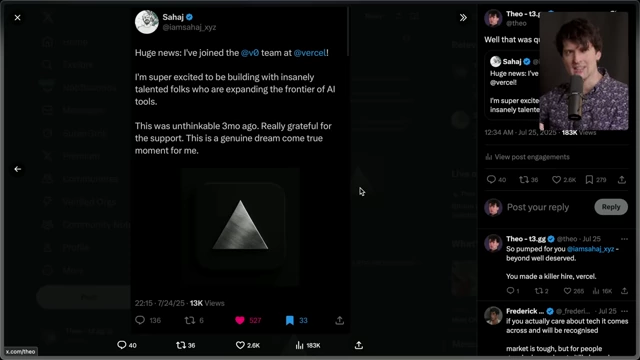
Sahaj's Twitter announcement of joining Vercel, demonstrating a successful outcome resulting from his effective communication and proactive networking. [ 00:42:13 ]
- A student gained a talk opportunity by knowing Theo's preference for Waterloo students.
- Meeting Heroes: If you approach your "heroes" with genuine curiosity and an intent to give or learn, rather than to ask for something, you are more likely to have a positive and impactful interaction.
- Theo's positive experiences meeting skateboard legends like Tony Hawk were based on giving appreciation or offering help.
The Importance of Genuine Curiosity and Networking [43:02]
Effective networking is driven by authentic interest.
- Operate from Genuine Curiosity: Talk to people without a transactional goal; let curiosity drive your interactions. People enjoy discussing their interests, and you can build connections by sharing genuine excitement.
- The article highlights that people love to talk about what they're interested in and, by extension, love to talk to people who are genuinely curious about their interests.
- Passive vs. Active Networking: Posting your thoughts online (blogging, social media) helps attract like-minded individuals, increasing your network organically.
- "Air Your Weirdness": Share what genuinely interests you. The best opportunities come when your values align with those you interact with, leading to more enjoyable and fulfilling work.
Hosting Events and Being a Hub [46:02]
Creating spaces for interaction can significantly multiply serendipitous connections.
- Low-Pressure Gatherings: Host simple, regular events (e.g., coffee meetups, bagel brunches) to facilitate social interaction. This is powerful because many people desire social connection but are reluctant to initiate.
- The article suggests throwing parties or events, especially regular, low-pressure get-togethers.
- Becoming a "Point of Contact": If you become the go-to person or place for conversations and deep dives in a specific field, opportunities naturally gravitate towards you. Theo's YouTube channel serves this purpose.
- Organic Network Growth: These interactions lead to self-sustaining friend groups and networks that offer mutual support and opportunities.
Embracing Awkwardness and Correcting Assumptions [49:16]
The initial stages of building a network and pursuing opportunities can feel uncomfortable, but it's essential to push through.
- Initial Discomfort: Early networking might feel artificial or forced. It's normal to feel like you "don't belong" or are "trying too hard." Perseverance is key to overcoming this awkward phase.
- The article advises that you'll quickly gain a sense of who is respected versus who is a "drama factory" and who is dependable.
- Challenging Assumptions: People often make external judgments (e.g., assuming Theo is a "drama farmer" based on his public persona). True connections and understanding come from direct interaction, allowing assumptions to be corrected.
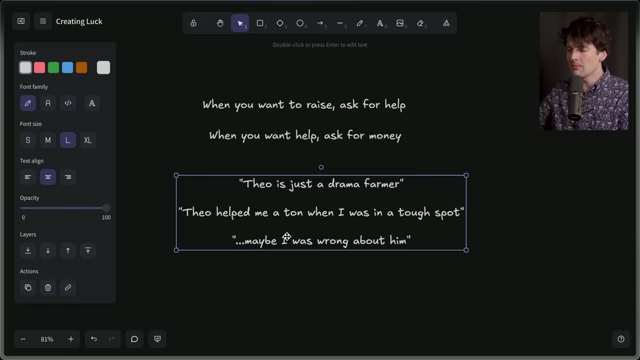
A diagram illustrating the loop of challenging assumptions, from initially labeling Theo as a "drama farmer" to realizing he's been helpful, prompting a re-evaluation. [ 00:55:44 ] - Learning Loop: Be open to rapidly correcting your assumptions when new information is discovered.
- Asking for Help vs. Money [50:53]: A counter-intuitive truth in the startup world: if you want to raise money, ask for help/advice; if you want help, offer money. This flips the transactional script, leading to more genuine and fruitful interactions.
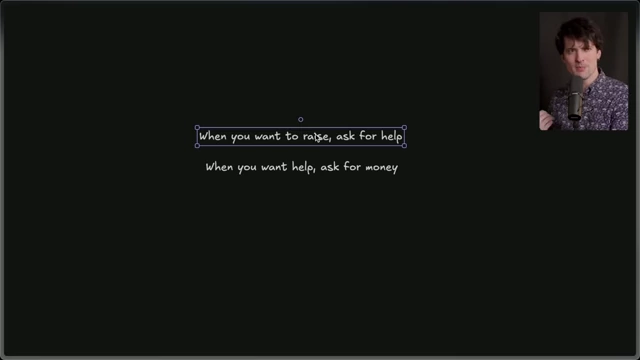
A key principle of networking: "When you want to raise, ask for help; When you want help, ask for money." [ 00:51:18 ]
Conclusion: The Unpredictable Path to Success [57:31]
Ultimately, the path to success is unique for everyone and cannot be precisely predicted.
- Embrace Your Own Journey: Your success won't look exactly like someone else's. The goal is to learn the right lessons: focus on what genuinely excites you, spend time with those who share your interests, and build connections based on mutual value.
- The article emphasizes that one cannot predict the exact form their luck will take.
- The Magic of Unforeseen Outcomes: By actively increasing your "luck surface area" through consistent effort, genuine curiosity, and generous networking, you create conditions where unexpected, transformative opportunities are likely to arise. This process leads to a richer and more fulfilling life than one could have imagined through linear planning.
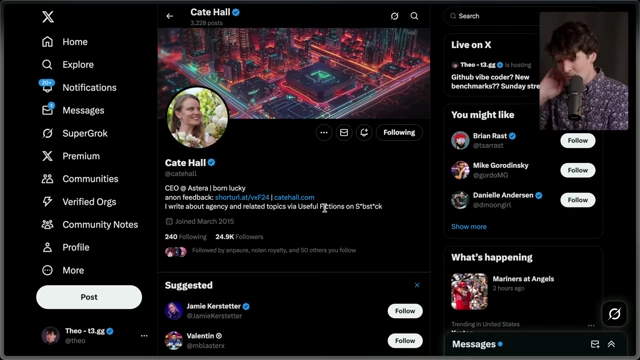
The X (Twitter) profile of Cate Hall, author of the article, showing her bio and recent activity. [ 00:58:57 ]