Social Media Strategy for Business Owners: How to Choose Your Content Type and Brand Approach to Maximize Growth
This video provides a comprehensive framework for business owners to select and execute a social media strategy, categorizing approaches into four main types based on account positioning (personal vs. traditional brand) and content type (entertainment vs. education). It further distinguishes between the "advertising game" and the "conversion game" and outlines a 7-step marketing funnel, concluding with a practical method for content creation by analyzing successful accounts in one's specific niche and strategy.
The 4 Social Media Strategies for Business Owners [0:34]
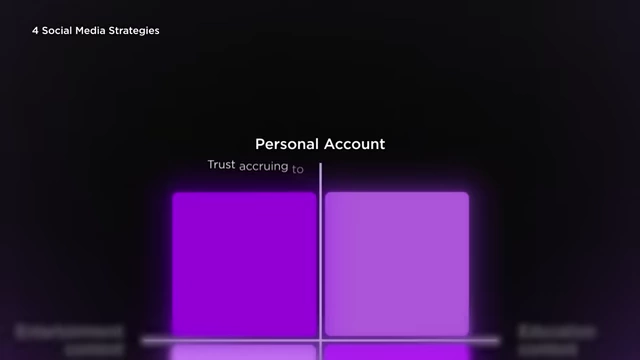
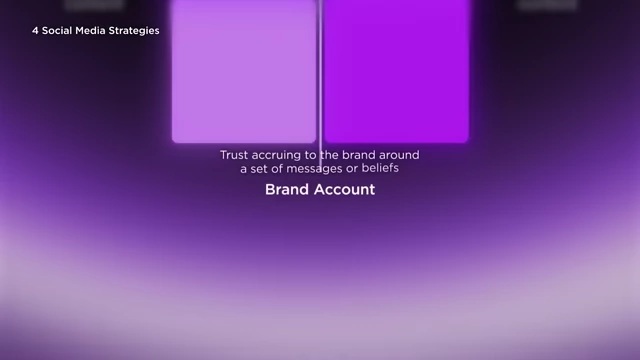
The video introduces four distinct social media strategies tailored for business owners, based on a 2x2 matrix.
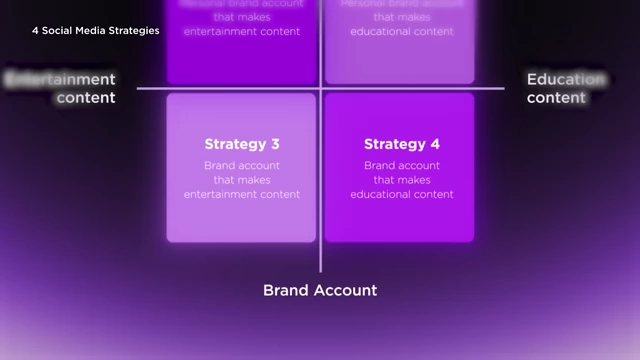
- Understanding the 2x2 Matrix
- Account Positioning: This refers to where viewer trust is intended to accrue.
- Content Type: This defines the method of value transfer in the content.
- Entertainment Content: Delivers value through emotional transfer, such as humor, curiosity, joy, or sadness, leading to a "dopamine unlock."
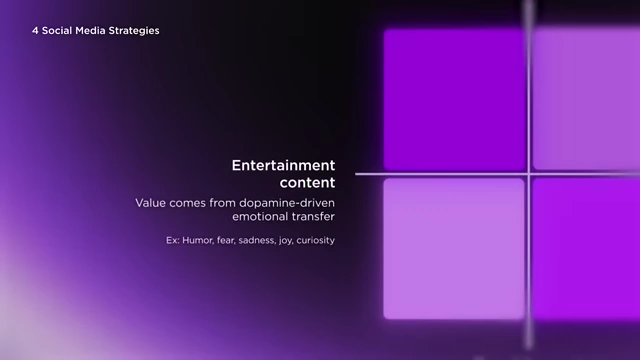
Entertainment Content: Value from Emotional Transfer [ 00:02:38 ] - Education Content: Delivers value through practical utility, providing actionable solutions or tactical knowledge to solve a problem.
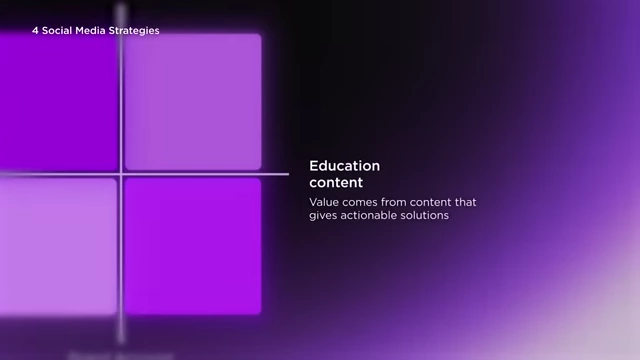
Education Content: Value from Actionable Solutions [ 00:02:50 ]
- Entertainment Content: Delivers value through emotional transfer, such as humor, curiosity, joy, or sadness, leading to a "dopamine unlock."
- The Four Strategies
- Personal brand account creating entertainment content in its niche.
- Personal brand account creating education content in its niche.
- Traditional brand account creating entertainment content.
- Traditional brand account creating education content.
- Strategic Commitment
- While any of these strategies can be successful in any niche, it is critical to select one and commit fully.
- Attempting to straddle multiple strategies or being "half-in, half-out" often leads to failure due to significant differences in execution.
The 2 Business Games [3:25]
Before selecting a social media strategy, business owners must first identify the primary business game they intend to play, as certain content strategies are incompatible with specific games.
- 1. The Advertising Game [3:29]
- Objective: To earn money through brand deals and Cost Per Mille (CPM) payments from social platforms.
- Mechanism: Brands and platforms pay you to create and post content, anticipating a return on investment through your audience's purchases.
- Compatibility: This game primarily works if you are positioned as an individual personal brand.
- It does not typically work for traditional brand accounts because competing brands are reluctant to pay other brands to promote their products.
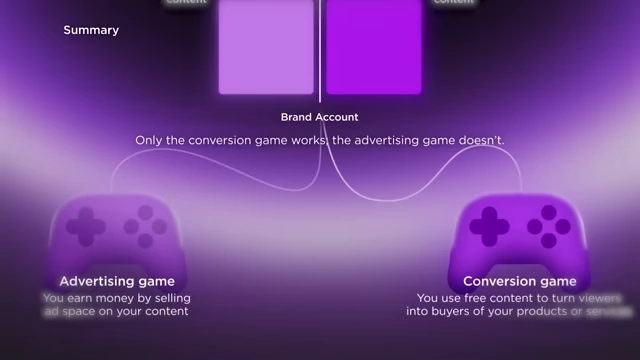
Business Game Viability by Account Type [ 00:05:17 ]
- It does not typically work for traditional brand accounts because competing brands are reluctant to pay other brands to promote their products.
- Examples from the Travel Niche
- Personal Account + Education Content (e.g., Kara and Nate) [5:28]
- Content Type: Educational travel tips, vlog breakdowns, practical advice for travelers.
- Monetization: Primarily through brand sponsorships, YouTube AdSense, and newsletter ad placements.
- Scale: Potentially generating millions annually.
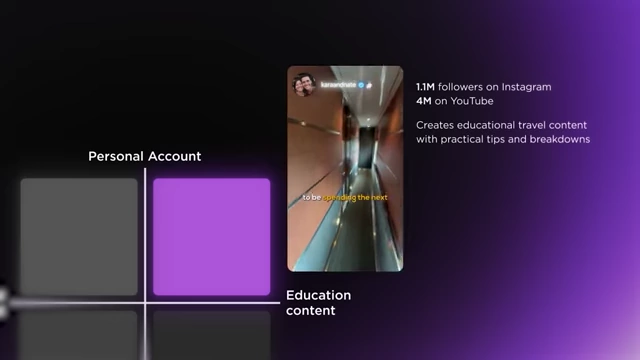
Example: Kara and Nate (Personal Education Content) [ 00:05:39 ]
- Personal Account + Entertainment Content (e.g., Katarina / Professional Traveler) [5:59]
- Content Type: Cinematic travel videos focused on "vibes," aiming to create emotional inspiration rather than tactical instruction.
- Monetization: Travel-related brand deals with hotels, airlines, and tourism boards.
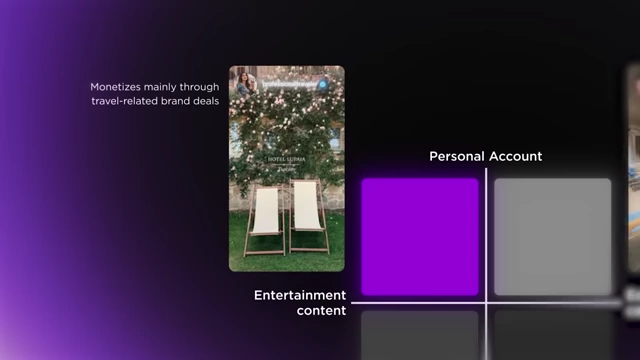
Example: Katarina (Personal Entertainment Content) [ 00:06:06 ]
- Personal Account + Education Content (e.g., Kara and Nate) [5:28]
- 2. The Conversion Game [4:18]
- Objective: To leverage free content to build audience awareness and trust, ultimately converting viewers into paying customers for your products or services.
- Compatibility: All four social media strategies (personal/traditional brand; entertainment/education content) are viable for this game.
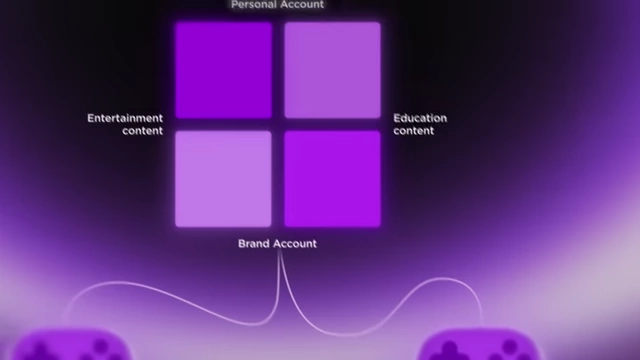
Conversion Game: All Four Social Media Strategies are Viable [ 00:04:33 ] - Examples from the Travel Niche
- Brand Account + Education Content (e.g., Lonely Planet) [6:46]
- Business Model: Sells custom travel plans.
- Content Type: Free educational content that acts as a sampler for their paid services, offering general travel advice and destinations.
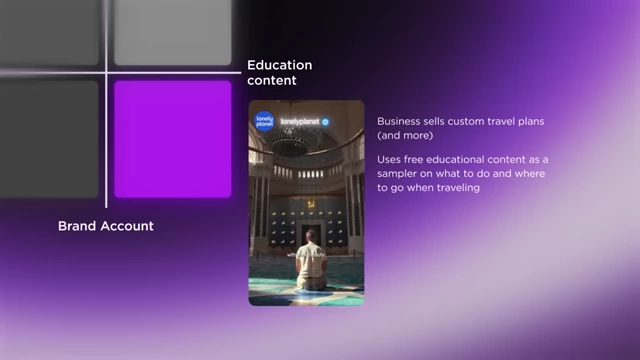
Example: Lonely Planet (Brand Education Content) [ 00:07:00 ]
- Brand Account + Entertainment Content (e.g., Wander) [7:08]
- Business Model: Rents luxury vacation homes.
- Content Type: Entertainment-focused content showcasing properties and experiences, designed to evoke emotional responses like FOMO or inspiration to book.
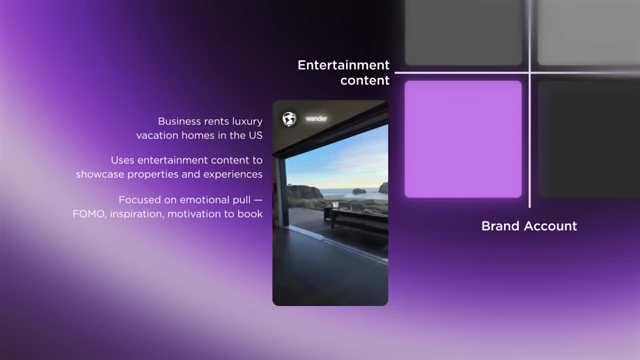
Example: Wander (Brand Entertainment Content) [ 00:07:30 ]
- Brand Account + Education Content (e.g., Lonely Planet) [6:46]
How do I pick which social media strategy is right for me? (entertainment vs education content) [8:39]
The decision between creating entertainment or education content rests on a fundamental question about your product or service.
- The Core Question [9:02]: "Does the product or service that you sell require education for how that solution actually solves the problem for the viewer, or is there embedded understanding in the product and solution?"
- Choosing Entertainment Content
- Condition: If there's an embedded understanding in the viewer's mind of how your solution solves their problem, or if the solution's function is obvious.
- Goal: To remind the viewer of their problem and make them aware of your solution, primarily by creating emotionally driven desire.
- Examples:
- Selling Chocolate [9:22]: People instinctively know chocolate curbs snack cravings. Your content should create desire, not explain how chocolate works.

Selling Chocolate: Embedded Understanding [ 00:09:28 ] - What to do: Make entertainment content that creates an emotionally driven desire (e.g., Mr. Beast Feastables, Midday Squares skits).

Midday Squares: Entertainment Content for Chocolate Brand [ 00:10:09 ]
- What to do: Make entertainment content that creates an emotionally driven desire (e.g., Mr. Beast Feastables, Midday Squares skits).
- Clothing Brand [11:29]: People understand how clothing works.
- What to do: Create entertainment content like try-on hauls, vlogs, or cinematic product shoots to create an emotional feeling or vibe.
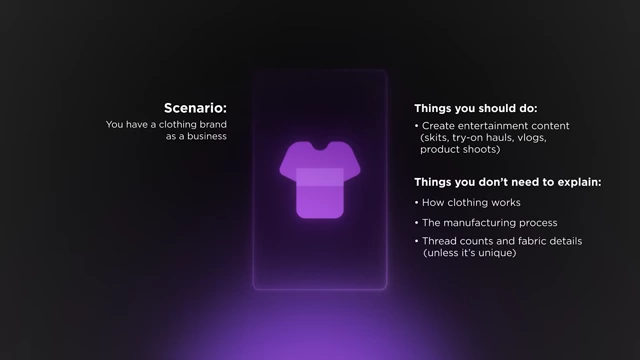
Clothing Brand: Entertainment Content for Emotional Feeling [ 00:11:50 ]
- What to do: Create entertainment content like try-on hauls, vlogs, or cinematic product shoots to create an emotional feeling or vibe.
- Retro Camera App [12:40]: Users understand how camera filters work.
- What to do: Showcase the end result (retro shots) to evoke nostalgia and emotional pull.
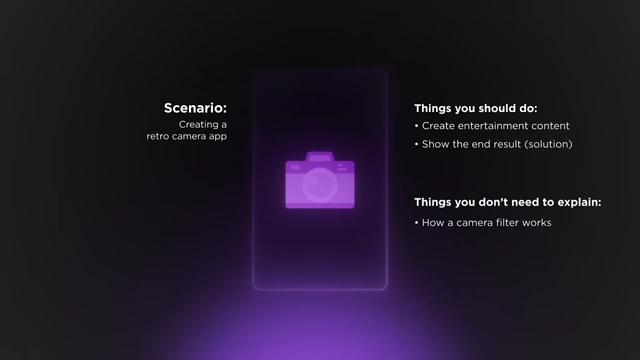
Retro Camera App: Entertainment Content for Emotional Pull [ 00:12:55 ]
- What to do: Showcase the end result (retro shots) to evoke nostalgia and emotional pull.
- Selling Chocolate [9:22]: People instinctively know chocolate curbs snack cravings. Your content should create desire, not explain how chocolate works.
- Categories Best Suited for Entertainment Content [13:21]: Consumer goods, consumables, CPG, clothing brands, basic consumer software, generally understood business software, travel, and certain fitness applications.
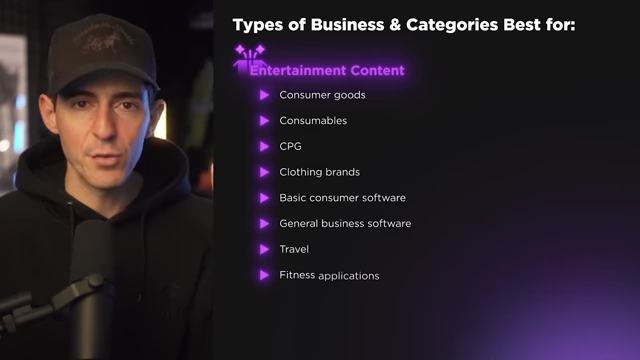
Businesses Best Suited for Entertainment Content [ 00:13:40 ]
- Choosing Education Content
- Condition: If the buyer needs explicit education on how your unique solution works, why it's superior, or how it differs from alternatives.
- Goal: To provide a clear path for the viewer to learn and be educated on your solution, building trust and understanding.
- Examples:
- Custom Tax Solutions for Small Businesses [10:29]: Business owners know they pay too much, but need to understand how your specific solution will reduce their taxes better than others.
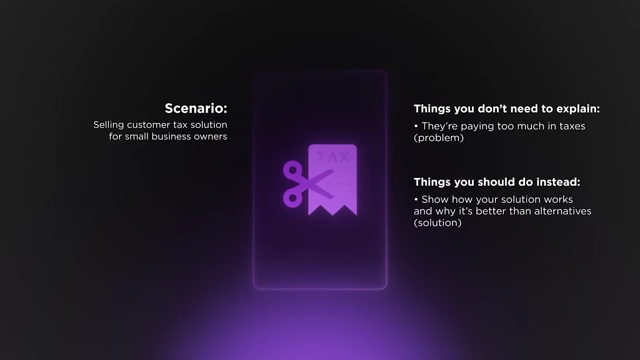
Selling Tax Solutions: Requires Explicit Education [ 00:10:42 ] - What to do: Show how your solution works, why it's better, and guide them to understand it.
- Fashion Stylist [11:57]: Clients need to understand your unique process, taste, preferred brands, and how your expertise will improve their wardrobe.
- What to do: Explain your unique process, educate on wardrobe building, and showcase your taste.
- New Productivity App [13:01]: Users need to learn about productivity habits and how your app functions differently or better than their current systems.
- What to do: Teach productivity habits and show how your app offers a superior system.
- Custom Tax Solutions for Small Businesses [10:29]: Business owners know they pay too much, but need to understand how your specific solution will reduce their taxes better than others.
- Categories Best Suited for Education Content [13:51]: Informational products, agencies, consulting, coaching, niche formulas or frameworks, new/innovative methods, and advanced software with complex features.
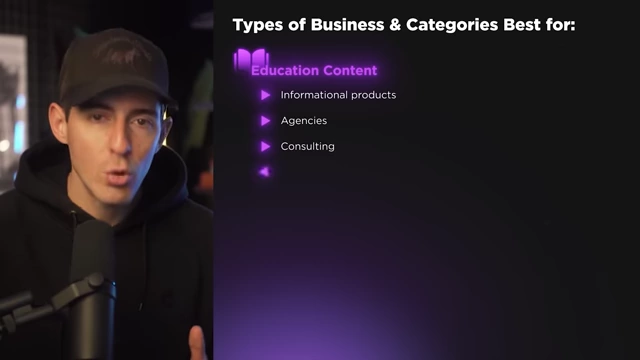
Businesses Best Suited for Education Content [ 00:14:00 ]
Do I use a personal brand account or traditional brand account? [14:31]
The decision between a personal brand account and a traditional brand account hinges on a simple question related to trust.
- The Core Question [14:50]: "What is the fastest path to getting the viewer to trust that your solution will solve their problem?"
- Default to Personal Brand:
- Typically, trust accrues faster to an individual rather than an abstract entity (brand). People tend to trust other people more readily.
- This is why many traditional brands utilize spokespeople, influencers, or human content creators to establish a human connection.
- If the buyer needs to trust you (the individual) to make the purchase, building a personal brand is generally the best approach.
- Exceptions for Traditional Brand Accounts [15:32]:
- Consumer Goods/Retail (CPG, E-commerce): If your product requires buyers to remember a specific brand name when searching or finding it in a physical store.
- In these cases, aggregating equity around the brand name is highly beneficial for in-store recognition and broader market presence.
- Example: Midday Squares operates under a traditional brand name (@MiddaySquares) but features its three founders prominently in content, leveraging person-to-person trust while building brand recall for retail.
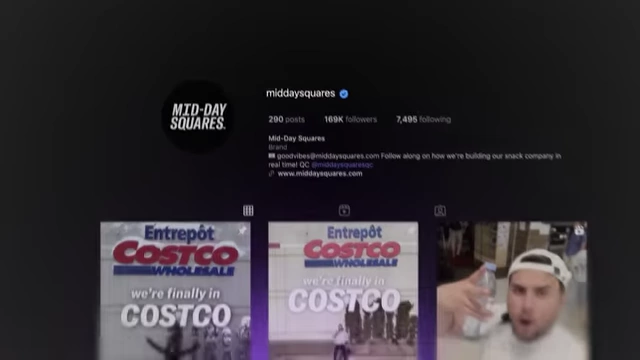
Midday Squares Instagram: Traditional Brand with Human Element [ 00:16:26 ]
- Collective Ethos: If the brand's core values or mission are better communicated by a collective rather than being tied to a single individual.
- Consumer Goods/Retail (CPG, E-commerce): If your product requires buyers to remember a specific brand name when searching or finding it in a physical store.
- Hybrid Approach (Even for Traditional Brands):
- Even when building a traditional brand account, it's advisable to have one person or a small group of recurring characters create content.
- This allows the brand to still benefit from a "pseudo personal brand" effect, fostering some degree of person-to-person trust, which often accelerates engagement and conversion.
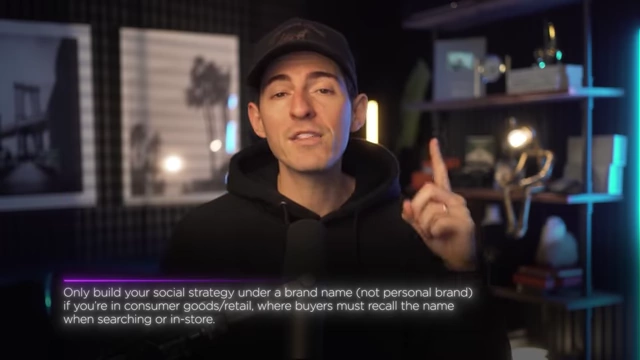
When to Use a Traditional Brand Account [ 00:15:39 ]
- Goal-Based Strategy for Conversion Game [17:37]
- If the customer needs education, make education content.
- If the customer doesn't need education, make entertainment content.
- If you as an individual need to be trusted, build a personal brand.
- If building CPG, retail, e-commerce, or detached from an individual messenger, build a traditional brand.
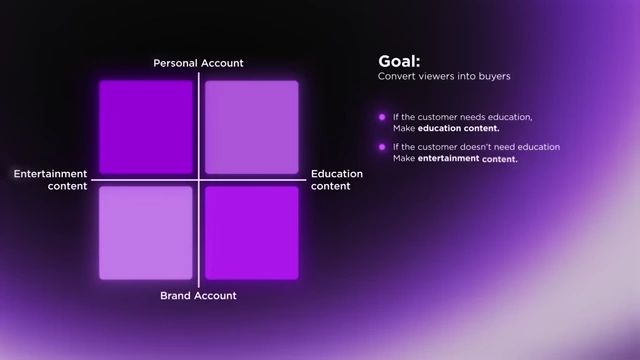
Choosing Strategy for Conversion Game [ 00:17:50 ]
- Goal-Based Strategy for Advertising Game [18:22]
- For individual personal brands playing the advertising game, the content choice (entertainment vs. education) should align with the type of content brands in your category would make to drive conversion for their products.
- Brands requiring education for their solutions will pay educational content creators.
- Brands with embedded understanding (e.g., airlines) will pay entertainment content creators.
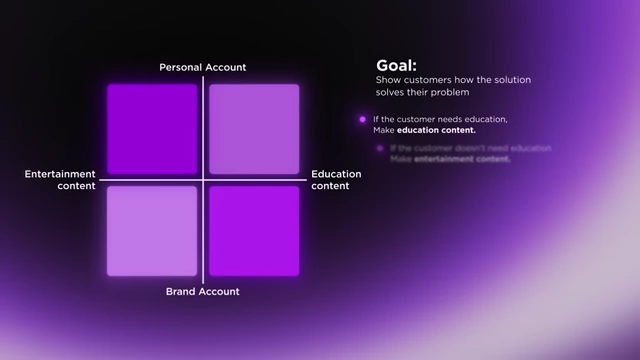
Choosing Content for Advertising Game [ 00:18:49 ]
Kallaway's Modern Marketing Funnel [19:43]
The video introduces "Kallaway's Modern Marketing Funnel," a 7-step psychological flow illustrating how a viewer progresses from initial awareness to becoming a paying customer. Unlike traditional funnels, it accounts for varying buyer journeys based on business type.
- The 7 Steps of the Funnel

Kallaway's Marketing Funnel: All 7 Steps [ 00:20:29 ] - Awareness of Problem: The customer identifies a need or pain point.
- Awareness of Solution Category: The customer knows there are general types of solutions for their problem.
- Awareness of You (as an individual or brand): The customer becomes aware of your existence.
- Awareness that You have a Solution for this Problem: The customer realizes you offer a product/service relevant to their need.
- Education on Solution Category for Problem: The customer learns about the various solutions available in the market.
- Education of Your Specific Solution for Problem: The customer learns the specifics of how your product/service uniquely addresses their problem.
- Conversion on Your Specific Solution for Problem: The customer makes a purchase of your solution.
- Scenario 1: Selling Chocolate (Embedded Understanding) [20:48]
- Assumed Steps: The average person is already at step 1 (hungry, craving) and step 2 (aware of solution categories like chocolate).
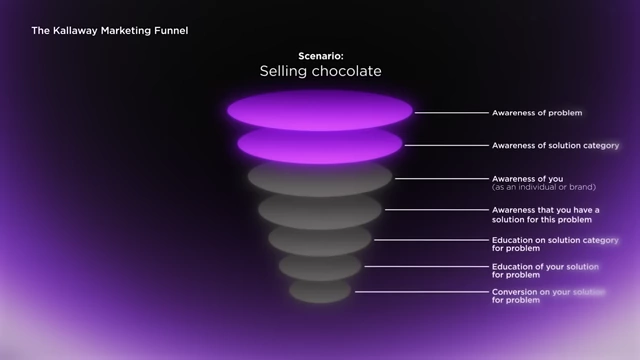
Chocolate Sales Funnel: Awareness Focused [ 00:21:06 ] - Content Focus: For a chocolate brand, the primary goal is to drive awareness at steps 3 (awareness of your brand) and 4 (awareness that you make chocolate).
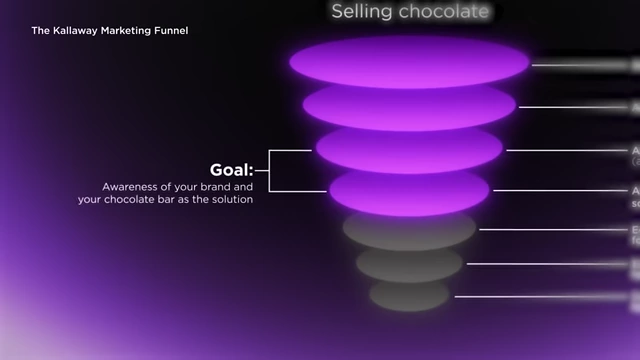
Chocolate Sales Funnel: Goal - Awareness of Brand and Product [ 00:21:29 ] - Skipped Steps: Since the understanding of how chocolate solves hunger is "embedded," the user often skips steps 5 and 6 (education). Entertainment content effectively moves them from 1-4 directly to 7.
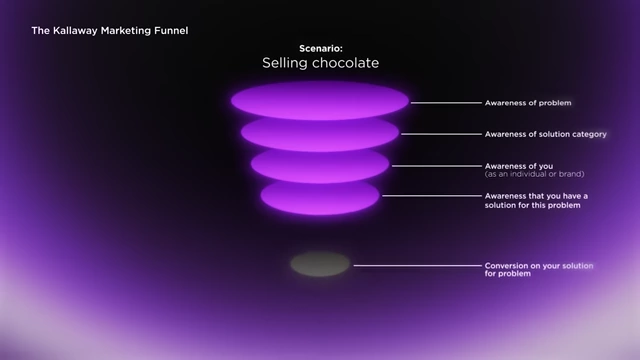
Chocolate Sales Funnel: Skipping Education Steps [ 00:21:45 ]
- Assumed Steps: The average person is already at step 1 (hungry, craving) and step 2 (aware of solution categories like chocolate).
- Scenario 2: Selling Tax Solutions (Requires Education) [21:52]
- Assumed Steps: Viewers are likely at step 1 (paying too much in taxes) and step 2 (aware of general tax solutions).
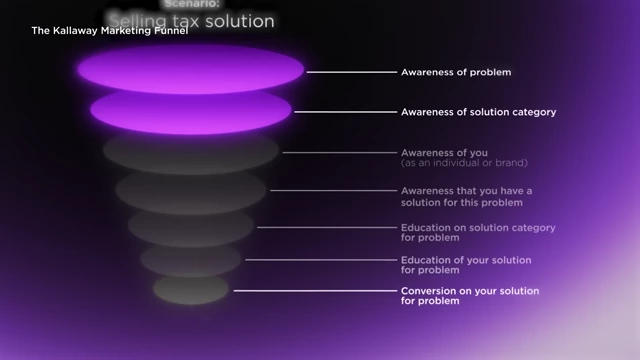
Tax Solution Funnel: Gaps in Awareness and Education [ 00:22:16 ] - Gaps: There are significant gaps in steps 3, 4, 5, and 6, as viewers are not aware of your specific solution or how it works differently.
- Content Focus: To achieve conversion (step 7), you must produce a substantial amount of educational content.
- Prioritize step 5: Broadly educate on how various solutions work across the industry, offering maximum value.
- Occasionally infuse step 6: Explain your specific solution and its unique benefits.

Tax Solution Funnel: Focusing on Education Steps [ 00:22:29 ]
- Outcome: Educational content at steps 5 and 6 naturally builds awareness of your brand and solution (steps 3 and 4), guiding the customer through the entire funnel to purchase.
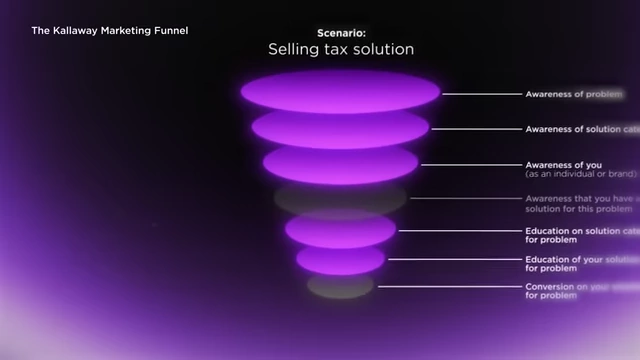
Tax Solution Funnel: Guiding Customer Through All Steps [ 00:22:45 ]
- Assumed Steps: Viewers are likely at step 1 (paying too much in taxes) and step 2 (aware of general tax solutions).
How do I know which content to make so that it works well based on my strategy? (sandcastles.ai) [22:50]
After selecting your social media strategy ("box"), the next critical step is to determine what specific content will be most effective for conversion.
- 1. Study What's Already Working in Your Niche and Strategy [23:18]
- The "Cheat Code": The most effective way to find content ideas is to analyze successful accounts that operate within your exact chosen strategy and niche. Avoid looking at accounts playing different games or using different strategies.
- Identifying Relevant Accounts:
- Personal vs. Brand Account: This is usually straightforward based on the handle (e.g., @KaneKallaway vs. @Nike).
- Entertainment vs. Education Content: Watch the last 10 videos of an account.
- Education: If the videos offer tactically helpful advice that the viewer can immediately apply to solve a problem.
- Entertainment: If the content primarily drives emotional transfer or "vibes" without offering direct, actionable solutions.
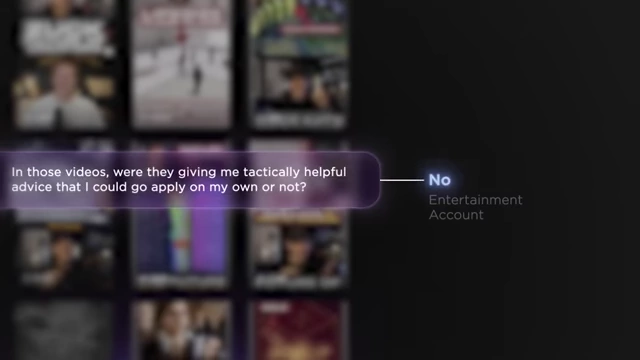
Differentiating Entertainment vs. Education Content [ 00:25:46 ]
- Using Sandcastles.ai for Research:
- Build a List: Compile a list of 10-20 successful accounts that fit your specific strategy and niche. You can find these by scrolling your feed, using competitor's "following" lists, or search.
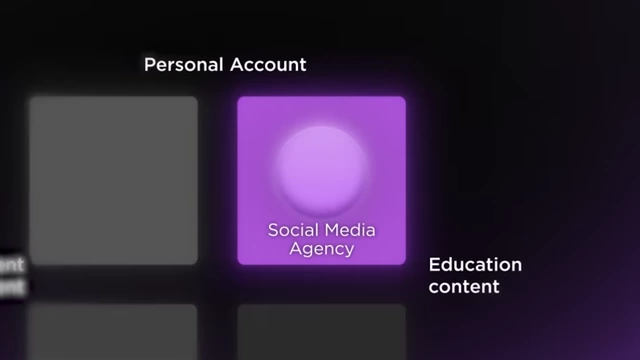
Social Media Agency: Personal Account, Education Content [ 00:24:14 ] 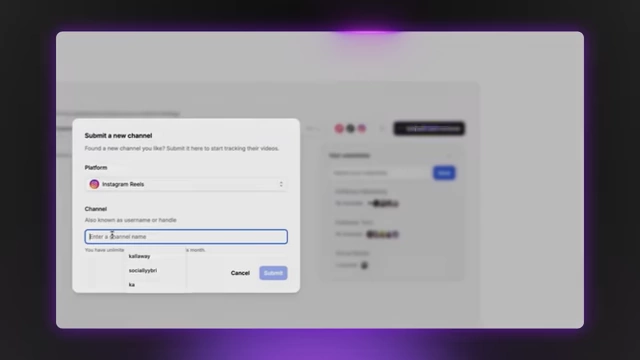
Sandcastles.ai: Adding a Channel for Analysis [ 00:24:57 ] 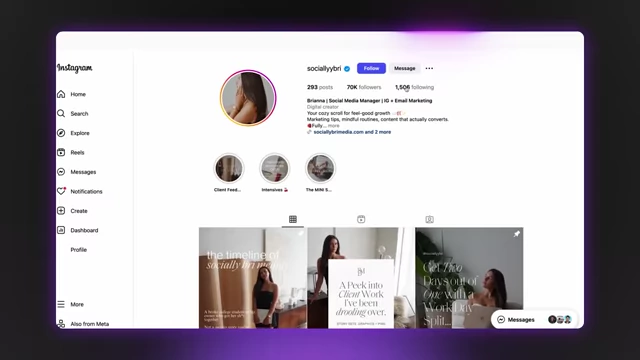
Example Instagram Profile for Competitor Research [ 00:24:58 ] 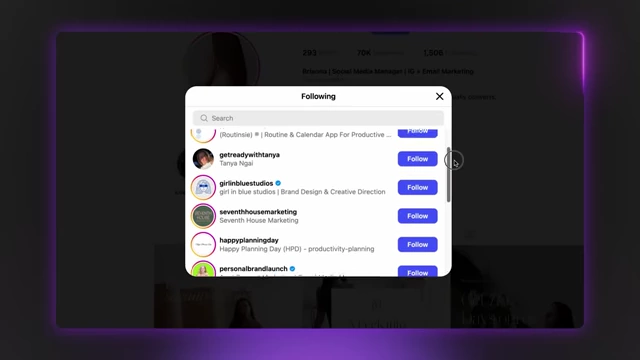
Instagram: Discovering Similar Accounts via 'Following' List [ 00:25:01 ] 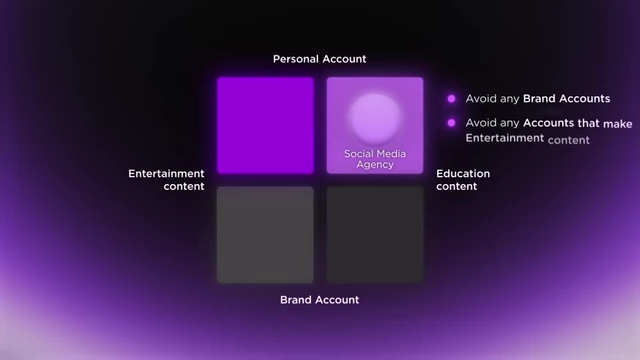
Filtering Accounts: Focusing on Personal Education Content [ 00:25:11 ] - Analyze Performance: Input these accounts into Sandcastles.ai, navigate to the videos tab, filter by your list, and sort by "most viewed" or "highest outlier videos."
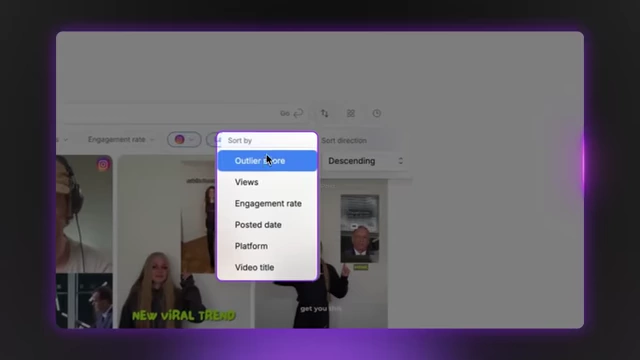
Sandcastles.ai: Sorting Videos by Performance [ 00:24:36 ] 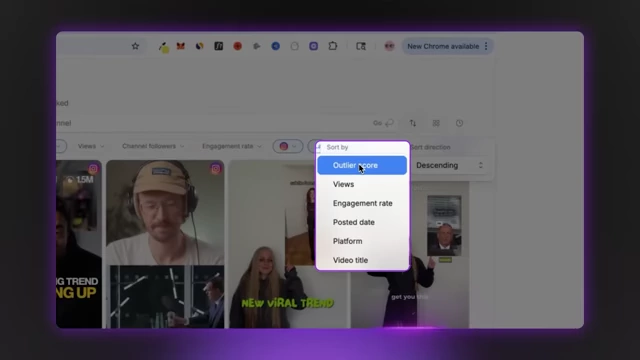
Sandcastles.ai: Sorting by Outlier Score [ 00:26:09 ] 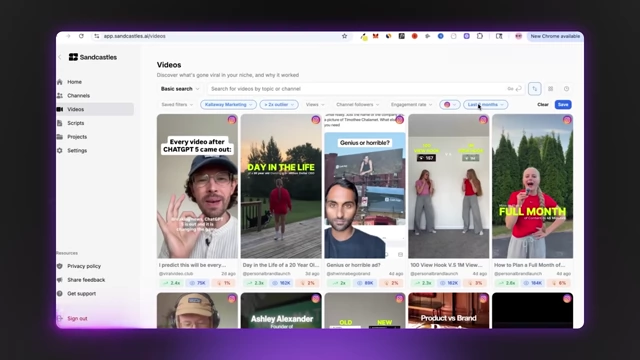
Sandcastles.ai: Top Performing Videos in Niche [ 00:26:17 ] 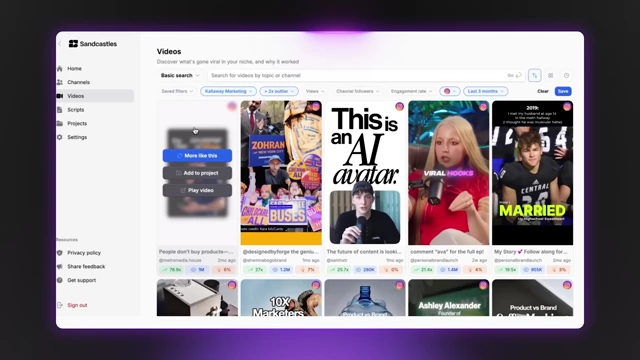
Sandcastles.ai: Analyzing Individual Video Performance [ 00:26:23 ] - Extract Patterns: Review the top-performing videos to identify recurring patterns in:
- Topics: What subjects resonate most?
- Key Points/Facts: What core information is being conveyed?
- Hooks: How do these videos grab attention?
- Formats: What video structures or styles are consistently successful?
- Key Visuals: What visual elements are effective?
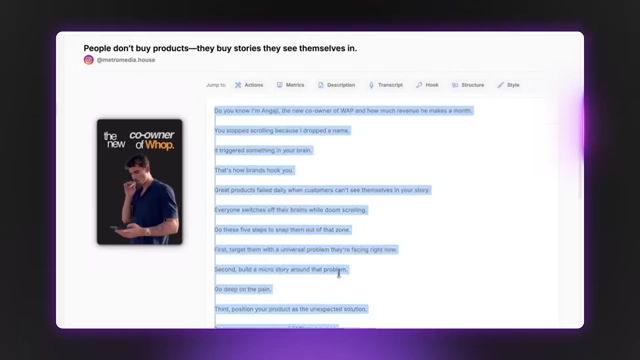
Sandcastles.ai: Analyzing Video Transcript for Key Patterns [ 00:26:29 ]
- Rationale: The audience engaging with these successful videos is the same audience you want to attract and convert.
- Build a List: Compile a list of 10-20 successful accounts that fit your specific strategy and niche. You can find these by scrolling your feed, using competitor's "following" lists, or search.
- 2. Attributes for Effective Content [27:02]
- For Entertainment Content [27:41]:
- Goal: Achieve an emotional transfer.
- Key Attributes:
- Highly Shareworthy: Content that people naturally want to share.
- Curiosity-Driven: Content that sparks and sustains curiosity.
- Broad Reach: Targets a massive total addressable market.
- Emotional Payoff: Delivers a satisfying emotional conclusion.
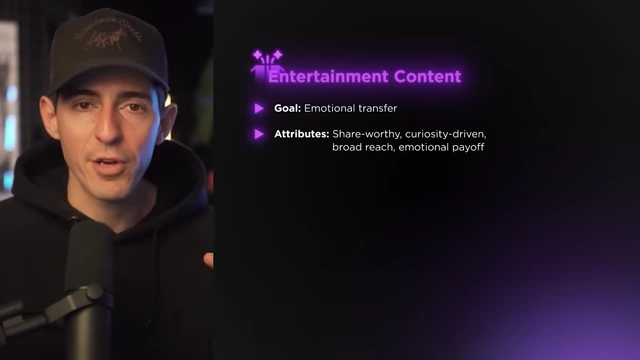
Attributes for Effective Entertainment Content [ 00:27:49 ]
- For Education Content [28:03]:
- Goal: Facilitate a tactical value exchange (provide actionable solutions).
- Key Attributes:
- On-Target Shareworthy: Content that is valuable and relevant to your specific target audience, encouraging sharing within that group.
- Large On-Target Total Addressable Market (TAM): Appeals to a significant portion of your ideal customer base.
- Clear Executable Problem-Solution Framework: Presents problems and provides clear, step-by-step, actionable solutions.
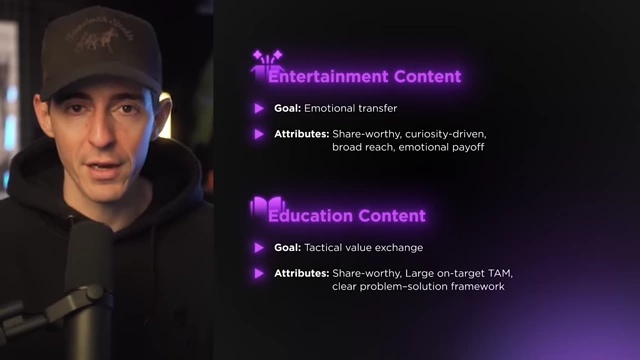
Attributes for Effective Education Content [ 00:28:19 ]
- For Entertainment Content [27:41]:
Summary [28:30]
This video provides a complete framework for business owners to develop an effective social media strategy.
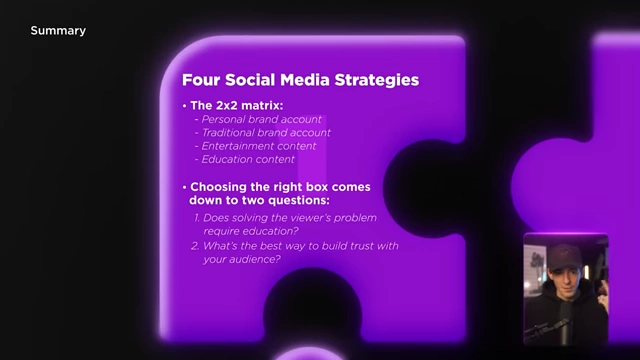
- Four Social Media Strategies: These are based on a 2x2 matrix that considers account type (personal vs. traditional brand) and content type (entertainment vs. education).
- Choosing the Right Strategy: The selection process is guided by two main questions:
- Does your solution require education for the viewer to understand how it solves their problem?
- What is the most effective way to build trust with your audience (person-to-person or brand-centric)?
- Two Business Games: The framework also distinguishes between the Advertising Game (focused on brand deals and requiring a personal brand) and the Conversion Game (focused on selling products/services, where all strategies are viable).
- Kallaway's Modern Marketing Funnel: This unique 7-step funnel maps the psychological journey of a viewer converting into a buyer, explaining how different businesses navigate the awareness and education stages.
- Content Creation Framework: A practical, step-by-step guide is provided on how to determine which content to create. This involves studying successful accounts within your specific chosen strategy and niche, leveraging tools like Sandcastles.ai to identify proven topics, hooks, and formats.
- Core Principle: The key to success is to diligently study and replicate patterns from content that is already performing well for similar businesses within your chosen strategy.