The Rise of "Slop Bowls": An Investigation into Fast Casual Dining
Summary:
- The video investigates the phenomenon of "slop bowls" – fast-casual meals like those found at Chipotle, Cava, and Sweetgreen – which have become a staple for urban workers' lunch breaks.
- The fast-casual dining sector has seen significant growth, with sales increasing by 9% last year among top 500 chains, outpacing fast food and casual dining.

Map showing the number of Chipotle locations across the United States. [ 00:01:00 ] - Many consumers are frequent eaters of these bowls, some spending hundreds of dollars a month and having them multiple times a week.
- While some appreciate the health benefits, speed, and consistency, others find them unappetizing due to their "slop-like" appearance and lack of individual flavor.
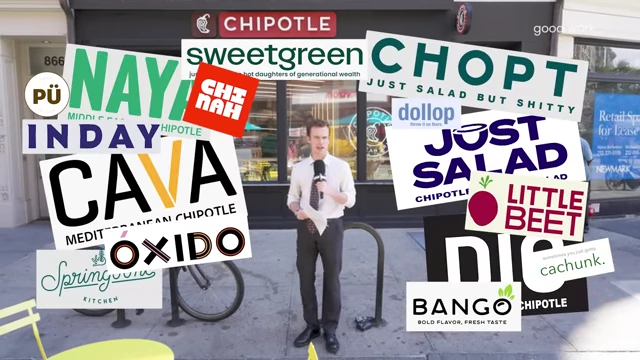
A collage of various fast-casual restaurant logos, highlighting the proliferation of "slop bowl" establishments. [ 00:10:38 ] - The "Slop Bowl Corridor" on 42nd Street in NYC is a prime example of the concentration and popularity of these establishments.
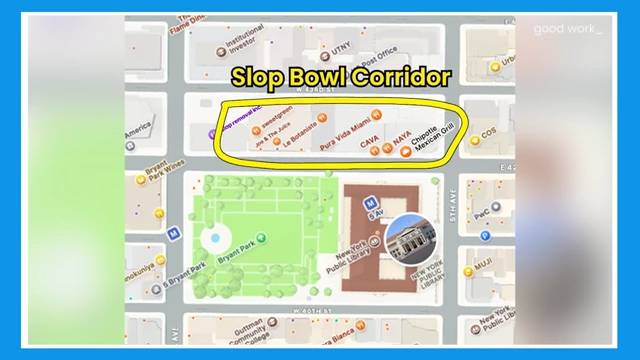
A map highlighting the "Slop Bowl Corridor" on 42nd Street in NYC, showcasing the density of fast-casual bowl restaurants. [ 00:03:45 ] - The video concludes that "slop bowls" represent a communal, if not always ideal, way for busy individuals to get through their day, offering efficiency and health despite their unappealing name and corporate vibe.
The Phenomenon of "Slop Bowls" [0:00]
- The video introduces "slop bowls" as a prevalent dining option in fast-casual restaurants like Cava, Sweetgreen, Chipotle, Dig, Naya, Chopt, and Just Salad [0:00].
The Origin and Growth of the Fast Casual Bowl Concept [0:37]
- Chipotle's Genesis [0:37]
- The origin of the "slop bowl" trend is traced back to 1993, when Steve Ells opened Chipotle in Colorado near the University of Denver [0:39].
- Chipotle expanded rapidly, with 3,799 locations across the US, making its founder a billionaire [0:51].
Map showing the number of Chipotle locations across the United States. [ 00:01:00 ]
- Replication and Diversification [1:03]
- Many "restaurantrepreneurs" sought to emulate Chipotle's success, blending fast-food efficiency with healthy ingredients and diverse cuisines [1:07].
- Examples include:
- Cava (Mediterranean Chipotle) [1:15]
- Naya (Middle Eastern Chipotle) [1:18]
- Dig (referred to as "Republican Chipotle") [1:18]
- Just Salad (Chipotle but just salad) [1:22]
- Chopt (Just Salad but "shitty") [1:27]
- Sweetgreen (Just Salad for "hot daughters of generational wealth") [1:31]
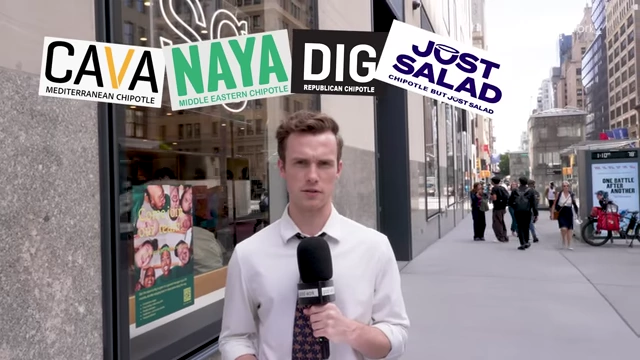
Logos and descriptions of various major fast-casual restaurant chains. [ 00:01:24 ]
- Smaller, emerging chains include Springbone, Inday, The Little Beet, Oxido, Bango Bowls, and Chinah [1:37].
A collage of various fast-casual restaurant logos, highlighting the proliferation of "slop bowl" establishments. [ 00:10:38 ]
- Industry Growth [1:48]
- Lisa Jennings, a veteran restaurant reporter, notes that fast casual has been a significant growth category since the 1990s [1:52].
Lisa Jennings, Reporter for Restaurant Business Magazine. [ 00:01:55 ] - Last year, fast-casual sales grew 9% among the top 500 restaurant chains, significantly outpacing fast food (2.3%) and casual dining (1.3%) [2:03].
- Lisa Jennings, a veteran restaurant reporter, notes that fast casual has been a significant growth category since the 1990s [1:52].
Consumer Habits and Perceptions of Slop Bowls [2:20]
- Frequent Consumption [2:20]
- Individuals confess to eating Chipotle multiple times a week, sometimes for both lunch and dinner, with some spending hundreds of dollars monthly [2:21].
- Consumers often rotate between various fast-casual bowl establishments, ensuring diversity in their "slop category" [3:16].

Devin Irvin, Finance / Bowl knower. [ 00:02:44 ] 
Zachary Bird, Finance / Bowl knower. [ 00:03:04 ] 
Nicole Berg, Marketing / Bowl knower. [ 00:03:19 ]
- The "Slop Bowl Corridor" [3:27]
- Devin Irvin, a "bowl knower," describes a "Slop Bowl Corridor" on 42nd Street in New York City (between 5th and 6th Avenues) where many such establishments are concentrated [3:33].
A map highlighting the "Slop Bowl Corridor" on 42nd Street in NYC, showcasing the density of fast-casual bowl restaurants. [ 00:03:45 ] - This area is a popular lunch spot for coworkers [3:48].
- Devin Irvin, a "bowl knower," describes a "Slop Bowl Corridor" on 42nd Street in New York City (between 5th and 6th Avenues) where many such establishments are concentrated [3:33].
- Reasons for Appeal [3:54]
- Comfort and Experience: Nicole Berg finds comfort in eating from a bowl and wishes to eat all meals this way [3:54].
- Price and Value: Bowls are seen as reasonably priced for the quality and quantity of ingredients [4:09].
- Health and Efficiency: The primary appeal for busy, high-functioning individuals is the health aspect and efficiency [6:04].
- Lisa Jennings clarifies that "slop bowl" is a derogatory term, and these are modern versions of the "sad desk lunch" but offer nutritious, filling meals with better ingredients than traditional fast food [6:20].
- Many find them consistent, healthy, and conveniently located near their workplaces [8:11].
- They are portable and allow for quick return to work [9:04].
- Criticisms and Detractors [8:07]
- Some individuals find no joy in the food, describing it as bland or "not tasting like anything" [8:07].
- Others feel it's just "thrown in the bowl" and lacks the experience eating should offer, feeling like "eating slop" [8:23].
- There are complaints about the long wait times for small portions of protein [9:24] and the high cost (e.g., $18 for Sweetgreen) [9:51].
- One person describes their "dry bowl" order which includes rice, spinach, chicken, romaine, and pita crisps [8:45].
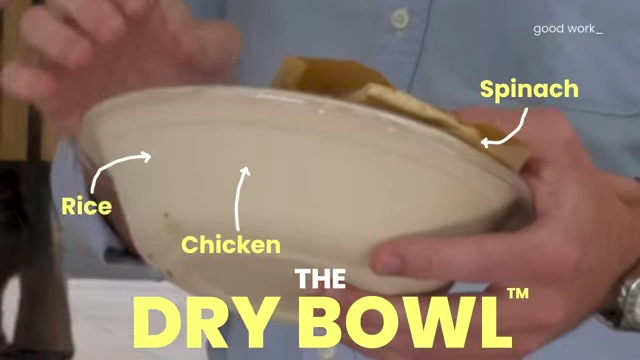
A visual breakdown of the ingredients in "The Dry Bowl™" order. [ 00:08:48 ] - Some prefer other options like bodegas or traditional sit-down lunches [9:30].
The Deeper Meaning of Slop Bowls [10:02]
- The investigation reveals that "slop" means different things to different people:
- The host concludes that despite the "corporate vibe" of these places, slop bowls represent a collective effort of diverse individuals "working together to try our hardest to get through the day" [10:19].
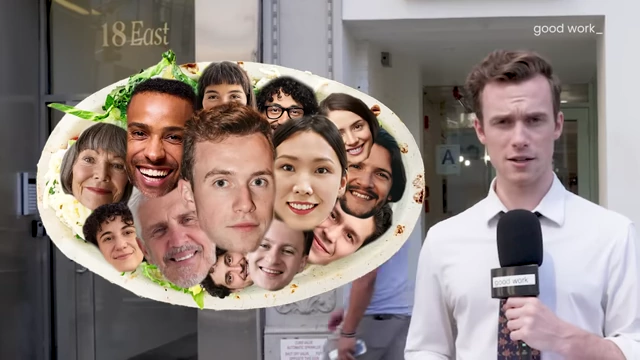
A composite image showing various faces within a slop bowl, representing collective consumption. [ 00:11:00 ] - It's acknowledged that while not ideal, there are appropriate times and places for their consumption, symbolizing a shared human experience of navigating daily life together [10:46].
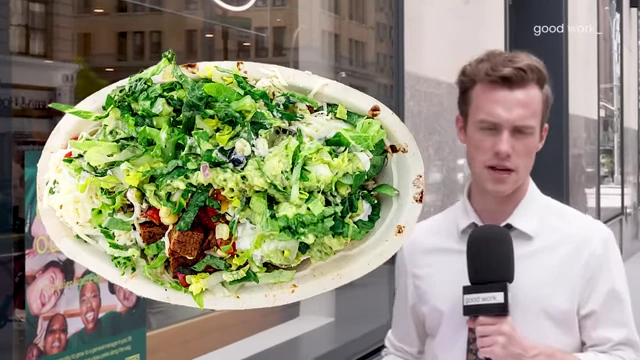
A close-up of a "slop bowl" filled with greens, grains, and various toppings. [ 00:10:54 ]