How to Approach Business Like a Video Game to Scale Your Online Business
This video presents a unique framework for approaching business as a video game, emphasizing that the entrepreneur is the main character who must acquire specific skills to advance through different levels.
- Business as a Game Concept: The video introduces the idea of business as a video game, where detaching ego and emotions allows for a more strategic focus on reaching the next level.
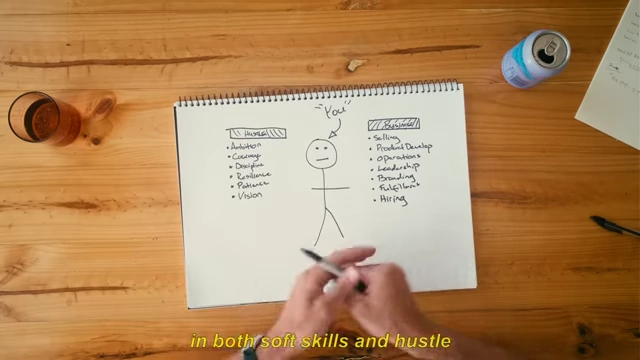
- Character Development (Hustle & Business Skills): Essential soft skills (ambition, courage, discipline, resilience, patience, vision) and key business skills (selling, product development, operations and systems, leadership, branding, fulfillment, hiring) are crucial for an entrepreneur's "hustle bar" and execution.
- Game Modes (Business Types): Various business models, such as freelancer, e-commerce, digital products, agency, and brick-and-mortar, are presented as "game modes," each requiring a different skill set.
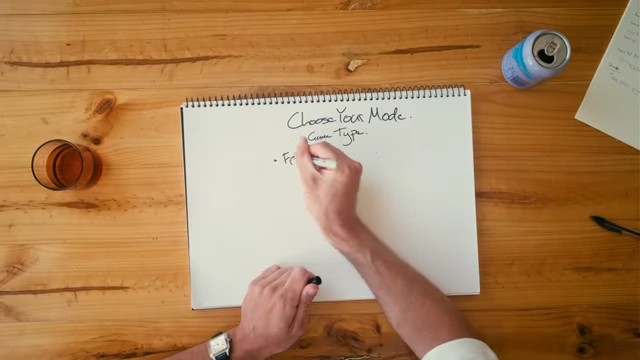
List of different business "game modes" including Freelancer, E-commerce, Digital Products, Agency, and Brick and Mortar [ 00:03:53 ] - Levels of the Game: The video details four business levels based on monthly revenue and the corresponding skills required:
- Level 1 ($0 to $1): Focuses on sales and foundational hustle.
- Level 2 ($1 to $10K): Adds fulfillment to sales and hustle.
- Level 3 ($10K to $100K): Introduces operations and systems alongside existing skills.
- Level 4 ($100K to $2M): Emphasizes branding, hiring, and leadership.
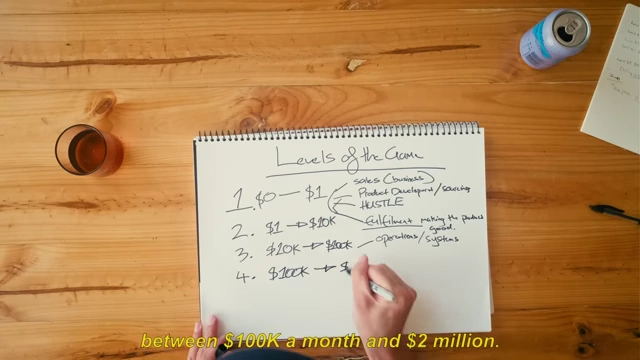
Outline of four business levels ($0-$2M) with corresponding key skills required at each stage [ 00:06:11 ]
- Identifying Current Challenges: The speaker shares his personal struggle with hiring top-tier talent as his business aims to break through the $2 million monthly revenue mark, highlighting the importance of continually developing skills relevant to the current business stage. He consults with an expert, Dara Denney, to gain insights into hiring creative strategists.
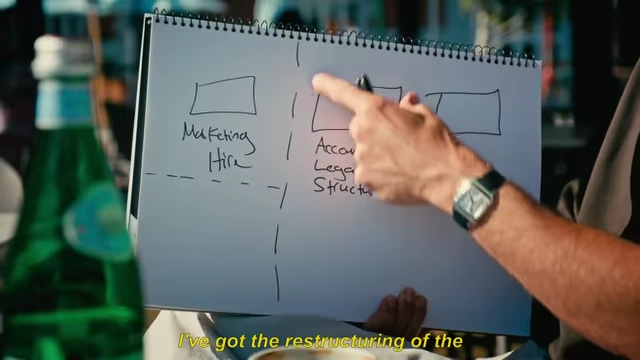
The speaker outlining his three main challenges for the week: Marketing Hire, Accounting/Legal Structure, and Operational Capacity [ 00:09:20 ]
Introduction: Business as a Video Game [00:00:06]
The video's core premise is to treat business as a video game, allowing entrepreneurs to detach their ego and emotions. This perspective helps individuals focus on the necessary steps and skill acquisition to advance their business to the next level.
Character Development: Skills for Success [00:01:50]
The speaker emphasizes that the entrepreneur is the "main character" in this business game. Success is not about a magical idea but about possessing the right skills and the drive to execute.
The Hustle Bar (Soft Skills) [00:02:07]
The "hustle bar" represents a combination of crucial soft skills:
- Ambition: The drive to achieve goals.
- Courage: The willingness to navigate the unknown.
- Discipline: The ability to consistently show up, even when unmotivated.
- Resilience: The capacity to persist even when things are not going well.
- Patience: The ability to endure delays and setbacks.
- Vision: The foresight to see the bigger picture and future goals.
- These soft skills are essential for an entrepreneur's overall hustle score.
Business Skills [00:02:55]
Complementing the hustle bar are specific business execution skills:
- Selling: The ability to close deals and generate revenue.
- Product Development: Creating and refining products that meet market needs.
- Operations and Systems: Establishing efficient processes for business functions.
- Leadership: Guiding and motivating a team.
- Branding: Building a recognizable and valuable identity for the business.
- Fulfillment: Delivering products or services effectively.
- Hiring: Attracting and integrating talent into the team.
Diagram illustrating "You" as the main character with "Hustle" soft skills (Ambition, Courage, Discipline, Resilience, Patience, Vision) and "Business" skills (Selling, Product Development, Operations, Leadership, Branding, Fulfillment, Hiring) [ 00:03:21 ]
Develop Your Character [00:03:22]
- Knowing which skills need development makes it easier to focus time and energy on improving them.
- Continuous improvement comes from showing up daily and learning from failures.
Choose Your Mode: Business Models [00:03:48]
Different business models are presented as "game modes," each requiring a unique combination of skills:
- Freelancer: Offering specialized services independently.
- E-commerce: Selling products online.
- Digital Products: Creating and selling digital goods.
- Agency: Providing services to multiple clients.
- Brick and Mortar: Operating a physical business location.
- While each mode requires specific skills, all demand proficiency in the fundamental "big dog of all business skills."
List of different business "game modes" including Freelancer, E-commerce, Digital Products, Agency, and Brick and Mortar [ 00:03:53 ]
Levels of the Game: Scaling Your Business [00:04:17]
The video outlines four distinct levels of business growth, each with increasing revenue targets and required skill sets.
Level 1: $0 to $1 [00:04:20]
- Significance: The first sale is crucial as it validates the business concept and proves possibility.
- Required Skills:
- Sales: The primary business skill to master.
- Product Development/Sourcing: Ensuring a viable product exists.
- Hustle: A foundational level of all soft skills (ambition, courage, discipline, resilience, patience, vision) is necessary.
Level 2: $1 to $10K per Month [00:05:18]
- Focus: Scaling beyond the initial sale.
- Required Skills:
- Sales: Continual improvement is necessary.
- Hustle: Must be consistently applied.
- Fulfillment: Delivering a high-quality product is vital for sustained growth (e.g., preventing a drop-shipped product from "falling off a cliff").
Level 3: $10K to $100K per Month [00:05:49]
- Key Addition: Introducing structure and efficiency.
- Required Skills:
- Sales, Fulfillment, Hustle: All previously acquired skills must continue to improve.
- Operations and Systems: Essential for managing increased volume and complexity.
- Advice: If a business is under $100K, the focus should still primarily be on sales, fulfillment, and consistent hustle/discipline, rather than premature branding efforts.
Level 4: $100K to $2 Million per Month [00:06:07]
- Speaker's Current Level: The speaker is currently operating at this level, aiming to break the $2 million mark.
- Current Challenge: The speaker identifies hiring as his personal barrier to advancing, despite strong branding.
- Prioritization: For businesses under $100K, focusing on sales, cash flow, and product-market fit is more important than branding.
The Next Level: Mastering Hiring [00:07:07]
Identifying the Bottleneck [00:07:42]
- The speaker's team is at capacity, unable to take on more work or new opportunities due to limited personnel.
- The primary constraint is the lack of staff to create necessary media and execute new initiatives.
- The speaker acknowledges avoiding the challenge of hiring due to fear of learning new skills.
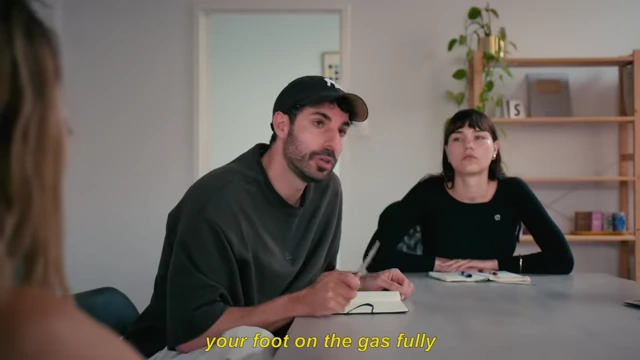
The speaker discussing team capacity with his team members, highlighting the current constraint on growth [ 00:07:48 ] 
The speaker and a team member (Robin) at a cafe, discussing how adding more personnel could accelerate business growth [ 00:08:09 ]
The speaker outlining his three main challenges for the week: Marketing Hire, Accounting/Legal Structure, and Operational Capacity [ 00:09:20 ]
Learning from an Expert [00:10:01]
- The speaker seeks advice from an expert, Dara Denney, on hiring creative strategists.
- He mentions a Steve Jobs quote about hiring smart people to tell you what to do, highlighting his own insecurity in this area due to past negative experiences with agencies and hires.
- The expert explains that the role of a "DTC creative strategist" focusing on performance ads is a relatively new and evolving field, primarily popularized in the US over the last 3-4 years. The talent pool for experienced practitioners is small, with many being students.
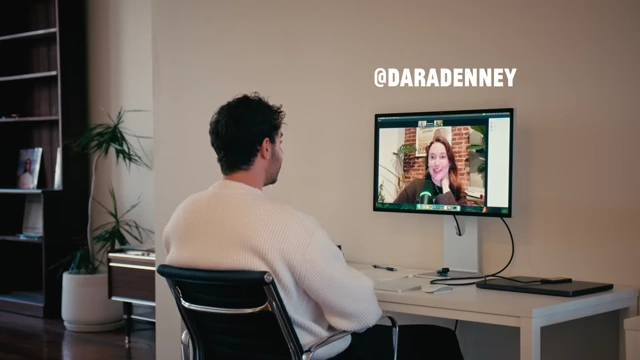
The speaker engaged in a video call with Dara Denney, an expert on hiring creative strategists [ 00:11:03 ]
Strategic Hiring Decisions [00:13:59]
- The team's creative strategy lead (Robin) handles both performance ads and emails, with emails accounting for 50% of revenue and ads fueling growth. Robin is at capacity.
- The expert suggests options:
- Hiring an external agency and in-house creators for volume if there's no bandwidth for internal training and mentorship.
- Hiring a junior creative strategist if Robin is willing to mentor and train them. This approach has shown the best long-term results.
- Finding local talent might be challenging, especially in isolated cities.
- Outcome: The conversation clarified that the current ad system is robust and performing well, meaning a new hire is needed to alleviate Robin's workload on email strategy, rather than ads.

The speaker and his team member, Robin, reviewing insights from the expert call to identify specific hiring needs [ 00:15:38 ]
Conclusion: The Skill to Master [00:17:15]
- The speaker concludes that mastering hiring is the critical skill for him to focus on for the next 12 months to get his business to the next level.
- He encourages viewers to identify their own critical skill to master for their next level of growth.