The video reviews the Ubiquiti E7 Audience, a high-end WiFi 7 access point designed for large audiences, costing $2000.
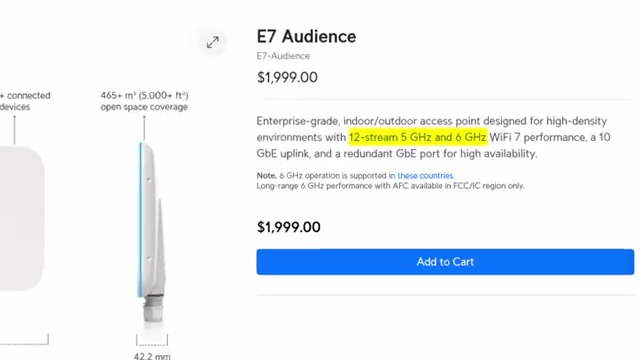
E7 Audience product page showing its $1999 price and key specifications like 12-stream WiFi 7 and 1500+ client capacity.
[
00:00:46
]
This device is rated for over 1500 clients, features an IP68 protection rating, and includes 10 GbE PoE++ input with a 1 GbE backup port. It operates on 5 GHz and dual 6 GHz bands, supporting 4x4 MIMO for 12 spatial streams and offers software-switchable directional antennas (90x90 or 50x50 degree patterns).
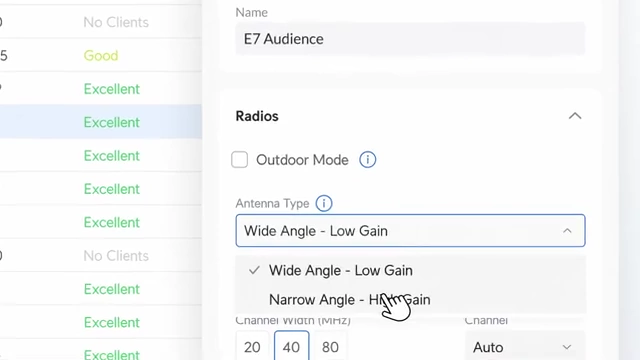
The UniFi UI showing options to switch between "Wide Angle - Low Gain" and "Narrow Angle - High Gain" antenna types for the E7 Audience.
[
00:06:34
]
The presenter tests the E7 Audience at a 300-person LANFest event in a 30,000 sq ft space, positioning it 20-30 ft high using a makeshift pole mount.
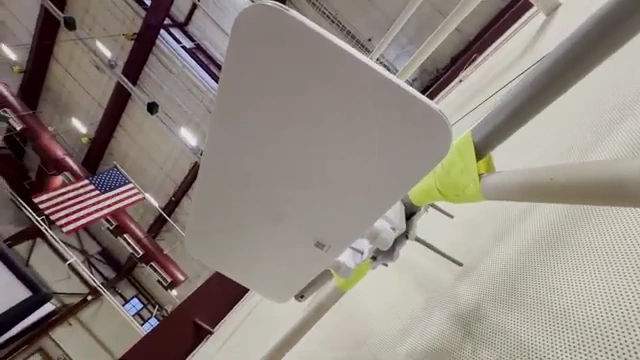
The E7 Audience mounted high on a diagonal cross-brace at the LANFest venue using zip ties and duct tape.
[
00:09:53
]
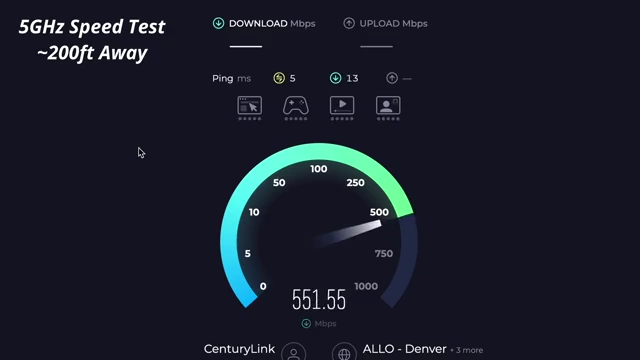
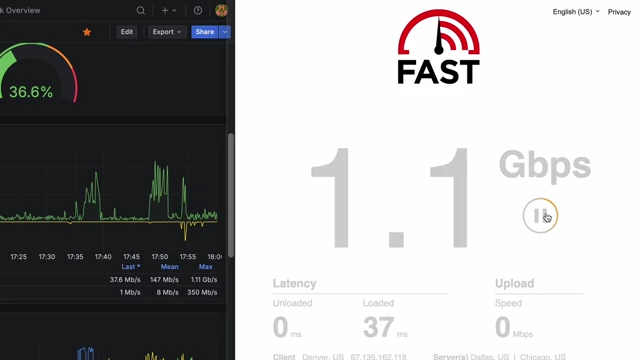
Initial tests showed over 500-600 Mbps on 5GHz from 200 ft away, and during the event with ~140 connected devices on 6GHz, speeds reached over 1 Gigabit.
A speed test showing 551.55 Mbps download speed on 5GHz from 200 feet away with no other users.
[
00:10:57
]
The AP handled over a terabyte of traffic over two days with minimal complaints, validating its performance in a demanding environment.
The presenter recounts a surprising experience of getting 400 Mbps Wi-Fi in a stadium with thousands of people, sparking curiosity about high-performance Wi-Fi solutions.
A speed test showing 440 Mbps download speed in a stadium.
[
00:00:20
]
He introduces the Ubiquiti E7 Audience, a top-of-the-line Wi-Fi 7 access point costing $2000, designed for large audiences like stadiums or universities.
E7 Audience product page showing its $1999 price and key specifications like 12-stream WiFi 7 and 1500+ client capacity.
[
00:00:46
]
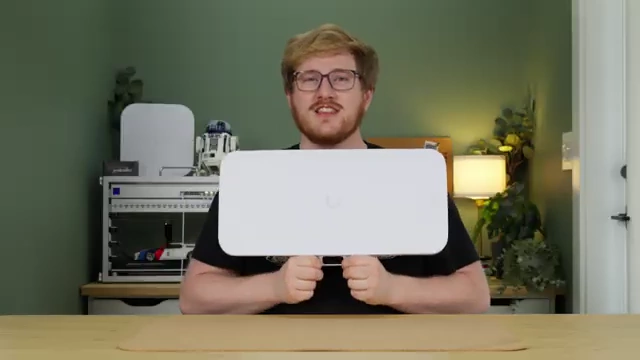
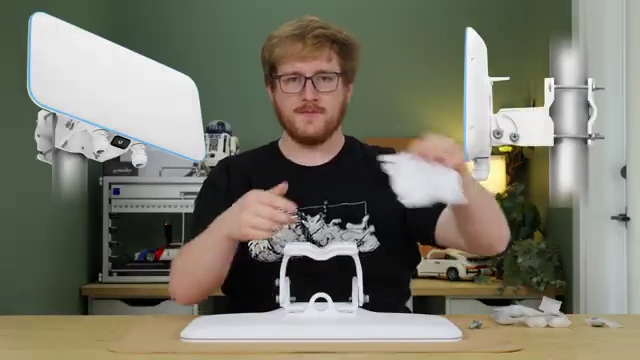
The device is physically large, exceeding the size of the presenter's head.
The presenter holding the E7 Audience, demonstrating its significant size.
[
00:01:08
]
It features a bracket for pole mounting, allowing for vertical or horizontal attachment and tilt adjustment, but no pan.
The E7 Audience mounting bracket, designed for pole mounting with adjustable tilt.
[
00:01:27
]
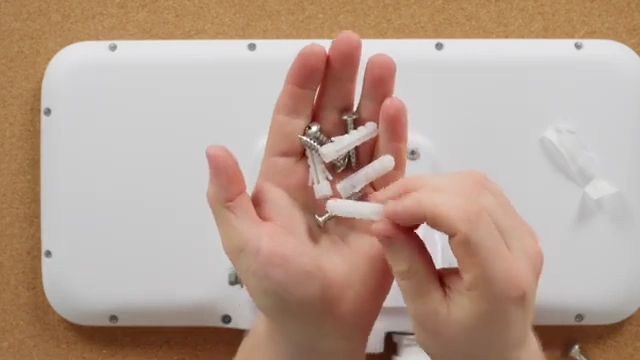
It also includes drywall anchors for wall installation, suitable for environments like schools.
A hand holding large drywall anchors, included with the E7 Audience for wall installation.
[
00:01:36
]
Cable Glands and IP68 Rating:
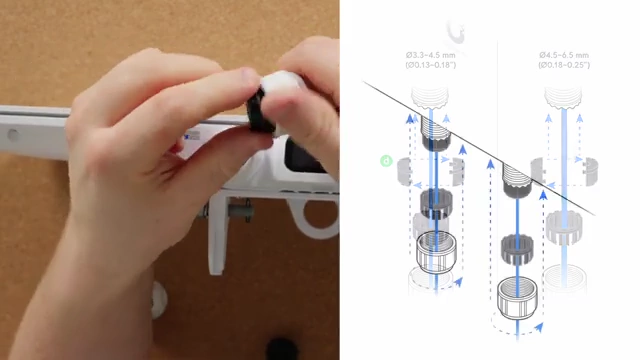
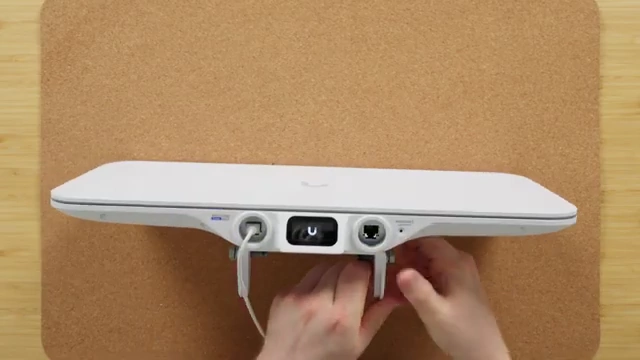
The access point has two cable glands to insulate Ethernet cables, preventing water ingress.
A diagram illustrating how the cable gland works to seal the Ethernet cable and prevent water entry.
[
00:01:57
]
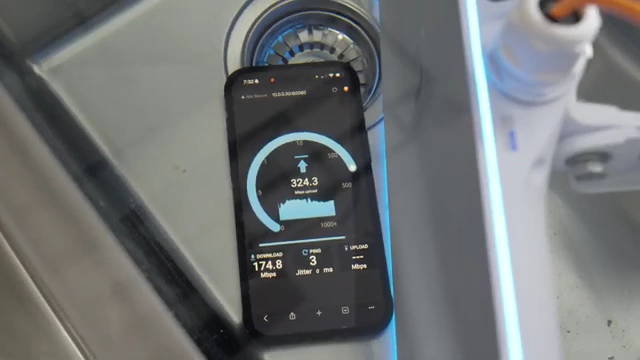
This design contributes to its IP68 protection rating, meaning it is fully dust-tight and can withstand submersion up to 1 meter for an extended period.
A demonstration shows the device still functioning while submerged in a sink.
The E7 Audience submerged in a sink, actively running a speed test with a download speed of 174.8 Mbps.
[
00:02:35
]
Connectivity:
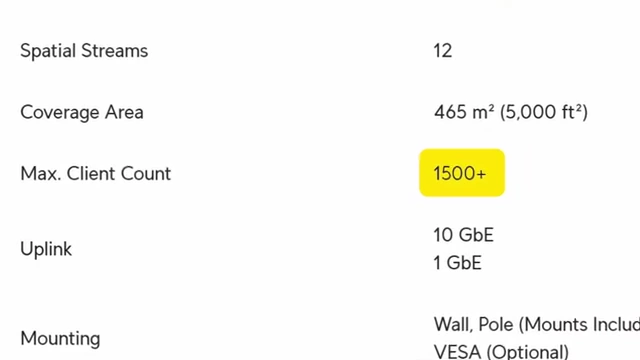
Rated for over 1500 clients.
A specification sheet for the E7 Audience highlighting its maximum client count of 1500+.
[
00:02:49
]
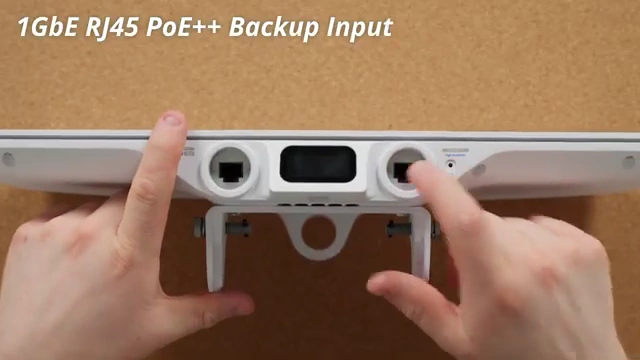
Features a 10 Gigabit Ethernet (GbE) RJ45 PoE++ input.
Includes a 1 GbE RJ45 PoE++ backup input for high availability, automatically switching if the primary link fails without LACP.
A close-up of the E7 Audience's underside, showing the 10 GbE primary and 1 GbE backup PoE++ RJ45 inputs.
[
00:02:59
]
Other Features:
A small screen on the bottom shows "Ready for Adoption" once powered on, whose utility is questioned by the presenter given its intended high-mount usage.
A close-up of the E7 Audience's screen displaying "READY FOR ADOPTION" with UniFi and Apple logos.
[
00:04:50
]
A reset button and an LED ring that wraps around the device.
Power Requirements:
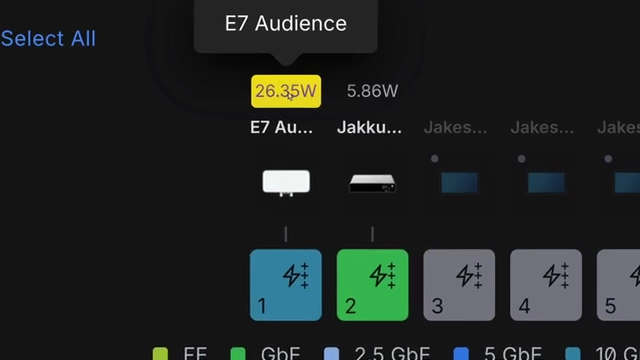
The E7 Audience draws 26 watts without any clients connected.
The UniFi dashboard displaying the E7 Audience's current power draw of 26.35W.
[
00:07:27
]
It requires a PoE++ switch like the UniFi Switch Pro XG 10 PoE.
Specifications of the UniFi Switch Pro XG 10 PoE, showing 10x 10GbE RJ45 PoE+++ ports with 90W Max Per Port.
[
00:03:39
]
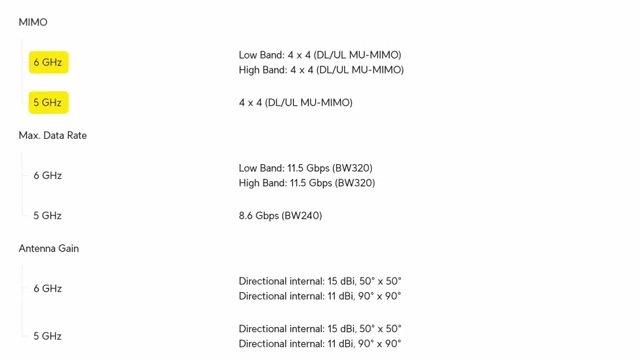
It does not support 2.4 GHz, focusing instead on faster 5 GHz and dual 6 GHz bands.
This configuration essentially provides the capability of two or three access points in one.
The E7 Audience's specifications detailing its 4x4 MIMO support for both 6 GHz and 5 GHz bands, along with maximum data rates.
[
00:05:46
]
MIMO and Spatial Streams:
All three radios (5 GHz and dual 6 GHz) support 4x4 MIMO, resulting in 12 spatial streams.
The E7 Audience product description highlighting its 12-stream 5 GHz and 6 GHz WiFi 7 performance.
[
00:06:15
]
This allows for significant simultaneous communication with multiple devices.
Antenna Directionality:
The device has two sets of internal antennas that can be switched via software.
Users can choose between a wide 90x90 degree pattern (wide mode) or a high-power, long-range 50x50 degree pattern.
The UniFi UI showing options to switch between "Wide Angle - Low Gain" (90x90 degree pattern) and "Narrow Angle - High Gain" (50x50 degree pattern) antenna types for the E7 Audience.
[
00:06:34
]
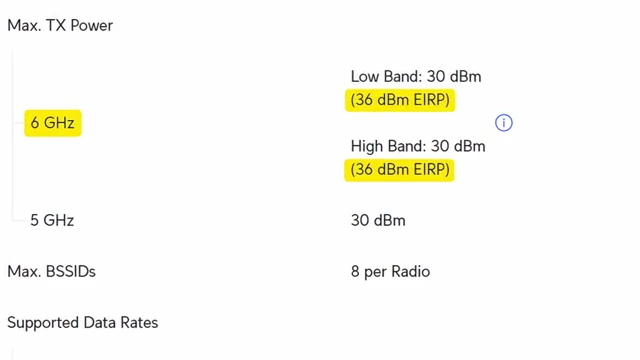
In its outdoor variant, it supports Automatic Frequency Coordination (AFC) on both 6 GHz antennas, allowing it to transmit at 36 dBm ERP (Effective Radiated Power), which is very high.
Specifications for the E7 Audience showing Max TX Power for 6 GHz (Low Band and High Band) at 30 dBm (36 dBm EIRP).
[
00:05:58
]
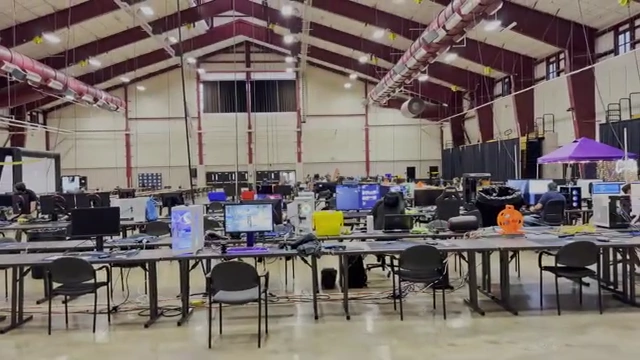
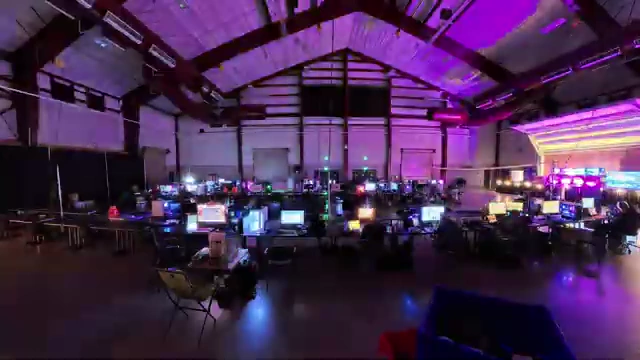
The presenter traveled to Colorado to test the E7 Audience at a LANFest event, a charity LAN party.
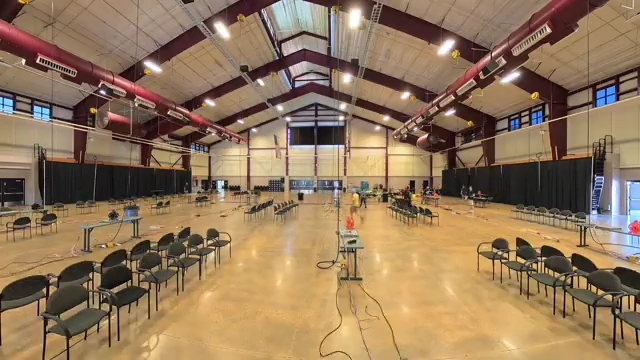
The venue is a large, cavernous space, approximately 250 by 150 feet (30,000 sq ft), with 300 gamers attending.
A wide panoramic shot of the empty LANFest venue before the event, showing its large, open layout.
[
00:08:23
]
The challenge was to provide Wi-Fi for the entire space with a single access point.
Network Setup:
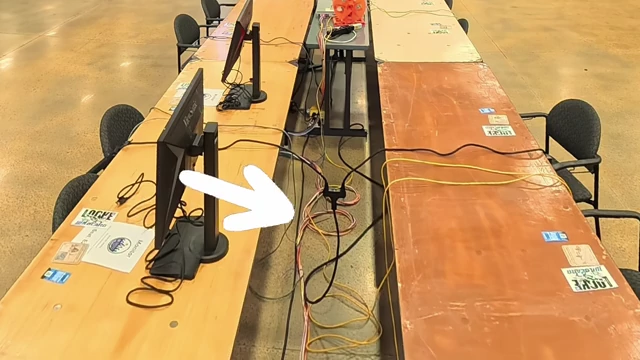
The LANFest setup is streamlined, with custom fiber reels and Ethernet "snakes" providing wired connections to each seat.
A close-up of a custom Ethernet "snake" cable bundle running along the floor between rows of gaming tables at LANFest.
[
00:08:30
]
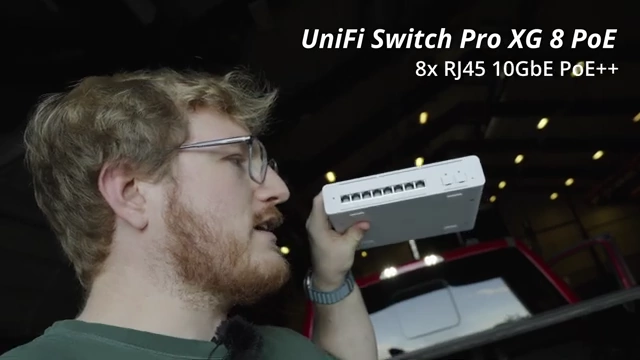
The E7 Audience was powered by a UniFi Switch Pro XG 8 PoE, an 8-port 10 GbE PoE++ switch with two 10 GbE SFP+ ports.
The UniFi Switch Pro XG 8 PoE, an 8-port 10 GbE PoE++ switch, used to power the E7 Audience during the LANFest test.
[
00:08:51
]
Mounting Challenges:
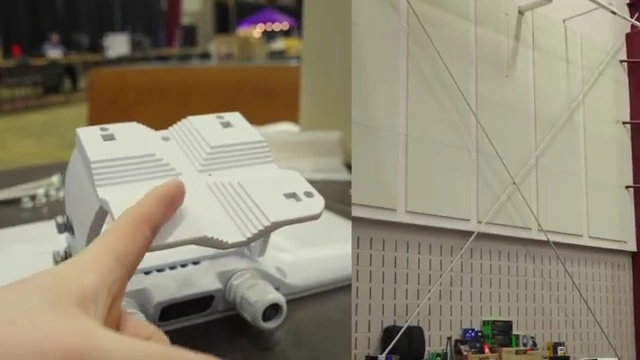
The AP needed to be mounted in the middle of the room, 20-30 feet high, on a diagonal cross-brace structure.
The standard mounting bracket only supports horizontal or vertical orientation, requiring a makeshift solution using zip ties and duct tape to attach it to a horizontal pipe.
A split screen showing the standard mounting bracket next to the diagonal cross-brace, illustrating the incompatible angle for mounting.
[
00:09:33
]
The Ubiquiti E7 Audience mounted high on a diagonal cross-brace at the LANFest venue using zip ties and bright yellow duct tape for a makeshift solution.
[
00:09:53
]
Configuration and Initial Tests (5GHz):
The AP was configured with a deep blue RGB LED and set to wide-angle, low-gain antenna mode (90x90 degree pattern) on the 5 GHz band.
Simulations in the UniFi Design Center suggested this configuration would provide good signal coverage for the entire space.
The UniFi interface showing the 6 GHz (Low Band) settings for the E7 Audience, with Channel Width set to 320 MHz.
[
00:10:15
]
A speed test at the far end of the room (~200 ft away) with no other users initially showed download speeds of 500-600 Mbps.
A panoramic view of the LANFest venue with gamers, taken from 200 feet away from the AP, providing context for the long-range speed test.
[
00:10:51
]
A speed test showing 551.55 Mbps download speed on 5GHz from 200 feet away with no other users.
[
00:10:57
]
Performance with 140+ Connected Devices (6GHz) [11:14]:
During the event, with the venue filled and many phones/laptops connected via Wi-Fi (while most gaming PCs were hardwired), the AP handled over a terabyte of traffic in two days.
A wide shot of the LANFest venue completely filled with gamers, their computers, and colorful lighting during the event.
[
00:08:42
]
The traffic graph showed consistent peaks of 1 Gigabit per second or more.
The presenter conducted a speed test on his laptop, 200 feet away, achieving over 990 Mbps.
A UniFi dashboard showing a traffic graph with peaks over 1 Gbps and a speed test result showing 1.1 Gbps download speed on 6GHz during the event.
[
00:11:52
]
Band Utilization Analysis:
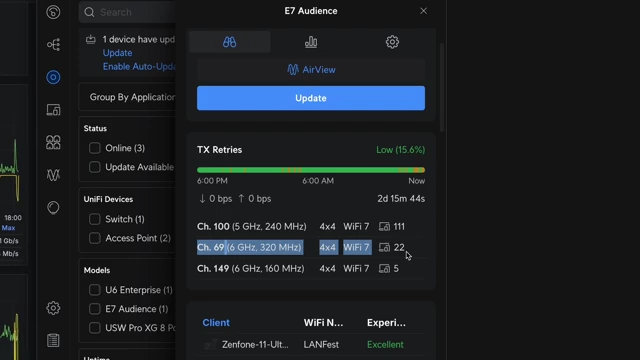
The low band 6 GHz radio (using channels in the lower 6 GHz spectrum, set to 320 MHz wide) was utilized significantly more than the high band 6 GHz radio (using channels in the higher 6 GHz spectrum, set to 160 MHz wide).
A UniFi dashboard view showing client distribution, with 22 clients on 6 GHz (Low Band, 320 MHz) and 5 clients on 6 GHz (High Band, 160 MHz).
[
00:12:06
]
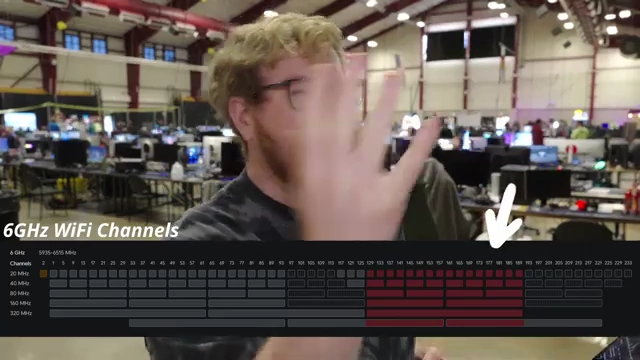
A detailed diagram illustrating the available 6GHz WiFi Channels and their corresponding bandwidths (20, 40, 80, 160, 320 MHz).
[
00:12:21
]
This is attributed to devices preferring the wider channel available on the low band.
Adjusting the low band to match the high band at 160 MHz resulted in more even distribution of client connections.