Explaining the Perceived Rise of Anti-Foreigner Sentiment in Japan: The Sanseito Party, LDP Scandals, and Social Media Influence
The video addresses audience concerns about a rise in anti-foreigner sentiment in Japan. Key points include:
- Japan faces economic issues like yen depreciation and rising import costs, coupled with a surge in overtourism that prices out locals.

A graph illustrates the significant depreciation of the Japanese Yen against the US Dollar over time. [ 00:00:21 ] 
News highlights Japan's record number of tourists in the first half of 2025. [ 00:00:33 ] - This environment has fueled a "Japan is cooked" narrative and contributed to the rise of the Sanseito party, characterized as "far-right" with a "Japanese people first" agenda.
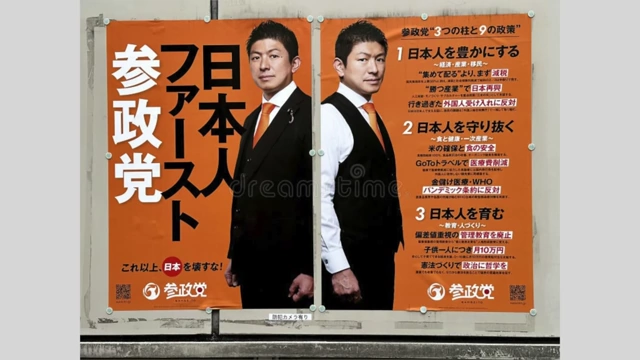
A Sanseito political poster displays the party's slogan, "Japanese people first." [ 00:01:29 ] - Sanseito's actual political power is limited (6% of seats), and its gains are largely due to widespread public frustration with the long-dominant Liberal Democratic Party (LDP).

An infographic illustrates the seat distribution in Japan's 248-seat House of Councillors, showing Sanseito holds only 6%. [ 00:03:29 ] - LDP scandals, particularly ties to the Unification Church (a foreign cult-like religion involved in financial exploitation) and a slush fund scandal, eroded public trust.
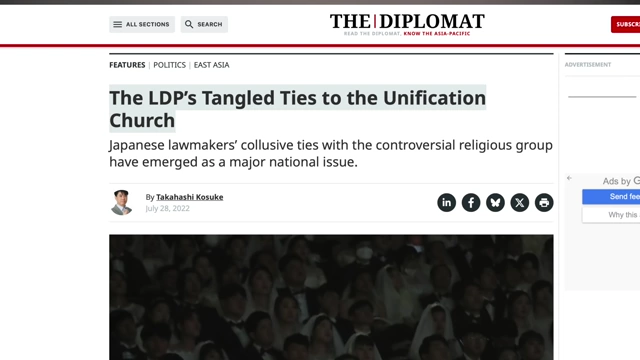
News article detailing "The LDP's Tangled Ties to the Unification Church." [ 00:06:47 ] - Sanseito leveraged social media effectively, appealing to disillusioned voters seeking an alternative to the perceived corrupt political establishment.

Sanseito's YouTube channel shows a consistent upload schedule of free, meaningful content. [ 00:11:42 ] - The video argues that attributing Sanseito's rise solely to xenophobia oversimplifies the complex motivations of voters, many of whom are reacting to domestic political failures and economic hardships rather than an inherent dislike of foreigners.
- The speaker encourages viewers to base their opinions on real-world experiences rather than social media's hyper-polarized portrayals, noting the popularity of "foreigner reacts to Japan" content among Japanese conservatives.

Japanese YouTube comments express pride and gratitude towards foreigners who appreciate Japanese culture. [ 00:14:21 ]
Introduction: Addressing Concerns about Japan [0:00]
The video begins by acknowledging viewer anxieties regarding Japan potentially losing its identity due to economic shifts, increased immigration, and overtourism.
- A viewer's question sparked the discussion, highlighting concerns about:
- Economic Factors: Post-COVID inflation hit Japan hard, and past economic policy prevented interest rate hikes, causing the yen to plummet. [0:10]
- Overtourism Impact: The weak yen and pent-up demand from the COVID-19 pandemic led to a massive wave of tourism. [0:28]
News highlights Japan's record number of tourists in the first half of 2025. [ 00:00:33 ] - Certain businesses, especially hotels and restaurants in tourist destinations, have started pricing based on international tourists' affordability, sometimes pricing out locals. [0:41]
- An example is Niseko, a ski resort in Hokkaido, known for its high prices and large international crowds, illustrating areas becoming "significantly more international." [0:57]
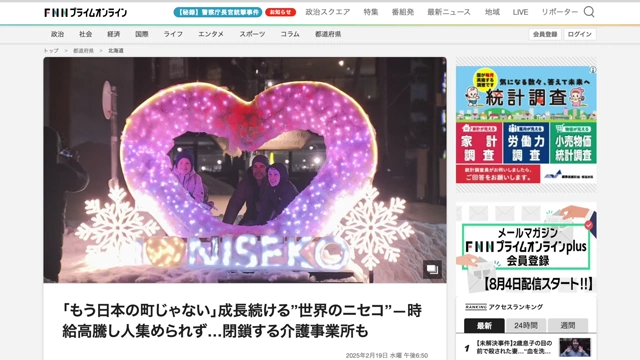
A Japanese news article discusses Niseko, a ski resort experiencing high prices and international crowds. [ 00:01:02 ]
- "Japan is Cooked" Narrative: A recent uptick in sensationalist "Japan is cooked" or "Japan is over" online content contributes to fears of Japan losing its unique character or identity. [1:08]
- The speaker, a foreigner living in Japan, who teaches the language and is a father of two girls growing up there, aims to add clarity and lower the temperature of these discussions, appreciating concerns from both those worried about losing Japanese identity and those worried about rising nationalism and anti-foreigner sentiment. [2:24]
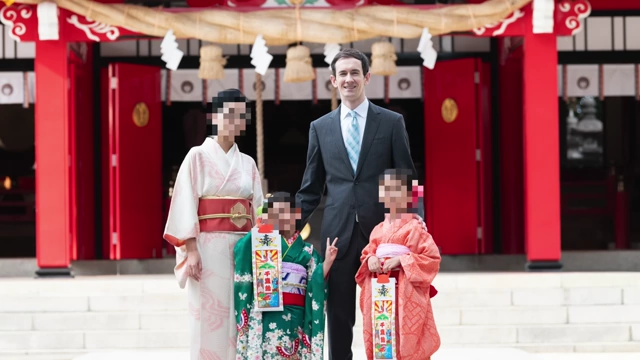
The speaker with his family in traditional Japanese attire, showing his personal connection to living in Japan. [ 00:02:36 ]
The Rise of the Sanseito Party [2:46]
The video focuses on the Sanseito party, a new political entity whose recent electoral gains have been interpreted by some as a significant shift towards anti-foreigner sentiment.
- Mischaracterization of Electoral Success: [3:06]
- Media often reported Sanseito's performance with headlines like "new far right-wing party wins big." [3:01]
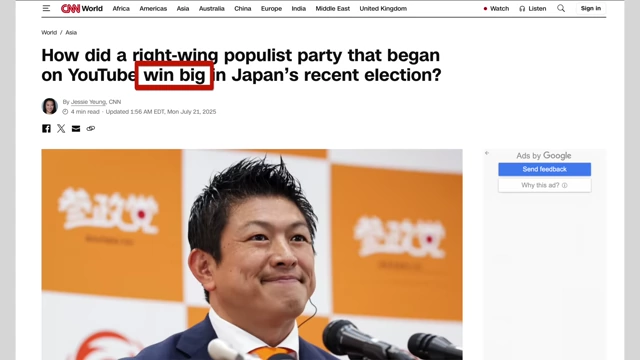
A CNN headline questions how a right-wing party that started on YouTube "won big" in Japan's election. [ 00:03:05 ] - However, Sanseito gained 14 seats, taking their total to 15 in the 248-seat House of Councillors. [3:13]
- This constitutes only 6% of the seats, indicating a relative rise in seats gained rather than overall political dominance or becoming "the new face of Japanese politics." [3:29]
An infographic illustrates the seat distribution in Japan's 248-seat House of Councillors, showing Sanseito holds only 6%. [ 00:03:29 ] - The fact that Sanseito gained roughly the same number of seats that the LDP lost suggests a direct transfer of disillusioned voters from the LDP to Sanseito. [10:45]

An infographic showing the House of Councillors, noting the LDP lost 14 seats. [ 00:03:55 ]
- Media often reported Sanseito's performance with headlines like "new far right-wing party wins big." [3:01]
- Sanseito's Political Stance and Rhetoric: [1:25][4:20]
- The party is typically characterized by media outlets as "far" or "ultra-conservative." [1:33]

A news headline describes Sanseito as an "alarming rise of Japan's far-right movement." [ 00:01:38 ] - Its slogan is "Japanese people first." [1:28]
A Sanseito political poster displays the party's slogan, "Japanese people first." [ 00:01:29 ] - The party's platform explicitly warns against a "silent invasion of foreigners," tapping into existing unease over immigration and overtourism. [4:29]
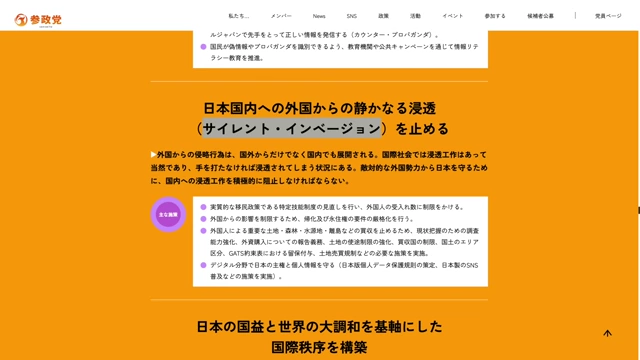
Sanseito's website explicitly warns against a "silent invasion of foreigners." [ 00:01:55 ] 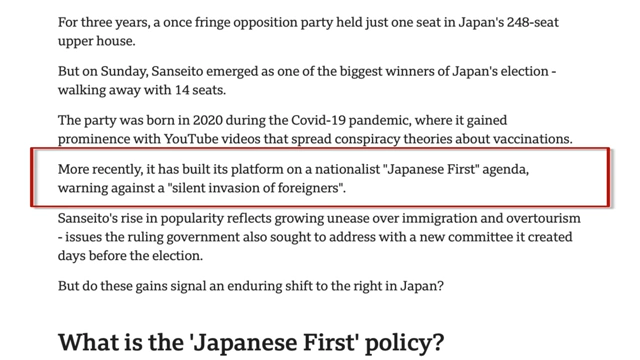
An excerpt from a BBC article explaining Sanseito's "Japanese First" agenda and warning against a "silent invasion of foreigners." [ 00:04:32 ] - The speaker notes that Sanseito intentionally grouped different types of foreigners to make the "silent invasion" case politically expedient. [5:20]
- The BBC article also notes that misbehavior and bad manners by some tourists have added fuel to the fire. [4:43]
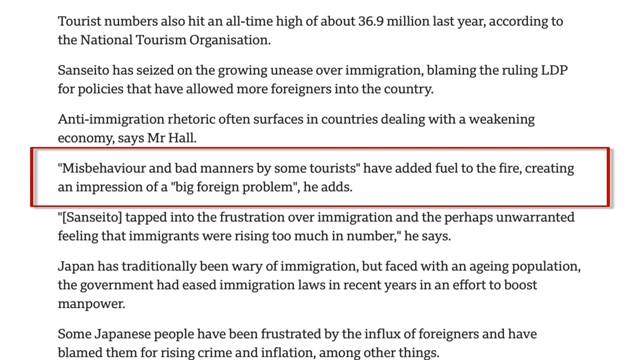
An excerpt from a BBC article noting tourist misbehavior fueling the "big foreigner problem" narrative. [ 00:04:47 ]
- The party is typically characterized by media outlets as "far" or "ultra-conservative." [1:33]
Underlying Political Discontent: LDP Scandals [5:40]
The video argues that Sanseito's rise is largely attributable to widespread public frustration with the long-dominant Liberal Democratic Party (LDP) rather than solely anti-foreigner sentiment.
- LDP's Long-Standing Dominance and Conservative Leanings: [5:50]
- For nearly 70 years, the Liberal Democratic Party (LDP) has completely dominated Japanese politics. [5:50]

Wikipedia entry showing the Liberal Democratic Party (LDP) has been in power almost continuously since 1955. [ 00:06:00 ] - Shinzo Abe, the longest-serving Prime Minister in Japanese history, was generally liked and seen as a strong patriotic leader. [6:06]
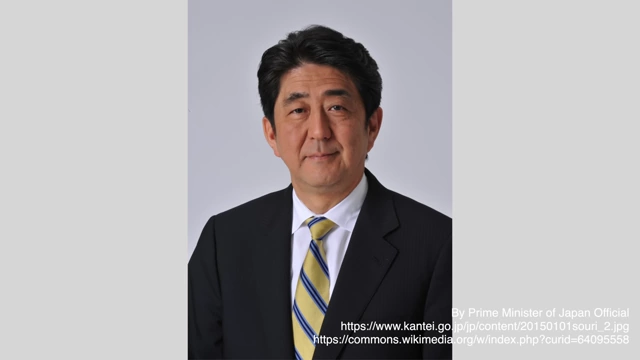
A portrait of former Japanese Prime Minister Shinzo Abe. [ 00:06:16 ]
- For nearly 70 years, the Liberal Democratic Party (LDP) has completely dominated Japanese politics. [5:50]
- The Unification Church Scandal: [6:19]
- In 2022, Abe was assassinated by a man who claimed the former politician had ties to a foreign cult-like religion that had caused deep personal harm to his family. [6:19]
News article detailing "The LDP's Tangled Ties to the Unification Church." [ 00:06:47 ] - The Unification Church, described as a cult-like religion and based in South Korea, used front organizations in Japan to gradually introduce Japanese college students to its doctrine. [6:47]
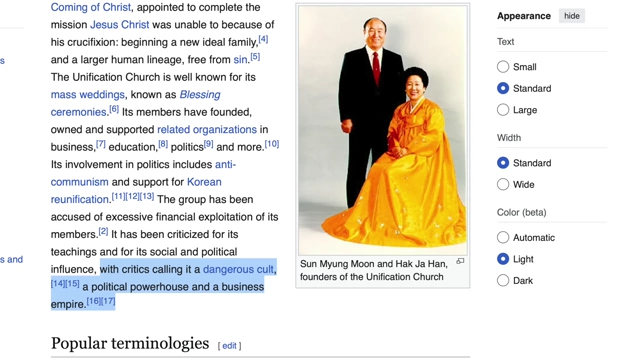
Wikipedia describes the Unification Church as a "dangerous cult" and "political powerhouse." [ 00:06:53 ] - Its doctrine taught that Japanese people could atone for their country's past sins by purchasing expensive items, donating to the church's overseas headquarters, and converting others, with Japanese followers reportedly funneling 70-80% of the church's total income to South Korea. [7:02]
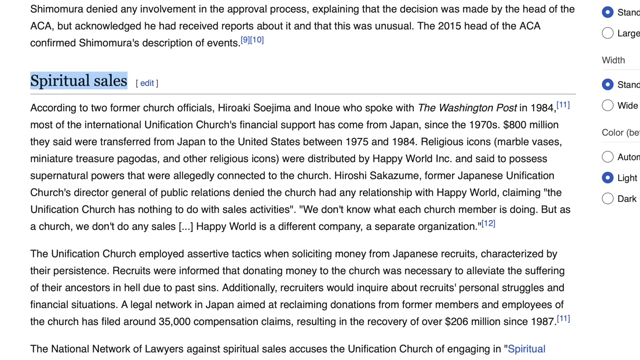
Wikipedia excerpt explaining the Unification Church's "spiritual sales" and financial exploitation. [ 00:07:17 ] 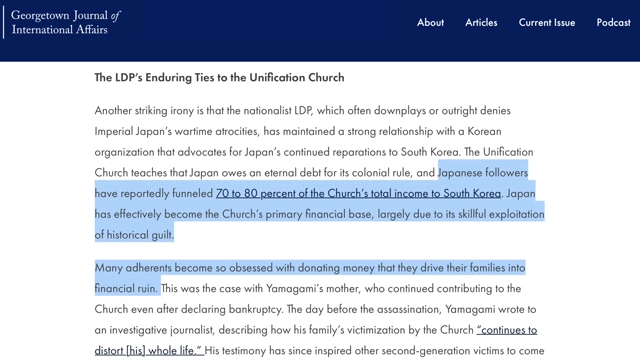
An excerpt from the Georgetown Journal of International Affairs details the Unification Church's exploitation of Japanese followers, who funneled 70-80% of the church's income to South Korea. [ 00:07:47 ] - The church also encouraged Japanese women to move to South Korea and marry Korean men in mass arranged wedding ceremonies. [7:21]
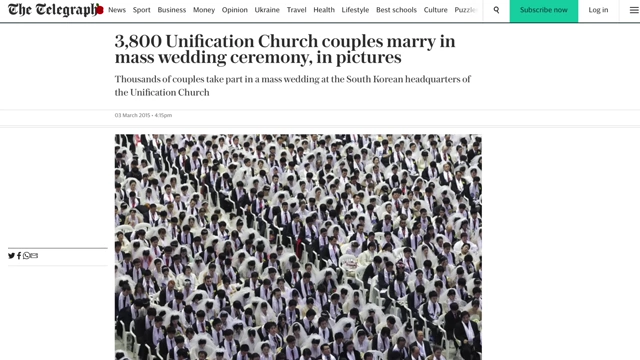
News reports on 3,800 Unification Church couples marrying in a mass wedding ceremony. [ 00:07:30 ] - The ruling LDP did little to curb the church's activities, benefiting from its unwavering political support and using church members as reliable voters, fundraisers, and campaign workers. [7:57]
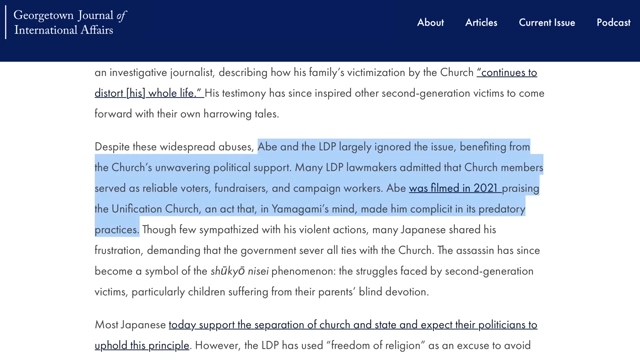
An excerpt from the Georgetown Journal of International Affairs explains how Abe and the LDP benefited from the Unification Church's political support. [ 00:08:16 ] - The mother of Abe's killer had sent $700,000 and donated her home to the church, bankrupting the family to the point they often couldn't afford food. [8:22]
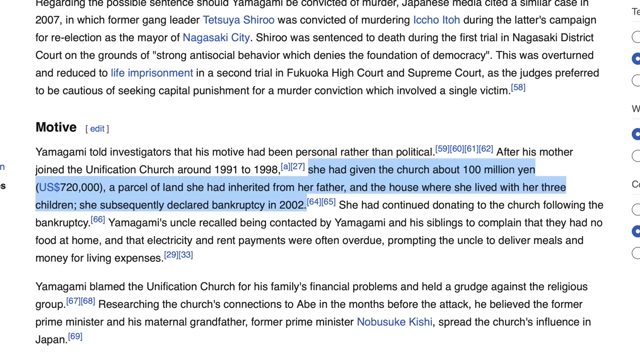
Wikipedia details the assassin's mother donating ¥100 million (US$720,000) and her home to the Unification Church, leading to bankruptcy. [ 00:08:30 ] - An internal LDP investigation, meant to distance itself, accidentally revealed that approximately half of its lawmakers had associated with the group. [9:09]
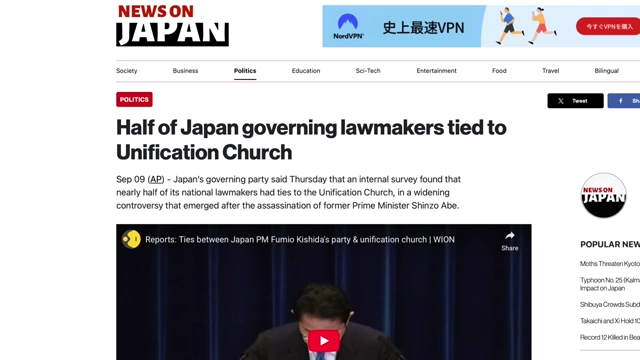
News reports that nearly half of Japan's governing lawmakers were tied to the Unification Church. [ 00:09:16 ]
- In 2022, Abe was assassinated by a man who claimed the former politician had ties to a foreign cult-like religion that had caused deep personal harm to his family. [6:19]
- Additional LDP Misconduct: [10:10]
- Just as the nation was recovering from the Unification Church scandal, multiple LDP members were found to have failed to report over 600 million yen in political fundraising income (Japanese slush fund scandal). [10:12]
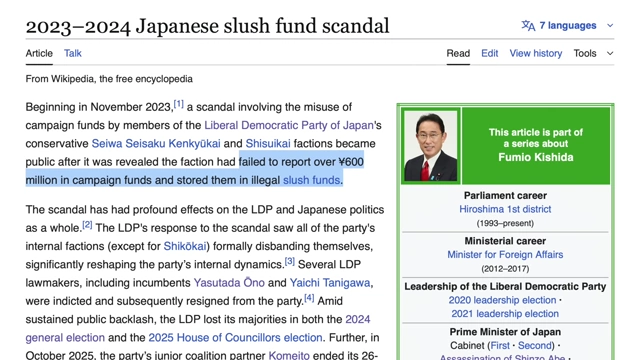
Wikipedia describes the 2023-2024 Japanese slush fund scandal, detailing over ¥600 million in unreported campaign funds by LDP members. [ 00:10:20 ] - This compounded public frustration with the LDP, which many people now saw as a "corrupt political old guard." [10:38]
- Just as the nation was recovering from the Unification Church scandal, multiple LDP members were found to have failed to report over 600 million yen in political fundraising income (Japanese slush fund scandal). [10:12]
Sanseito's Social Media Strategy and Nuance in Sentiment [11:00]
Sanseito's success is also attributed to its effective use of social media, setting it apart from older, less digitally savvy parties.
- Social Media Native Advantage: [11:07]
- Sanseito originated on YouTube, understanding how to engage a modern audience with standout thumbnails, catchy titles, and professionally presented young speakers who speak directly to the viewer. [11:26]

A Sanseito YouTube thumbnail promoting a speech, demonstrating their social media marketing style. [ 00:11:32 ] 
Another Sanseito YouTube thumbnail features young, professionally presented speakers, showcasing their appeal to a modern audience. [ 00:11:36 ] - Crucially, they regularly post free, meaningful content. [11:40]
Sanseito's YouTube channel shows a consistent upload schedule of free, meaningful content. [ 00:11:42 ] - In contrast, other major parties do the opposite: they rarely post free content and instead flood the platform with unskippable ads of older men making vague statements right before elections, a strategy that alienates potential voters. [11:43]
- Sanseito originated on YouTube, understanding how to engage a modern audience with standout thumbnails, catchy titles, and professionally presented young speakers who speak directly to the viewer. [11:26]
- Distinguishing Voter Motivation: [12:23]
- While some Japanese people did vote for Sanseito because they genuinely view tourists and immigrants as a "silent invasion," the speaker believes the overwhelming majority of Sanseito supporters voted out of deep frustration with the LDP and the existing political establishment. [10:27]
Conclusion: Avoiding Hyper-Polarization [13:00]
The video concludes by highlighting the discrepancy between sensationalized social media portrayals and the actual sentiments within Japan, advocating for a nuanced perspective.
- Social Media Distortion vs. Reality: [13:00]
- There is a lot of "Japan is cooked" content online, some from Japanese politicians and supporters, and much from foreigners who neither live in Japan nor speak the language. [13:02]
- Conversely, the fastest-growing genre on Japanese YouTube features foreigners reacting positively to and celebrating Japan. [13:53]

A popular Japanese YouTube video shows an "Italian man trying authentic Japanese ramen." [ 00:13:35 ] 
YouTube video details show 2.4 million views for the "Italian man ramen" video. [ 00:13:38 ] 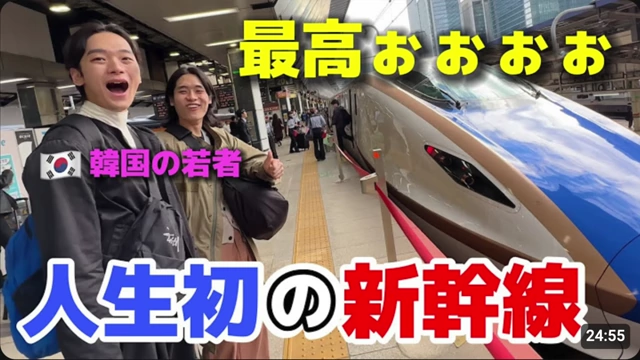
A popular Japanese YouTube video shows Koreans "amazed by their first ride on the bullet train." [ 00:13:41 ] 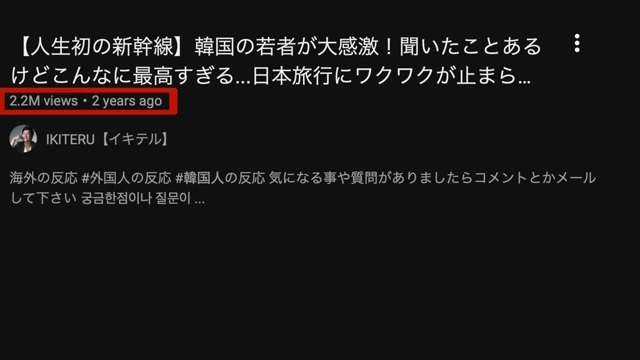
YouTube video details show 2.2 million views for the "Koreans on bullet train" video. [ 00:13:44 ] 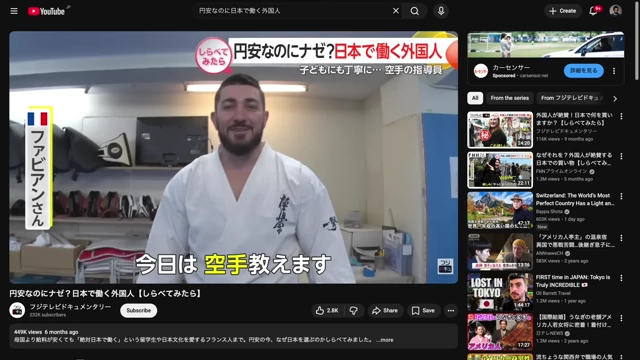
A Japanese YouTube video features a "foreign karate teacher in Japan," attracting positive attention. [ 00:14:10 ] - This suggests that "foreigners in Japan" (who demonstrate a deep passion for Japanese culture) and "Japanese conservatives" (who are passionate about maintaining and celebrating that culture) are often compatible in real life, despite how social media frames them as "utterly incompatible." [14:25]
Japanese YouTube comments express pride and gratitude towards foreigners who appreciate Japanese culture. [ 00:14:21 ]
- Call for Nuance and Real-World Experience: [15:10]
- The speaker urges viewers to let their real-world experiences in Japan, rather than the "distorted lens of social media," shape their views on the country and its people. [15:10]