Clark Morin's Journey: Recovering from Marathon Burnout, Low Testosterone, and Rebuilding a Balanced Life
Clark Morin, a disciplined marathon runner, shares his journey of pushing performance limits to the detriment of his overall well-being.
- Clark's passion for running, reignited during the pandemic, led him to achieve ambitious marathon goals, including a 2:28 time.
- However, an intense 82-day training block for the New York Marathon resulted in a DNF (Did Not Finish) and exposed underlying mental and physical health issues.
- He realized he had lost joy in running and neglected warning signs, leading to burnout and self-deception.
- Opening up about his struggles on social media, despite initial insecurity, proved to be a powerful step towards healing.
- He discovered critically low testosterone levels (235 ng/dL at 26 years old), likely exacerbated by high mileage (90-100 miles/week) and suboptimal recovery practices.
- His recovery now focuses on prioritizing quality sleep, balanced nutrition (emphasizing healthy fats), and significantly reducing training volume.
- Clark is committed to rebuilding his health, finding a new purpose beyond performance metrics, and ensuring a holistic, balanced life.
Introduction & Who is Clark Morin [00:00]
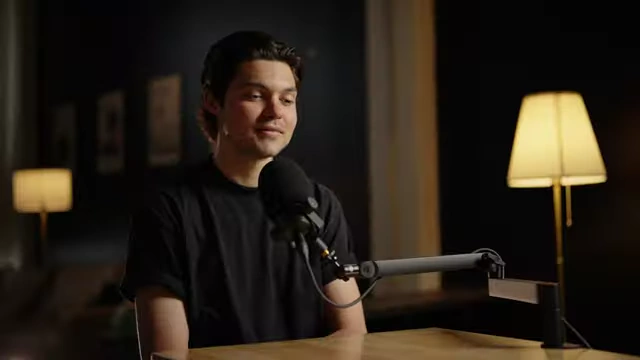
- Clark attributes his strong work ethic and persistent nature to observing his parents' careers.
- He is currently in a phase of his life where he aims to apply this same level of discipline to other personal and professional endeavors, such as his career and relationships.
How Running Became a Passion [02:00]
Clark's athletic journey began with swimming, a sport he excelled at from a young age, even qualifying for the Junior Olympics in 8th grade. However, he admitted to disliking swimming, viewing it as something his parents pushed him into.
- He made a conscious decision to transition to track and field, focusing on long-distance running in high school.
- This marked the first time he actively chose a sport, fostering a sense of autonomy and personal investment.
- His years in swimming had inadvertently built a strong aerobic base, which naturally gave him an advantage in endurance running.
Reigniting the Spark During the Pandemic [08:30]
After a hiatus from running during his college years at Loyola in Chicago, Clark reconnected with the sport during the COVID-19 pandemic lockdown.
- Running became his daily outlet, offering mental clarity amid global uncertainty and becoming the highlight of his days.
- He started with consistent daily runs, gradually increasing his mileage to seven miles a day, a number significant to him.
- This rekindled passion eventually led him to compete in his first marathon, a charity event.
- The experience opened his eyes to the world of competitive marathoning and the prestigious Boston Marathon.
- His initial attempt to qualify for Boston was unsuccessful, serving as a humbling experience.
- However, through consistent effort and dedication over the next two years, he achieved his Boston Qualifying time with a 2:28 marathon at the Chicago Marathon.
- This accomplishment propelled him to explore the limits of his potential in the sport.
The Obsession with Performance & Discipline [11:00]
- He views quantifiable running times as a direct and objective reflection of his unwavering hard work and passion.
- He believes that the capacity for such dedication is universal, provided one discovers a genuine passion.
- While acknowledging a competitive dynamic with training partners, his ultimate focus remains on surpassing his own personal benchmarks.
- Running uniquely instilled in him a profound sense of personal accountability, as success or failure rested squarely on his own efforts.
- "I missed my time goal for Boston. I was trying to run a 235. I ran a 237. Right. Great time, tough course, but at the end of the day that was on me." [00:18:24]
- He also held himself accountable for a successful personal best (2:28 at Indie) and his recent DNF.
- He believes his progress is due to consistent daily effort over five years, including proper eating and sleeping even on rest days.
The Build to New York & The Breaking Point [18:00]
- He admitted to ignoring various warning signs throughout his training, pushing them aside in relentless pursuit of his goal.
- During this period, he experienced a significant decline in his mental and physical well-being, losing joy and confidence in the process.
- On race day, despite his preparation, he felt mentally disengaged and, after only seven miles, suffered a hamstring strain, leading to his first DNF (Did Not Finish) in a marathon.
- "I wasn't even thinking I was going to run a marathon that day. I almost I almost You could have asked me like, "What are you doing here?" And I might have even said to you, "I don't know because I just wasn't mentally there." [00:24:12]
DNF: The Race That Exposed Everything [20:30]
The DNF at the New York Marathon served as a profound "slap in the face wakeup call," forcing Clark to confront the underlying issues he had neglected.
- The failure left him questioning "why?" and grappling with self-blame for not recognizing and addressing the warning signs earlier.
- He realized he had invested an unhealthy amount of his identity and energy solely into running, creating an imbalance in his life.
- "I don't remember or even recall one day of those 82 days where I could actually say I had fun." [00:28:46]
- He confessed to putting on a facade of strength and confidence, while internally battling self-doubt and a lack of joy in his training.
Mental Health, Burnout, and Self-Deception [24:00]
The DNF was not an isolated incident but the culmination of a "mountain of other issues" that Clark had neglected, leading to significant mental and physical burnout.
- He had deliberately suppressed his feelings of pain, doubt, and concern, even from himself, driven by a fear of acknowledging that something was wrong.
- His girlfriend observed a change in his demeanor, prompting her to voice her concerns and initiate conversations about his well-being.
- Following the marathon, Clark began attending therapy and made the decision to take a break from running to prioritize his holistic health.
- "The DNF was what I like to call the cherry on top to a mountain of other issues that I neglected through the pure act of pursuing and chasing a goal." [00:31:51]
Social Media Pressure & The Mask of Discipline [32:00]
Clark initially felt insecure about being transparent on social media, believing his followers were primarily interested in his performance metrics rather than his personal struggles.
- He worried about appearing "weak" or losing his image as a motivating figure.
- He created a separate "clark.runs" account to share his running journey away from his high school friends, indicating an early inclination towards privacy.
- Despite these concerns, he found that opening up about his vulnerabilities led to more meaningful connections and support from his online community.
- He cherishes his organic following, emphasizing quality over quantity, and plans to continue sharing his journey at his own pace, prioritizing his well-being over social media growth.
Discovering Underlying Health Issues [39:30]
For approximately two years, Clark experienced persistent symptoms such as fatigue, tiredness, and difficulty focusing, despite maintaining an active lifestyle with high mileage.
- He sought a full hormone panel two years prior, expressing concerns about his testosterone levels as a long-distance runner, but his doctor denied the request, stating he was healthy.
- "I was denied the first time and I was also younger then. I was like 24 23 24 and naturally by nature I really don't actually like to push back. So I just walked out of I said, "Okay, the doctor said I'm healthy. Cool." [00:47:32]
- Following his DNF and continued feeling unwell, he insisted on a comprehensive blood panel during his 26th birthday annual check-up.
- The results revealed critically low testosterone levels, measuring 235 ng/dL, which is significantly below the normal range for a male of his age.
- This discovery provided immense relief and affirmation, validating his long-held intuition that "something was off" with his health.
- "The amount of grace that I felt seeing that number, it was affirmation on that I was right about something." [00:49:07]
Living with Low Testosterone & Chronic Fatigue [43:00]
Clark's low testosterone levels were particularly concerning because they remained low even after weeks of reduced running mileage, suggesting a chronic issue rather than just acute training stress.
- He recognized that high-volume running (90-100 miles per week for extended periods) is known to negatively impact testosterone, but his current low levels indicated a deeper problem.
- The compounded effects of low testosterone and chronic fatigue had seeped into all aspects of his life.
- He experienced a profound loss of confidence and experienced difficulties in his relationship, significantly impacting his self-perception and how he interacted with others.
- The period immediately after the DNF, with his mother and girlfriend present, was emotionally challenging as he had to openly confront his physical and mental state.
- Due to insurance requirements, he needs a second blood test to confirm the low levels before he can begin any formal treatment.
Recovery and Rebuilding from Ground Zero [48:00]
Clark's primary focus has now shifted from chasing performance times to a holistic recovery, aiming to be happy, healthy, and strong.
- His strategy for naturally increasing testosterone and overcoming chronic fatigue involves:
- Prioritizing Quality Sleep [00:51:37]: This is paramount for testosterone production. He is working on establishing a consistent sleep schedule and avoiding eating large meals close to bedtime, which can disrupt sleep quality. He monitors metrics like resting heart rate and heart rate variability (HRV) with a Garmin device, noting that they have been consistently "off" for a while.
- Optimizing Nutrition [00:54:26]: He plans to incorporate more healthy fats, such as avocados, salmon, nuts, and legumes, into his diet to support hormone regulation, recognizing a past overemphasis on protein and carbs. He consciously avoids tracking calories due to a past eating disorder but estimates consuming 4500-5500 calories daily during peak training to fuel his high mileage.
- Reduced Training Volume [00:50:23]: Despite his ingrained stubbornness to run high mileage (15 miles/day), he is intentionally choosing to reduce his running volume to allow his body sufficient time for recovery and healing.
- He acknowledges his past struggles with an eating disorder and refrains from using calorie-tracking apps to avoid reverting to unhealthy thought patterns.
- He previously experimented with carb cycling and carb timing to optimize his fuel for workouts, but now emphasizes a more balanced intake.
Lessons Learned & What’s Next [56:00]
Clark has learned valuable lessons from his experience, realizing that an unbalanced, extreme pursuit of performance can lead to profound burnout and neglect of overall well-being.
- His future is now focused on ensuring his life is not solely defined by running.
- He is committed to a holistic approach that prioritizes his relationships, career, and personal experiences.
- He is currently in a phase of introspection, "digging himself out of a hole," to rediscover his "why" for running and for life, beyond purely competitive metrics.
- He plans to return to competitive running only when he feels entirely strong, healthy, and happy, emphasizing the importance of balance in all aspects.
- On social media, where he has an organic and supportive community, he intends to share his health journey check-ins.
- This approach represents a shift from focusing on performance to openly discussing the often-overlooked "dark side" of high performance, aiming to inspire others through transparency rather than just showcasing success.