The Three Fundamental Shifts Reshaping the Global Animation Industry
Summary:
- Demon Slayer: Infinity Castle's record-breaking box office, earning over $616 million worldwide and becoming the highest-grossing anime film in history, highlights three fundamental shifts in the animation industry.

Demon Slayer's record-breaking opening weekend domestic gross in the US [ 00:00:10 ] - The first shift is a growing audience demand for mature, complex, and emotionally honest animated storytelling, moving beyond the long-held perception that animation is solely for children. R-rated films like Demon Slayer find massive success, and Oscar-winning animations feature mature themes.
- Secondly, Eastern animation, exemplified by Ne Zha 2 and K-Pop Demon Hunters, is dominating the global market by embracing cultural authenticity and taking creative risks, influencing global storytelling standards and challenging Western studios.

Chinese animated film 'Ne Zha 2' outearning 'Inside Out 2' to become the highest-grossing animated film in history [ 00:09:17 ] 
Netflix's most watched original films showing K-Pop Demon Hunters at #1 [ 00:09:58 ] - The third shift involves evolving business models, with franchises like Demon Slayer adopting multi-part cinematic finales, turning series conclusions into blockbuster theatrical events that generate immense hype and provide animators more time, unlike the rushed schedules seen in some TV anime.

Jujutsu Kaisen animators reveal episodes are completed hours before airtime, highlighting the issue of rushed production schedules [ 00:13:20 ] - These trends indicate a permanent shift where Eastern animation is setting global standards, forcing Western studios to adapt to a new landscape, especially as Gen Z shows high anime viewership.

New York Times Magazine article highlights Gen Z's high anime viewership [ 00:15:47 ]
Introduction: Demon Slayer's Monumental Success [0:00:00]
- Demon Slayer: Infinity Castle achieved a staggering $70 million in its opening weekend in America, breaking a 26-year-old record and accumulating over $616 million worldwide, becoming the highest-grossing anime film in history. [0:00:00] [0:00:36]
- The film's total US earnings reached $118.2 million. [0:00:45]
- It surpassed both Pixar and DreamWorks releases and even Marvel and DC at the box office. [0:00:55] [0:01:09]
- This success is not an anomaly, as the franchise's previous film, Muggan Train, earned over $512 million globally in 2021. [0:01:15] [0:01:23]
- These R-rated animated films demonstrate a profound cultural shift in audience preferences and the animation industry. [0:01:28]

Demon Slayer: Infinity Castle surpassed $616M at Global Box Office [ 00:00:39 ] 
Global box office top 10 list shows Demon Slayer: Infinity Castle among the highest-grossing animated films [ 00:00:40 ] 
Detailed US box office performance of Demon Slayer: Infinity Castle, reaching $118.2 million [ 00:00:47 ] 
News headline states Demon Slayer: Infinity Castle outranked DC and Marvel at the box office [ 00:01:10 ] 
Theatrical performance data for Demon Slayer Mugen Train, showing over $512 million worldwide [ 00:01:24 ] 
Table listing highest-grossing adult animated films, with Demon Slayer: Infinity Castle and Mugen Train at the top [ 00:03:45 ]
1. The Shift Towards Mature Storytelling [0:01:47]
- Historical Perception of Animation: For a long time, Hollywood perpetuated the idea that animated movies were exclusively for children. [0:02:06]
- The Hays Code (1934-1968) censored mature content in animation, conditioning generations to view it as children's entertainment. [0:02:17]

Explanation of the Hays Code's impact on film content [ 00:02:20 ] - The high cost and time investment for animated films meant studios favored guaranteed family audiences, leading to a self-reinforcing cycle where only child-friendly animation was funded. [0:02:30]
- The success of Disney and Looney Tunes further solidified this perception. [0:02:44]
- The Hays Code (1934-1968) censored mature content in animation, conditioning generations to view it as children's entertainment. [0:02:17]
- Evolving Audience Demands: Audiences have matured and, significantly, have been exposed to diverse anime over decades, reshaping their expectations for animation. [0:02:57]
- Demon Slayer as an Example: Demon Slayer's success, particularly as an R-rated film, demonstrates this shift. [0:03:32]
- Its global accessibility stems from a simple, universally relatable good-versus-evil narrative about a kind hero, transcending cultural barriers unlike more niche anime. [0:03:51]

A silhouetted figure of Koyoharu Gotouge, the creator of Demon Slayer [ 00:03:55 ] - The story maintains deep emotional weight, committing to consequences, character growth, and even death, creating genuine emotional connections through detailed backstories for both heroes and villains. [0:04:30] [0:05:01]

Scene depicting the tragic death of Tanjiro's family in Demon Slayer [ 00:04:36 ] 
Another view of Tanjiro's deceased family, emphasizing the emotional weight [ 00:04:38 ] 
Close-up shot of Tanjiro finding his family, covered in blood [ 00:04:42 ] 
Rengoku, a key character, dies protecting others, underscoring the story's commitment to emotional stakes [ 00:04:48 ] 
Rengoku's final moments, with Tanjiro watching in distress [ 00:04:52 ] 
Akaza's full character design and action pose in Demon Slayer [ 00:05:25 ] 
Akaza in a fierce combat sequence, showcasing detailed animation [ 00:05:27 ] - The impeccable animation by Ufotable, especially in Infinity Castle, elevates the storytelling, showcasing fluid action sequences and complex environments. [0:05:33] [0:05:50]
- Its global accessibility stems from a simple, universally relatable good-versus-evil narrative about a kind hero, transcending cultural barriers unlike more niche anime. [0:03:51]
- Wider Industry Trend: This trend extends beyond Demon Slayer, with recent Oscar-winning animated films like The Boy and the Heron, Guillermo del Toro's Pinocchio, and Soul featuring mature, layered themes. [0:06:40]
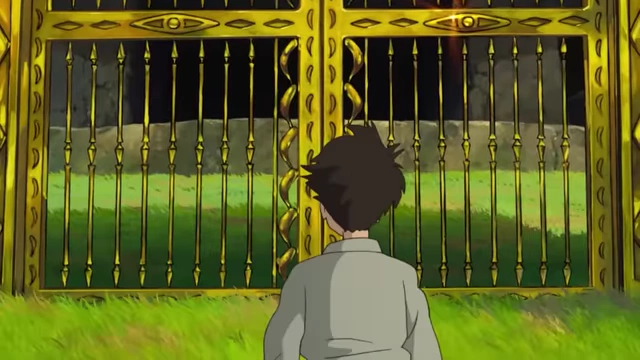
Still from 'The Boy and the Heron', an Oscar-winning animated film with mature themes [ 00:06:49 ] 
Still from 'Guillermo del Toro's Pinocchio', an Oscar-winning animated film known for its dark and layered themes [ 00:06:51 ] 
Still from 'Soul', an Oscar-winning animated film with profound philosophical themes [ 00:06:53 ] - Spider-Man: Across the Spider-Verse further solidifies this by tackling dark themes of death, identity, and challenging fate, proving that animation can resonate with audiences seeking complex narratives. [0:06:57]
- These films succeed because they treat audiences as individuals capable of experiencing genuine emotions and complex relationships, confirming that "animation is for all ages." [0:07:13]
2. The Rise of Eastern Animation and Cultural Authenticity [0:08:52]
- Eastern Studios Taking Creative Risks: While Western studios often play it safe with familiar IPs, Eastern animation has built global empires by taking significant creative risks. [0:09:02]
- Commercial Dominance:
- Ne Zha 2 (Chinese) became the highest-grossing animated movie in history, earning over $2 billion worldwide, outperforming all Disney, Pixar, and DreamWorks films. [0:09:15]
Chinese animated film 'Ne Zha 2' outearning 'Inside Out 2' to become the highest-grossing animated film in history [ 00:09:17 ] - K-Pop Demon Hunters became Netflix's most-watched original film, with 325 million views, by successfully blending Korean pop culture aesthetics with supernatural action. [0:09:53]
Netflix's most watched original films with K-Pop Demon Hunters at #1, showing its significant viewership [ 00:09:58 ]
- Ne Zha 2 (Chinese) became the highest-grossing animated movie in history, earning over $2 billion worldwide, outperforming all Disney, Pixar, and DreamWorks films. [0:09:15]
- Cultural Influence and Authenticity:
- These films demonstrate a hunger for stories that blend diverse cultural influences without homogenizing them. [0:10:05]
- They achieve global success by being authentically Japanese or Chinese, and by embracing cultural specificity rather than trying to appeal to everyone generically. [0:10:24]
- This establishes new cultural hierarchies where creativity and authenticity are paramount, influencing how global audiences perceive storytelling. [0:09:24] [0:12:10]
- The consistent high critical acclaim (e.g., over 90% on Rotten Tomatoes for these films) further underscores their quality and impact. [0:10:44]

Rotten Tomatoes scores for various successful animated films, all above 90% [ 00:10:48 ] 
Spotify's daily top songs chart for the USA, showing "Your Idol" (from K-Pop Demon Hunters) ranking highly [ 00:12:27 ]
- Western Studios Playing Catch-Up:
- Anime's international interest has risen exponentially, with Sony recognizing this early and investing $1.18 billion to acquire Crunchyroll. [0:11:12]

The Hollywood Reporter discusses the significant growth of Japan's anime industry in the decade before the pandemic [ 00:11:16 ] 
News report on Sony completing its $1.2 billion acquisition of Crunchyroll [ 00:11:27 ] - Sony forecasts anime to be a $60 billion global industry by 2030. [0:11:38]

Sony executives forecast the anime sector to become a $60 billion global industry by 2030 [ 00:11:38 ] - Netflix reports that half of its 300 million users watch anime, demonstrating its mainstream appeal, especially among Western consumers. [0:11:56]

Cartoon Brew article highlights anime's global takeover, with 150 million Netflix subscribers tuning in [ 00:11:57 ] 
Netflix report indicates over 100 million households globally watched at least one anime title in 2020 [ 00:15:24 ]
New York Times Magazine article highlights Gen Z's high anime viewership, surpassing NFL followers [ 00:15:47 ] 
Parrot Analytics data shows Netflix expanding its anime presence, with about 240 titles in its US catalog by 2024 [ 00:16:56 ] - Disney is also attempting to enter the adult animated series market, but Western studios face the challenge of distinguishing authentic storytelling from corporate replication. [0:16:56]

Cartoon Brew article reports Disney developing dozens of adult animated series through a new TV unit [ 00:16:59 ] - Sony Animation, through its Spider-Verse films and K-Pop Demon Hunters, and Crunchyroll acquisition, is an exception, betting on anime and mature animation as the future, including a strategic partnership with Bandai Namco. [0:17:33]

News report on Sony acquiring a 2.5% stake in Bandai Namco in a new anime-focused strategic partnership [ 00:16:51 ]
- Anime's international interest has risen exponentially, with Sony recognizing this early and investing $1.18 billion to acquire Crunchyroll. [0:11:12]
3. Evolution of Business Models: Cinematic Events [0:12:40]
- Demon Slayer's Trilogy Strategy: Unlike traditional TV series or single movies, Demon Slayer is concluding its narrative through a trilogy of global cinematic events. [0:12:48]
- This strategy is proving highly effective, transforming a series finale into a mainstream blockbuster spectacle. [0:12:57]
- Benefits of the Model:
- Enhanced Animation Quality: It provides animators more time and flexibility, preventing rushed production schedules common in episodic releases. [0:13:10]
IGN article highlights Jujutsu Kaisen animators speaking out about episodes being completed hours before airtime [ 00:13:20 ] - Unparalleled Hype Generation: Each movie, often ending on a cliffhanger, becomes a global event, generating widespread conversation and anticipation for subsequent installments. [0:13:21]
- Significant Revenue Potential: This theatrical franchise approach is projected to gross over $2 billion combined for Demon Slayer. [0:13:42]

Text overlay indicating a projected $2 billion combined gross for the Demon Slayer theatrical franchise [ 00:13:50 ]
- Enhanced Animation Quality: It provides animators more time and flexibility, preventing rushed production schedules common in episodic releases. [0:13:10]
- Future Implications:
- Other major anime franchises like One Piece, JJK, or Solo Leveling are likely to adopt similar multi-movie finales given this success. [0:13:52]
- Western studios need to re-evaluate their approach to animated movies, as animated trilogies like Infinity Castle and Spider-Verse prove animation can create large-scale, cohesive stories akin to Lord of the Rings or Star Wars. [0:14:17]
Conclusion: Animation's New Frontier [0:14:36]
- Animation has outgrown the creative and commercial limitations imposed by Western studios for decades, with audiences moving towards more mature and culturally authentic content. [0:14:43]
- While family-friendly animation will always exist, the future billion-dollar animated movies will likely be the more mature ones. [0:15:03]
- The "pandemic anime boom" accelerated this trend, solidifying anime as the predominant visual language for entire generations who grew up demanding more sophisticated animated narratives. [0:15:27]
- Anime's success stems from its unwavering commitment to complexity, maturity, and emotional honesty, trusting audiences to respond. [0:16:22]
- The next five years will determine if Hollywood can adapt and compete, or if Eastern animation will permanently establish itself as the global standard. [0:17:51]