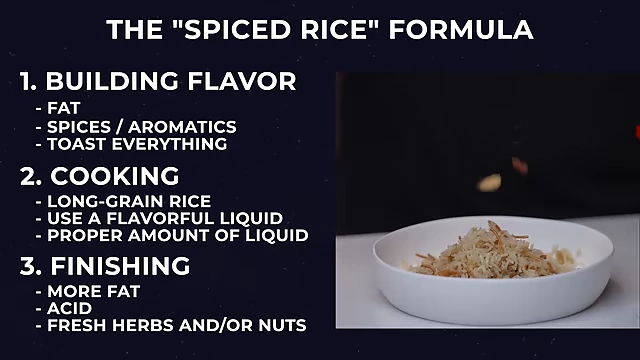
This video introduces a three-stage formula for making delicious spiced rice, transforming it from a simple side dish to a flavorful centerpiece.
Building Flavor: The first stage focuses on creating a rich base by heating fat with aromatics (like onions, garlic) and spices. This step is crucial because fat effectively carries and absorbs flavors from spices, enhancing the overall taste and mouthfeel of the rice.
Cooking: The second stage emphasizes using long-grain rice, specifically Basmati for its fluffy texture, and a precise liquid-to-rice ratio (1.25-1.5 parts liquid to 1 part rice) to prevent mushiness. Using flavorful liquids like chicken stock instead of just water further elevates the taste.
Finishing: The final, optional but highly recommended, stage involves adding extra elements after cooking, such as a touch more fat for glossiness, a splash of acid (like lime juice) for brightness, and fresh herbs or toasted nuts for added freshness and textural contrast.
The 3-Stage Spiced Rice Formula Summary
[
00:08:35
]
The video presents a simple, easy-to-follow three-stage formula to create an infinite number of spiced rice dishes by simply changing a few ingredients. This method elevates rice from a basic accompaniment to a more interesting and flavorful dish.
This stage is essential for developing a rich, flavorful base for the rice, going beyond the simple combination of rice, water, and salt.
Start with Fat [1:10]
- Heat a small amount of fat in a pot over medium heat.
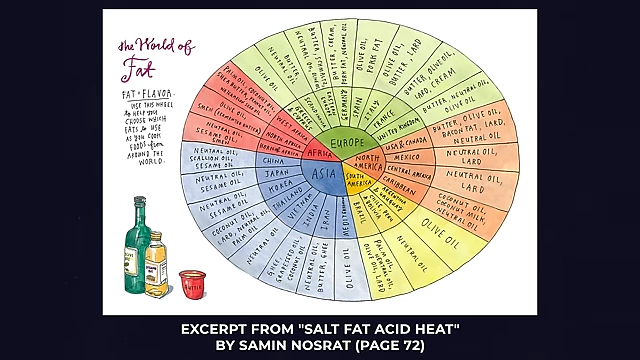
- Types of Fat:
Olive oil for Mediterranean dishes.
Butter or ghee for Indian dishes.
Neutral oil for Mexican rice or when unsure, as it won't clash with other flavors.
The book "Salt Fat Acid Heat" is recommended for guidance on fat and cuisine pairings.
Why Fat is Key:
Fat is an extremely efficient carrier of flavor, superior to water.
Flavor compounds in spices and herbs are fat-soluble, allowing fat to absorb and hold flavors effectively.
Fat coats the tongue more effectively than water, leading to a better mouthfeel and overall flavor experience.
The World of Fat diagram from Samin Nosrat's book, illustrating different fats used across various cuisines.
[
00:01:30
]
A taste test comparison demonstrating how oil carries more flavor from spices than water.
[
00:02:42
]
Add Aromatics and/or Veggies [1:40]
- Add aromatics like diced onion (most common), garlic, or ginger, along with a pinch of salt.
- Consider adding vegetables like carrots and bell peppers.
- Choose ingredients that complement the intended cuisine.
- Cooking Duration: The cooking time of aromatics, especially onions (from 1 to 15+ minutes), significantly impacts the final flavor.
Incorporate Spices [3:18]
- Add spices to shape the dish's flavor profile.
- Spice Combinations:
Indian style: Cumin, cardamom, cloves, cinnamon.
Middle Eastern style: Cumin, paprika, turmeric, bay leaf.
Lebanese style: A pinch of cinnamon, black pepper.
Toasting Spices: Toast spices for about 30 seconds to further infuse their flavors into the oil.
A visual representation of the "World of Flavor" showcasing various spices and herbs and their culinary pairings.
[
00:03:53
]
The book "Salt Fat Acid Heat" is recommended as an essential resource for beginning home cooks.
The cover of Samin Nosrat's book, "Salt Fat Acid Heat."
[
00:04:00
]
Toast the Rice [4:10]
- Add the rinsed long-grain rice to the pot and toast it for about 30 seconds, stirring continuously.
- This step adds a toasty flavor and ensures the rice grains are thoroughly coated in the infused oil and spices.
This stage focuses on the proper rice type and liquid ratio for a perfect cook.
Choose the Right Rice Type [4:40]
- Long-grain rice (e.g., Basmati, Jasmine) works best for this formula due to its light, fluffy texture and distinct grains that remain separate when cooked. It also absorbs spices well.
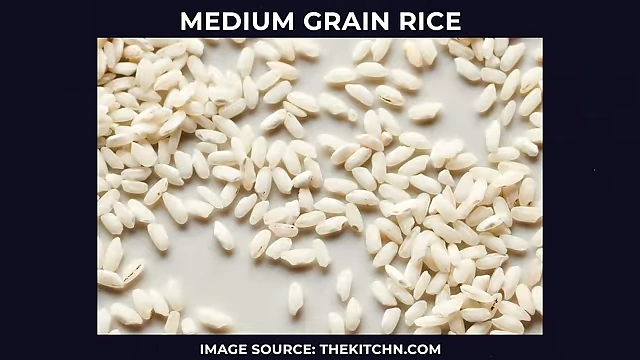
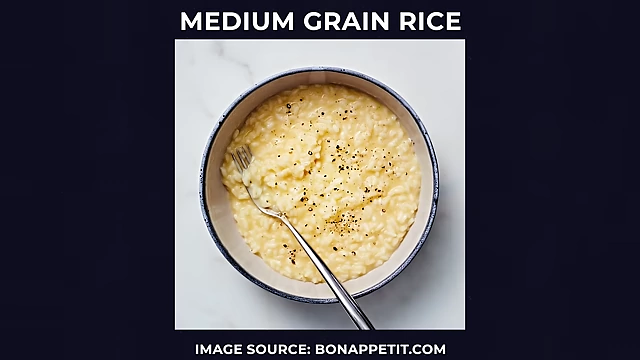
- Medium-grain rice is moist, tender, and slightly clingy (good for risotto).
An example of medium-grain rice, which is moist and slightly clingy.
[
00:04:50
]
A bowl of creamy risotto, an ideal dish for medium-grain rice.
[
00:05:07
]
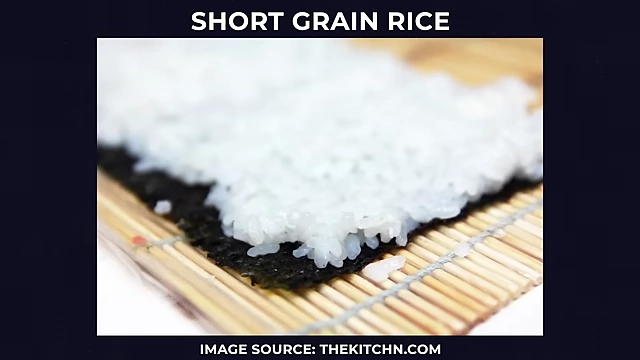
- Short-grain rice is softest and stickiest (ideal for sushi).
Sushi prepared with short-grain rice, known for its soft and sticky texture.
[
00:05:14
]
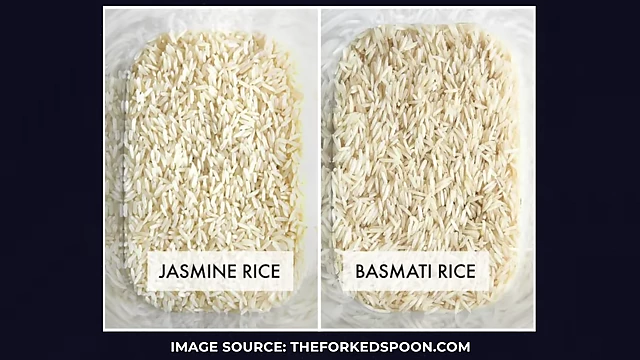
- Basmati vs. Jasmine: Basmati is preferred for its fluffier, more delicate, and longer grains compared to Jasmine rice, which tends to be more moist and clingy.
A side-by-side comparison of Jasmine and Basmati rice, highlighting their visual differences.
[
00:05:20
]
Use Proper Liquid-to-Rice Ratio [5:47]
- The key to great rice is using the correct ratio of liquid to rice.
- For long-grain rice, use about 1.25 to 1.5 parts liquid for every 1 part rice. Exceeding this ratio can lead to mushy, bloated rice.
An example of mushy and clumpy rice, resulting from too much liquid during cooking.
[
00:05:58
]
Opt for Flavorful Liquid [6:15]
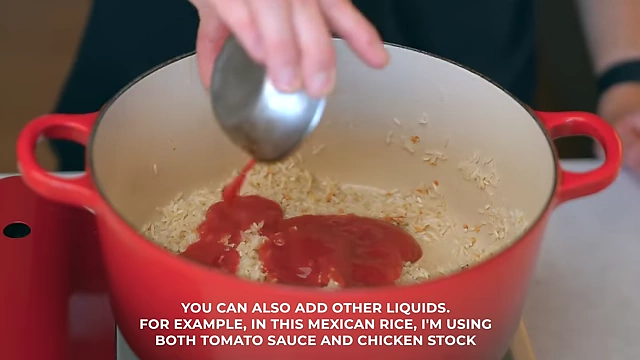
- Instead of just water, use more flavorful liquids like chicken stock or even bouillon cubes dissolved in water.
- This adds significant depth of flavor with minimal extra effort.
Tomato sauce and chicken stock being added to rice for a flavorful Mexican rice dish.
[
00:06:29
]
- Adjust salt content if using pre-salted stock.
Cooking Process [6:45]
1. Add liquid to the pot and bring it to a boil.
2. Stir the rice once, reduce heat to low, and cover the pot.
3. Simmer for 15 to 18 minutes.
4. Remove the pot from heat and let it steam, still covered, for an additional 5 minutes.
5. Fluff the rice with a fork or spoon, then taste and adjust seasoning as needed.
This optional but highly recommended stage adds extra flavor and presentation elements to the cooked rice.
Add More Fat [7:34]
- Introduce a small amount of the same type of fat used initially (e.g., butter, olive oil).
- This imparts a smooth, glossy texture and enhances the mouthfeel.
Incorporate Acid [7:48]
- Add a touch of acid, such as lime juice, lemon juice, or vinegar.
- Acid provides a "zing" that brightens the flavors.
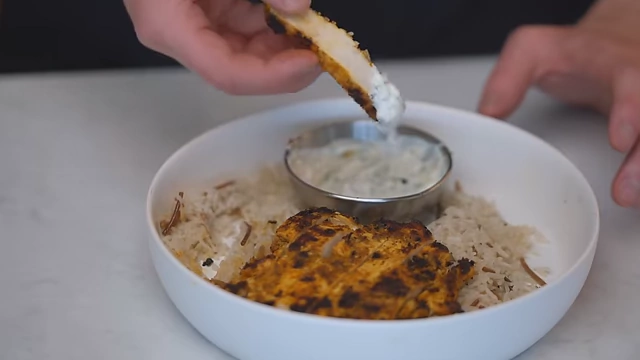
- The decision to add acid depends on what the rice is served with (e.g., less needed if serving with a yogurt sauce, more if rice is a main component like in a pilaf).
Lebanese rice served with chicken and a yogurt sauce, an example where additional acid in the rice may not be necessary.
[
00:08:10
]
Include Fresh Herbs and/or Toasted Nuts/Seeds [8:21]
- Chopped fresh herbs (e.g., cilantro) add freshness to almost any rice dish.
- Toasted nuts and seeds (e.g., almonds for Lebanese rice) introduce varied textures, making the rice more interesting.