The video extends the concept of cycles from daily sleep to broader natural phenomena, arguing that life is cyclical.
Daily Cycles and Lifespan:
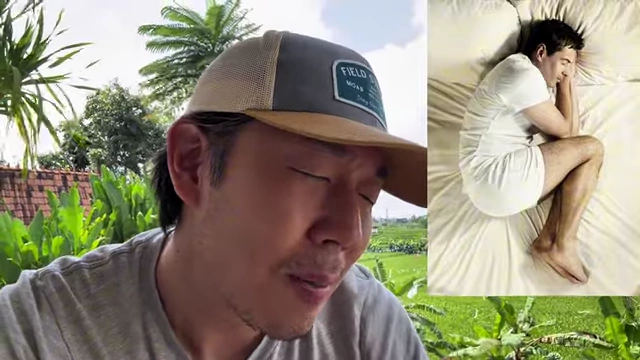
The trajectory of a single day, from waking (youthful energy) to high noon (peak energy) to evening (winding down) and finally sleep (death), mirrors a human lifespan.
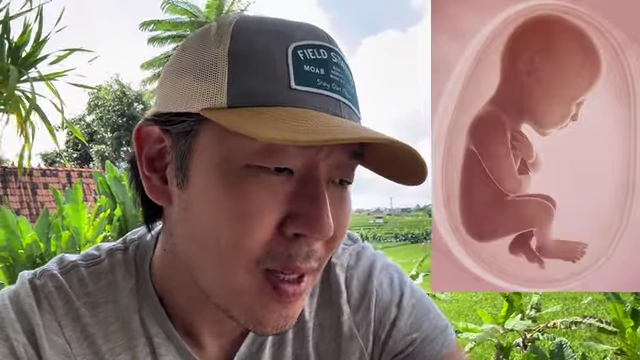
This pattern of daily "rebirth" and "death" hints at the cyclical nature of a full lifetime.
Annual Cycles and Life Stages:
The Earth's rotation around the sun creates seasons, which are likened to stages of life.
Spring: Represents youth, budding, and sprouting, like new life.
Summer: Corresponds to the 20s and 30s, a period of peak energy and activity.
Autumn: Symbolizes aging, with leaves changing and shedding, akin to physical changes like male pattern baldness.
Winter: Represents old age, with bare trees and white snow, similar to white hair in golden years.
The darkest day of the year (January) is metaphorically considered the point of death, followed by rebirth in spring.
The Cyclical Nature of the Universe:
The idea of finite time (beginning or end) is deemed illogical; a circular model of time is more intuitive, as seen in celestial movements (planets, orbits, electrons).
The infinity symbol (sideways eight) is presented as a variation of a circle, reinforcing the concept of continuous cycles.
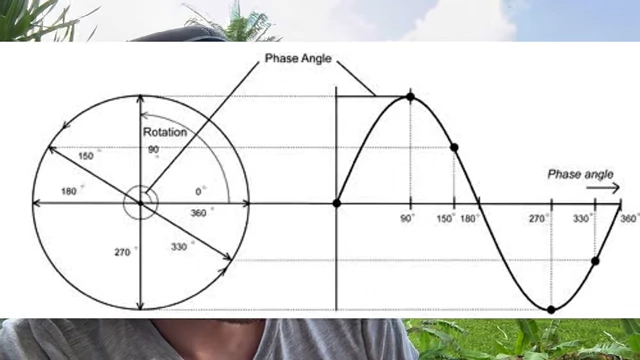
Circles are fundamentally linked to sinusoidal waves, which are ubiquitous in nature (sound waves, electromagnetic waves), further supporting the idea of cyclical patterns in existence.
Diagram illustrating how circular motion can be mapped to a sinusoidal wave.
[
00:04:10
]
This universal prevalence of cycles suggests that reincarnation is an intuitive and natural progression of existence.
To reconcile the theory of reincarnation with the increasing global population, the speaker proposes a unified consciousness model.
All Individuals as One:
The belief that every person alive is fundamentally "you," implying a singular, overarching consciousness or "God."
This single consciousness, being "alone and bored," decided to replicate itself into individual people so that they could interact with other people and have friends.
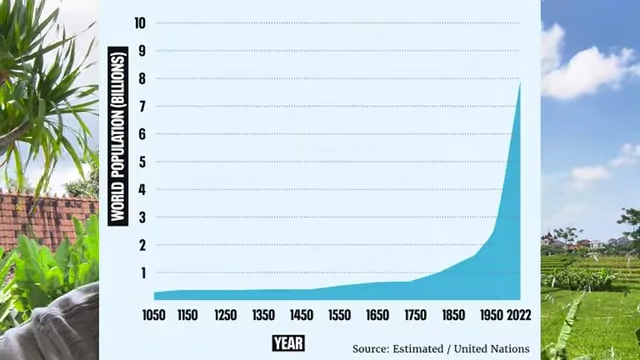
Graph showing the rapid increase in world population from 1050 to 2022.
[
00:05:23
]
Personality and Genetics:
Personality traits and predispositions (e.g., addictive tendencies) are largely determined by brain chemistry and genetics, making it plausible that one could embody various personalities in different lives.
This perspective encourages empathy and kindness towards others, as they are seen as manifestations of the same core self.
Religion and its Coexistence with Reincarnation [7:10]
The video concludes by discussing how traditional religions can fit within this framework.
Religion as a Man-Made System:
Major religions are viewed as effective man-made systems designed to establish moral incentives and maintain societal order (e.g., Ten Commandments).
They have historically contributed to social stability by promoting ethical behavior.
Psychological Value of Belief:
Religion offers significant emotional value to individuals, providing comfort through beliefs like reuniting with loved ones in an afterlife.
This comfort, akin to a placebo effect, is seen as a positive creation from belief itself.
Coexistence of Belief Systems:
The act of choosing to believe in God, even if God is not "real" in a conventional sense, creates a positive force in one's life.
This suggests that belief in a higher power can coexist with the reincarnation theory, possibly serving as trials or lessons given by a larger consciousness, similar to Buddhist beliefs in reliving lives.