The Power of Delusional Self Belief: How Unwavering Faith, Hard Work, and Luck Lead to Extraordinary Success
The video explores the concept of "delusional self-belief" and its role in achieving extraordinary success, using historical examples.
- It starts with examples of individuals like Kanye West and Conor McGregor expressing extreme confidence despite long odds.
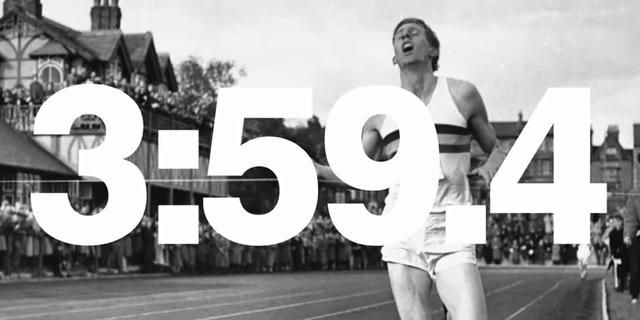
- The story of the 4-minute mile barrier is presented, where Roger Bannister broke a widely believed impossible record, after which many others quickly followed, illustrating the power of overcoming mental limits.
- Bill Gates's journey with Microsoft is examined, highlighting how his immense hard work combined with fortunate circumstances (early access to computers, the IBM deal) led to exponential success after years of struggle.
- Quentin Tarantino's career is used to demonstrate the importance of persistence through years of failure, showing that sustained effort positions one to capitalize on eventual lucky breaks.
- The core argument is that while luck and being in the right place at the right time are factors, unwavering belief, dedication, and continuous effort are essential for making success, though not guaranteed, eventually seem inevitable over a long enough timeline.
00:00:00 Introduction: The Audacity of Belief
The video opens with examples of highly successful individuals expressing extreme confidence in achieving seemingly impossible goals, such as Kanye West aiming for the NBA or Conor McGregor predicting his UFC success. These instances highlight a level of self-belief that might be perceived by others as delusional.

- Initial statements of bold ambition [00:00:06]
- Contrasted with skeptical reactions from others [00:00:10]
- Demonstrating a belief in limitless potential [00:00:16]
- Showing examples of individuals who achieved unlikely success (Conor McGregor, Jeff Bezos) [00:00:21][00:00:32]
00:01:00 Chapter 1: Breaking Barriers - The Four-Minute Mile
This chapter uses the historical example of the 4-minute mile to illustrate how perceived physical or mental barriers can be shattered by belief.
- In July 1945, Gunder Hägg set the world record for the mile at 4 minutes and 1.2 seconds. [00:01:00]
- At the time, many believed running a mile in under 4 minutes was physically impossible. [00:01:11]
- Scientists even claimed the human body couldn't handle the speed without severe consequences, like the heart exploding. [00:01:21]
- Roger Bannister, a medical student, believed otherwise. [00:01:44]
- On May 6, 1954, Roger Bannister broke the 4-minute barrier, running the mile in 3 minutes, 59.4 seconds. [00:01:52][00:02:09]
- Bannister understood there was no physical "brick wall" at 4 minutes; it was a psychological one. [00:02:12]
- Just under two months later, 22 more people broke the 4-minute mile. [00:02:23]
- The current world record for the mile is significantly faster than 4 minutes. [00:02:38]
00:04:00 Chapter 2: Hard Work or Luck - The Case of Bill Gates
This section analyzes the success of Bill Gates, examining the interplay between luck, opportunity, and exceptional effort.
- Bill Gates's immense wealth is highlighted, dwarfing the lifetime earnings of average people. [00:04:21]
- The video questions how a single individual could achieve such vast success, suggesting it wasn't simply "handed" to him. [00:04:51]
- At age 12, Gates attended Lakeside, a private school where he gained access to one of the few computers in the world at the time (Teletype Model 30). [00:05:07][00:05:15]
- Gates initially went to college to study law but continued to pursue his interest in computers in his spare time. [00:05:37][00:05:47]
- In January 1975, an article sparked the idea for Microsoft. [00:06:03]
- Gates and Allen dropped out of college 8 months later to focus on building Microsoft. [00:06:34][00:06:38]
- Microsoft operated at a loss for the first 5 years. [00:07:58]
- A significant breakthrough occurred in 1980 when they signed a contract with IBM to create an operating system. [00:08:40][00:08:43]
- This deal instantly introduced Microsoft's software to millions of computers. [00:08:47]
- Bill Gates was an incredibly hard worker, often working 18 hours a day, 7 days a week, and not taking weekends or vacations for years. [00:07:35][00:07:43]
- While acknowledging Gates had a "lucky head start" with his background and early computer access, the video argues his success required both luck and extreme dedication and hard work. [00:07:10][00:08:04]
- Success is often not linear but exponential, with years of effort leading to sudden breakthroughs. [00:08:19]
00:09:10 Chapter 3: Inevitable - The Role of Persistence
This chapter argues that with enough time and persistent effort, encountering lucky breaks becomes highly probable, making success seem almost "inevitable."
- While luck is acknowledged as necessary (being in the right place at the right time), the video suggests that over an entire lifetime dedicated to a goal, opportunities for luck are bound to arise. [00:09:10][00:09:20]
- Quentin Tarantino's career is used as an example. [00:09:25]
- Because Tarantino was "delusional enough to believe it would work," he persisted. [00:09:52][00:09:54]
- The 8 years of struggle and "nothing working out" developed him into a great filmmaker, positioning him to capitalize when an opportunity arose. [00:10:02][00:10:06]
- Persistence through the difficult, unproductive years makes one capable and present when luck eventually strikes. [00:10:08]
- The video concludes that committing to a dream for at least a decade makes success likely, but the difficulty lies in maintaining belief and persistence during the long period when nothing seems to be happening. [00:10:15][00:10:25]