This video offers a comprehensive guide to building a personal brand that combines aesthetics with conversion, broken into three main sections: Aesthetics, Content, and Conversion.
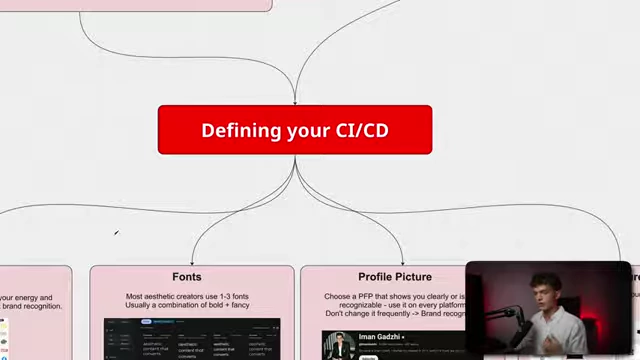
A mind map illustrating the key components of defining your Corporate Identity/Design (CI/CD) for a personal brand.
[
00:13:10
]
Aesthetics [00:00:27]: Focus on internal identity (self-clarity, unique edge, authenticity, brand values/voice) and external design (inspiration from visual boards, consistent corporate identity with colors, fonts, profile picture, and signature items).
Content [00:17:14]: Develop a multi-platform strategy, using TikTok/Instagram for broad reach to drive traffic to YouTube for in-depth nurturing. Create a content strategy using a storytelling framework (hook, obstacle, origin, knowledge, solution) and provide value through documentation, eye-opening insights, and education. Define your ideal customer profile (ICP) to tailor content effectively.
Conversion [00:47:59]: Emphasize nurturing a niche audience over chasing millions of views. Structure YouTube content as a funnel (Top, Middle, Bottom) to guide viewers towards specific business offerings. Monetize by identifying customer "dream outcomes" and offering solutions through various product types like 1:1 coaching, courses, and communities, informed by market research.
1. Aesthetics: Crafting Your Brand's Internal Identity and External Design [00:00:27]
Building an aesthetic personal brand involves two key components: defining your internal identity and designing your external presence.
Define who you are right now (current state, skills, position).
List everything you are not (personality traits, dislikes).
Identify what you do (hobbies, skills, job, business, side hustles).
Articulate your why (purpose in life, what you want to achieve).
Determine why you want to build a personal brand (intentions, motivations).
Your Unique Edge (USP) [00:02:08]
- Recognize that every successful brand has a unique perspective, expertise, or strength.
- List your interests, experiences, and areas of expertise.
- Identify your unique skills (e.g., knitting, gardening, water purification).
- Brainstorm how to leverage these skills for content creation (teaching, coaching, community building).
- Strategize how to attract like-minded people through your personal brand.
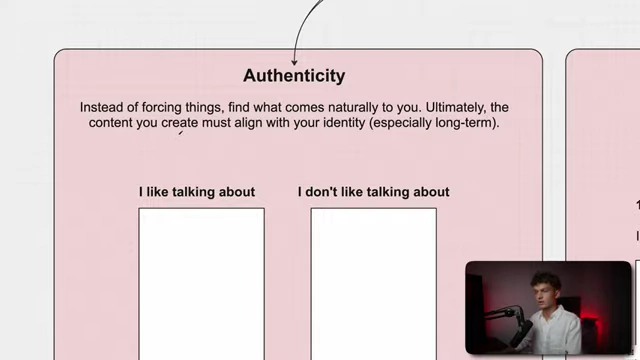
A diagram to identify topics you genuinely enjoy discussing and those you don't, to ensure authenticity in content creation.
[
00:04:33
]
- Align content with your true identity for long-term sustainability, avoiding forced interests.
- List topics you genuinely like talking about and those you don't like.
Brand Values & Voice [00:04:47]
- Define your brand values (what you stand for, e.g., authentic, empowering, bold).
- Determine your brand voice (how you communicate, e.g., serious, casual, professional, confident).
- Ensure values and voice align with your personality.
Signature Style [00:05:55]
- This is an extension of your unique edge, aligned with brand values and voice.
- Identify Elements: List key elements of your life (e.g., morning routines, side hustle, gym, travel).
- Describe Elements: Detail what you do within each element (e.g., "Morning routines before work: how journaling and planning set the tone for a focused day").
- Signature Content: Turn these elements into recurring content themes (e.g., tips from solo-preneur life, behind-the-scenes of creative projects).
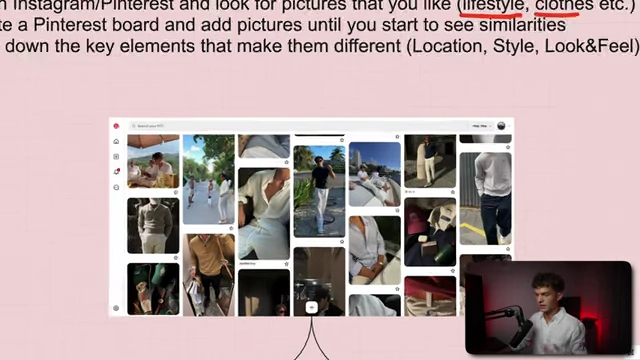
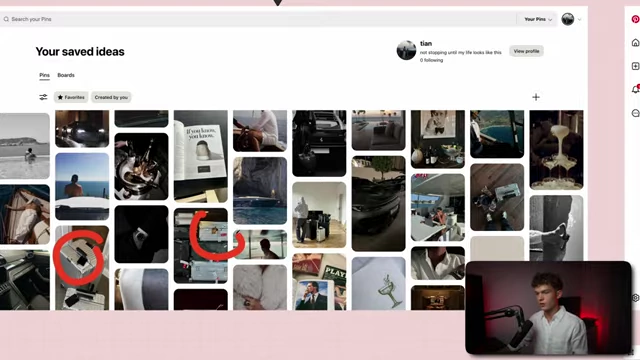
Instructions for creating a Pinterest board to identify recurring themes and key elements in desired aesthetics.
[
00:08:50
]
- Use platforms like Instagram and Pinterest to find pictures of lifestyles, clothes, cars, etc., that resonate with your desired aesthetic.
- Create Pinterest boards and add images until you identify recurring similarities.
- Note key elements that make them unique (location, style, look & feel).
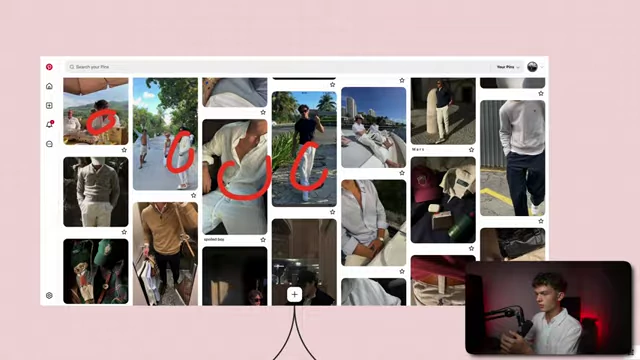
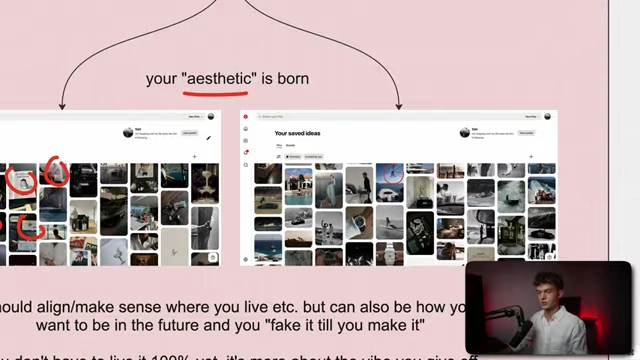
- Your "aesthetic" is born from these identified patterns. This can reflect your current life or a future vision ("fake it till you make it").
An example of a Pinterest board highlighting recurring fashion themes like linen pants, black tees, and watches to define a personal style.
[
00:09:00
]
A Pinterest board illustrating lifestyle inspirations, including luxury watches, cars, and travel scenes, to shape a desired personal brand aesthetic.
[
00:09:52
]
Two Pinterest boards demonstrating how a personal "aesthetic is born" by identifying recurring patterns across collected images.
[
00:10:25
]
- Example [00:09:42]: Pinterest board showing boats, nice cars, travel, watches, good physiques, stylish fashion.
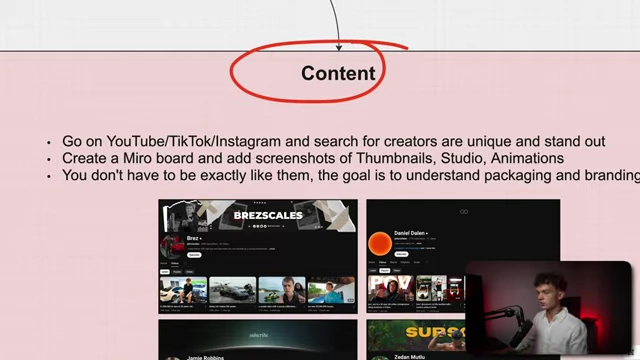
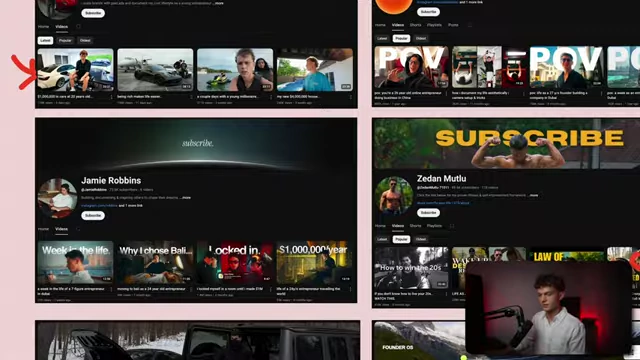
Instructions for creating a Miro board with screenshots of successful creators' thumbnails, studio setups, and animations to analyze their branding.
[
00:11:47
]
- Search YouTube, TikTok, and Instagram for creators who stand out.
- Create a Miro board (or Figma) with screenshots of their thumbnails, studio setups, and animations.
- Identify reoccurring themes and patterns in their content packaging and branding.
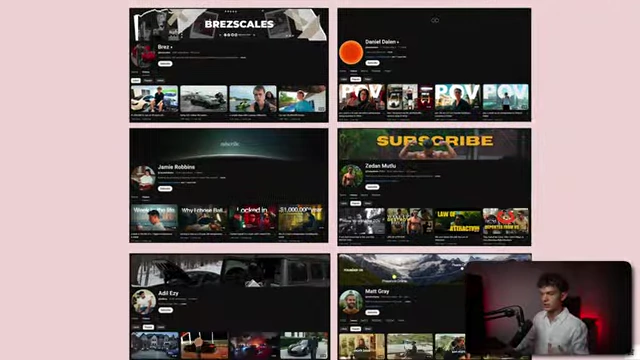
A collection of YouTube channel screenshots showcasing diverse content packaging and branding styles for inspiration.
[
00:12:03
]
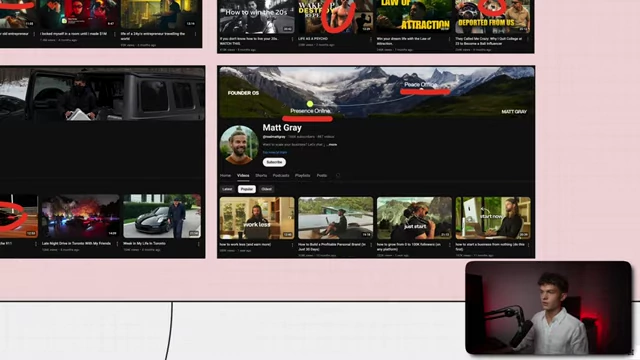
Examples of YouTube channel thumbnails illustrating content trends such as "POV" and materialistic lifestyle themes.
[
00:12:27
]
A YouTube channel banner with the slogan "Peace Offline, Presence Online," indicating a brand's core message.
[
00:12:48
]
- Examples [00:12:05]: Brezscales (raw authentic vlogs), Daniel Dalen (vlog style, high quality), Jamie Robbins (materialistic lifestyle), Zodan Mutlu (physique/workout), Matt Gray (nature, freedom business).
- Observe how banners, thumbnails, and profile pictures are consistently matched.
Defining Your Corporate Identity/Design (CI/CD) [00:13:07]
A mind map illustrating the key components of defining your Corporate Identity/Design (CI/CD) for a personal brand.
[
00:13:10
]
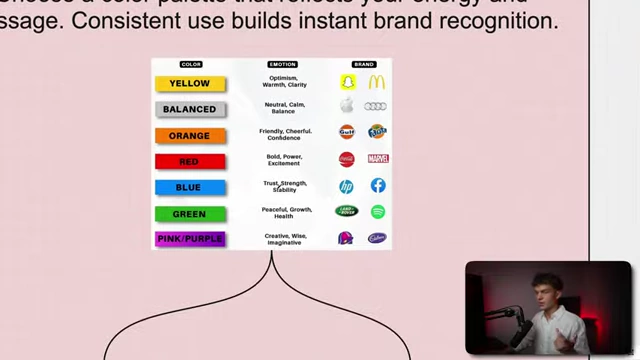
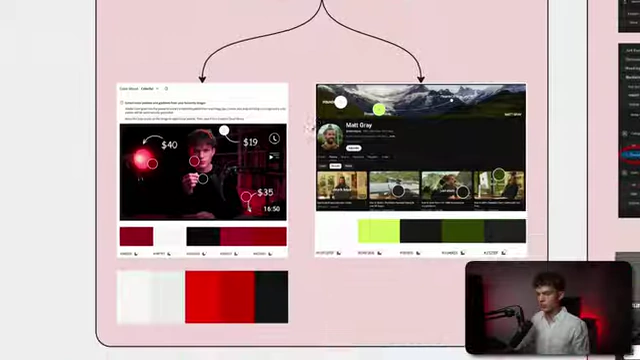
- Colors [00:13:19]: Choose a color palette (1-3 main colors, usually 2 contrast + 1 accent) that reflects your energy and message (e.g., red for boldness, power). Consistent use builds instant brand recognition.
A color theory chart linking specific colors to emotions and well-known brands, aiding in selecting a brand's color palette.
[
00:13:33
]
Examples demonstrating how a consistent color palette (red, white, black) is applied across thumbnails and channel branding.
[
00:14:06
]
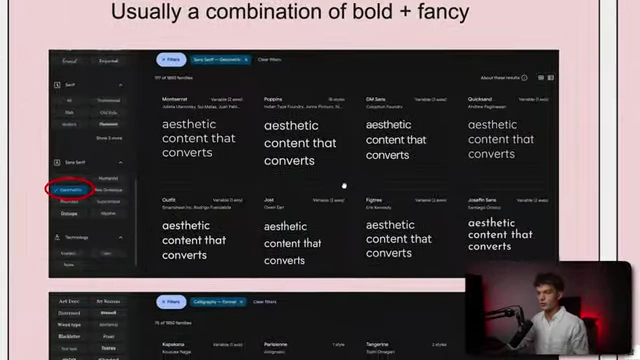
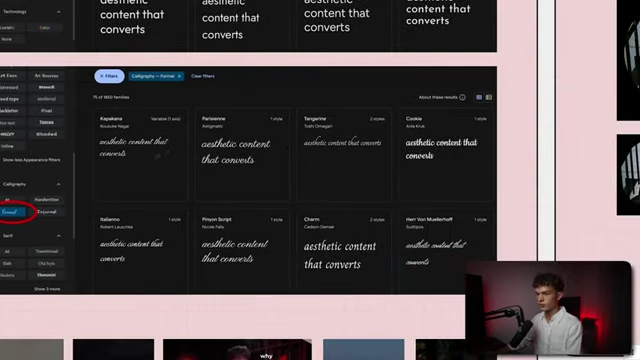
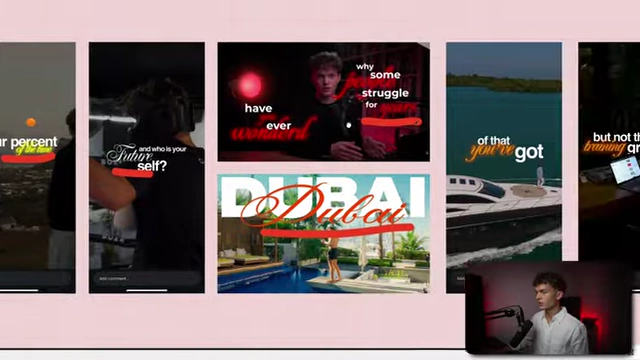
- Fonts [00:14:21]: Use 1-3 fonts, typically a combination of bold and fancy. Google Fonts (geometric, formal categories) can help. Maintain consistency across all content.
A Google Fonts screenshot demonstrating how to filter for "geometric" fonts suitable for bold branding elements.
[
00:14:28
]
A Google Fonts screenshot demonstrating how to filter for "formal" fonts to complement a brand's visual identity.
[
00:14:44
]
Examples of short-form video content showcasing consistent use of selected bold and fancy fonts for text overlays.
[
00:15:04
]
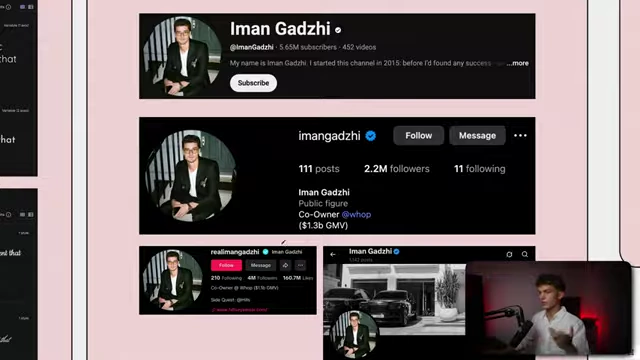
- Profile Picture (PFP) [00:15:19]: Select a clear, highly recognizable PFP and use it consistently across all platforms for strong brand recognition. Don't change it frequently.
Iman Gadzhi's consistent profile picture across YouTube, Instagram, and Twitter, illustrating its importance for brand recognition.
[
00:15:40
]
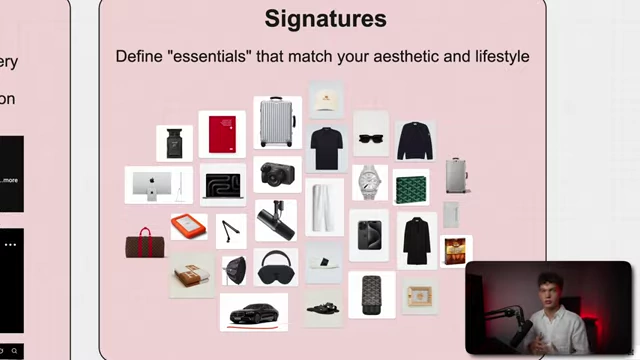
- Signatures/Essentials [00:15:59]: Define specific items (e.g., luggage, camera gear, clothing, watches, cars) that match your aesthetic and lifestyle. These items can become associated with your personal brand.
A collage of "signature" items such as luggage, camera gear, and fashion accessories that define a personal brand's lifestyle aesthetic.
[
00:16:09
]
2. Content: Engaging Your Audience and Building Authority [00:17:14]
Effective content creation involves strategic platform use, value provision, and storytelling.
2.1. Platform Strategy: Leveraging Each Platform's Strengths [00:17:29]
Instagram & TikTok:
- Goal: Maximize eyeballs and drive traffic.
- Instagram: Primarily for follows, converting via DMs/stories.
- TikTok: High growth potential, low view duration, low conversion. Drive traffic to YouTube and Instagram through bios and stories.
- Key Insight: Quality over quantity. Focus on engaging a niche audience rather than mass appeal.
YouTube:
- Goal: Nurture traffic, build trust through long-form content.
- Longer videos (30 mins+ or podcasts) build deeper connections and make monetization easier.
Content Types:
- Superficial (TOF & MOF): Top and Middle of Funnel content designed to increase awareness (e.g., viral trends, broad appeal).
- In-depth (BOF): Bottom of Funnel content designed for conversion and monetization (e.g., detailed tutorials, case studies).
Content Categories:
- Actionable: "How-to" guides (e.g., "Do X, Y, Z").
- Theoretical: Explaining concepts (e.g., "The secret behind X").
- Narrative: Story-based content (e.g., "Day in the life of X").
- Attractor: High-result content (e.g., "How I hit $X in X months").
Picking a Platform for Your Niche:
- Consider where you have the most leverage/connections (e.g., LinkedIn).
- Choose platforms you are most familiar with.
- Identify where your Ideal Customer Profile (ICP) is most likely to be (e.g., YouTube for serious learners).
2.3. Content Strategy: Storytelling and Value Provision [00:20:20]
The 5-Stage Content Circle [00:20:29]:
1. Conflict: Identify an internal conflict you or your audience faced.
2. Internal Pursuit: Reflect on aspirations.
3. Action: Detail steps taken to achieve goals.
4. Result: Document the outcome.
5. Content: Create content that shares this journey, attracting like-minded people.
Providing Value [00:21:22]:
- Value builds trust, leading to monetization. Focus on specific groups.
- 1. Documentation: Vlogs, behind-the-scenes, "building in public" (genuine).
- 2. Opening Someone's Eyes: Mindset videos, new perspectives (motivation).
- 3. Education: Solving problems, positioning you as an authority (tutorials).
Ideal Customer Profile (ICP) [00:23:03]:
![A template for defining your Ideal Customer Profile (ICP) with a detailed sentence structure: "My ideal customer is a [who] who wants [what] because [why]."][192]
- Define your ICP in one detailed sentence (e.g., "My ideal customer is a burnt-out solopreneur who wants more time freedom because they're stuck doing everything alone.").
- Break down ICP: The Promise/Dream Land, The Problem, Journey of Potential Clients, Problem List, The Desire, Desired Situation, The Gap + How You Bridge It, USP, Reasons to Believe, Features and Benefits, High-Ticket Offer (HTO) Sales Argument, Customer Verticals, Potential Questions, Objections.
Storytelling Framework [00:27:54]:
- Hook: Intrigue viewers, stop scrolling (question, contrast, revelation hooks).
- Obstacle: A challenge your audience faces (internal: fear, doubt; external: market, competition; philosophical: beliefs, misconceptions).
- Origin Story: Share personal experiences related to the challenge (situation, struggle, turning point, lesson).
- Knowledge: Share insights from your experiences (key lessons, initial assumptions, real discoveries).
- Solution: Provide clear, actionable value (quick wins, long-term strategy, pitfalls to avoid, clear next steps).
2.4. Authority Building: The 7-11-4 Rule [00:30:57]
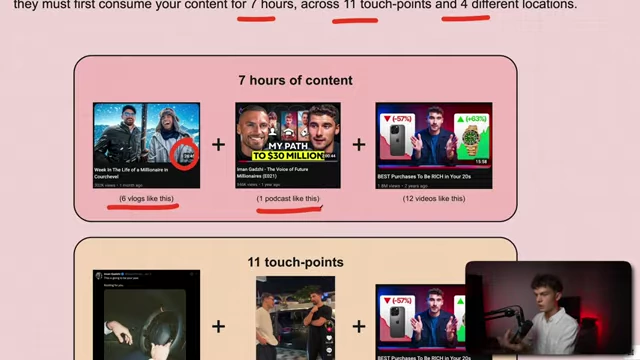
To build a qualified audience that will buy from you, they need to:
A visual breakdown of the "7-11-4 Rule" for building audience authority: 7 hours of content, 11 touch points, and 4 different locations.
[
00:31:36
]
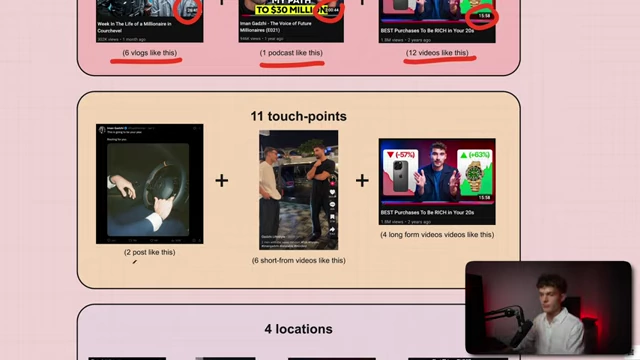
- 7 Hours of Content: Consume 7 hours of your content (e.g., 6 x 30-min vlogs, 1 x 2-hr podcast, 12 x 15-min videos).
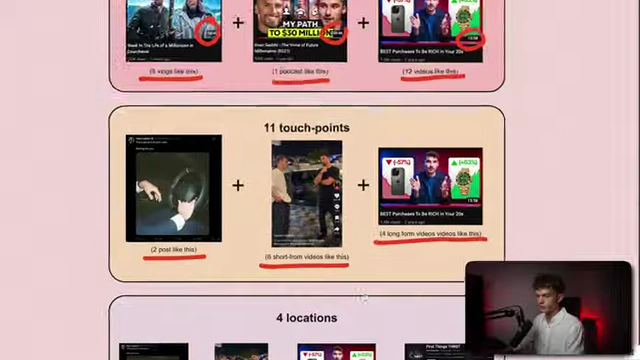
An example of the "11 touch-points" required for audience engagement, including social media posts and short-form videos.
[
00:31:46
]
- 11 Touch Points: See your content 11 times across various platforms (e.g., Twitter, short-form, long-form).
An illustration of the "4 different locations" for content distribution, including Twitter, TikTok, YouTube, and other channels.
[
00:31:51
]
- 4 Different Locations: Encounter your content on 4 different platforms/apps (e.g., Twitter, TikTok, YouTube, other podcasts).
Authority Audit Checklist [00:32:13]: A checklist for evaluating content quality and engagement (e.g., compelling hooks, logical structure, actionable CTAs, sparking conversations, building relationships).
2.5. Platform-Specific Strategies
TikTok Strategy [00:32:44]
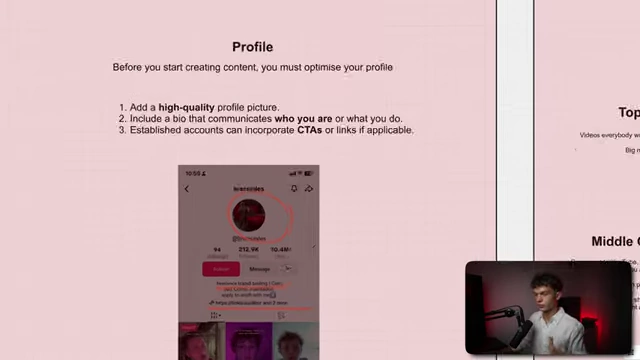
- Profile Optimization: High-quality PFP, clear bio ("who you are and what you do"), call to action (link to YouTube/Instagram).
An example of an optimized TikTok profile featuring a high-quality PFP, clear bio, and calls to action linking to other platforms.
[
00:33:36
]
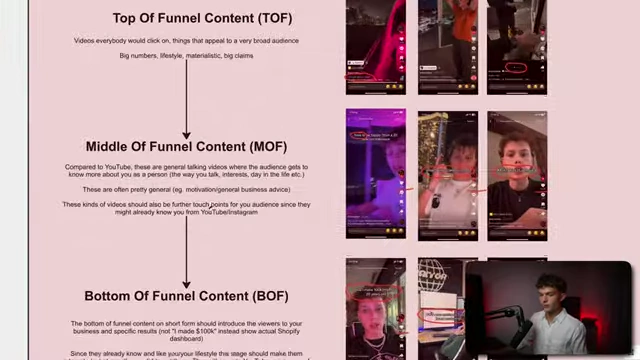
- Content Funnel:
A diagram illustrating the TikTok content funnel, from Top-of-Funnel (TOF) to Middle-of-Funnel (MOF) and Bottom-of-Funnel (BOF) content.
[
00:35:03
]
Top of Funnel (TOF) [00:34:30]: Broad appeal, viral (big numbers, lifestyle, materialistic).
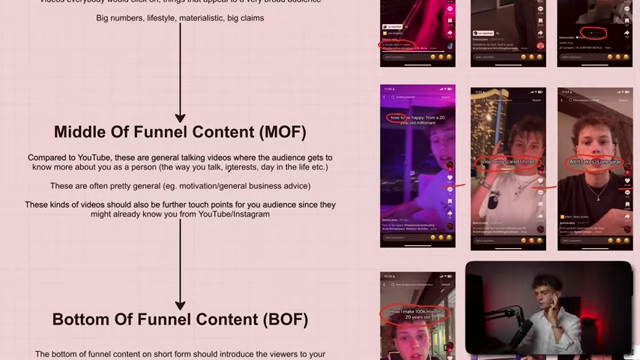
Examples of Middle-of-Funnel (MOF) TikTok videos, typically general talking videos focused on mindset and personal interests.
[
00:35:18
]
Middle of Funnel (MOF) [00:35:03]: Talking videos where audience gets to know you personally (interests, day-in-the-life, motivational, general business advice).
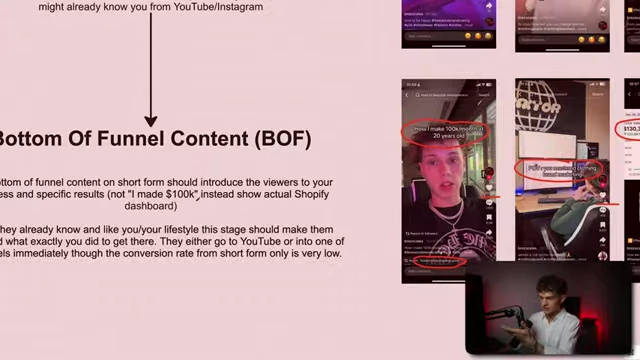
Examples of Bottom-of-Funnel (BOF) TikTok content, featuring specific business results and direct calls to action.
[
00:36:04
]
Bottom of Funnel (BOF) [00:35:54]: Introduce specific business/results (showing proof, e.g., Shopify dashboard). Drive interested viewers to YouTube.
- Keys to Success: Consistency (post daily/frequently), Content (high-quality, fast-paced, shares journey, inspires/educates), Context (understand audience needs, right message/time, younger demographic).
- Content Framework: 70% educational/entertaining, 20% behind-the-scenes, 10% soft selling/promotional.
- Direct Traffic: Use clear CTAs, create curiosity gaps, tease exclusive content on other platforms, build multiple touch points.
- Hooks: Start first 3 seconds with a problem, surprising fact, or intriguing question. Create 7-15 second punchy content that encourages rewatches. Respond to comments within first hour. Use video replies for top comments.
YouTube Strategy [00:39:50]
- Profile Optimization: High-quality banner, PFP, channel description (who you are, what you do, who you help).
An example of an optimized YouTube channel profile with a clear banner, high-quality profile picture, and a concise channel description.
[
00:39:57
]
- Problem Farming [00:40:19]: Map audience problems, create two framing points per pain point (problem-oriented vs. solution-oriented).
- Growth Topics [00:41:20]: Proven content formats based on principles of value:
Brand Leveraging: Case studies/exposes of other successful brands.
Ultimate Guides: 30-60 min comprehensive tutorials.
System Protocols: 10-min videos showing proven methods/frameworks.
Deep Dives: 15-30 min detailed exploration of a single concept.
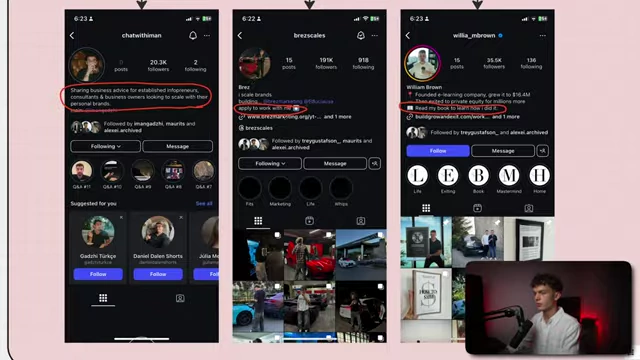
Examples of optimized Instagram profiles, demonstrating clear bios and calls to action from various creators.
[
00:43:25
]
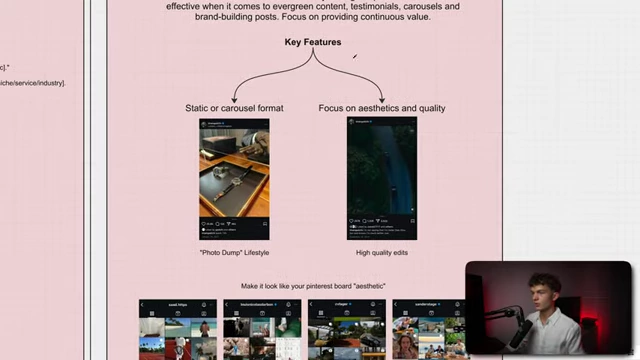
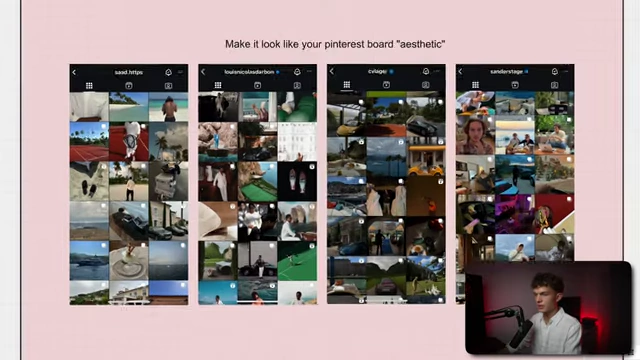
- Posts: Provide value, establish authority. Most effective for evergreen content (testimonials, carousels, brand-building posts). Focus on aesthetics/quality (photo dumps, high-quality edits). Aim for a "Pinterest board aesthetic."
Two key features for effective Instagram posts: static or carousel formats, and a strong focus on aesthetics and quality.
[
00:44:04
]
Instagram feeds curated to mimic a Pinterest board aesthetic, emphasizing visual consistency and high-quality imagery.
[
00:44:38
]
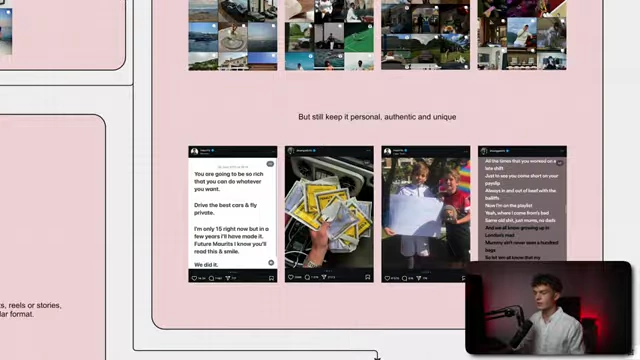
Examples of Instagram posts that maintain a personal, authentic, and unique feel, including old notes, parking tickets, and personal photos.
[
00:44:58
]
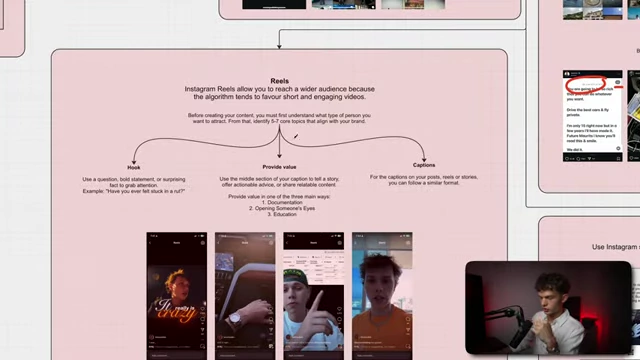
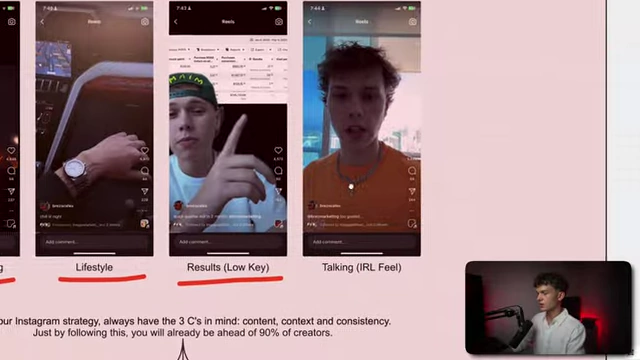
- Reels: Similar to TikTok, reuse content. Focus on good hooks, providing value (documentation, opening eyes, education), and concise captions. Types: aesthetic+talking, lifestyle, results (low-key selling), IRL updates.
An overview of Instagram Reels strategy, emphasizing the importance of a strong hook, providing value (documentation, opening eyes, education), and concise captions.
[
00:45:40
]
Various types of Instagram Reels content: aesthetic with talking, lifestyle vlogs, low-key results showcasing, and in-real-life (IRL) updates.
[
00:46:10
]
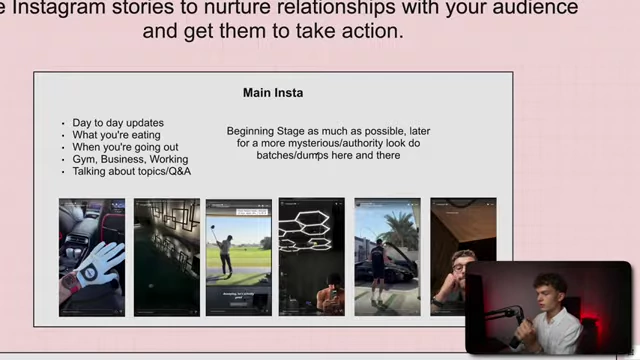
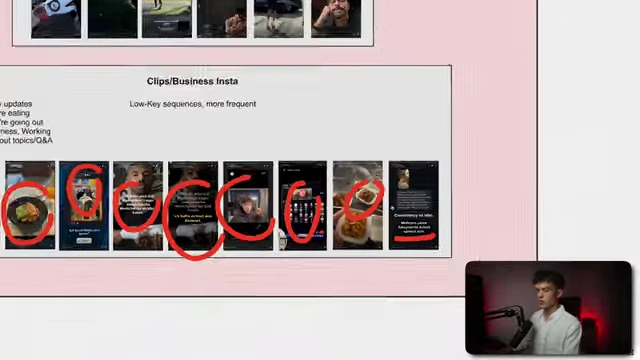
- Stories: Underestimated for nurturing relationships and monetization. Day-to-day updates (eating, activities, gym, business, Q&A). Can be "spammed" frequently in early stages to build trust; later, less frequent "dumps" for a mysterious/authoritative look. Use for low-key selling by mixing results/mindset with lifestyle.
A guide for using Instagram Stories to nurture audience relationships, with advice for frequent posting in early stages and more curated "dumps" later for authority.
[
00:46:57
]
Examples of Instagram Stories that subtly integrate low-key selling of products or services alongside lifestyle content.
[
00:47:49
]
3. Conversion: Turning Viewers into Buyers [00:47:59]
Converting your nurtured audience is the final, and easiest, step if previous stages are well-executed.
Focus on nurturing interested people in your niche rather than mass views.
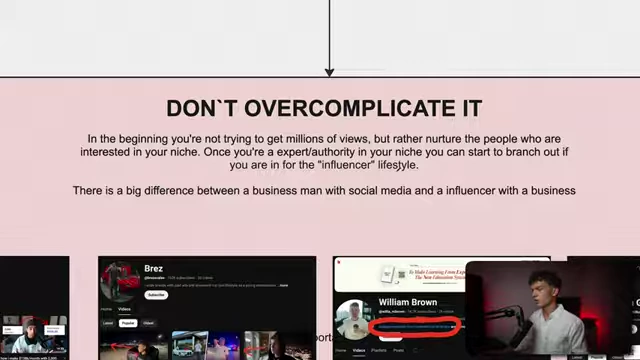
Decide if you are a "businessman with social media" or an "influencer with a business."
A distinction between being a "businessman with social media" (business first, social as tool) and an "influencer with a business" (social first, then monetized).
[
00:48:18
]
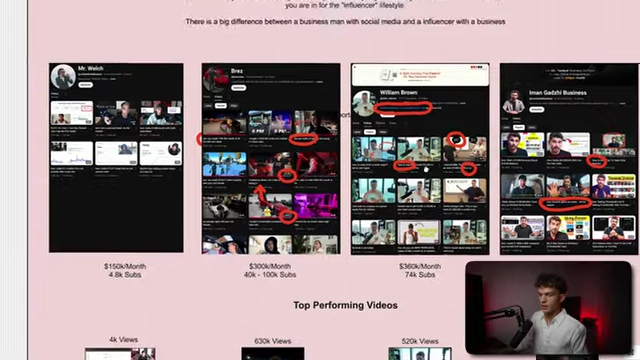
Views and subscribers don't equate to money; a niche, engaged audience does.
A comparison chart of several creators, demonstrating that high income can be achieved with a niche, engaged audience, even with fewer subscribers, emphasizing quality over quantity.
[
00:49:31
]
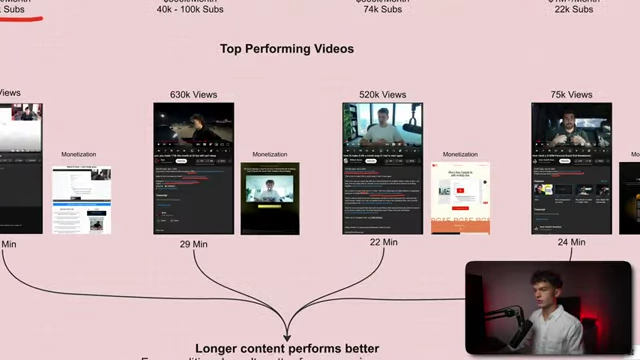
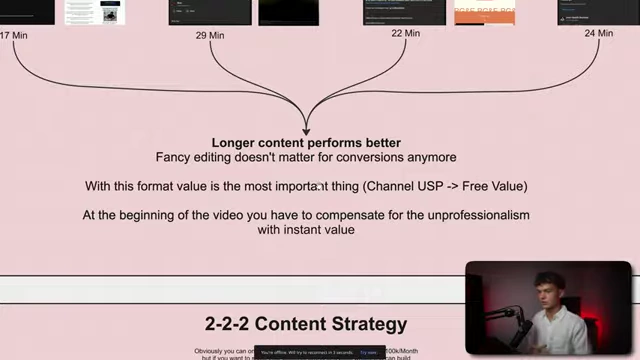
Monetization Pattern: Long-form video -> Link -> Funnel (video/signup). Longer content performs better, and value is paramount over fancy editing.
A visual representation of top-performing YouTube videos, showing the typical monetization path from long-form content to external funnels.
[
00:50:17
]
A key insight highlighting that longer content performs better for conversions, and value is more important than fancy editing.
[
00:51:19
]
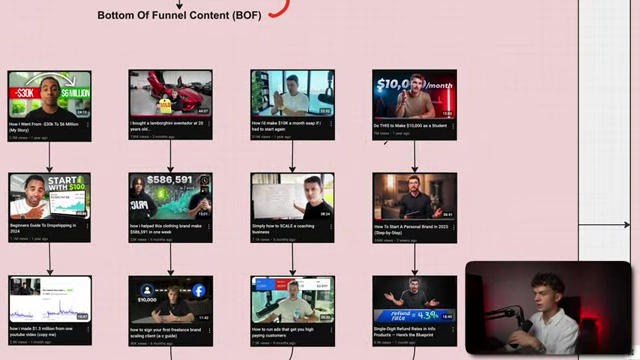
Utilize the Top-of-Funnel (TOF), Middle-of-Funnel (MOF), and Bottom-of-Funnel (BOF) content strategy on YouTube to guide your audience.
A comprehensive diagram of the YouTube content funnel, illustrating the progression from broad Top-of-Funnel content to highly specific Bottom-of-Funnel tutorials for conversion.
[
00:52:04
]
TOF Content: Broad appeal (e.g., "How I made $X," "I bought a Lamborghini").
MOF Content: Niche down, explain how results were achieved (e.g., specific business models like drop shipping, coaching).
BOF Content: Highly niched, specific "how-tos" and breakdowns for advanced users who understand the foundational concepts (e.g., "How to sign your first client," "Single-digit refund rates blueprint").
Monetization Pattern: Long-form video -> Link -> Funnel (video/signup). Longer content performs better, and value is paramount over fancy editing.
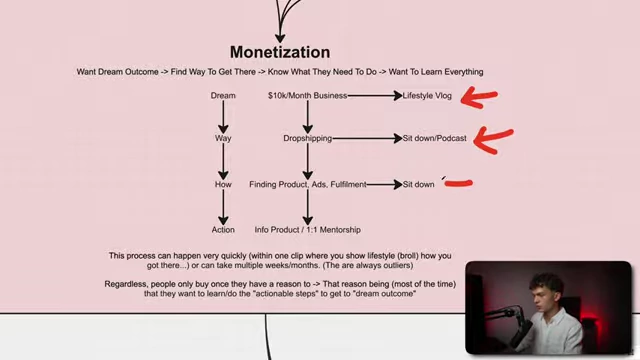
A monetization framework illustrating the journey from a viewer's "dream outcome" to purchasing an "info product/mentorship" through different content types.
[
00:54:26
]
1. Dream Outcome: The lifestyle they want (e.g., $10K/month business). Offer lifestyle vlogs.
2. Way to Get There: The method (e.g., drop shipping). Offer sit-down talks or podcasts.
3. Know What They Need to Do: Specifics (e.g., finding products, ads). Offer detailed sit-down content.
4. Learn Everything (Action): Full solution (e.g., info product, 1:1 mentorship).
3.4. Product Research and Offer Creation [00:56:01]
Research: Your audience dictates what you sell.
- Step 1: Identify audience desires by talking to your market (DMs, Q&A, TypeForm surveys, Calendly calls).
- Step 2: Re-analyze gathered data (pain points, objections, etc.) and get feedback from current/previous clients.
Keep Goal in Mind: More insights lead to better offers. Deeply understand your ICP and what they'd pay for.
Niche Down for Higher Prices: The more specific your audience/niche, the more you can charge (e.g., Time Management for Sales Professionals vs. for Outbound B2B Power Tools & Gardening Sales Reps).
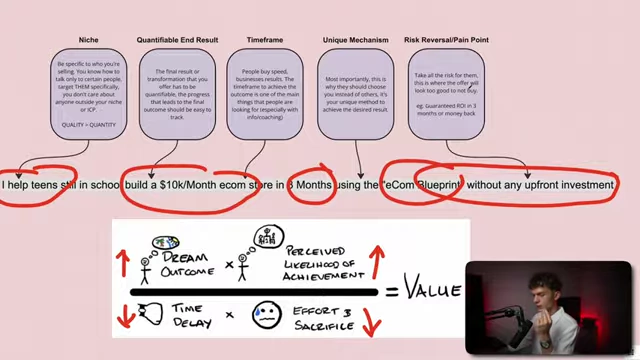
Create a "Grand Slam" Offer Statement [00:59:31]:
- Value = (Dream Outcome x Perceived Likelihood of Achievement) / (Time Delay x Effort & Sacrifice). Maximize value by increasing dream outcome/likelihood and minimizing time delay/effort/sacrifice.
The "Grand Slam Offer Statement" formula, showing how value is created by maximizing perceived likelihood and dream outcome while minimizing time delay and effort.
[
01:00:44
]
- Offer Statement Example [01:00:19]: "I help [niche] build a [quantifiable end result] in [timeframe] using the '[unique mechanism]' without any [risk reversal/pain point]."
The offer is more important than the product itself.
Progression of Product Types:
1. 1:1 Coaching [01:02:10]: Start here (5-10 clients, $1K-$10K/month, 1-4 months). Gets best results, provides testimonials and feedback.
2. 1:Many Coaching [01:02:24]: Group calls with pre-recorded foundation (10-30 clients, $3K-$8K/month, 1-4 months). More efficient.
3. Inner Circle [01:03:09]: Larger community, more calls with team coaches (20-100 clients, $3K-$6K/month, 1-4 months). Start building a team.
4. High-Level Course [01:03:21]: Pre-recorded 95% of content, main value from product (50+ clients, $1K-$5K, lifetime access, weekly calls with team).
5. Course [01:03:45]: Accessible version of the high-level course for broader audience (infinite clients, $300-$1K). Covers 80% of results.
6. Community [01:04:14]: Low-ticket recurring (infinite clients, $25-$250/month). Focus on community, news, updates. Often started free, then charged.
Tools for Implementation:
- 1:1 Coaching: Google Meet (free, easy to use, record calls).
- Communities/Courses: Skool ($99/group, professional, active community via gamification) or Whop (free setup, 3% processing fees, landing page, Discord community).
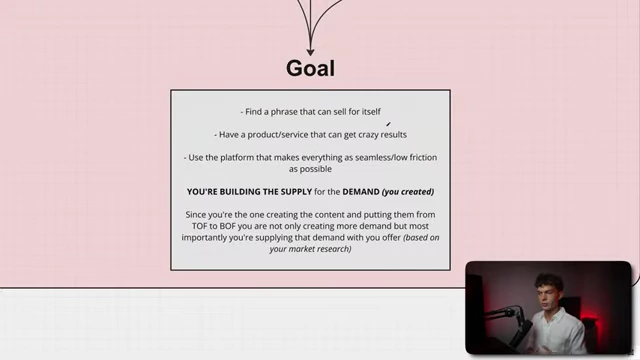
Overall Goal: Find a compelling offer, deliver crazy results, use seamless platforms, and supply the demand you create through your content funnel.
A summary of the overall goal for product implementation: create a compelling offer, deliver results, use seamless platforms, and supply the demand created by content.
[
01:06:23
]