An Examination of Outdated Boomer Financial Advice for Modern Economic Realities
This video humorously critiques outdated "Boomer financial advice" by contrasting it with the realities of the modern economy. Key points include:
- Unrealistic Wealth Pathway: Boomer Joe's advice on paying for college with a summer job, buying a cheap house by 24, and retiring wealthy after 40 years with one company is debunked by today's high tuition, stagnant wages, and housing costs.
- Outdated Budgeting: Boomer advice (20% savings, 20% rent, 10% food) is unrealistic, as modern expenses demand at least 50% for rent and 35% for food, leaving minimal for other needs.
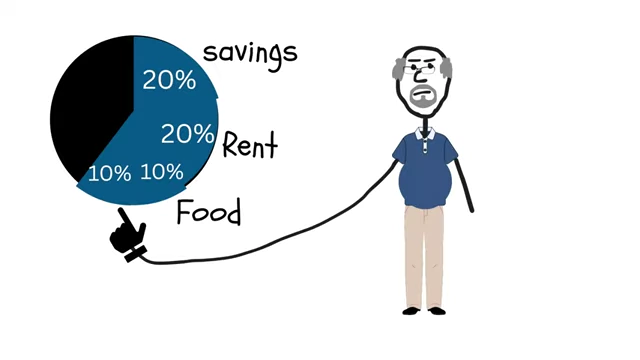
Contrasting pie charts show Boomer Joe's outdated budget (left) with 20% for rent and 10% for food, compared to modern reality (right) with 50% for rent and 35% for food. [ 00:02:25 ] 
Contrasting pie charts show Boomer Joe's outdated budget (left) with 20% for rent and 10% for food, compared to modern reality (right) with 50% for rent and 35% for food. [ 00:02:35 ] - College Degree Misconceptions: The belief that a degree guarantees a high-paying job is challenged, highlighting skyrocketing tuition, lifelong debt, and the impact of AI replacing traditional jobs.
- Misplaced Corporate Loyalty: The advice to stay loyal to one company for decades is rejected, as promotions often go to connections, and companies rarely reward loyalty, making job hopping or entrepreneurship more viable.
The Unrealistic Boomer Blueprint [0:00:00]
The video introduces "Boomer Joe," a 65-year-old financial advisor whose advice, while potentially effective in 1981, is "laughingly outdated" for the modern economy of 2025. The narrator highlights that younger generations face significantly tougher challenges due to high tuition, rent, and stagnant wages.
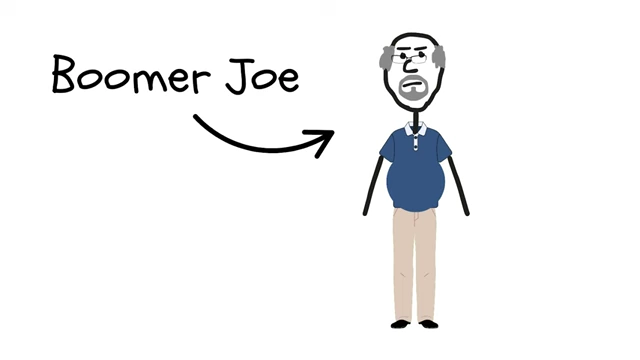
1. The Outdated Path to Financial Freedom [0:00:35]
Boomer Joe outlines a "simple pathway to get wealthy":
- Idealized Journey:
- Get a summer job to save for college tuition.
- Graduate with a degree and minimal debt.

A stick figure celebrating graduation with a diploma, surrounded by balloons, representing the idealized achievement of a degree. [ 00:00:40 ] - Immediately secure a high-paying job.
- Buy a "beautiful house" for cheap by age 24.
- Save 20% of your paycheck monthly.
- Stay with the same company for 40 years.
- Retire with "a few million in the bank."

An older stick figure character holding a large bag of money, symbolizing the boomer's expectation of a wealthy retirement. [ 00:00:55 ]
- Modern Economic Constraints:
- This path is presented as objectively "10 times more difficult" now.
- Inflation has severely diminished purchasing power.
- Wages have remained stagnant.
- Tuition costs are exorbitantly high.
- Even with a degree and a house, individuals face lifelong debt.
2. Budgeting in a New Economic Reality [0:01:51]
Boomer Joe advises to "live below your means" with a specific budget breakdown:
- Boomer's Frugal Allocation:
- 20% for savings.
- 20% for rent (e.g., a "nice little two-bedroom apartment for $250 a month").
- 10% for food.
- 10% for other expenses.
A pie chart illustrating Boomer Joe's outdated budget advice, allocating 20% to savings, 20% to rent, and 10% to food. [ 00:02:25 ]
- Current Cost of Living:
- The narrator counters that these allocations are impossible today.
- Rent is a minimum of 50% of income.
- Food expenses are around 35%.
- The remaining 15% goes to other essential needs.
A contrasting pie chart shows modern budgeting, with 50% of income going to rent, 35% to food, and only 15% remaining for other expenses. [ 00:02:35 ] - It's impossible to afford even basic housing for 20% of income, often leading to living in undesirable, unsafe locations.

A stick figure character lives in a small shed precariously perched atop an apartment building in a dangerous and unsavory street, illustrating the dire housing situation for those trying to afford rent. [ 00:02:50 ] - Eating out is a luxury, not a common practice for those struggling financially; people are "already eating like peasants."
3. The College Degree Dilemma [0:03:34]
Boomer Joe insists on the necessity of a college degree:
- Boomer's Mandate:
- A college degree is crucial for making "good money."
- Jobs will be readily available for graduates.
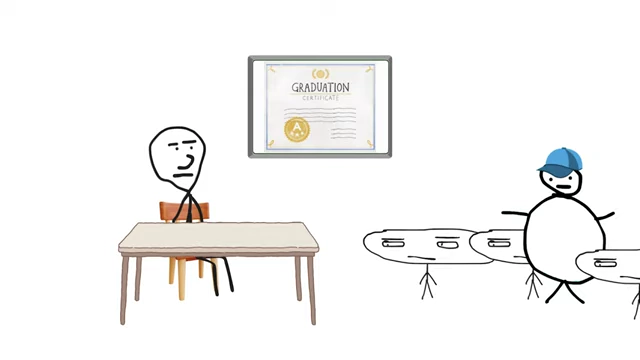
A stick figure character sits at a desk while many other stick figures, representing jobs, eagerly wait in line, illustrating the boomer's belief that a degree guarantees employment. [ 00:03:40 ] - College tuition can be covered by working a summer job, as Boomer Joe did at 18.
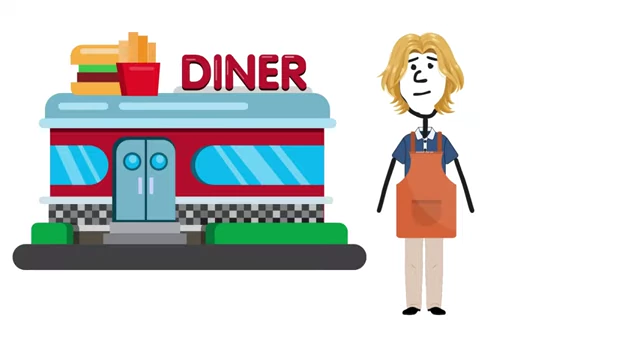
A stick figure character working at a diner, representing the boomer's belief that a summer job is sufficient to save for college tuition. [ 00:04:23 ]
- Contemporary Educational Challenges:
- The narrator labels college as "mostly a scam" due to internet learning alternatives.
- Tuition is "10 times as expensive" compared to the 1970s.
- Graduates often face overwhelming debt for the "rest of your life."
- Even with a degree, finding a job is difficult, partly due to AI replacing roles, forcing graduates into low-wage jobs.
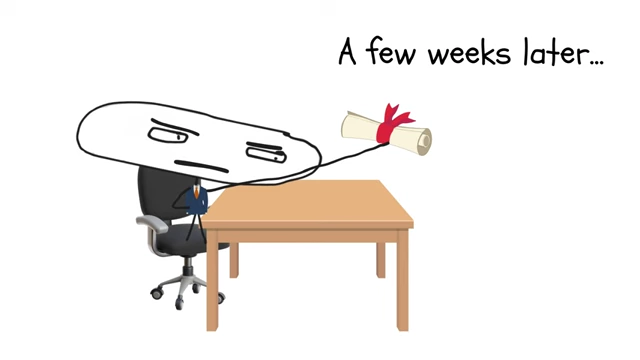
A stick figure character with a diploma sits dejectedly at a desk, implying difficulty finding employment despite having a degree. [ 00:05:05 ]
4. Challenging Corporate Loyalty [0:05:33]
Boomer Joe advocates for company loyalty for career progression:
- Boomer's Loyalty Doctrine:
- "Stay loyal to one company for 40 years and slowly climb the corporate ladder."
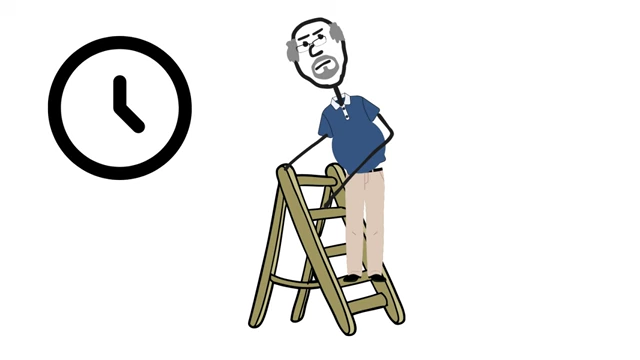
Boomer Joe on a small ladder next to a clock icon, symbolizing the idea of slowly progressing in a company over a long period. [ 00:05:40 ] - "Show up early, stay late, work on the weekends, and your boss will notice it."
- Loyalty "always pays off."
- "Stay loyal to one company for 40 years and slowly climb the corporate ladder."
- Workplace Realities:
- The narrator argues that company loyalty is a "scam" because companies rarely reciprocate it.
- Promotions and "good jobs" are often given to the "boss man's stupid niece or spouse" (nepotism) rather than based on merit or hard work.

A boss character introducing his niece, Joanna, as the new strategist coordinator, illustrating nepotism over merit. [ 00:06:20 ] - Hard work is often unrewarded, exemplified by receiving a cheap, self-assembled coffee maker instead of a promotion.

A boss character offers a low-quality coffee maker labeled "BIG CORP" as a reward for hard work, underscoring the inadequacy of corporate recognition. [ 00:06:47 ] - Job hopping or starting one's own business is a more effective strategy for career advancement and earning potential in today's economy, as "loyalty does not exist."

A stick figure couple stands proudly in front of their newly opened "CAFE" business, symbolizing entrepreneurial ambition. [ 00:08:54 ] - However, starting a business can also lead to failure, as depicted by the cafe exploding.

A newly opened cafe business exploding in a mushroom cloud, illustrating the high risks and potential failures associated with entrepreneurship. [ 00:09:02 ]
Conclusion: Generational Divide in Financial Understanding [0:07:38]
The video culminates in a symbolic confrontation between Boomer Joe and the narrator, emphasizing the complete disconnect in their understanding of financial realities. Boomer Joe remains obstinate, believing the younger generation is lazy, while the narrator insists that Boomer Joe's worldview is obsolete. The satirical ending underscores the impossibility of applying outdated advice to modern economic challenges.