Breaking the Cycle: A 5-Step System to Achieve Leaner Physique and Sustainable Muscle Growth Without Endless Calorie Deficits
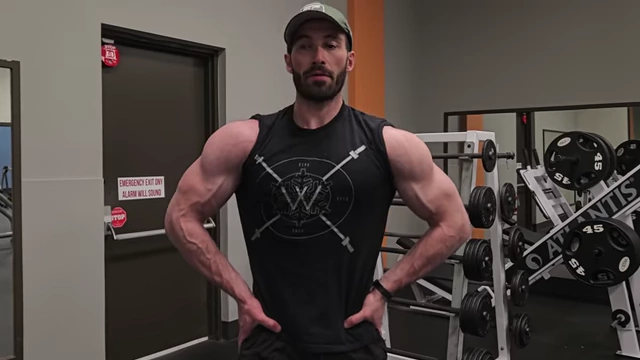
This video introduces a 5-step system to achieve long-term physique goals by moving beyond continuous, ineffective calorie deficits. The speaker shares his personal struggle with endless dieting cycles that left him "soft and small" but now shows significant progress.

- He emphasizes the importance of committing to distinct fat loss phases with clear end dates, rather than vague, open-ended diets.
- The system advocates for strategically increasing food intake post-cut to restore energy, optimize hormones, and fuel muscle growth.
- It highlights the "cruising" phase to maintain progress by making modest calorie adjustments and focusing on consistent healthy habits.
- A key takeaway is reframing maintenance as a period for performance and health, not just scale numbers.
- The video outlines three long-term "buckets" or phases (fat loss, maintenance, gain) tailored to different starting body compositions, promoting a cyclical yet progressive approach to fitness over years.

Long-term physique strategy for an 'Average Joe' with phases of fat loss, maintenance, and gain. [ 00:08:15 ]
The Ineffectiveness of Perpetual Calorie Deficits [0:00]
The video begins by questioning if continuous calorie deficits might hinder achieving one's best physique, arguing that while necessary for fat loss, they can become a trap if not managed correctly. The speaker shares his personal journey and the common frustration of feeling "soft and small" despite consistent effort.


Breaking the Cycle of Inefficient Dieting [0:28]
The speaker recounts his own experience, where repeated "cuts" often led to looking worse and gaining fat back, creating a cycle of frustration.
- He describes feeling like he was "doing everything right" but saw no significant changes, leading to constant dissatisfaction.
- Hiring a coach revealed a new approach, leading to visible physique improvements like muscle definition and better workouts.
- The core lesson is to properly commit to a single fat loss phase, executing it effectively to achieve goals quicker and fundamentally alter one's physique trajectory.
- Avoid the "half-cut, half-accidental bulk purgatory" that keeps many stuck.
The Importance of a Structured Approach to Bodybuilding [1:37]
- True physique development requires intentional building, not constant tearing down.
- Muscle growth needs sustained periods of being well-fed and training hard, emphasizing that "you can't build anything noteworthy if you're constantly tearing it down."
The 5-Step System for Sustainable Physique Development [2:13]
The video introduces a five-step process to move beyond ineffective calorie deficits towards a more sustainable and productive fitness journey.
1. Pick Your Starting Point [2:26]
- Assess current fat levels: Understand roughly how much fat needs to be lost.
- 8-15 lbs: Approximately 6-8 weeks of focused effort.
- 15-20 lbs: Approximately 10-12 weeks if truly focused.
- 25+ lbs: Could take 12-24 weeks depending on the amount.
- Goal: The aim is not to get shredded immediately, but to complete one focused fat loss phase and build momentum.
- Key principle: Every fat loss phase should have a distinct start and end date.
2. Set Your Deadline [3:34]
- Importance of an end date: A specific end date creates urgency and motivates consistent effort, preventing blind, open-ended dieting.
- Commitment: Based on the estimated time from Step 1 (e.g., 6, 8, or 12 weeks), choose a definitive end date.
- Execution: When that date arrives, the fat loss phase stops, regardless of feeling "almost there." This teaches discipline and prevents prolonged, unproductive dieting.
3. Raise Your Food [4:23]
- Post-cut calorie increase: Once the fat loss phase ends, increase calorie targets.
- Benefits: This restores energy, helps normalize hormone levels, improves recovery, and fuels better workouts.
- Opportunity for muscle growth: Use the increased food intake to build muscle and drive future progress.
- Develop healthy habits: Easier to focus on sleep and better food choices when not in a deficit.
- Enjoyment: Lifting weights becomes more enjoyable and productive with adequate fuel, leading to strength gains and muscle building.
4. Cruise (Maintaining Progress) [5:10]
- Avoid rebound weight gain: This phase is crucial to prevent rapidly regaining lost fat.
- Expect some weight gain: Initial weight increase (1-3% of body weight, or 2-6 lbs) is normal due to carb and water retention, not fat.
- Modest calorie increase: Start by adding 400-600 calories per day on top of the end-of-cut calories.
- Monitor weekly averages: Adjust calories by ~100 per day if weight continues to drop or if gaining more than half a pound per week over several weeks.
- Consistency is key: Maintain tracking food, consistent steps, and hard gym training. Avoid immediate cheat meals or abandoning structure.
- Balance: Learn to navigate between strict dieting and uncontrolled eating, finding a sustainable middle ground.
5. Reframe What it Means to 'Maintain' [6:57]
- Shift mental focus: Maintenance is not about chasing scale highs or lows, but about providing enough food for the body to feel healthy, safe, and perform optimally.
- Prioritize well-being: Focus on good hunger cues, mood, energy levels, sleep quality, and gym performance.
- Long-term perspective: Understand that the best physique is built over extended periods of consistent effort, not rapid, short-term diets.
The 3 Long-Term Physique Development "Buckets" [8:00]
The video outlines three long-term pathways based on an individual's starting point:
Bucket #1: Average Joe (Some muscle, some extra fat)
- Phase One: Fat Loss (significant chunk)
- Phase Two: Maintain Body Weight (or slight further fat loss)
- Phase Three: Lean Gain (slowly build muscle)
- Phase Four: Short Fat Loss (reveal muscle)
Long-term physique strategy for an 'Average Joe' with phases of fat loss, maintenance, and gain. [ 00:08:15 ]
Bucket #2: Skinny & Small (Bony and scrawny)
- Phase One: Extended Lean Gain (long period of muscle building)
- Phase Two: Short Fat Loss (clean up any fat gained)
- Phase Three: Extended Lean Gain (continue building muscle)

Long-term physique strategy for a 'Skinny & Small' individual, focusing on extended gain phases. [ 00:08:25 ]
Bucket #3: High Body Fat Percentage (Lots of fat to lose)
- Phase One: Extended Fat Loss (significant loss)
- Phase Two: Maintain (break for recovery)
- Phase Three: Extended Fat Loss (continue until desired leanness)
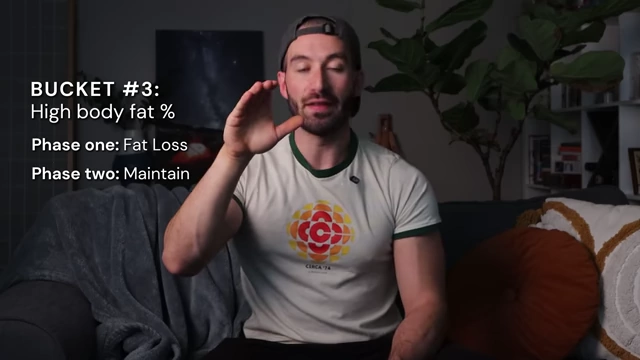
Long-term physique strategy for individuals with a 'High body fat %', prioritizing extended fat loss. [ 00:08:40 ]
Your Next Steps: Building a Yearly Plan [8:43]
- Calendar Integration: Plan your year with distinct phases for fat loss and muscle gain/maintenance.
- Example Plan:
- Jan 1st - Mar 7th: 10-week Fat Loss (e.g., 190 lbs -> 180 lbs)
- Mar 8th - Aug 31st: 6-month Lean Gain (monthly gain: +1 lb, e.g., 180 lbs -> 186 lbs)
- Sept 1st - Oct 13th: 6-week Fat Loss (e.g., 186 lbs -> 180 lbs, but with more muscle)
- Oct 14th - EOY (and beyond): 3-6+ month Lean Gain/Maintenance (focus on further muscle building)

An example yearly plan outlining specific fat loss and lean gain phases with target weights. [ 00:09:35 ]
- Example Plan:
- Compounding Effects: These long, slow growth phases compound over time, leading to significant visible changes during subsequent fat loss diets.
- Efficiency: Limit fat loss pushes to a couple per year for maximum efficiency, unless a large amount of fat needs to be lost.