The Chinese Government's Systemic Exploitation of Overseas Students for Espionage and Influence
Elephants in Rooms - Ken LaCorte
This video explores how the Chinese government utilizes its student population in the U.S. for espionage and influence, despite most students being law-abiding. China systematically steals technology and intellectual property, often using students in academic or research programs. Noteworthy cases include Nongyong Zang, who smuggled biological agents and drugs; Chen Song, a military officer transmitting Stanford research; and Linway Ding, a Google engineer stealing AI designs. The "Thousand Talents Plan" actively recruits Chinese experts and scholars in the U.S. to return to China with their acquired knowledge. Over 275,000 Chinese students are in the U.S., a surge driven by U.S. universities seeking tuition revenue and China's strategic placement of students. The China Scholarship Council funds students who sign loyalty contracts and name family guarantors, enforcing compliance via potential financial penalties and China's 2017 National Intelligence Law. Chinese Students and Scholars Associations (CSSAs), ostensibly cultural groups, monitor students and report dissent. While most students are not spies, strategically placed individuals can cause significant damage. Potential solutions include "risk-based openness" with tighter vetting for sensitive fields.
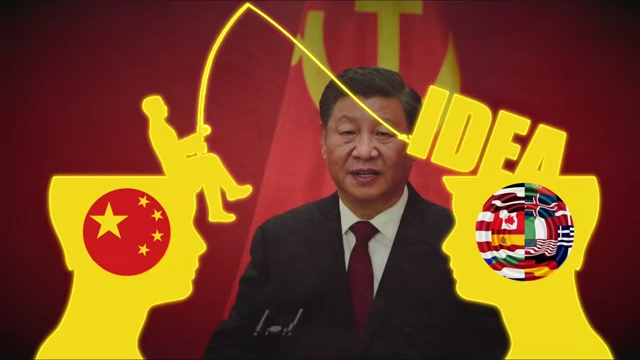
1. The Chinese Espionage Threat [02:05]
Beijing has engaged in systematic technology and intellectual property theft for decades, targeting universities, corporations, and government labs, often by placing individuals, including students, directly into institutions.
- Systematic Intellectual Property Theft [02:07]
- China has systematically stolen designs for fighter jets, biotech formulas, and solar breakthroughs, making intellectual property theft an essential part of its economic growth.
Illustration of China's strategy to acquire foreign intellectual property [ 00:02:08 ] - This theft frequently occurs through individuals entering the country with student visas or via collaborative research, a method the speaker refers to as "crowdsourced spying."
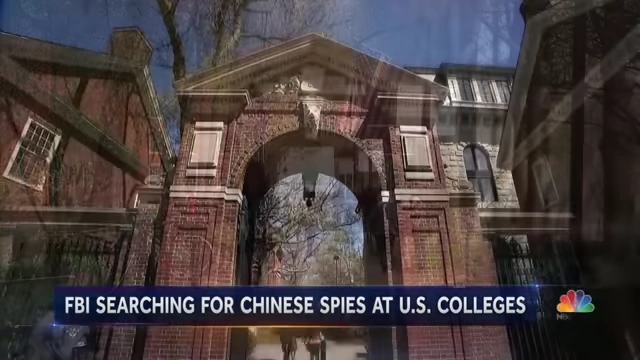
News report on the FBI's search for Chinese spies at U.S. colleges [ 00:02:24 ] 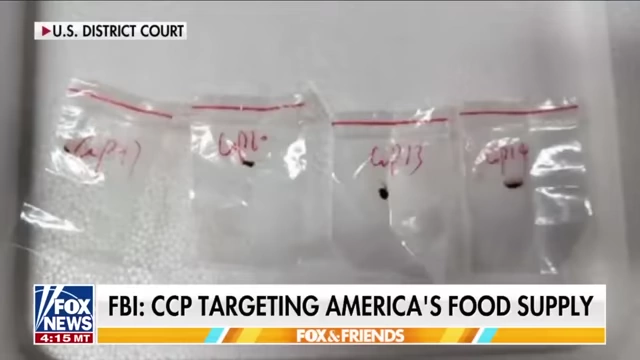
Evidence from an FBI investigation into CCP targeting of America's food supply [ 00:02:35 ]
- China has systematically stolen designs for fighter jets, biotech formulas, and solar breakthroughs, making intellectual property theft an essential part of its economic growth.
- Case Studies of Infiltration [02:37]
- Nongyong Zang: A student and president of the Chinese Students and Scholars Association at the University of Florida, she was involved in a multi-million dollar scheme, posing as a biomed researcher to illegally ship controlled biological agents like purified proteins of cholera and whooping cough, as well as high-purity fentanyl and meth compounds, to China using her student email and status.

News report on a student involved in a smuggling probe [ 00:00:30 ] 
List of biological agents and illicit substances illegally shipped to China [ 00:00:43 ] 
Seized bags of high-purity compounds illegally smuggled [ 00:00:52 ] - Chen Song: Arrived at Stanford as a neurology researcher but was a Chinese military officer who systematically transmitted Stanford research, methodologies, and capabilities back to China.
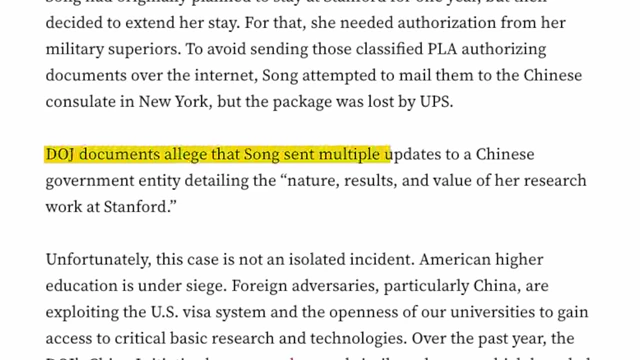
Department of Justice documents detailing Chen Song's transmission of Stanford research to China [ 00:02:54 ] - Yangqing Yi: Posed as a physics student at Boston University but was a lieutenant in the People's Liberation Army, tasked with gathering intelligence on U.S. military researchers and compiling dossiers on scientists in AI and robotics.
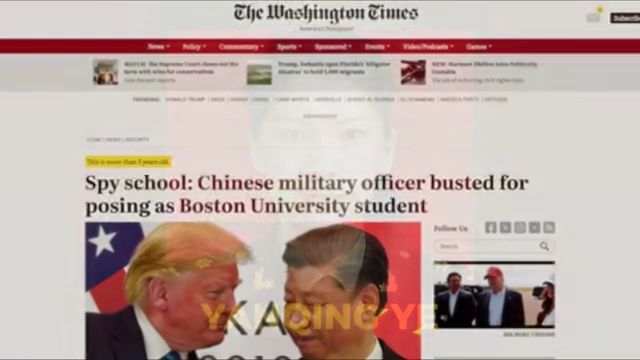
Headline reporting a Chinese military officer posing as a Boston University student [ 00:03:04 ] 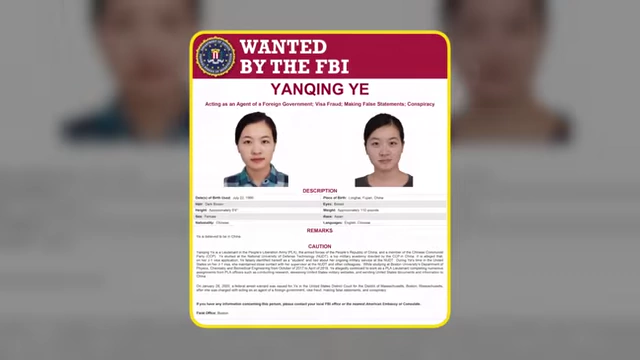
FBI wanted poster for Yangqing Ye, a Chinese military officer who posed as a student [ 00:03:11 ]
- Nongyong Zang: A student and president of the Chinese Students and Scholars Association at the University of Florida, she was involved in a multi-million dollar scheme, posing as a biomed researcher to illegally ship controlled biological agents like purified proteins of cholera and whooping cough, as well as high-purity fentanyl and meth compounds, to China using her student email and status.
- China's Focus on Artificial Intelligence (AI) [03:20]
- AI is considered the most transformative and dangerous technology of our time, likened to the "new Manhattan Project."
Artificial intelligence, a key area of interest for Chinese intelligence [ 00:03:23 ] - Control over AI implies control over future military power, surveillance capabilities, and economic warfare.
Visual representation of China's focus on AI and robotics for intelligence gathering [ 00:03:16 ] - Linway Ding: A Google software engineer charged with secretly founding a Chinese AI company while employed by Google, uploading confidential AI chip designs and hundreds of files, and pitching them to a Chinese government talent program.
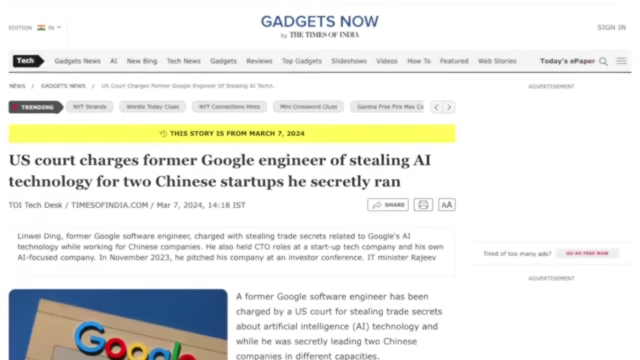
News about a former Google engineer charged with stealing AI technology for Chinese startups [ 00:04:18 ]
- AI is considered the most transformative and dangerous technology of our time, likened to the "new Manhattan Project."
- "Thousand Talents Plan" [04:37]
- Launched in 2008, this Chinese initiative aimed to recruit leading tech experts, particularly those already working or studying in the United States, to bring their expertise and research back to China.
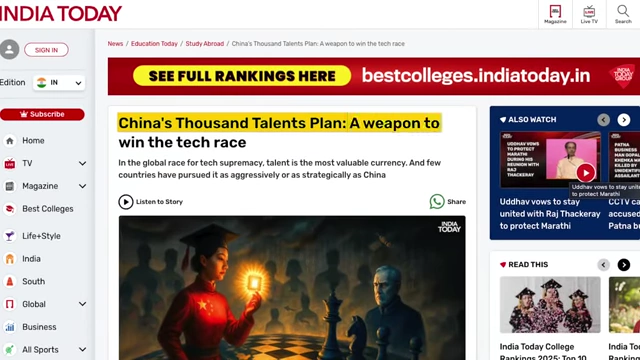
Article on China's "Thousand Talents Plan" as a strategy to win the tech race [ 00:04:43 ] - Visiting students and junior scholars are actively recruited with promises of research funding, lab access, and jobs back home.
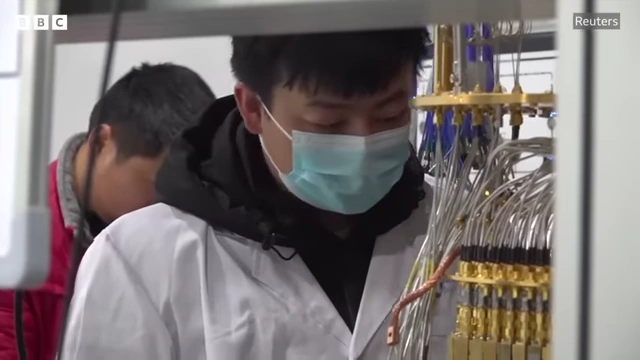
Chinese experts working in a lab, reflecting the talent brought back through programs like the Thousand Talents Plan [ 00:04:47 ]
- Launched in 2008, this Chinese initiative aimed to recruit leading tech experts, particularly those already working or studying in the United States, to bring their expertise and research back to China.
2. The Surge in Chinese Students in the US [05:13]
The number of Chinese students in the United States is substantial, reaching over a quarter million, comprising about 25% of all foreign students.
- Scale of Chinese Student Enrollment [05:13]
- Approximately 277,398 Chinese students were in the U.S. during the 2023/24 academic year, making them the largest group of international students.
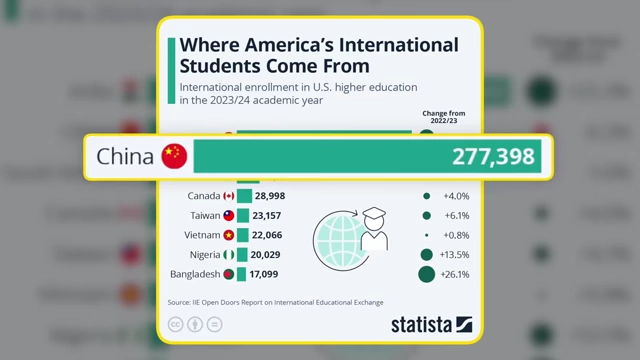
Chart showing China as the largest source of international students in the U.S. for 2023/24 [ 00:05:18 ] - In contrast, only about 600 American students study in China.
- Approximately 277,398 Chinese students were in the U.S. during the 2023/24 academic year, making them the largest group of international students.
- Reasons for the Surge [05:37]
- U.S. Policy after Tiananmen Square [1989]: The U.S. government granted extended visas and asylum to tens of thousands of Chinese students, hoping they would defect to freedom.
- University Business Model: Beginning in the 2000s, Chinese students became a significant revenue source for many U.S. universities, paying full tuition and contributing billions of dollars annually, with some public universities relying on their enrollment to balance budgets.
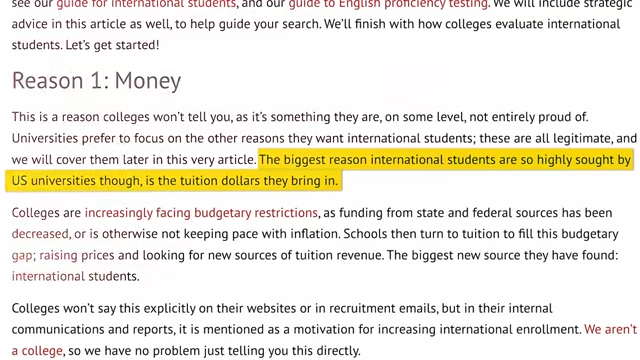
Highlighted text indicating tuition dollars as a primary reason U.S. universities seek international students [ 00:05:58 ] 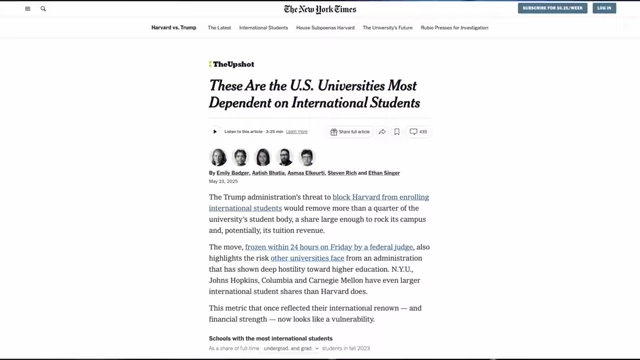
Article discussing U.S. universities' dependence on international students [ 00:06:19 ] - Beijing's Systematization: The Chinese government actively encouraged and systematized education abroad, setting up agencies to place students in strategic fields like science, business, and engineering.
3. Chinese Communist Party (CCP) Pressure on Students [06:09]
In recent years, the intent behind Chinese students studying abroad has shifted for some, with students being directly selected, sponsored, and managed by Chinese institutions tied to the government.
- China Scholarship Council (CSC) [06:46]
- Overseen by Beijing's Ministry of Education, the CSC provides full scholarships, including tuition, housing, and living stipends, to thousands of students primarily headed to the U.S. for sensitive research fields.
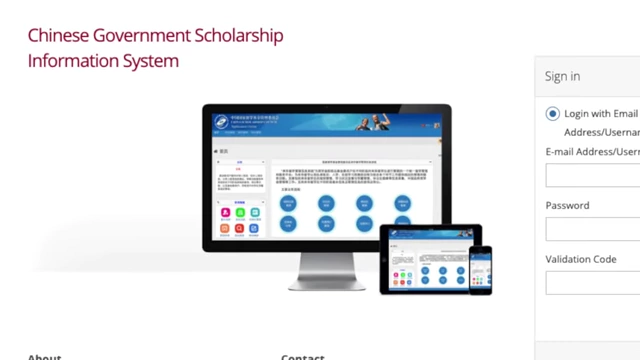
The Chinese Government Scholarship Information System, a mechanism for government sponsorship [ 00:06:42 ] 
Chinese Ministry of Education's full scholarship program for students studying abroad [ 00:06:51 ] - Before arriving, sponsored students sign a contract pledging obedience to the party, promising not to embarrass China, and naming two guarantors (usually family members) who face financial liability if the student deviates or fails to return home.
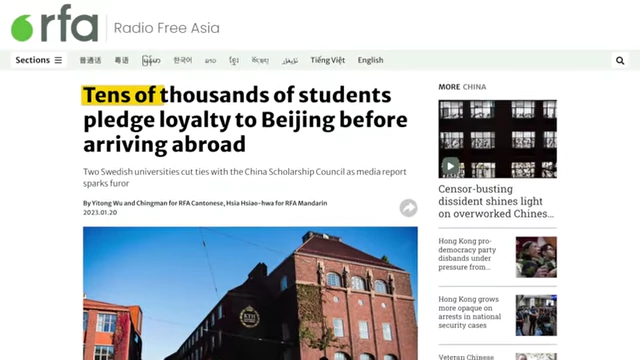
News headline on Chinese students pledging loyalty to Beijing before studying abroad [ 00:07:07 ] 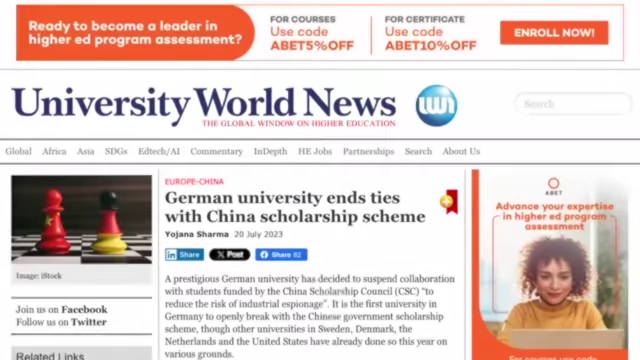
Report on a German university ending ties with China's scholarship scheme due to espionage risk [ 00:07:30 ]
- Overseen by Beijing's Ministry of Education, the CSC provides full scholarships, including tuition, housing, and living stipends, to thousands of students primarily headed to the U.S. for sensitive research fields.
- China's National Intelligence Law [2017] [07:35]
- Under this law, every Chinese citizen and organization is legally required to "support, assist, and cooperate with state intelligence work anywhere in the world."
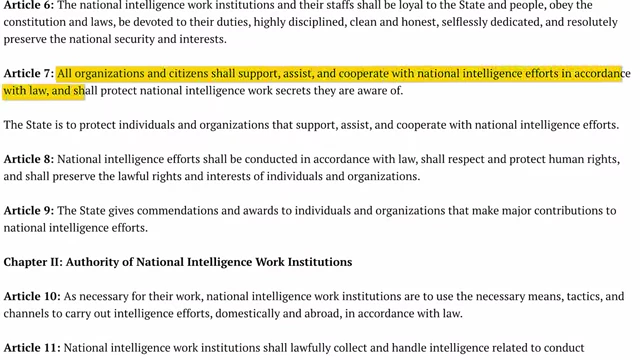
Article 7 of China's National Intelligence Law, requiring citizens to cooperate with state intelligence [ 00:07:43 ] - This sweeping mandate means overseas students can be called upon by authorities to target research labs, classmates' laptops, or military sites, with refusal potentially not being an option.
- Under this law, every Chinese citizen and organization is legally required to "support, assist, and cooperate with state intelligence work anywhere in the world."
- Chinese Students and Scholars Associations (CSSAs) [09:46]
- CSSAs are student groups found on most major American campuses with Chinese national students.
- While appearing to be cultural clubs, they are officially recognized and often directly supported by Chinese embassies and consulates.
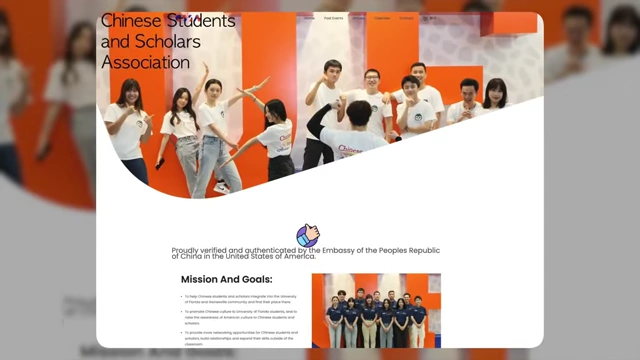
Website for the Chinese Students and Scholars Association (CSSA) on a U.S. campus [ 00:09:46 ] - Their true role is to monitor Chinese students abroad, promote "correct" views of China, and report any activity that might embarrass the regime back home.
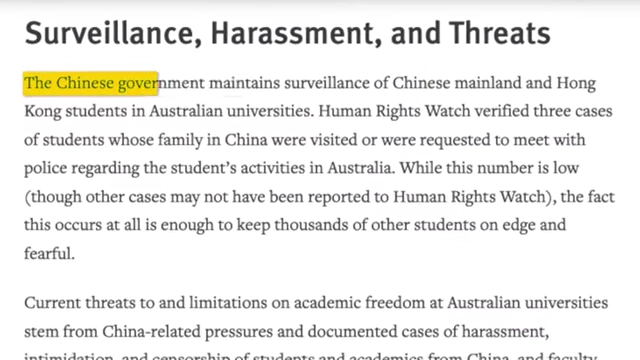
Report on Chinese government surveillance of students in Australian universities [ 00:09:33 ] - Students are pressured to self-censor, fearing repercussions for their families back in China, highlighting that these students are often victims of their own government.
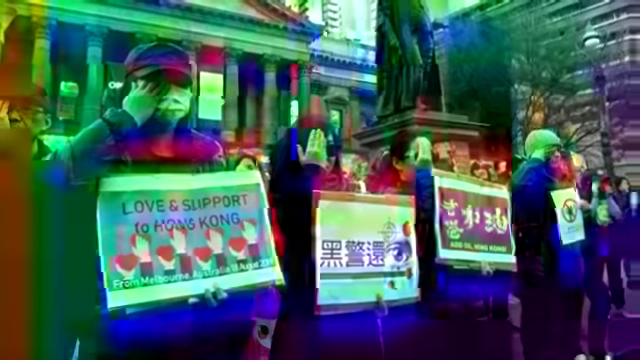
A pro-Hong Kong rally in Australia, an example of dissent monitored by Chinese authorities [ 00:10:24 ] 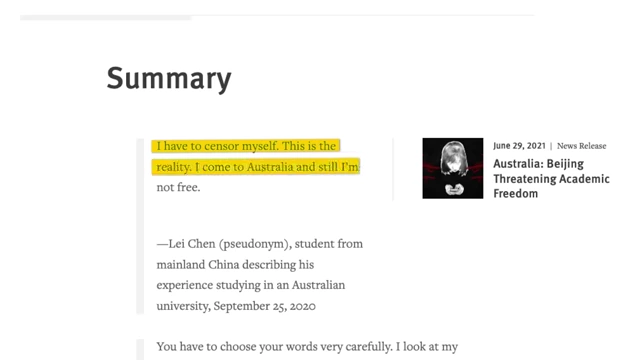
A Chinese student's quote on self-censorship while studying abroad [ 00:10:44 ]
- Examples of Student Espionage [08:11]
- University of Michigan Engineering Students [2023]: Five students were caught taking photos of tanks near Camp Grayling, a National Guard training site, at midnight. They had encrypted photos of military equipment and discussed wiping their phones, leading to charges of conspiracy, lying to federal agents, and destruction of records.
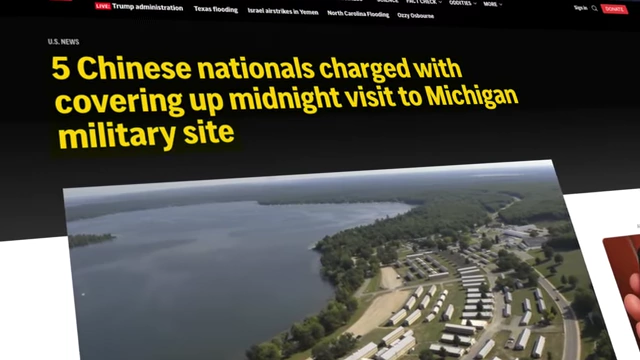
Headline on Chinese nationals charged after visiting a U.S. military training site [ 00:08:16 ] - Chinese Graduate Student [2023]: A 26-year-old student studying agricultural engineering was given a 6-month prison term for flying a drone over a restricted naval shipyard in Virginia, obtaining video of classified naval vessels under construction. The drone crashed, and its footage revealed sensitive military technology.
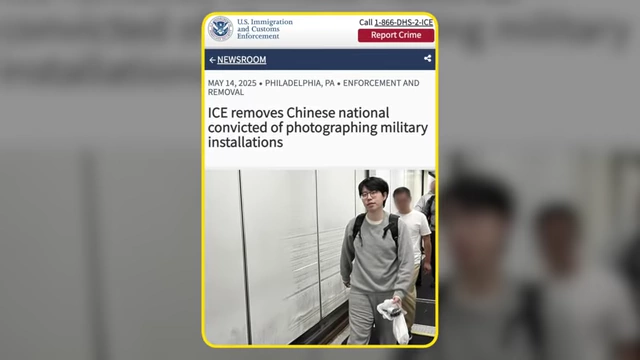
News about a Chinese national convicted for photographing U.S. military installations with a drone [ 00:11:16 ] - Stanford University has received over $64 million in undisclosed funding from anonymous Chinese donors since 2010.
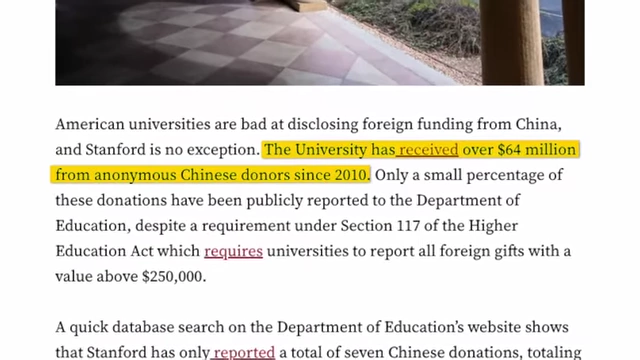
Report revealing Stanford University's undisclosed foreign funding from anonymous Chinese donors [ 00:10:58 ]
- University of Michigan Engineering Students [2023]: Five students were caught taking photos of tanks near Camp Grayling, a National Guard training site, at midnight. They had encrypted photos of military equipment and discussed wiping their phones, leading to charges of conspiracy, lying to federal agents, and destruction of records.
4. Putting the Issue in Context [11:53]
It is important to acknowledge that the vast majority of Chinese students in the U.S. are not spies and simply seek an education and a better life. However, espionage is not a numbers game; a single well-placed individual can cause significant damage.
- Not All Students Are Spies [12:03]
- Only a trivial number of the hundreds of thousands of Chinese students are "bad actors," and true espionage cases are rare annually.
- It is unfair to judge the many based on the actions of a few.
- Espionage as a Strategic Game [12:23]
- The concern is not about percentages but about strategic placement, as "one well-placed mole can do more damage than a thousand honest students can undo."
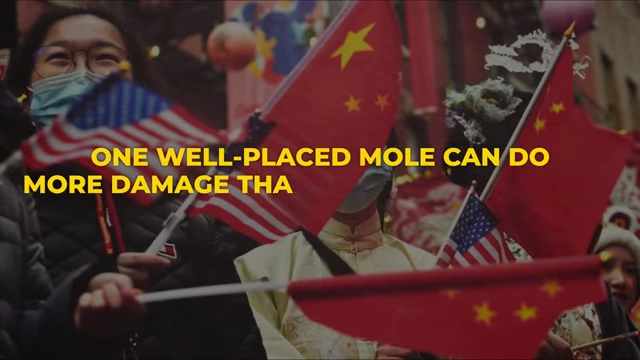
Visual illustrating the concept that one well-placed mole can cause significant damage [ 00:12:30 ] - The debate centers on the potential vulnerability of the United States.

The debate on Chinese students focuses on potential vulnerability, not just percentages [ 00:12:36 ]
- The concern is not about percentages but about strategic placement, as "one well-placed mole can do more damage than a thousand honest students can undo."
- Benefits of Chinese Students to the U.S. [12:41]
- Economic Contribution: Chinese students contribute approximately $14 billion annually to the U.S. economy through tuition, living expenses, and purchases.
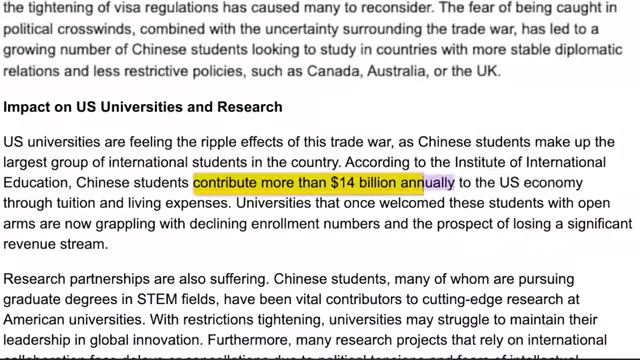
Highlighted text showing the annual economic contribution of Chinese students to the U.S. economy [ 00:12:46 ] - Academic Contribution: They fill critical graduate programs, especially in STEM fields, where there may be a shortage of American students, and contribute significantly to U.S. innovation through research and startups.
- Philosophical Argument ("Peace Through People"): For decades, the U.S. has embraced student exchanges as a way to build mutual understanding and expose young people to democratic ideals, even during periods like the Cold War. Some argue that closing doors now would be a mistake.

U.S. and Soviet Union flags, representing past "peace through people" student exchanges [ 00:13:22 ]
- Economic Contribution: Chinese students contribute approximately $14 billion annually to the U.S. economy through tuition, living expenses, and purchases.
- Underlying Risk: Open Societies Exploited [13:33]
- Despite the benefits, a risk remains that some of the brightest talent trained in the U.S. returns to China to support military-aligned programs.
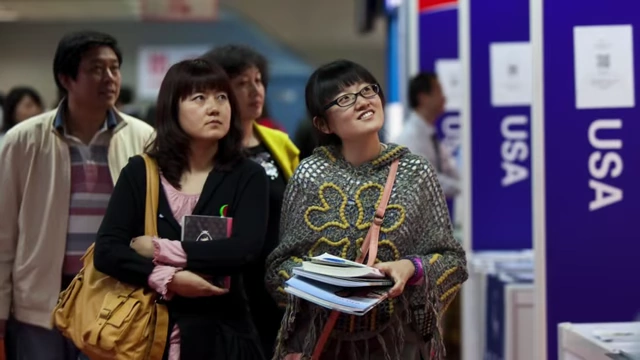
Chinese students at an education fair, showing interest in studying in the USA [ 00:13:38 ] - This issue highlights a "systemic vulnerability in open societies" where authoritarian regimes exploit that openness.

Infographic on the systemic vulnerability of open societies to exploitation by authoritarian regimes [ 00:13:54 ] - The dilemma is that open doors bring both opportunity and risk.
- Despite the benefits, a risk remains that some of the brightest talent trained in the U.S. returns to China to support military-aligned programs.
5. Possible Paths Forward [14:05]
The U.S. government is split on how to address the issue of Chinese students, with national security hawks advocating for a crackdown and universities emphasizing the importance of retaining talent.
- Government Split [14:09]
- National security hawks push for stricter measures.
- Universities and economic leaders argue against losing valuable talent.

Visual depicting the economic argument against restricting Chinese students in the U.S. [ 00:14:13 ]
- Proposed Solutions [14:17]
- Full Ban/Restrictions: Some propose a complete ban or severe restrictions on Chinese student visas.
- Reciprocity Caps: An idea to limit the number of Chinese students in the U.S. to match the number of American students in China.
- Risk-Based Openness: This approach aims to keep doors mostly open but flags sensitive areas like AI, quantum computing, and biotech for tighter vetting.
- It would involve training universities to spot espionage risks.
- Mandatory foreign funding disclosures would be enforced.
- Current U.S. Approach [14:59]
- The State Department has introduced new screening rules, including detailed background checks and social media reviews for Chinese student visas.
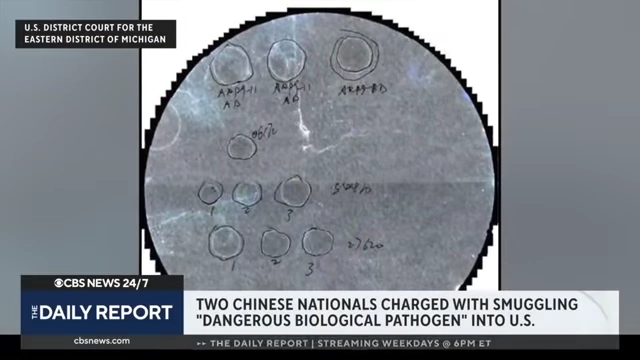
Evidence from a case where Chinese nationals were charged with smuggling dangerous biological pathogens [ 00:14:55 ] - The overall expectation is a continued "whack-a-mole" approach, focusing on prosecuting bad actors rather than completely overhauling the system, given America's commitment to being an open society.
- The State Department has introduced new screening rules, including detailed background checks and social media reviews for Chinese student visas.