Casey Neistat on AI's Impact on Filmmaking, Authenticity, and the Future of Content
In this inaugural episode of Out of Office, filmmaker and YouTuber Casey Neistat discusses his creative journey and the profound impact of AI on media with Michael Mignano.
- Authenticity in Filmmaking: Neistat emphasizes the importance of human touch and imperfection in his work, contrasting it with overly polished, disingenuous content, preferring tools like the iPhone for its raw aesthetic.
- AI as a "Tidal Wave": He views AI not just as a tool but as an overwhelming force that will revolutionize content creation, making human-made content a niche market. He likens the current state of media to Aztecs facing conquistadors' advanced weapons.
- Future of Content Economy: Neistat predicts an infinite flood of AI-generated "good enough" content, challenging traditional monetization models based on human effort. He notes the music industry is already experiencing this shift.
- Post-Phone Era: Discussion shifts to a "peak phone" era, with a growing desire for single-purpose, tangible technologies (like retro cameras and Game Boys) and the rise of wearables (Meta glasses, Apple Vision Pro) that could offer more intentional interactions.
- Lessons from Beme and CNN: Neistat reflects on his startup Beme, its focus on realness, and the challenges of its acquisition by CNN, highlighting the misalignment between tech innovation and corporate media.
- Parenting in a Tech World: He expresses strong concerns about children's exposure to technology and AI, advocating for practical skills and human connection over screen time.
- Purpose Over Success: Ultimately, Neistat's driving force is purpose, which he primarily finds in parenting, with his career as an extension of that core value.
Welcome to Out of Office [0:00]
Michael Mignano, host of "Out of Office," introduces the inaugural episode featuring filmmaker and YouTube icon Casey Neistat. The setting is New York City, Casey's lifelong muse and a central character in his work.
- New York City as a Muse [1:45]
- Neistat shares that New York City is his muse, a place where he found his footing and realized his creative ambitions, unlike his experience in Los Angeles.
- He compares his life to the movie "Big," viewing NYC as a playground for a "grown-ass child" who thrives on creativity and independence.
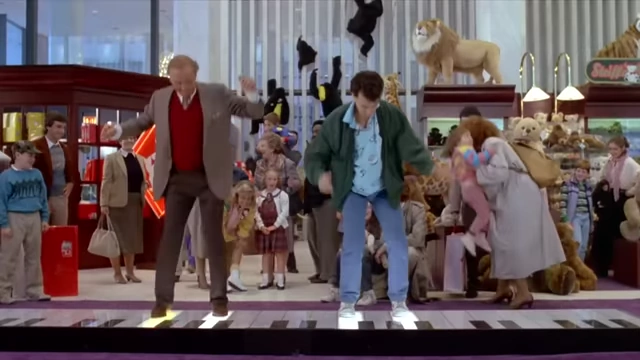
Tom Hanks and Robert Loggia playing the giant piano in "Big" [ 00:02:45 ] - He laments the modern trend towards technically perfect, over-engineered images, which he believes diminishes authenticity and emotional connection.
- Evolution of Filmmaking Aesthetic [3:50]
- Neistat appreciates the "verite" (truthfulness) of '70s and mid-'90s New York City films, which captured a raw, imperfect city.
![A scene from "If Lucy Fell" [<a href="https://youtube.com/watch?v=bMDjJ9j1U2E&t=1996">1996</a>] with the Twin Towers in the background](https://storage.googleapis.com/summarizer-images/images/bMDjJ9j1U2E/sc0074_t00.03.38.webp)
A scene from "If Lucy Fell" [<a href="https://youtube.com/watch?v=bMDjJ9j1U2E&t=1996">1996</a>] with the Twin Towers in the background [ 00:03:38 ]
- Neistat appreciates the "verite" (truthfulness) of '70s and mid-'90s New York City films, which captured a raw, imperfect city.
Tools, Authenticity & The Evolution of Filmmaking [4:22]
Casey discusses how his tools and philosophy have evolved, always prioritizing storytelling and authenticity over gear.
- Technological Enablement [4:38]
- Neistat's entry into filmmaking was enabled by consumer technology like the iMac DV in the late '90s, making video editing accessible for the first time.
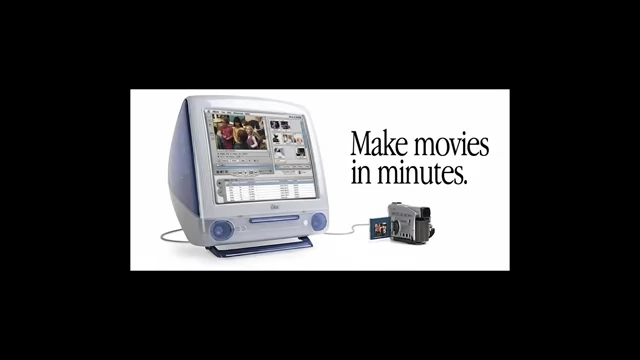
An advertisement for the iMac DV, highlighting its ability to "Make movies in minutes" [ 00:04:54 ] - He recognizes that technology democratized filmmaking, allowing individuals to create without professional-grade equipment.
- Neistat's entry into filmmaking was enabled by consumer technology like the iMac DV in the late '90s, making video editing accessible for the first time.
- The Message, Not the Gear [5:46]
- Around 2015-2017, the quality of affordable cameras (DSLRs) became so good that the "gear became the message," leading to an obsession with equipment rather than storytelling.
- Neistat actively pushes back against this, emphasizing that "it's what you do with the gear that matters," choosing simpler tools like his hands, markers, and paper for recent videos to highlight human involvement.
- Authenticity Over Perfection [6:56]
- He believes that the more perfect something looks, the harder it is to believe, while raw footage feels more real.
- Neistat uses his phone for casual interactions to maintain an authentic aesthetic, contrasting it with perfectly shot, staged family moments by other YouTubers which he finds "disingenuous."
- The phone's value lies in its immediacy and accessibility for capturing genuine moments, not in being a high-end cinematic tool.
AI as a Filmmaking Tool [11:53]
Neistat shares his current stance on AI in his creative process.
- Initial AI Experiments [12:01]
- He previously experimented with ChatGPT to generate a script for a "Casey Neistat YouTube video," and more recently used prompts with Sora for a video about AI itself, explicitly to demonstrate AI-generated footage.
- AI is Antithetical to Personal Filmmaking [13:00]
- While acknowledging AI will become a powerful tool for many, Neistat states it's not for him because he thrives on the holistic process of filmmaking: writing, shooting, editing, and starring in his own work.
- He compares his approach to a painter creating their own art, rather than an artist like Jeff Koons who employs many people in a "factory" model, seeing AI filmmaking as "antithetical" to his personal creative drive.
The AI Tidal Wave & The Future of Content [14:11]
Neistat expresses a strong belief that AI will fundamentally transform the media landscape on a massive scale.
- Inevitable Disruption [14:16]
- He asserts that AI's impact is "irrelevant" to individual preferences because "it's going to happen" – it's a "tidal wave that's going to consume everything."
- He uses an analogy of a conquistador warning Aztecs about guns, while the Aztecs only understand blunt instruments, to illustrate the media world's underestimation of AI's power.
- Rapid Advancement [16:16]
- Neistat cites Elon Musk's prediction that AI will be able to make feature films by the end of 2027, describing its progress as "exponential."
- He expects a rapid proliferation of AI-generated content, starting with one breakthrough "good AI movie" and quickly escalating to millions, rendering handcrafted videos easily overwhelmed.
- Attention is the Product [18:08]
- In the current attention economy, "good is good," regardless of its origin. Platforms like YouTube and Netflix prioritize user attention over the artistic merit or human origin of content.
- He foresees a "vinyl of media" for handmade films, a small niche similar to vinyl records in music, but warns it will be a tiny fraction of overall consumption.
Movies, Theaters and the Attention Economy [20:01]
The conversation extends to how traditional entertainment venues are adapting to changing consumer habits and the impending AI influx.
- Decline of Traditional Theaters [20:44]
- Neistat believes movie theaters, once a "big event," will not return to their pre-COVID prominence, despite optimistic views from industry figures like Seth Rogen.
- To compete with home entertainment, theaters must offer enhanced experiences like IMAX or dinner service (Alamo Drafthouse).
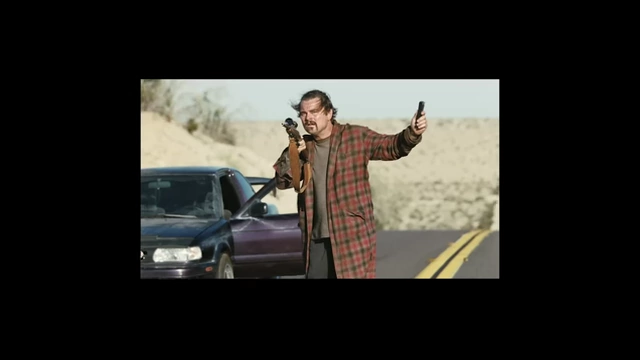
A still from the film "Oppenheimer" [ 00:20:08 ]
- Content Funnel Analogy [22:17]
- He uses the analogy of a "content funnel": the top represents total content made, and the bottom is good content.
- In the past, limited content meant a stronger relationship with popular media (e.g., Tom Hanks' "Big"). Now, the ubiquity of content, amplified by AI, makes it harder for singular pieces to resonate universally.
- Quality vs. Attention [23:51]
- Neistat questions the role of "good content" when there's an overwhelming abundance. He points to shows like "Coco Melon" (most-watched on Netflix) as examples of content that captures attention, regardless of traditional quality, fundamentally changing what is "seen."
- Creator Sentiment Towards AI [24:20]
- While he personally prefers manual creation, he supports others using AI to create, recognizing it as an inevitable, transformative force ("nuclear bomb that eviscerates everything").
- He anticipates a future where people will watch AI-generated shows without distinguishing them from human-made content.
The Business of Video and AI Monetization [26:45]
The discussion delves into the complex financial implications of AI on content creation and the broader media industry.
- Monetization Challenges [26:50]
- The traditional model of monetizing attention through ads and views will be disrupted by AI's ability to generate infinite content.
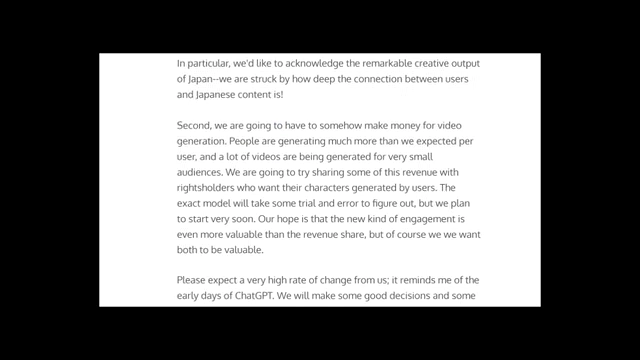
- Sora's potential to invoke specific individuals (e.g., "Casey Neistat") in generated videos raises questions about name and likeness compensation, with companies like OpenAI exploring payment structures.

Roasted ducks and pork hanging in a Chinatown restaurant window [ 00:26:30 ]
Sam Altman's blog post discussing OpenAI's plan to compensate rights holders for AI-generated content [ 00:27:32 ]
- New Economic Models [29:08]
- Neistat finds it difficult to predict how monetization will work, as existing economic frameworks are based on human effort and scarcity, which AI removes.
- He compares the situation to the early days of online retail, where traditional businesses were annihilated, but predicts AI's impact will be much faster.
- While scary, AI also presents "an entirely new whole generation of opportunity," akin to how YouTube created millions of creators.
How AI Changes Creator Economics [30:29]
Neistat and Mignano discuss how AI impacts the fundamental principles of success for creators and venture capital.
- Disruption of Persistence and Consistency [30:09]
- Neistat notes that traditional advice for YouTube success (persistence, consistency) doesn't translate to AI, where "persisting" simply means more prompts. This makes applying past industry knowledge to the AI era challenging.
- Venture Capital and Pattern Matching [30:29]
- Mignano highlights that venture capital, which relies on "pattern matching to the past," struggles with AI due to its unpredictable and rapid evolution.
- Copyright and Likeness Concerns [31:30]
- Neistat acknowledges the validity of lawsuits from media companies against AI training on copyrighted material.
- However, he believes such regulations are a "losing battle," as AI development will always outpace legislative efforts, with alternative platforms emerging that violate rules. He emphasizes the inevitability of content being used for training, regardless of consent.
What Happens to Big Creators Like MrBeast? [35:16]
The conversation turns to the future of high-production, human-intensive content creators like MrBeast.
- Effort vs. AI Generation [35:41]
- Neistat recognizes MrBeast's empire is built on immense "effort, energy, and resources" from a large team.
- He questions what happens when this level of content can be replaced by simple prompts, making it indistinguishable for audiences, particularly young viewers.
- Flooding the Zone [37:07]
- The concern is that AI agents could tirelessly generate MrBeast-like content, "flooding the zone" and making it impossible for viewers to differentiate genuine human work from AI simulations.
- Broader AI Optimism [36:48]
- Despite his personal aversion to AI for his own creative process, Neistat expresses excitement about the potential opportunities AI could bring, acknowledging its "scary" but transformative nature.
Peak Phone and the Next Wave of Devices [41:19]
The discussion shifts from content creation to the hardware that consumes it, predicting a move beyond smartphones.
- Phone Usage Plateau [38:41]
- Neistat mentions a study suggesting phone usage peaked in 2022 and is slightly declining, hinting at "peak phone."
- He believes phones now offer "less benefit than detriment," with social media exacerbating negative impacts.
- Resurgence of Older Tech [39:05]
- A counter-movement sees a "resurgence of older technology" like vinyl, wired headphones, and point-and-shoot cameras (Canon reissuing old models, Mod Retro's Game Boy device).
- This trend is driven by young people's desire for tangible, single-purpose devices and a rejection of the "monolithic device that does everything," which their parents stare at constantly.
- Wearables as the Future [41:51]
- Neistat identifies wearables (Meta Ray-Ban glasses, Apple Vision Pro, Humane AI Pin) as the "fix" and the "next wave of devices."
- He believes AI will replace fragmented operating systems and apps, allowing for a "singular input" on mobile computing devices, making interactions more intentional.
Beme, Realness & The Lost Internet [43:12]
Neistat connects his past startup to the current desire for authenticity.
- Beme's Vision [43:50]
- Beme, his startup, originated as a Google Glass product (initially "Be Me"), aiming to capture raw, unfiltered moments and promote empathy by sharing real perspectives.
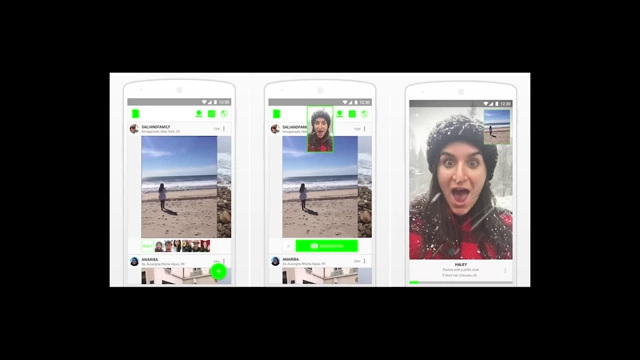
Screenshots of the Beme app interface, showing its design for authentic, unfiltered video sharing [ 00:43:27 ] - The app allowed users to film without looking at their phone, maintaining focus on the subject.
- Beme, his startup, originated as a Google Glass product (initially "Be Me"), aiming to capture raw, unfiltered moments and promote empathy by sharing real perspectives.
- Contrast with Current Internet [44:51]
- This vision contrasts sharply with today's "polished artificial version of the world" on social media, now taken to a "literal artificial version" with generative AI like Sora.
- Sora's onboarding even includes a disclaimer that "everything you're about to experience is not real."
- The "Dead Internet" Theory [46:05]
- Neistat predicts a near future where platforms like TikTok and Reels will use real-time AI to generate infinite, hyper-personalized content as users scroll, blurring the line between human and AI creation, moving towards a "dead internet."
From Startup to CNN & Lessons from the Acquisition [47:23]
Neistat shares his experiences as a founder and the challenges of a corporate acquisition.
- Founder's Anguish [47:26]
- Being a founder is an intense experience, marked by "anguish" of financial uncertainty and the all-encompassing nature of building a business. He views this experience as foundational, distinguishing true founders from those in "startups within a big company."
- CNN Acquisition Misalignment [49:34]
- Beme was acquired by Turner/CNN, primarily for Neistat's media reach and audience, rather than their innovative technology (though they did build products like "Exit Polls" for elections).
- Neistat acknowledges a "real misalignment" as he was interested in building tech for CNN, while CNN was more interested in his personal brand.
- Challenges of Scaling [53:38]
- His failure to "thrive" post-acquisition was personal; he struggled with rapidly scaling the company and managing a large team, finding it "outside of my wheelhouse." He prefers working alone or with a small team.
- The Cliché of Acquisition [54:36]
- He reflects that his experience with the acquisition, particularly the difficulties in integrating a startup into a large corporation, became a "cliché" shared by many founders.
Can Media & News Survive AI? [54:54]
The discussion considers the future of traditional media and news organizations in the age of AI.
- Human-Centric Content [55:10]
- Neistat believes areas with intrinsic human elements, like live sports and news media focused on "perspective from real people," have the potential to thrive.
- Competition from Independent Journalists [55:38]
- The main challenge for traditional news media like CNN will be competing with "real innovators" – independent journalists and creators (e.g., on platforms like X) who can build direct audiences, rather than AI itself.
- Regulation Lag [32:46]
- He believes legislative regulation of AI will always lag significantly behind technological advancements, rendering attempts to control its spread ineffective.
Meta Glasses vs Vision Pro — The Next Interface [59:05]
A deeper dive into the potential of next-generation wearable devices as a new interface.
- Meta Ray-Ban Glasses [59:08]
- Neistat praises Meta's Ray-Ban glasses for their discreet camera, allowing users to capture moments without being glued to a phone. He sees them as a step towards more intentional interactions.
- Apple Vision Pro's Social Barrier [1:01:01]
- He is critical of the Apple Vision Pro's social acceptability, finding its "zombie face" effect during video calls "creepy" and considering it a "weirdo" device for public use, except for niche applications like gaming or medical fields.
- AI Operating Systems [59:34]
- The long-term vision is for AI operating systems to streamline mobile computing, replacing fragmented apps with a single, voice-activated input, potentially freeing users from constant phone distraction.
- Niche Opportunities [57:25]
- Neistat argues that incumbents (large tech companies) may struggle to win the wearable race due to massive R&D costs and past failures (e.g., Humane AI Pin).
- He sees more opportunities in "niche spaces" and single-purpose devices, driven by a growing "exhaustion" with current mobile phones.
An air hockey scoreboard displaying "HOME 07 GUEST 06" [ 01:08:20 ]
Parenting & Raising Kids in a Tech World [1:04:11]
Neistat shares his conservative approach to raising children amidst ubiquitous technology.
- Limiting Screen Time [1:04:19]
- Both Neistat and Mignano are strict about keeping their children away from iPads and excessive screen time, viewing it as "demonstrably dangerous."
- They find it challenging to navigate a world where many other children are constantly glued to devices.
- Education and Future Skills [1:05:55]
- Neistat believes current "one-size-fits-all" education methods will be the last of their kind, with AI enabling more personalized learning tailored to individual strengths.
- He encourages his daughters to pursue trades and hands-on skills (e.g., welding, plumbing), which he sees as "bankable skill sets" with "intrinsic value" in an AI-dominated future.
- He's skeptical of college education's value, particularly for fields like computer science, given AI's rapid advancements.
Casey’s Final Reflection: Purpose Over Success [1:08:45]
Neistat concludes with a reflection on his personal philosophy and aspirations.
- The Ideal Future [1:10:27]
- If he had unlimited money, time, and no distractions, Neistat would choose to be on a large farm with many children and dogs, focusing on being a parent.
- Purpose as the Core [1:10:52]
- He values "purpose" above abstract concepts like happiness or success, seeing it as the fundamental driving force in life.
- He shares a historical anecdote about WWI shell-shocked soldiers finding renewed life purpose by contributing during WWII, highlighting the transformative power of having a role.
- Parenting as Primary Purpose [1:11:52]
- For Neistat, his core purpose is being a parent, with his career serving as an extension of that.
- Hope for an AI-Enabled Future [1:12:03]
- Mignano offers an optimistic closing thought: perhaps AI will free up enough human time for everyone to focus on their true purposes, potentially leading to a return to more fundamental, hands-on ways of living.