How to Learn Any Skill Effectively by Avoiding Theory Overload
Summary:
This video explains that the fastest way to learn any skill is to avoid "theory overload" and balance new theory with consistent practice, allowing skills to become habits.
- The Problem: Many people fall into the "theory overload" trap, trying to learn too many new concepts at once, leading to cognitive overload and slow progress.
- Experiential Cycling: Effective learning involves a cycle of experience, observing results, reflecting on what to change, and experimenting with new approaches.
- Cognitive Resources: The brain has limited cognitive resources; introducing too much new theory fills this capacity, hindering effective learning and habit formation.
- Balancing Theory and Practice: The key is to introduce only 1-2 new theoretical concepts at a time, ensuring they are practiced enough to become automatic habits before introducing more.
- Monitoring Progress: Success is measured by how quickly new habits are forming, evidenced by tasks becoming easier and faster without compromising accuracy or consistency.
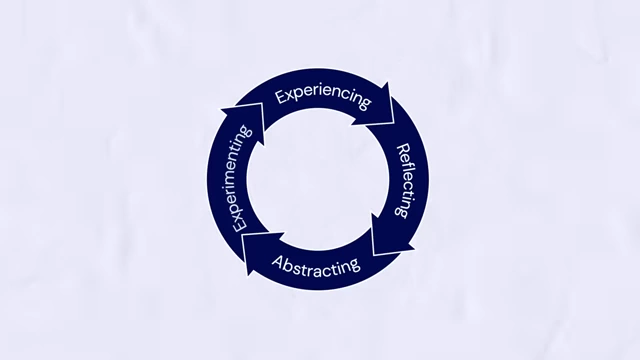
Diagram illustrating the Experiential Learning Cycle: Experiencing, Reflecting, Abstracting, and Experimenting. [ 00:02:15 ]
Introduction [0:00]
The video addresses the common mistake of "theory overload" that leads to nearly 100% failure in learning new skills. It emphasizes that this mistake is prevalent because most people make it daily.
The Mistake and Key Concept [0:45]
- Theory Overload: This is the critical error many learners make, preventing effective skill acquisition.
- Experiential Cycling as the Key Ingredient: Learning any new skill fundamentally relies on an "experiential cycle."
- This cycle involves:
- Having an experience.
- Observing the result.
- Thinking about what needs to change.
- Doing an experiment to see if the change improves the outcome.
- An Archery Analogy [0:50]
- When shooting an arrow, where it lands depends on the setup beforehand.
- You cannot control the arrow mid-air; the outcome reflects prior actions.
- In learning, exam results, memory, and understanding depend on the processes used before studying.
- Repeatedly firing arrows without knowing what to change is ineffective; improvement requires analyzing and adjusting the setup.
- Without this experiential cycle, learning any new skill is impossible.
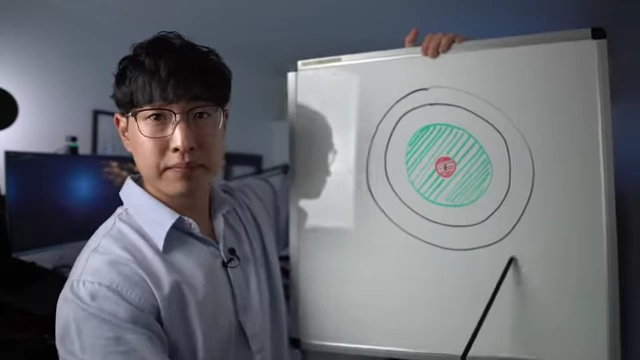
An archery target on a whiteboard, illustrating the importance of understanding the setup before shooting for better outcomes. [ 00:01:35 ]
Diagram illustrating the Experiential Learning Cycle: Experiencing, Reflecting, Abstracting, and Experimenting. [ 00:02:15 ]
- This cycle involves:
The Fastest Way to Learn Skills [2:45]
- The "Theory Overload" Trap: Counterintuitively, the fastest way to learn any skill is to learn more slowly.
- Case Study: Suresh vs. Enzo [3:01]
- Two students in a learning program:
- Suresh: Completed 31% of the program in 5 weeks. Went from 80% to 71% in exam results, indicating a decline in performance.
- Enzo: Completed 20% of the program in 54 weeks. Went from 62% to 92% in exam results, showing significant improvement.
- Despite covering less material, Enzo achieved better academic results because he avoided theory overload.
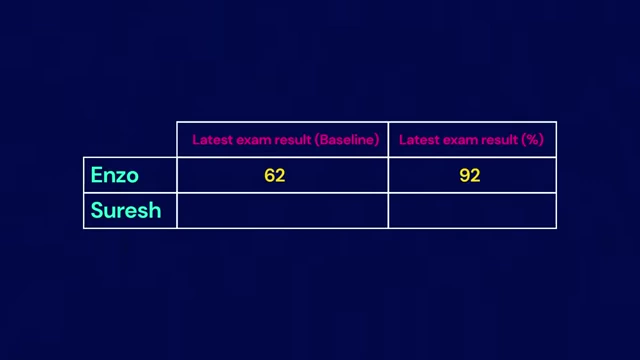
Comparison table of Enzo and Suresh's exam results, showing Enzo's significant improvement from 62% to 92% while Suresh declined from 80% to 71%. [ 00:03:50 ]
- Two students in a learning program:
The Analogy: Cognitive Resources [4:35]
- Your Brain as a Bowl with Limited Resources:
- Imagine your brain as a bowl with a limited amount of cognitive resources (like RAM in a computer).
- Wooden blocks represent these cognitive resources.
- When learning a new skill, each new concept requires cognitive resources to keep in mind and process (e.g., "hold my arrow more tightly," "stabilize my core").
- The bowl (brain) quickly gets filled up.
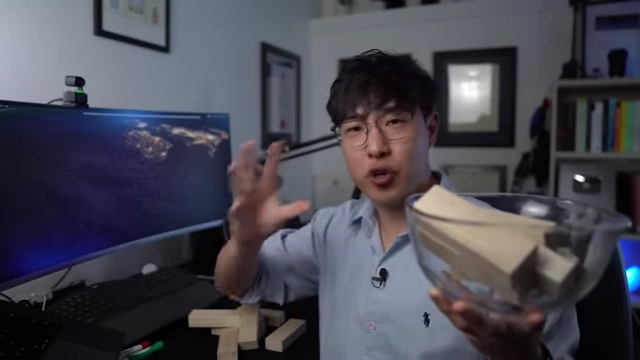
A clear glass bowl being filled with wooden blocks, representing how cognitive resources are used up when learning new concepts. [ 00:05:09 ]
- Effort in Learning:
- Performing the activity itself (doing the skill) also consumes resources.
- When a new skill eventually becomes a habit, the amount of resources it takes decreases.
- Learning a new skill is unfamiliar, difficult, and awkward, which consumes additional resources.
- Cognitive Skills vs. Physical Skills:
- Physical skills burn energy using muscles.
- Cognitive skills burn effort with the brain, inherently requiring a high level of mental resources to understand, process, organize new information, and create new memories.
- This effort is essential for translating learning into memory and understanding; without it (passive learning), no memory is formed.
- The Overload Point: Adding just a few more things when the brain is already working hard can quickly lead to cognitive overload, where the brain's ability to process new information overflows.
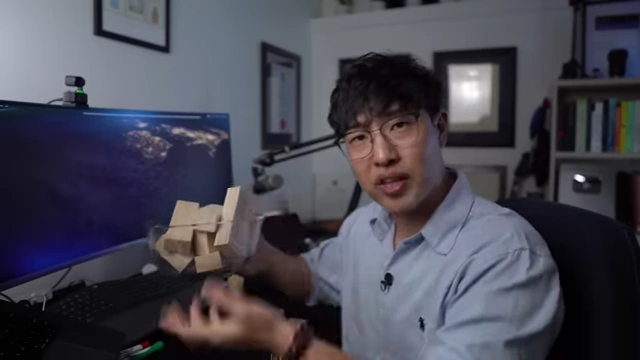
A clear glass bowl overflowing with wooden blocks, visually demonstrating the concept of cognitive overload. [ 00:05:49 ] 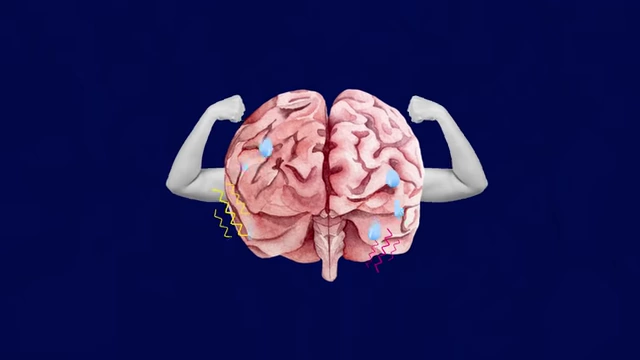
Diagram of a brain with muscular arms, symbolizing the significant cognitive effort required for effective learning. [ 00:06:19 ] 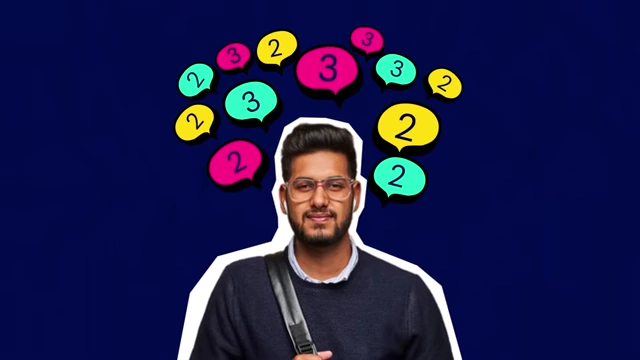
An animated person surrounded by numerous thought bubbles with numbers '2' and '3', illustrating the concept of being overwhelmed with too many new concepts. [ 00:07:45 ] - This phenomenon is called "multiple element interactivity" in research and causes cognitive overload.
How to Learn a New Skill (The Solution) [7:40]
- Balance New Theory with Practice: The key to effective learning is to always balance new theory with practice.
- Practicing without theory is aimless.
- Practicing with too much theory leads to cognitive overload.
- The trick is to balance new theory coming in with existing skills becoming habits.
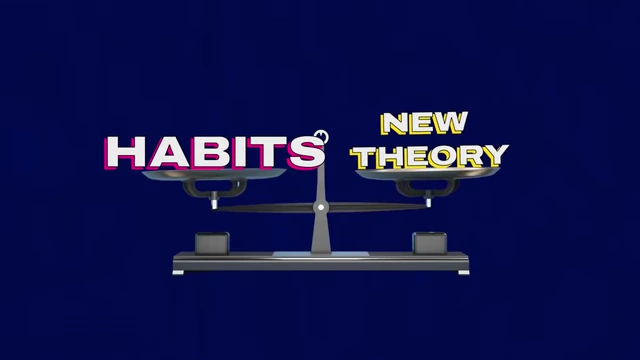
A scale balancing "Habits" on one side and "New Theory" on the other, symbolizing the need for equilibrium in learning. [ 00:08:44 ]
- The Habit Formation Process:
- When skills become habits, the brain finds a more efficient way to perform them, requiring fewer cognitive resources. It finds a "shortcut."
- This frees up cognitive space to take in new theory.
- What initially required intense concentration eventually takes virtually no thought, allowing consistent and accurate performance.
What it Looks Like in Practice [10:12]
- Practical Application:
- If you have limited practice time (e.g., 5 hours/week), you need to reduce the amount of new theory you take in to prevent overload. This aligns practice and theory for optimal skill growth.
- If you have more practice time (e.g., 20 hours/week), you can increase the theory intake proportionally.
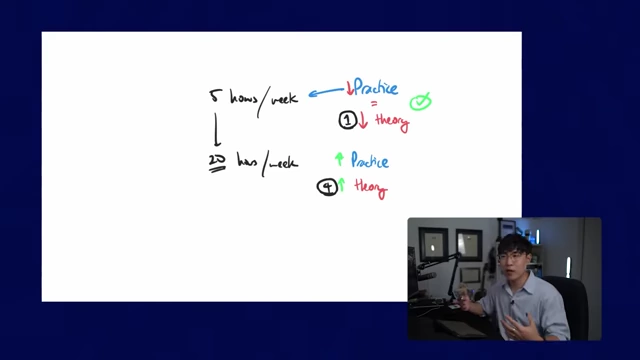
A whiteboard illustrating the relationship between hours of practice and theory intake, showing a direct correlation for optimal learning with examples of 5 hours practice for 1 hour theory, and 20 hours practice for 4 hours theory. [ 00:11:23 ]
- Rule of Thumb: For every 1 hour of theory, aim for at least 5 hours of practice.
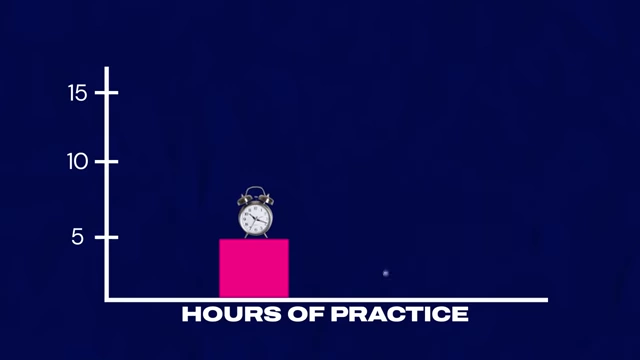
A bar graph showing "Hours of Practice" with a bar at 5 hours and an alarm clock on top, illustrating the suggested practice time. [ 00:12:37 ] - Beyond Hours: More important than the number of practice hours is how quickly new habits are forming.
- When new habits form, you gain mental space for more theory.
- If habit formation is slow, theory intake should also be slow.
- Signs of Habit Formation: You know new habits are forming when:
- Things become easier and faster.
- Your accuracy and consistency are not compromised.
- Speed comes naturally with efficiency, not by actively trying to go faster.
- Revisiting Enzo's Success: Enzo understood that his habit formation was slower than anticipated.
- Instead of the 5:1 practice-to-theory ratio, he effectively practiced for 15-20 hours for every 1 hour of theory.
- Although it seemed he was learning slowly, his skill growth was maintained at an optimal rate because he never allowed himself to get overloaded.
- The Principle: Almost 100% of the time, people balancing their theory intake rate with their practice and habit-forming rate learn desired skills smoothly and quickly.