How to Achieve Lasting Consistency for Your Personal Brand
This video offers a comprehensive guide to achieving lasting consistency for your personal brand or business. Key takeaways include:
- Uncovering your deep-rooted "why" through the "Seven Levels Deep" exercise to provide unwavering motivation.

The speaker holds up her notebook, which contains notes for the 'Seven Levels Deep' exercise [ 00:04:20 ] - Building consistency through practical strategies like implementing "mini movers" (three essential daily tasks), utilizing organizational systems (e.g., Asana) for recurring tasks, and establishing a strict routine to treat your brand like a professional business.

Text overlay reading "you've decided that's your thing even when it's inconvenient." [ 00:08:30 ] - Embodying your desired personal brand by aligning your physical presence (dressing and creating the part), mental outlook (believing you are the persona), and environmental influences (curating physical, social, and digital spaces).
- The overall message emphasizes that consistency is a choice and an identity that needs to be built and maintained before breakthrough success.
Introduction to Consistency and Your Debut Era [00:00]
The speaker highlights the common desire for growth, clients, and brand deals, but emphasizes that most people lack the "consistency" needed for success. She introduces the concept of a "debut era," inspired by Taylor Swift, where one must put in the unglamorous hard work before achieving recognition. This video is the second episode in a series on owning and implementing a personal brand, focusing on how to maintain stamina and consistency for future success.
Finding Your Deep-Rooted "Why" [01:38]
Consistency is directly tied to understanding your "origin story" and "why" you are doing what you do. Many creators are passionate but fail due to a lack of a profound, enduring motivation.
- The Importance of a Deep Why: Superficial reasons like wanting to make others feel confident are not enough to sustain effort during difficult times (e.g., no income, no support). A deep-rooted, often "selfish," why is what truly gets you out of bed and keeps you going.
- The Seven Levels Deep Exercise:
- This exercise, taught by Dean Graziosi, involves repeatedly asking "Why is that important to you?" seven times, starting from your initial goal.
- The speaker shares her personal example:
- Goal: "Why do I want to be successful?"
- Level 1: "Because it gives me a sense of purpose."
- Level 2: "Because without purpose, I feel lost."
- Level 3: "Because I have felt lost my entire life."
- Level 4: "I had no role models or support with my dreams growing up."
- Level 5: "I feel like my parents would take more of an interest in me."
- Level 6: "To feel loved."
- Level 7: "To feel safe, secure, wanted, and needed."
- This exercise reveals that her ultimate motivation is a fundamental need for safety and love, a far more powerful driver than simply "success."
The speaker holds up her polka-dotted notebook, explaining it contains her 'Seven Levels Deep' exercise notes from 2021. [ 00:04:20 ]
- Impact on Consistency: When you know you're building towards profound personal needs, you stop needing external motivation and act from a place of identity rather than obligation.
Three Exercises for Fining-Tuning Consistency [07:03]
This section focuses on "building before the breakthrough," the unromanticized phase of consistent effort. Consistency is reframed as a choice and an identity, not a born trait or something dependent on inspiration.
- Consistency as a Choice:
- The speaker emphasizes that consistency isn't about natural talent or feeling inspired, but rather a decision to make your venture "your thing" even when it's inconvenient or boring.
-
Text overlay reading "you've decided that's your thing even when it's inconvenient." [ 00:08:30 ] - Mr. Beast Example: Mr. Beast's success (444 million subscribers after 10 years and 96 videos) is attributed to his relentless consistency, not superior talent, highlighting that patience and showing up are paramount.
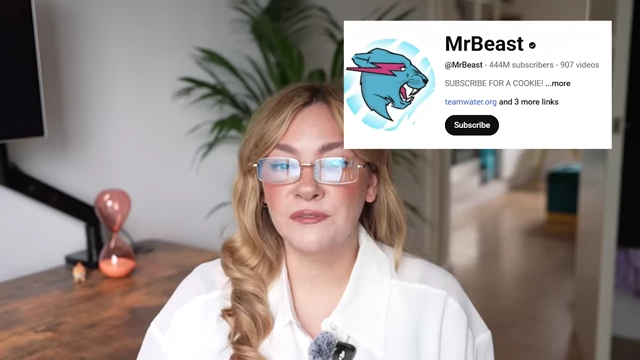
MrBeast's YouTube channel page is shown with his subscriber count and video information. [ 00:09:30 ]
- 1. Mini Movers:
- These are three small, high-impact tasks you commit to completing every single day.
- By focusing on a minimal number of crucial tasks, you build the "consistency muscle" daily, even on less productive days.
Text overlay reading "3 things a day." [ 00:11:00 ]
- 2. Systems:
- Implementing systems helps maintain consistency despite human fluctuations in mood, energy, or cognitive load.
- The speaker uses Asana (a project management system, noting she uses the free version) to set up recurring tasks, eliminating the need to manually create daily to-do lists and reducing decision fatigue.

The Asana logo is displayed on the screen. [ 00:12:00 ]
- 3. Routine:
- Treating your personal brand or business like a professional job with dedicated work hours, lunch breaks, and days off fosters consistency.
- This mindset shift from a "hobby" or "side hustle" to a "thriving business" signals seriousness and commitment, mirroring how celebrities manage their brands.

Text overlay reading "work hours, lunch hours, days off." [ 00:13:20 ]
How to Embody Your Personal Brand [14:46]
Embodiment means becoming the person on your mood board before external validation, acting as if you already are your desired self.
- Act Before You're Believed In:
- Sabrina Carpenter Example: She acted like a Coachella headliner before achieving that status.

An image of Sabrina Carpenter with long blonde hair and a yellow top is shown, illustrating her desired brand image. [ 00:15:19 ] - Taylor Swift Example: She performed on small stages as if they were arenas, playing over 150 small shows before her first album.
- This proactive approach trains others to see you as you see yourself.
- Sabrina Carpenter Example: She acted like a Coachella headliner before achieving that status.
- The Embodiment Blueprint: Three Types of Energy: To truly embody your brand, focus on aligning three core energies:
- 1. Physical Energy [17:28]:
- Start dressing, styling, and creating content that reflects your brand's aesthetic and mood board.
- Curate three "uniform" outfits that define your personal brand's look for professional appearances.
- Action Step: Plan a photo shoot (even a simple one with friends/family) to physically "debut" your brand, capturing images in your curated aesthetic, and then share them to declare your new identity to the world.
- Continuously perform small actions daily that align with your main character persona (e.g., choosing a specific perfume, doing a "hot girl walk").

A collage of images featuring celebrities like Olivia Rodrigo and Charli XCX, showcasing different brand aesthetics. [ 00:14:10 ]
- 2. Mental Energy [19:42]:
- Stop viewing your mood board persona as a separate, future self; recognize that she already exists within you. If embodying the persona feels too difficult, it might not be authentically aligned with who you are.

Text overlay stating, "we need to stop believing that we are a separate entity to that board." [ 00:20:19 ] - Decision-Making Framework: When faced with decisions (e.g., content creation, email responses, offers), ask: "What would that person do?" This helps you make choices aligned with your desired brand.
- Embodiment is "remembering" and "acting like" who you already feel you are, not "pretending."

A list of questions is displayed on the screen, starting with "what would I do differently if I was that person?" [ 00:21:19 ]
- Stop viewing your mood board persona as a separate, future self; recognize that she already exists within you. If embodying the persona feels too difficult, it might not be authentically aligned with who you are.
- 3. Environmental Energy [21:30]: Your environment profoundly impacts your identity and energy. Audit three aspects:
- Physical Environment [21:41]: Ensure your living and working spaces reflect your brand standards and inspire you. A cluttered or uninspiring space can hinder growth.
- Social Environment [22:24]: Surround yourself with people who uplift and support your aspirations. Just as "you are the average of the five people you spend the most time with," choose relationships that align with your desired future.

Text overlay reading "who are you surrounded by?". [ 00:22:59 ] - Digital Environment [23:22]: Curate your online feed by unfollowing or muting content that causes comparison, negativity, or drain. Instead, follow accounts that inspire, educate, and expand your mindset.
- Taylor Swift Quote: The speaker shares a clip where Taylor Swift discusses protecting her energy by not engaging with hate comments, emphasizing that your energy is precious and should be guarded.
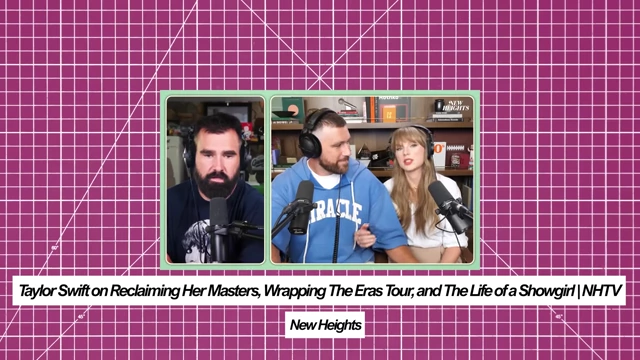
A screenshot from the 'New Heights' podcast shows Taylor Swift and two men talking. [ 00:25:49 ] - Your environment, whether physical, social, or digital, must mirror the identity you are becoming.
- 1. Physical Energy [17:28]:
Outro [26:10]
The speaker reassures viewers that they are not "behind" but simply in their debut era, quietly building their personal brand both externally and internally. She encourages viewers to do their "homework" (the exercises) and stay focused, expressing gratitude for their support.