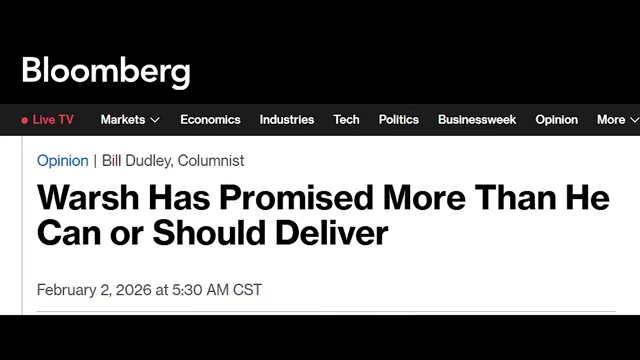
Kevin Warsh's Potential Fed Chairmanship: Monetary Policy, Market Volatility, and Consistent Inflation Outlook
President Trump may nominate Kevin Warsh as the next Federal Reserve Chair, potentially replacing Jerome Powell, leading to significant changes in monetary policy. Warsh, a former Fed Governor, advocates for a reactive monetary policy, allowing crises to occur before intervening with substantial liquidity, contrasting with Powell's proactive, steady money printing. Despite their differing approaches, both policies are argued to ultimately lead to ongoing money printing, inflation, and dollar devaluation, with the key difference being the timing of liquidity injections (lumpy vs. steady). In the short term, markets are expected to experience increased volatility due to policy uncertainty. Medium-term forecasts suggest a rotation from speculative growth investments to value stocks, negatively impacting Bitcoin and other cryptocurrencies due to reduced liquidity. Long-term precious metals investors may still benefit as de-dollarization and inflation are projected to continue, albeit with more volatile market cycles. There's also a possibility that Warsh might not strictly adhere to his hawkish rhetoric once in office.
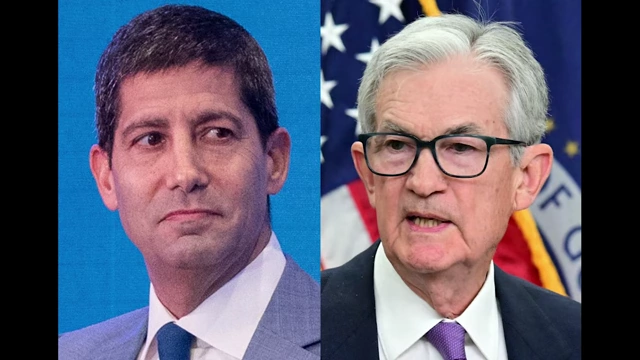
Introduction to Kevin Warsh and His Monetary Philosophy [0:00:37]
Kevin Warsh's Background [0:00:39]
- Served as a Fed Governor from 2006 to 2011, during which he was involved in critical policy decisions during the 2008 financial crisis. [0:00:48]
- His responsibilities included bank rescues, liquidity programs, and the initial stages of quantitative easing (QE). [0:00:57]
- After leaving the Federal Reserve, Warsh became a significant critic of the institution's ongoing monetary policy, particularly the continuous practice of money printing. [0:01:12]
- He proposes a reformative approach to the Federal Reserve's operations, advocating for a different direction compared to the current regime. [0:01:29]
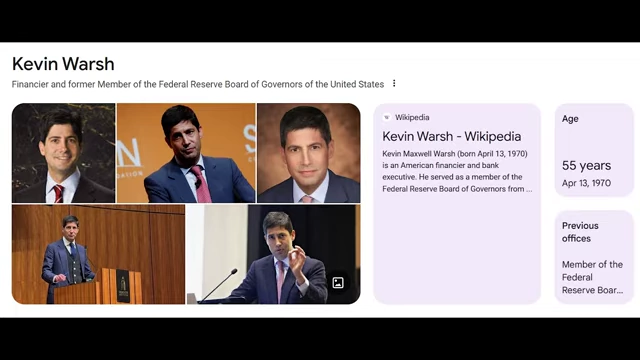
Kevin Warsh's Wikipedia entry, highlighting his career as a financier and former member of the Federal Reserve Board of Governors. [ 00:00:40 ] 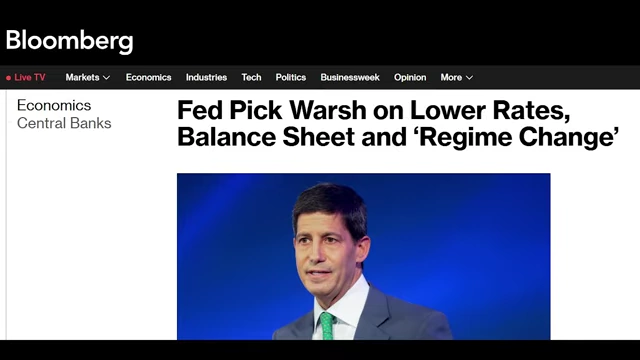
A Bloomberg news headline detailing Fed pick Warsh's views on lower rates, the balance sheet, and a 'regime change'. [ 00:01:46 ]
- Served as a Fed Governor from 2006 to 2011, during which he was involved in critical policy decisions during the 2008 financial crisis. [0:00:48]
Contrasting Monetary Policies: Powell vs. Warsh [0:01:58]
- Jerome Powell's Current Approach [0:01:58]
- The strategy under Jerome Powell is to proactively prevent financial crises by steadily printing money. [0:01:58]
- As an example, the Federal Reserve reportedly began printing $40 billion a month in December 2025 to purchase US Treasury bills, aiming to increase market liquidity. [0:02:09]
- This approach's advantage is avoiding immediate financial emergencies or crises. [0:02:27]
- The disadvantage is that it fosters an environment of constant and elevated inflation. [0:02:32]
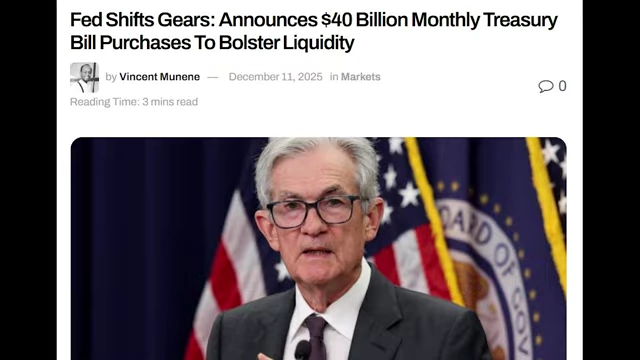
A news headline featuring Jerome Powell, announcing the Fed's $40 billion monthly Treasury Bill purchases to bolster liquidity. [ 00:02:00 ]
- The strategy under Jerome Powell is to proactively prevent financial crises by steadily printing money. [0:01:58]
- Kevin Warsh's Proposed Approach [0:02:43]
- Warsh suggests halting continuous money printing and allowing financial emergencies or crises to naturally occur. [0:02:43]
- Only after a crisis materializes would the Federal Reserve intervene with a substantial flood of money printing. [0:02:52]
- He believes central banks are fundamentally created to respond to panics, using "overwhelming force" to restore market functionality when markets fail to clear due to spreads between buyers and sellers. [0:05:15]
- Warsh himself supported the dramatic doubling of the Fed's balance sheet in 2008, seeing it as a necessary response to an emergency. [0:03:46]
- Jerome Powell's Current Approach [0:01:58]
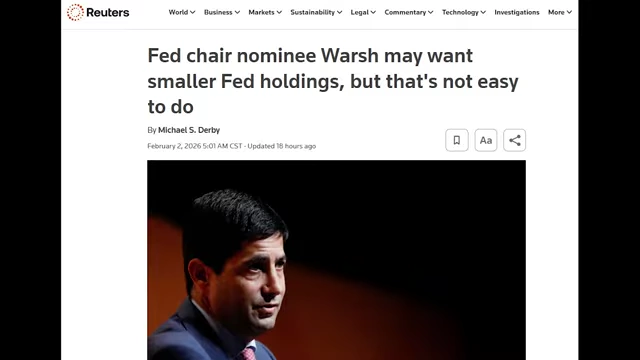
Speaker's Analysis of Policy Outcomes [0:06:40]
- Similar Long-Term Financial Impact [0:07:10]
- The speaker argues that regardless of whether the Fed prints money steadily (like Powell) or in large, sudden bursts during crises (like Warsh), the ultimate outcome for the economy remains the same: persistent money printing, ongoing inflation, and continued devaluation of the US dollar. [0:07:10]
- The primary difference between the two approaches is merely the timing or pattern of the money printing, not the overall quantity over the long run. [0:08:28]
- This is likened to receiving a paycheck monthly versus bi-monthly; the total amount received is the same, but the timing can impact short-term financial stress. [0:07:17]
Short-Term and Medium-Term Investment Implications [0:08:46]
- Increased Market Volatility (Short-Term) [0:08:49]
- Warsh's introduction of a new monetary regime is expected to cause increased volatility in the short term. [0:08:49]
- Markets prefer predictability, and Warsh's policies, with their uncertainty and potential for mixed signals (e.g., rate cuts alongside liquidity tightening), can reduce confidence in the Fed's consistent intervention to support asset prices (the "Fed put"). [0:08:51]
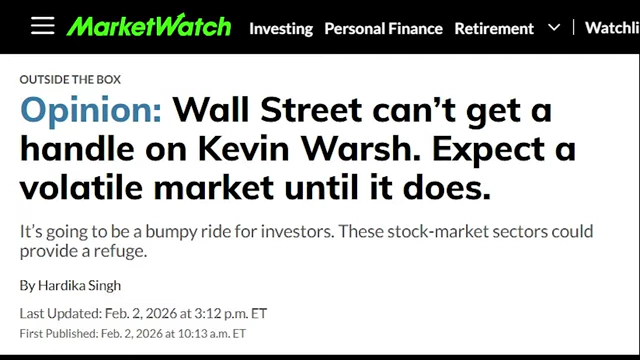
A MarketWatch headline titled "Wall Street can't get a handle on Kevin Warsh. Expect a volatile market until it does.", indicating near-term market uncertainty. [ 00:09:15 ]
- Investment Rotation (Medium-Term) [0:09:13]
- A shift in Federal Reserve policy resulting in less consistent liquidity could trigger a rotation in investment portfolios. [0:09:16]
- This rotation would likely move capital out of speculative growth investments and into value stocks, which are typically defined by strong profits and cash flow. [0:09:22]
- Specific Asset Class Impacts
- Bitcoin and Crypto: Warsh's approach, characterized by less liquidity in the markets, would be significantly detrimental to Bitcoin and other cryptocurrencies, as they often trade like amplified tech stocks that thrive on ample liquidity. He is considered potentially the "worst Fed chair for Bitcoin." [0:09:31]
- Precious Metals (Gold and Silver): For long-term investors in precious metals, Warsh's potential chairmanship is not a cause for concern. His policies are not seen as offering genuine solutions to restore confidence in the US dollar. Therefore, de-dollarization and inflation are expected to continue, though market cycles for precious metals might become "lumpier." [0:09:51]
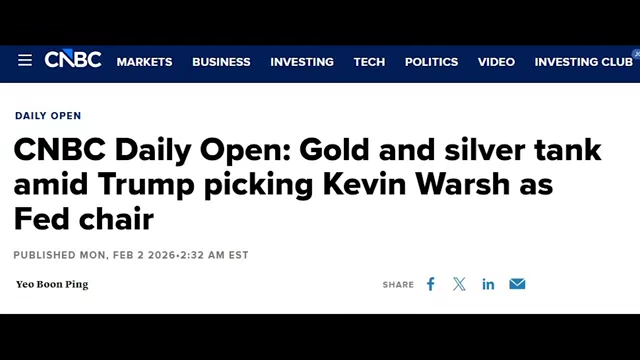
A CNBC headline announcing that gold and silver tanked amid news of Trump picking Kevin Warsh as Fed chair. [ 00:09:58 ]
The "Talk is Cheap" Scenario [0:10:07]
- There is a possibility that Kevin Warsh's actions, once in office, may not fully align with his stated hawkish rhetoric regarding tightening monetary policy and reducing the Fed's balance sheet. [0:10:18]
- This possibility is underscored by considering why a President like Trump would nominate someone who would intentionally restrict liquidity and create headwinds for stock markets. [0:10:39]
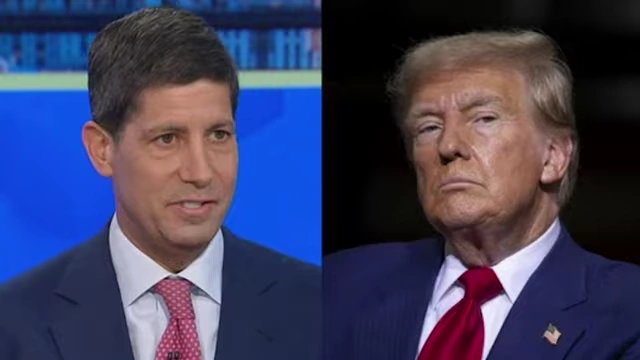
Kevin Warsh and Donald Trump pictured side-by-side, illustrating the political context of Warsh's potential nomination by Trump. [ 00:10:26 ] - Ultimately, the speaker maintains that the broader trends of money printing, inflation, dollar devaluation, and de-dollarization will continue, regardless of who leads the Federal Reserve, implying that the change in Fed Chair merely adjusts the timing of these ongoing phenomena rather than altering their fundamental direction. [0:10:47]