Understanding the Distinct Origins, Mechanisms, and Evidence Levels of Mitochondrial Peptides: Humanin, MOTS-c, and SS-31
Summary:
This video explains the differences between three popular mitochondrial peptides: Humanin, MOTS-c, and SS-31.
- Mitochondrial Importance: Mitochondria are more than just energy producers; they possess their own DNA, regulate calcium, influence oxidative stress, and control cell survival, playing a central role in various age-related and chronic diseases.
- Endosymbiotic Origin: Their unique evolutionary history, stemming from an ancient symbiotic event where a host cell engulfed a bacterium, means mitochondria retain their own genome and can encode their own peptides, facilitating cellular communication.
- Humanin: Discovered during Alzheimer's research, Humanin is a mitochondrial-derived peptide primarily acting as a stress-responsive survival signal, offering cytoprotection and anti-apoptotic effects, with strong preclinical evidence but limited human trials.
- MOTS-c: Also mitochondrial-derived, MOTS-c functions as a metabolic regulator and mitokine, promoting metabolic adaptation by influencing the folate cycle and AMPK activation, and engaging in mitonuclear communication, showing promising preclinical results but lacking robust human interventional data.
- SS-31 (Elamipretide): This is a synthetic tetrapeptide designed to target cardiolipin, a crucial phospholipid in the inner mitochondrial membrane, thereby stabilizing mitochondrial structure and respiratory chain function. SS-31 is FDA-approved for Barth syndrome, marking a significant clinical advancement compared to the other two peptides.

An overview of mitochondria and the three peptides: SS-31 targeting cardiolipin, MOTS-c encoded in 12S rRNA, and Humanin in 16S rRNA. [ 00:00:00 ]
Mitochondrial Peptides Explained [0:00]
- Mitochondria are widely recognized as the powerhouses of the cell, regulating energy production and possessing a unique evolutionary history.
- Research into mitochondrial peptides offers insights into how the body responds to improved mitochondrial function and expands understanding of mitochondria themselves.
- This video will explore the interconnectedness and differences among the three most popular mitochondrial peptides: SS-31, MOTS-c, and Humanin.
- These peptides are connected by the same organelle but have distinct origins, mechanisms, and levels of evidence.
- Humanin and MOTS-c are mitochondrial-derived peptides (MDPs), meaning they are encoded within mitochondrial DNA.
- SS-31 is a synthetically derived tetrapeptide engineered to target a specific mitochondrial structure, not encoded by mitochondrial DNA.
Why Mitochondria Matter [0:55]
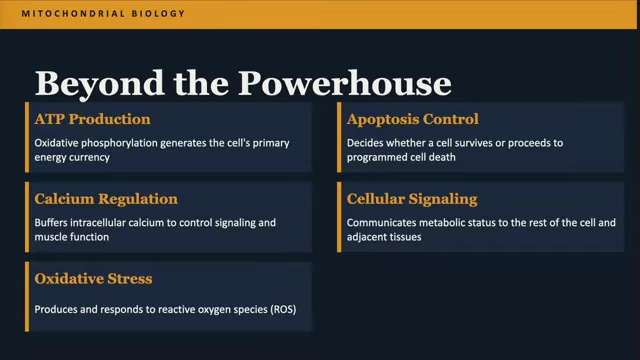
- Mitochondria are far more than just "powerhouses"; they are complex organelles with diverse functions.
- ATP Production: They generate the cell's primary energy currency through oxidative phosphorylation.
- Calcium Regulation: They buffer intracellular calcium to control signaling and muscle function.
- Oxidative Stress: They produce and respond to reactive oxygen species (ROS).
- Apoptosis Control: They decide whether a cell survives or proceeds to programmed cell death.
- Cellular Signaling: They communicate metabolic status to the rest of the cell and adjacent tissues.
- Mitochondrial dysfunction is linked to a broad range of age-related and chronic diseases.
- These include insulin resistance and type 2 diabetes, neurocognitive decline, cardiovascular disease, cancer, obesity and metabolic syndrome, and exercise intolerance.
- The relationship between mitochondrial dysfunction and these conditions is often bidirectional, involving complex interactions with genetics, physical activity, metabolic health, environmental factors, nutrition, and baseline disease burden.
The Origin of Mitochondria [1:17]
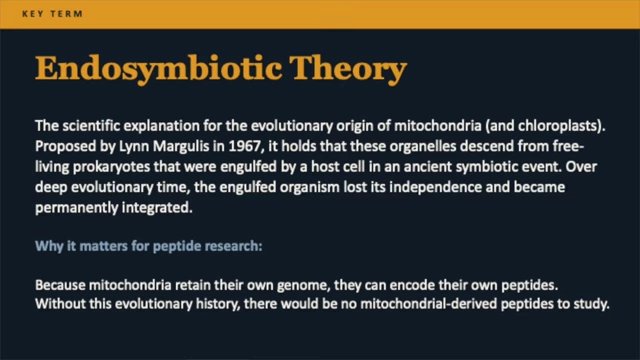
- The evolutionary origin of mitochondria is explained by the Endosymbiotic Theory.
- Approximately two billion years ago, a primitive host cell engulfed an oxygen-utilizing bacterium.
- Instead of digesting it, the host cell maintained a symbiotic relationship with the bacterium.
- Over millions of years, this relationship stabilized, with the bacterium gradually losing its autonomy and transferring much of its genetic material to the host nucleus.
- The remnant of this bacterium is the mitochondrion, retaining its own small circular genome.
- This ancient origin is crucial for peptide research because mitochondria retain their own genome, enabling them to encode their own peptides.
- Without this evolutionary history, the study of mitochondrial-derived peptides would not be possible.
Mitochondria Speak Their Own Language [3:26]
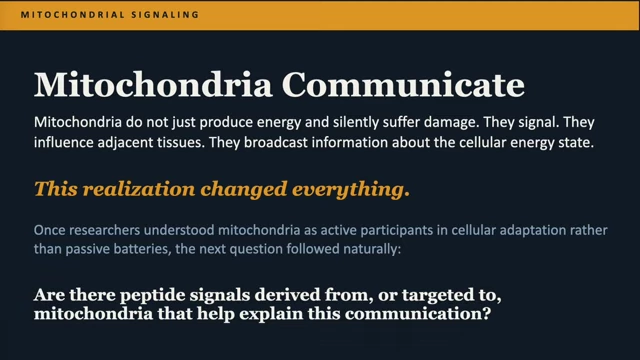
- Scientists discovered that mitochondria are not just passive energy producers but active communicators.
- They signal to the rest of the cell, influence adjacent tissues, and broadcast information about the cellular energy state.
- They participate in a broader ecosystem of metabolic distress signaling and adaptive response.
- This realization shifted the understanding of mitochondria from silent organelles to active participants in cellular adaptation.
- It naturally led to the question of whether peptide signals derived from or targeted to mitochondria help explain this communication.
- This is where Humanin, MOTS-c, and SS-31 enter the picture, each representing a different aspect of mitochondrial biology.
Humanin Explained [5:18]
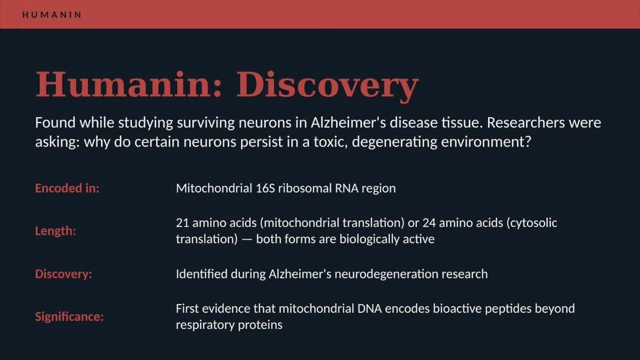
- Discovery: Humanin was discovered during research into surviving neurons in Alzheimer's disease tissue.
- Researchers investigated why certain neurons persisted in a toxic, degenerative environment.
- They identified a short peptide encoded within the mitochondrial 16S ribosomal RNA region.
- This discovery was paradigm-shifting, indicating that mitochondrial DNA encodes bioactive peptides beyond just respiratory proteins.
- Function and Mechanism: Humanin acts as a stress-responsive survival signal, with its defining characteristic being cytoprotection.
- Anti-apoptotic: It interacts with apoptotic machinery (e.g., BAX and IGFBP-3) to reduce cell death signals.
- Neuroprotective: It has been shown to protect neurons against amyloid-beta toxicity in Alzheimer's models.
- Cardioprotective: Preclinical evidence suggests protection against ischemia-reperfusion injury.
- Stress Signal: Its levels appear to rise in response to oxidative and inflammatory burdens, then decline with aging.
- Evidence Level:
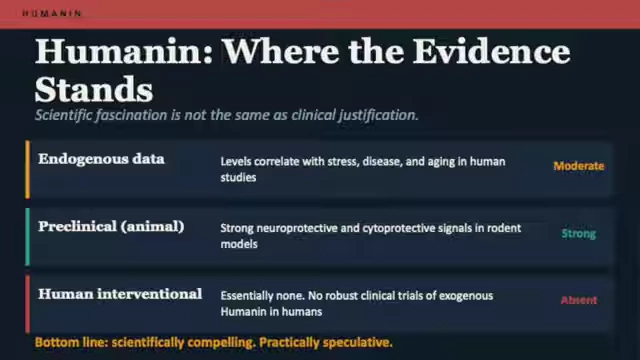
Summary of Humanin's evidence levels. [ 00:07:15 ] - Endogenous data: Moderate evidence showing levels correlate with stress, disease, and aging in human studies.
- Preclinical (animal): Strong evidence for neuroprotective and cytoprotective signals in rodent models.
- Human interventional: Essentially none; no robust clinical trials of exogenous Humanin in humans.
- Conclusion: Scientifically compelling, but practically speculative for human use.
MOTS-c Explained [7:27]
- Introduction: MOTS-c stands for Mitochondrial Open Reading Frame of the 12S rRNA-c.
- Origin: It is encoded within the mitochondrial 12S ribosomal RNA region.
- Length: It is a 16-amino acid peptide.
- Classification: It is a mitochondrial-derived peptide (MDP) and a mitokine.
- Primary Identity: A metabolic regulator and exercise-related signaling molecule.
- Key Distinction: Unlike Humanin (survival focus), MOTS-c is primarily about metabolic adaptation.
- Mechanism: MOTS-c is deeply entangled with metabolism.
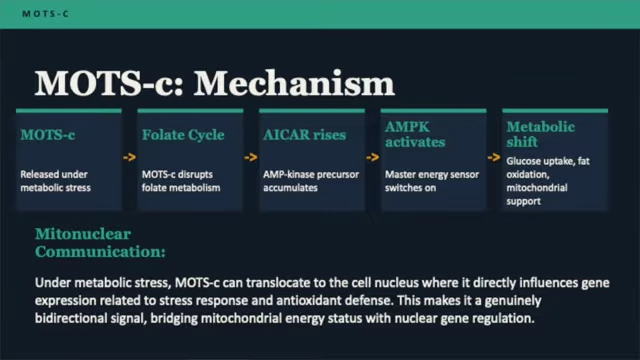
- Released under metabolic stress, MOTS-c disrupts the folate cycle.
- This leads to an increase in AICAR (AMP-kinase precursor).
- AICAR then activates AMPK, a master energy sensor that regulates cellular energy homeostasis.
- AMPK activation triggers a metabolic shift towards energy preservation, mitochondrial support, glucose uptake, and fat oxidation.
- Mitonuclear Communication: A particularly interesting aspect of MOTS-c is its ability to translocate to the cell nucleus under metabolic stress.
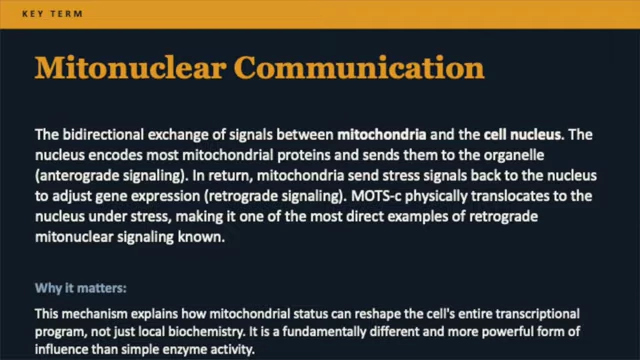
Definition and significance of Mitonuclear Communication. [ 00:09:57 ] - In the nucleus, it directly influences gene expression related to stress response and antioxidant defense.
- This makes MOTS-c a genuinely bidirectional signal, bridging mitochondrial energy status with nuclear gene regulation, representing a direct example of retrograde mitonuclear signaling.
- If Humanin's message is "don't die," MOTS-c's message is "adapt."
- Research Shows:
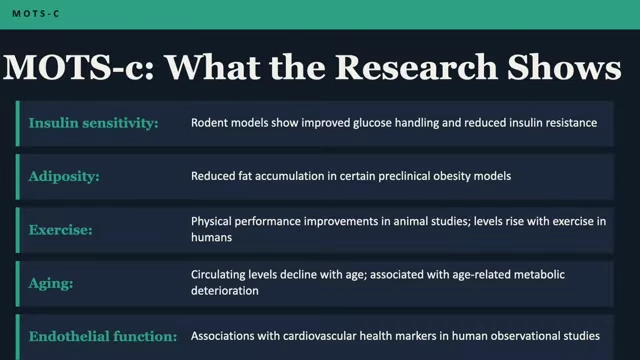
Key research findings on MOTS-c. [ 00:10:28 ] - Insulin sensitivity: Rodent models show improved glucose handling and reduced insulin resistance.
- Adiposity: Reduced fat accumulation in certain preclinical obesity models.
- Exercise: Physical performance improvements in animal studies; circulating levels rise with exercise in humans.
- Aging: Circulating levels decline with age, associated with age-related metabolic deterioration.
- Endothelial function: Associations with cardiovascular health markers in human observational studies.
- Conclusion: Conceptually fascinating and promising, but robust human interventional evidence is still lacking, making its real-world use speculative.
SS-31 Explained [10:57]
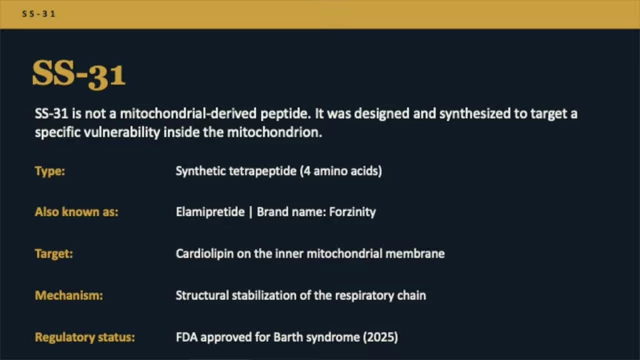
- Origin and Type: SS-31 is not a mitochondrial-derived peptide like Humanin or MOTS-c.
- It is a synthetic tetrapeptide (4 amino acids), also known as Elamipretide (brand name: Forzinity).
- It was specifically designed and synthesized to target a vulnerability within the mitochondrion.
- Target and Mechanism: SS-31 targets cardiolipin, a unique phospholipid located on the inner mitochondrial membrane.

How SS-31 works by stabilizing mitochondrial machinery. [ 00:11:43 ] - Cardiolipin binding: SS-31 selectively concentrates in the inner mitochondrial membrane by directly binding cardiolipin.
- Respiratory chain stabilization: It preserves the architecture needed for efficient electron transport and ATP production.
- ROS reduction: Stabilizing the membrane reduces electron leak and reactive oxygen species generation.
- Calcium handling: Emerging evidence suggests beneficial effects on mitochondrial calcium buffering.
- Unlike Humanin or MOTS-c, SS-31 acts more like a structural brace, preserving mitochondrial machinery under stress rather than signaling how the cell should respond.
- Regulatory Status: SS-31 has advanced significantly beyond preclinical intrigue.
- It is FDA-approved under the brand name Forzinity for Barth syndrome in patients weighing at least 30 kg (approved in 2025).
Why Cardiolipin Matters [11:49]
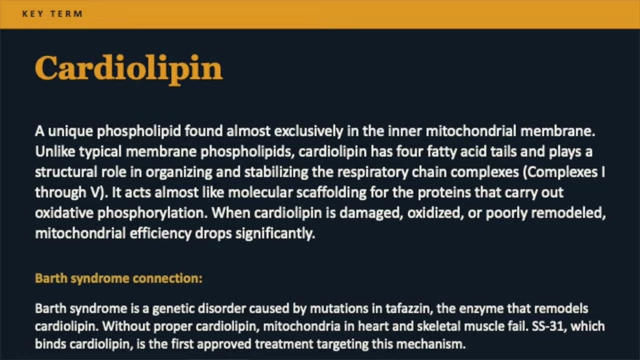
- Cardiolipin is a unique phospholipid found almost exclusively in the inner mitochondrial membrane.
- It possesses four fatty acid tails, distinguishing it from typical membrane phospholipids.
- Structural Role: Cardiolipin plays a critical structural role in organizing and stabilizing the respiratory chain complexes (Complexes I through V).
- It acts as a molecular scaffolding for the proteins that carry out oxidative phosphorylation, ensuring efficient energy production.
- Impact of Damage: When cardiolipin is damaged, oxidized, or poorly remodeled, mitochondrial efficiency significantly drops.
- This destabilizes the environment, making electron transport less efficient.
- It can lead to an increase in reactive oxygen species (ROS).
- Calcium handling can become disrupted, leading to overall mitochondrial dysfunction.
SS-31 and Barth Syndrome [13:06]

- Barth Syndrome Connection: Barth syndrome is a rare genetic disorder caused by mutations in tafazzin, an enzyme crucial for remodeling cardiolipin.
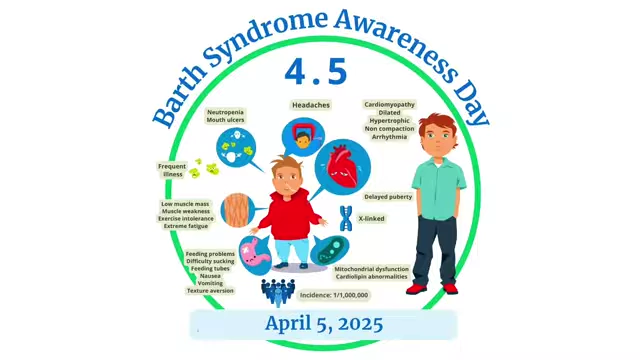
An infographic detailing symptoms and features of Barth Syndrome. [ 00:13:36 ] - Without proper cardiolipin, mitochondria in heart and skeletal muscle are severely affected, leading to devastating symptoms.
- Therapeutic Strategy: SS-31 (Forzinity), which binds to cardiolipin and supports inner membrane function, became the first approved treatment specifically targeting this mechanism.
- This demonstrates SS-31's tangible, clinically relevant target and its efficacy as a legitimate therapeutic strategy.
The Bigger Picture [13:42]
- The category of mitochondrial peptides is a fascinating but nuanced field, similar to the gut microbiome.
- It is still in its infancy and prone to oversimplification, often reduced to broad "optimization" language.
- Nuance in Mitochondrial Biology: Mitochondria are not just ATP factories but evolutionary relics with their own DNA and signaling potential.
- They play central roles in oxidative stress, apoptosis, calcium handling, and disease susceptibility.
- Distinctions Matter: Understanding the differences between Humanin, MOTS-c, and SS-31 provides a deeper insight into both the peptides themselves and the complex biology of mitochondria.
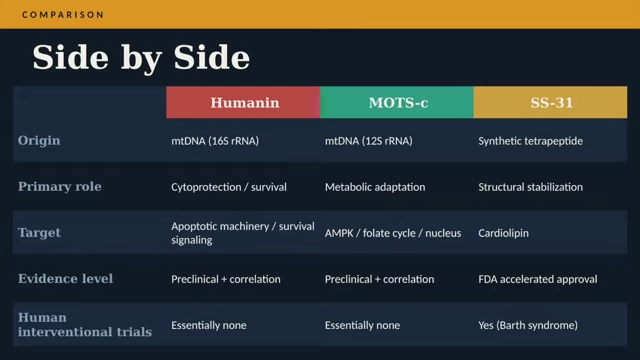
- Humanin: Originates from mitochondrial DNA (16S rRNA), its primary role is cytoprotection/survival, targeting apoptotic machinery/survival signaling. Evidence is preclinical + correlation, with essentially no human interventional trials.
- MOTS-c: Originates from mitochondrial DNA (12S rRNA), its primary role is metabolic adaptation, targeting AMPK/folate cycle/nucleus. Evidence is preclinical + correlation, with essentially no human interventional trials.
- SS-31: Is a synthetic tetrapeptide, its primary role is structural stabilization, targeting cardiolipin. Evidence includes FDA accelerated approval, with human interventional trials for Barth syndrome.