Chris Lonsdale on How to Learn Any Language in Six Months: 5 Principles and 7 Actions for Rapid Acquisition
Chris Lonsdale shares his approach to rapid language acquisition, challenging common misconceptions about learning. He outlines five core principles and seven actionable steps for adults to achieve fluency in a new language within six months.
- The Problem and Solution: Many struggle with language learning, but the key is to observe successful methods and apply universal principles.
- Dispelling Myths: Talent and simple immersion are not prerequisites for success.
- 5 Principles:
- Focus on relevant content.
- Use the language as a communication tool from day one.
- Prioritize understanding the message for unconscious acquisition.
- Engage in physiological training (hearing sounds, muscle memory for speaking).
- Maintain a positive psychophysiological state and tolerate ambiguity.
- 7 Actions:
- Engage in "brain soaking" by listening extensively.
- Always seek to understand meaning first, even without knowing all words.
- Mix known words creatively to form new expressions.
- Focus on high-frequency "core" vocabulary.
- Find a "language parent" who supports and guides communication.
- Physically copy the facial movements of native speakers.
- Establish "direct connect" between new language sounds and internal imagery/feelings, bypassing translation.
These methods, based on observation and psychology, empower learners to achieve rapid fluency.
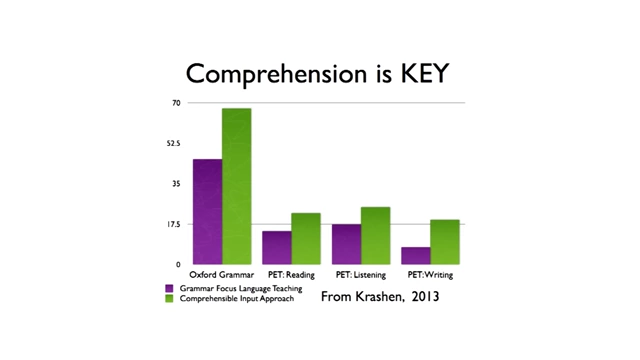
A bar chart showing superior results for the comprehensible input approach over grammar-focused teaching [ 00:10:08 ]
The Lifelong Question: Speeding Up Learning [0:33]
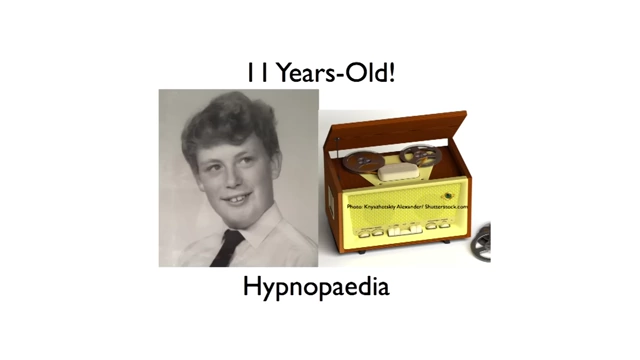
Chris Lonsdale began asking himself how to speed up learning from a young age, even writing to researchers in the Soviet Union about hypnopaedia (sleep learning) at 11 years old.
- While hypnopaedia didn't work, this initial curiosity led to broader research into learning methodologies.
- He became passionate about psychology, which influenced his understanding of effective learning.

A head made of gears symbolizing psychology [ 00:01:42 ]
Personal Journey and the Big Question [1:46]
In 1981, Lonsdale moved to China with a goal to become natively fluent in Chinese within two years.

- He achieved fluency in Mandarin Chinese in just six months by applying psychological research principles.
- He found that many people, both foreigners and native Chinese speakers learning other languages, struggled immensely.
- This experience refined his core question: "How can a normal adult learn a new language quickly, easily, and effectively?" [2:45]
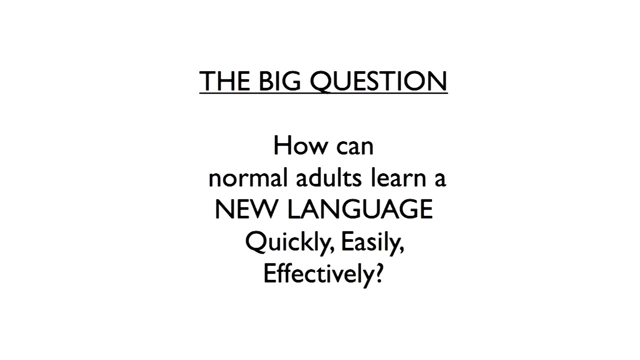
The Big Question: How can normal adults learn a new language quickly, easily, effectively? [ 00:02:46 ] - He emphasizes the importance of language acquisition for global communication, especially given modern challenges.
The Solution: Modeling and Principles [3:12]
Lonsdale's approach is based on "modeling": observing where success already occurs, identifying the underlying principles, and applying them.
- After 15-20 years of observing and modeling language learning, he concluded that any adult can achieve fluency in a second language within six months. [3:38]
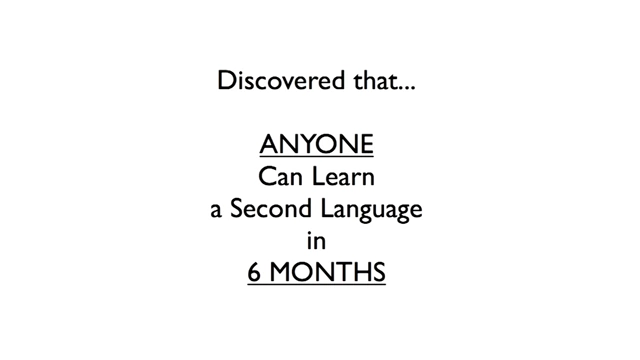
A slide claiming anyone can learn a second language in 6 months [ 00:03:38 ] - He addresses skepticism about this claim by comparing it to historical examples of human progress.
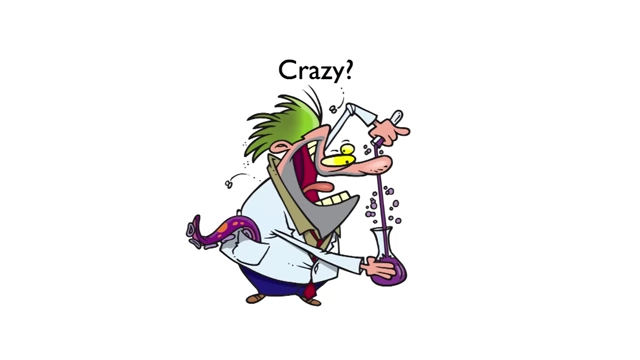
A cartoon image of a mad scientist, labeled "Crazy?", reflecting common skepticism towards rapid learning claims [ 00:03:48 ] 
The history of Human Progress is all about Expanding Limits [ 00:03:55 ] - One example is the historical belief that "heavy stuff can't fly" [4:09], which was disproven by airplanes and, more recently, flying cars and wingsuits.

A pile of scrap metal representing the old belief that heavy stuff can't fly [ 00:04:05 ] 
A large airplane demonstrates that heavy objects can fly [ 00:04:15 ] 
A flying car in the sky, demonstrating that even cars can now fly [ 00:04:31 ] 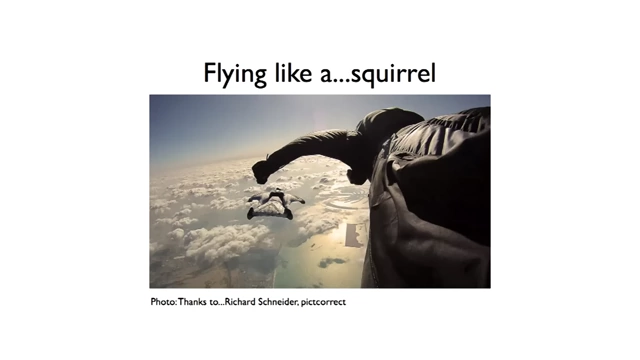
A person flying with a wingsuit, demonstrating a different way of flying [ 00:04:45 ] - Another example is the belief that people can't draw, which can be overcome in five days by applying principles. He demonstrates his own "before" and "after" drawings.

Chris Lonsdale's initial drawing of a face [ 00:05:15 ] 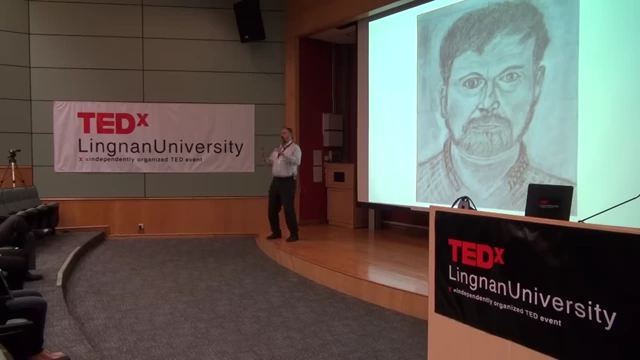
Chris Lonsdale's improved drawing after applying principles for five days [ 00:05:23 ] 
A slide stating that anyone can learn to draw in 5 days [ 00:05:33 ] 
A slide connecting the ability to learn to draw with the ability to learn a second language [ 00:05:42 ]
- One example is the historical belief that "heavy stuff can't fly" [4:09], which was disproven by airplanes and, more recently, flying cars and wingsuits.
Dispelling Two Myths About Language Learning [5:52]
There are two common misconceptions that hinder language learners.
- 1. Talent is Required [5:55]
A bullet point highlighting "Talent" as something that doesn't matter for language learning [ 00:05:56 ] - The story of Zoe, who was told she had no talent for Dutch but became fluent in Portuguese in six months after applying Lonsdale's principles, disproves this myth. Talent does not matter.
- 2. Immersion in a New Country is Enough [6:24]
A bullet point highlighting "Immersion per se" as something that doesn't matter for language learning [ 00:06:27 ] - Many Westerners in Hong Kong, and Chinese living in Western countries, after years of immersion, still don't speak the local language fluently.
- This is because "a drowning man cannot learn to swim." [6:46]
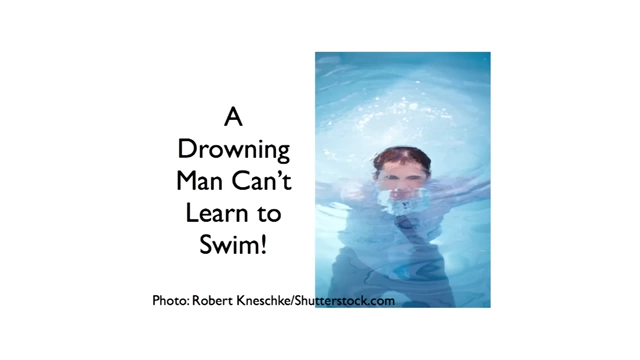
A man drowning in water, symbolizing the idea that 'a drowning man cannot learn to swim' [ 00:06:48 ] - Without foundational understanding and comprehensible input, simply being in an environment where a language is spoken by adults talking above one's head is not effective for learning.
The 5 Principles for Language Acquisition [7:03]
Lonsdale outlines five core principles crucial for rapid language acquisition.
- 1. Focus on Language Content That Is Relevant to You [7:03]
- Learning is tied to four elements: attention, meaning, relevance, and memory, which are interconnected.
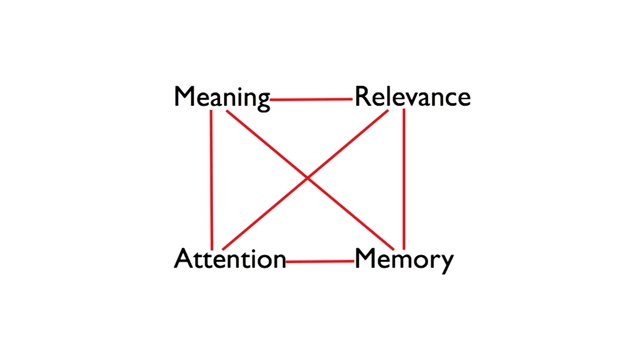
A diagram showing the interconnected relationship between Meaning, Relevance, Attention, and Memory [ 00:07:05 ] - If information is related to your survival or personal goals, you will naturally pay attention and remember it.
- Example: Recognizing tree marks, then bear tracks, then an actual bear, illustrates how perceived relevance drives attention and learning.

Tree marks on a forest tree [ 00:07:21 ] 
A bear footprint in the mud by a river [ 00:07:29 ] 
A grizzly bear roaring in a field, illustrating immediate attention to a threat [ 00:07:35 ] 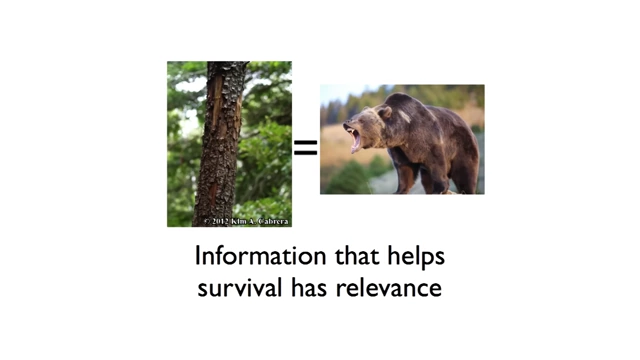
A visual representation connecting tree marks and a roaring bear to "Information that helps survival has relevance" [ 00:07:46 ] 
A triumphant silhouette against a sunset, representing "Information that helps achieve Personal Goals has relevance" [ 00:07:52 ] 
Principle #1: Focus on language content that is relevant to you [ 00:07:59 ]
- Learning is tied to four elements: attention, meaning, relevance, and memory, which are interconnected.
- 2. Use Your New Language as a Tool to Communicate From Day 1 [8:05]
- We master tools by using them, and we learn them fastest when they are relevant to our needs.

An assortment of common hand tools [ 00:08:06 ] - Example: A colleague who struggled to learn Chinese typing for nine months mastered it in 48 hours when faced with an urgent deadline, because it became a relevant tool to create value.

A close-up of a Chinese keyboard [ 00:08:20 ] 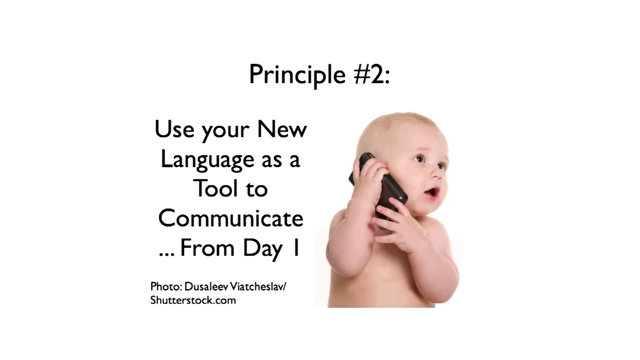
Principle #2: Use your new language as a tool to communicate from day one [ 00:08:49 ]
- We master tools by using them, and we learn them fastest when they are relevant to our needs.
- 3. When You First Understand the Message, You Will Unconsciously Acquire the Language [9:38]
- This is known as "comprehensible input," a concept supported by 20-30 years of research.
- When you understand the message, you acquire the language naturally, without conscious effort.
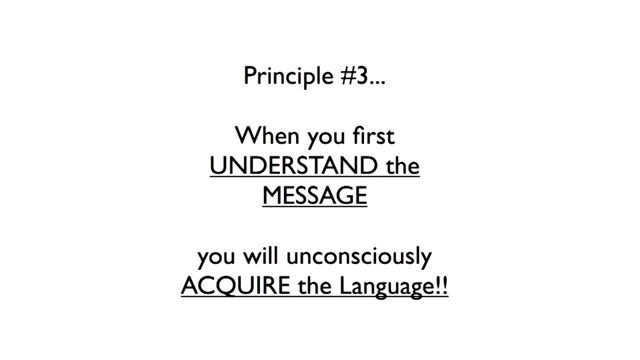
A principle stating that understanding the message leads to unconscious language acquisition [ 00:09:43 ] - Charts show that "comprehensible input" yields significantly better results across reading, listening, and writing tests compared to grammar-focused language teaching.
A bar chart comparing grammar-focused language teaching versus a comprehensible input approach across reading, listening, and writing tests, showing superior results for comprehensible input [ 00:10:08 ]
- 4. Physiological Training [10:30]
- Language learning is not merely about accumulating knowledge; it's physiological training involving both listening and speaking.
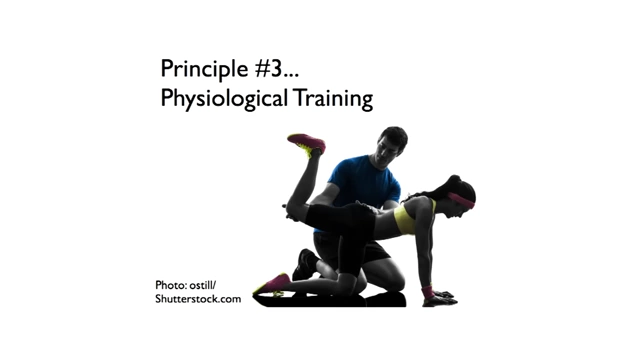
Principle #4: Physiological training, illustrated by a person performing leg exercises [ 00:10:29 ] - Hearing the sounds: Our brains filter out unfamiliar sounds, making us "deaf" to them. To learn a new language, you must physically train your ears to hear its specific sounds.

A man with a filtered face and hands cupped to his ears, labeled 'English Deaf', illustrating the concept of being unable to hear unfamiliar language sounds [ 00:10:53 ] - Speaking requires muscle: There are 43 muscles in the face that need to be coordinated to produce the correct sounds for a new language. This requires physical practice, similar to learning a new sport. Your face will hurt if you're doing it right.

A detailed anatomical illustration of facial muscles, indicating that speaking requires muscle control [ 00:11:16 ] 
A person clenching their teeth in pain, illustrating the soreness one might feel when practicing new facial muscle movements for language acquisition [ 00:11:35 ]
- Hearing the sounds: Our brains filter out unfamiliar sounds, making us "deaf" to them. To learn a new language, you must physically train your ears to hear its specific sounds.
- Language learning is not merely about accumulating knowledge; it's physiological training involving both listening and speaking.
- 5. Psycho-physiological State Matters [1:13:59]
- Your emotional and mental state profoundly impacts learning.

Principle #5: Psychophysiological state matters! [ 00:11:45 ] - You learn quickly when you are happy, relaxed, curious, and in an alpha brain state.
- It is crucial to be tolerant of ambiguity: do not expect to understand every single word. Focus on what you do understand to avoid frustration and allow for faster learning.
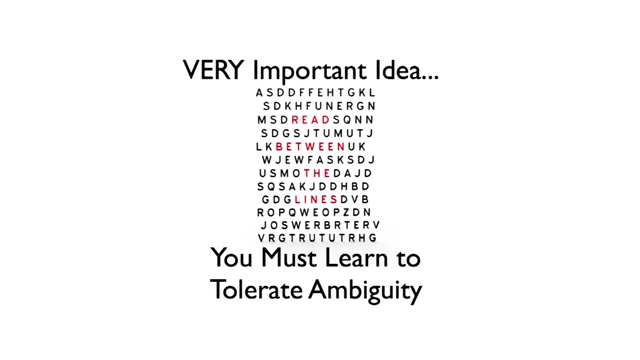
A word search puzzle with "READ BETWEEN THE LINES" highlighted, followed by the statement "You Must Learn to Tolerate Ambiguity" [ 00:11:56 ]
- Your emotional and mental state profoundly impacts learning.
The 7 Actions for Rapid Language Acquisition [1:19:00]
These actions are practical steps derived from the five principles and are under the learner's control.
- 1. Listen a Lot (Brain Soaking) [1:21:40]
- Immerse yourself in the target language's sounds, rhythms, and patterns. It's not about understanding every word, but about getting your brain used to the soundscape.

A woman with comically large ears, symbolizing the act of listening a lot [ 00:12:24 ] 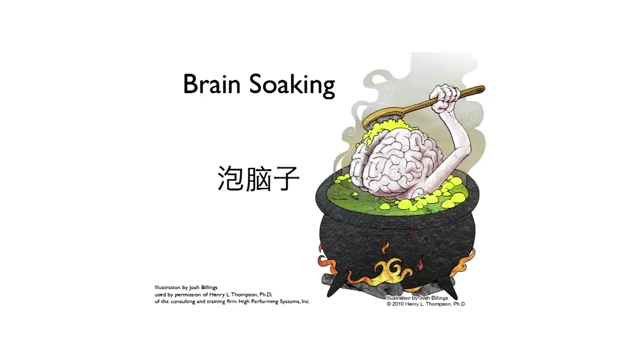
An illustration of a brain being "soaked" in a pot, representing deep immersion in language sounds [ 00:12:38 ]
- Immerse yourself in the target language's sounds, rhythms, and patterns. It's not about understanding every word, but about getting your brain used to the soundscape.
- 2. Get the Meaning First [1:24:38]
- Utilize body language and existing patterns (e.g., cognates between related languages) to grasp the message before focusing on individual words.
A slide emphasizing to focus on getting the meaning first, before the words [ 00:12:45 ] - Human communication is heavily reliant on body language.
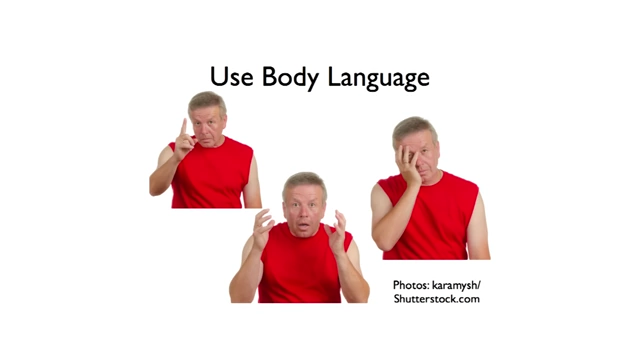
A man demonstrating different body language expressions to convey meaning [ 00:12:48 ] - Many languages share common roots; for example, Vietnamese shares 30% Mandarin and 30% Cantonese, allowing for 60% comprehension if you know those languages.
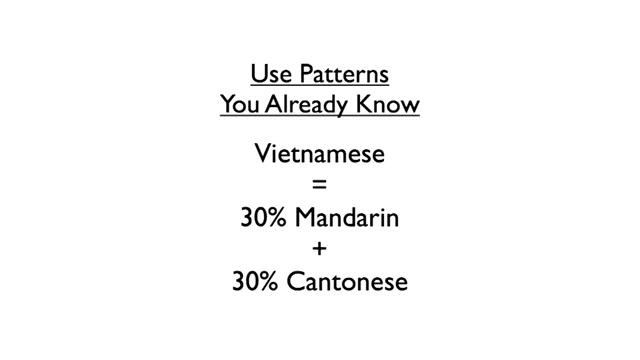
A slide showing that Vietnamese is composed of 30% Mandarin and 30% Cantonese, illustrating the use of existing language patterns [ 00:13:18 ]
- Human communication is heavily reliant on body language.
- Utilize body language and existing patterns (e.g., cognates between related languages) to grasp the message before focusing on individual words.
- 3. Start Mixing! [1:30:30]
- Language is a creative process. Babies combine simple words (e.g., "Me, ball, now").
A slide titled "Action #3: Start Mixing!" [ 00:13:28 ] - With just 10 verbs, 10 nouns, and 10 adjectives, you can form 1000 different phrases.

A calculation showing that 10 verbs, 10 nouns, and 10 adjectives can create 1000 possible phrases [ 00:13:38 ] - Get creative and have fun; perfection is not the initial goal.
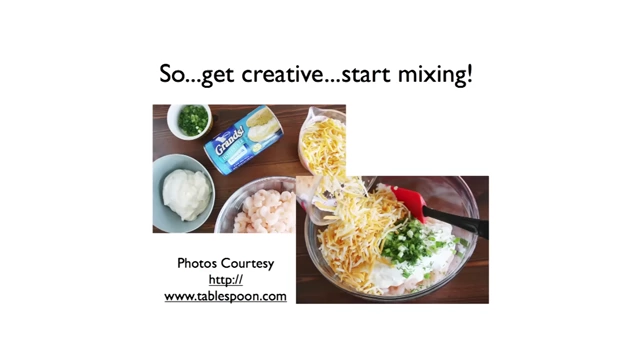
A visual of various ingredients being mixed in a bowl, representing getting creative and mixing language elements [ 00:13:52 ]
- Language is a creative process. Babies combine simple words (e.g., "Me, ball, now").
- 4. Focus on the Core [1:35:55]
- Identify and master the high-frequency content of the language first.

Action #4: Focus on the Core, illustrated by a cross-section of Earth's core [ 00:13:57 ] - In English, 1,000 words cover 85% of daily communication, and 3,000 words cover 98%. Master these, and you're speaking the language.
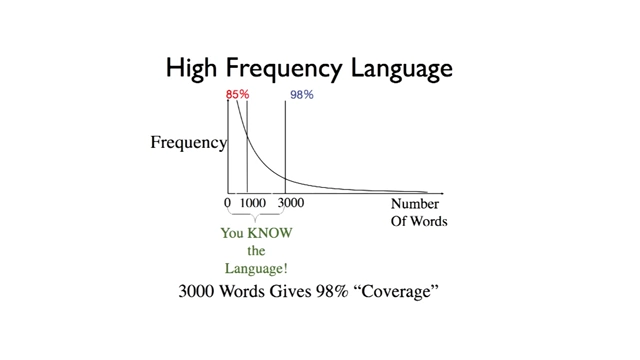
A graph illustrating that a small number of high-frequency words cover a large percentage of daily communication [ 00:14:05 ] - Your Toolbox:
- Week 1: Learn essential phrases in your target language like "How do you say that?", "I don't understand," "Repeat that please." [1:41:40]
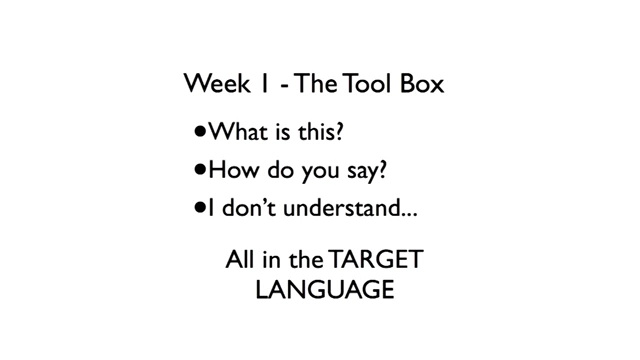
A slide listing essential phrases for Week 1 of language learning [ 00:14:26 ] - Week 2-3: Introduce simple pronouns, nouns, and verbs (e.g., "me," "this," "you," "that," "give," "hot"). [1:42:00]
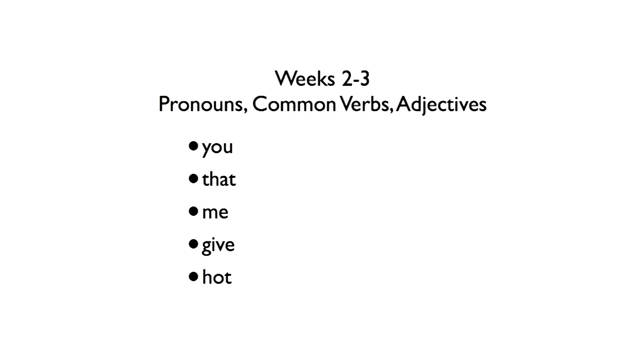
A slide listing simple pronouns, common verbs, and adjectives for Weeks 2-3 of language learning [ 00:14:44 ] - Week 4: Begin incorporating "glue words" like "although," "but," "therefore," which connect ideas and allow for more complex meaning. [1:49:00]

A cartoon image of a glue tube with "glue words" like "but", "and", and "even though" written next to it [ 00:14:57 ]
- Week 1: Learn essential phrases in your target language like "How do you say that?", "I don't understand," "Repeat that please." [1:41:40]
- Identify and master the high-frequency content of the language first.
- 5. Get a Language Parent [1:51:11]
- Find someone genuinely interested in you as a person, who will communicate with you as an equal, helping you understand the message.

A mother reading to her child, illustrating the concept of a language parent [ 00:15:47 ] - Four Rules of a Language Parent: [1:57:00]
- They will work hard to understand what you mean, even when you make mistakes.
- They will never correct your mistakes directly.
- They will feed back their understanding using correct language so you can adjust.
- They will use words that you already know.
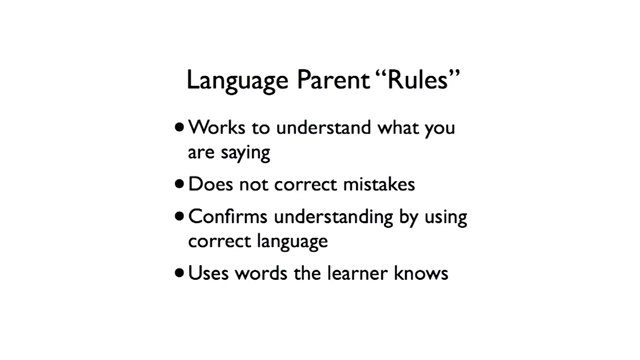
A slide listing the four rules for a language parent [ 00:16:07 ]
- Find someone genuinely interested in you as a person, who will communicate with you as an equal, helping you understand the message.
- 6. Copy the Face [1:32:00]
- To accurately produce new sounds, you must physically train your facial muscles.
- Observe native speakers' facial movements and allow your unconscious mind to absorb these physical rules.
- Use resources like mirror practice or videos that show mouth positions for different sounds if a native speaker isn't available.
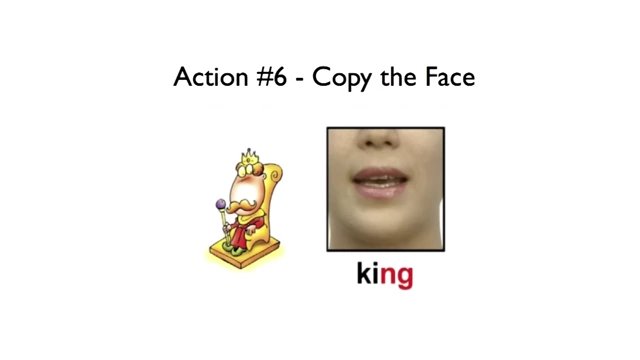
A visual combining an image of a king with a close-up of a mouth forming the 'k' sound in "king", illustrating copying facial movements [ 00:16:27 ]
- 7. Direct Connect [1:57:57]
- Instead of translating words from your mother tongue to the target language, directly connect new sounds to images, feelings, and internal representations in your mind.

A slide promoting "Direct Connect" to mental images, shown with a brain image with glowing neural connections [ 00:17:15 ] - The inefficient common "study" procedure involves repeatedly translating a word (e.g., "Fire" to "火").
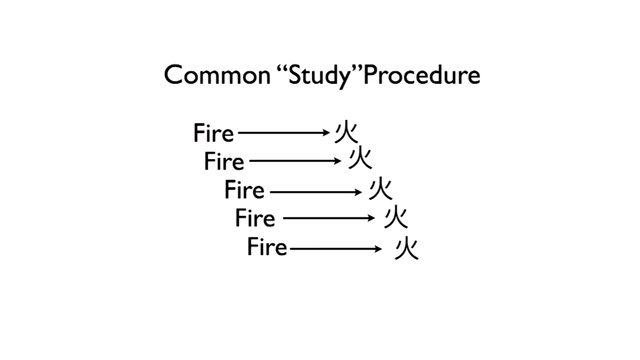
A slide showing the common "study" procedure of translating "Fire" to its Chinese character "火" repeatedly [ 00:17:23 ] - This creates new neural pathways, making the language acquisition process more efficient and eventually unconscious.
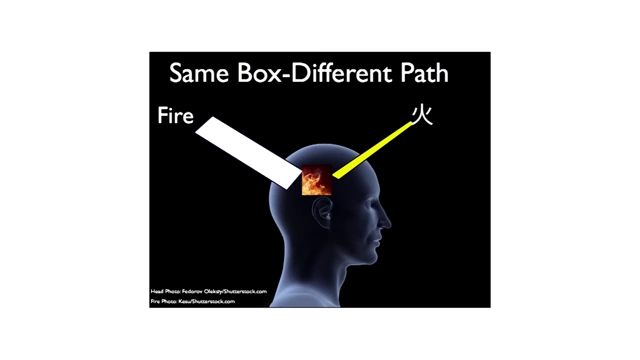
A diagram showing a direct connection between the concept of "Fire" and its image in the brain, bypassing translation [ 00:17:27 ]
- Instead of translating words from your mother tongue to the target language, directly connect new sounds to images, feelings, and internal representations in your mind.
Conclusion [1:57:57]
By consistently applying these five principles and seven actions, anyone can become fluent in a second language within six months. [1:08:00]