The Potluck of Relationships: Understanding Transactional Dynamics, Energy, and Authentic Intentions
Summary:
This video uses a potluck analogy to explain the nature of transactional relationships and energy exchange.
- All relationships involve an energy exchange, making them transactional, but the nature of this transaction matters.
- The speaker differentiates between win-win (ideal, mutual growth), win-lose, lose-win, and lose-lose dynamics, advocating for win-win scenarios.
- In the potluck analogy, your "meal" represents your contribution, cooked with either intention/authenticity or unintentionality/people-pleasing.
- When you contribute authentically and with abundance, you attract reciprocal relationships and take rejections less personally.
- Conversely, inauthentic contributions or a consumption mindset (focusing only on what you get) lead to resentment and unfulfilling connections.
- The video emphasizes setting boundaries, being intentional in your interactions, and understanding that rejection can be redirection, allowing you to move towards more compatible relationships.
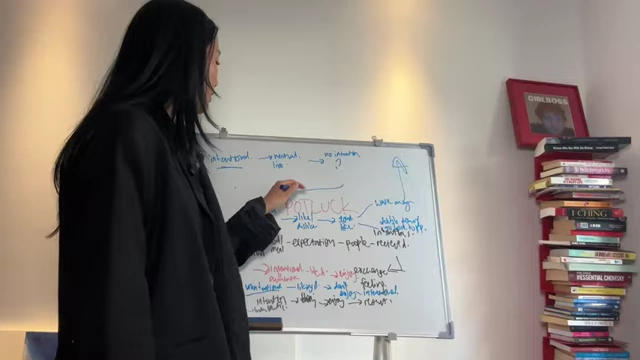
The speaker uses a whiteboard to illustrate the dynamics of relationships with a potluck analogy. [ 00:00:00 ]
Introduction to Relationship Dynamics [0:01:04]
The video introduces the concept of relationships as transactional, using a potluck analogy.
- Transactional Nature of Relationships [0:01:25]
- All relationships involve an energy exchange, making them transactional.
- It's the nature of the transaction that requires awareness and mindfulness.
- Dismisses the critique of being "superficial," asserting that one can be both intellectually deep and well-presented.
- Four Types of Transactional Outcomes [0:02:20]
- Win-Win: The ideal situation, representing genuine love where two individuals create a third reality, extending themselves for mutual spiritual growth and shared interests.
- Win-Lose: One party benefits at the other's expense.
- Lose-Win: One party loses for the other's benefit.
- Lose-Lose: Both parties are depleted and unsatisfied.
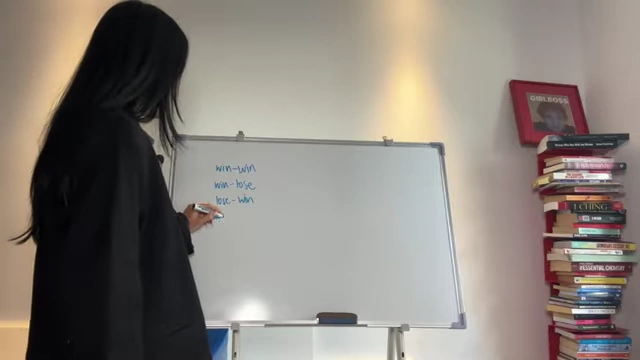
The whiteboard lists the four types of transactional outcomes: win-win, win-lose, lose-win, and lose-lose. [ 00:02:40 ] - Modern society's emphasis on a "winner and a loser" in transactions often stems from historical power dynamics and a fear of being exploited.
- Creating a win-win situation requires effort, stretching one's perspective to consider both individual and collective needs.
- An example of an unequal transaction: paying for a meal but not receiving it (lose-win for the customer).
The Potluck Analogy for Social Interactions [0:05:01]
Life is likened to a potluck, where interactions involve several factors.
- Key Factors in the Potluck Analogy [0:05:05]
- Intention: The purpose behind your contribution (the "meal").
- Food/Meal: What you actually bring to the table.
- Expectation: How you anticipate your contribution will be received.
- People: The individuals you interact with.
- Reception: How your contribution is genuinely received.
- Feeling: Your emotional response to the exchange.
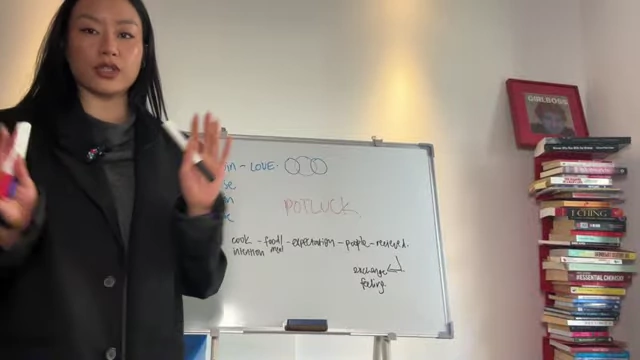
A whiteboard outlines the different factors involved in the potluck analogy, including intention, food, expectation, people, and feelings. [ 00:05:39 ]
Scenario 1: The Ideal Win-Win Contribution [0:05:47]
This scenario represents a healthy, fulfilling interaction.
- Your Approach: You cook from a place of abundance and authentic intention, expressing who you are.
- Your Expectation: You hope people enjoy it, but you are not overly attached to their approval; indifference is acceptable.
- Others' Response: People enjoy your contribution because they are also intentional with their own.
- Outcome: A win-win situation where everyone has a great time, fostering mutual enjoyment and connection.
Scenario 2: Unintentional Contribution and Entitlement [0:06:55]
This scenario illustrates the negative impact of inauthenticity and entitlement.
- Your Approach: You contribute without true intention, simply "throwing something together."
- Your Expectation: You feel entitled to people liking your contribution.
- Others' Response: People don't enjoy your offering, perceiving the lack of intention, especially if they have been intentional themselves.
- Outcome: You feel "iced out" or left out, experiencing a sense of being slighted due to your own inauthentic contribution.
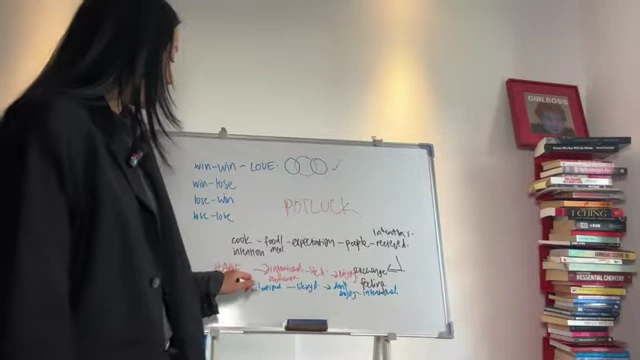
The whiteboard illustrates a scenario where one's unintentional contribution leads to feeling excluded or "iced out" because others were intentional. [ 00:07:29 ]
Scenario 3: People-Pleasing and Inauthenticity [0:07:49]
This scenario highlights the dangers of sacrificing authenticity for validation.
- Your Approach: You create something with intention, but it's inauthentic, tailored to what you think others want, not what's true to you.
- Your Expectation: You still feel entitled to people liking it.
- Others' Response: People enjoy what you've presented.
- Outcome: Despite the positive reception, you feel unseen and obligated to continue people-pleasing, leading to resentment. This reveals a "lose-win" dynamic for you, as your true self is not appreciated. You must work to unmask this behavior and embrace authenticity.
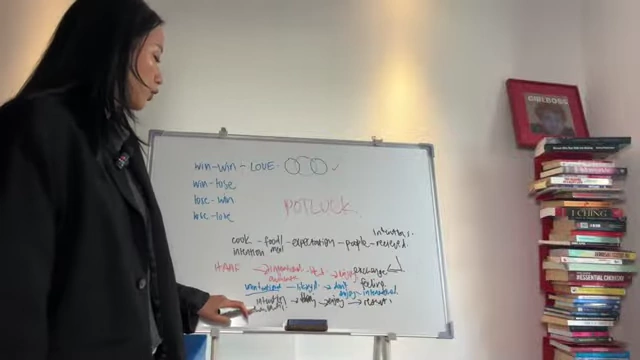
A whiteboard details a scenario where one creates with "intentional but inauthentic" effort, leading to feeling obligated to maintain a people-pleasing persona. [ 00:09:08 ]
Scenario 4: Authenticity Meets Misalignment [0:09:28]
This scenario explores the challenges of becoming authentic within existing relationships.
- Your Approach: You commit to being intentional and authentic, becoming less concerned with others' approval.
- Your Expectation: Neutrality, but a hopeful desire for enjoyment.
- Others' Response: People who were accustomed to your previous, inauthentic self may react negatively, creating tension.
- Crossroads: You face a choice:
- Walk away: Seek new relationships and environments where your authentic self is appreciated.
- Double down: Try to force acceptance (unhealthy) or revert to people-pleasing (detrimental to your growth).
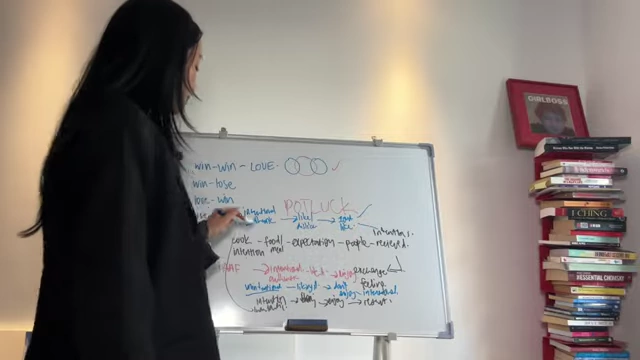
The whiteboard illustrates a decision point: either "walk away" from relationships that don't appreciate your authentic self or "double down" on trying to force acceptance. [ 00:10:08 ]
Scenario 5: Intentionality Meets One-Sided Lack of Effort [0:10:32]
This scenario emphasizes the importance of reciprocal energy.
- Your Approach: You are intentional and authentic, maintaining neutral expectations.
- Others' Response: The other people are unintentional, critical, and "a mess," nitpicking your genuine contributions.
- Outcome: You realize their "food is nasty" and choose to leave, seeking relationships where your efforts are valued and reciprocated. This underscores the necessity of moving away from depleting interactions.
The Evolving Nature of Relationships and Personal Growth [0:13:05]
- Constant Change and Response Control [0:13:05]
- Relationships and individuals are always changing, and you control your response to these shifts, not the direction of the changes themselves.
- If intentional people's life paths diverge, it's acceptable to acknowledge the change, appreciate the past relationship, and redirect energy.
- Authenticity and Personal Resilience [0:14:20]
- Living intentionally means taking rejections less personally because you haven't overextended or minimized yourself.
- You appreciate the relationship for what it was and move on.
- Authenticity helps you attract suitable and compatible relationships.
- Fear of rejection is reframed as redirection, providing valuable information about compatibility.
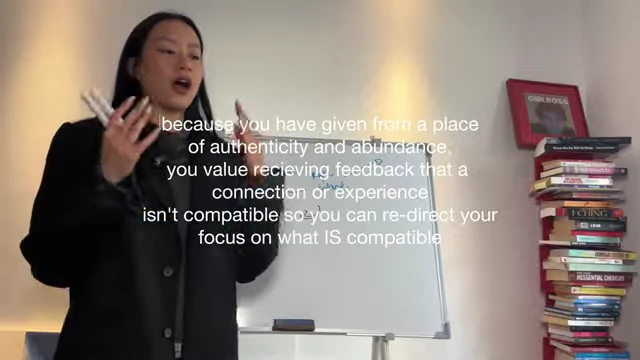
Text overlays the speaker, explaining that giving from authenticity and abundance allows one to value feedback, even if it signifies incompatibility, to redirect focus. [ 00:14:47 ] - If you are authentic, you will inevitably encounter people who don't like you, but you may as well be true to yourself and enjoy the process.
- Creating from a place of people-pleasing leads to resentment if efforts are not appreciated.
- It's an ongoing process of strengthening the ability to say "no" to requests that compromise your true self.
- Being okay with being "the bad guy" in someone else's story is a part of this growth.
Contribution vs. Consumption Mindset in Interactions [0:20:01]
- Focus on Contribution [0:20:01]
- When going out, focus on what you can contribute to the vibe for a good time, rather than solely what others can do for you.
- If in a depleted state, it's better to not go out, preventing negative energy.
- Individualism and hyper-capitalist consumption culture often lead people to ask "what can I consume?" from a relationship or experience, instead of "what can I contribute?"
- Recognizing Equitable Exchange [0:21:17]
- An example illustrates the difference: women expressing gratitude and offering to pay for a meet-up, demonstrating awareness of exchange, versus men demanding to be taken out without offering anything.
- Focusing on your contribution clarifies what you offer, making it easier to set boundaries.
- When you contribute from a place of abundance, you give generously. If that energy isn't matched, you redirect your energy elsewhere, as your baseline happiness is self-generated.
Text over the speaker encourages viewers to engage in relationships in a way that feels "hot & fun" for them. [ 00:17:06 ]