Digital Despair: How Algorithms Distort Reality, Fuel Polarization, and Misrepresent Geopolitical Narratives
Summary:
This video explains how digital algorithms amplify anger and hyperbole, creating widespread pessimism and a distorted perception of reality. Key points include:
- In the UK, extreme public dissatisfaction (71% negative outlook) exists despite positive global investment rankings, driven by "rage bait" and "slop" that simplify complex issues [0:24] [6:30].
- Machine learning research from Indonesia reveals a strong link between political polarization and online toxicity, intensified by identity factors [13:23] [17:00].
- Singapore's Protection from Online Falsehoods and Manipulation Act (POFMA) provides legal tools to combat verifiable misinformation [23:18], while ASEAN adopts flexible, "soft but ethical" AI governance [28:38].
- The "debt trap" narrative regarding China's Belt and Road Initiative is debunked with evidence showing projects are primarily driven by local economic needs and political maneuvering [31:14] [33:57], not a top-down Chinese strategy.
- Solutions involve adopting "cautious understatement," [12:52] fostering algorithmic awareness [22:04], and demanding transparency and accountability from governments and platforms [40:41].

People immersed in their phones, highlighting the pervasive nature of digital content [ 00:01:00 ]
1. The Pervasive Culture of Digital Pessimism [0:00]
- 1.1. The Disconnect Between Perception and Reality [0:00]
- A personal anecdote illustrates an individual's intense engagement with "rage bait" online, leading to a belief in impending societal collapse despite calm real-world surroundings [0:00].
- This reflects "CAPS LOCK Britain," where nuance is seen as weakness and hyperbole dominates discourse [0:08].

An angry woman consumed by her phone, illustrating the concept of "rage bait" [ 00:01:10 ] - UK Prime Minister approval ratings plummeted to a net -66, a depth of unpopularity unseen since the 1970s [0:17].
- 71% of Britons believe the country is heading in the wrong direction, the highest pessimism recorded since 2020 [0:24].

A large screen displaying "71%" to an audience, representing widespread public pessimism [ 00:01:30 ] - Paradoxically, the rest of the world ranks "Brand Britain" as one of the most stable, attractive, and influential nations on Earth, placing it second most attractive for investment globally and fifth in soft power and culture [0:31].
- This discrepancy highlights a crisis of perception more than a crisis of reality [0:50].
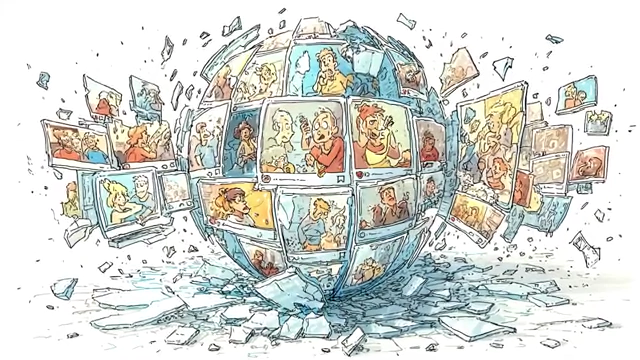
A globe shattered by cracks and surrounded by digital screens, symbolizing a global crisis of perception [ 00:08:20 ]
- 1.2. The Language of Digital Despair [3:16]
- Oxford University Press's 2025 word of the year, "rage bait," defines online content deliberately crafted to be frustrating, offensive, or provocative to generate anger, clicks, and shares [4:31].
- Anger is not an incidental byproduct of the digital age but a core, highly profitable product being traded and maximized by algorithms [5:01].
- 1.3. Strategic Use of Reductive Language [5:49]
- Political strategists like Steve Bannon advocate "flooding the zone" with content to overwhelm, distract, and disorient the media and voters, making complexity impossible [5:56].
- The resulting dizzying rate of disposable, low-quality content, termed "slop," is churned out by AI models and clickbait farms specifically to overwhelm reasoned thought [6:30].
- 1.4. The Public Opinion Paradox in the UK [6:44]
- Constant negative headlines lead to a belief that everything is collapsing, irrespective of objective data or personal experience [6:51].
- Case Study: Housing Policy Debate [10:25]
- Online discourse constantly frames the issue as extreme "builders versus blockers" (YIMBY vs. NIMBY) [10:28].
- 72% of those opposing new homes (NIMBYs) wrongly believe they are the majority, showing how a small, loud online group can skew perceived reality because they are consistently rewarded by algorithms [11:06].
- Case Study: Immigration Debate [11:32]
- Public perception (56% believing net migration increased in 2024) contradicted actual government data (numbers halved), demonstrating the failure of facts to penetrate existing negative narratives [12:17].
- 1.5. The Way Out: Cautious Understatement [12:31]
- The solution is a deliberate, conscious choice to adopt "cautious understatement" over hyperbolic overstatement, actively resisting the algorithmic pressure to maximize everything [12:52].
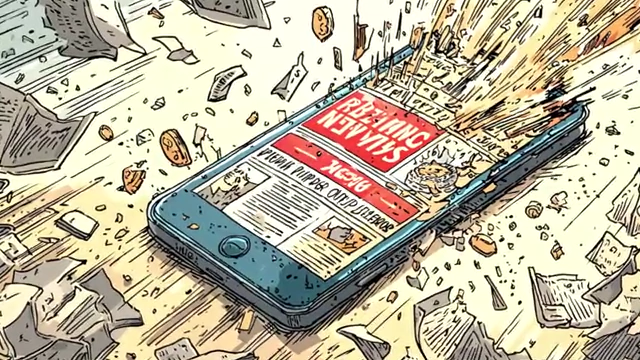
A smartphone shattering with news articles flying out, symbolizing the destructive impact of digital hyperbole [ 00:13:00 ]
- The solution is a deliberate, conscious choice to adopt "cautious understatement" over hyperbolic overstatement, actively resisting the algorithmic pressure to maximize everything [12:52].
2. Understanding Online Toxicity and Polarization [13:14]
- 2.1. The Indonesian Research on Digital Discourse [13:23]
- Fascinating research on online discourse in Indonesia, the world's third-largest democracy, provides a clear view of how platform architecture amplifies polarization, especially when intersecting with sensitive identity issues [13:23].

Two groups facing each other across a chasm, symbolizing deep political polarization [ 00:14:29 ]
- Fascinating research on online discourse in Indonesia, the world's third-largest democracy, provides a clear view of how platform architecture amplifies polarization, especially when intersecting with sensitive identity issues [13:23].
- 2.2. Defining Political Polarization and Toxicity [14:15]
- Political Polarization: Defined as the divisive opinions held by two or more politically oriented groups on substantive issues (the "what they believe") [14:24].
- Toxicity: Refers to the harsh, aggressive, or impolite language intended to cause emotional distress, disgust, or anger (the "how") [14:39].
- 2.3. The Destructive Feedback Loop [15:05]
- Polarization fuels toxic language, and that toxic language then reinforces polarization, with social media platforms acting as accelerants due to anonymity and unchallenged expression of extreme views [15:15].

A machine-like structure creating a destructive feedback loop, symbolizing how polarization and toxicity amplify each other [ 00:15:09 ]
- Polarization fuels toxic language, and that toxic language then reinforces polarization, with social media platforms acting as accelerants due to anonymity and unchallenged expression of extreme views [15:15].
- 2.4. Quantifying the Relationship [15:53]
- Machine learning experiments on a massive dataset of over 28,000 Indonesian texts confirmed a significant, measurable correlation [15:56].
- A logistic regression model predicting toxicity using only the polarization label still yielded an AU ROC score over 68, indicating strong co-occurrence [16:19].
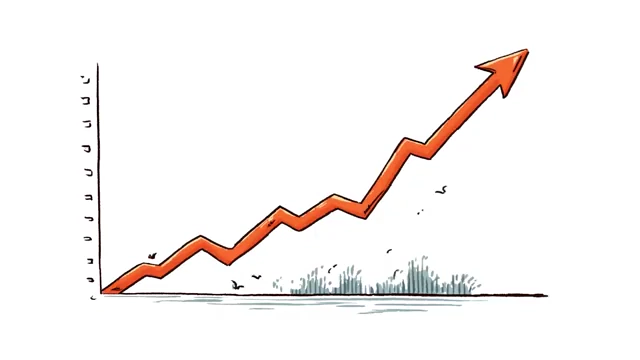
A graph with an upward-pointing arrow, representing a strong positive correlation between two factors [ 00:16:19 ] - Researchers found polarization was harder to detect than straight-up toxicity, as identifying harshness and insults is relatively easy for human moderators, but determining intent to promote conflict is highly reliant on cultural context [18:50].
3. Governmental Responses to Digital Hyperbole [19:47]
- 3.1. Individual Digital Literacy: The Case of Uncle Tan [19:47]
- After a digital literacy workshop, when faced with panic-triggering viral content, a retired teacher named Uncle Tan paused, checked the source, recognized the emotional hook, and consciously chose to disengage by closing the application instead of sharing [22:36].

A hand pressing a button on a smartphone, symbolizing a conscious decision to disengage from rage bait [ 00:22:49 ]
- After a digital literacy workshop, when faced with panic-triggering viral content, a retired teacher named Uncle Tan paused, checked the source, recognized the emotional hook, and consciously chose to disengage by closing the application instead of sharing [22:36].
- 3.2. Singapore's Legal Framework: POFMA [23:18]
- Singapore's Protection from Online Falsehoods and Manipulation Act (POFMA), introduced in 2019 to tackle the rapid spread of falsehoods [23:18], is laser-focused on verifiably untrue statements that could cause public harm, intentionally constrained to target only false statements of fact [24:22].

A red shield protecting a world map from threats, symbolizing Singapore's POFMA law [ 00:23:29 ] - The Court of Appeal affirmed POFMA's constitutionality and established a five-step legal framework for judges to ensure government orders meet strict criteria (statement of fact, genuinely false, necessary in public interest) [26:53].

A gavel resting on a legal book, symbolizing judicial oversight and the constitutional framework [ 00:27:19 ]
- Singapore's Protection from Online Falsehoods and Manipulation Act (POFMA), introduced in 2019 to tackle the rapid spread of falsehoods [23:18], is laser-focused on verifiably untrue statements that could cause public harm, intentionally constrained to target only false statements of fact [24:22].
- 3.3. ASEAN's Approach to AI Governance [28:20]
- ASEAN adopted a "soft but ethical" model, anchored by its Digital Master Plan 2025, favoring flexibility and non-binding frameworks over rigid punitive legal mandates (like the EU's comprehensive AI Act) [28:38].
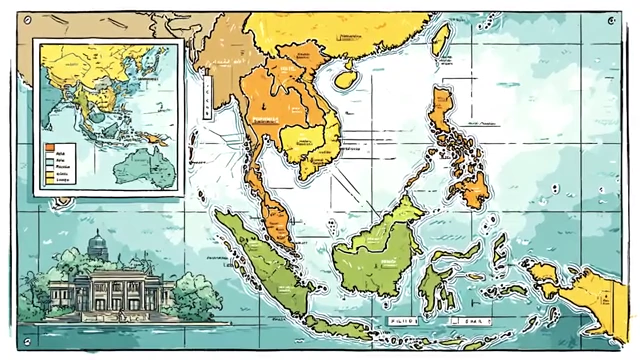
A map of Southeast Asia with countries colored differently, illustrating the region's diversity [ 00:29:18 ]
- ASEAN adopted a "soft but ethical" model, anchored by its Digital Master Plan 2025, favoring flexibility and non-binding frameworks over rigid punitive legal mandates (like the EU's comprehensive AI Act) [28:38].
4. Debunking the "Debt Trap" Narrative of China's Belt and Road Initiative (BRI) [31:14]
- 4.1. The Pervasive Narrative vs. Economic Evidence [31:14]
- 4.2. Challenges to the Debt Trap Theory [32:19]:
- The primary driver of most BRI projects is overwhelmingly genuine economic need for infrastructure, not a centrally coordinated grand geopolitical strategy from Beijing [32:20].
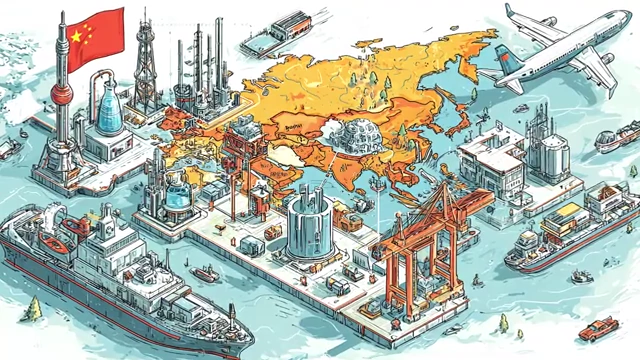
An infographic showing various Chinese industries and infrastructure across a map, illustrating the economic drivers of BRI [ 00:32:28 ] - The nature, scope, and direction of most BRI projects are determined primarily by the recipient governments themselves [32:54].
- The primary driver of most BRI projects is overwhelmingly genuine economic need for infrastructure, not a centrally coordinated grand geopolitical strategy from Beijing [32:20].
- 4.3. Case Study: Malaysia's East Coast Rail Link (ECRL) [33:10]
- Research confirms that controversial mega projects in Malaysia were driven primarily by intense domestic concerns and local political maneuvering, not a grand strategy from China [33:57].
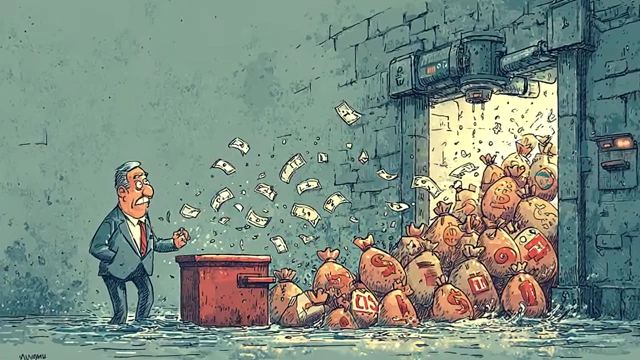
A man standing outside a building from which money is pouring into a box, symbolizing elite self-dealing [ 00:35:38 ]
- Research confirms that controversial mega projects in Malaysia were driven primarily by intense domestic concerns and local political maneuvering, not a grand strategy from China [33:57].
- 4.4. Case Study: Sri Lanka and Hambantota Port [35:57]
- When Sri Lanka faced its liquidity crisis, China did not forgive the debt nor seize the asset [39:05]. Instead, a Chinese state-owned enterprise (CM Ports) paid the Sri Lankan government $1.12 billion to lease the port for 99 years [39:10].
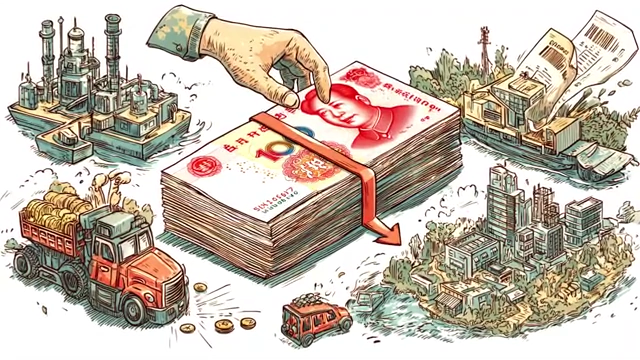
A hand placing money onto a stack, surrounded by images of infrastructure and industry, depicting a commercial transaction [ 00:39:18 ] - The research highlights pathologies on both sides: China's fragmented financing system where profit-seeking SOEs often prioritize commercial returns, but the greater pathology lies with recipient governments where local elites exploit massive infrastructure projects to cultivate political support and feed patronage networks [40:00].
- When Sri Lanka faced its liquidity crisis, China did not forgive the debt nor seize the asset [39:05]. Instead, a Chinese state-owned enterprise (CM Ports) paid the Sri Lankan government $1.12 billion to lease the port for 99 years [39:10].
- 4.5. Policy Recommendations [40:34]
- For Recipient Governments: The primary burden of reform falls on them to take greater responsibility for rigorous project viability assessments, financial sustainability, and transparent regulatory environments to bargain effectively with all foreign partners [40:41].
5. Conclusion: Choosing Constructive Engagement [41:52]
- The constant search for a crisis narrative often obscures a far more complex reality, defined by local agency, nuanced governance efforts, and economic progress that is "simply not viral" [42:13].
- These are quiet, professional movements attempting to apply constructive solutions to digital chaos, but they rely on an essential choice from the consumer of information: to prioritize facts, critical context, and cautious understatement over algorithmic sensation and collective despair [42:50].

A man at a desk with a computer, bombarded by digital information streaming from a wall-mounted eye-like device, symbolizing the challenge of information consumption [ 00:42:28 ]