The 4 YouTube Creator Types Explained: A Comprehensive Guide to Positioning Your Content for Growth
Summary:
- Every YouTube creator fits into one of four positions: Hero, Performer, Teacher, or Commentator, each influencing content strategy and audience engagement.
- The Hero is the main character, whose personal experiences are the focus, with packaging centered on first-person narratives.
- The Performer provides an immersive experience where the content itself is the star, and the creator can be "invisible" behind the story.
- The Teacher acts as a guide, helping the audience achieve a specific goal or learn a skill, with content focused on problem-solving.
- The Commentator filters existing content through their reactions or expertise, providing insights or opinions on external media.
- Most creators embody a primary and a secondary position, and understanding this blend is vital for consistent audience attraction and meeting viewer expectations.

An overview of the four YouTube creator positions: Hero, Performer, Teacher, and Commentator, with their core descriptions. [ 00:00:45 ]
Introduction to Creator Positions [0:00]
- YouTube creators fall into one of four distinct positions: Hero, Performer, Teacher, and Commentator.
The four YouTube creator positions: Hero, Performer, Teacher, and Commentator, with their core descriptions. [ 00:00:45 ] - The way a creator positions themselves and their content significantly impacts their success, determining consistent views and effective audience building.
- Each position is characterized by "What it is," "Positioning," "Packaging," and "Delivery," alongside common pitfalls and advantages.

A checklist outlining the key aspects for analyzing each channel position: What it is, Position, Packaging, and Delivery. [ 00:00:55 ]
Hero Position [0:00]
- What it is: The creator functions as the main character, undergoing experiences and inviting the audience to join their journey.
- Positioning: The audience observes the creator directly within the video, vicariously experiencing events through them.

Visualizing the Hero position, where the creator (pawn) is in the video, and the audience observes their experience. [ 00:01:36 ] - Example: Ariel Bisset's channel, which chronicles her ongoing renovation of an 1850s farmhouse, with each video detailing her personal experiences and progress.

Ariel Bisset's YouTube channel page, an example of a Hero-first creator. [ 00:01:58 ] 
A grid of Ariel Bisset's videos, showcasing her personal journey renovating an 1850s farmhouse. [ 00:02:00 ] - Packaging: Utilizes first-person language, such as "I did something" or "I tried something," emphasizing the creator's personal involvement.
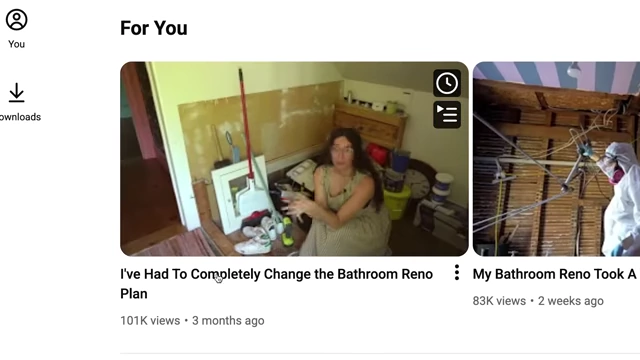
A video title from Ariel Bisset's channel, "I've Had To Completely Change The Bathroom Reno Plan," illustrating first-person packaging. [ 00:02:26 ] - Delivery: The creator acts as the narrator, leveraging their personality, authenticity, and connection to engage the audience.
- Mistakes and Challenges:
- Common Mistakes: Creators who are not inherently interesting or whose experiences lack broad appeal often struggle, especially when starting out.
- Initial Hurdles: Smaller channels may find it difficult to gain traction with a hero-first approach, as audiences may not yet care about the individual.
- Advantages: Once an audience connects with the creator, the specific topic of the video becomes less critical.
- Disadvantages: Building an initial audience can be challenging if the creator or their experiences aren't compelling enough to attract new viewers.

A visual contrast highlighting the advantages and disadvantages of the Hero creator position. [ 00:03:35 ] - Strategy to Combat Challenges: Consistently engaging in interesting activities to attract new viewers who will then subscribe based on their appreciation for the creator.
Performer Position [4:12]
- What it is: The creator's individual presence can be almost secondary; the audience becomes engrossed in the story or the experience presented, often forgetting the creator behind the content.
- Positioning: The creator is "underneath" the video, allowing the content itself to be the primary focus for the audience.

Visualizing the Performer position, where the content itself is the focus, and the creator is "underneath" it. [ 00:04:28 ] - Emphasis: Placed entirely on the audience's experience and immersion in the content.
- Examples: Channels featuring historical storytelling, challenges, or skits designed solely for entertainment. Matt Mitchell's channel, for instance, offers entertaining skits like "ranking every SEC fan base by how annoying they are."

Matt Mitchell's YouTube channel page, an example of a Performer creator. [ 00:05:36 ] - Packaging: Focuses on the inherent interest of the video's topic or concept, rather than the creator's reaction or the educational takeaway.

A video title from Matt Mitchell's channel, "Ranking Every SEC Fanbase by How Annoying They Are," exemplifying performer packaging. [ 00:05:54 ] 
Another video title from Matt Mitchell's channel, "The Waffle House 10 Commandments," showcasing entertaining content packaging. [ 00:06:14 ] - Delivery: Highly varied, prioritizing the creation of a desirable experience for the audience.
- Mistakes and Challenges:
- Core Issue: Video ideas or concepts must be consistently entertaining, funny, or engaging to prevent audience disinterest.
- Advantages: This position allows for a wide range of topics, and compelling concepts can spread rapidly, attracting large new audiences as the content is not heavily reliant on the creator's personality or specific information delivery.
- Disadvantages: Channel performance can be highly inconsistent if video ideas fluctuate in quality, leading to fluctuating viewership. Audience loyalty may be less consistent compared to other positions, as it's tied to the specific content rather than the creator.
Teacher Position [8:10]
- What it is: The creator serves as a guide, providing instruction and information to help the audience acquire a skill, accomplish a goal, or understand a concept.
- Positioning: The creator stands "next to" the content, presenting it as a tool or lesson for the audience to learn from.

Visualizing the Teacher position, where the creator stands "next to" the content, presenting it to the audience as a guide. [ 00:08:14 ] - Audience Motivation: Viewers are primarily motivated by a desire to achieve something specific, such as learning a skill or gaining an outcome. They value the topic matter first and the clarity of explanation second.
- Examples: "That Practical Mom" creating videos like "I quit social media and got my brain back" (aiming for healthier, more productive living) or "20+ meals I cook when grocery prices make me want to cry" (teaching budget-friendly cooking).
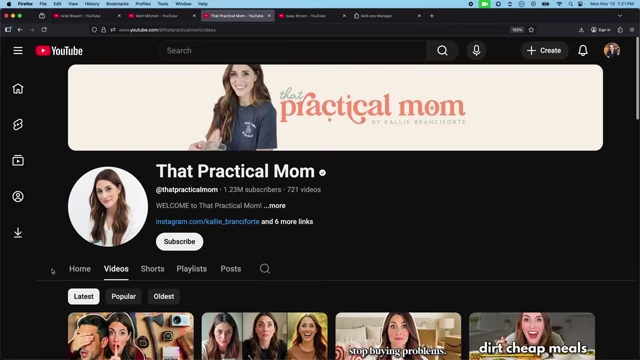
"That Practical Mom" YouTube channel page, an example of a Teacher creator. [ 00:09:26 ] - Packaging: Clearly promises a specific outcome or solution, indicating how the video will help the audience accomplish their goals.
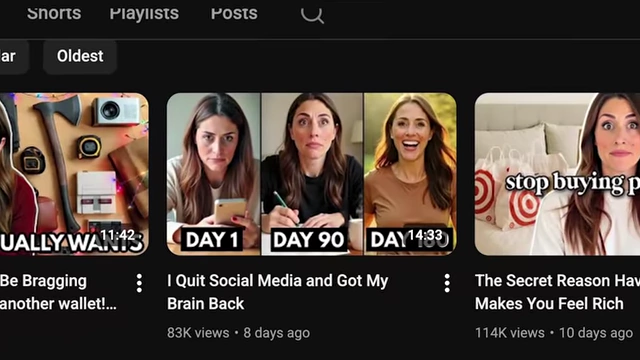
A video title from "That Practical Mom" channel, "I Quit Social Media And Got My Brain Back," demonstrating problem-solving packaging. [ 00:09:28 ] 
Another video title from "That Practical Mom," "20+ Meals I Cook When Grocery Prices Make Me Want to Cry," showing a focus on practical outcomes. [ 00:09:37 ] - Delivery: Aims to deliver the promised information in a digestible, practical, and as enjoyable a manner as possible, tailored to the topic's nature.
- Mistakes and Challenges:
- Advantages: Highly effective for attracting search-based traffic, particularly in niche areas with unmet information needs. Videos that answer specific questions are often "surfaced" by YouTube to new viewers.
- Disadvantages: Audience stickiness can be difficult to maintain, as viewers may leave once they have extracted the desired information or achieved their goal. This can lead to a less engaged, transient audience.
Commentator Position [12:10]
- What it is: The creator acts as a filter, providing commentary, reactions, or insights on already existing content, allowing the audience to experience it through their perspective.
- Positioning: The creator is situated "in between" the existing content and the audience, guiding the audience's interpretation or introducing them to new material.

Visualizing the Commentator position, where the creator acts as a "filter" between the content and the audience. [ 00:13:04 ] - Content Scope: This can include factual content (e.g., product reviews, news analysis) or fictional works (e.g., video games, movies, music reactions).
- Example: Isaac Brown's channel, which features him reacting to music, such as "Gen-Z Music Producer shocked listening to The Beatles," offering his perspective on established works.

Isaac Brown's YouTube channel page, an example of a Commentator creator. [ 00:13:50 ] - Packaging: Often uses direct reaction formats ("so-and-so reacts to...") or poses questions to review and evaluate products or media ("Is [product] good?").

A video title from Isaac Brown's channel, "Gen-Z Music Producer SHOCKED listening to With The Beatles," demonstrating reaction-based packaging. [ 00:13:53 ] 
Another video title from Isaac Brown's channel, "Gen-Z Music Producer ROCKD listening to Foreigner 4 for the first...", showing more reaction content. [ 00:14:30 ] - Delivery: Typically involves the creator showing their face, reacting to, and providing commentary on the subject matter, frequently seen in YouTube Shorts.
- Mistakes and Challenges:
- Content Engagement: The subject matter being commented on must be inherently interesting to the target audience.
- Creator's Role: The commentator must either be a "sub-entertainer" (enhancing the original content with their reactions/personality) or an "expert" (providing unique, valuable insights and conversation). Without these, the content will likely struggle to retain viewers.
Primary and Secondary Positions [15:49]

- The Blend of Roles: It is rare for a YouTube creator to embody only one position purely. Most channels operate with a primary position complemented by a secondary one.
- Importance of Understanding: Recognizing both your primary and secondary positions is crucial for consistently attracting the right audience and meeting their expectations. Inconsistent content performance often arises from a mismatch between a video's positioning and the audience's expectations.

A summary whiteboard showing the four creator positions with their key attributes before discussing primary/secondary roles. [ 00:17:41 ] - Example 1: Hero Primary & Performer Secondary [16:36]
- Description: Gaming channels where the creator is the central figure experiencing the game (Hero) while simultaneously delivering an entertaining experience to the audience through their gameplay and reactions (Performer).
- Channel Type: Gaming channels where the creator's face is shown, reflecting their journey through the game.
![A search query "playthru of [game]", indicating audience preference for performer content in gaming without specific creator focus.][188]

Willjum's YouTube channel page, an example of a Hero primary and Performer secondary gaming channel. [ 00:16:54 ]
- Example 2: Commentator Primary & Teacher Secondary [17:38]
- Description: A channel that primarily reacts to content (Commentator) but also frequently pauses to offer educational insights, explanations, or "how-to" guidance (Teacher).
- Channel Type: For instance, a dance channel reacting to performances and then breaking down the steps or techniques.