Marketing is presented as the most important and valuable skill, crucial for promoting businesses or oneself, and capable of changing one's life trajectory.
Definition of Marketing: It's the activity of promoting and selling products/services, but more importantly, it involves attracting, retaining clients, and delivering on promises to foster repeat business.
Balanced Approach: Many mistakenly believe success hinges solely on product or solely on marketing.
Product-only fallacy: Businesses focus years on perfecting a product without marketing, leading to no customers and an unscalable "job" worse than employment.
Marketing-only fallacy: Marketers push poor products aggressively, leading to quick negative word-of-mouth and requiring constant new launches.
The correct approach: The biggest businesses in the world have exceptional products that they market exceptionally well (e.g., Apple). Both aspects are critical for sustainable growth.
The Apple logo, representing an exceptional product
[
00:03:39
]
2. Sell Something the Market is Starving For [0:03:49]
Personal Anecdote: The speaker's early failure selling water filters in Australia highlighted the difficulty of creating demand where none existed. He was pushing a "convincing argument" rather than offering a "compelling offer" that solved a burning problem.
Minimal Viable Product (MVP) / Minimal Viable Offer (MVO): Launch with just enough quality to be sellable, primarily to test market appetite.
Text overlay for "MINIMAL VIABLE OFFER"
[
00:04:33
]
Market Selection: The most pivotal factor in marketing is choosing the right market.
Avoid unique ideas: Don't waste time seeking a completely unique idea; instead, look for competitive niches with lots of players, as this proves existing demand.
Irrelevance of branding elements without market fit: A great logo, team, or funnel is useless in the wrong market.
Golden Rule: Build a business that you yourself would want to be a customer of.
Direct Response Advertising: Marketing messages designed to elicit an immediate, measurable action (e.g., call, click, buy).
Brand Advertising: Aims to raise awareness, reinforce messages, or depict a lifestyle, with less immediate calls to action.
Evolution of Brands: Many top brands (e.g., Apple) started with direct response tactics (cold calling, direct selling) and "earned the right" to become a brand over time as they achieved success.
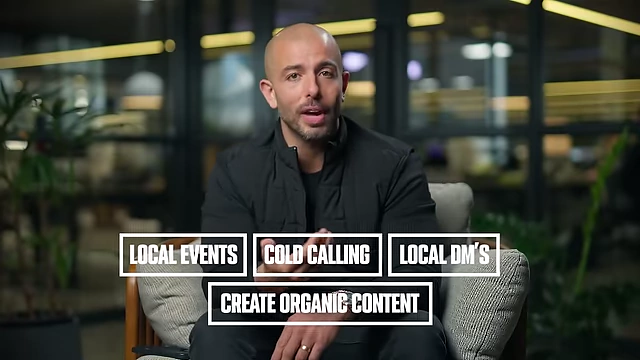
Starting Point for New Businesses: Without significant venture capital, direct response (local markets, cold calling, DMs, organic social content) is the best starting point.
Text overlay listing direct response tactics: Local Events, Cold Calling, Local DMs, Create Organic Content
[
00:08:24
]
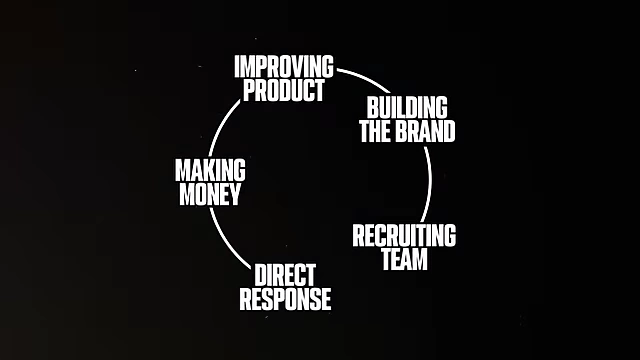
Diagram illustrating the cyclical relationship between direct response, making money, improving the product, building the brand, and recruiting a team
[
00:08:41
]
Brand Building Framework: Once established, focus on questions like: What is important to us? What do we stand for? What problems do we solve? Who is the customer? This informs brand-building efforts within direct response.
No Free Advertising: Both organic (time) and paid (money) marketing incur costs.
Speaker's Journey: Started with direct selling/cold calling, then direct response ads, and only after achieving over $10M in revenue did he invest in organic content like YouTube.
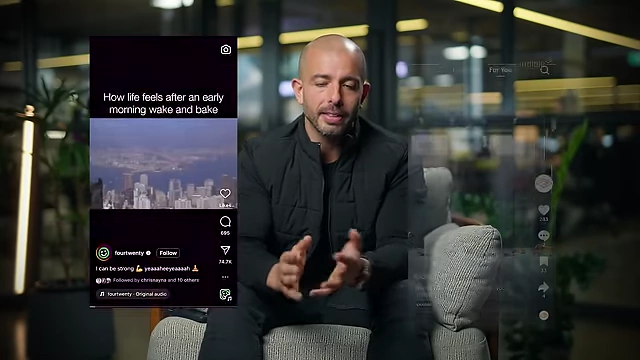
Organic as a Testbed: Organic content (e.g., Instagram Reels, TikTok) is excellent for testing hooks and messaging in the marketplace without large initial investment. Successful organic content can then be amplified with paid ads.
A smartphone screen displaying an Instagram Reel, illustrating organic content
[
00:10:44
]
Blended Customer Journey: The customer journey is no longer linear. Prospects discover brands through a mix of paid ads, organic searches, social media, email lists, and webinars before converting. One feeds the other.
Avoid Pure Organic Reliance: While organic has huge potential, relying purely on it can lead to frustration and business failure if no one sees your content. A combination of both is necessary.
Highly Leveraged Skill: Storytelling is presented as the most leveraged skill for building businesses, brands, and acquiring customers.
Becoming a Better Storyteller:
Good Writer = Good Thinker: Clear thinking leads to clear writing. Practice writing job ads, Facebook ads, landing page copy to crystallize thoughts.
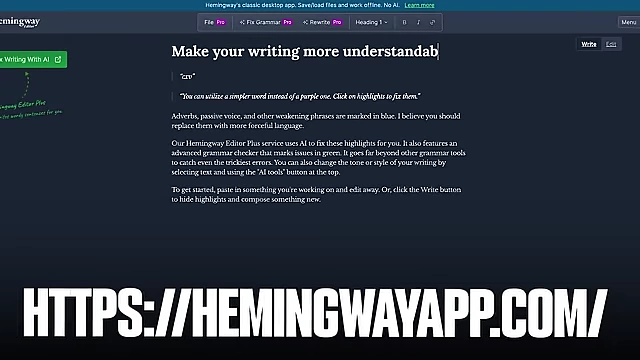
Clarity in Writing: Use tools like the Hemingway app to ensure simplicity. Successful communicators (New York Times bestsellers, top YouTubers, politicians) write and speak at a sixth-grade reading level or below to avoid alienating audiences with overly complex language.
Screenshot of the Hemingway App interface, showing how it simplifies writing for clarity
[
00:13:13
]
Communication Style: Continuously improve communication skills as they impact all business and personal relationships.
Hooks and Framing: A "hook" captures attention immediately. One good hook is more valuable than a thousand perfectly crafted words. Dedicate disproportionate time to crafting hooks.
Graphic of the word "HOOK" surrounded by eyes, symbolizing attention capture
[
00:14:34
]
Study Markets: Analyze viral content on platforms like TikTok, YouTube, and Instagram Reels to understand effective hooks.
"What You Say" > "How You Say It": Focus first on delivering the right message, then on refining the delivery.
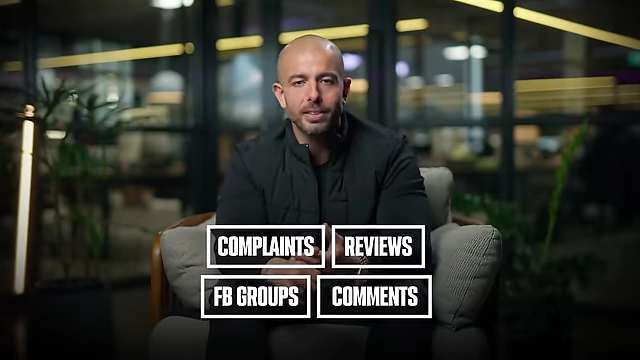
Market Research: Understand customer pain points by analyzing service complaints, reviews, Facebook groups, and YouTube comments. Craft messages that directly address these pain points, making them "strike like lightning."
Text overlay listing sources for market research: complaints, reviews, Facebook groups, and comments
[
00:15:46
]
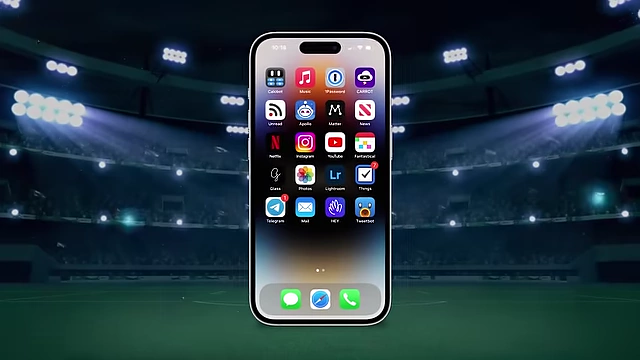
Attention as Currency: In the modern age, attention is the new currency. Businesses compete not just with direct competitors but with all other alternatives for a prospect's time and attention (Netflix, Instagram, YouTube).
Win the First Game: Marketing's primary goal is to win the "first game"—getting people's attention and getting them to consume your message.
Measure of Success: Is your marketing communication (ad, video, subject line) worthy of your customer's attention, and is it more engaging than infinitely more entertaining alternatives? If not, you're "pushing a boulder up a hill."
Increase Consumption: The best way to increase throughput in your funnel is to increase content consumption by having entertaining content, strong hooks, and good packaging.
A smartphone screen with various app icons, set in a stadium, symbolizing the arena where businesses compete for attention
[
00:16:39
]
Marketing Makes Sales Redundant: The ultimate goal of marketing is to build so much desire that prospects are already sold before being asked to buy. They should be actively seeking your solution.
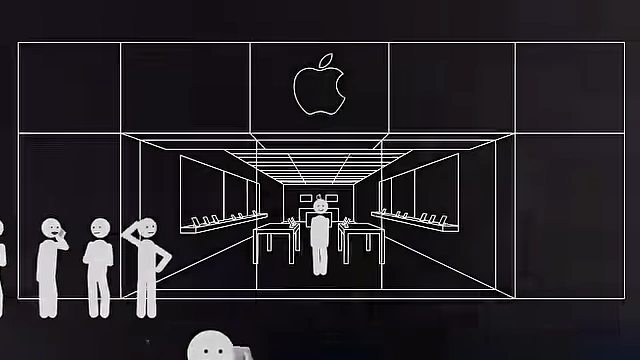
Apple Store Analogy: Apple Geniuses are "order takers" because Apple has built immense desire through exceptional products, solving problems elegantly, and charging a premium. People line up for their products.
A line of customers waiting outside an Apple Store, illustrating high demand and desire
[
00:19:03
]
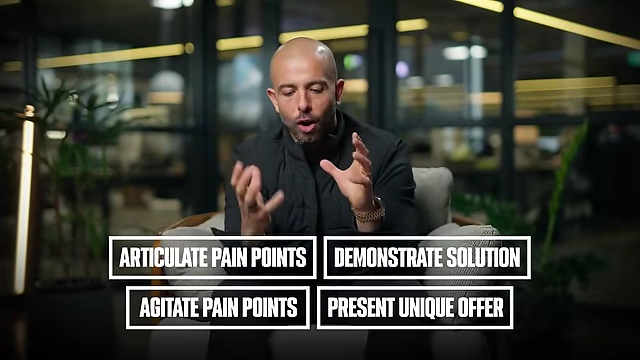
Marketer's Job: To articulate customer pain points, demonstrate how your product solves them, agitate those pain points, and present a truly unique and exciting offer.
A text overlay displays the four key actions of a marketer: "ARTICULATE PAIN POINTS," "DEMONSTRATE SOLUTION," "AGITATE PAIN POINTS," and "PRESENT UNIQUE OFFER."
[
00:19:29
]
Consequence of Insufficient Desire: If people aren't willingly buying, it's because you haven't built enough desire, or your marketing isn't effective enough.
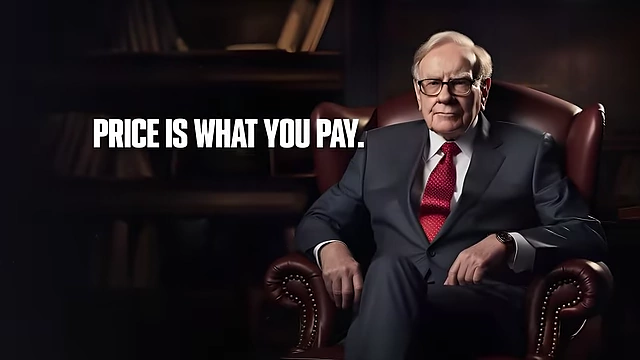
Value Exceeds Price: Quoting Warren Buffett, "Price is what you pay. Value is what you get." A transaction occurs when perceived value exceeds price.
Warren Buffett is shown with a quote overlay: "PRICE IS WHAT YOU PAY. VALUE IS WHAT YOU GET."
[
00:20:01
]
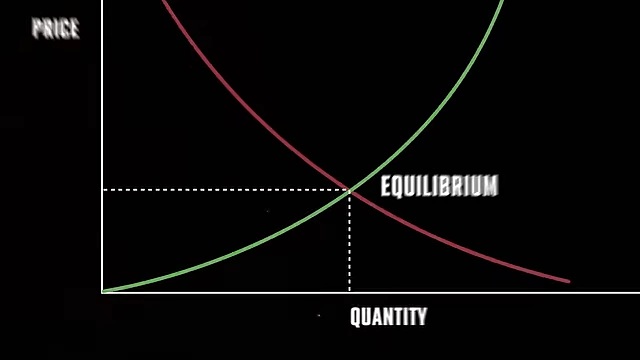
Demand and Supply: Aim for a situation with more demand than supply, then adjust pricing to meet demand at the highest possible premium.
Avoid Cost-Plus Pricing: Do not price by calculating delivery cost and adding a markup. This often ignores crucial overheads like ads, sales teams, and innovation.
Value-Based Pricing: Price based on the value your product provides to the customer by solving their problem. The more value it provides, the higher you can price.
A graph showing demand and supply curves intersecting at an equilibrium point, illustrating optimal pricing
[
00:20:37
]
Investment Cycle: More money generated allows for more investment in product/service, hiring, and innovation, leading to better solutions for more people.
The "Chef" Trap: Many entrepreneurs start a business because they love the craft ("cooking"), not because they want to build a business. They end up doing everything themselves (grating carrots, scrubbing potatoes, accounting), leading to being overworked and underpaid.
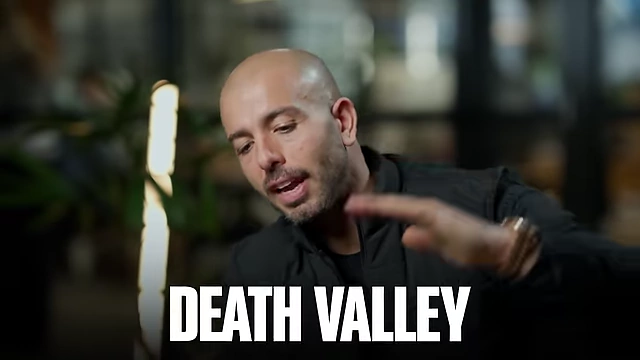
Death Valley: This stressful period where the business owner does all tasks, makes decent money but has no time, is called "Death Valley." It's a character-forming but unsustainable phase.
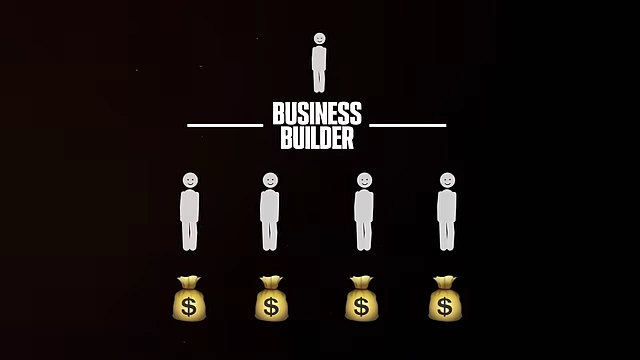
Transition to Business Builder: The skills that got you started won't get you to the next level. You must shift focus from being a practitioner to a business builder responsible for growth. This involves hiring, training, retaining, and leading people.
A simple diagram showing a stick figure labeled "BUSINESS BUILDER" at the top of a hierarchy with four other stick figures below, each with a bag of money
[
00:23:53
]
Focus on Revenue-Producing Activities: To escape Death Valley, concentrate on activities that generate cash (marketing, sales) to fund hiring and team development.
Leverage Your Time: Continuously evaluate the worth of your time (total profit / hours worked). Delegate tasks below your hourly rate to focus on highly leveraged, revenue-producing activities.
Small Swings First: In the beginning, success often comes from many small, non-business-threatening "swings."
Leverage Resources for Big Swings: As financial resources grow, take "big, violent, wild swings"—doing things no one else in your market is doing, things you've never done before. These yield disproportionate results.
Long-Term Perspective: Realize that bigger swings lead to greater impact and results over time. If you want what others don't have, do what others don't do.
Text overlay: "IF YOU WANT WHAT OTHERS DON'T HAVE"
[
00:25:45
]
11. Master One Channel (Demand Capture vs. Demand Generation) [0:26:11]
Demand Capture: Targeting people actively searching for your product/service (e.g., Google Ads for "bleeding neck" customers).
Easier Conversion: Requires less persuasion (crazy offers, hooks) as intent is high. Millions are made here.
Demand Generation: Creating demand among those not actively searching (e.g., Facebook/YouTube ads).
Greater Scale & Skill: Unlocks billions by reaching a wider audience. Requires high skill to pique interest and build desire among those initially uninterested.
Strategic Focus: Start by mastering one channel, typically demand capture first, before moving into demand generation for exponential growth.
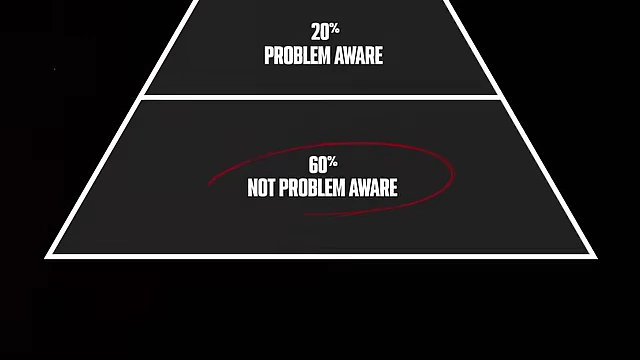
This formula describes the distribution of potential customers in any given market:
3% Looking to Buy (LTB): Actively searching for solutions (demand capture).
17% Information Gathering: Considering a purchase, seeking information.
20% Problem Aware: Know they have a problem but aren't actively seeking solutions.
60% Not Problem Aware: Unaware of their problem or your solution.
Marketer's Role in Demand Generation: The skill of a marketer is to engage the 60% (and 20% problem aware) through compelling hooks, stories, and desire-building to make them an offer. Mastering this unlocks geometric business growth.
A pyramid diagram illustrating the "LARGER MARKET FORMULA" with segments showing 3% (Looking to Buy), 17% (Information Gathering), and 20% (Problem Aware). The bottom 60% is circled and labeled "NOT PROBLEM AWARE."
[
00:28:38
]
Time Horizon = Payoff: Longer time horizons lead to bigger payoffs. Playing the "long game" has fewer competitors.
Avoid Impatience: Most people focus on quick wins (this month, this year), leaving long-term potential on the table.
Amazon Example: Amazon lost money for over a decade, investing heavily in logistics for a long-term vision, eventually reaping massive "big slow money."
A conveyor belt system in an Amazon warehouse, symbolizing long-term logistical investment
[
00:29:50
]
Strategic Progression: Initially, focus on "quick fast money" for immediate survival (oxygen for the business). As success and capital grow, you earn the right to play longer games and make investments with a 10-year outlook, which completely changes investment decisions.
A timeline from 0 to 10 years, emphasizing a long-term business perspective
[
00:30:39
]
14. Focus on Skills with a Long Half-Life [0:31:21]
Compoundable Skills: Prioritize acquiring skills that will continually compound throughout your career, regardless of changing tactics or platforms.
Short Half-Life Skills: Specific tactical skills (e.g., Facebook media buying strategies) have short shelf lives and will be outdated in a few years.
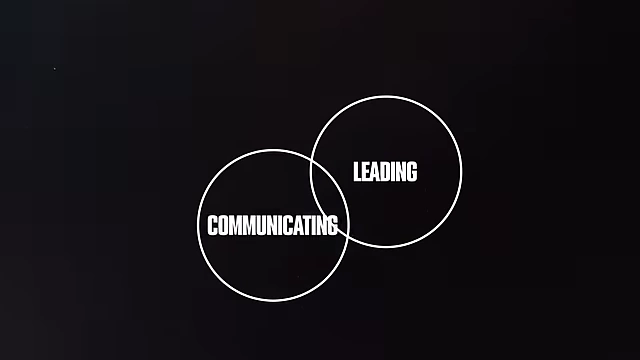
Long Half-Life Skills Examples: Leading people, communicating effectively, and clear writing. These are foundational and valuable across any business or role.
A Venn diagram illustrating two overlapping circles labeled "COMMUNICATING" and "LEADING," representing skills with a long half-life
[
00:32:18
]
The "Redundancy" Hack: Aim to make yourself redundant at every step of your journey by delegating tasks, freeing yourself to focus on high-leverage, long-term skills. This maximizes throughput and opportunity.
15. Spend 80% of Your Time Increasing Customer Lifetime Value [0:32:55]
Common Marketing Pitfall: Many marketers obsess over lowering customer acquisition cost (CAC) through split tests and media buying courses.
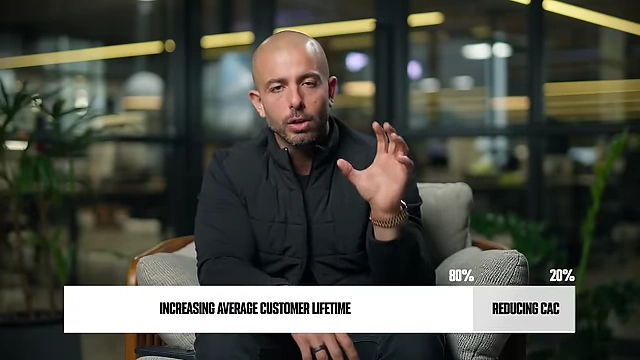
The 80/20 Rule:
80% on Increasing LTV: Focus the majority of your time on delivering a better product/service that encourages customers to buy more or more frequently, providing an incredible experience.
20% on Reducing CAC: Dedicate a smaller portion of time to optimizing customer acquisition costs.
A horizontal bar graph indicating an 80% focus on "INCREASING AVERAGE CUSTOMER LIFETIME" and a 20% focus on "REDUCING CAC."
[
00:34:28
]
Strategic Advantage: If your customer's lifetime value (LTV) is higher than competitors, you can afford to spend more to acquire customers, allowing you to dominate the market without worrying about shaving off small amounts from CAC.
16. Advanced People Always Do the Basics [0:34:31]
Fundamentals Over Shiny Objects: Many aspiring entrepreneurs chase advanced, "shiny" tactics from gurus, believing these are the secret to success.
Billionaire Perspective: Successful billionaires and experienced business leaders consistently emphasize the importance of fundamentals and frameworks, not specific "tactical juice."
Consistent Execution: Consistently executing the fundamentals exceptionally well will outperform those who rely on complex, advanced funnels or targeting strategies without a strong foundation. Avoid the heartache of chasing the latest hack.
Increasing Skepticism: Over 17 years, the level of market skepticism has steadily increased due to:
Lower Barriers to Entry: Organic platforms (TikTok, YouTube) make it easier for anyone to start a business.
Guru Model: Proliferation of courses from non-experts, leading to incompetence and bad customer experiences.
Antidote to Skepticism: Value:
Prove by Helping: The best way to overcome skepticism is to prove you can help people by actually helping them, offering value upfront. This lowers the "skepticism meter" from past negative experiences.
Goodwill: Providing value also generates goodwill, even from those who may never become paying customers.
A visual representation of an injection needle, where the fluid inside is labeled "VALUE" and is being injected into a virus symbol labeled "SKEPTICISM."
[
00:37:37
]
Unique Mechanism: Address skepticism by:
Critiquing Alternatives: Explain why other solutions (e.g., diets like Paleo, Keto) have failed, speaking to the customer's prior negative experiences.
Presenting Your Superior Solution: Introduce your unique product as the "unique mechanism" that solves the problem more effectively than failed alternatives, using comparison and contrast to highlight its superiority.
Impact on Conversions: Failing to address market skepticism will consistently lead to low conversion rates.
Compelling Offer > Convincing Argument: A compelling offer is far more powerful in any transaction.
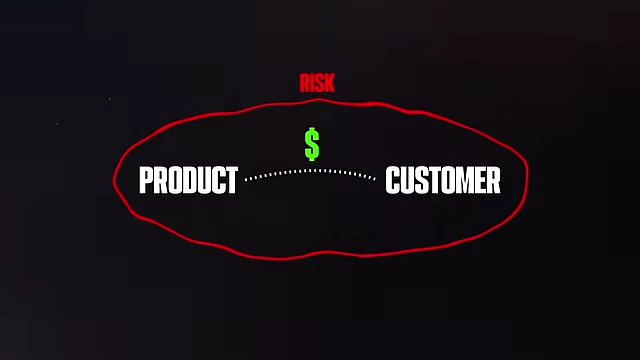
Burden the Risk: In most transactions, the business owner asks the prospect to bear all the risk. Instead, as a business owner, you should take on the majority of the risk.
How to obtain video link
Your summary will appear here after you click "Submit" above
How to obtain video link on mobile
Go to YouTube
Long press the video. A menu will appear
Click "Copy link" or ("Share" then "Copy link")
Come back to this page and click "Submit"
How to obtain video link on desktop
Go to YouTube
Right click the video and click "Copy Link Address"
Come back to this page and click "Submit"
quot;) representing money flowing from "PRODUCT" to "CUSTOMER," with a red oval outlining the entire system, emphasizing the financial transaction" loading="lazy">
A diagram showing a dollar sign ("
How to obtain video link
Your summary will appear here after you click "Submit" above
How to obtain video link on mobile
Go to YouTube
Long press the video. A menu will appear
Click "Copy link" or ("Share" then "Copy link")
Come back to this page and click "Submit"
How to obtain video link on desktop
Go to YouTube
Right click the video and click "Copy Link Address"
Come back to this page and click "Submit"
quot;) representing money flowing from "PRODUCT" to "CUSTOMER," with a red oval outlining the entire system, emphasizing the financial transaction
[
00:39:47
]
Clearly Defined Benefit: The more clearly defined the end benefit of your offer, the more compelling it becomes.
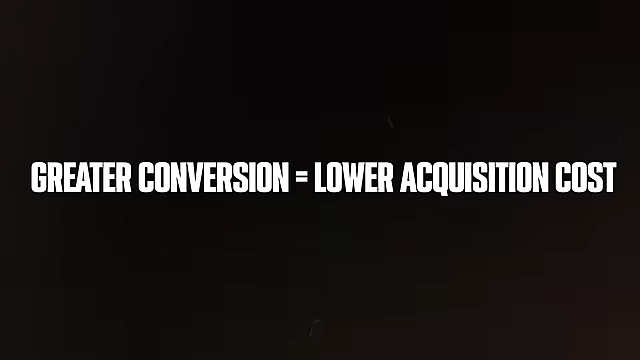
Addressing the Refund Objection: While taking on risk might lead to refunds, a compelling offer significantly increases conversion rates, which lowers customer acquisition costs, ultimately offsetting potential refund losses.
Text overlay indicating that "GREATER CONVERSION = LOWER ACQUISITION COST"
[
00:40:55
]
Litmus Test: If the offer doesn't keep the founder awake at night, it's not strong enough.
Long-Lost Art Form: Showmanship is a crucial, often overlooked, aspect of business. People remember how you made them feel, not just what you said or wrote.
Beyond Promotion: Showmanship extends to both promotional activities (getting attention) and customer service (delighting and surprising customers).
Ritz-Carlton Example: The Ritz-Carlton empowers every team member with a $2,000 allowance per incident to resolve customer complaints without approval, ensuring an incredible and memorable experience. They turn problems into opportunities to surprise and delight.
The exterior of The Ritz-Carlton in Atlanta, symbolizing a high standard of service and luxury
[
00:42:11
]
Remarkable Experience: Aim to create an experience so remarkable that customers want to talk about it (leave a "remark"), generating positive word-of-mouth.
Business Benefits: Injecting showmanship into both marketing and service leads to increased customer loyalty and more customers.
AI Automation: AI will automate many manual marketing tasks, such as data interpretation, media buying (Facebook/Google ads), scriptwriting, and headline generation.
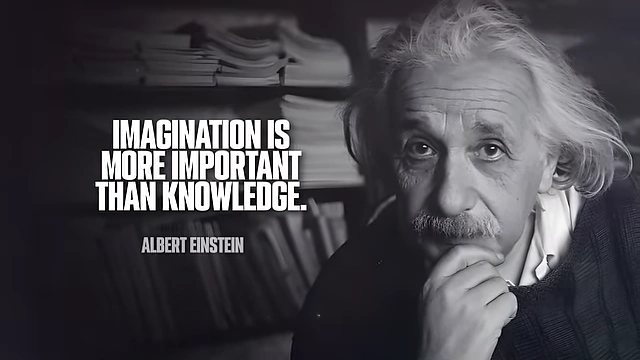
The Differentiator: Ideas and Imagination: When everyone has access to the same AI tools, the competitive edge will come from human creativity, imagination, and the ability to generate big ideas (as famously quoted by Albert Einstein: "Imagination is more important than knowledge").
Cultivating Creativity:
Solitude: Solitude "stokes the flame of creativity."
Reduce Consumption: The more you consume, the less you create. Prioritize creation over constant consumption.
Quiet Reflection: Allow for time, space, and quiet (e.g., walks without a phone) for imagination to flourish and big concepts to emerge.
AI as a Tool: AI will serve as a logistical assistant to execute and amplify human-generated big ideas.
A quote from Albert Einstein: "IMAGINATION IS MORE IMPORTANT THAN KNOWLEDGE."
[
00:45:27
]