The Ultimate Guide to Soy Sauce: History, Production, Flavor Profiles, and Blind Taste Tests
This video provides a comprehensive deep dive into soy sauce, covering its history, diverse production methods, and intricate flavor profiles, along with practical taste tests to guide home cooks.

Introduction to Soy Sauce [0:00]
This video offers an in-depth exploration of soy sauce, one of the most widely used fermented liquids globally. The aim is to answer common questions regarding its production, flavor, regional variations, and how to select the "best" soy sauce for home cooking.
History of Soy Sauce [2:01]
The history of soy sauce is deeply intertwined with the significance of soybeans in East Asia.
- The Importance of Soybeans:
- Soybeans were a crucial nutrient-rich crop in East Asia, similar to maize in Mesoamerica or chickpeas in the Middle East.
- They contain twice the protein of other legumes like pinto beans or chickpeas.

A table comparing the protein content of various legumes, highlighting soybeans. [ 00:02:32 ] - Soybeans can yield 20 times more protein per hectare than grazing cattle or growing fodder.
- They are one of the few plant-based foods containing all nine essential amino acids.
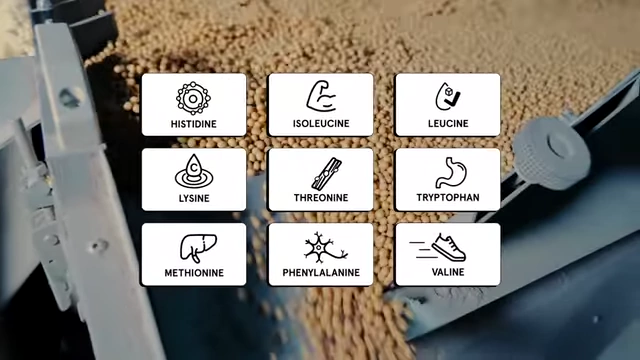
An infographic illustrating the nine essential amino acids. [ 00:02:48 ]
- Problems with Raw Soybeans:
- Develop unappealing flavors when cooked.
- Almost impossible to cook to a soft, creamy texture due to low starch content.
- High fiber content can make them hard to digest, leading to gas.
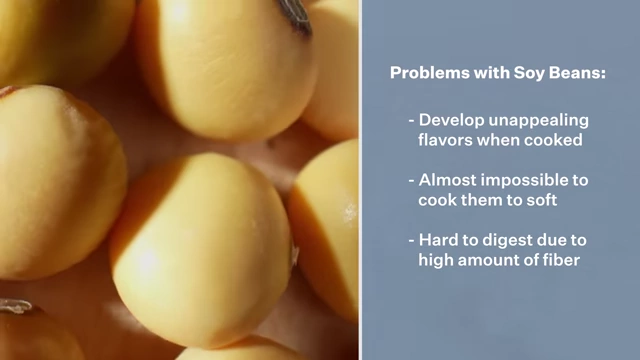
A list outlining the problems associated with cooking and eating raw soybeans. [ 00:03:17 ]
- Ancient Solutions to Soybean Problems:
- Eating them before they mature: Edamame are immature soybeans, which are sweeter, more palatable, and easier to digest.
- Extracting protein by crushing into milk and curds: This led to products like soy milk and tofu.
- Fermentation: This method transforms soybeans into more digestible and flavorful products.
- Fermentation produced bean pastes and bean curd condiments (jiangs in China, miso paste in Japan).
- The liquid byproduct pooling on top of these fermented pastes, particularly miso, became known as tamari, leading to the discovery of soy sauce.
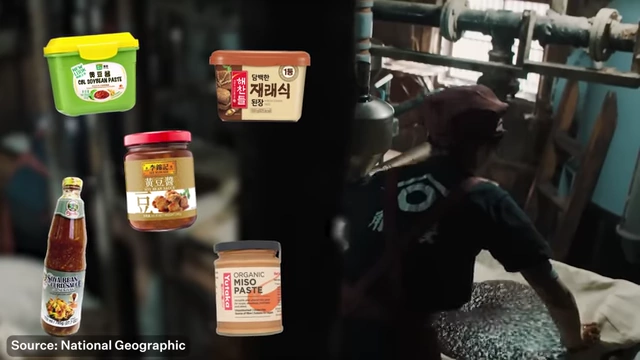
Various fermented soybean products like miso paste and bean curd condiments. [ 00:04:40 ]
- Evolution and Diversification of Soy Sauce:
- The industrialization of fermented soybean paste and soy sauces occurred over a thousand years across various Asian countries and cultures.
- Chinese monks brought jangs (fermented bean paste) to Japan in the 6th century, which evolved into miso, and its liquid byproduct became tamari.
- Key variables contributing to diverse variations:
- Soybean to wheat ratio: Tamari is typically 100% crushed soybeans, making it gluten-free. Japanese shoyu is often 50% wheat and 50% soybeans. Chinese soy sauces use some wheat but less than Japanese shoyu.
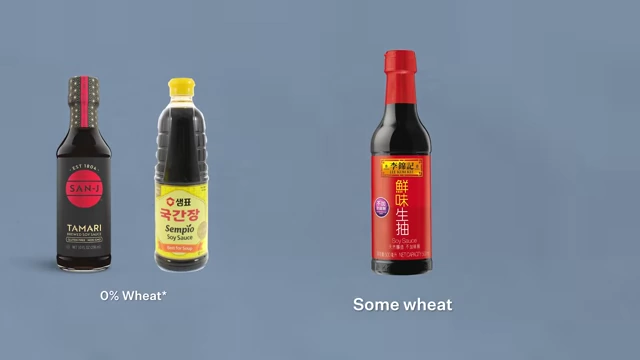
A comparison of wheat content in different types of soy sauce from various countries. [ 00:10:28 ] - Salinity of the brine.
- Length of fermentation: Ranging from 6 months to 3+ years.
- Added ingredients: Such as sugar or aromatics.
- Soybean to wheat ratio: Tamari is typically 100% crushed soybeans, making it gluten-free. Japanese shoyu is often 50% wheat and 50% soybeans. Chinese soy sauces use some wheat but less than Japanese shoyu.
How is Soy Sauce Made? [6:49]
There are two primary methods for making soy sauce: traditionally brewed and chemical hydrolysis.
- Traditional Brewing (Shoyu Example):
- Preparation of Soybeans and Wheat: Soybeans are soaked and steamed, while wheat is roasted to develop toasty aromas, then both are crushed.
- Koji Inoculation and Initial Fermentation: The crushed soybeans and wheat are mixed and inoculated with Koji mold (Aspergillus sojæ), then fermented for 3 days at 86°F.
- Koji enzymes are crucial, breaking down wheat starch into sugars, soy and wheat proteins into amino acids, and seed oils into fatty acids. These are catalysts for hundreds of new aromas.
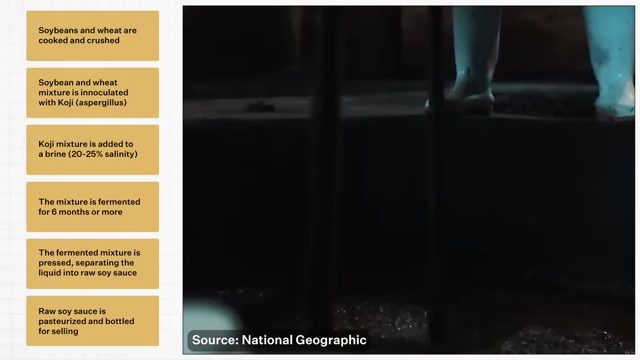
A visual explanation of the Koji mold fermentation process, detailing how it breaks down components into new aromas. [ 00:07:34 ]
- Koji enzymes are crucial, breaking down wheat starch into sugars, soy and wheat proteins into amino acids, and seed oils into fatty acids. These are catalysts for hundreds of new aromas.
- Moromi Preparation: The Koji mixture is then combined with a saltwater brine (20-25% salt) to form a soupy mixture called moromi.
- Long-Term Fermentation: The moromi is fermented for 6 months to 3 years (or more) in traditional cedar barrels or commercial stainless steel vats. During this period, Koji enzymes continue to produce unique flavor and aroma compounds (e.g., roasty smelling pyrroles, fruity smelling esters).
- Pressing and Pasteurization: The fermented moromi is pressed to extract raw soy sauce. This raw sauce is then pasteurized at 180°F, which further develops flavors through browning reactions, before being filtered and bottled.
- Chemical Hydrolysis (Quick Method):
- This method, developed in the 1920s, bypasses long fermentation.
- Defatted soy meal is broken down with hydrochloric acid for 8-10 hours, creating amino acids and sugars.
- The mixture is then neutralized with sodium carbonate.
- To compensate for the lack of complex flavors from skipped fermentation, the product is flavored and colored with syrups, caramels, and salt.
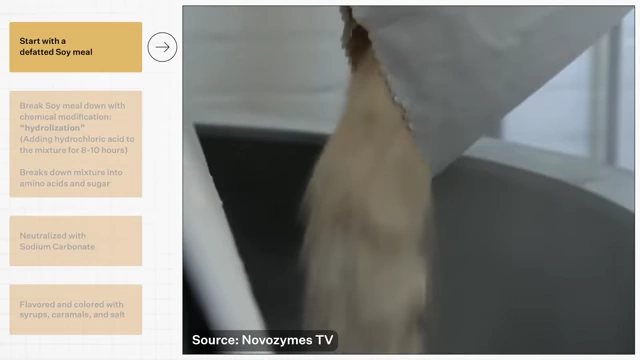
A visual guide illustrating the steps of chemical hydrolysis in soy sauce production. [ 00:11:11 ] - Chemical soy sauce is often blended with some traditionally fermented soy sauce to improve palatability.
- A key question is whether consumers can taste the difference between traditionally brewed and chemically hydrolyzed soy sauce.
What is the Flavor of Soy Sauce? [12:38]
Soy sauce flavor is a complex interplay of six qualities: taste, aroma, texture, sight, physical sensation, and human element.
- Taste (All Five Present):
- Salty: Comes from the brine. Final product is 15-17% salt. Sodium content varies widely (290 mg to 1480 mg per 15 mL). Chemical soy sauces can taste saltier due to fewer balancing flavors, despite sometimes having lower sodium.
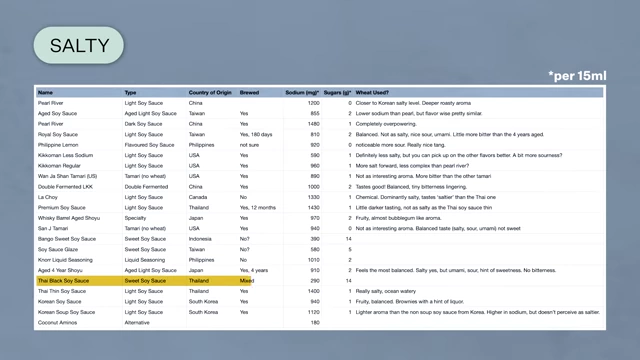
A table showcasing the wide range of sodium content across different soy sauces. [ 00:13:28 ] - Umami: Produced by Koji enzymes breaking down proteins into amino acids, particularly glutamic acid (also found in seafood, tomatoes, cheeses).
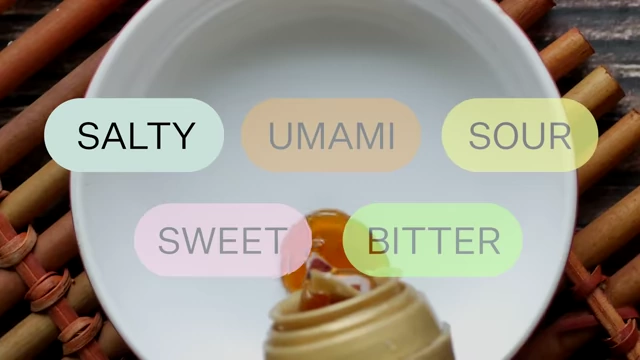
An image listing the five tastes present in soy sauce: Salty, Umami, Sour, Sweet, Bitter. [ 00:14:18 ] - Sour: Derived from organic acids, such as lactic acid, produced during fermentation. Tamari, made with 100% soybeans, often has higher concentrations of lactic acid.
- Sweet: A subtle sweetness comes from wheat starches breaking down into glucose (1-2 grams of natural sugars per 15 mL in most soy sauces). Some specific varieties, like Ketjap Manis or Thai black soy sauce, have significant added sugar (5-14 grams) and taste distinctly sweet.

A table highlighting the sugar content in different soy sauces, showing a wide range. [ 00:15:39 ] - Bitter: A slight bitterness comes from naturally occurring alcohols (polyphenols). This is more noticeable when tasting plain or as a garnish (e.g., some tamari) but typically cooks off during heating.
- Salty: Comes from the brine. Final product is 15-17% salt. Sodium content varies widely (290 mg to 1480 mg per 15 mL). Chemical soy sauces can taste saltier due to fewer balancing flavors, despite sometimes having lower sodium.
- Aroma: Soy sauce is rich in hundreds of volatile compounds (alcohols, acids, esters, phenols, pyrazines, sulfur-containing compounds) contributing to aromas described as malty, caramel-like, cooked potato-like, floral, alcoholic, sour, smoky, and fruity.
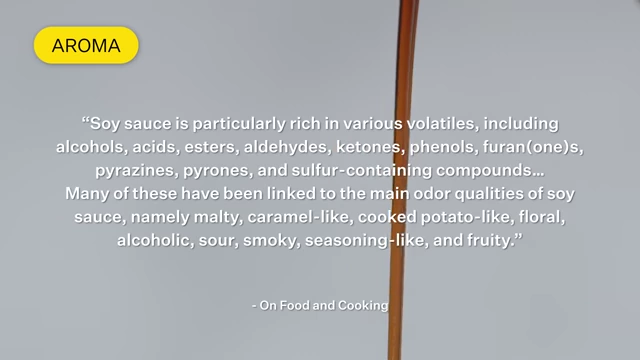
A graphic listing various volatile compounds and associated odor qualities found in soy sauce. [ 00:17:37 ] - Korean soy sauces offer distinct aromas (e.g., deep brownie/alcohol vs. hint of truffle).
- Chinese soy sauces often have a deeper, roasty quality.
- Whiskey-aged soy sauce can have fruity, bubblegum, and liquor-like aromas.
- A 4-year aged soy sauce had the most complex and interesting aroma.
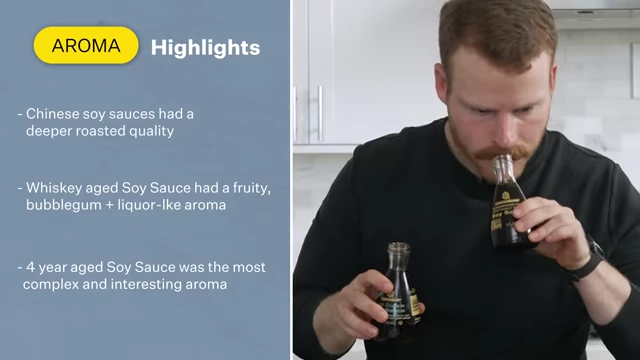
A text overlay highlighting key aroma observations from the soy sauce tasting. [ 00:18:11 ] - Chemical soy sauce generally lacks complex aroma. Tamari has balanced taste but less aroma.
- Texture (Viscosity): Light soy sauces are typically thin and watery, while darker and sweeter soy sauces are more viscous or syrupy.
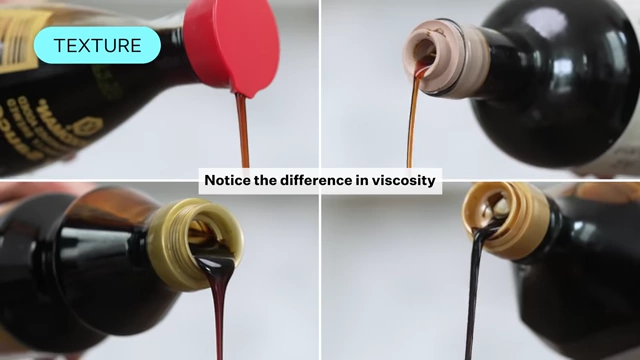
A visual comparison demonstrating the differences in viscosity between various soy sauces. [ 00:19:07 ] - Sight (Color): Colors range from very pale to almost black. Dark soy sauces are often used to impart a deep brown color to dishes (e.g., Chinese dark soy sauce), while light soy sauces are primarily for seasoning.
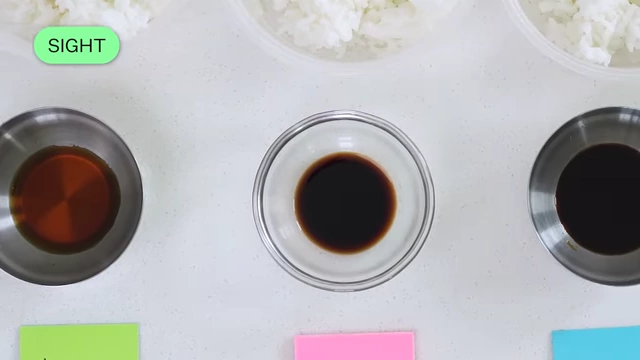
Three bowls with different shades of soy sauce, ranging from light brown to very dark. [ 00:19:17 ] - Physical: The salt, umami, and sour notes in soy sauce trigger salivation, enhancing the mouthwatering quality of food.
- Human Element (Bias): Personal and cultural experiences, nostalgia, and individual preferences heavily influence how soy sauce is perceived and enjoyed.
Sushi Test [20:44]
The sushi test involved applying different soy sauces to nigiri and sashimi for a blind tasting.
- Methodology: Nigiri was brushed with chemical (La Choy) vs. 4-year aged Japanese soy sauce. Sashimi was brushed with Kikkoman vs. a smoked soy sauce.
- Results:
- It was difficult to consistently distinguish between the soy sauces in a single bite when combined with fish and rice. The chemical soy sauce tasted saltier on its own but was harder to pick out in sushi.
- The unique aromas, like that of the whiskey barrel-aged soy sauce, were often masked by the other ingredients in the sushi.
- Conclusion: Sushi, as a complex food with other dominant flavors, makes it challenging to isolate and appreciate subtle differences in soy sauces used as a dipping or brushing agent.
Fried Rice Test [25:23]
This test explored how different soy sauces perform when cooked into a dish.
- Methodology: Five types of soy sauce (Korean soup, aged Japanese, Thai thin, imported Chinese, and hydrolysis/chemical) were each cooked with equal portions of jasmine rice in a wok.
- Visual Observations: The aged Japanese soy sauce produced a desirable dark, roasty color, while the Thai thin soy sauce resulted in the lightest color.
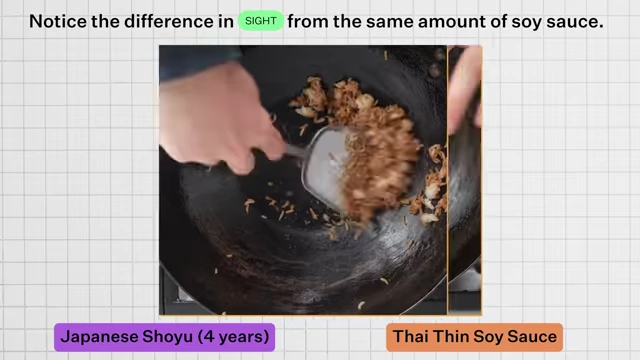
A side-by-side comparison of fried rice made with Japanese Shoyu (4 years) and Thai Thin Soy Sauce, showing the difference in color. [ 00:26:00 ] - Tasting Results:
- The 4-year aged Japanese soy sauce was the clear favorite. It imparted a distinct roasty, deep, chocolatey, and nutty flavor that truly stood out.
- The hydrolysis (chemical) soy sauce was a close second due to its prominent saltiness, even though it lacked complex aroma.
- While all five produced successful fried rice dishes, the aged Japanese one offered a unique depth of flavor and aroma that was discernible even after cooking.
- Conclusion: Cooking with soy sauce allows some of its unique flavor and aroma compounds, especially those from longer fermentation, to shine through and significantly impact the final dish.
Dipping Sauce Test [28:29]
This test investigated how soy sauce variations perform in a mixed dipping sauce.
- Methodology: Three dipping sauces were made using Kikkoman, 4-year aged soy sauce, and coconut aminos (a soy sauce alternative), mixed with sesame oil and mirin. These were tasted with crispy potstickers.
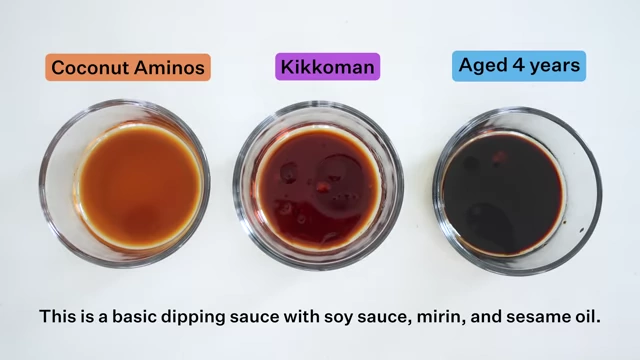
Three bowls of dipping sauce, labeled with Coconut Aminos, Kikkoman, and Aged 4 years, used for the dipping sauce test. [ 00:28:49 ] - Results:
- Coconut Aminos was distinctly different, being the least salty and most sweet, offering a unique flavor profile compared to traditional soy sauces.
- However, it was difficult to differentiate between the Kikkoman and the 4-year aged soy sauce in the dipping sauce. The strong aromas and tastes of sesame oil and mirin tended to overpower the subtle nuances of the soy sauces themselves.
- Conclusion: In dipping sauces with other strong ingredients, the individual characteristics of different traditionally brewed soy sauces can be masked, making it less critical to choose a highly complex or aged variety unless its specific attributes are strong enough to cut through the other flavors.
What is the 'Best' Soy Sauce? [30:52]
The video concludes that there is no single "best" soy sauce; instead, mastery comes from understanding and utilizing the soy sauce you possess.
- Key Takeaway: "You won't make better food by simply purchasing the best soy sauce. You'll make better food by mastering the soy sauce you have."
- Home Experiment Challenge to Master Your Soy Sauce:
- Purchase 2-3 different soy sauces: Choose based on categories like price point, country of origin, sodium level, or production method (chemical vs. long-aged).
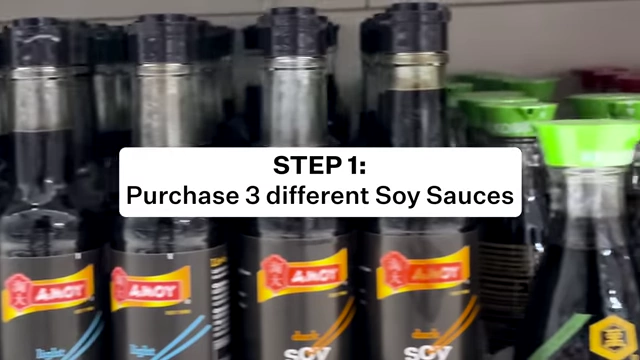
A shelf displaying various bottles of soy sauce at a grocery store. [ 00:31:34 ] - Perform a "raw sip test":
- Evaluate taste: Is it salty, sour, bitter, sweet, umami?
- Assess aroma: Is it roasty, chocolatey, alcoholic, fruity?
- Observe color: Is it very light, dark, or very dark?
- Note texture: Is it thin or thick?
- Consider human biases: Do you have a preference for soy sauces from specific cuisines?
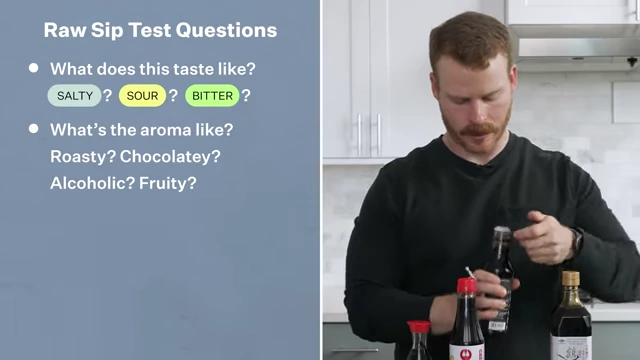
Questions to ask during a raw sip test to analyze the flavor profile of soy sauce. [ 00:31:54 ]
- Make a dish and troubleshoot from a fundamental level:
- Problem: Salty forward with little aroma (e.g., chemical soy sauce):
- Fix: Balance with a sprinkle of sugar. Allow other aromatic ingredients (e.g., fresh garlic, ginger) in the dish to shine.
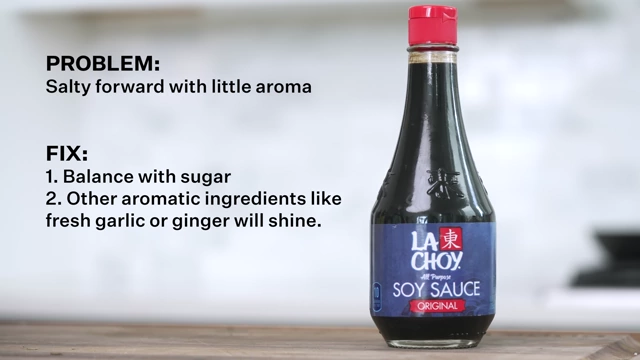
A bottle of La Choy soy sauce, illustrating the problem of being salty-forward with little aroma, and suggested fixes. [ 00:32:24 ]
- Fix: Balance with a sprinkle of sugar. Allow other aromatic ingredients (e.g., fresh garlic, ginger) in the dish to shine.
- Problem: Want more sourness in a dipping sauce:
- Fix: Use a soy sauce with a naturally sour taste profile (e.g., tamari), or add ponzu, rice wine vinegar, or citrus.
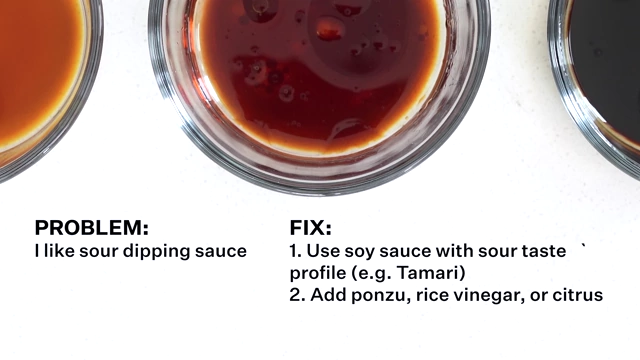
A graphic showing the problem of wanting a sour dipping sauce and offering solutions like using tamari or adding acidic ingredients. [ 00:32:42 ]
- Fix: Use a soy sauce with a naturally sour taste profile (e.g., tamari), or add ponzu, rice wine vinegar, or citrus.
- Problem: Want a deeper color in stir-fry:
- Fix: Use a single darker-colored soy sauce (e.g., Japanese shoyu), or combine a lighter soy sauce with a Chinese-style dark soy sauce.
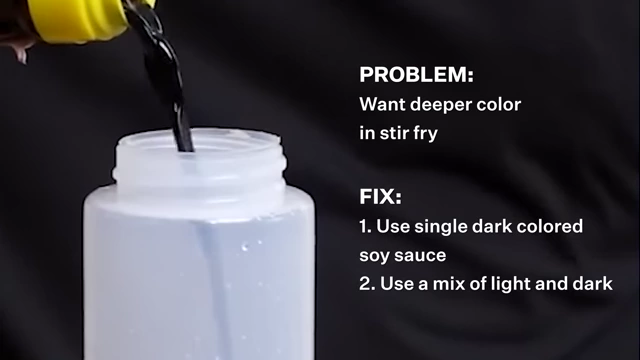
A graphic showing the problem of wanting a deeper color in a stir-fry and offering solutions like using dark soy sauce or a mix. [ 00:32:54 ]
- Fix: Use a single darker-colored soy sauce (e.g., Japanese shoyu), or combine a lighter soy sauce with a Chinese-style dark soy sauce.
- Problem: Salty forward with little aroma (e.g., chemical soy sauce):
- Purchase 2-3 different soy sauces: Choose based on categories like price point, country of origin, sodium level, or production method (chemical vs. long-aged).
- Conclusion: Understanding how to balance taste, aroma, texture, and color in your soy sauce usage is crucial for culinary success. There are no strict rules; experiment to find what tastes best to you, regardless of regional pairings.