This video explains how the distance to Polaris is precisely known, discusses theoretical methods to extend the Sun's life by stellar lifting or interior mixing, addresses the stability of Earth orbit amid mega-constellations, details how stars approach our Solar System, elaborates on moving planets via asteroid gravitational assists, explains asteroid collision mechanics resulting in "rubble piles," and anticipates future atmospheric probes for Uranus.
An asteroid performs a gravitational assist with Earth, a theoretical method for planetary relocation.
[
00:13:24
]
Measuring Cosmic Distances: Polaris and the Parallax Method [00:27]
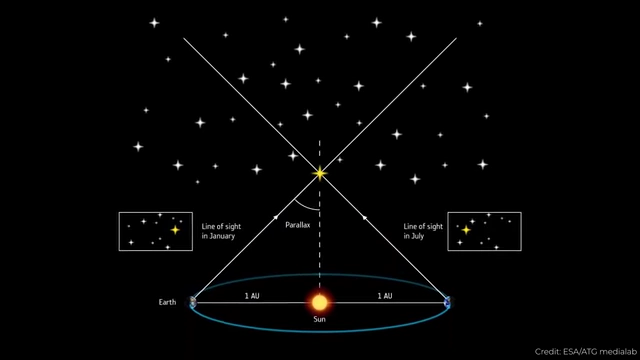
Diagram illustrating the parallax method where Earth's orbit around the Sun causes an apparent shift in a nearby star's position against distant background stars, allowing distance calculation.
[
00:01:40
]
Polaris Distance Confirmation
The distance to Polaris is known to be 446.5 light-years, with an uncertainty of approximately 1.1 light-years.
Polaris is one of thousands of Cepheid variable stars astronomers use for distance measurements.
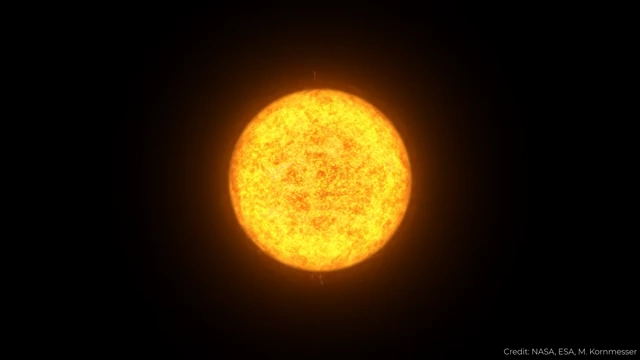
Artist's impression of a pulsating star, representing a Cepheid variable star whose pulsation period is directly linked to its intrinsic brightness.
[
00:02:40
]
Astrometry and Parallax
The primary method for measuring close star distances is astrometry, specifically the parallax method.
This involves measuring a star's apparent angle in the sky from opposite sides of Earth's orbit (a 6-month interval).
The shift in the star's position against background stars forms a triangle, allowing distance calculation using trigonometry.
The parallax method has limitations, effective for distances up to a few thousand light-years.
Cepheid Variables as Standard Candles
Distances to many Cepheid variable stars were established using parallax.
The pulsation period of a Cepheid variable directly correlates with its intrinsic brightness.
By comparing observed brightness to intrinsic brightness, astronomers can calculate the star's distance.
This establishes the first rung of the "cosmic distance ladder," crucial for measuring distances to far-off objects.
Gaia Mission Impact
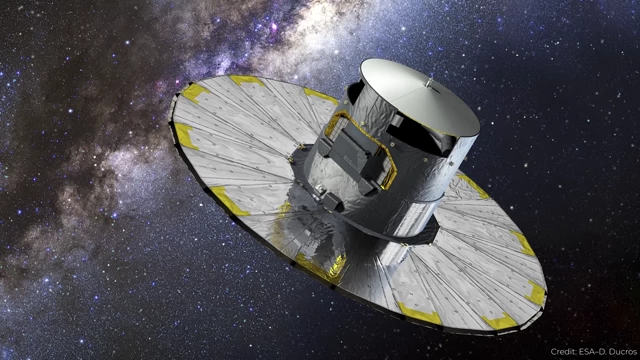
The European Space Agency's Gaia mission provided the most comprehensive astrometric measurements, mapping over a billion stars in the Milky Way.
Artist's impression of the Gaia spacecraft against the backdrop of the Milky Way, responsible for precise astrometric measurements of over a billion stars.
[
00:03:37
]
This mission significantly enhanced our understanding of stellar distances, movements, and the Milky Way's structure.
Adding fuel (mass) to the Sun would paradoxically shorten its lifespan, as more massive stars burn through their fuel faster.
Stellar Lifting for Longevity
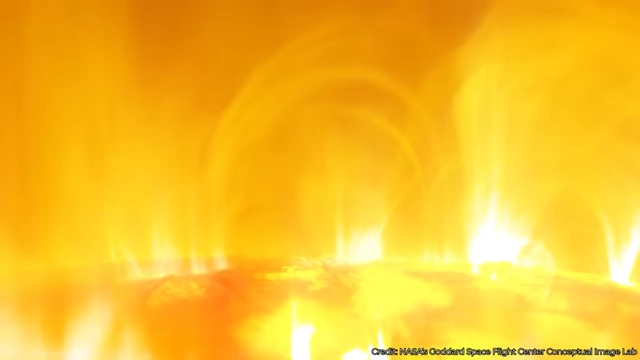
The theoretical optimal strategy is "stellar lifting," which involves extracting mass from the Sun.
Artist's impression of magnetic fields or other forces extracting material from the Sun's surface, illustrating the concept of stellar lifting.
[
00:05:13
]
This could be achieved using powerful magnetic fields or by spinning up the Sun.
The extracted material could then be used to form multiple smaller, less massive stars, like red dwarfs.
For instance, the Sun's mass could be split into 13 red dwarf stars, each potentially lasting for 10 trillion years.
Mixing the Sun's Interior
An alternative method to extend the Sun's life involves physically mixing its interior.
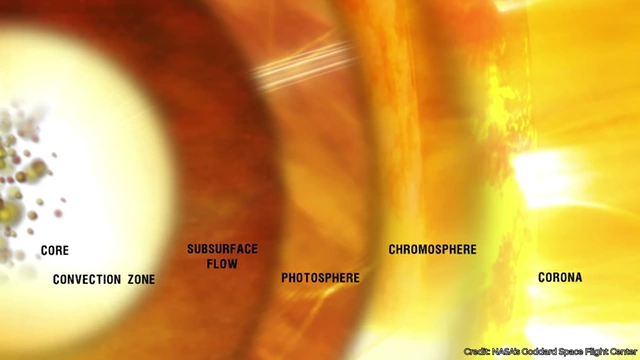
The Sun currently has a core where fusion occurs, surrounded by a radiative zone that prevents the outer convective layers from reaching the core.
Diagram illustrating the internal structure of the Sun, showing the core, convection zone, subsurface flow, photosphere, chromosphere, and corona.
[
00:06:32
]
This means only a fraction (about a third) of the Sun's hydrogen fuel is available for fusion.
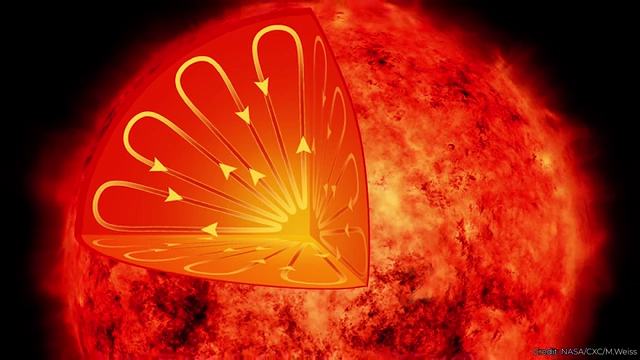
Diagram illustrating full convection within a red dwarf star, where the entire star mixes its fuel, allowing for a much longer lifespan.
[
00:06:38
]
Red dwarf stars are fully convective, constantly mixing their fuel. If the Sun's interior could be mixed, fresh hydrogen could be introduced to the core, extending its fusion period.
Satellite Mega-Constellations and Orbital Stability [07:33]
Current State of Near-Earth Orbit
Near-Earth orbit is not yet dangerously unstable, but the situation is concerning.
Space is vast, but increasing orbital debris raises the risk of collisions.
Altitude-Dependent Debris Lifespan
Low Earth Orbit (LEO) (below 500 km): Satellites and debris in this region de-orbit and burn up within 5-10 years due to atmospheric drag. This means the area can naturally "clean up" if new launches cease.
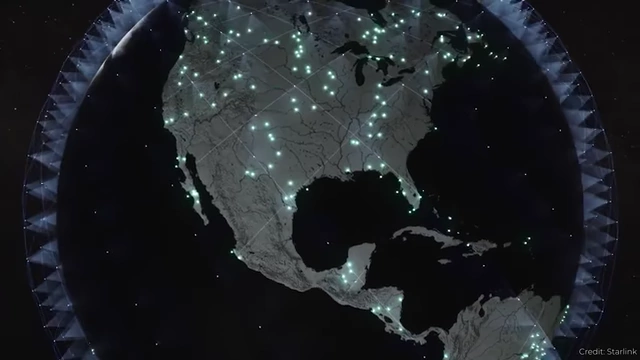
An animation showing a vast network of Starlink satellites providing coverage over North America, illustrating the scale of mega-constellations.
[
00:09:02
]
Mid-Altitude Orbits (e.g., 800 km): Satellites in this range, like some OneWeb constellations, can last for a couple of decades.
Higher Altitudes (above 1,000 km): Debris can persist for centuries or even "practically forever," posing a significant long-term threat.
An animation showing various satellite orbits around Earth, with labels for different missions, highlighting the density and diverse altitudes of objects in Earth's orbit.
[
00:09:39
]
Kessler Syndrome Risk
The main concern is the Kessler syndrome, a theoretical scenario where a cascade of collisions creates so much debris that space access becomes impossible.
While not imminent, increased debris necessitates frequent course corrections for operational satellites, consuming valuable propellant and shortening their lifespan.
Need for Orbital Regulation
The solution is international agreement and regulation on satellite placement and orbital paths.
An animation illustrating different satellite flight paths and orbital zones around Earth, suggesting a need for organized traffic control in space.
[
00:11:25
]
Implementing designated "flight paths" or zones, similar to air traffic control or shipping lanes, would minimize collision risks and allow for a greater number of satellites to operate safely.
Particular caution is needed for higher orbits where debris remains indefinitely.
Approximately every million years, a star system passes within about 0.25 light-years of our Sun.
Lack of Planetary Disruption
Despite billions of years of such encounters, none have come close enough to significantly disrupt the stable orbits of the planets in our Solar System.
Interstellar Travel Concept
The idea of using these close stellar approaches for interstellar travel has been proposed. Instead of building extremely fast spacecraft for a direct journey, humanity could theoretically "hop" between star systems as they pass by.
Artist's impression of an asteroid passing close to Earth, illustrating a gravitational assist that could subtly alter the planet's orbit.
[
00:13:24
]
Asteroid Gravitational Assists
Planets can be moved theoretically by using the gravitational pull of asteroids.
When an asteroid flies close to a planet, its gravity provides a small tug, altering the planet's orbit slightly.
Long-Term Earth Relocation
A classic theoretical example involves moving Earth to counteract the Sun's increasing luminosity.
In about a billion years, the Sun's output will increase enough to boil Earth's oceans.
By bringing an asteroid close to Earth every roughly 10,000 years, humanity could gradually push Earth's orbit outward, maintaining its habitability zone in sync with the Sun's evolving energy output.
Unlike pool balls, asteroids do not simply bounce off each other when they collide.
High-speed asteroid collisions typically result in both objects shattering into smaller pieces and debris.
Evidence from Missions
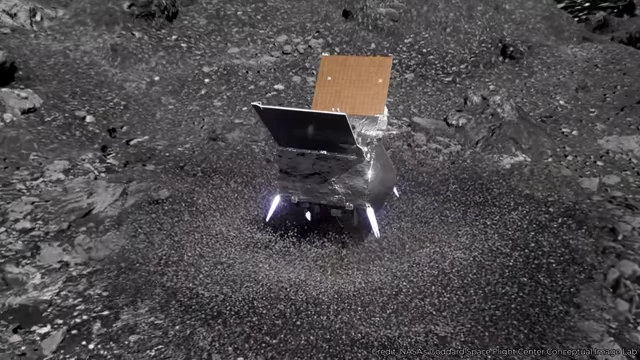
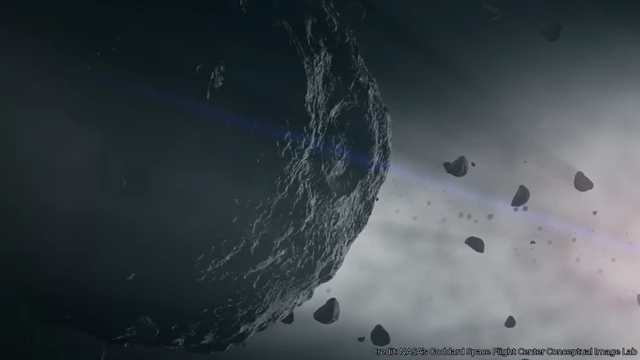
Missions like Osiris-Rex (to asteroid Bennu) and Hayabusa2 (to asteroid Ryugu) have revealed these asteroids to be "rubble piles."
A detailed image of asteroid Bennu, showing its irregular shape and rough, rubble-pile surface, observed by the Osiris-Rex mission.
[
00:14:40
]
Artist's impression of a large asteroid shattering into many smaller pieces and debris after a high-speed collision.
[
00:15:37
]
Rubble piles are loosely accumulated collections of rocks and boulders, formed from the gravitational re-accumulation of debris from past collisions.
An asteroid with an irregular shape and rough texture, characteristic of a 'rubble pile' formed from the gravitational re-accumulation of debris.
[
00:15:24
]
Asteroid Families
Observations of asteroid families, groups of asteroids sharing similar chemical compositions and orbital characteristics, support the idea that they originated from the fragmentation of larger parent bodies that have undergone multiple collisions over cosmic timescales.
The Solar System's asteroid belt is a dynamic environment where objects are constantly being ground down into smaller pieces and dust.
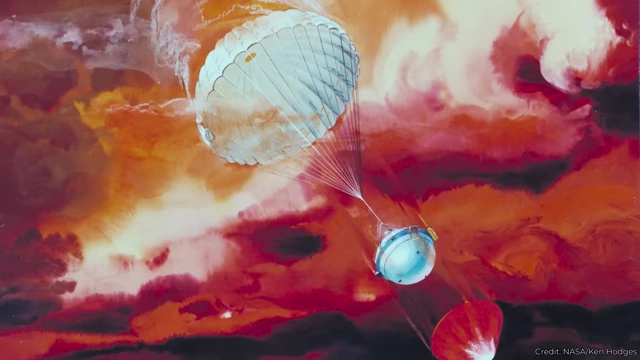
Artist's impression of an atmospheric probe descending with a parachute through colorful, cloudy alien skies, collecting data.
[
00:16:03
]
Precedent from Gas Giants
Previous missions to gas giants like Jupiter (Galileo probe) and Saturn (Cassini spacecraft, which ultimately performed a controlled dive into its atmosphere as an atmospheric probe) included atmospheric entry vehicles.
Artist's impression of the Cassini spacecraft during its controlled dive into Saturn's atmosphere, providing data before its final burn-up.
[
00:16:21
]
Future Ice Giant Exploration
If a dedicated mission is eventually sent to Uranus (or Neptune), it is highly anticipated that it would include an atmospheric probe.
Such a probe would provide invaluable direct data about the composition, structure, and dynamics of the upper cloud layers of these distant ice giant worlds, which are currently poorly understood.