Multi-Generational Living: An Economic and Social Defense Against Hyperindividualism
This video argues that multi-generational living is becoming a necessary "economic fortress" against the instability caused by hyperindividualism and the nuclear family model.
- The individualistic lifestyle, once a Western ideal, is facing a "terminal failure point" due to immense financial, social, and environmental costs.

Individual vs. Economic Fortress [ 00:01:10 ] - Collective living offers significant economic advantages through resource pooling, reducing fixed costs like mortgages, utilities, and groceries.

Family pooling resources into an economic fortress [ 00:08:59 ] - Evidence from communities like Twin Oaks shows drastic reductions (70-80%) in per capita consumption of resources like gasoline and electricity.
Resource Consumption Reduction at Twin Oaks Community [ 00:07:09 ] - Multi-generational households provide a built-in, low-cost reciprocal caregiving system for children and the elderly, mitigating major financial shocks.

Grandparents providing low-cost childcare [ 00:10:41 ] - This model also offers a robust psychological buffer against loneliness and isolation, fostering stronger social support and a sense of purpose.

Elderly woman and child doing a puzzle, symbolizing connection [ 00:11:46 ] - The "sandwich generation" crisis, where middle-aged adults care for both children and aging parents, highlights the unsustainable burden of the individualistic model.

Calendar showing the time and financial burden of caregiving [ 00:15:27 ] - East Asian nations utilize familialism as a strategic, low-cost extension of state welfare, influencing their pro-traditional policy blueprints.

East Asian familialism vs. state welfare [ 00:21:26 ] - Western societies are critiqued for having "engineered disintegration" of collective bonds through psychological, economic, and cultural manipulation by financial elites and tech giants.

Digital surveillance capitalism thriving on fractured populace [ 00:35:48 ] - Ultimately, the collective unit is presented as the most realistic means of survival, wealth preservation, and social stability in an unstable world.

The Collective Unit: Shared Destiny and Mutual Defense [ 00:42:32 ]
The Shift to Collective Living [0:00]
The video opens with an anecdote about a friend who, despite valuing independence, moved back in with his parents and sister's family due to economic pressures. He described their multi-generational household as a "command center" for daily routines and financial pooling, finding confidence in collective security rather than feeling stifled.

- The 2026 economic shift highlighted the vulnerability of the "atomized individual life," revealing the "terminal failure of a myth."
- The question is posed: Is the return to multi-generational households a step backward or the "only realistic fortress" left for civilization?
- This urgent shift sees people trading individual freedom for collective security and is framed as a critical examination of hyperindividualism versus familialist models on a global stage.

Comparing hyperindividualism vs. familialist socio-political models [ 00:02:33 ]
Defining Multi-Generational Living [3:40]
Multi-generational housing is defined as a conscious, intentional choice to interweave lives, fostering collective existence and mutual support, rather than just sharing an address to save money.
- Scope of the Model:
- Typically includes grandparents, parents, and children (traditional model).
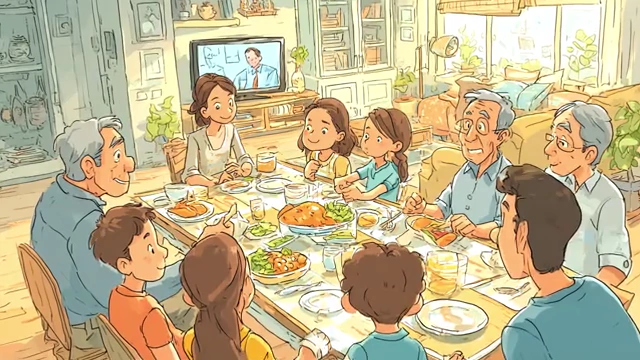
Large multi-generational family having dinner [ 00:01:53 ] - Can extend to unrelated individuals of differing ages who opt for a communal lifestyle.
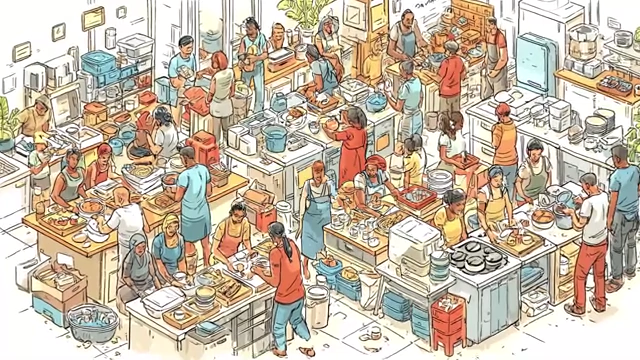
Diverse group of people engaged in communal activities in a shared space [ 00:04:17 ] - Reflects a deep-seated human desire for connection and a built-in support system within the home.

Old hands holding a family photo over money, symbolizing intergenerational connection and wealth [ 00:04:37 ]
- Typically includes grandparents, parents, and children (traditional model).
- Critique of the Nuclear Family Model:
- For decades, the Western ideal was the individualistic, atomized life, often represented by the nuclear family isolated in a single-family home.

Nuclear family posing proudly in front of their single-family home [ 00:04:44 ] - This model is now under scrutiny for its immense environmental and social costs.
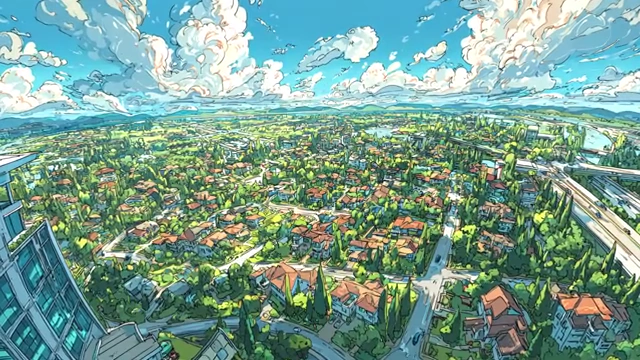
Aerial view of extensive urban sprawl, highlighting environmental costs [ 00:05:02 ] - Multi-generational housing offers a compelling, adaptive, and practical alternative, fulfilling the need for belonging and reducing the collective footprint.

Large, happy multi-generational family gathered around a dining table [ 00:05:12 ]
- For decades, the Western ideal was the individualistic, atomized life, often represented by the nuclear family isolated in a single-family home.
Economic and Resource Efficiency of Collective Living [5:36]
The data on sharable lives demonstrates compelling ecological and resource efficiency.

- Resource Demand Reduction:
- Consolidating living spaces and centralizing resources naturally and drastically reduces demand for heating, cooling, water, and transportation.
Jigsaw puzzle of interconnected buildings and houses [ 00:05:43 ] - This aligns with sustainable living principles, often without requiring ideological activism.

Sustainable green buildings integrated into an urban environment [ 00:05:17 ]
- Consolidating living spaces and centralizing resources naturally and drastically reduces demand for heating, cooling, water, and transportation.
- Resource Cycling (Circular Economy):
- A shared household operates as a highly efficient microcosm of a circular economy.
Overflowing recycling bin in a home setting [ 00:06:03 ] - Financial, material, and human labor resources cycle with greater velocity and efficiency among members, leading to less waste.

People interacting in a shared kitchen space with multiple appliances [ 00:06:14 ] - Reduced need for separate utility connections, individual lawns, and multiple identical appliances (e.g., washers/dryers) dramatically decreases the per capita environmental load.

Shared washing machines and a clothing library setup [ 00:06:25 ] - Land Use Optimization: Fewer individual homes mean less demand for residential construction, reducing urban sprawl and pressure on undeveloped land.

Dense residential area with individual houses and green spaces [ 00:06:31 ] - Preserved land supports biodiversity and ecosystem services (clean water, air).
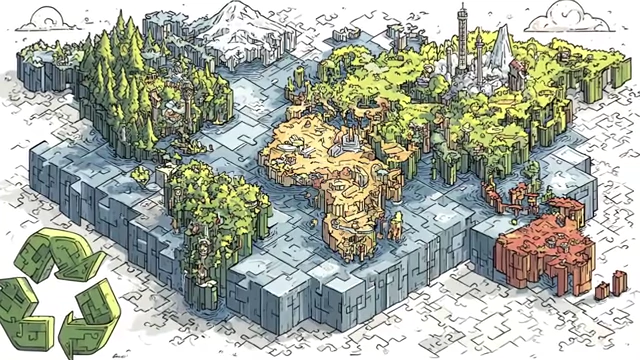
World map made of puzzle pieces with recycling symbols, representing global environmental services [ 00:08:21 ]
- A shared household operates as a highly efficient microcosm of a circular economy.
- Quantitative Proof (Twin Oaks Community) [6:36]:
- The Twin Oaks community in Virginia, founded in 1967 on cooperation and sustainability, provides hard data.
- Members consume:
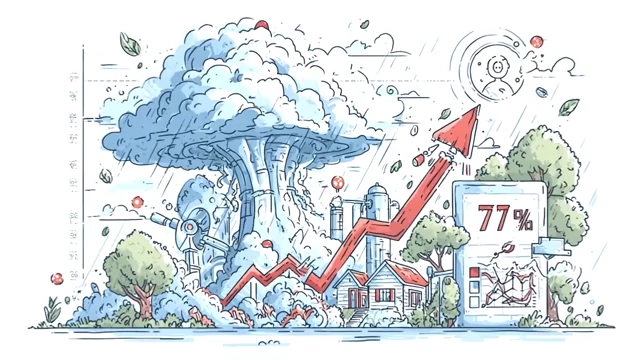
- 70% less gasoline per capita.
- 80% less electricity per capita.
- 76% less natural gas per capita than neighbors in conventional single-family homes.
Chart showing significant reductions in resource consumption (77%) in a sustainable community [ 00:07:09 ]
- This efficiency is a direct result of comprehensive resource sharing:

Financial Advantages and Wealth Preservation [8:37]
Multi-generational living transforms the exposed individual into a "shareholder in an economic fortress" through economic resilience.

- Pooling Resources for Fixed Costs:
- Families collectively contribute to massive fixed costs: mortgage payments, utilities, property taxes, groceries.
Hand dropping money into a communal fund, with more money flowing out to people [ 00:08:59 ] - This shared responsibility substantially reduces individual financial burdens, alleviating precarity and short-term debt.
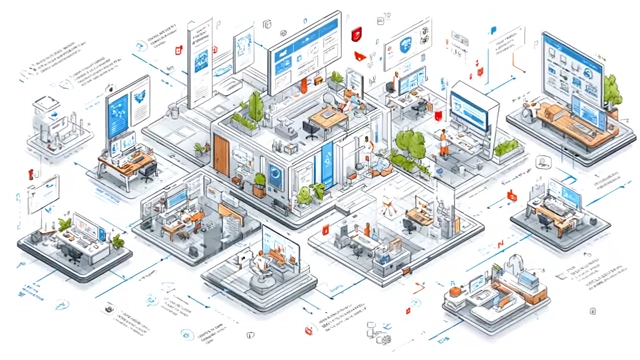
Isometric view of a multi-room house with individuals working in shared spaces [ 00:09:03 ] - Savings free up capital for savings, investments, or rapid debt repayment, enhancing financial security and capital accumulation.

Stressed man at a desk piled with papers and a graph, representing financial pressure [ 00:09:26 ] - This is nearly impossible for young professionals struggling with solo rent.
- Families collectively contribute to massive fixed costs: mortgage payments, utilities, property taxes, groceries.
- Building Lasting Assets [9:47]:
- Provides a concrete opportunity for pooled investment, especially in property.
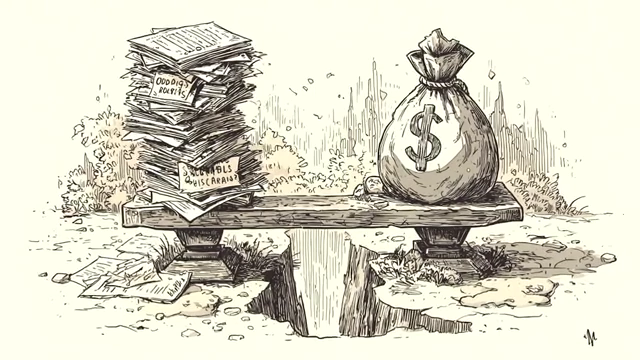
Scale balancing a stack of papers against a bag of money, symbolizing wealth building [ 00:09:50 ] - Combining wealth and earning potential of two or three generations accelerates equity building and asset acquisition.

Multi-generational family reviewing financial documents and coins together [ 00:10:01 ] - It becomes a mechanism for intergenerational wealth preservation.
- Provides a concrete opportunity for pooled investment, especially in property.
Reciprocal Caregiving and Psychological Benefits [10:20]
The human element of multi-generational living is a "game-changer," creating a reciprocal caregiving ecosystem.

- Built-in Low-Cost Caregiving:
- Grandparents, often retired or semi-retired, provide low-cost, high-quality childcare, alleviating the astronomical burden of external daycare.
Grandmother and child watching TV together [ 00:10:41 ] - Adult children support aging parents, allowing for "aging in place" and avoiding the prohibitive costs and emotional toll of institutional care.

Young woman helping an elderly man with a walker up the stairs [ 00:10:59 ] - This mutual aid stabilizes family fiscal health against the two greatest financial shocks: childcare and elder care.
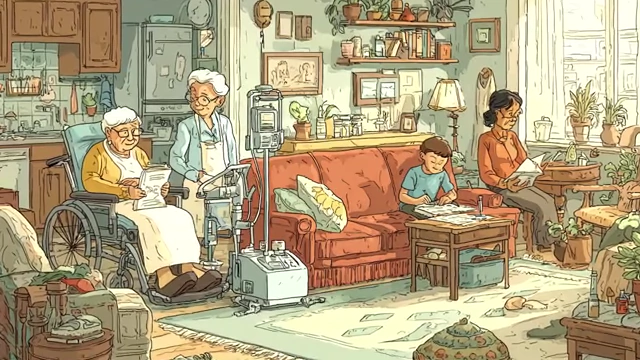
Living room scene depicting multiple generations interacting and receiving care [ 00:11:04 ]
- Grandparents, often retired or semi-retired, provide low-cost, high-quality childcare, alleviating the astronomical burden of external daycare.
- Psychological Buffer against Isolation [11:21]:
- Acts as a robust psychological defense against the isolation and fragmentation of modern life, addressing loneliness and social isolation (often overlooked public health crises).

Lonely woman reading a newspaper by herself [ 00:11:19 ] - For Seniors: Regular daily interaction, not just scheduled visits, significantly reduces loneliness and depression, potentially enhancing longevity and cognitive function.
Elderly woman and child doing a puzzle together [ 00:11:46 ] - For Children: Studies suggest improved mental health, higher cognition, and social support. They benefit from a wider network of mentors, role models, and attachment figures, gaining diverse social skills from interacting with multiple generations.

An elderly man and a child sitting on a porch swing together [ 00:12:00 ]
- Acts as a robust psychological defense against the isolation and fragmentation of modern life, addressing loneliness and social isolation (often overlooked public health crises).
- Sense of Purpose and Cultural Preservation [12:21]:
- Gives all residents a powerful sense of purpose and belonging.

Two women caring for an elderly woman at a table [ 00:12:22 ] - Acts as a vessel for cultural preservation, ensuring the smooth transfer of traditions, stories, and languages across generations.

An elderly man and a child making art together [ 00:12:27 ] - Grounds individuals in a shared history and collective identity, protecting against the fracturing of identity by digital culture and globalization.
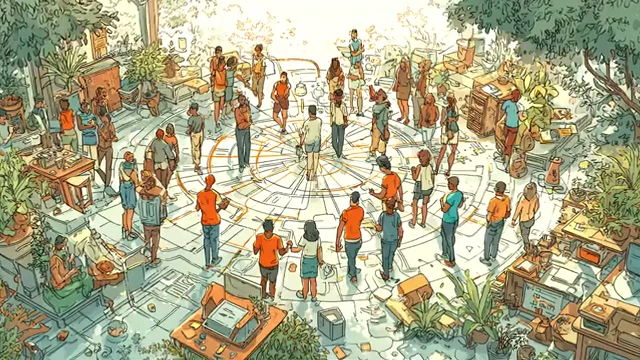
A diverse group of people standing in a circle, symbolizing collective identity [ 00:12:32 ] - In an age where digital culture and globalization often fracture identity, this daily cultural continuity is profoundly protective.

Stressed woman surrounded by multiple screens and digital content [ 00:12:53 ]
- Gives all residents a powerful sense of purpose and belonging.
The Sandwich Generation Crisis [13:03]
The necessity of collective living is brutally clear when examining the pressure on the "sandwich generation."
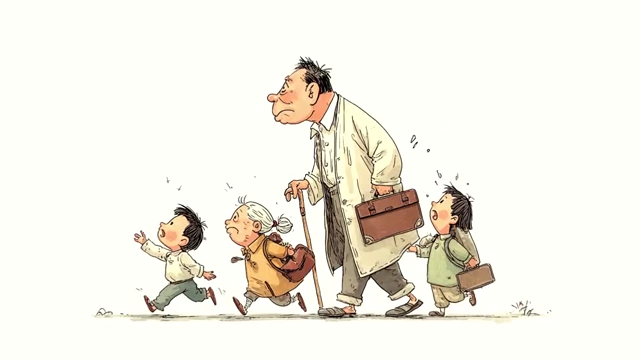
- Definition and Causes:
- Middle-aged adults simultaneously caring for dependent children and aging parents.

Stressed woman working at a computer with children and an elderly man in the background [ 00:13:23 ] - Exacerbated by converging trends: people having children later and extended lifespans, leading to prolonged dual dependency.
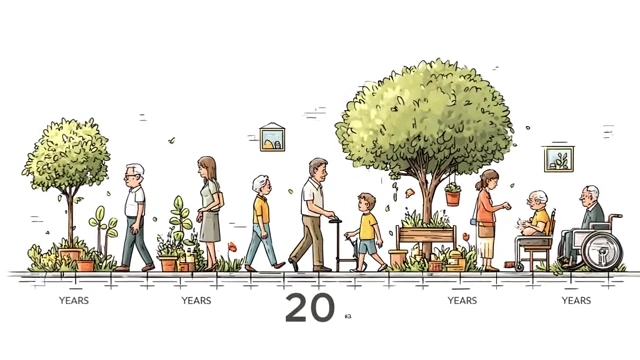
Timeline showing human lifespan with varying ages, illustrating extended dependency [ 00:13:32 ]
- Middle-aged adults simultaneously caring for dependent children and aging parents.
- Types of "Sandwiches" (Carol Abaya's Categories) [13:54]:
- Traditional Sandwich: Dealing with aging parents needing physical or financial care and their own dependent children (core two-layer squeeze).

Stacked layers representing the different burdens of the sandwich generation [ 00:14:03 ] - Club Sandwich: Individuals in their 40s-60s caring for aging parents, elderly grandparents, and adult children who've moved back home (sometimes even grandchildren), managing three or four layers of dependency.

Stressed woman looking at her phone, surrounded by various tasks and responsibilities [ 00:14:23 ] - Open-Faced Sandwich: Acknowledges complex and varied caregiving burdens, covering anyone significantly involved in elder care outside the first two categories.

Hand reaching for a partially eaten sandwich, symbolizing varied caregiving burdens [ 00:14:46 ]
- Traditional Sandwich: Dealing with aging parents needing physical or financial care and their own dependent children (core two-layer squeeze).
- Economic Drain in the US [15:01]:
- US adults in the sandwich situation spend approximately $10,000 and dedicate 1,350 hours annually (over 33 full 40-hour work weeks) to uncompensated caregiving.
Calendar showing financial and time commitment ($100 per day) for caregiving [ 00:15:27 ] - This is a massive economic drain and a measurable impact on the workforce.

A man looking distressed while money is being taken from him, representing economic drain [ 00:15:25 ]
- US adults in the sandwich situation spend approximately $10,000 and dedicate 1,350 hours annually (over 33 full 40-hour work weeks) to uncompensated caregiving.
- Gendered Labor Burden [16:09]:
- The burden is disproportionately borne by women, who are society's primary supporters for emotional and intimate physical care (bathing, dressing, managing appointments).
Men typically focus on financial support.

Woman serving food at a family gathering, illustrating traditional gender roles [ 00:16:23 ] 
Man focused on work at a desk with piles of money, representing financial support [ 00:16:33 ] - This leads to severe risks for female caregivers: stress, burnout, depression, loss of personal time, and career development loss.

Woman looking distressed while holding a document with a red asterisk, indicating career setbacks [ 00:16:51 ] - Women, often at peak career potential, face a systemic double bind: needing to earn more, but caregiving duties prevent career advancement, exacerbating family financial insecurity and reducing lifetime earnings and retirement savings.

Woman sitting alone surrounded by cash, looking worried about financial insecurity [ 00:17:10 ] - This makes the entire family unit more fragile when they eventually become the aging generation.

Old television set on a dilapidated porch, symbolizing a fragile family unit [ 00:17:40 ]
- The burden is disproportionately borne by women, who are society's primary supporters for emotional and intimate physical care (bathing, dressing, managing appointments).
East Asian Policy Blueprint: Familialism and State Intervention [17:43]
In East Asia, the multi-generational model is historically stronger, but pressures lead to unique manifestations of the sandwich crisis, informing state policy.

- Confucian Legacy of Familialism:
- Rooted in a cultural system where kinship is the primary source of welfare, historically expecting the elderly and dependent children to rely exclusively on families.
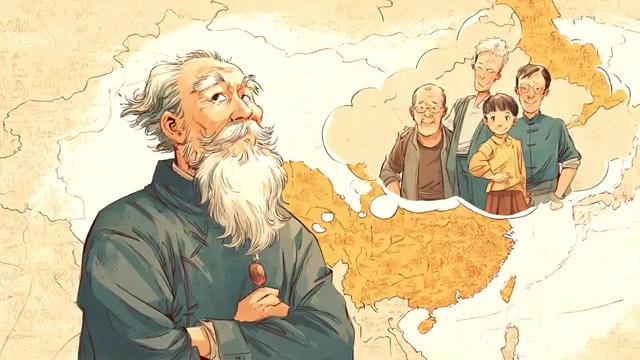
Elderly man contemplating a family over a map of China, representing familialism [ 00:20:52 ] - The household is structurally assigned maximum welfare obligations, providing an effective non-state social safety net for centuries, allowing the state to focus on economic growth.

Large multi-generational family posing for a photo [ 00:21:21 ]
- Rooted in a cultural system where kinship is the primary source of welfare, historically expecting the elderly and dependent children to rely exclusively on families.
- Challenges to Familialism:
- Economic modernization, urbanization, population aging, and rising female labor participation inevitably challenged this structure.
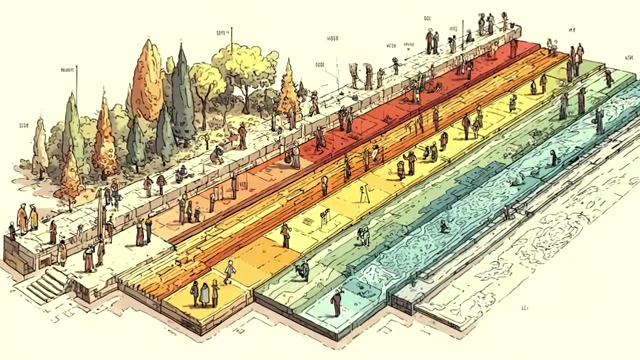
Infographic illustrating challenges and transitions in East Asian policy evolution [ 00:21:45 ]
- Economic modernization, urbanization, population aging, and rising female labor participation inevitably challenged this structure.
- Policy Evolution: Three Stages [21:48]:
- Economic Mobilization Phase (Confucian Family Strong):
- During rapid industrialization, governments focused on economic growth.

Industrial factory landscape with smoke stacks [ 00:21:56 ] - The welfare state was intentionally underdeveloped, and the Confucian family acted as the primary, uncompensated welfare provider.

Split image of an elderly woman struggling versus a young man with groceries, symbolizing the family as the primary welfare provider [ 00:22:10 ]
- During rapid industrialization, governments focused on economic growth.
- Confucian Family Challenged Phase:
- Economic restructuring shifted economies to post-industrial, knowledge- and service-based models, creating demand for highly educated women in the professional workforce.

Asian university campus with a city skyline in the background [ 00:22:39 ] - This weakened traditional gender divisions; women became less able/willing to shoulder the double burden of wage earner and primary caregiver.

Woman in a business suit waiting in a professional setting [ 00:22:44 ] - Result: low fertility rates, delayed marriage, and accelerating population aging.

Calendar with pages flying off, symbolizing accelerating demographic changes [ 00:23:00 ]
- Economic restructuring shifted economies to post-industrial, knowledge- and service-based models, creating demand for highly educated women in the professional workforce.
- Developmental Welfare Under Pressure Phase:
- As the family safety net falters, states face intensifying political pressure.

A grand building illuminated by a spotlight, with people gathered outside, symbolizing political pressure [ 00:23:14 ] - Social policy reforms (childcare, elder care) become common to relieve public distress and stabilize the workforce.

Man speaking in front of a global map with economic graphs, advocating for social policy reforms [ 00:23:32 ] - The state selectively supports families to help them preserve their traditional roles.

Man and woman with child entering a home, while an elderly man checks mail, symbolizing state support for traditional family roles [ 00:24:08 ]
- As the family safety net falters, states face intensifying political pressure.
- Economic Mobilization Phase (Confucian Family Strong):
- East Asian Policy Characteristics (Pro-Traditional Model) [23:46]:
- Work-Centered Welfare:
- Individuals must primarily support families through continuous paid work; direct welfare provisions for non-workers are minimal.

Split image of traditional and modern Asian cities with people in between, representing work-centered welfare [ 00:24:33 ] - Leave arrangements (maternity, parental) are often short or absent.

Woman looking at a calendar, indicating limited maternity leave [ 00:24:47 ] - The state's goal is to provide selective support to enable wage earners to balance work and family without exiting the labor market, focusing on labor market optimization, not universal social equality.

Uncle Sam figure guarding a gate from a crowd while holding money, representing means-tested welfare [ 00:24:57 ]
- Individuals must primarily support families through continuous paid work; direct welfare provisions for non-workers are minimal.
- Public-Private Co-financing:
- States resist fully financing or directly providing all care services, preferring to be finance providers.

Split image of two men at desks, symbolizing public and private sector collaboration in financing [ 00:25:34 ] - They draw upon private resources (mandatory contributions, encouraging private market delivery), shifting costs to individuals and private enterprise.

Hand putting a coin into a piggy bank amidst piles of money, illustrating shifting costs to individuals [ 00:25:51 ]
- States resist fully financing or directly providing all care services, preferring to be finance providers.
- Comprehensive Social Care System (Home/Community-Based):
- Prioritizes home-based and community-based care over large-scale institutional care, sustaining the cultural ideal that caregiving remains within the family or immediate neighborhood.
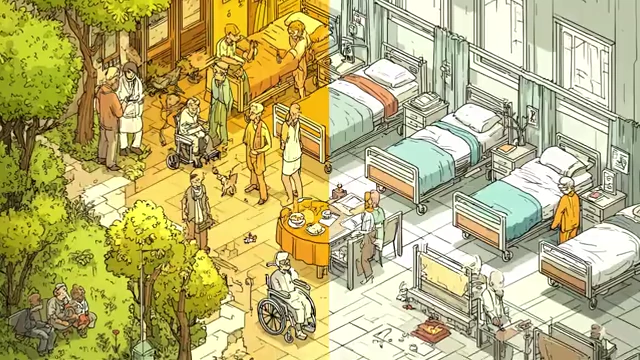
Split image comparing a bustling outdoor community care setting with a sterile institutional hospital ward [ 00:26:07 ] - State initiatives explicitly assist families in providing care, rather than entirely relieving them of the responsibility.

Elderly woman and young man washing dishes together [ 00:26:12 ]
- Prioritizes home-based and community-based care over large-scale institutional care, sustaining the cultural ideal that caregiving remains within the family or immediate neighborhood.
- Work-Centered Welfare:
Case Studies [26:24]
- Japan [26:26]:
- First to confront aging challenges and economic stagnation, forced to pivot from a traditional post-war model (male breadwinner/female homemaker) to an interventionist approach after 1990s economic stagnation.

Split image of a stressed man with economic charts vs. an old woman, representing Japan's aging and economic challenges [ 00:26:27 ] - Key Interventions:
- Long-Term Care Insurance (LTCI) [2000]: Public financing for elderly care in community and institutional settings (prioritizing community).

Graph showing economic decline in Japan [ 00:26:58 ] - Angel Plan & New Angel Plan: Expanded high-quality childcare services, spurred by alarming low fertility rates.
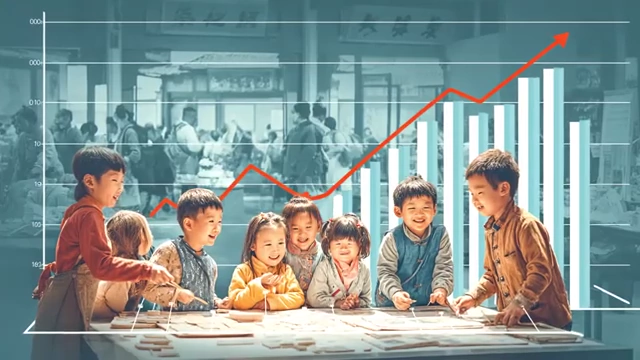
Children in a classroom setting with an upward trend graph, symbolizing increased childcare services [ 00:27:30 ]
- Long-Term Care Insurance (LTCI) [2000]: Public financing for elderly care in community and institutional settings (prioritizing community).
- Remaining Challenges: Despite substantial public financing, families still provide an estimated 75-80% of care responsibilities. Frustration remains regarding the scarcity and inflexibility of affordable childcare. Japan's approach remains firmly rooted in the pro-traditional model.

Children looking bored in a crowded classroom, reflecting childcare scarcity [ 00:28:03 ]
- First to confront aging challenges and economic stagnation, forced to pivot from a traditional post-war model (male breadwinner/female homemaker) to an interventionist approach after 1990s economic stagnation.
- South Korea [28:14]:
- Policy shift driven by the 1997 Asian financial crisis, jolting them from a non-interventionist stance.

Cityscape with a downward red arrow, representing South Korea's financial crisis [ 00:28:17 ] - Adopted a "social investment strategy" integrating social development with economic goals ("productivism redefined").
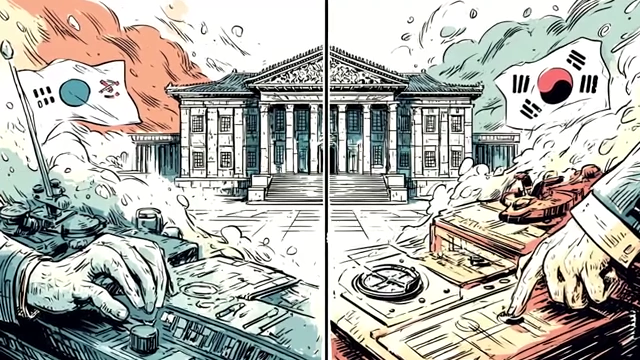
Split image of two hands controlling government levers, representing state intervention in South Korea [ 00:28:28 ] - Commodification of Care Work: Views care services as a new growth engine, creating jobs and stimulating the service sector.

Graph illustrating economic growth alongside medical symbols, signifying commodification of care work [ 00:28:54 ] - Cultural Paradox: Korea is the only OECD country where university-educated women have a lower labor force participation rate than those with less education.

Stressed woman with a Korean flag, university cap, and scattered papers, symbolizing the cultural paradox [ 00:29:41 ] - Economic incentives and service provisions are insufficient to overcome deeply entrenched traditional gender divisions of labor.

People waiting outside an office door, illustrating challenges in professional workplaces [ 00:30:00 ]
- Economic incentives and service provisions are insufficient to overcome deeply entrenched traditional gender divisions of labor.
- Policy shift driven by the 1997 Asian financial crisis, jolting them from a non-interventionist stance.
- China [30:19]:
- Characterized as a latecomer in comprehensive welfare reform, resembling earlier productivist stages of Japan and Korea.

Map of China with economic charts and a pie graph [ 00:30:22 ] - The Confucian family still acts as the dominant welfare institution, with social policy largely subordinated to economic strategy.
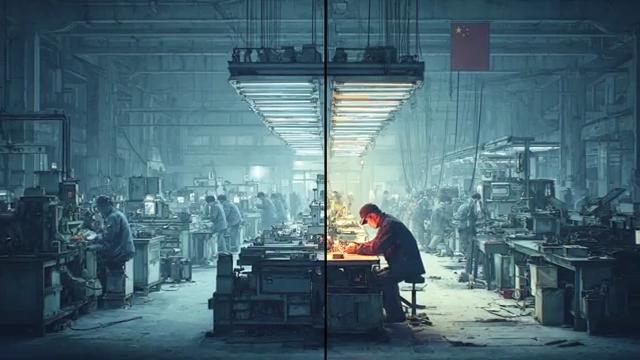
Split image of factory workers and a traditional Chinese family dinner, showing family as welfare institution [ 00:30:27 ] - Minimal government intervention in widespread state-provided childcare and elderly care, preferring market and family roles.

Traditional Chinese government building [ 00:30:47 ] - Aggressive Interventions: State intervenes aggressively when aligned with national economic/social goals (e.g., one-child policy and its reversal). Recent community-based care pilots are accommodations to rapid aging, not comprehensive welfare initiatives.

Man aggressively holding a document with a red seal, symbolizing aggressive state intervention [ 00:31:13 ]
- Characterized as a latecomer in comprehensive welfare reform, resembling earlier productivist stages of Japan and Korea.
- The "Sandwich Class" in Hyper-Expensive Cities (Singapore, Hong Kong) [19:05]:
- Refers to middle-class families with significantly above-average incomes who are financially trapped.

Man standing confidently amidst huge piles of money [ 00:19:26 ] - Caught between stratospheric real estate costs and the structure of public services.

A small house dwarfed by a towering skyscraper, symbolizing stratospheric real estate costs [ 00:19:47 ] - They earn too much for state support but not enough for private luxury, making multi-generational living an absolute financial necessity, not a cultural choice, to maintain a middle-class existence.

Family looking stressed at a table with bills and a piggy bank, representing being financially trapped [ 00:19:43 ] - The multi-generational arrangement is often not a choice for cultural continuity but an absolute financial necessity.

Family standing outside a "SOLD" house with moving boxes, showing financial necessity [ 00:20:25 ]
- Refers to middle-class families with significantly above-average incomes who are financially trapped.
Western Fragmentation vs. Eastern Cohesion [31:56]
The video contrasts why multi-generational living feels like a "fortress" in the West but is a policy blueprint for state stability in East Asia.

- Western Fragmentation:
- The collective has been systematically attacked and undermined in Western societies.

Group of people divided by a large crack in a table [ 00:32:17 ] - Engineered Disintegration: Erosion of social cohesion is presented as a result of deliberate psychological, economic, and cultural manipulation by financial elites and corporate entities.

Crowd of people staring at phones, with news feeds in the background, symbolizing social fragmentation [ 00:32:23 ] - Elite Gaslighting [33:00]: A psychological strategy to make populations doubt reality, question experiences, and distrust neighbors, fracturing society into isolated, easily controlled units.

Man looking into a shattered mirror, symbolizing doubt in objective reality [ 00:33:00 ] - Collapse of Community Bonds: Traditional institutions (unions, churches, clubs) that fostered horizontal trust and collective identity are collapsing.

Empty church pews, symbolizing the collapse of community bonds [ 00:33:22 ] - Systemic Narrative Control [33:39]: Powerful media outlets dismiss public anxieties (economic decline, demographic change) as "fringe" or "conspiracy theories," even when backed by evidence.

TV screen with a "NEWS" banner covering the anchor's face [ 00:33:37 ] - Concentration of Media Ownership [34:21]: Asset managers like BlackRock hold major shares in vast media conglomerates, giving them immense centralized influence over narratives.

Large, imposing corporate building, symbolizing concentrated media ownership [ 00:34:29 ] - Gutting of Local Journalism [34:51]: Private equity and hedge funds dismantled over 1,800 local US newspapers, destroying community watchdog functions and generating institutional distrust.

Newspaper with "TIPS!" on a pile of rubble [ 00:34:55 ] - Silicon Valley's Role [35:25]: Tech giants are accused of deliberately suppressing dissenting views and amplifying divisive, sensational content to drive engagement (digital surveillance capitalism thriving on loneliness).

Split phone screens showing angry individuals and chaotic crowds, symbolizing divisive content amplification [ 00:35:33 ] - Endgame: Exploitation and Transnational Control: A distracted, atomized populace cannot organize or resist exploitation.
Erosion of national identity enables governance by undemocratic global bodies (WHO, WEF) advocating "stakeholder capitalism," where corporations replace democratic processes.

Person standing alone in a spotlight in a desolate landscape [ 00:36:17 ] 
Tattered American flag, symbolizing the erosion of national identity [ 00:36:22 ]
- The collective has been systematically attacked and undermined in Western societies.
- Eastern Cohesion (China's Model) [36:47]:
- Machinery of Stability: State-regulated information ecosystem prioritizes social stability over profit-driven polarization, actively regulating tech giants to avoid digital oligarchy.

Technological infrastructure with a green beam flowing through interconnected cubes, representing a machinery of stability [ 00:36:52 ] - Resilient Grassroots Community Structures: Stability rooted in functional neighborhood committees (BU) that resolve disputes, organize welfare, manage public health, and maintain order.

Neighborhood bulletin board in a residential area [ 00:37:21 ] - Hyper-efficient Governance Model: Provides a direct two-way link between the state and community, ensuring feedback and compliance (e.g., during COVID-19).

Illustrated map with connected buildings and icons, representing a hyper-efficient governance model [ 00:37:49 ] - Promotion of Collective Values: State actively promotes Confucian values emphasizing family duty, collective good, and hierarchical respect, countering Western hyperindividualism and moral relativism.

Split image of a man with a phone (individualism) and a man writing (traditional values) [ 00:38:27 ] - Economic Sovereignty: Avoided neoliberal shock therapy and de-industrialization, preserving community economic function. Policies like "common prosperity" align business practices with national social objectives, prioritizing people over unchecked profits.

Large vault door, symbolizing economic sovereignty and protection [ 00:38:36 ]
- Machinery of Stability: State-regulated information ecosystem prioritizes social stability over profit-driven polarization, actively regulating tech giants to avoid digital oligarchy.
Conclusion: The Future of Collective Resilience [40:57]
The crisis of low fertility, inflation, and social instability is the "terminal vulnerability of the lone atomized consumer unit."
- The East Asian model, rooted in familialism, treats the extended family as a high-efficiency economic fortress and a vital extension of state capacity.

An old hand holding a young hand over documents, representing the extended family unit [ 00:41:17 ] - This is a low-cost governance model designed to promote social stability and demographic continuity.

A multi-generational family having dinner, representing demographic continuity [ 00:41:27 ] - In both Westerners facing economic collapse and East Asia's civilizational strategy, the trend is the same: the collective unit is proving to be the most realistic means of survival, wealth preservation, and social stability.
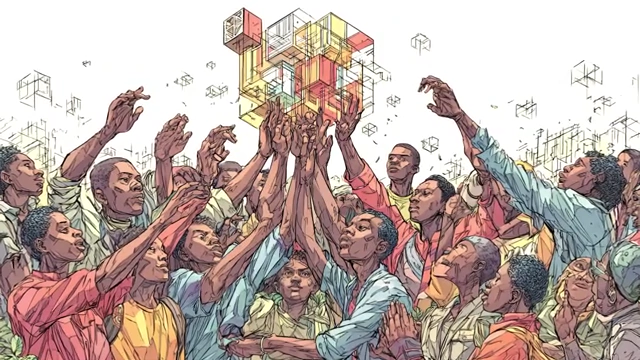
Group of diverse people reaching up for a glowing, multi-colored cube, symbolizing collective effort and survival [ 00:41:48 ] - The perceived "burden of kinship" (time, logistics, interdependence) is being aggressively re-evaluated as the "ultimate long-term security asset."

A man looking stressed at a desk with a calculator and piles of papers, representing the re-evaluation of the burden of kinship [ 00:41:58 ] - The return to collective living is a proactive civilizational survival strategy, prioritizing long-term demographic continuity and physical asset inheritance over short-sighted consumerism.

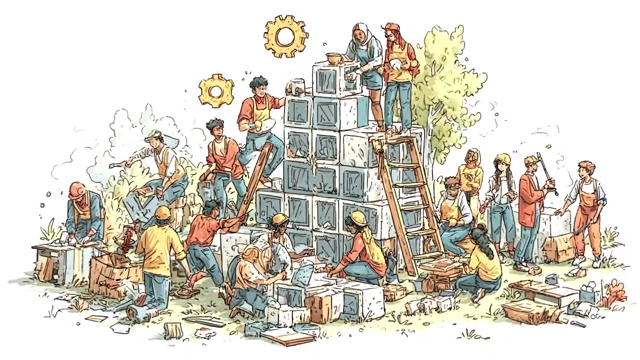
People building a large, green structure with blocks, symbolizing a proactive civilizational survival strategy [ 00:42:15 ] - The true test of resilience lies in who owns the future: the individual, isolated and exposed by the market, or the collective unit, bound by shared destiny and mutual defense.

An angry man looking at red stock market numbers, representing the individual exposed by the market [ 00:42:33 ]