The Rising Cost of RAM: How AI Demand and Supply Constraints Drive Price Increases
RAM prices are skyrocketing due to the immense demand from AI data centers, which require vast amounts of fast memory for training and inference. The three major DRAM chip manufacturers (SK Hynix, Samsung, and Micron) are prioritizing these lucrative AI customers, with Micron exiting the consumer memory business and SK Hynix sold out until 2026. Samsung has reportedly doubled contract prices. Increasing production is challenging as existing fabrication plants already run at maximum capacity, and manufacturers are reluctant to build new, multi-billion dollar factories due to the fear of oversupply once the anticipated "AI bubble" eventually pops. Even with China's CXMT entering DDR5 production, they are years away from making a significant dent in global supply. Consumers should expect all memory-dependent devices, from gaming PCs to smartphones and cars, to become more expensive in the coming years.
Introduction to RAM Price Surge [0:00]
Recent months have seen a dramatic increase in RAM prices, making PC upgrades more expensive. This surge is primarily driven by the insatiable demand from AI data centers.

- Industry Shifts by Major Manufacturers:
- Micron exited its consumer memory business, including its Crucial brand, to focus entirely on the high-demand AI sector.

Micron announces exit from Crucial Consumer Business. [ 00:00:49 ] - SK Hynix announced that its memory production capacity is fully sold out through 2026.

SK Hynix has already sold out its memory production capacity for 2026. [ 00:00:56 ] - Samsung reportedly doubled its DDR5 RAM contract pricing for suppliers.
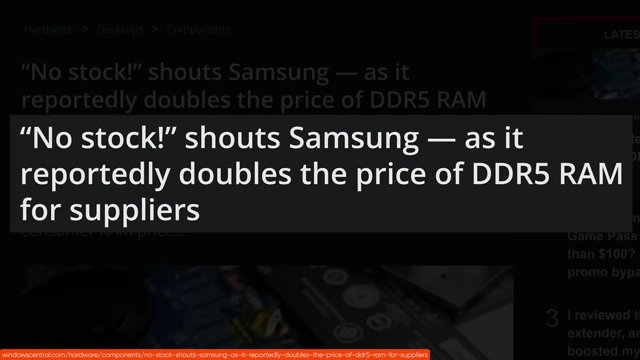
News report indicating Samsung reportedly doubled the price of DDR5 RAM for suppliers. [ 00:01:01 ] - This market trend suggests prices will continue to rise before any potential stabilization, especially if the AI market remains strong.
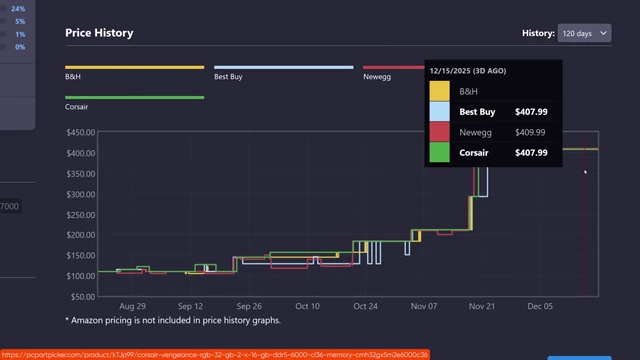
RAM price history chart showing significant increases across retailers from October to December. [ 00:02:30 ]
- Micron exited its consumer memory business, including its Crucial brand, to focus entirely on the high-demand AI sector.
Why AI Models Require So Much RAM [2:26]
Artificial Intelligence, particularly Large Language Models (LLMs) like ChatGPT, DeepSeek, and Gemini, are extremely demanding of RAM.
- Training and Inference Demands:
- LLMs are trained by processing colossal amounts of data, including text, images, video, and audio files. Higher quality models require parsing through larger datasets.
- This training process can span from several hours to many months for the most complex models.

Text indicating that Large Language Model (LLM) training can take anywhere from "a weekend" to "half a year". [ 00:03:01 ] - RAM is essential due to its significantly higher speed compared to SSDs and its larger capacity than CPU caches.
- For "inference" (user interaction with trained models), ample RAM allows for quick referencing of past conversation context, crucial for coherent and appropriate responses.
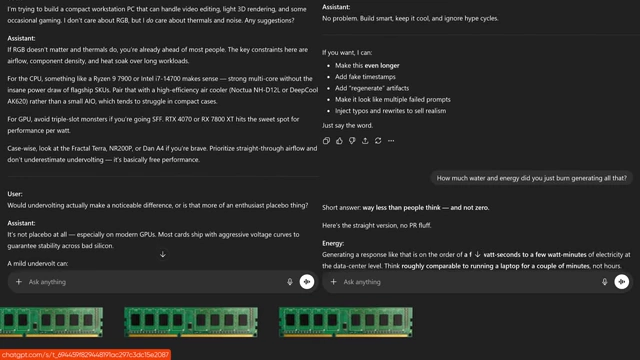
A screenshot of a ChatGPT conversation alongside images of RAM sticks, illustrating the memory required for AI inference and context retention. [ 00:03:27 ]
- Financial Muscle of AI Companies:
- Companies like OpenAI are backed by billions in funding, enabling them to outbid other sectors for available memory.

News headline highlighting OpenAI's substantial funding, enabling them to acquire vast amounts of memory. [ 00:03:48 ] - This financial power ensures they acquire the necessary memory to stay at the forefront of AI development.
- Companies like OpenAI are backed by billions in funding, enabling them to outbid other sectors for available memory.
Impact on Gaming RAM and Market Concentration [3:55]
While server RAM for AI and consumer gaming RAM seem distinct, they both rely on the same fundamental DRAM chips, leading to indirect competition.
- Dominance of Three Manufacturers:
- Despite numerous brands selling RAM modules (sticks), only three major players actually manufacture the core DRAM chips: SK Hynix, Samsung, and Micron.
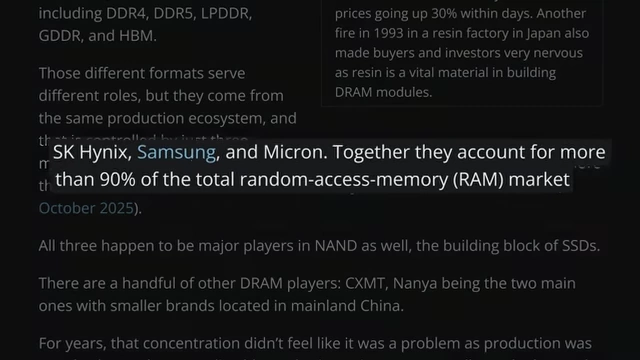
Text emphasizing that SK Hynix, Samsung, and Micron control over 90% of the total RAM market. [ 00:04:29 ] - These three giants collectively control over 90% of the global RAM market, supplying nearly every industry that uses processors.
- Inside a Semiconductor Fab:
- An interior view of a modern semiconductor fabrication plant, showcasing the complex machinery involved in chip production.

An interior view of a modern semiconductor fabrication plant, showing complex machinery. [ 00:04:39 ] - Close-up of automated machinery precisely assembling RAM modules on a production line.
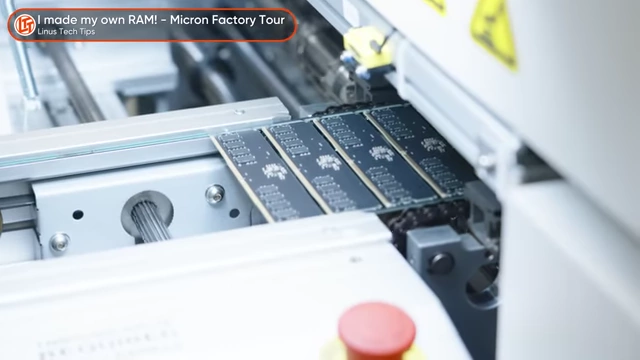
Close-up of automated machinery assembling RAM modules on a production line. [ 00:04:42 ]
- An interior view of a modern semiconductor fabrication plant, showcasing the complex machinery involved in chip production.
- This market concentration means that AI companies, with their massive budgets, are effectively bidding against individual consumers for a finite supply of chips.
- Despite numerous brands selling RAM modules (sticks), only three major players actually manufacture the core DRAM chips: SK Hynix, Samsung, and Micron.
- Prioritization of High-Value Customers:
- Manufacturers are naturally pivoting resources towards their most lucrative customers, primarily AI and data center companies.
- A denied rumor about Samsung struggling to supply its own smartphone business units with RAM highlights the severe supply constraints and internal competition within large tech conglomerates.

News headline questioning if RAM is so expensive that Samsung might not supply its own units, highlighting market scarcity. [ 00:06:03 ] 
Samsung rejects the claim that it is negotiating with itself over memory contracts. [ 00:06:10 ]
Reasons Against Increasing RAM Production [6:14]
Despite soaring demand and prices, major RAM manufacturers are unwilling to significantly boost production or build new fabrication facilities.
- 1. Existing Fabs at Maximum Capacity and Complexity:
- Current state-of-the-art fabrication facilities (fabs) operate 24/7 with optimized supply management and highly skilled engineers.
- Semiconductor manufacturing is an extremely delicate process; increasing production beyond current limits or rushing operations risks significant errors, leading to weeks or months of lost output.
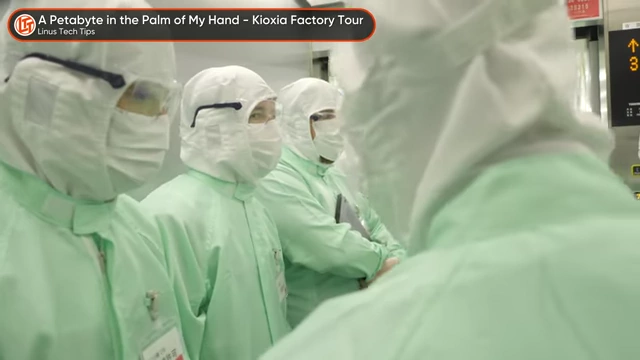
Cleanroom engineers in protective suits observing the delicate semiconductor manufacturing process. [ 00:06:31 ]
- 2. Manufacturers' Strategy to Avoid Oversupply:
- SK Hynix and Samsung have publicly stated their intent to "minimize the risk of oversupply."
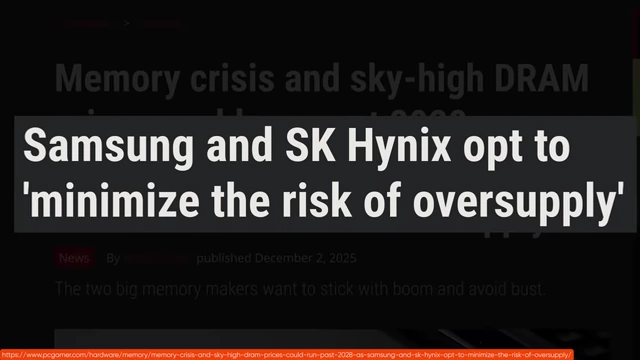
News headline stating Samsung and SK Hynix opt to 'minimize the risk of oversupply'. [ 00:06:58 ] - In the past, similar demand spikes (e.g., during the smartphone boom of the mid-2010s) led manufacturers to increase production, only for demand to subside, resulting in overstock and dramatic price drops, sometimes below cost.
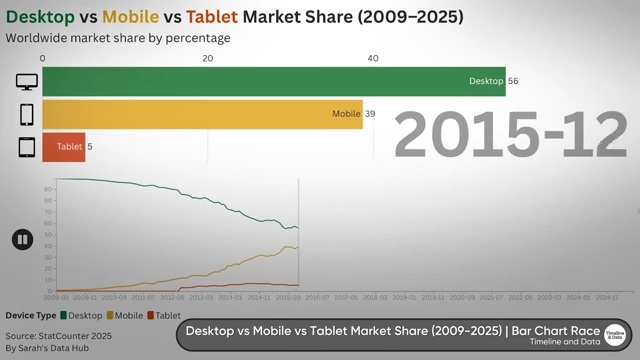
A bar chart race illustrating the historical shift in worldwide market share between desktop, mobile, and tablet devices from 2009 to 2015. [ 00:07:11 ] - Companies wish to avoid this "boom and bust" cycle, preferring stable, higher prices over fluctuating profitability.
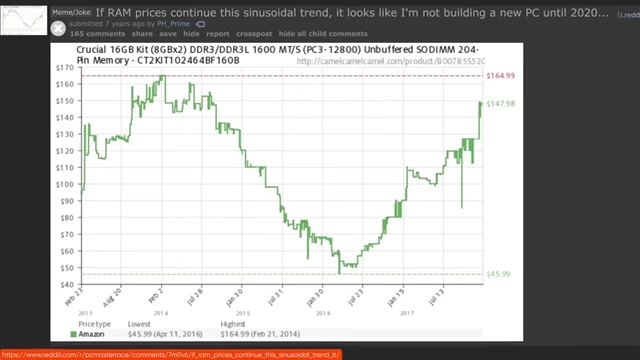
An older price history chart for Crucial 16GB RAM, demonstrating a previous "sinusoidal trend" of price fluctuations. [ 00:07:32 ]
- SK Hynix and Samsung have publicly stated their intent to "minimize the risk of oversupply."
- 3. Long Lead Times and High Costs for New Fabs:
- Building a new silicon wafer fabrication plant is an immense undertaking, requiring years to complete and billions of dollars in investment.
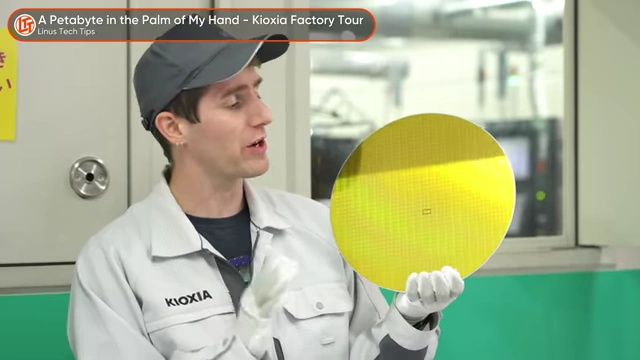
Linus Sebastian holding a large silicon wafer, the base material for semiconductor chips. [ 00:07:46 ] - These projects cannot be significantly accelerated by simply allocating more capital.
- Extensive planning is required for infrastructure, including earthquake proofing, water access and management, power supply, staffing, logistics, and a consistent supply of specialized chemicals, gases, and high-purity silicon wafers.

A "TO DO:" list detailing the extensive requirements for building a new semiconductor fabrication plant, including earthquake proofing, water, power, and supply chain. [ 00:08:10 ] - Manufacturers would only undertake such a massive investment if they were confident that high prices would be sustained for many years, which they deem unlikely given the speculative nature of the AI market.
- Building a new silicon wafer fabrication plant is an immense undertaking, requiring years to complete and billions of dollars in investment.
The Inevitable AI Bubble Pop and Future Outlook [8:30]
The current AI market surge is considered a bubble that is expected to eventually pop, influencing the long-term strategy of memory manufacturers.
- Anticipated Market Correction:
- The "AI bubble" is widely expected to burst, though the exact timing is uncertain.

A quote from Business Insider featuring OpenAI CEO Sam Altman, discussing how "smart people get overexcited about a kernel of truth" during market bubbles. [ 00:08:34 ] - While demand for memory won't disappear after the bubble pops, it will not remain at current inflated levels.
- Manufacturers are unwilling to commit to new, multi-billion dollar production facilities that might become redundant or unprofitable by the time they are operational.
- The "AI bubble" is widely expected to burst, though the exact timing is uncertain.
- China's Emergence in Memory Production:
- China's CXMT has announced the capability to manufacture DDR5 chips.
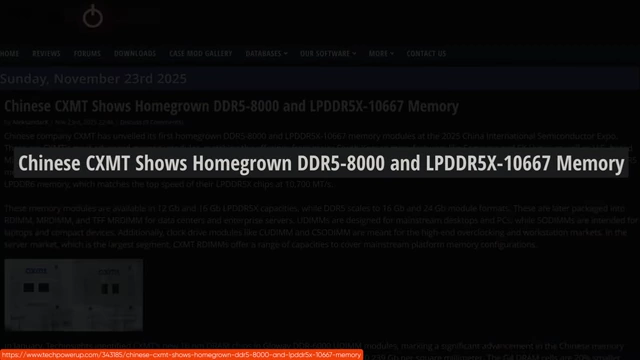
News headline announcing Chinese CXMT's development of homegrown DDR5-8000 and LPDDR5X-10667 memory. [ 00:09:22 ] - This could potentially alleviate some supply pressure, especially if trade tensions between the US and China ease.
- However, CXMT is estimated to be 2-3 years away from matching the production output of the established "big three."
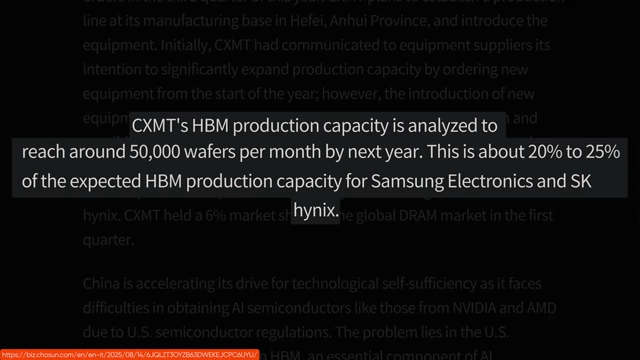
Text outlining CXMT's HBM production capacity, estimated to reach 20-25% of Samsung and SK Hynix by the next year. [ 00:09:37 ]
- China's CXMT has announced the capability to manufacture DDR5 chips.
- Continued High Prices Post-Bubble:
- SK Hynix's production being sold out through 2026 means that prices will likely remain high even if the AI bubble pops earlier.
- Companies that have pre-booked these chips at current high market rates will pass those costs onto consumers.
A graphic showing Kingston Technology, illustrating how the increased cost of RAM chips will be passed on to consumers. [ 00:10:18 ] - This will lead to increased costs for a wide range of memory-dependent devices, including iPhones, Steam Decks, smartwatches, and cars.

Visuals of an iPhone, Steam Deck, and smartwatch, demonstrating the widespread impact of rising RAM prices across various consumer electronics. [ 00:10:48 ]
Consumer Action and Broader Implications [10:38]
For the average consumer, navigating the rising RAM prices is complex, with no easy solutions.
- Widespread Impact:
- The price increase will affect virtually all devices that require memory, extending beyond just gaming PCs.
- News headline reporting that Nintendo is expected to increase the cost of the Switch 2 due to a 41% rise in RAM expenses.

News headline reporting that Nintendo is expected to increase the cost of the Switch 2 due to a 41% rise in RAM expenses. [ 00:11:24 ]
- Lack of Simple Solutions:
- Boycotting memory manufacturers is not a practical solution, as nearly all modern electronic products rely on RAM.
- The issue is deeply rooted in complex market dynamics, corporate profit motives, and global geopolitical factors, leaving individual consumers with limited direct influence.