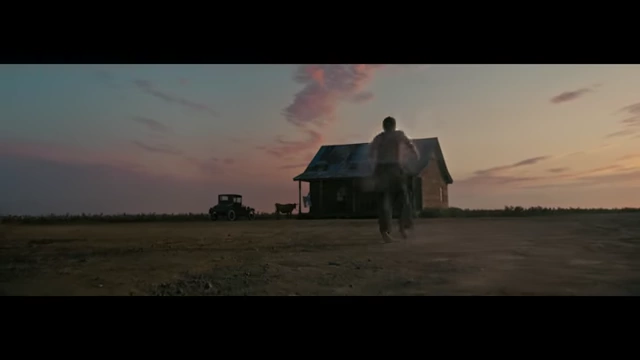
Autumn Durald Arkapaw Makes History with SINNERS: The Filmmaking Process Using IMAX 65mm Cameras
Summary:
- Director Ryan Coogler and Cinematographer Autumn Durald Arkapaw discuss their collaborative process on "SINNERS," focusing on its groundbreaking IMAX 65mm production.
- Arkapaw achieved a historic milestone as the first woman to shoot a theatrical feature film in 65mm and IMAX, notably operating an IMAX camera handheld for a major release.
- Their filmmaking philosophy prioritizes conveying emotional core and audience feelings over mere technical references.
- They sought advice from Christopher Nolan and Hoyte van Hoytema, who both encouraged treating the large format cameras with a normal, uninhibited approach.
- A test shoot in California's flatlands helped visualize the vast, isolated Mississippi Delta, a key thematic element beautifully captured by the immersive 1.43 full-frame aspect ratio.
- The team masterfully handled the heavy 100-pound IMAX cameras for dynamic crane and handheld shots, demonstrating agility despite the equipment's size.
- The opening church scene is highlighted as a triumph of departmental synergy, with lighting, production design, and performances merging to create a visually rich and tonally complex experience that is both heightened and real.
- The strategic use of different aspect ratios (wide for landscapes, tall for character focus) greatly enhances the film's immersive quality.
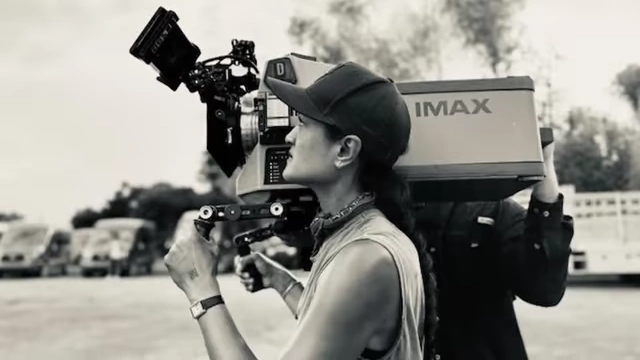
Cinematographer Autumn Durald Arkapaw operating a handheld IMAX camera, marking a historic achievement. [ 00:01:18 ]
Introduction to IMAX and "SINNERS" Collaboration [00:00:00] [00:01:38]
- Ryan Coogler's Relationship with IMAX [00:00:00]
- Coogler's connection to IMAX began in 2008 after seeing Christopher Nolan's "The Dark Knight" in the format.
- He has been a "day one" attendee for any IMAX release since then, deeply impacted by Nolan's work.
- Autumn Durald Arkapaw's Historic Achievement [00:01:11]
- Autumn Durald Arkapaw made history as the first woman to shoot a theatrical feature film in 65mm and IMAX, notably handheld an IMAX camera for a major release.
Cinematographer Autumn Durald Arkapaw operating a handheld IMAX camera, marking a historic achievement. [ 00:01:18 ]
- Autumn Durald Arkapaw made history as the first woman to shoot a theatrical feature film in 65mm and IMAX, notably handheld an IMAX camera for a major release.
The Filmmaking Process and Collaboration Philosophy [00:01:38]
- Translating Story from Script to Screen [00:01:41]
- Durald Arkapaw notes Coogler's unique process of communicating the emotional impact he wants the audience to feel, rather than providing tangible visual references.
- This approach, focusing on the emotional core and character-driven narratives, guides the cinematography to ensure a sense of reality and authenticity.
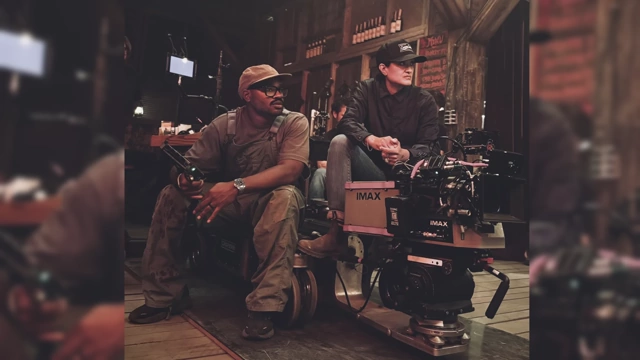
Director Ryan Coogler and Cinematographer Autumn Durald Arkapaw on set with a large format IMAX camera. [ 00:05:50 ]
Preparing to Shoot in Large Format [00:04:23]
- Inspiration for Large Format [00:03:10]
- Jesse Ehrman from Warner Bros. suggested exploring large format for "SINNERS."
- Coogler initially considered using a 416 camera, but the suggestion sparked the idea of IMAX.
- Seeking Expert Advice [00:00:30] [00:05:33]
- Christopher Nolan's Counsel: Coogler's first call for advice was to Christopher Nolan, who advised treating the large format camera like a Super 8 camera, emphasizing not to "bow down" to the camera but to make it like a normal movie.
- Hoyte van Hoytema's Insights: Durald Arkapaw also spoke with Hoyte van Hoytema, who shared his deep, emotional connection to the IMAX format and advised to "drive it like you stole it," focusing on what they wanted to convey visually to the audience.
- Aspect Ratio Exploration: Durald Arkapaw presented various aspect ratio options, including the 2.76 "Hateful Eight" format, which excited her for its potential.
The Test Shoot and Visual Themes [00:06:59]
- Recreating the Mississippi Delta [00:07:02]
- To capture the flat, expansive landscape of the Mississippi Delta, a test shoot was conducted in the flatlands of Palmdale, California.
- The test aimed to understand how different lenses and formats would render the unique visual characteristics of the location.
- Breathtaking Scope and Isolation [00:07:48]
- The test footage was described as "breathtaking," immediately demonstrating the visual theme of isolation and vastness that Coogler experienced while scouting in Mississippi.
- The 1.43 full-frame aspect ratio particularly amplified the grandeur of the sky, creating an impactful contrast with solitary characters.
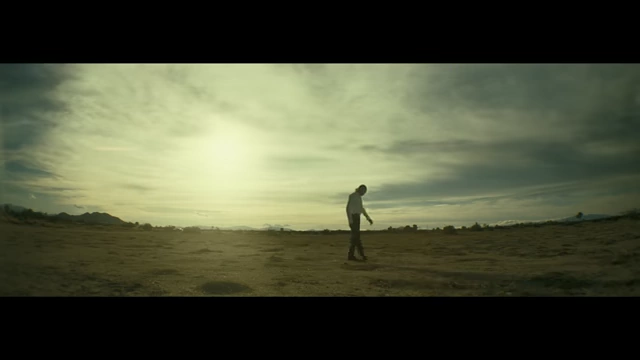
A wide shot illustrating the vast, isolated landscapes of the Mississippi Delta. [ 00:07:58 ]
- Representation in Large Format [00:09:08]
- Coogler noted the rarity of films featuring people of color in such large formats, and the profound effect of seeing close-ups in IMAX.
- Durald Arkapaw praised Coogler's bravery in pushing these boundaries, enabling her to be equally brave in execution, resulting in an immersive experience.
- The film dynamically uses different aspect ratios, transitioning between wide shots for landscapes and tall shots for character focus to enhance immersion.
Filming the Opening Scene [00:10:33]
- The Church Scene's Synergy [00:11:25]
- Coogler highlights the opening church scene as a testament to every department "firing on all cylinders" – from makeup, costumes, and performances to production design by Hannah Beachler.
- The visual contrast of white textures (church, Ruth's costume) against the dark skin of characters like Saul was intentionally used to create beauty and reality.
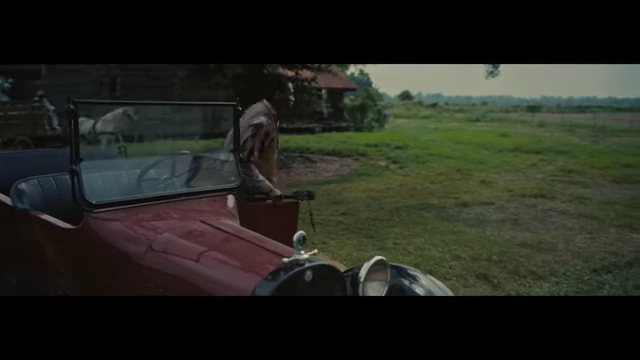
A character arriving in a vintage car at a rural setting in the film's opening scene. [ 00:10:52 ] 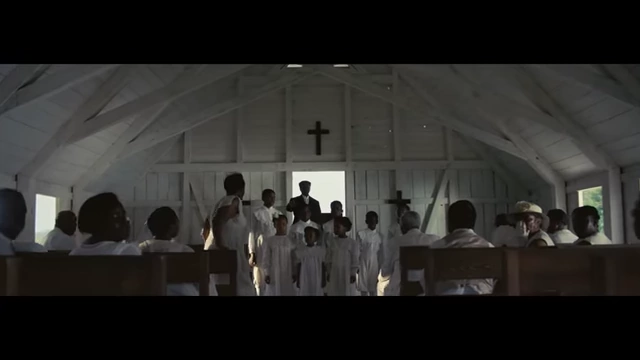
The interior of the church scene, showcasing the production design and contrast in textures. [ 00:11:19 ]
- Cinematography Challenges and Execution [00:13:02]
- Durald Arkapaw's lighting beautifully captured the scene's heightened yet real, supernatural yet grounded tone.
- Operating 100-pound IMAX cameras, especially for crane movements and handheld shots, presented significant physical and technical challenges compared to much lighter digital cameras (e.g., Sony Venice at 37-40 pounds).
- Despite the weight and complexity, the team maintained fluidity and agility, executing complex shots and long takes effectively without the stiffness often associated with large format film cameras.
Filming the Farmhouse Scene [00:15:56]