Understanding the Psychology of Money: 18 Traps to Avoid and Mindset Shifts for Lasting Wealth
This animated summary of Morgan Housel's "The Psychology of Money" reveals 18 psychological traps that influence financial decisions and offers mindset shifts for building lasting wealth.
- Act 1: The False Confidence highlights that financial decisions are often influenced by personal history and biases rather than pure logic, and warns against overestimating personal control or trusting comforting narratives over data.
- Act 2: The Emotional Hijack discusses the dangers of endlessly chasing more, seeking admiration through material possessions, and mistaking appearances of wealth for true wealth. It also explains how pessimism can masquerade as wisdom, leading to poor choices.
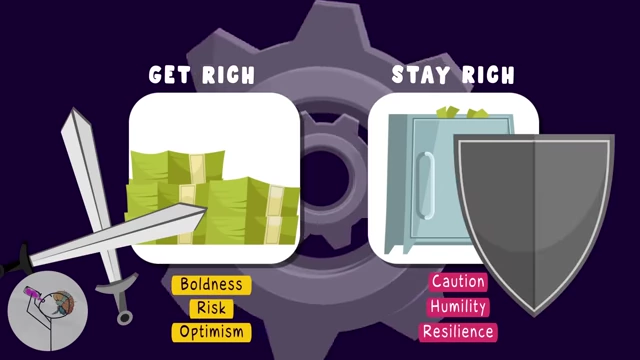
- Act 3: The Hidden Rules of Money emphasizes the importance of saving without specific goals for flexibility, accepting market volatility as a fee, and recognizing that staying rich requires different skills (caution, humility, resilience) than getting rich.
- Act 4: The Long Game illustrates the immense power of compounding over time, the significance of rare "tail events" in financial success, and the ultimate value of money as freedom, especially over one's time.
- Act 5: Become the Person Who Wins Long Term advises against expecting predictable markets, planning rigidly without accounting for personal change, and copying others' financial strategies without understanding their unique "game."
Introduction [0:00]
The video introduces "The Psychology of Money" as a diagnosis of how the mind sabotages wealth, emphasizing that financial decisions are deeply psychological, not just logical. It promises to uncover mental traps and mindset shifts for financial improvement.
Act 1: The False Confidence [1:01]
This section addresses common cognitive biases that lead to poor financial decisions.
Trap 1: You Think You're Logical [1:18]
- Intelligence does not protect against bias; it can even hide it.
- People make different investment choices based on their unique life experiences and stories.
- A stockbroker from the Great Depression might avoid investing, while a tech worker from the '90s boom might chase risks.
- Someone who graduated during the 2008 crash might fear the stock market, while a crypto investor from 2017 might see volatility as normal.
- Personal experience is a tiny, bubble-like sliver of global financial reality.
- These limited experiences shape nearly 100% of one's financial worldview.
Trap 2: You Think You’re in Control [2:39]
- Success and failure are a mix of effort, luck, and risk.
- We tend to attribute success solely to merit and failure to deservedness, overlooking the role of luck and risk.
- Example: Bill Gates and Kent Evans [0:03:41]
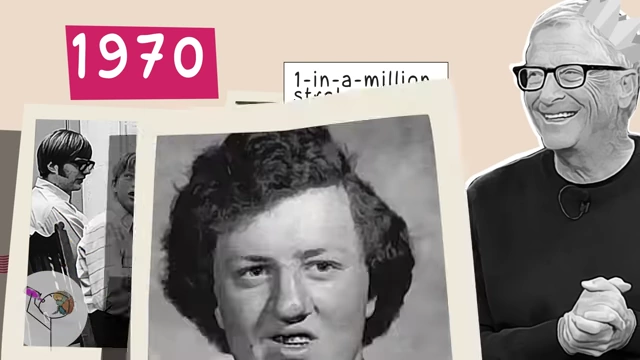
A split image showing a younger Bill Gates in the 1970s, indicating a "one-in-a-million stroke of luck" for attending a high school with a computer, and his equally brilliant friend Kent Evans who died in a mountaineering accident, highlighting the role of risk. [ 00:03:42 ] - Bill Gates's success, while brilliant, was also influenced by the luck of attending one of the few high schools with a computer in the 1970s.
- His equally brilliant friend, Kent Evans, died in a mountaineering accident before finishing high school, illustrating the role of risk.
- The importance of humility [0:04:12]
- Don't take full credit for success or full blame for failure, as luck and risk play significant roles.
- Be cautious about admiring or copying those with extreme success, as their circumstances may not be repeatable.

A graph showing a normal distribution curve with "patterns" highlighted as repeatable, and extreme successes (represented by famous individuals like Elon Musk, Oprah, Steve Jobs) as rare outliers that are hard to repeat. [ 00:04:40 ]
- Focus on repeatable patterns over individual stories to build a financial life that can withstand bad luck.
Trap 3: You Believe the Story, Not the Reality [5:02]
- People are often swayed by comforting narratives, even when facts contradict them.
- Example: Lottery winner story - The story of a baker winning $200 million makes buying a ticket feel rational, despite astronomical odds.
- "Appealing fictions" are narratives that feel good but are misleading.
- Example: Crypto boom of 2021 [0:06:25]
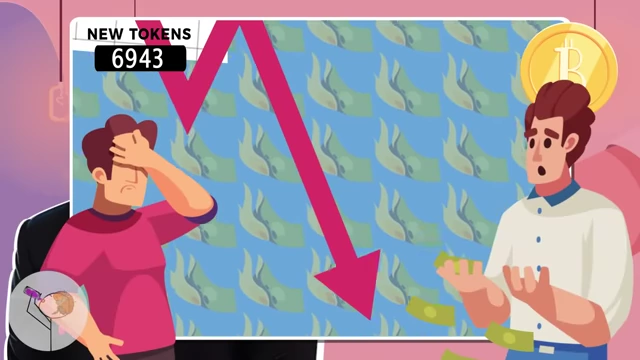
A visual depicting two individuals looking distressed as a large red arrow indicates a market crash in crypto, with thousands of new tokens losing value, symbolizing the collapse of the crypto boom due to reliance on appealing fictions rather than data. [ 00:06:26 ] - Thousands of new tokens launched with no real utility, driven by the narrative of quick riches and flashy influencer lifestyles, leading to billions lost when the market collapsed in 2022.
- Example: Crypto boom of 2021 [0:06:25]
- Always question if a belief is supported by data or merely by desire.
Trap 4: You Think You're a Spreadsheet [6:51]
- People plan with cold logic but are influenced by emotions like stress and doubt.
- "Aiming to be mostly reasonable works better than trying to be coldly rational" (Morgan Housel).
- Reasonable plans are sustainable, which is crucial for long-term wealth building.
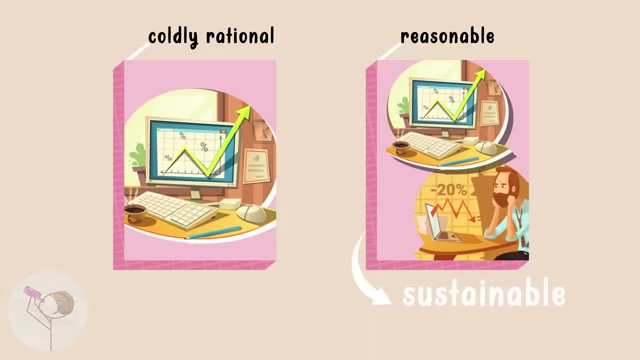
A visual comparison illustrating that a "coldly rational" plan might look perfect on paper but is unsustainable for humans, whereas a "reasonable" plan, accounting for emotions and downturns, is sustainable and builds wealth. [ 00:07:19 ]
- Reasonable plans are sustainable, which is crucial for long-term wealth building.
- Example: Stock market returns [0:07:30]
- Historical data shows positive returns over longer periods (68% over 1 year, 88% over 10, 100% over 20), but these returns are only realized if one sticks with the plan through emotional temptations.

A chart showing historical positive returns of the stock market over 1, 10, and 20 years, with text emphasizing that these returns require staying calm and not abandoning the plan during downturns. [ 00:07:39 ] - The real threat to a financial plan is emotional temptation, not poor logic.
- Historical data shows positive returns over longer periods (68% over 1 year, 88% over 10, 100% over 20), but these returns are only realized if one sticks with the plan through emotional temptations.
Act 2: The Emotional Hijack [8:05]
This section explores how emotions can derail financial well-being.
Trap 5: You Chase More Than You Need [8:20]
- Chasing more status, validation, or admiration often ruins finances.
- "There is no reason to risk what you have and need for what you don't have and don't need" (Morgan Housel).
- Example: Sam Bankman-Fried [0:09:27]

A visual representation showing Sam Bankman-Fried behind bars, surrounded by burning money, symbolizing the collapse of his empire due to the insatiable chase for "NEVER ENOUGH" despite having billions. [ 00:09:29 ] - Despite being worth $20 billion at 29, he risked everything by mixing customer funds, driven by the desire for "more" (control, status, admiration), leading to the collapse of FTX and his disgrace.
- Comparison with others, especially on social media, creates a never-ending cycle of wanting more.
- "It is impossible to escape envy by means of success" (Bertrand Russell).
- Define "enough" and protect it; true wealth is peace of mind.
Trap 6: You Think Stuff Will Make You Admired [10:44]
- People mistakenly believe expensive possessions will earn them admiration.
- "No one is impressed with your stuff as much as you are" (Morgan Housel).
- The "man in the car paradox": people seeing a luxury car admire the car itself and picture themselves in it, not the driver.
- Wealth becomes a mirror reflecting others' desires, not admiration for the owner.
- Money is a weak tool for chasing admiration; real respect comes from humility, kindness, and empathy.
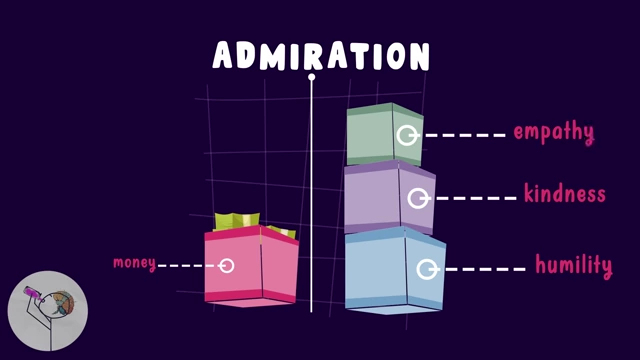
A bar chart illustrating that "admiration" is more effectively built by qualities like empathy, kindness, and humility (stacked blocks) than by money/material possessions (single block). [ 00:11:59 ]
Trap 7: You Think Looking Rich Means Being Rich [12:09]
- Trying to look rich is the fastest way to go broke.
- "Spending money to show how much money you have is the fastest way to have less of it" (Morgan Housel).
- True wealth vs. looking rich [0:13:02]
- Looking rich is about visible spending (cars, watches, vacations), which often hides debt and stress.
- True wealth is invisible: financial assets not yet spent, offering freedom, time, and peace of mind.

An infographic contrasting "LOOK RICH" (spending, visible items like a car with debt) and "TRUE WEALTH" (not spending, invisible growth like a money tree, leading to freedom and peace of mind). [ 00:12:59 ]
- Building wealth is silent; it involves quiet investments and deferred gratification, not public displays.
Trap 8: You Fall for Fear Disguised as Wisdom [13:36]
- Pessimism often feels smarter and more realistic than optimism.
- "Optimism sounds like a sales pitch. Pessimism sounds like someone trying to help you" (Morgan Housel).
- Bad news is loud and fast; progress is slow and quiet.
- This makes pessimistic stories more persuasive, even if less accurate.
- True optimism expects setbacks but believes in long-term growth.
- Smart investors stay calm during downturns and "zoom out" to view decades, not days, to see the compounding progress.

A visual contrasting "PESSIMISM" (fast, loud market crashes) with "OPTIMISM" (slow, quiet long-term growth) and indicating that smart investors stay calm by focusing on decades, not days, to see the compounding progress. [ 00:14:58 ]
- Smart investors stay calm during downturns and "zoom out" to view decades, not days, to see the compounding progress.
Act 3: The Hidden Rules of Money [15:18]
This section delves into less obvious but critical financial principles.
Trap 9: You Think Saving Needs a Goal [15:35]
- How much you save matters more than how much you earn.
- Saving doesn't always need a specific goal; it creates options and flexibility.
- "Savings is the gap between your ego and your income" (Morgan Housel).
- High earners can live paycheck to paycheck if their lifestyle (ego) inflates with their income.
- The diagram illustrates income rising but lifestyle (ego) rising in tandem, leaving little room for saving.
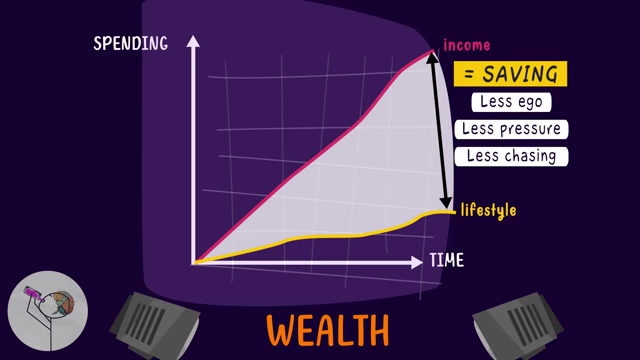
A graph showing income and lifestyle over time, highlighting that saving is the gap between income and lifestyle (ego) and how inflated lifestyles reduce savings, impacting wealth. [ 00:16:58 ]
- Building wealth is about needing less, not just earning more.
- Saving gives freedom and time to navigate life changes and unforeseen circumstances.
Trap 10: You Want the Gains—But Not the Ride [17:36]
- Investing is not free; it comes with emotional costs like stress, doubt, and fear from volatility.
- "Everything has a price, but not all prices appear on labels" (Morgan Housel).
- Market volatility should be seen as a "fee" for admission to the gains, not a "fine" for doing something wrong.
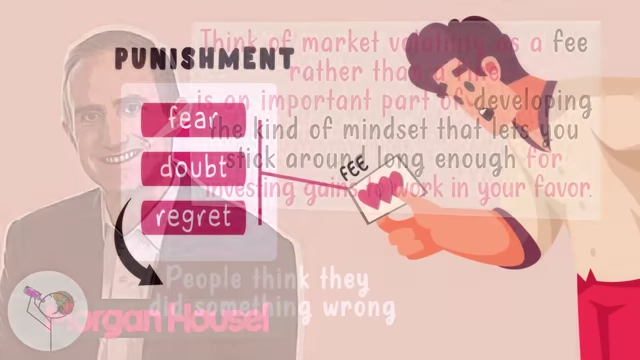
An image depicting an investor holding a "fee" card with hearts, indicating emotional costs like fear, doubt, and regret as the price of admission for market gains. [ 00:18:18 ]
- Market volatility should be seen as a "fee" for admission to the gains, not a "fine" for doing something wrong.
- Example: Netflix stock history - Returned over 35,000% but spent 94% of the time below its previous all-time high, requiring investors to endure constant discomfort.
- Avoiding short-term pain by timing the market often leads to greater long-term losses.
- Expect and accept the emotional cost as a necessary part of investing success.
Trap 11: You Think Getting Rich Is the Hard Part [19:05]
- Getting rich and staying rich require different skill sets.
- Getting rich: boldness, risk, optimism (offense).
- Staying rich: caution, humility, resilience (defense).
An illustration contrasting "GET RICH" (money piles, swords, representing boldness and risk) with "STAY RICH" (a safe, shield, representing caution, humility, and resilience). [ 00:19:28 ]
- "Good investing isn't about brilliance. It's about survival" (Morgan Housel).
- Survival in the market allows compounding to work its magic.
- Build systems with a "room for error" (margin of safety) to survive surprises.
- Hold extra cash for flexibility, diversify investments, and cultivate emotional resilience.
- The "barbell personality": a mix of confidence in the future and caution for potential problems.
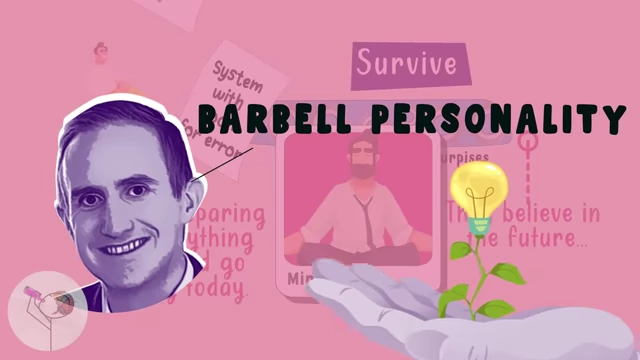
Morgan Housel's "barbell personality" concept: an investor meditating on one side, with a lightbulb-plant signifying future belief, while the other side shows preparations for "everything that could go wrong today" with extra cash and diversification. [ 00:20:27 ] - US economic history shows long-term growth despite numerous setbacks, reinforcing the power of resilience and long-term optimism.
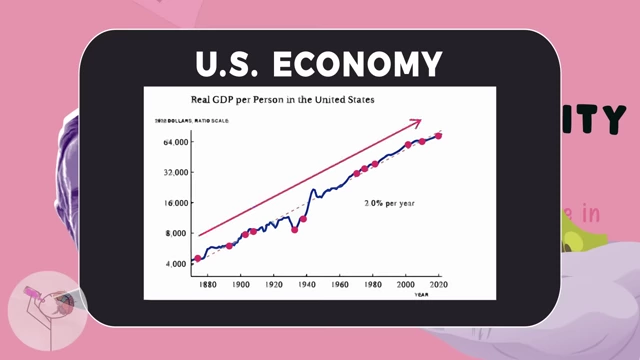
A graph showing the long-term upward trend of the U.S. economy (Real GDP per Person) over 170 years, with red markers indicating recessions and emphasizing sustained growth despite crises. [ 00:20:47 ]
Trap 12: You Overestimate Your Plan [20:53]
- Financial plans often look perfect on paper but don't account for human emotions or unexpected life events.
- "The most important part of every plan is planning on your plan not going according to plan" (Morgan Housel).
- Build a plan that survives reality, not just one that looks safe on paper.
- Margin of safety [0:21:48] - essential to endure the unexpected without panic.
- Housel plans for future returns to be a third lower than historical averages, allowing him to save more and sleep better.

A comparison of a "Perfect Plan" that looks safe on paper versus a "System with Room for Error" which includes a "Margin of Safety" to endure the unexpected. [ 00:21:47 ]
- Housel plans for future returns to be a third lower than historical averages, allowing him to save more and sleep better.
- Emotional resilience is as crucial as financial resilience.
- Avoid "single points of failure" (e.g., relying on one job, one income stream, one big bet).
- Saving without a specific goal is smart, as the biggest costs in life are often unforeseen.
- "The purpose of a margin of safety is to make forecasting unnecessary" (Benjamin Graham).
Act 4: The Long Game [22:18]
This section emphasizes the significance of time and patience in wealth building.
Trap 13: You Underestimate the Power of Time [22:31]
- Time, not talent, is the most powerful force in finance.
- Example: Warren Buffett [0:23:18] - Most of his $160 billion net worth came after his 65th birthday, demonstrating the power of long-term compounding.
- He started investing at age 10 and stayed in the game for over 80 years.
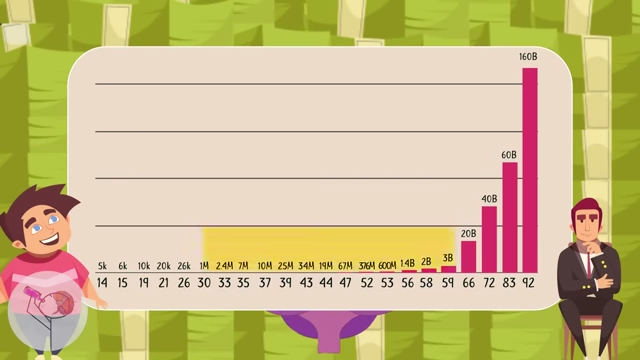
A bar chart illustrating Warren Buffett's wealth accumulation, showing that a vast majority of his net worth was gained after age 65, emphasizing the power of compounding over a very long time. [ 00:23:17 ]
- He started investing at age 10 and stayed in the game for over 80 years.
- Compounding is about earning good returns for a really long time, not just chasing the biggest, often unrepeatable, gains.
- Wealth is built slowly, quietly, over decades, like an oak tree.
Trap 14: You Ignore How Rare Success Really Is [24:01]
- One big win can cover many small losses; most outcomes are driven by a few rare "tail events."
- Tail events are hard to predict but change everything when they occur.
- "You can be wrong half the time and still make a fortune" (Morgan Housel).
- Example: Warren Buffett's portfolio - Nearly all his wealth came from just 10 out of hundreds of stocks he owned.
- His investment in Coca-Cola in 1989 was a quiet investment that became an explosive compounder.
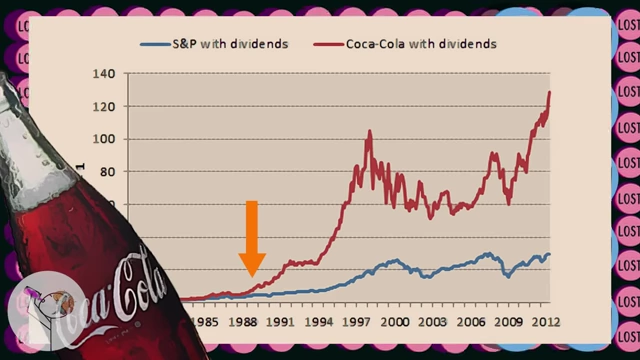
A graph showing the historical performance of Coca-Cola with dividends versus the S&P with dividends, highlighting a specific period around 1989 when Buffett invested, demonstrating a 'tail event' and compounding growth. [ 00:24:57 ]
- His investment in Coca-Cola in 1989 was a quiet investment that became an explosive compounder.
- The stock market also shows this: 7% of companies drove all net gains in the Russell 3000 index since 1980, while 40% of stocks never recovered from drops over 70%.
- The trap: focusing on big wins as normal and repeatable, when they are rare.
- Mindset shift: Stop trying to be right all the time; focus on staying in the game to catch rare, impactful moments.
Trap 15: You Buy Stuff and Sell Your Time [26:03]
- The greatest benefit of money is freedom, especially over your time.
- Controlling your time is the "highest dividend money pays."
- Angus Campbell's study on happiness [1981] [0:27:14] - A strong sense of controlling one's life is a more dependable predictor of well-being than any objective condition.
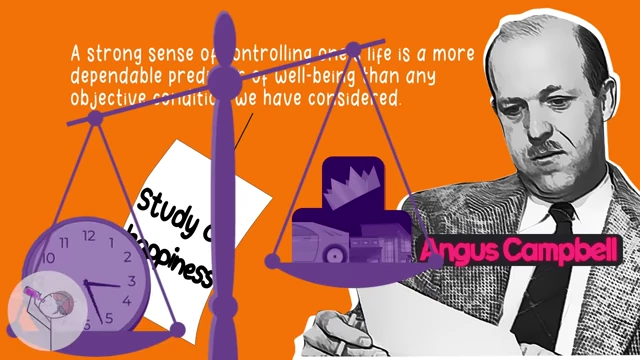
A scale balancing "time" (representing control over one's life) against "stuff" (material possessions), with Angus Campbell's quote on control being a stronger predictor of well-being. [ 00:27:16 ] - Financial freedom is about needing less and living life on your terms, not just retiring early or accumulating more.
- "The highest form of wealth is the ability to wake up every morning and say, 'I can do whatever I want, when I want, with who I want, for as long as I want'" (Morgan Housel).
Act 5: Become the Person Who Wins Long Term [27:42]
This final section guides viewers on cultivating a long-term winning mindset.
Trap 16: You Expect the Market to Be Predictable [27:56]
- The most important financial events are surprises and cannot be foreseen.
- The "historians as prophets" trap: using history to predict the future.
- History teaches how people react to change, not what changes will occur.
- Biggest market shifts are often unprecedented (new risks, technologies, shocks).

A stock history graph illustrating new risks, technologies, and shocks appearing over time, emphasizing that history provides humility, reminding us that past and future surprises are unpredictable. [ 00:28:46 ]
- History provides humility, reminding us that past surprises were not predicted and future ones won't be either.
- Mindset shift: Build the right mindset and stay calm when the next surprise comes; calm beats certainty.
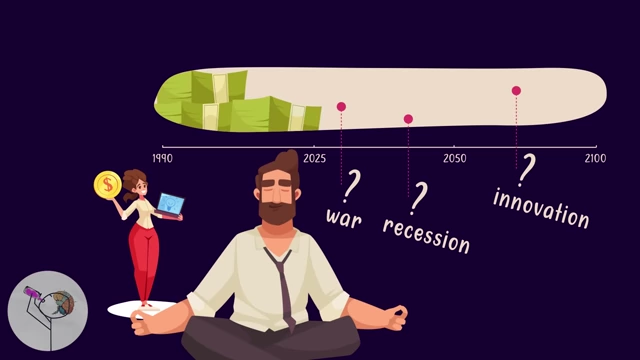
A timeline showing unpredictable future events like war, recession, and innovation, alongside a meditating person, emphasizing that a calm mindset wins over certainty in the long term. [ 00:29:09 ]
Trap 17: You Forget That You’ll Change [29:14]
- People underestimate how much they will change in the future ("end of history illusion").
- Long-term planning is tricky because plans are built for who we are today, not who we will become.
- "Imagining a goal is easy. Imagining that goal under real life stress is something else entirely" (Morgan Housel).
- Rigid plans can lead to regret if personal goals or priorities shift (e.g., wanting kids after planning not to).
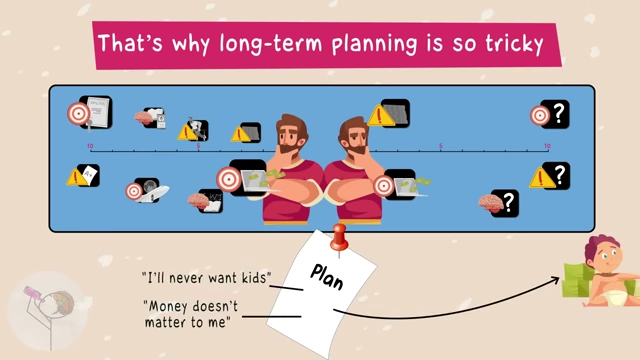
An image showing a person creating a plan, with thought bubbles indicating potential future changes in goals or desires (like wanting kids), highlighting how current plans might not account for future self-evolution. [ 00:30:06 ]
- Rigid plans can lead to regret if personal goals or priorities shift (e.g., wanting kids after planning not to).
- Protection from future regret [0:30:54]:
- Avoid extreme financial commitments.
- Aim for moderation: moderate savings, working hours, family time, and lifestyle expectations.
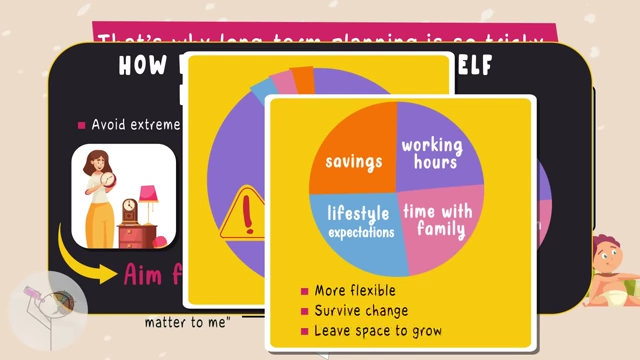
A circular chart divided into savings, working hours, lifestyle expectations, and time with family, illustrating how moderation in these areas creates flexibility and space to adjust without regret. [ 00:30:56 ]
- Moderation allows for flexibility and survival through life changes.
Trap 18: You Copy People Who Aren’t Playing Your Game [31:01]
- Following advice not meant for you is the fastest way to lose money.
- "Know what game you're playing and don't let someone else's game distract you from it" (Morgan Housel).
- Different people have different goals, timelines, and strategies (e.g., a day trader vs. a long-term investor).
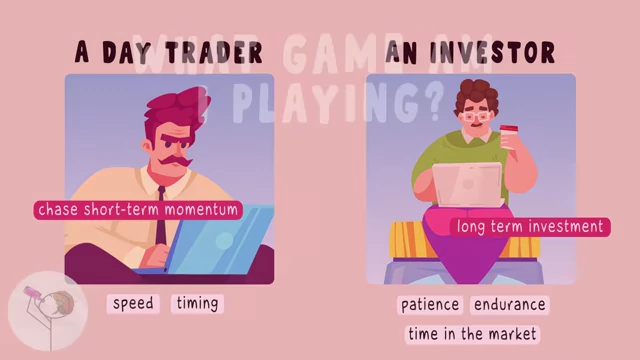
A side-by-side comparison of a "DAY TRADER" (chasing short-term momentum, valuing speed and timing) and an "INVESTOR" (long-term investment, valuing patience, endurance, and time in the market), illustrating different financial "games." [ 00:32:16 ]
- Different people have different goals, timelines, and strategies (e.g., a day trader vs. a long-term investor).
- Copying others' moves means inheriting their risks without knowing their rules.
- Mindset shift: Define your game, know your goals, and filter out irrelevant advice.
- Financial comparison is dangerous because it's often out of context.
- A lawyer driving a Porsche might be a strategic move for their career, but copying it as a freelancer makes no sense.
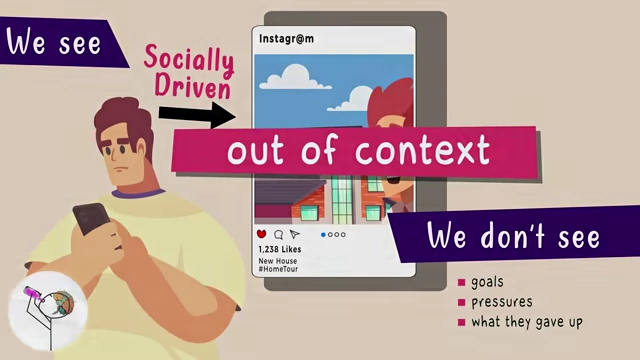
An image illustrating the danger of financial comparison, where people see socially driven purchases (like a Porsche on Instagram) but don't see the underlying goals, pressures, or sacrifices, leading to out-of-context decision-making. [ 00:32:56 ]
- A lawyer driving a Porsche might be a strategic move for their career, but copying it as a freelancer makes no sense.