How Roger Chen Built Two #1 Apps: Lobby's Viral Growth & Bro's AI Companion Strategy
In this video, Roger Chen, a serial app developer, shares his journey of building two successful apps, "Lobby" and "Bro," both of which reached #1 on the App Store.
- Lobby's Viral Growth: Roger explains how Lobby, a social app designed to replicate college dorm hangouts, struggled initially but achieved viral growth through a "group picture" feature that fostered spontaneous sharing and created FOMO among friends.
- Bro's AI Companion Concept: He details the development of Bro, an AI companion that integrates directly into existing apps, emphasizing the importance of validating ideas with mockups and TikTok ads before extensive development.
- Ad Strategy for Feedback: Roger highlights his strategy of using TikTok ads for rapid feedback on product concepts and UI, rather than solely for scaling, which helped identify effective formats like the "floating bro" interface.
- Future of Social + AI: He discusses his vision for combining social interaction with AI to create "context" that augments human connections, rather than replacing them, by providing a "hype man" AI that keeps conversations going.
- Advice for App Builders: Roger advises aspiring app builders to focus on "founder-market fit," pursuing ideas they are genuinely passionate about to sustain long-term development and innovation, using his own experiences with less passionate projects as a contrast.
The Vision Behind Lobby & Bro [00:42]
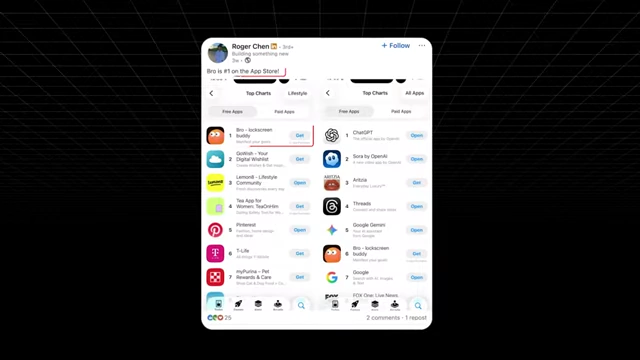
Roger Chen built two viral consumer social apps, Lobby and Bro, both reaching #1 on the App Store.
- Lobby's Success:
- Reached 500,000 daily active users.
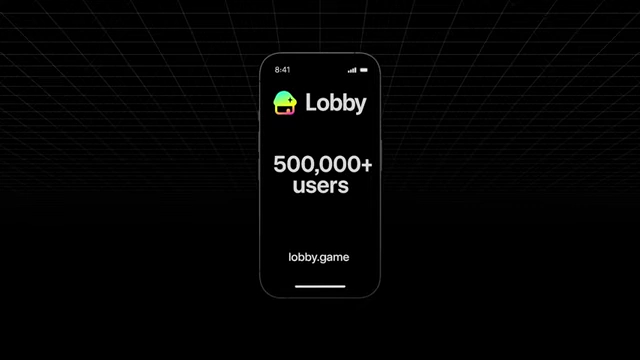
Lobby app screen displaying 500,000+ users [ 00:00:08 ] - Hit #1 in five different countries with no paid marketing, driven by product-led viral growth.
- Reached 500,000 daily active users.
- Bro's Success:
- Core Problem Addressed: How to make online conversations feel like in-real-life (IRL) hangouts, as current video calls feel like conference rooms and group chats often die out.
How do you make online conversations feel like IRL hangouts? [ 00:00:46 ] 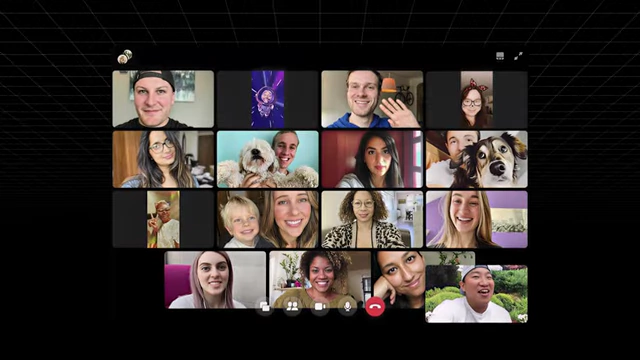
Typical video call interface resembling a conference room [ 00:00:49 ] 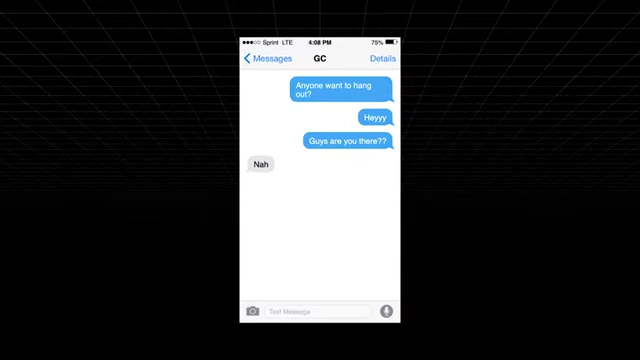
Example of a stagnant group chat [ 00:00:51 ] - Lobby's Approach:
- Rebuilt the college dorm lobby experience.
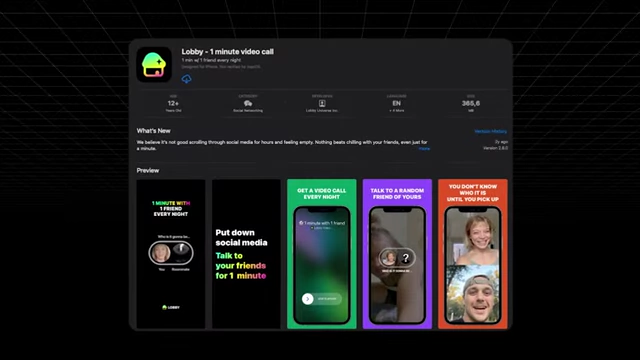
Lobby App Store listing highlighting its "1 minute video call" feature [ 00:00:53 ] - Features spontaneous, low-pressure interactions with background activities like YouTube and SoundCloud to avoid awkward silences.
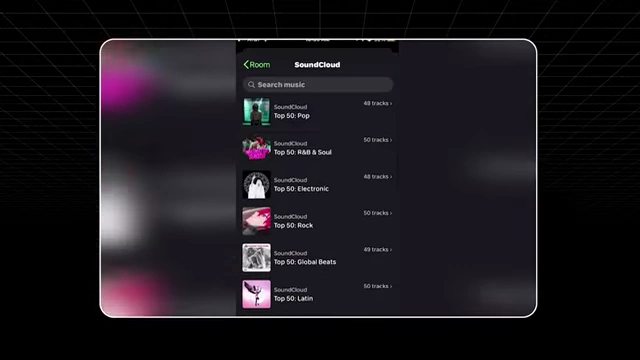
Lobby app interface with SoundCloud integration for shared listening [ 00:01:00 ] - Everything changed with one breakout feature.
- Rebuilt the college dorm lobby experience.
- Bro's Approach:
- Embeds an AI companion directly into existing apps (texts, dating apps, camera roll).
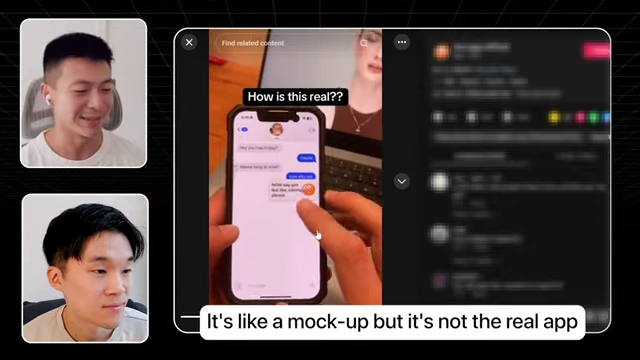
TikTok video showcasing the Bro AI companion within a text message mockup [ 00:00:30 ] - Insight: AI companions should live within the apps users already use, not in a "black box."
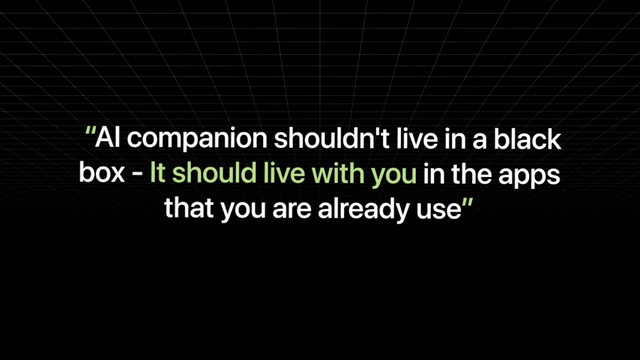
Roger Chen's philosophy on AI companions: "It should live with you in the apps that you are already use" [ 00:01:32 ]
- Embeds an AI companion directly into existing apps (texts, dating apps, camera roll).
- Validation Strategy:
- Validated ideas without writing a single line of production code.
- Used TikTok ads to test formats and UI, then scaled with 50 creators.
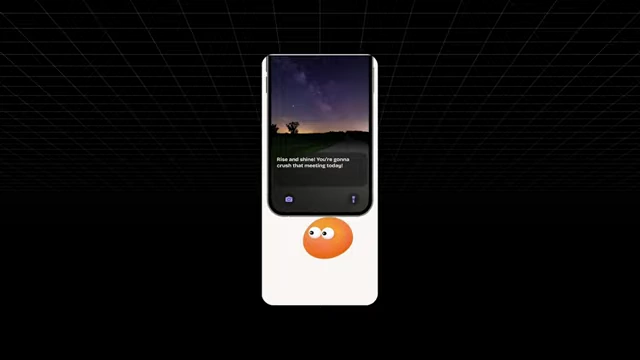
Validating Ideas Without Building [01:37]
Roger emphasizes the importance of validating ideas quickly before extensive development.
- Mockup-Based Prototyping:
- Uses tools like ProtoPie to create fake mockups of apps.
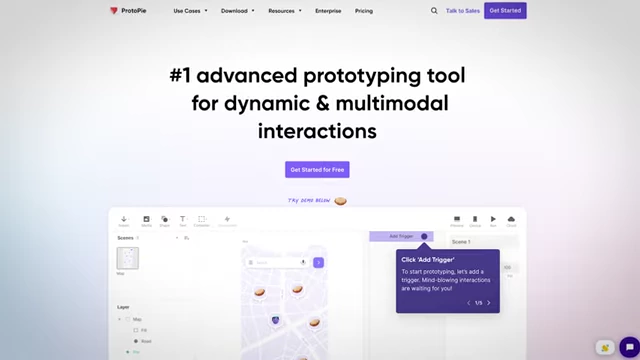
ProtoPie, an advanced prototyping tool for dynamic interactions [ 00:00:34 ] - Films these mockups to test user reaction on platforms like TikTok.
- Carrying around mockups, even playing with them personally, helps identify workflow issues (e.g., flow too long).
- Reduces unnecessary engineering work by catching issues early.
- Uses tools like ProtoPie to create fake mockups of apps.
- Using Ads for Fast Product Feedback:
- Bought TikTok ads for initial concepts to get quick reactions, bypassing long influencer negotiations.
What he did: He bought TikTok ads, tested formats, and found what resonated [ 00:01:43 ] - Gained two key insights:
- Identified at least one ad format that resonated.
- Determined if people were interested in the product concept.
- Views ads as a validation tool, not just for scaling, especially crucial in the "dreadful period" between idea and launch when feedback is scarce and burning money.
- Bought TikTok ads for initial concepts to get quick reactions, bypassing long influencer negotiations.
How Bro Hit #1 on the App Store [03:24]
Bro's success was largely attributed to a strong TikTok strategy and a focused product wedge.
- TikTok Strategy (Hook and Demo):
- The format used was a "hook and demo" with a real person to capture attention, as people tend to swipe away from app interfaces alone.
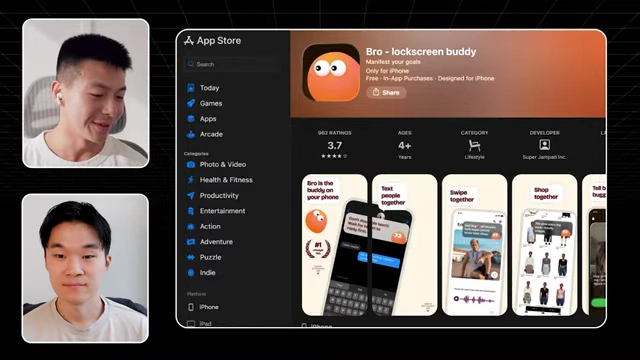
Bro app listing on the App Store, showcasing its "lockscreen buddy" feature [ 00:03:45 ] - The hook is a relatable scenario, followed by a demo of the product.
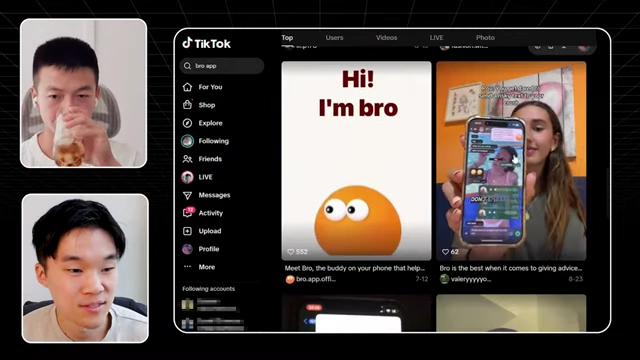
TikTok search results for "bro app" showing various content formats [ 00:04:28 ] 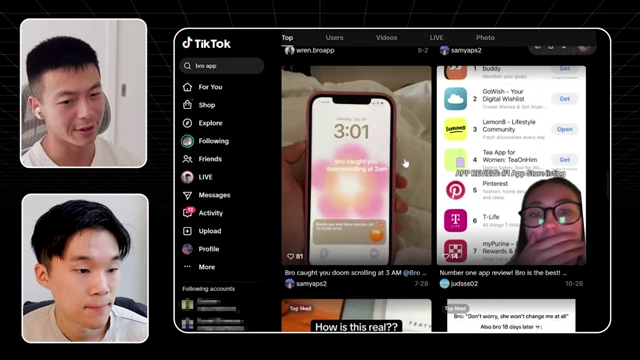
TikTok video demonstrating Bro AI providing an alert on the lock screen [ 00:04:37 ]
- The format used was a "hook and demo" with a real person to capture attention, as people tend to swipe away from app interfaces alone.
- Outlier Viral Hits:
- While mass-producing content, a few videos received 2-3 million views, showing the unpredictable nature of virality.
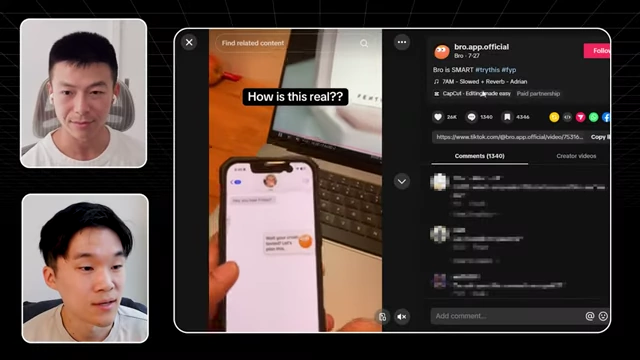
The most successful TikTok video for Bro, accumulating 7.9 million views by demonstrating the AI in texting [ 00:05:37 ] 
Bro app's official TikTok account, highlighting their 7.9M views viral video [ 00:05:40 ] - The team's own assumptions about which videos would perform well were often wrong.
- While mass-producing content, a few videos received 2-3 million views, showing the unpredictable nature of virality.
- Prototyping Process for Bro:
- Leo, Roger's co-founder, created impressive prototypes using ProtoPie before the app was fully built.
- This allowed them to film demos and gauge interest before investing in full development.
- Focus on a Specific Wedge:
- Despite an ambitious vision for Bro as an "always-there" companion, they needed a specific scenario (a "wedge").
- They focused initially on integrating Bro with texting, then dating apps, and other life activities.
- The key viral element found was Bro, a "little bro on your screen," floating above the text interface. This became the main product wedge.
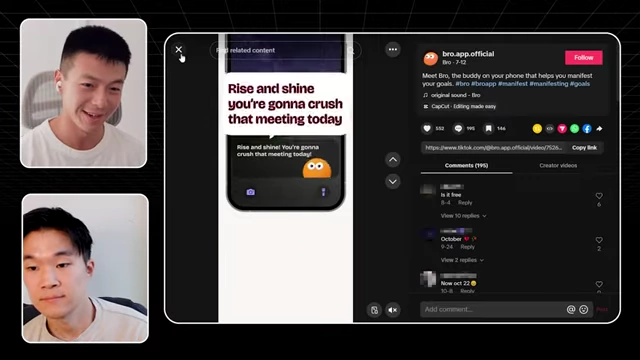
A TikTok ad for Bro featuring a morning affirmation on the lock screen [ 00:09:13 ]
- Bro's Core Concept - Augmenting Social Connections:
- AI companions should augment, not displace, real-world social relationships.
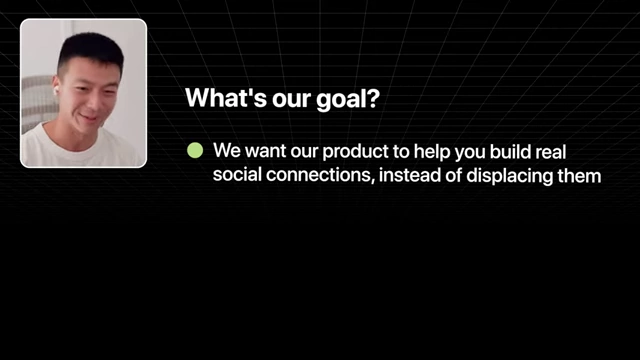
Roger Chen's goal for AI companions: augmenting social connections, not displacing them [ 00:14:49 ] - Instead of thinking of AI as a friend, view it as a convenient "in-between" that makes social interaction more accessible.
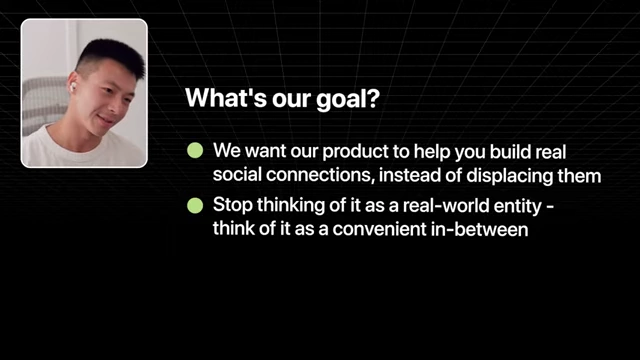
Roger Chen's advice: view AI companions as a "convenient in-between" to make social interaction more accessible [ 00:15:16 ] - Uses the DoorDash analogy to explain accessibility.
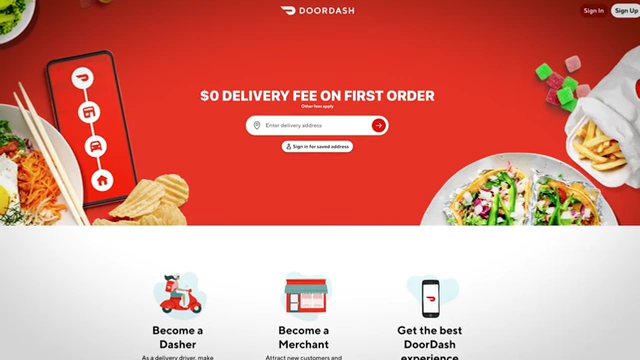
DoorDash website used as an analogy for accessibility in new tech [ 00:15:36 ]
- AI companions should augment, not displace, real-world social relationships.
Making Online Conversations Feel IRL [15:55]
Roger's overarching goal for Lobby and Bro was to make online interactions feel more natural and less like structured calls.
- The Problem with Online Conversations:
- In real life, hangouts are spontaneous, without a specific intent; it's about the "vibe."
- Online, every interaction feels like it needs a specific intent, making it less natural.
- Lobby's Inspiration - College Dorms:
- Recreated the spontaneity of a college dorm lobby: a common area where people could drop in, with background activities like music or movies.
- This low-pressure environment allowed people to talk without specific intent.
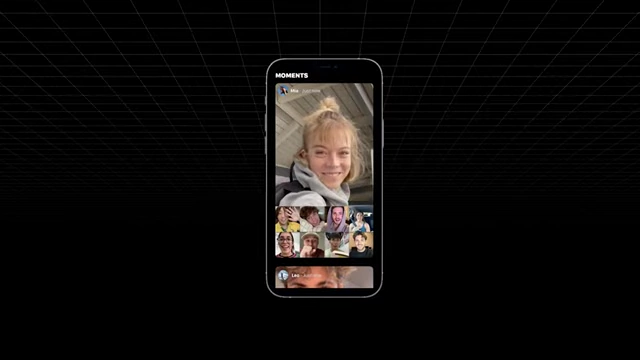
Lobby app's "Moments" feature showing friends interacting in real-time [ 00:17:09 ]
- Lobby's Key Features:
- Users could watch YouTube or SoundCloud together, play games, and screen share, providing "background activity."
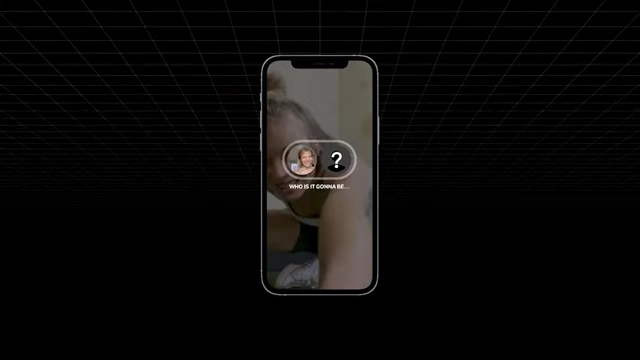
Lobby app's "Who is it gonna be?" feature for spontaneous friend connections [ 00:18:51 ]
Lobby app interface showing shared music listening via SoundCloud [ 00:01:00 ] - This allowed users to "do stuff together" rather than just staring at each other.
- Users could watch YouTube or SoundCloud together, play games, and screen share, providing "background activity."
Lobby’s Breakout Growth Story [20:01]
Lobby experienced a sudden, unexpected viral growth after a period of struggle.
- Initial Struggles:
- For about a year, Lobby struggled with quality growth, retaining power users but having poor overall retention.
- Viral Breakout in Israel:
- In 2022, Lobby unexpectedly went viral in Israel, becoming #1 on the App Store with exceptional Day 90 retention (25-30%), significantly higher than other markets.
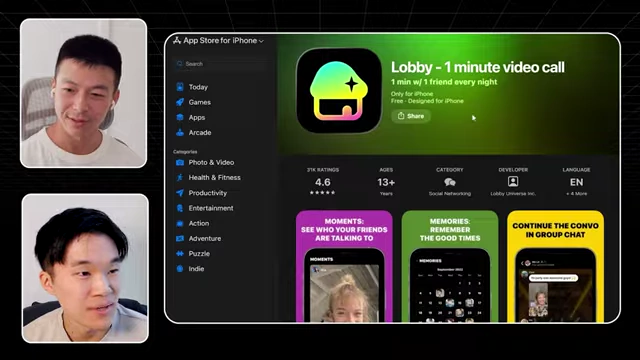
Lobby app's App Store listing, showing its key features and user interface [ 00:20:07 ]
- In 2022, Lobby unexpectedly went viral in Israel, becoming #1 on the App Store with exceptional Day 90 retention (25-30%), significantly higher than other markets.
- The Role of Network Density:
- The key difference in Israel was higher "network density" – 60% of users had 5 friends on day one, compared to 20% elsewhere.
- This high density led to super high retention and further growth.
- Product-Led Growth Features:
- The team realized growth needed to come from users inviting friends through product features, not just content marketing.
- They focused on boosting inviting and sharing with both common and "wacky" features.
The Group Picture Viral Loop [23:02]
A key "wacky" feature that drove Lobby's viral growth was the "group picture."
- IRL Inspiration:
- When friends hang out in person with nothing specific to talk about, they often start taking group pictures.
- This creates excitement and new topics of conversation.
- Lobby's Group Picture Feature:
- During a video chat, users could press a button, triggering a 3-2-1 countdown and phone vibration.
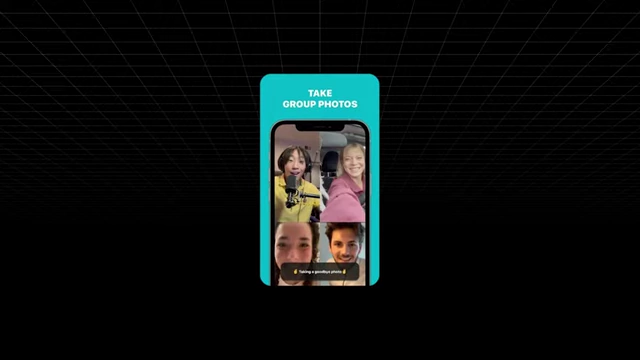
Lobby app's "Take Group Photos" feature in action during a video call [ 00:22:42 ] - It captured a "boomerang" picture that could be easily shared to Snapchat or Instagram stories.
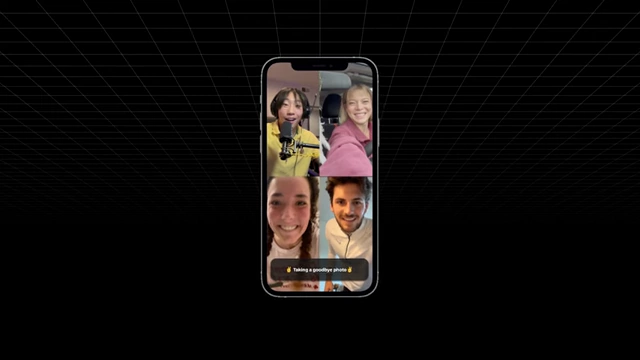
A group photo taken within the Lobby app during a video chat [ 00:23:12 ]
- During a video chat, users could press a button, triggering a 3-2-1 countdown and phone vibration.
- Two-fold Impact:
- Increased Sharing: Generated shareable content, spreading awareness of Lobby.
- Created FOMO: Friends not in the hangout would see the pictures and want to join next time, driving new user acquisition.
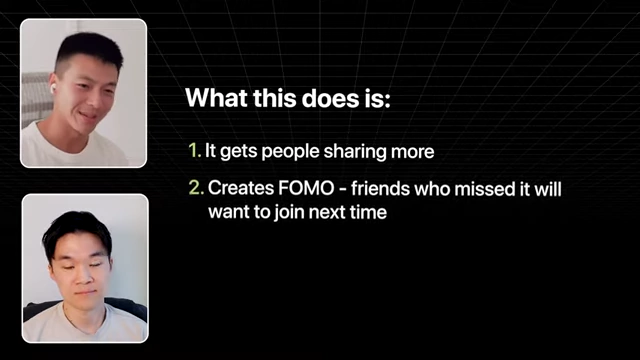
The dual impact of Lobby's group picture feature: increased sharing and creation of FOMO [ 00:23:38 ]
- Watermarking: The shared pictures were watermarked with the app's branding.
- The feature also led to viral growth in other countries, including the UK, Italy, Germany, Egypt, and Saudi Arabia.
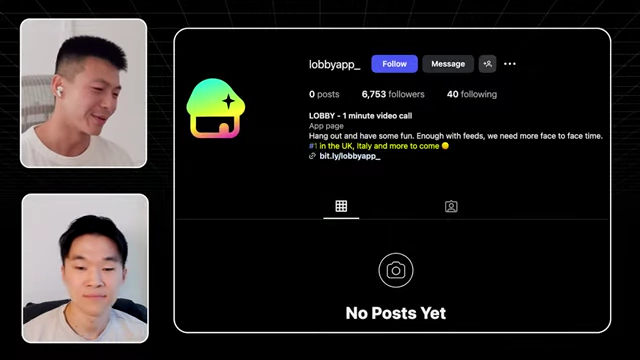
Lobby app's Instagram profile showing its global reach and #1 rankings [ 00:23:57 ]
- The feature also led to viral growth in other countries, including the UK, Italy, Germany, Egypt, and Saudi Arabia.
Designing Spontaneous Social Experiences [27:47]
Lobby also implemented a "one-minute video call" feature to encourage temporal density and low-pressure interactions.
- Addressing Temporal Density:
- For real-time products, both relationship density (friends on the app) and temporal density (friends online at the same time) are crucial.
- One-Minute Call Feature:
- A "game" where at a random minute each night, a bar pops up, inviting users to "talk to your friends for one minute."

Lobby's "1 minute video call" feature encourages quick, low-pressure interactions [ 00:27:36 ] - The call automatically ends after one minute.
- A "game" where at a random minute each night, a bar pops up, inviting users to "talk to your friends for one minute."
- Low-Pressure Interaction:
- The one-minute limit made it "super low pressure," removing the obligation to chat for a long time.
- Users could blame the game for ending the call, alleviating social awkwardness.
- Inspired by BeReal:
- The concept was inspired by BeReal's synchronous experience, where everyone posts at a randomized time, creating a flood of simultaneous content.
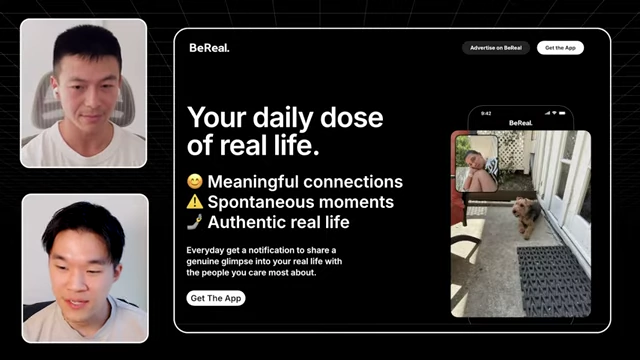
BeReal website, illustrating a synchronous social experience [ 00:28:26 ]
- The concept was inspired by BeReal's synchronous experience, where everyone posts at a randomized time, creating a flood of simultaneous content.
The Future of Social + AI [29:01]
Roger envisions AI playing a crucial role in enhancing human social connections, rather than replacing them.
- Focus on Social Connection:
- Believes in the irreplaceable value of human connection; AI cannot replicate this.
- Aims to build a true social app, different from Bro's core AI companion flow.
- AI to Create Context, Not Content:
- In a world with abundant AI-generated content (e.g., Sora videos), authentic human interaction becomes more valuable.
- Wants to use AI to generate "context" that facilitates more conversations among people.
- AI as a "Hype Man":
- The AI can act as a "third guy" in a conversation, similar to a talk show's co-host, to keep discussions lively and open up new topics.
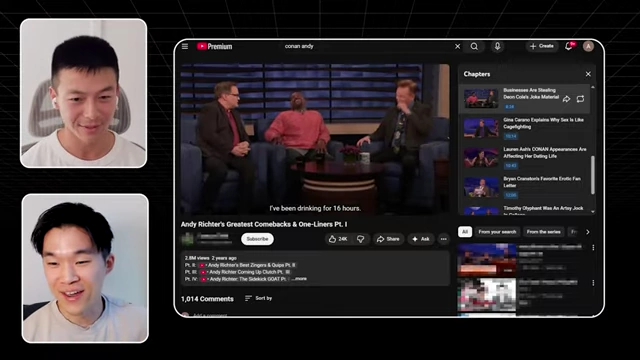
Talk show example with a host, guest, and a "third guy" (Andy Richter) to maintain conversational flow [ 00:32:50 ] - This offloads the "thankless job" of carrying the conversation from one person.
- The AI can act as a "third guy" in a conversation, similar to a talk show's co-host, to keep discussions lively and open up new topics.
Advice for Consumer App Builders [37:33]
Roger offers advice for moving from simple, cash-flowing apps to more ambitious product ideas.
- Founder-Market Fit:
- Crucial to building ambitious products.
- Founders must be genuinely passionate about the problem or niche they are addressing.
- Cites his personal lack of passion for an AI-generated interactive story app (Super Movie) versus his friend's passion for AI Dungeon (world-building).
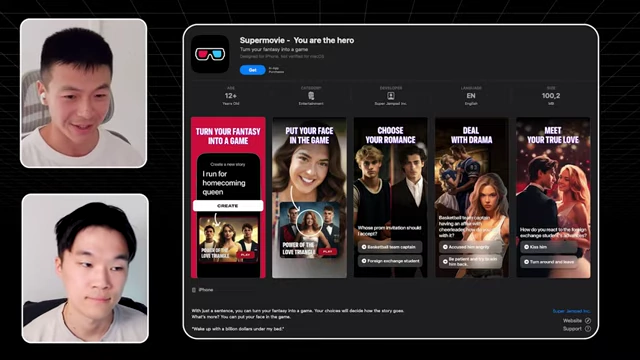
Supermovie app, an AI-generated interactive story app that Roger found less passionate about [ 00:38:53 ] 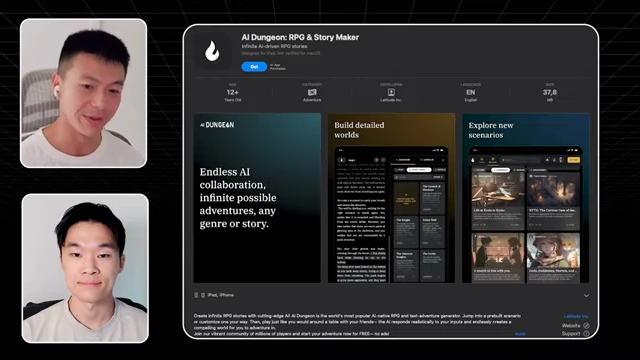
AI Dungeon app, an RPG & story maker, highlighting strong founder-market fit through a friend's passion for world-building [ 00:39:26 ]
- Passion for Social Products:
- His team's passion lies in building products that connect people and bring joy, like a "never-ending music festival" experience.
- This innate appeal and the fun of designing new experiences sustain them through challenges.
- Building with Heart:
- Advised to use "less of the brain and more of the heart" when building products for the long term.
- Avoid getting caught in "micro-optimizations" and "torturing yourself."