Neil Gaiman's MasterClass: A Comprehensive Guide to the Art of Storytelling
Summary:
Neil Gaiman's MasterClass offers aspiring writers a deep dive into the craft of storytelling, drawing from his extensive experience. Key takeaways include:
- Truth in Fiction: Stories convey profound human truths through imaginative lies, exemplified by Coraline teaching bravery.
- Sources of Inspiration: Cultivate a "compost heap" of experiences, subvert familiar narratives, and use thought experiments to spark new ideas.
- Finding Your Voice: Develop a unique style through consistent writing, embracing imperfection, and letting the story's voice emerge authentically.
- Developing the Story: Engage readers by making them ask "And then what happened?", ensuring characters' wants drive the plot, and outlining key themes.
- Characters and Dialogue: Create distinct, believable characters through their unique dialogue and inner desires, often achieved by giving them "funny hats" or memorable traits.
- Worldbuilding: Craft immersive worlds by incorporating real-world details, appealing to all senses, and establishing clear, even if unstated, rules.
- Editing and Revision: Approach editing with fresh eyes, identify what the story is truly "about," and be willing to recalibrate.
- Rules for Writers: Consistently write, finish projects, submit them, and always start the next thing to cultivate resilience and continued growth.

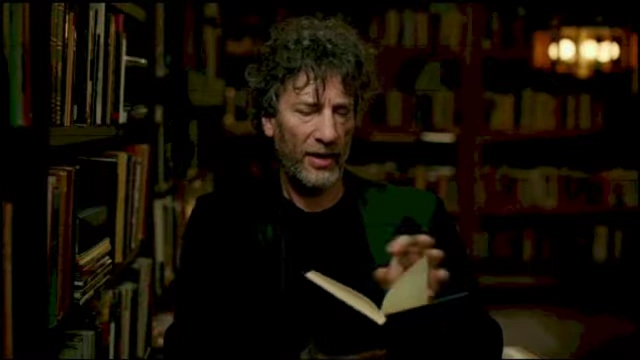
Neil Gaiman shares his passion for teaching storytelling [ 00:01:50 ]
Introduction [0:00:00]
Truth in Fiction [0:04:37]
- Stories as Fundamental Human Phenomena:
- Human beings are inherently storytelling creatures, with stories being vital and ingrained in our nature.
- Fiction conveys profound truths through "memorable lies," using non-existent people, events, and places to communicate deeper realities to audiences of all ages.
- Case Study: Little Red Riding Hood:
- This fairy tale, though fictional, imparts a crucial truth: there are dangerous people (wolves, metaphorical or real) who may not have good intentions, teaching children caution.
- The fantastical elements (talking wolves, grandmothers being eaten and resurrected) are understood as symbolic, allowing the audience to extract the underlying moral.
- The Truth of Coraline [0:07:53]:
- Gaiman began Coraline with a fabricated quote attributed to G.K. Chesterton: "Fairy tales aren't true. Fairy tales are more than true. Not because they tell us that dragons exist, but because they tell us that dragons can be defeated."
- His personal experience of being stung by yellow jackets while protecting his children in the woods became the core message for Coraline: bravery is not the absence of fear, but acting despite being scared.
- The book's impact: Many readers have told Gaiman that Coraline saved their lives during difficult times, demonstrating how fictional "lies" can provide genuine emotional and psychological support.
- Be Honest [0:14:53]:
- All fiction must be as honest as possible for readers to genuinely connect with it. Gaiman attributes his success to being an "honest writer of fiction," making his characters feel real and eliciting reader empathy.
- Finding Honesty: His personal turning point came after early rejections, leading him to realize he needed to write honestly about himself, rather than imitating others or hiding his true thoughts. This meant being vulnerable, "walking down a street naked" in his writing.
- Case Study: The Ocean at the End of the Lane [0:20:27]: This is Gaiman's most personal novel, written from the perspective of his seven-year-old self. Accessing childhood memories, even forgotten ones, allows writers to infuse their narratives with authentic emotional truth.
- Truth as a Condiment: Use personal truths and experiences as "seasoning" to make fictional narratives more convincing and credible, even when depicting fantastical elements (e.g., an extraterrestrial affair).
Sources of Inspiration [0:24:43]
- The Writer's Compost Heap:
- Every writer should cultivate a "compost heap" of experiences, observations, and consumed media (books, music, conversations).
- This mental reservoir allows disparate elements to "rot down" and later yield new stories and creative ideas.
- Recognizing Diverse Influences:
- Writers often focus on obvious influences, but unexpected sources can be more profound.
- Personal Examples: Gaiman mentions authors like Tolkien and Ursula Le Guin, but also highlights Lou Reed, whose compressed, emotionally evocative songwriting influenced his narrative style, especially in conveying emotion without explicit description.
- His wife, Amanda Palmer, realized Judy Blume's honest writing from her youth was a significant, if often unacknowledged, influence on her music.
- Openness to Everything: The most important thing for a writer is to be open to all experiences and influences, as surprising connections can emerge.

A map of Earthsea, a key influence on Neil Gaiman's worldbuilding [ 02:54:46 ]
- Subvert the Familiar [0:29:22]:
- A powerful technique is to take familiar stories (like fairy tales) and re-examine them from fresh, unconventional angles.
- Snow White Reimagined: By questioning the established narrative of Snow White (e.g., a perpetually young, beautiful princess, a prince who desires a dead body), new, darker interpretations can emerge (a vampire princess and a necrophile prince). This turns the stepmother into a heroic figure trying to protect her kingdom.
- Exercise: Take a familiar folk or fairy tale, turn it around, identify inconsistencies, and reinvent it with personal elements, making characters breathe with new life.
- Thought Experiments [0:33:48]:
- Engage in mental "thought experiments" by observing people in everyday settings (e.g., on public transport, in a coffee shop) and imagining them in unexpected situations.
- "What If" Scenarios: Consider fantastical elements entering mundane situations (e.g., a train transported to a distant planet, a werewolf biting a goldfish, a chair that turns into a "chairwolf"). This playful approach can generate surprising plot points and character reactions.
- Listening to Dialogue: Pay attention to overheard conversations and unique ways people speak; these can be valuable for developing realistic dialogue, even if not used verbatim.
- Confluence of Ideas [0:37:07]:
- Ideas often arise from the "confluence" of two or more disparate elements coming together.
- Boredom can be a fertile ground for creativity, forcing the mind to make connections.
- This process allows for the creation of intricate narratives by combining familiar concepts in novel ways, such as the "chairwolf" example demonstrating how two well-known ideas (werewolves, furniture) can collide to form a unique story concept.

The prompt for Neil Gaiman's "March Tale" short story [ 01:38:38 ]
Finding your Voice [0:41:01]
- Style as "Getting Things Wrong":
- Drawing from a misremembered quote by Jerry Garcia, Gaiman suggests that a writer's individual style emerges from their unique imperfections and distinctive ways of expressing themselves, rather than perfect imitation.
- The process of developing one's voice is a journey of self-discovery, where a writer eventually realizes "this is what you sound like."
- Importance of Writing and Finishing [0:44:43]:
- Overcoming "Bad Words": Gaiman advocates for the principle of getting all the "bad words" and "bad stories" out through consistent writing. Like an artist needing to make a million bad drawings to get to the good ones, a writer must produce a large volume of work.
- Quantum Improvement from Finishing: The act of finishing a piece of writing, even a failure, leads to "quantum" leaps in improvement because it forces the writer to confront the entire narrative arc and learn from its completion. Abandoned fantastic beginnings teach less than completed failures.
- Consistent Practice: Writing consistently across various formats (short stories, novels, scripts) helps solidify a writer's voice, which will inherently manifest regardless of the genre or style chosen.
- Finding the Voice of a Story [0:49:16]:
- Attitude, Not Just Words: While different stories may adopt varied linguistic styles, the underlying "attitude" or "soul" of the narrative should reflect the author's unique perspective.
- Taking a Stab: When starting a project, consider key aspects like narrative perspective (first, third person) and the overall tone.
- Case Study: American Gods: Gaiman initially wrote American Gods in first-person from the protagonist Shadow's perspective but found it didn't work because Shadow was emotionally closed off. Switching to third-person allowed for a more effective exploration of Shadow's journey from numbness to awakening.
- Transparent vs. Character-Driven Voices:
- American Transparent: A style where the author's voice is invisible, allowing the characters and events to speak for themselves (e.g., Elmore Leonard, Stephen King).
- Writer as Character: A style where the narrator's voice is distinct and formal, almost like a character telling the story (e.g., Stardust, where the narrator resembles a 19th-century adult fairy tale author).
- First-Person Confessional: A direct, intimate style where the narrator directly addresses the reader, establishing trust before potentially subverting expectations (e.g., The Ocean at the End of the Lane, Violent Cases).
Developing the Story [0:56:01]

- "And Then What Happened?" [0:56:41]:
- Gaiman defines a story as "anything fictional that keeps you turning the pages and doesn't leave you feeling cheated at the end."
- Drawing inspiration from his young son's constant question "What's going to happen?", he emphasizes that this innate curiosity is what drives readers.
- A story must cultivate this curiosity by introducing interesting characters, intriguing situations, and a sense of care.

Neil Gaiman illustrates the "And then what happened?" concept for story engagement [ 00:58:57 ]
- The Importance of Caring [1:00:49]:
- For a story to resonate, the writer must deeply care about their characters and the unfolding events. This care must be imbued in the writing; otherwise, the reader will not invest emotionally.
- Write Down Everything You Know [1:01:42]:
- Brain Dump: When beginning a new project, Gaiman recommends an extensive "brain dump" – writing down everything you know and feel about the story, characters, and world. This often reveals hidden connections and sparks new ideas.
- Process of Connection: The act of writing, even simple notes, helps the mind discover connections, which are the building blocks of fiction.
- What Is Your Story About? [1:04:45]:
- Beyond plot, a writer needs to understand the core "aboutness" or theme of their story. This often becomes clearer during the writing or editing process.
- Case Study: Neverwhere: Gaiman wanted Neverwhere to be "about the people who fall through the cracks" – homelessness, the mentally ill, those living rough in big cities. By embedding this message within an adventure story, he aimed to make readers engage with these themes without feeling lectured.
- Metaphor Made Concrete: Fantasy, for Gaiman, often involves making abstract metaphors concrete. In Neverwhere, the homeless of London Below become literally invisible to the people of London Above, highlighting societal neglect.
- Create Conflict [1:09:33]:
- Embracing Difficulty: Young writers often shy away from conflict, but it is essential for plot development. Conflict arises when characters' wants and needs are mutually exclusive.
- Multiple Resolutions: Conflict doesn't always require head-on confrontation; it can be navigated through intelligence, indirect action, or lead to unexpected outcomes that alter the story's direction.
Story Case Study, The Graveyard Book [1:14:11]

- Driven by Wants and Needs:
- Gaiman reads the opening of The Graveyard Book, immediately establishing a chilling scenario: "A hand in the darkness, and it held a knife."
- The narrative introduces the "man Jack," whose clear want is to kill a baby, having already murdered its family.
- The baby's simple want is to escape its crib, driven by curiosity, not fear, leading it inadvertently into the nearby graveyard.

Excerpt from "The Graveyard Book" describing the man Jack's intentions [ 01:15:21 ]
- Conflicting Desires in the Graveyard:
- In the graveyard, two ghosts, Mr. and Mrs. Owens, discover the baby. Mrs. Owens feels an immediate desire to protect the child, while Mr. Owens is hesitant, believing a living baby has no place among the dead.
- The appearance of the baby's ghostly mother, expressing an intense want for her child's protection, creates a strong emotional conflict.
- Resolution and New Beginning: Death herself appears, advocating for "charity" for the dead. Silas, a mysterious figure who is neither living nor dead, volunteers to be the child's guardian, bringing food from the living world.
- This convergence of conflicting wants and needs establishes the core premise: a living child adopted by ghosts in a graveyard, setting up the central question: "What's going to happen to this child?"

Excerpt from "The Graveyard Book" revealing the ghostly mother's plea [ 01:18:59 ]
Short Fiction [1:22:15]
- The Magic of Short Stories:
- Short stories are likened to "close-up magic" – small, intricate, and impactful, creating wonder and leaving a lasting impression on the reader.
- They offer compact journeys, allowing readers to explore new worlds and minds quickly, "back in time for dinner."

Neil Gaiman reads the introduction to his short story collection "M is for Magic" [ 01:24:33 ]
- Practice Your Craft [1:33:20]:
- Learning the Ropes: Short fiction is an ideal medium for new writers to learn their craft, especially the crucial skill of finishing a piece. It allows for quick iterations and learning from both successes and failures.
- Small Journeys: Instead of attempting epic novels immediately, short stories offer manageable "short journeys" to hone skills without overwhelming commitment.
- Compression and Economy [1:30:24]: Writers should strive for brevity and precision, choosing each word carefully to maximize impact. Gaiman gives an example of his 100-word story "Nicholas Was."
- One Thing to Happen [1:32:57]: Unlike novels with multiple plotlines, a short story typically focuses on one central event or idea, allowing for greater focus and impact.

The full text of "Nicholas Was," a 100-word short story [ 01:31:31 ]
- Imagine Your Story as the Last Chapter of a Novel [1:26:51]:
- Drawing from a conversation with Roger Zelazny, Gaiman advises treating short stories as the "last chapter of a novel I didn't write." This approach imbues characters with a history and a sense of existing beyond the immediate narrative, making the story feel richer and more impactful.
Short Fiction Case Study, March Tale [1:36:17]
- The Calendar of Tales Project [1:36:17]:
- Gaiman engaged in a project where he asked the public for story prompts related to each month, seeking "beautiful little ideas" rather than full plots.
- For March, the prompt was "What historical figure does March remind you of?" The winning response was: "Anne Bonnie and her rapscallion heart dreaming for a ship of her very own."
Neil Gaiman showing the notebook he used to write "A Calendar of Tales" [ 01:39:00 ]
- Developing the March Tale:
- Gaiman developed this into a story about an aging Anne Bonnie living a respectable life, her adventurous past hinted at but suppressed.
- The dialogue and internal thoughts reveal her hidden piratical nature, contrasting with her prim exterior.

An illustration of a ship from the "March Tale" story [ 01:40:34 ] - Expanding to a Novel: He suggests how this short story could evolve into a novel by introducing a character from Anne's past, creating conflict that forces her to confront her true identity and use her forgotten skills to protect her family. This novel would explore themes of secrets, gender roles, and the clash between a romanticized past and mundane reality.

An excerpt from "March Tale" hinting at Anne Bonnie's true identity [ 01:41:11 ] 
A line from "March Tale" emphasizing Mrs. Riley's out-of-character moment [ 01:42:10 ]
Character Case Study, “October Tale” [2:16:25]
- This story features a genie (narrator) who, after being freed, encounters a woman named Hazel who has no wishes.

- **Character Introduction:** The genie is introduced by his actions and a human-like moment (stretching out a cramp), quickly followed by his fantastical nature. Hazel is introduced practically, identifying the genie.
- **Conflict from Contrasts:** The core conflict arises from the genie's expectation of granting wishes and Hazel's contentment, leading to an unexpected plot where the genie must learn about human life.

- **"Man Learns a Lesson":** The story follows the "man learns a lesson" archetype, with the arrogant, outdated genie slowly learning humility and the value of simple companionship from the pragmatic Hazel. This ends with the genie finding contentment without granting wishes.

Dialogue and Character [1:51:04]
- Dialogue as Character Revelation:
- Dialogue and character are intrinsically linked; how a character speaks is a direct reflection of who they are.
- Good dialogue simultaneously reveals character, advances the plot, and can incorporate humor.
- Listening to Your Characters [1:55:35]:
- Controlled Insanity: Gaiman describes character writing as "controlled insanity," where the writer both creates and observes their characters as if they have independent lives.
- Letting Them Speak: A crucial skill is to "listen" to what characters want to say, even if it deviates from the initial plan. If dialogue feels forced, it often means the writer isn't listening to the character.
- Delirium from Sandman: The character Delirium in The Sandman came to life when Gaiman stopped trying to force her to be angry and instead let her speak in a "gentle and bemused" way, revealing her "gloriously perfectly unhinged" mind. This allowed her to deliver both absurd and profound lines.

A comic panel of Delirium from "The Sandman," illustrating unique character design and dialogue style [ 01:57:02 ] 
Delirium's whimsical dialogue about unusual ice cream flavors from "The Sandman" [ 01:58:39 ] 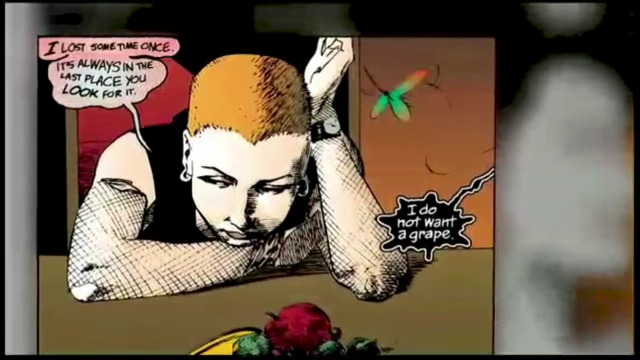
Delirium offering peculiar advice about "losing time" [ 01:59:30 ]
- Trust Your Characters [1:59:44]:
- Characters, once imbued with life and belief, sometimes act unexpectedly. A writer must trust their characters' motivations, even if it means altering the plot. Disregarding a character's "will" can lead to a flat, unbelievable narrative.
- "Funny Hats": Distinguishing Characters [2:09:27]:
- To prevent characters from blending together (being "indistinguishable except for their names"), give each a unique, memorable trait or "funny hat." This can be a physical characteristic, a speech pattern, a quirky habit, or a distinct personality trait.
- Case Study: Neverwhere's Mr. Croup and Mr. Vandemar [2:12:27]: These assassin characters are made instantly distinguishable by contrasting descriptions (one tall, one short; different eye colors; one obsessed with words, the other with hunger) and distinct dialogue styles.

An excerpt from "Neverwhere" establishing the distinct characteristics of Mr. Croup and Mr. Vandermar [ 02:13:05 ] 
An illustration of Mr. Croup and Mr. Vandermar from "Neverwhere" [ 02:14:54 ] 
An illustration of Old Bailey from "Neverwhere," exemplifying a unique character "funny hat" [ 02:15:39 ]
- Do Just Enough Research [2:05:04]:
- Drawing from Experience: Writers should draw from their own life experiences, encounters with diverse people, and observations to create authentic characters.
- Targeted Research: When writing about unfamiliar cultures, professions, or types of people, conduct respectful research through interviews and observation.
- Avoid the "Vortex of Research": Research should be a "smash and grab" operation—gather what you need quickly and apply it to the story, rather than getting bogged down in endless detail.
- Imagination and Extrapolation: Combine direct experience with imagination. If you know what it's like to walk in the rain for a few hours, you can extrapolate what 10 days in the rain would feel like.
- "Tiny Part of You Taking Notes" [2:38:33]: A writer constantly observes, even in personal or difficult moments, storing details (smells, reactions, sounds) that might later be used to make fiction feel true.
Worldbuilding [2:32:18]
- Playing God: Worldbuilding is the joy of creating an entire universe, whether real or imagined. All fiction is an act of "magical creation."
- Smuggle in Details [2:33:06]:
- From the Real World: Avoid generic fantasy worlds. Instead, look at the world around you (outside your window, places you've visited) and transform them. Magnify or shrink real-world details.
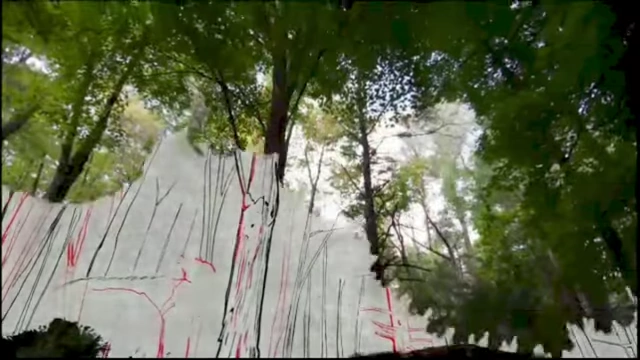
An illustrative visual blending a drawn landscape with a real forest, symbolizing the imaginative aspect of world creation [ 02:32:17 ] - Sensory Immersion: Incorporate sensory details (smell of cooking cabbage in a school, touch of a furry wall) to make your world more vivid and real. These "smuggled" details make the world feel authentic to the reader and, more importantly, to the writer.
- Ask Weird Questions: Even if not explicitly answered in the text, knowing details like where people go to the toilet, how a city is fed, or the economic structure of a medieval town adds depth and credibility to your world.
- From the Real World: Avoid generic fantasy worlds. Instead, look at the world around you (outside your window, places you've visited) and transform them. Magnify or shrink real-world details.
- Know the Rules in Order to Break Them [3:29:41]:
- Implicit and Explicit Rules: Understand the rules of your fictional world, both explicit (stated facts) and implicit (unspoken assumptions).
- Trial and Error: Characters discover the rules of a world through experience and mistakes, just as in real life (e.g., touching fire to learn it's hot). Allow your characters to interact with the world and learn its boundaries.
- "Know More Than You Tell": As the author, possess more knowledge about your world than you reveal to the reader. This hidden depth creates a sense of realism and allows readers to infer richness beyond the explicit descriptions.
- Case Study: The Graveyard Book and Graveyards: Gaiman's inspiration for The Graveyard Book came from observing his son playing comfortably in a graveyard. He extensively researched and visited various graveyards, absorbing details to create a believable "jungle" for his story.

An illustration of a ruined chapel, a real-world inspiration for "The Graveyard Book" [ 02:47:18 ] 
An illustration depicting a graveyard on a hill, inspired by Glasgow Necropolis [ 02:47:37 ]
Descriptions [2:55:15]
- The Power of Words: Descriptions are crucial, and the choice of words is paramount.
- Beyond the Obvious:
- Describe what needs to be described and explain what needs to be explained. The writer is in charge, with no rules except to tell a great story.
- Aim for evocative language that encourages the reader to imagine rather than just be told.
- One Memorable Detail [3:01:00]: Instead of generic descriptions, focus on one memorable, distinctive detail that sets an object or person apart and evokes emotion (e.g., a tree resembling a "clutching hand").

An excerpt from "Neverwhere" vividly describing contrasting bodyguards [ 02:58:05 ] - Appeal to the Senses [3:02:40]: Engage all five senses (touch, smell, taste, sight, sound). Smell, often overlooked, can be particularly powerful and evocative.
- Case Study: Coraline's Tunnel [3:03:43]: Coraline's journey through a dark, unknown tunnel emphasizes the sense of touch, describing the walls as "warm and yielding" with "fine downy fur," then "hot and wet like somebody's mouth," creating a visceral and nightmarish experience.

An excerpt from "Neverwhere" describing London with rich sensory detail [ 02:59:17 ] 
Neil Gaiman gesturing to emphasize sensory details like touch [ 03:03:20 ]
Humor [3:05:46]
- Humor is Vital: Gaiman believes humor, whether subtle or overt, is essential in writing as it provides recognition and releases tension.
- Twist the Cliché [3:06:43]:
- Take familiar clichés from a genre (e.g., pirates demanding to walk the plank) and twist them or present them from an unexpected perspective to create humor.
- Case Study: Fortunately the Milk [3:06:43]: A father's mundane task of buying milk becomes a fantastical adventure where he encounters aliens and pirates. Humor arises from the father's deadpan reactions to absurd situations, his insistence on fulfilling familiar tropes (demanding to walk the plank), and his son's interruptions about scientific inaccuracies (piranhas in the sea).

An excerpt from "Fortunately the Milk," showing humorous dialogue and character illustration [ 03:08:32 ] 
An illustration from "Fortunately the Milk" depicting a Stegosaurus in a hot air balloon, a surprising twist [ 03:10:40 ]
- End With Funny Words [3:13:44]:
- Strategic word choice and placement can enhance humor. Ending a phrase or sentence with the "funny word" maximizes its impact (e.g., "four suitcases filled entirely with lard").

An excerpt from "Anansi Boys" featuring the running gag about limes [ 03:21:44 ] 
An excerpt from "Anansi Boys" with a humorous observation about a lime [ 03:23:42 ]
- Strategic word choice and placement can enhance humor. Ending a phrase or sentence with the "funny word" maximizes its impact (e.g., "four suitcases filled entirely with lard").
- Collaborative Humor with Terry Pratchett:
- Gaiman and Terry Pratchett developed unique terms for comedic elements in their collaboration Good Omens:
- "Fig": A subtle, running joke that appears innocuous but eventually pays off in the plot.
- "Sherbet Lemons": Small, throwaway gags meant to elicit a quick smile, without a larger payoff.
- "Cigarettes": The narrative moments at the end of a novel where characters reflect and tie up loose ends, akin to the wrap-up scenes in 1960s cop shows. Gaiman learned that these need to be carefully integrated into the plot, especially in adaptations, to maintain narrative drive.
- Gaiman and Terry Pratchett developed unique terms for comedic elements in their collaboration Good Omens:
Genre [3:24:01]
- Medium vs. Genre in Comics: Comics are a medium, not a genre, offering creative freedom to explore various fictional categories. This allowed Gaiman to mix historical fiction, fantasy, sci-fi, horror, and political themes in The Sandman without audience objection.
- Understand Reader Expectations [3:25:02]:
- Genre is defined by reader expectations. A "cowboy novel" versus a "novel set in the American Wild West" highlights this distinction: the former requires specific tropes (cattle stampedes, high-noon showdowns) that readers expect, while the latter can explore the setting more broadly.
- Failing to meet genre expectations can disappoint readers and confuse publishers (e.g., a musical with no songs).
- Learn the Rules in Order to Break Them [3:29:41]:
- Understanding genre rules is a valuable tool. Knowing the conventions allows a writer to either fulfill them or deliberately subvert them for greater impact.
- Gaiman likens this to his elocution teacher's advice: "Before you can be eccentric, you have to know where the circle is." One must understand the "rules" before creatively breaking them.
- Sail Against Expectations [3:32:25]:
- Use reader expectations as a driving force. Hiding information, setting up anticipation, and then delivering an unexpected but satisfying twist (e.g., the reveal of Death as a woman in Sandman) can be highly effective.
- Step Out of Your Comfort Zone [3:35:48]:
- Gaiman advises new writers to venture beyond their preferred genres. Sticking solely to what you know can lead to derivative work ("photocopy of a photocopy").
- Exploring different types of fiction fosters originality and helps a writer discover their unique voice.
Comics [3:37:19]
- Medium, Not Genre: Gaiman reiterates that comics are a medium, offering a unique blend of pictures and words to convey meaning in ways other mediums cannot.
- Plotting a Comic:
- Thumbnailing: Gaiman starts by folding paper and numbering pages (e.g., 1-24 for a typical comic). He then sketches "little stick figures" as visual notes, dictating roughly what should be in each panel and how much information it can convey.

Neil Gaiman preparing paper for thumbnail sketches for a comic [ 03:41:22 ] 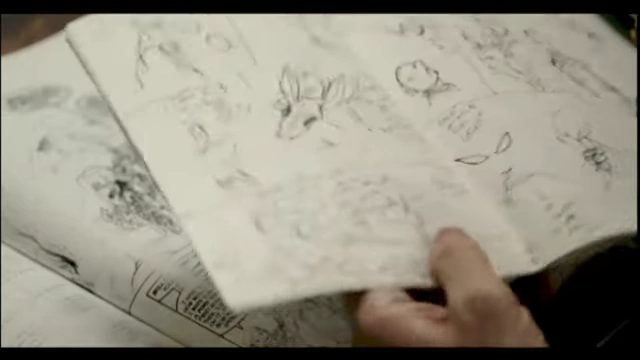
Neil Gaiman's rough thumbnail sketches for comic panel layouts [ 03:41:28 ] 
A page from Neil Gaiman's notebook showing numbered pages for comic plotting [ 03:41:38 ] - Script as a Letter to the Artist: The comic script is a detailed "letter" to the artist, designed to inspire and guide their interpretation. It describes visual details, character emotions, and even impossible-to-draw concepts like "a non-existent wind" to set the mood.

A thumbnail sketch depicting a landscape and the Long Man of Wilmington [ 03:43:30 ] - The Page as the Unit [3:50:53]: In comics, the page is a crucial unit. The layout, panel transitions, and page turns are essential for pacing and revealing information. Plot surprises are often placed on left-hand pages to maximize impact when the reader turns the page.

A close-up of comic panels, highlighting how meaning and narrative flow are created in the space between illustrations [ 03:51:43 ] 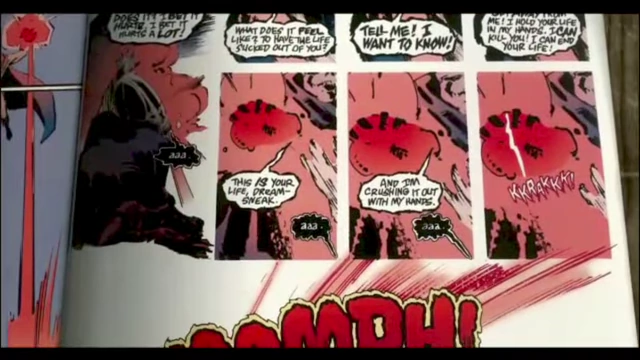
A sequence of panels from "The Sandman #7" depicting the shattering of the ruby [ 03:52:43 ] 
A comic page from "The Sandman #7" showing Dr. D as a tiny figure in Morpheus's hand, emphasizing scale and narrative surprise [ 03:53:00 ] 
The dramatic reveal of Morpheus holding the tiny Dr. D in his palm, a pivotal moment achieved through page turn [ 03:53:49 ]
- Thumbnailing: Gaiman starts by folding paper and numbering pages (e.g., 1-24 for a typical comic). He then sketches "little stick figures" as visual notes, dictating roughly what should be in each panel and how much information it can convey.
- Narrative Collaborators [3:55:07]:
- Comics are a highly collaborative art form involving writers, pencillers, inkers, letterers, and colorists. Each contributes to the storytelling.

Neil Gaiman showcases a volume of "The Sandman" [ 03:38:59 ] 
Charles Vess's pencil art for "The Sandman #19" [ 03:56:30 ] 
Detailed pencil work by Charles Vess depicting the procession of carts [ 03:57:01 ] 
A comic panel featuring Hamnet's dialogue, underscoring the emotional heart of "A Midsummer Night's Dream" issue [ 03:57:38 ] - Case Study: Sandman #19 ("A Midsummer Night's Dream"):
- Idea: The concept was the first performance of Shakespeare's A Midsummer Night's Dream for an audience of actual fairies, delivered as a gift.
- Layered Action: Gaiman planned multiple layers of action: the play itself, the reactions of the fairy audience (Oberon, Titania, Puck), and the commentary of "idiot fairies."
- Heartbreak as the Core: The emotional core of the story, discovered through his editor's feedback, was the sorrow of Shakespeare's son, Hamnet, who feels distant from his father. This emotional depth is what made the issue award-winning.

A comic panel showing Hamnet with an actor in a rabbit's head, conveying his sense of isolation and the blend of reality/fantasy [ 04:02:32 ] - Lettering as Sound: Gaiman worked closely with letterer Todd Klein to create distinct lettering styles for each of Dream's family members and other characters, allowing readers to "hear" the different voices.

Comic panels illustrating different lettering styles for the Endless characters in "The Sandman," demonstrating this unique collaborative element [ 03:59:02 ]
- Comics are a highly collaborative art form involving writers, pencillers, inkers, letterers, and colorists. Each contributes to the storytelling.
Dealing With Writers Block [4:04:23]
- "Writer's Block" as Being Stuck:
- Gaiman dismisses "writer's block" as a fancy term for being stuck. It implies helplessness, but it's a solvable problem.
- Retrace Your Steps [4:05:10]:
- Step Away: If stuck, step away from the work and engage in a different activity (chopping wood, walking, playing with children). This allows the subconscious mind to work.
- Read Anew: Return to your writing pretending you've never read it before. Start from the beginning and read through. This often reveals where the story went "off the rails" or where a different path should have been taken.
- Problem is Earlier: The point of being stuck is usually a symptom of a problem that occurred much earlier in the narrative.
- Be Willing to Recalibrate [4:07:24]:
- Go Deeper: Sometimes being stuck means you're being shallow and need to delve into deeper, darker, or more uncomfortable emotional territory.
- Embrace the Unexpected: Be open to characters taking unforeseen actions, even if it requires significant plot restructuring. Gaiman describes stopping Anansi Boys for months when he realized a character would logically commit murder in a comedy, forcing him to recalibrate the plot to ensure characters still received what they needed while maintaining the comedic tone.
- Write the Next Thing You Know [4:16:21]:
- Driving Through Fog: Writing a novel is like "driving through the fog with one headlight out." You can't see the whole path, but you can see enough to keep moving. Focus on writing the next sentence, paragraph, or scene you do know.
- Forward Motion: The key is continuous forward motion. The "mists will clear" periodically, offering glimpses of the larger narrative, but you must keep going even when unsure.
Editing [4:18:01]
- Creation and Fixing: Writing is a two-fold process: creating (exploding onto the page) and then fixing (editing). The first draft is an explosion; subsequent drafts are about cleaning up the "shrapnel" and damage.
- Pretend You've Never Read It Before [4:19:13]:
- After finishing a draft, step away from it for a period (a week or more).
- Then, print it out and read it with fresh eyes, pretending you know nothing about it. Read it as a critical, yet empathetic, reader.
- Ask Yourself, "What Was This About?" [4:21:43]:
- This is the most crucial question during editing. The answer helps identify the story's true core and theme.
- Use this understanding to reinforce what the story is about and eliminate elements that stray from this central theme. It provides a clear "yardstick" for what to keep and what to cut.
- Dealing with Feedback and Rejection [4:24:18]:
- Accept Criticism on "What": When someone says something "doesn't work" in your story, accept that they are right about that specific observation. That's valuable information.
- Question Criticism on "How": However, when they suggest how to fix it, they are "almost always wrong." The solution often lies deeper in the text, perhaps in a misplaced plot point or a underdeveloped theme. Fixing it their way means writing their story, not yours.
- Don't Obsess Over Perfection [4:25:40]:
- Perfection is an ideal, not an achievable state in reality. Striving for it can paralyze a writer.
- The Unfixable Blank Page: You cannot fix a blank page. The goal is to produce something imperfect that can be improved.
- Gaiman recounts how a perfectionist colorist failed to deliver work for The Sandman because he was constantly trying to make it "perfect," ultimately losing the job.
Rules for Writers [4:29:29]
- Gaiman's 5 (plus 1) Rules, adapted from Robert Heinlein and Harlan Ellison:
- You must write: The most fundamental rule. Nothing happens if you don't put words on the page.
- You must finish what you write: Don't abandon projects or endless revise; complete them. Perfectionism can be a trap.
- You must send it out into the world: Share your finished work with potential publishers, agents, or online platforms. This is an act of bravery.
- Refrain from rewriting, except to editorial request: Once submitted, resist the urge to endlessly revise. Only revise if an editor asks, unless their request compromises the integrity of your story.
- When it comes back, send it out again: Rejection is inevitable. Don't let it break your spirit. Keep submitting until it finds a home.
- Start the next thing: Continuously work on new projects. This ensures you always have something to offer and prevents obsession over a single piece. It also keeps your creative muscles active.
The Writer's Responsibilities [4:42:11]
- Beyond Storytelling: Gaiman reflects on his responsibilities as an artist, a question that became prominent after a tragic incident where a murder was falsely linked to The Sandman.
- Core Responsibilities:
- Tell Good, Honest Stories: His primary responsibility is to craft narratives that are well-told, authentic, and embody his beliefs and values.
- Encapsulate Beliefs and Values: Stories should reflect the writer's worldview and moral compass.
- Embrace Diverse Perspectives: Be willing to include and do justice to characters with different viewpoints, even those you might not personally agree with.
- Empowering Readers:
- Providing "Tools or Weapons": For young readers, encountering "darkness" or difficult themes in fiction (like in Coraline) is not inappropriate. Instead, it provides them with crucial "tools or weapons" to understand and cope with the real world's challenges, teaching bravery and resilience.
- The Essence of Humanity:
- His work, like Good Omens, carries a message of human responsibility for the world, emphasizing that humanity's greatest triumphs and tragedies stem from people being "basically people," not inherently good or evil.
- The Necessity of Living and Observing:
- Experience is Fuel: Read widely and write consistently, but most importantly, live. Every experience, every person met, every observation will eventually serve as material for fiction.
- The Magic of Connection: Writers must gather these disparate observations because "one day you'll write a story and you'll realize that actually you can write this story because once on a mountaintop in China, a little man tried to sell you a pot of snow white honey." Every small, seemingly insignificant detail of life feeds the wellspring of storytelling.