An In-Depth Character Analysis of Slay the Princess: Exploring the Player's Voices, the Princess, and the Narrator
This analysis of "Slay the Princess" delves into its complex characters through their ideals, goals, and actions.
- The game features a unique loop where the player (The Long Quiet) restarts cycles, retaining memories while the Narrator does not.
- The player is guided by 11 distinct inner voices, each representing different personality traits and biases, such as The Hero (moral compass), The Broken (empathy), The Cheated (retribution), The Cold (pragmatic detachment), The Contrarian (defiance), The Hunted (survival instinct), The Skeptic (logical truth-seeker), The Smitten (idealized love), The Stubborn (unwavering determination), The Opportunist (self-interest), and The Paranoid (distrust of reality).
- The Princess (The Shifting Mound) is a creature of change and death, whose form and abilities are directly molded by the player's perception of her.
- The Narrator, a mortal who split the original God into two (Long Quiet and Shifting Mound), seeks to eliminate death for mankind, driving the player to slay the Princess, often exhibiting arrogance and an inability to empathize.
- The game highlights the subjective nature of morality and the profound impact of player choices on the narrative and character development.

Ideals, Goals, Actions Framework [ 00:08:00 ] 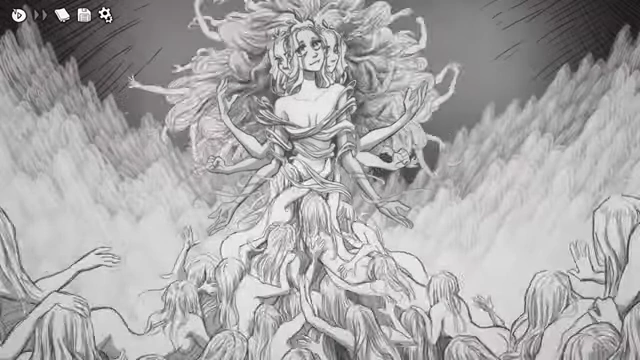
The Princess in her full form as the Shifting Mound [ 00:39:08 ]
Introduction to Slay the Princess [0:00]
The video begins by introducing "Slay the Princess," a visual novel game where the player navigates repeated cycles (paths in the woods, a cabin, a basement, and a princess), making decisions to either slay or save the titular princess. The game constantly subverts expectations, with the player and the Princess retaining memories of previous loops, unlike the Narrator. Each loop introduces new "voices" in the player's head, reflecting past actions and offering conflicting advice. These voices, along with the changing environment and Princess's forms, define the game's core loop. The central theme revolves around subjectivity, where "no wrong choices" exist, and all endings are valid.
Character Analysis Framework: Ideals, Goals, Actions [7:45]
The presenter proposes a "trifecta" for analyzing characters:
- Ideals: The character's core beliefs or worldview.
- Goals: What the character aims to achieve, stemming from their ideals.
- Actions: The steps a character takes to achieve their goals, justified by their ideals.
This framework is crucial for developing three-dimensional, morally gray characters, where actions that might seem terrible in isolation are justified by the character's internal logic.
The fundamental framework for analyzing characters: Ideals, Goals, and Actions.
Ideals, Goals, Actions Framework [ 00:08:00 ]
The Long Quiet (The Player) & Their 11 Voices [10:56]
The player, referred to as "The Long Quiet" (or "The Decider"), is revealed to be a God, one half of the original deity of the world, tasked by the Narrator to slay the Princess, their other half, to eliminate the concept of death. The Long Quiet is influenced by 11 distinct inner voices, each embodying a specific trait or perspective, which are explored in detail:
1. The Hero [11:50]
- Ideals: Heroism, helping others, moral correctness.
- Goals: To reduce harm to all parties, find compromises.
- Actions: Often indecisive, seeking to avoid extremes, leading to unfavorable outcomes for everyone. The Hero struggles with clear-cut right or wrong, often proposing compromises that leave both the Narrator and Princess unsatisfied.
2. The Broken [15:09]
- Ideals: Submission, comfort, safety, empathy, understanding.
- Goals: To avoid pain and find love/care, often through submission to the Princess.
- Actions: Pessimistic and self-deprecating, yet capable of profound empathy. Even after torture, The Broken remains loyal and understanding towards the Princess and the Narrator.
3. The Cheated [17:06]
- Ideals: Retribution, evening the score, getting back at the world for perceived unfairness.
- Goals: To achieve a "win" and reclaim agency, often by defying the Narrator.
- Actions: Defiant and paranoid, seeking to settle scores, sometimes taking control from the player/Narrator. The Cheated embodies a "fuck it, we'll ball" mentality but can succumb to doubt.
The Princess bites off her own arm, an early subversion of the damsel in distress trope.
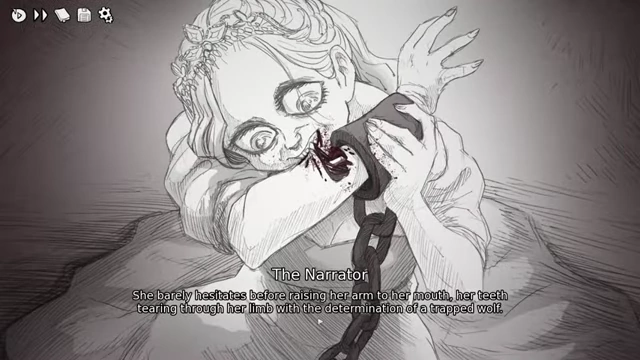
The Princess shockingly bites off her own arm [ 00:03:51 ]
4. The Cold [18:53]
- Ideals: Pragmatic detachment, unfeeling logic, seeking novelty for interest rather than joy.
- Goals: To observe, gather new "data points," and entertain itself.
- Actions: Emotionally distant, useful in painful situations by convincing the player to ignore suffering. The Cold helps the player become a more efficient "killing machine" but is often useless in situations requiring empathy or freeing the Princess.
The Ghostly Princess hovers over a skeletal figure, representing a cold, deadly outcome.
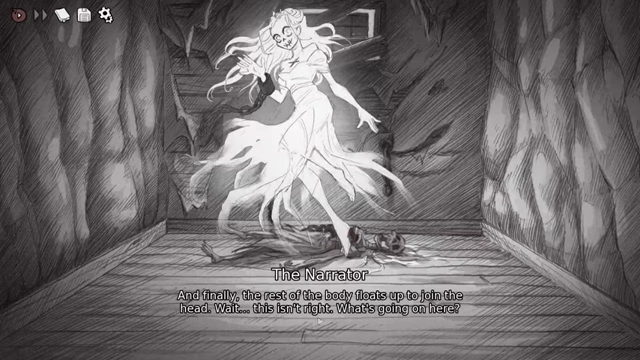
The Ghostly Princess hovers over a skeletal figure, representing a cold, deadly outcome [ 00:19:17 ]
5. The Contrarian [20:25]
- Ideals: Defiance, rebellion, opposition to authority, causing discord.
- Goals: To actively irritate and undermine the Narrator above all else.
- Actions: Taking actions directly contrary to the presented premise or goals, often creating new options in the subjective reality of the construct. The Contrarian is a useful voice for challenging the status quo.
6. The Hunted [21:44]
- Ideals: Survival above all else, primal instinct.
- Goals: To stay alive for one more second, avoiding death at any cost.
- Actions: Reacting instinctually to immediate threats, unable to plan long-term. Effective in dodging and evading but leads to attrition if not combined with other strategies.
The Beast Princess lurks in the shadows, embodying the primal fear of the hunted.
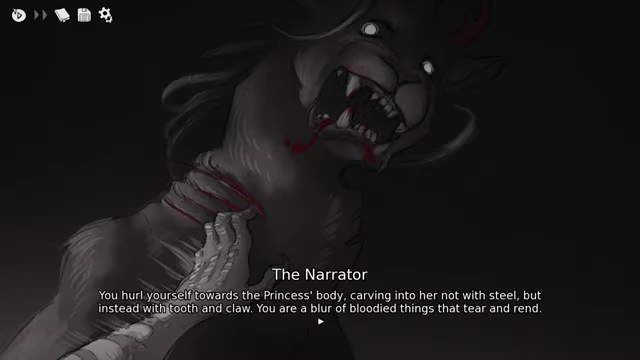
The Beast Princess lurks in the shadows, embodying the primal fear of the hunted [ 00:52:16 ]
7. The Skeptic [27:23]
- Ideals: Logical questioning, seeking truth through evidence and explanation.
- Goals: To understand the situation, uncover facts, and avoid stagnation.
- Actions: Analyzing situations from a rational perspective, doubting claims without proof, sometimes forcefully intervening (e.g., slaying the player) to gain more information. A planner and organizer, similar to The Stubborn but focused on understanding.
8. The Smitten [29:32]
- Ideals: Idealized love, love for the idea of loving the Princess.
- Goals: To be happy with the Princess forever, fulfilling his idealized vision of love.
- Actions: Blindly devoted to all versions of the Princess, justifying any of her actions as perfect. In "Happily Ever After," he traps the player and Princess in a beautiful but stifling eternity, refusing to acknowledge relationship problems.
The Smitten Princess, depicting idealized love and devotion.
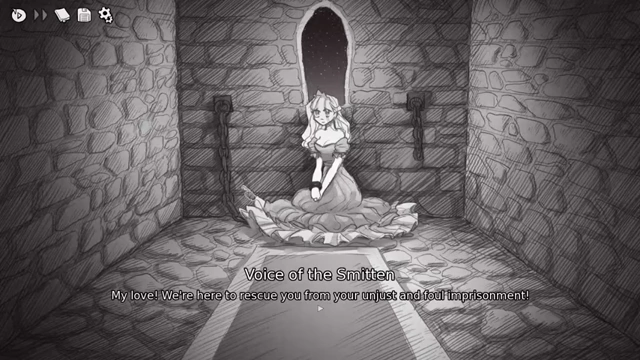
The Smitten Princess, depicting idealized love and devotion [ 00:05:48 ]
9. The Stubborn [32:13]
- Ideals: Persistence, brute force, unwavering determination ("if it doesn't work, hit it again").
- Goals: To keep fighting, achieve victory through sheer endurance.
- Actions: Relentlessly combating the Princess, even past the point of death, inspiring continuous struggle. The Stubborn thrives on conflict and aligns with the Narrator's goal of eternal struggle, albeit with different motivations.
The crystalline, spiky Princess form representing unwavering determination, also noted by the Voice of the Stubborn as "the perfect woman."
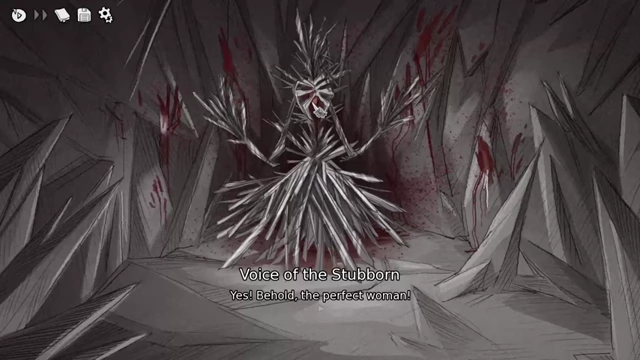
The crystalline, spiky Princess form representing unwavering determination [ 00:20:25 ]
10. The Opportunist [23:22]
- Ideals: Self-preservation, always ending up on top, ruthless pragmatism.
- Goals: To win by any means, taking the easiest path to victory.
- Actions: Quickly switching allegiances to whoever holds power, backstabbing others, and using deception. He is good at identifying similar traits in other characters, like The Witch, because "it takes one to know one."
The Princess with a knife in her chest, illustrating betrayal or opportunistic action.
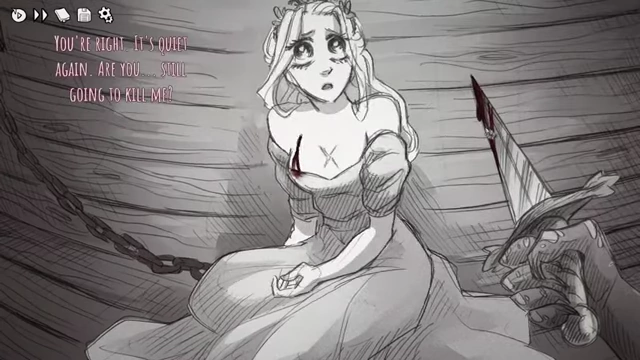
The Princess with a knife in her chest, illustrating betrayal or opportunistic action [ 00:24:29 ]
11. The Paranoid [25:17]
- Ideals: Distrust of reality, questioning everything from a perspective of danger, fear of bad things happening.
- Goals: To expose threats, understand the true nature of reality to prevent harm.
- Actions: Constantly expecting the worst, inadvertently shaping the Princess into more dangerous forms due to her reactive nature. However, his questioning of reality can become an asset in challenging the Princess's power, as seen in the Apotheosis route.
The Masked Princess, representing the paranoia and distrust of reality.
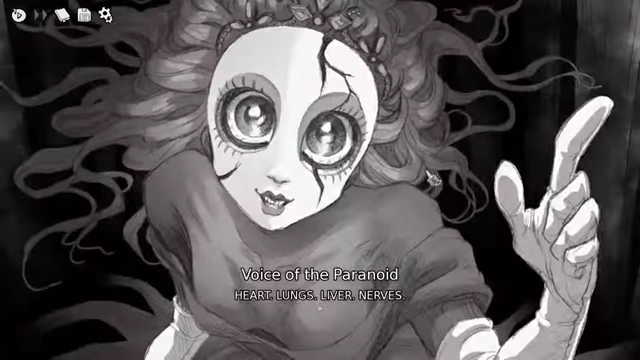
The Masked Princess, representing the paranoia and distrust of reality [ 00:25:25 ]
The Princess (The Shifting Mound) [35:08]
The Princess is the other half of the original God, known as "The Shifting Mound," embodying the very concepts of change and death.
- Nature: She is a creature acted upon, her form and abilities directly influenced by the Long Quiet's (player's) perception and beliefs. If the player perceives her as dangerous, she becomes dangerous; if as helpless, she appears so.
An abstract, cascading form of the Princess, representing her continuous change and growth through various perceptions.
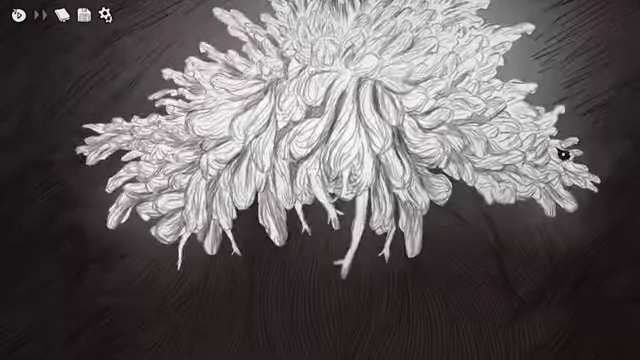
An abstract, cascading form of the Princess, representing her continuous change and growth [ 00:38:48 ] - Goals: To survive, continue existing, and ultimately reunite with the Long Quiet to become whole again. She collects various "vessels" (different forms) to remind her of her nature.
- Full Form: When she gathers enough perceptions, she reaches her full, god-like form (Multitudes), becoming an unstoppable force of change and death, impenetrable to reason or manipulation. She cannot comprehend mortal fear of death.
The Princess in her full, god-like form, having absorbed countless perceptions and possibilities.
The Princess in her full form as the Shifting Mound [ 00:39:08 ] - Outcomes:
- Slaying her: Destroys the concept of death, leading to a world without change envisioned by the Narrator.
- Resetting: If the player cannot bring themselves to slay her, they can choose to restart the loop, hoping for a different outcome or an endless cycle.
- Escaping: The player and Princess can abandon the cabin and leap into the unknown in their smaller, more mortal forms, choosing to forge a new path together.
The Long Quiet kisses the Princess, signifying a choice to unite or escape together, forsaking the Narrator's plan.
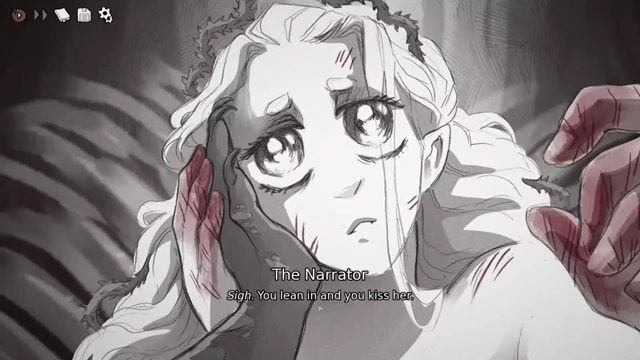
The Long Quiet kisses the Princess, signifying a choice to unite or escape together [ 01:05:19 ] The Princess struggles against multiple clawed hands, symbolizing the internal and external forces acting upon her and the player's agency in shaping her fate.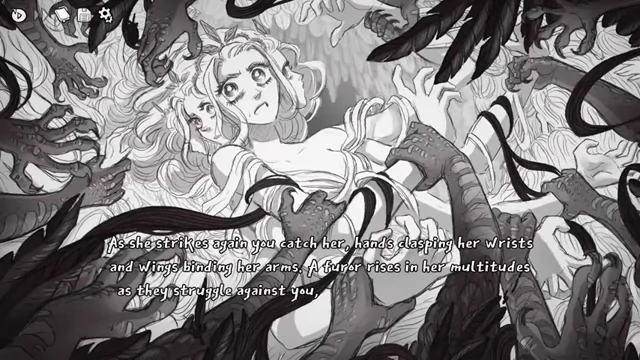
The Princess struggles against multiple clawed hands, symbolizing the internal and external forces acting upon her [ 01:10:07 ]
The Narrator [43:34]
The Narrator is a mortal man who, in a desperate attempt to save mankind from the universe's inevitable end, split the original God into two: the Long Quiet (the player) and the Shifting Mound (the Princess).
- Ideals: Against the unknown, against death, against the loss of mankind, believing in an immutable truth.
- Goals: To have the Long Quiet slay the Princess, thereby eliminating death and creating a world of eternal, pleasant rediscovery for humanity.
- Actions: Weaving himself as an echo into the construct he created, he guides (and manipulates) the player. He self-sacrificed his mortal life to prevent his own awareness from corrupting his plan.
The Narrator's dream of a world free from fear, chaos, and death, where life continues peacefully forever.
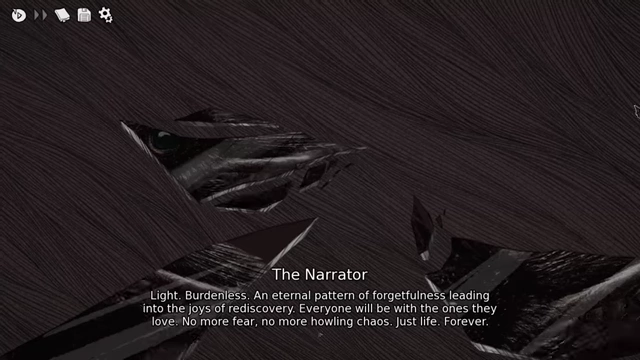
The Narrator's vision of a peaceful, eternal world [ 00:45:38 ] - Flaws:
- Arrogance & Lack of Empathy: He is almost completely incapable of seeing perspectives other than his own, particularly regarding the concept of death and the Long Quiet's situation. He sees the player as a tool ("blade").
- Ineffectiveness: Despite the high stakes, his attempts to convince the player are often clumsy, sarcastic, and uninformative, leading to frustration and resistance.
- Evolution: In routes like "The Wild," he shows determination and panic, becoming a more active defender of his vision when threatened with the collapse of all worlds. In "Happily Ever After," he shows apprehension for the Princess's misery and allows her to escape, revealing a hidden capacity for empathy.
Interplay of Characters & Game Mechanics [52:13]
The game masterfully demonstrates how the various voices and main characters interact:
- Voice Combinations: Voices can combine strengths, such as The Stubborn inspiring The Hunted to fight, transforming passive survival into aggressive self-preservation. Similarly, The Paranoid and The Skeptic can work together, leveraging one's questioning of reality and the other's logical assessment to break free.
- Player Agency: The Long Quiet (player) holds ultimate power; their decisions shape the Princess's form and influence the narrative's direction. The game emphasizes that while the Princess is change, the player is the agent of that change.
- Subjectivity: The game is a "walking contradiction," exploring themes of love, choices, death, rebirth, and free will, all viewed through a million subjective lenses. The narrative constantly reminds the player that their perception is reality within the game's construct.
- Video Games as a Medium: "Slay the Princess" excels as a storytelling medium by immersing the player as a character, making their personal ideals, goals, and actions directly impactful on the narrative and world, fostering a unique level of engagement and self-reflection.