How to Thrive as a Creative in 2025: Bridging Creative Skills with Strategic Direction Amidst AI and Evolving Marketing
This video discusses how creatives can adapt and succeed in 2025 by shifting from isolated creative roles to strategic creative positions, especially with the rise of AI and the commoditization of creative services.
- The speaker explains the changing landscape of creative work, highlighting the different income models for traditional "non-creators" versus "creators."

Comparison of Non-Creator vs. Creator Income Streams [ 00:02:00 ] 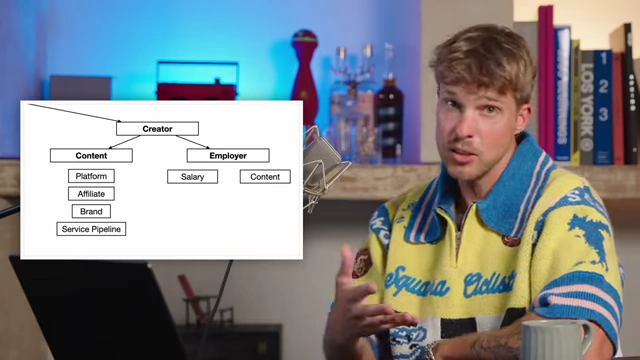
Comparison of Non-Creator vs. Creator Income Streams [ 00:02:40 ] - He identifies a significant gap in corporate creative functions due to a generational divide and a lack of opinion-driven evaluation, leading to unoptimized creative output.
- The "zone of opportunity" for creatives is to optimize both creative work and business content, understanding how to apply skills to move things on the internet effectively.
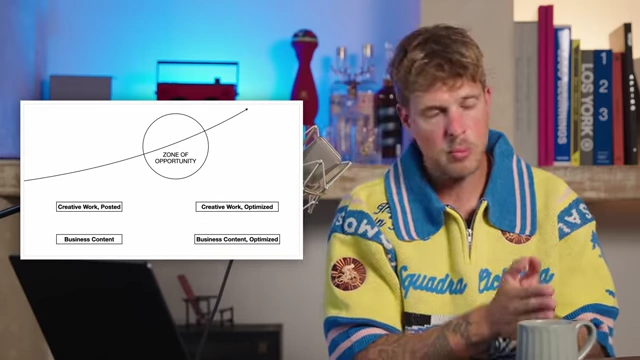
The Zone of Opportunity for Creative Optimization [ 00:06:29 ] - The key to future-proofing a creative career is "skill stacking," combining a core creative skill with secondary skills, strategic thinking, and understanding funnels.
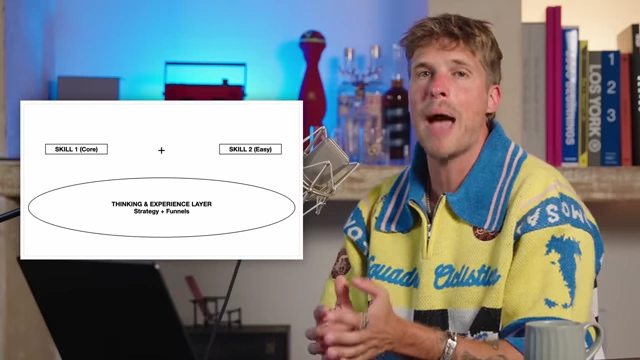
The Comprehensive Skill Stacking Model [ 00:08:59 ] - The most in-demand roles, like Creative Strategist and Creative Director, require mastery of pillar strategy, shoot execution, and building a creative network for both organic and paid content.
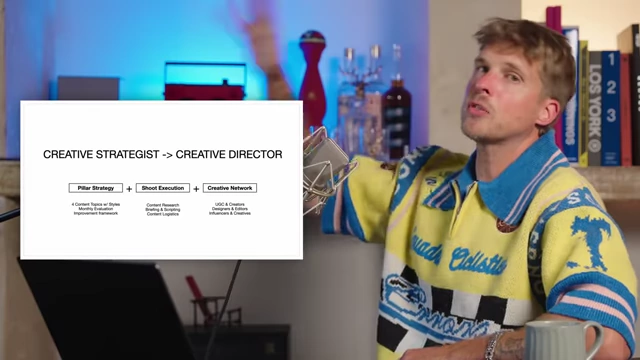
Key Components of a Creative Strategist or Creative Director [ 00:09:19 ] - AI's impact is clarified, distinguishing between ineffective uses (like generating viral scripts) and impactful applications (like AI hooks for ads, world-building, and retouching).
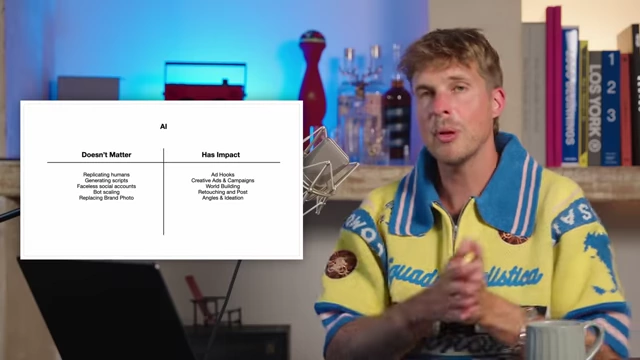
AI Applications Categorized by Impact [ 00:12:48 ] - To achieve success, creatives must acquire a core skill, actively test organic and paid content, develop a bias for action, and build a comprehensive toolkit of proven methods.
Introduction: The Changing Landscape for Creatives [0:00:00]
The nature of creative work is rapidly changing, especially with the rise of the creator economy, the shift towards everything becoming content, and the increasing role of AI. Understanding where the money is and what skills are valuable is crucial as jobs become commoditized. The video aims to explain how creatives got here, the opportunities in creative strategy and direction, the real impact of AI, and actionable steps for a future-proof career.
The Evolution of Creative Work & Income Models [0:01:41]
The way creatives make money has diversified, creating different economic models for "non-creators" and "creators."
Non-Creator Model [0:01:41]
- Traditionally, non-creators earned a salary from an employer and often supplemented this with a side hustle.
- This side hustle typically involved offering services (e.g., painting, copywriting) and required traditional marketing to acquire clients.
Traditional Income Streams for a Non-Creator [ 00:02:00 ]
Creator Model [0:02:18]
- Creators have expanded income streams beyond a salary, including:
- Platform payouts (e.g., TikTok creator fund, YouTube ad revenue).
- Affiliate marketing (e.g., TikTok Shop).
- Brand deals and sponsorships.
- A service pipeline, similar to side hustles for non-creators, but often amplified by their content presence.
Multiple Income Channels for a Creator [ 00:02:40 ]
- This model empowers creative individuals who understand social media to generate more income and leads, making them more self-reliant.
Challenges in Modern Creative Work & The "Broken" System [0:03:09]
Creative work faces significant fragmentation and issues within traditional corporate structures.
The Generational Gap [0:03:35]
- There's a major gap between older generations in leadership roles who don't fully understand modern social media and younger generations entering the workforce who do.
- This prevents effective mentorship, making it difficult for younger creatives to progress in their careers within corporate settings.
Lack of Opinion and Taste [0:04:31]
- A decade-long trend of avoiding strong opinions on creative work ("good" or "bad") has hindered the development of critical taste and defense of creative choices.
- Creative work, especially in business, is often objective: does it achieve company goals or not? Without evaluating performance and defending opinions, growth in creative effectiveness stagnates.
The Zone of Opportunity: Optimized Creative Work [0:05:25]
There's a clear spectrum of how businesses engage with creative work and content, revealing a significant opportunity for those who can bridge the gap between basic and optimized efforts.
Spectrum of Creative Work in Business [0:05:25]
- Bottom Tier: Businesses living in an "old world playbook" that don't effectively utilize content or social media for marketing.
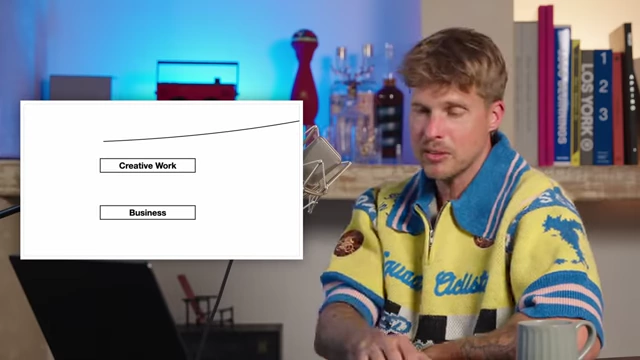
The Relationship between Creative Work and Business [ 00:05:30 ] - Middle Tier: The majority of businesses that engage in basic creative work (e.g., posting on Instagram) but don't do it well or optimize for results.
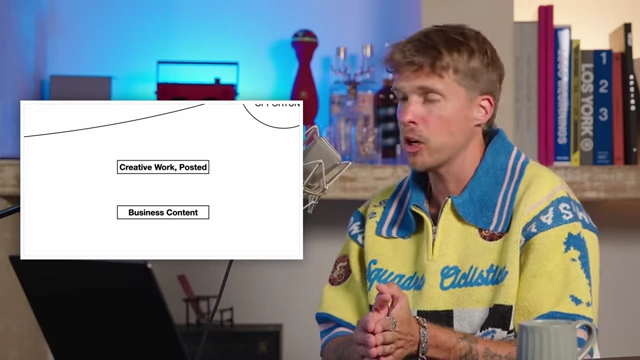
Creative Work and Business Content Spectrum [ 00:05:44 ] - Top Tier: Businesses that truly understand and take action on what's happening in the modern world, optimizing their creative work and business content.
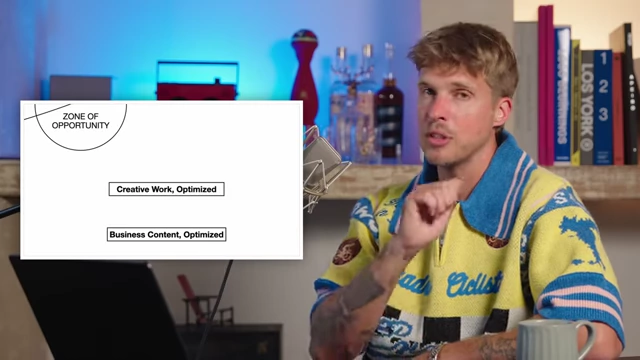
Optimized Creative Work and Business Content [ 00:06:02 ]
The Need for Optimization [0:06:18]
- Creatives (artists, videographers, photographers) who complain about algorithms not favoring their work are often failing to optimize it for platform engagement.
- The "zone of opportunity" lies in transforming basic creative work and business content into optimized versions that perform well across various platforms (influencers, social media, paid advertising, cultural interaction).
Zone of Opportunity for Creative and Business Content Optimization [ 00:06:29 ]
Shifting from Single Skills to Skill Stacking [0:06:47]
Traditional creative roles focused on a single skill are becoming obsolete. Modern creatives need a diverse skill set.
Beyond Single Skills [0:06:47]
- Agencies and traditional companies often pigeonhole creatives into single roles (designer, videographer, copywriter).
- The modern world demands individuals with multiple skills, making single-skill professionals less useful.
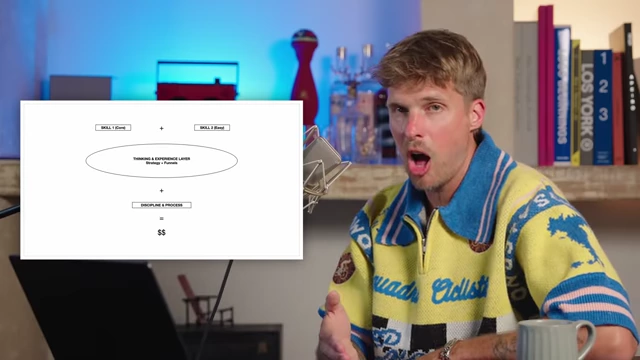
Single Skills vs. Stacked Skills Model [ 00:07:09 ]
The Skill Stacking Formula [0:07:05]
- Skill 1 (Core): A foundational, solid creative skill (e.g., videography, design, copywriting).
- Skill 2 (Secondary): Additional "softer" skills, often augmented by AI (e.g., using AI for copywriting, basic Shopify backend management). These might have taken years to learn but are now more accessible.
- Experience Layer (Strategy + Funnels): Understanding how things move in the modern world (strategy) and how people convert into buying (funnels).
- Discipline + Process: Implementing a structured approach to work.
Comprehensive Skill Stacking Model [ 00:08:59 ] - Combining these elements makes a creative highly valuable, leading to roles like Creative Strategist, Creative Director, or Head of Growth.
The Shift in Marketing Budgets [0:07:41]
Companies are evolving how they allocate budgets, moving from marketing-centric to content-centric approaches.
- Traditionally, content was a small part of a larger marketing budget.
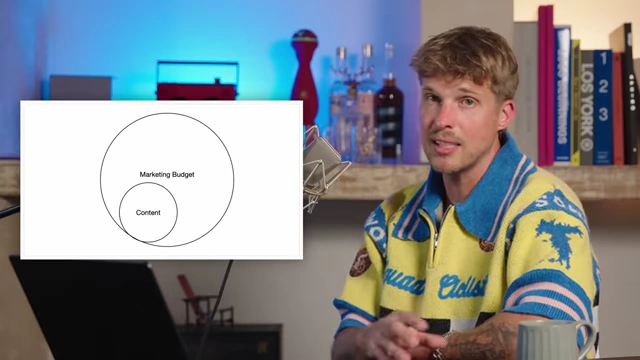
Traditional Marketing Budget with Content as a Subset [ 00:07:46 ] - Savvy companies now view marketing as content, with a content budget being the primary focus, and ads using content as a smaller subset.
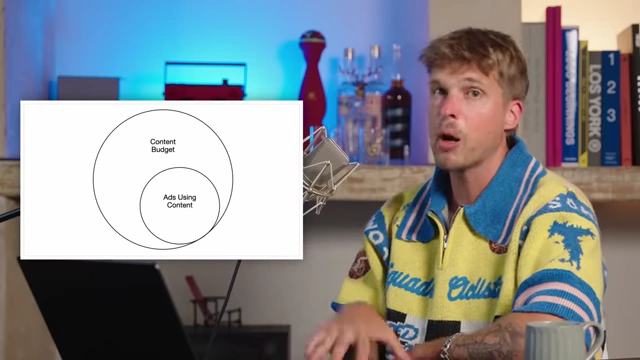
Modern Content Budget with Ads as a Subset [ 00:07:54 ]
The Core Components of a Creative Strategist/Director [0:09:02]
To transition from a creative strategist to a creative director, one must master three key areas:
1. Pillar Strategy [0:09:34]
- For organic content, developing a "pillar strategy" involves:
- Four Content Types with a Style: Defining specific content formats and aesthetics (e.g., travel vlogs, product formulation breakdowns, behind-the-scenes photo dumps).
- Monthly Evaluation: Regularly assessing which pillars to keep, improve, or discard based on performance.
- Improvement Framework: Developing clear strategies to enhance underperforming pillars (e.g., changing format, improving hooks).
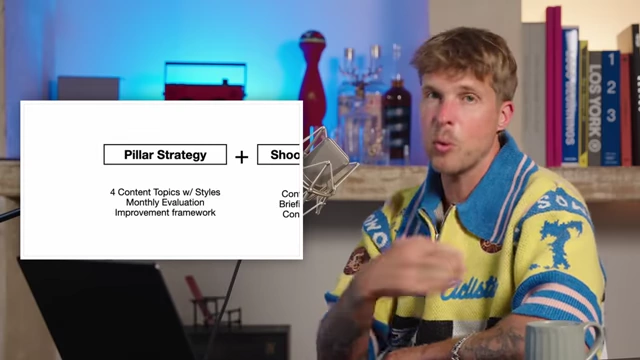
Details of Pillar Strategy [ 00:09:40 ]
2. Shoot Execution [0:10:11]
- The practical implementation of content creation involves:
- Content Research: Thorough investigation into what to create.
- Briefing & Scripting: Clearly communicating objectives to all involved parties and writing necessary scripts.
- Content Logistics: Managing all operational aspects, including lighting, deliverables, editing, and budgeting.
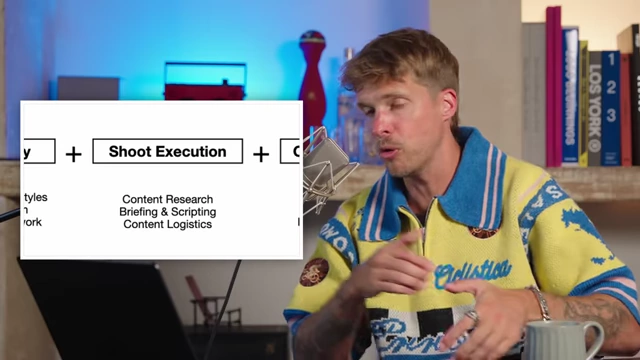
Details of Shoot Execution [ 00:10:28 ]
3. Creative Network [0:10:33]
- Building a robust network is essential for scaling creative output and impact:
- UGC & Creators: Identifying and engaging user-generated content creators and other influencers.
- Designers & Editors: Having access to professionals at various price points to execute creative visions.
- Influencers & Creatives: Collaborating with individuals who can amplify campaigns and drive cultural relevance.
Importance of Paid Content Strategy [0:10:55]
Beyond organic content, understanding paid strategy is equally vital for business success.
Paid Content as a Business Driver [0:11:00]
- Many successful brands prioritize paid content, even if their organic strategy is not strong, to drive sales and leads across various sectors (e-commerce, local businesses, software).
TikTok Shop Example (Level 1 & Advanced) [0:11:28]
- Level 1: Brands recruit affiliates/creators, manage a brand store with products and deals, and convert good creative content into paid ads, testing them on other networks and integrating live streams.
- Advanced: Involves a dedicated team for briefing, tracking, and strategizing with creators, running their content as ads, and aggregating creative insights. These roles are new and highly impactful.
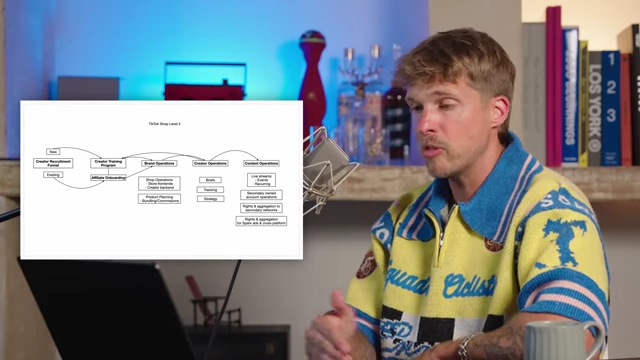
Advanced TikTok Shop Strategy Flowchart [ 00:11:59 ]
Navigating AI's Impact on Creative Roles [0:12:46]
It's crucial to differentiate between AI uses that don't matter and those that have a real impact on creative work.
AI Uses That Don't Matter [0:12:50]
- Believing AI will fully replace humans in shoots.
- Expecting AI-generated video scripts to go viral organically.
- Relying on faceless accounts to "crush it" solely through AI.
- These are often ineffective and time-consuming distractions.
AI Uses That Have Impact [0:13:09]
- AI Hooks: Applying AI video for testing variations in ad hooks.
- Creative Ads & Campaigns: Using AI to create energetic, story-driven advertisements that are uniquely possible with AI, rather than replicating humans one-to-one.
- World Building: Generating graphics, ideas, and visual tones for storytelling.
- Retouching & Post-Processing: Utilizing AI for efficient photo and video enhancements.
- Angles & Ideation: Using AI to assist in developing creative content angles and ideas, rather than passively letting it "write itself."
Categorization of AI Applications in Creative Work [ 00:12:48 ]
Your Route to a Future-Proof Creative Career [0:15:17]
To position yourself for success in this evolving landscape, follow these steps:
1. Acquire a Core Skill (Skill A) [0:15:26]
- Become proficient in at least one solid creative skill: photography, videography, design, or copywriting. This is the foundational element that cannot be outsourced or automated.
2. Test Organic & Paid Content [0:15:34]
- Actively engage in testing what works on social media, both organically and through paid advertising.
- This can be done through your own content, for a brand, or in a job role like a social media manager. Understanding live project performance is invaluable.
3. Develop a Bias for Action [0:16:01]
- Overcome creative block by committing to and engaging in large projects that demand consistent action.
- Busyness often eliminates procrastination and fosters a natural inclination to get things done.
4. Build a Toolkit [0:16:22]
- Systematically save and organize examples of successful advertisements, organic videos, and other media that perform well across various networks.
- This curated reference point enables you to propose proven methods and explain why they would work for a business, making you a highly desirable hire.