Finnish Volunteer Sergeant Major Explains Ukraine War's Evolution, Battlefield Changes, and Urgent Need for Western Support
- Carlo, a Finnish volunteer serving as a battalion sergeant major in Ukraine's 3rd Assault Brigade, shares his perspective on the ongoing war, drawing from Finland's historical animosity with Russia.
- He describes arriving in Ukraine on March 4, 2022, fully equipped, and participating in the defense of Kyiv, highlighting the initial "traditional military" warfare.
- The battlefield has drastically evolved over three years, with commercial off-the-shelf drones, especially FPV drones, becoming dominant in both artillery and anti-tank roles, nearly replacing traditional methods.
- The Ukrainian army has transformed, expanding significantly by integrating civilians with no prior military training, whose diverse life experiences and civilian skills are now valuable assets.
- Carlo criticizes the insufficient international support, warning that Western nations risk a larger conflict if Ukraine falls, urging them to stop pretending the problem doesn't exist.
- He emphasizes understanding Russia's brutal "prison culture" and "slave mentality," which he believes Western societies fail to grasp, contributing to their fear of Russian "red lines."
- Despite the hardships, Carlo is inspired by the "superhuman" resilience of Ukrainians, asserting that Ukraine has a moral right not to lose, and that the war offers a historic chance for complete independence.

Carlo, a Finnish volunteer and battalion sergeant major, speaking in uniform [ 00:00:26 ]
Introduction: Carlo's Role and Finnish Perspective [00:00:22]
Carlo, a Finnish volunteer, serves as a battalion sergeant major in the international rifle battalion of Ukraine's 3rd Assault Brigade. He recounts his journey and observations three years into the full-scale invasion.
- Finnish History with Russia [00:01:48]
- Finland has a historically negative relationship with Russia, considering them a "natural enemy" for over 500 years, with 42 or 43 wars fought between them.
- Historically, Russians invaded Finnish lands, enslaving people who were then sold as far as Turkey.
- Fins "get the hatred for the Russians from their mother's milk" and always remain ready for conflict, preferring Russia to stay on its side of the border.
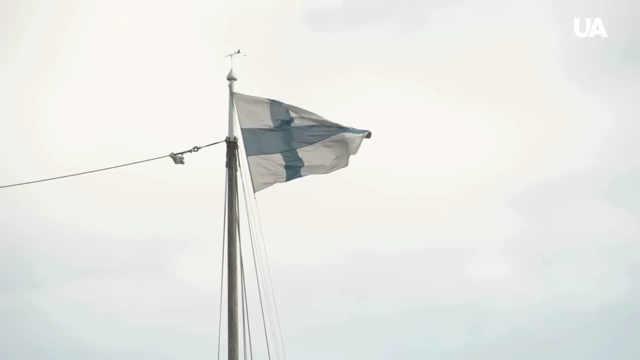
The flag of Finland flying [ 00:01:48 ] 
Chains and shackles, symbolizing historical enslavement by Russians [ 00:02:10 ]
- Motivation to Join the War [00:02:48]
- Carlo reacted immediately to the invasion, arriving in Ukraine by March 4th, 2022.
- He came prepared with his own night vision, radios, body armor, and helmet, having prior military service as a Finnish reservist and experience in dangerous situations.
- This is his first "real war," but he had undergone extensive training.
- He views helping Ukraine as directly helping his own country, seeing no middlemen in the fight against Russia.
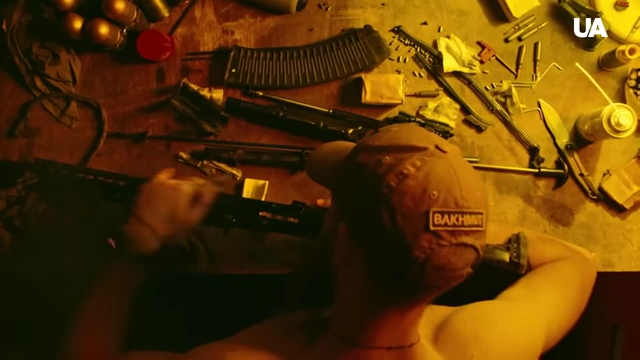
A soldier in uniform cleaning a rifle, with a 'BAKHMUT' cap visible [ 00:03:07 ] 
The patch of Ukraine's 3rd Assault Brigade on a soldier's uniform [ 00:03:29 ]
Joining the Fight: Early Days of the Invasion and Kyiv's Defense [00:03:45]
Carlo recounts his initial involvement in Ukraine, bringing military equipment and joining the fight.
- Arrival and Early Contributions [00:03:45]
- He arrived with about three tons of military equipment, including body armor, helmets, camouflage, and winter jackets.
- Spent a couple of days in Kyiv helping to find ways to support newly forming units.
- First Combat Mission and Defense of Kyiv [00:04:08]
- After taking compatriots back to Poland, he returned to join a reconnaissance platoon of the first battalion of Kavasov.
- His unit participated in most battles during the defense of Kyiv.
- His first combat mission was in the village of Mushroom.
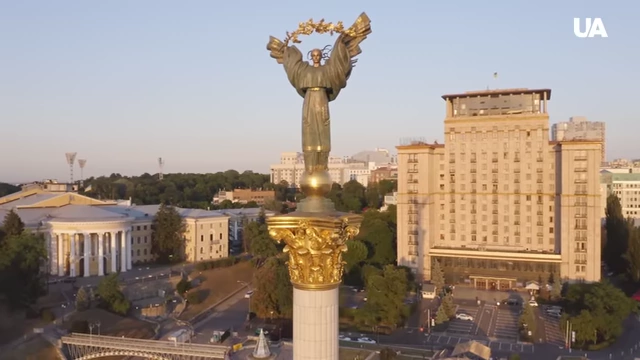
The Independence Monument in Kyiv on a sunny day [ 00:04:03 ]
The Evolving Battlefield: Rise of Drone Warfare [00:05:04]
The nature of warfare has dramatically changed since the initial invasion, with technology playing a critical role.
- Traditional vs. Modern Warfare [00:05:04]
- The early battlefield was more "traditional military against military warfare."
- Drones were minimal, mainly single Mavics flying around.
- His initial training was sufficient for that environment.
- Dominance of Emerging Technologies [00:05:32]
- New emerging technologies, especially commercial off-the-shelf drones, have almost taken over the battlefield.
- This includes various types of drones, land-based robots, and fixed-wing copters.
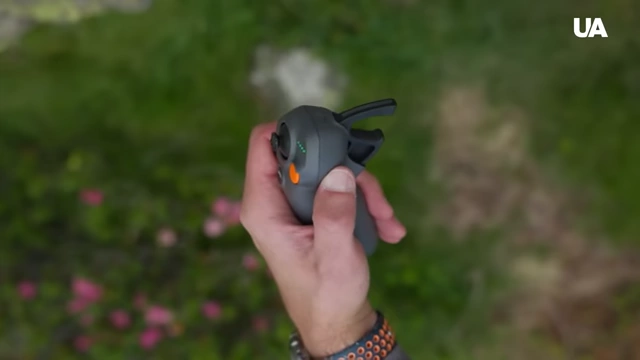
A hand holding a drone controller [ 00:05:47 ] 
A commercial drone hovering in the sky over a field [ 00:05:50 ] - Drones have largely replaced artillery and anti-tank weapons, with FPV drones now performing most anti-tank work.
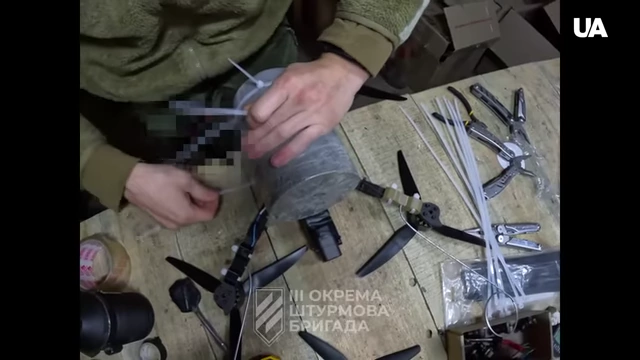
A soldier assembling an FPV drone from commercial parts [ 00:06:13 ] - In the war's beginning, Western anti-tank weapons played a significant role in infantry combat.
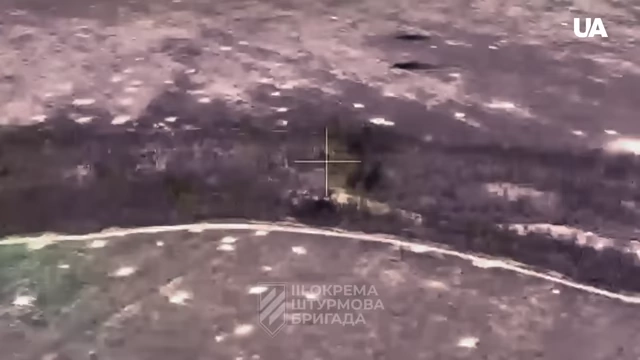
A thermal vision view from a drone targeting a wooded area [ 00:06:08 ] 
Two soldiers operating a drone and monitoring screens from a dugout [ 00:06:21 ]
- Warfare as Evolution/Revolution [00:06:25]
- The current conflict is the first full-scale war in 80 years, demonstrating an "extreme evolution, maybe revolution" in warfare.
- He compares it to World War I, which started with horse cavalry and rapidly advanced to airplanes, tanks, machine guns, and gas; and World War II, which saw a transition from Polish cavalry to atomic bombs in six years.
Transformation of the Ukrainian Armed Forces [00:06:59]
The composition and experience of the Ukrainian army have changed considerably since the full-scale invasion.
- Initial Response [00:06:59]
- The first 6 to 12 months were sustained by the professional Ukrainian army and tens of thousands of volunteers forming battalions.
- These early volunteers were a "different kind of breed of people, a different kind of soldiers," both good and bad.
- Mobilization and Civilian Integration [00:07:46]
- Since late 2022, the army has expanded several times, with most new personnel mobilized from civilian life.
- These individuals often lack prior military training, requiring longer and more extensive training to be effective.

A soldier signing documents at a table, with grenades nearby [ 00:08:10 ] 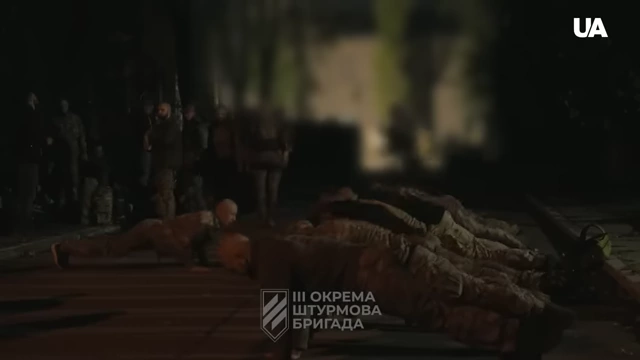
Soldiers performing push-ups as part of training [ 00:08:27 ] - However, their diverse civilian life experiences and professional skills are a significant resource, outweighing the perceived difference between contract soldiers and mobilized personnel.
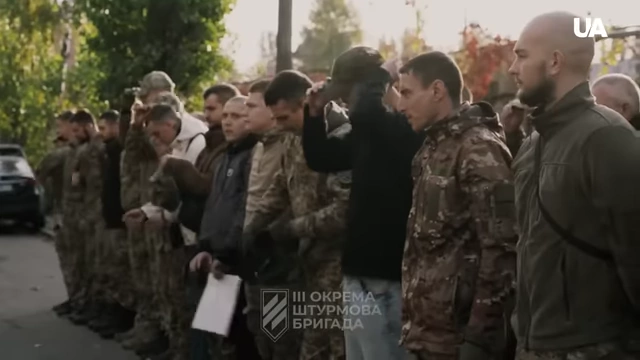
Ukrainian soldiers standing in formation, some in civilian attire [ 00:08:34 ]
- The Essence of a Soldier [00:08:50]
- Nobody is born a soldier; they become a warrior through training.
- A true soldier must be able to think for themselves and make decisions in dynamic combat situations, as fighting is "not chess and there's no stop."
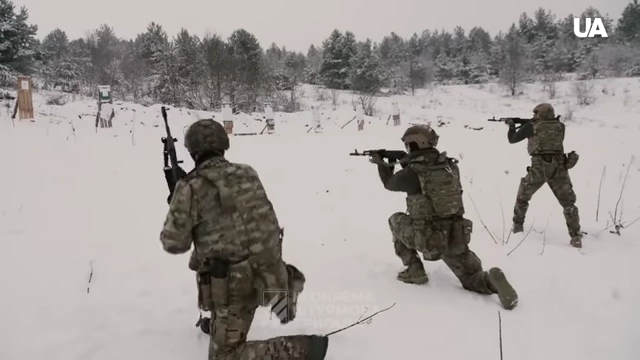
Soldiers training with rifles in a snowy environment [ 00:09:04 ]
Critique of International Support and Western Perceptions [00:09:24]
Carlo expresses strong opinions on the Western world's response to the war and its understanding of the threat.
- Western Complacency and Forgetting History [00:09:24]
- He believes much of the world has forgotten the harsh lessons of World War II, learned "in blood of millions of people."
- Many nations behave like ostriches, burying their heads in the sand and pretending the problem doesn't exist, which only leads to greater peril.
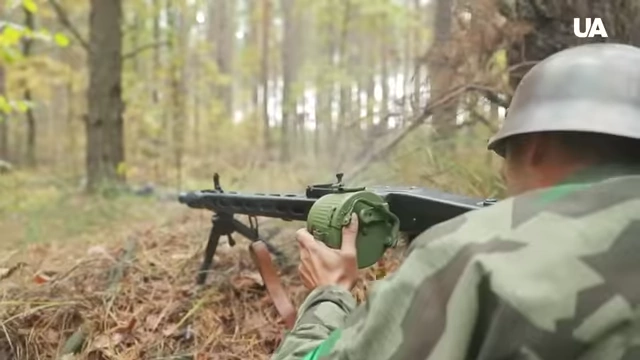
Soldiers in historical uniforms in a forest setting, depicting WWII combat [ 00:09:52 ] - He warns that if Ukraine falls, Western nations are "next" and will be in "deep trouble."
- Delusional Western Societies [00:10:25]
- Most Western societies are "delusional," with people becoming "soft," and their will to defend their own countries critically low.
- While the reality might change when a threat materializes, the logical approach is to provide maximum support to Ukraine and maximum pressure on Russia.
- Insufficient Support and Manipulation [00:10:56]
- "Not a single country on this planet is doing enough, including Ukraine, not nearly enough."
- Western nations need to stop "pretending" and directly acknowledge that Russia is confronting not just Ukraine, but the entire Western world.
- More money, equipment, and especially an end to doing business with Russia are required; anything less is "lip service."

A person holding a smartphone displaying news headlines about "propaganda" [ 00:11:40 ] - Political propaganda and internal politics in various countries manipulate the message to suit their agendas.
- The Russian Mindset [00:13:53]
- Many nations fail to understand the Russian mindset and mentality, which doesn't operate with the same logic as English-speaking Western societies.
- The fear of "red lines" is a sign of effective Russian propaganda.
- The brutal culture of the Russian army is derived from the Soviet prison system, as many post-WWII soldiers were recruited from prisons.
- This has led to a "weird slave mentality," void of "real actual core values and morals."

A group of men, identified as Russian prisoners of war, sitting at a table [ 00:14:10 ] 
A hand gripping rusty prison bars [ 00:15:04 ] - He states that this brutality is Russia's "true character," evident in past conflicts like Chechnya.

A Russian prisoner of war, with subtitles reading "And you haven't thrown him the fuck away? You could die from that!" [ 00:15:58 ]
Motivation and Ukrainian Resilience [00:16:41]
Carlo expresses deep respect for the Ukrainian spirit and draws inspiration from his comrades.
- Finding His Tribe [00:16:41]
- Carlo feels privileged to have met the people in Ukraine, his "brothers and sisters," and found his "tribe."
- He still considers himself Finnish but sometimes receives feedback from his comrades that he is "not a Finnish guy anymore, you're Ukrainian."

Ukrainian soldiers standing in formation [ 00:17:00 ]
- Ukrainian "Superhuman" Mentality [00:17:32]
- While Finns are known for resilience, Carlo is amazed by the "superhuman" mentality of many Ukrainians.
- They don't let hardship get to them, continue without sleep, and never give up, even when everything around them is difficult. This resilience is a key motivator for Carlo.
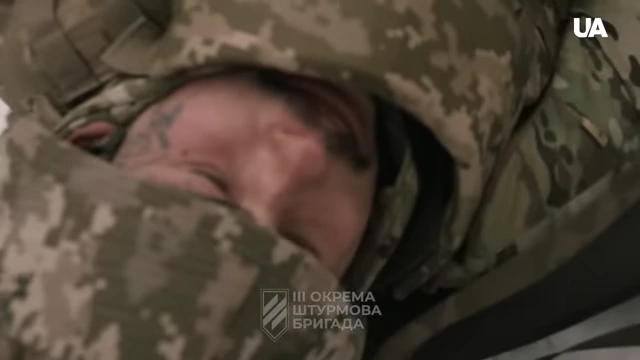
A soldier resting or sleeping, wrapped in camouflage clothing [ 00:18:10 ]
- Moral Imperative to Win [00:18:15]
- "We do not have the moral right to lose this war." The price has been too high, with many lives lost.
- They "owe it to them to fight and see this till the end."

Fires burning at night, possibly a memorial or ceremonial fire [ 00:18:24 ]
- Russia's Downfall [00:18:41]
- From his perspective, the downfall of Russia has begun. Historically, a weaker Russia tends to "peacock" and increase propaganda until it collapses.
- To "lose or stop right now would be bad, wrong, immoral, and completely insane."
- He encourages Ukrainians by reminding them that they have successfully fought Russia "basically alone for 3 and a half years."
- The military situation is becoming more stable, with more resources and improved processes.
The Path to Ukrainian Independence [00:20:00]
Carlo views the war as a unique opportunity for Ukraine's future.
- A Righteous Cause [00:20:00]
- He considers this "one of the most righteous causes any of us will see during our lifetimes."
- Historic Chance for Independence [00:20:07]
- This war is "the biggest chance in the history of the entire Ukrainian nation to actually become completely independent."
- Ukraine has the opportunity to fully establish its own country, language, and culture.

The Independence Monument in Kyiv under a cloudy sky [ 00:20:19 ]
- No Room for Excuses [00:20:21]
- "You cannot f**k this up. If you lose your homeland, that's it."
- The "time of excuses is over" for the duration of the war; all focus must be on winning.
- After the war, they can continue their lives and "build the best possible country for all of us."

A soldier stands with the Ukrainian flag fluttering in the wind at sunset [ 00:20:36 ]