Balancing Art and Time: Navigating the Creative Process Under Capitalism
Summary:
This video offers practical advice for artists and creatives navigating their process within a capitalist society.
- Examine Intentions: Understand why you create, focusing on art for art's sake rather than external validation or profit.
- Find Inspiration: Track "pings" of curiosity and interest, allowing ideas to steep and evolve, recognizing that love and attention are intertwined.
- Deconstruct Creation: Break down the creative process into three key areas:
- Making Money: Choose work that fuels or is neutral to your artistic resources (time, money, energy) to avoid draining yourself.
- Art Admin: Budget time for necessary administrative tasks (e.g., marketing, website updates) and detach from perfectionism in these areas.
- The Creative Act: Establish a routine, but acknowledge its imperfection and practice "strategic underachievement" by consciously choosing areas to underperform to excel in your art.
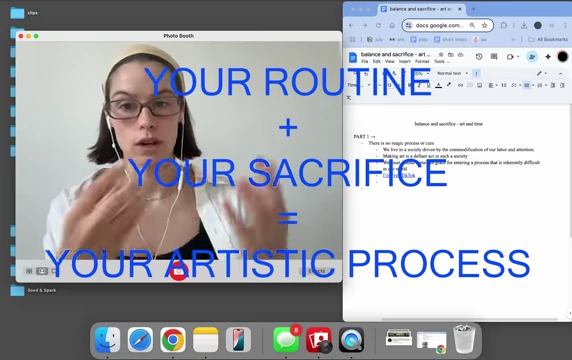
The equation for your artistic process [ 00:07:48 ]
Understanding the Creative Process in a Capitalist Society [0:00:12]
The video explores the challenges of engaging in creative processes and making art within a society driven by profit and productivity, particularly from an American perspective.
- Challenging the "Magic Process" Myth:
- Societal Resistance to Art:
- Society generally discourages activities that don't contribute to productivity or financial gain [0:02:29].
- Artists are often applauded for financial success, creating a skewed perception of artistic value [0:03:02].
- The commodification of labor and attention makes it difficult to focus on art [0:03:48].
- Art as a Defiant Act:
- The Necessity of Sacrifice:
Cultivating Inspiration and Starting Your Artistic Journey [0:08:09]
This section focuses on how to initiate a creative practice, from internal readiness to gathering ideas.
- Comfort with Being Seen:
- A crucial step is to be comfortable with being seen in whatever state you are in, even if it's raw or vulnerable [0:08:40].
- The fear is often not public speaking, but the act of being seen itself [0:08:54].
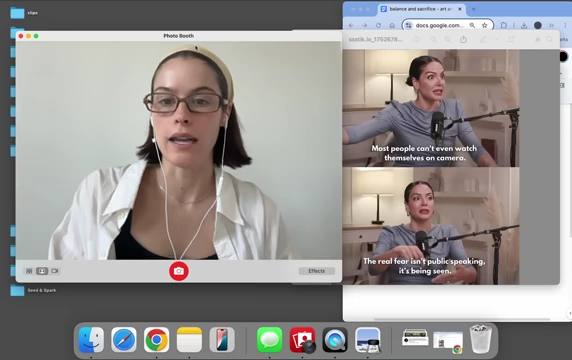
The fear of being seen, not just public speaking. [ 00:09:04 ] - Raw emotions need to be "alchemized" before being shared [0:09:13].
- Tracking Inspiration ("Pings"):
- Maintain awareness of what you consume and how it inspires you [0:09:26].
- Keep a list of "pings" – random ideas, observations, or desires (e.g., wanting a two-handled mug, a theater piece about book clubs) [0:10:03].
- These pings can come from diverse sources, not necessarily within your artistic discipline [0:10:20].
- Marinating Ideas:
- "Love and Attention" as Inspiration:
- The concept that "love and attention" are the same thing, as suggested in the movie Ladybird, means that paying attention to what you love cultivates more creativity [0:12:17].
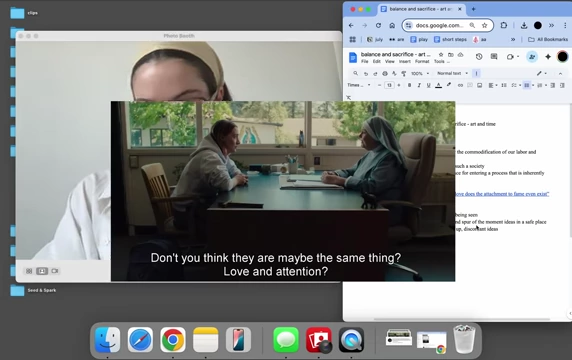
The connection between love and attention from Ladybird. [ 00:12:20 ] - Creating from a place of love fosters a more fulfilling artistic practice [0:12:28].
- The concept that "love and attention" are the same thing, as suggested in the movie Ladybird, means that paying attention to what you love cultivates more creativity [0:12:17].
The Three Components of Artistic Creation [0:12:30]
The act of creation is broken down into three interdependent sections: making money, art administration, and the creative act itself.
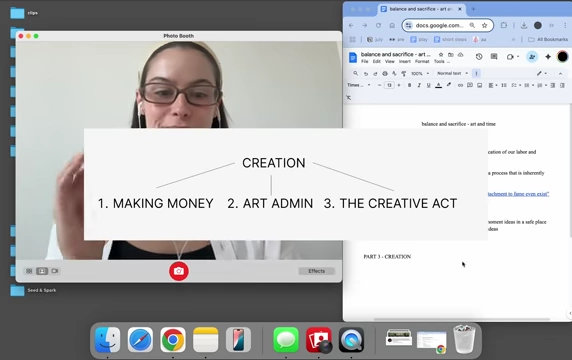
- 1. Making Money (Financial Strategy) [0:12:37]
- Intentional Financial Choices:
- It's a privilege to critically think about how you make money, acknowledging that some stages of life may not allow for this [0:13:00].
- Choosing a "soul-sucking job" for a higher salary can ironically lead to less money saved due to increased compensatory spending (e.g., buying unnecessary gadgets or clothes to cope with unhappiness) [0:13:37].
- Fueling Artistic Resources:
- Intentional Financial Choices:
- 2. Art Admin (Administrative Tasks) [0:15:42]
- Budgeting for Non-Creative Work:
- "Art admin" includes all the necessary but often disliked tasks associated with bringing art to the public (e.g., social media posts, uploading music, website updates) [0:15:52].
- It's important to budget time for these tasks, releasing perfectionism, and detaching them from the core artistic work [0:17:11].
- For actors, this means keeping headshots, reels, and online profiles updated, alongside managing a website and social media [00:17:26].
- Budgeting for Non-Creative Work:
- 3. The Creative Act (Routine and Sacrifice) [0:18:01]
- Establishing a Routine:
- A routine is essential to respect yourself as an artist, but it must be experimented with to find what works best for you (e.g., pre-game rituals like meditation or journaling, post-game wind-down) [0:18:19].
- Your routine will not be perfect and won't "save" you from the inherent challenges of art-making [0:18:54].
- Strategic Underachievement:
- Embrace Oliver Burkeman's concept of "strategic underachievement" by consciously choosing areas of life where you will deliberately underperform [0:19:55].

Definition of Oliver Burkeman's "strategic underachievement." [ 00:19:54 ] - This allows you to allocate more time and energy to your artistic practice without striving for excellence in every aspect of life [0:20:01].
- It's not martyrdom but a realistic approach to managing limited resources [0:20:20].
- Embrace Oliver Burkeman's concept of "strategic underachievement" by consciously choosing areas of life where you will deliberately underperform [0:19:55].
- Action and Repetition:
- The core of the creative process is putting ideas into action, regardless of whether it feels "right" or if you're in a "flow state" [0:21:20].
- Repetition is key, and this consistency will require sacrifice [0:21:34].
- Researching the routines and practices (or lack thereof) of your favorite artists can provide valuable insights [0:22:00].
- Establishing a Routine:
Conclusion [0:21:57]
The video encourages viewers to experiment with different approaches, research artists they admire, and embrace a mindset of less pressure and more openness and integrity in their personal creative journeys.