The Fujifilm X-E5: A Camera That Understands and Channels Your Creative Vision
Summary:
The video explores the Fujifilm X-E5, a 40-megapixel rangefinder-style digital camera, highlighting how it fosters a seamless creative "flow" by becoming an extension of the photographer's vision.
- The X-E5's refined design, tactility, and intuitive controls, like the film simulation dial, allow it to "disappear" during use, turning creative decisions into muscle memory.
- Its compact size, light weight, excellent balance, and fast autofocus enable effortless shooting and seamless transition between stills and advanced video capabilities.
- Fujifilm's confident color science, evidenced by its in-camera film simulations, provides a strong creative starting point, fostering trust in instincts and a distinct visual style.
- Through a collaboration, the camera proved capable of channeling the unique visions of two different artists, demonstrating its openness to individual expression without imposing a specific look.
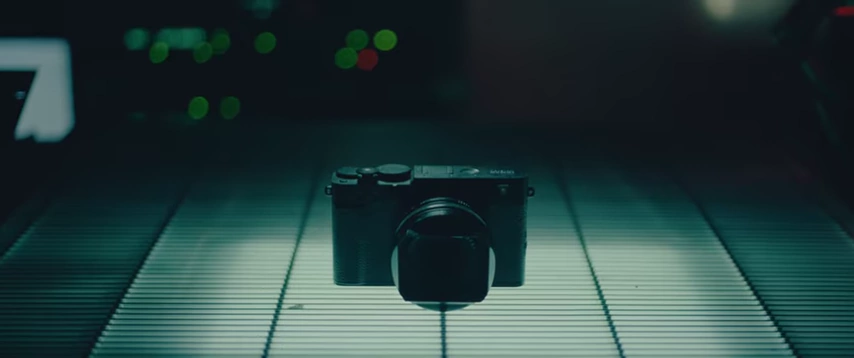
The Fujifilm X-E5 camera, a sleek 40-megapixel rangefinder-style digital camera. [ 00:01:40 ]
The Concept of Creative Flow and Camera Integration [00:00:14]

- Merging with the Machine: The video introduces the idea of "flow" where a photographer merges with their camera, ceasing to think about settings or fight the tool.
- The camera effectively "disappears," allowing the photographer's internal vision to align with what they see through the lens.
- This state transforms the camera from an object into an extension of one's perception.
Introduction to the Fujifilm X-E5 [00:01:38]

- Initial Perception and Evolution: The Fujifilm X-E5, a 40-megapixel rangefinder-style digital camera released in the mid-2020s, initially seemed redundant compared to the existing X-Pro line.
- Over time, its distinct role became clear through refinement rather than dramatic redesign, signifying a settled design language for Fujifilm.
- Refined Design and Premium Feel: The X-E5 boasts a small, sharp, and deliberate design with crisply machined edges, making it feel modern.
- A decade of Fujifilm's design cues were distilled into its form, imparting a sense of premium quality previously only hinted at in earlier models.
Tactility and the Creative Process [00:02:33]

- Tactility's Role in Photography: Fujifilm understands that tactility is integral to the creative process, not merely decorative.
- The film simulation dial is a prime example, allowing photographers to commit to specific looks in-camera, turning the decision-making into muscle memory.
- This prevents interruption of the creative flow by making stylistic choices during shooting rather than post-processing.
- Personal Needs and Autofocus: The narrator, due to a physical disability, found manual focus challenging and preferred autofocus for quick image capture.
- The X-E5's immediate and effective autofocus facilitated a strong connection, removing barriers and allowing for pure intent and response.
Seamless Operation and Versatility [00:04:09]

- Ergonomics and Portability: The X-E5 is small and light enough to be forgotten while carrying, and its excellent balance allows for natural one-handed shooting.
- Its fast and reliable autofocus helps maintain presence during shooting.
- Lens Integration and System Cohesion: When paired with Fujifilm's X-mount lenses, the camera feels effortless, as design and function are inseparable.
- The entire system functions cohesively, from the camera's aesthetics to its operation and the images it produces.
- Viewfinder Experience: The eyepiece was refined with less visual clutter, complementing the camera's design.
- Fujifilm introduced a classic viewfinder mode with a simplified layout and clean, intentional red text.
- The analog-style meter aimed to provide just enough information without distracting from the scene, despite a slight imperfection in its white outline.
Camera as a Conduit for Vision [00:05:25]

- Redefining Camera's Role: A camera that "disappears" changes the perception of what a camera is, shifting it from an objective tool to a conduit for personal vision.
- The narrator emphasizes that the X-E5's images felt distinctly personal, not neutral, allowing their vision to shine through.
- Vision originates in the mind, and the camera serves as a channel; a poorly designed conduit degrades or fragments that vision.
- Flow is achieved when resistance from the tool is removed.
Advanced Video Capabilities and Workflow [00:07:43]

- Professional Video Quality: The X-E5's video capabilities are so advanced that the narrator would not hesitate to use it on a Hollywood set.
- This is attributed to the footage's quality, weight, and stability, rather than the camera attempting to mimic a cinema camera.
- In-Body Image Stabilization (IBIS): With IBIS, handheld video shots remain composed, controlled, and usable.
- Effortless Stills-to-Video Transition: The camera allows for seamless switching between stills and video without requiring a rig, setup, or mental shift.
- This integration means motion capture feels like another way of seeing, facilitated by the same creative conduit.

A vivid night shot of a street with glowing neon signs, demonstrating the camera's video capabilities in low light. [ 00:09:49 ]
- This integration means motion capture feels like another way of seeing, facilitated by the same creative conduit.
The Power of Fujifilm Color [00:10:25]

- Confident and Intentional Color: Color is a significant reason for the camera's effectiveness, not due to accuracy, but confidence.
- Fujifilm's color science provides images that feel "finished" in-camera, influencing how the photographer shoots—faster, with more trust in instincts.
- Film simulations are designed to "feel right" and serve as a strong starting point for shaping images, aligning with the narrator's intentional workflow.

A monitor displaying "ETERNA" with ISO settings, illustrating one of Fujifilm's film simulations. [ 00:10:50 ]
A Shared Experience: Exploring Vision with Ash Thorp [00:11:28]

- Testing the Camera's Openness: The narrator questioned if the camera would maintain its "disappearing" quality when used by another artist, Ash Thorp.
- Despite never meeting in person and living across the country, their creative work shares a similar emotional space and attraction to atmosphere, indicating aligned tastes.
- Channeling Diverse Perspectives: Although they use the camera differently and focus on distinct moments, the underlying creative instinct is the same.
- The X-E5 accommodates these differences without averaging their voices or imposing a look, allowing individual work to come through.

A black and white photograph of abstract architectural lines, illustrating Ash Thorp's distinctive visual style. [ 00:13:53 ] 
A dynamic photo of a crosswalk with red light trails, showcasing another aspect of Ash Thorp's creative vision. [ 00:16:09 ]
- The X-E5 accommodates these differences without averaging their voices or imposing a look, allowing individual work to come through.
- Camera as a Connector: The camera traveled with Ash through Korea and Japan, and later with the narrator through Hong Kong and China, acting as a shared presence.
- This journey demonstrated the camera's ability to remain "open" and carry intention without reshaping it, regardless of the user.
Conclusion: An Open Tool for Expression [00:13:51]

- A History of Unresisted Vision: The camera now has a unique history, not for its rarity or technical specifics, but for its capacity to facilitate the visions of two individuals without resistance.
- It moved across places and continents, through different ways of seeing, yet remained open.
- Allowing, Not Defining: The most valued quality in a camera is what it allows, rather than what it promises.
- The X-E5 never attempted to define, correct, or demand interpretation of the work; it simply listened.
- It functions as an interface, a stable connection between internal thoughts and external expression, proving that the best cameras channel vision, they don't create it.

The Fujifilm X-E5 camera, symbolizing a tool that channels vision without imposing its own. [ 00:15:51 ]