How to Accelerate Learning and Growth: 4 Key Principles
This video presents four key principles to learn and grow exceptionally fast, challenging the common belief that working harder or longer is the solution.
- 1. Master "Learning How to Learn": Focus on understanding concepts rather than just memorizing facts or procedures. Build mental models and validate them by seeking feedback from experts for rapid correction and deeper understanding.
- 2. Velocity Beats Perfection: Prioritize fast feedback loops and early iterations over striving for a perfect first draft. Shipping incomplete work and getting immediate feedback accelerates learning significantly, leading to better results over time.
- 3. Constraint is Your Best Teacher: Embrace constraints by cutting timelines in half and taking on projects slightly beyond your current ability. This forces ruthless prioritization of essential learning and fosters growth, especially with a supportive safety net.
- 4. Your Questions Define Your Frontier: Actively maintain a running list of questions, noting their evolution from basic to complex. When your questions align with the open problems experts are grappling with, you've reached the cutting edge of knowledge.
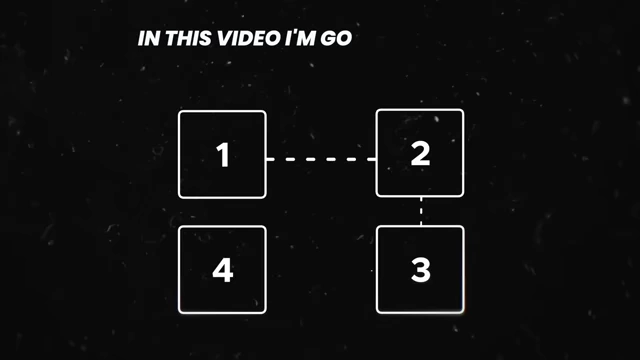
The video outlines four core principles for rapid learning, represented by numbered squares indicating their progression. [ 00:00:20 ]
Introduction to Rapid Learning [0:00]
The speaker, Steve, a former principal engineer at Amazon, introduces a system for learning and growing faster. He highlights that traditional methods of learning, such as working harder or extended study hours, are often counterproductive. The key to accelerating learning lies in having the right system.
- His background includes learning over 20 programming languages and ramping up on countless systems across diverse domains at Amazon. [0:26]
- This experience led him to realize that learning speed, not intelligence or credentials, is the most crucial predictor of career growth. [0:08]
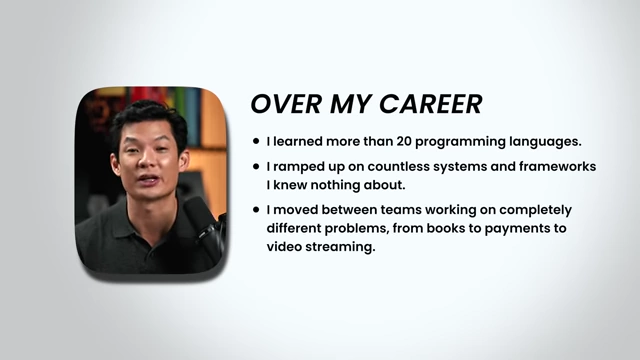
The speaker's career involved learning over 20 programming languages and working across diverse domains. [ 00:00:39 ] - The video will cover four key principles to build this learning system. [1:01]
Principle 1: The Meta-Skill of Learning How to Learn [1:27]
Most people attempt to learn linearly, memorizing facts and trying to grasp every detail before moving on, which is an incredibly slow method.
- Not all knowledge is created equal. [1:49]
- The Knowledge Bucket System [1:52]
- The speaker developed this system, categorizing knowledge into four types.
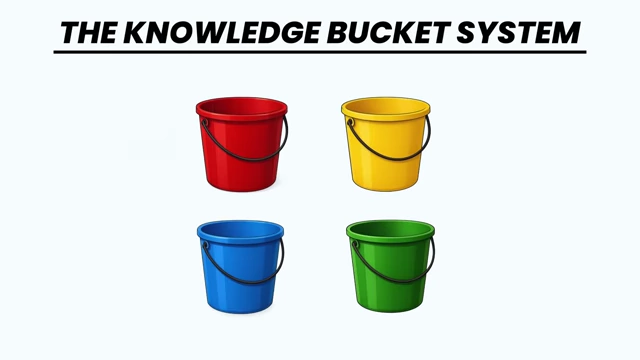
The Knowledge Bucket System visualizes four distinct categories of knowledge. [ 00:01:54 ] - 1. Facts [2:01]
- This is knowledge needed in your working memory, such as team names, core systems, or key stakeholders.
- These must be memorized.
- To manage large volumes of factual documents, ask an LLM (Large Language Model) to summarize aggressively to avoid overwhelming notes.
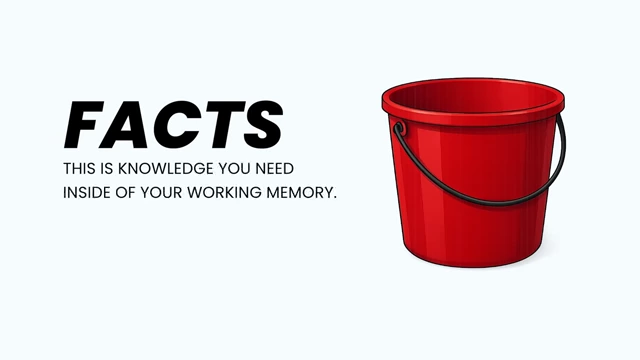
Facts represent information that must be memorized for immediate recall. [ 00:02:05 ]
- 2. Procedures [2:23]
- This is "how-to-do-X" knowledge, including Standard Operating Procedures (SOPs), build processes, and deployment steps.
- These are not learned by reading but by doing with supervision.
- For example, to learn about on-call rotation, shadow someone on-call instead of reading all the SOPs.
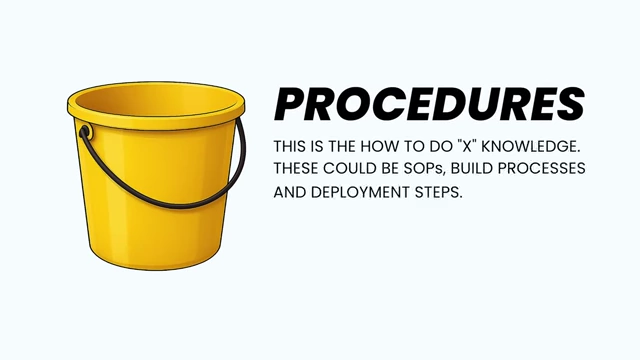
Procedures describe "how-to" knowledge, which is best learned through hands-on practice with supervision. [ 00:02:28 ]
- 3. Concepts [2:41]
- Concepts are ideas and how those ideas relate to other ideas. This is the "game-changer" for learning.
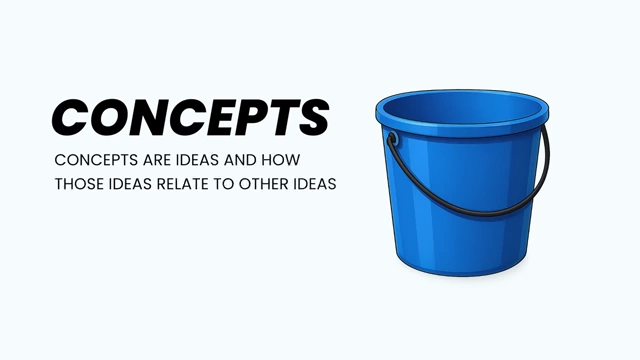
Concepts are abstract ideas and their relationships, forming the foundation of accelerated learning. [ 00:02:45 ] - Conceptual understanding transfers across different domains.
- The speaker's experience at Amazon involved working on search for books, then concert tickets, and later Prime Video.
- While surface details changed (book scans vs. video encodings), the fundamental catalog concepts (e.g., how to uniquely identify items, manage metadata, handle versions, make information discoverable, vendor SKUs, data matching, localization) remained identical across all domains.
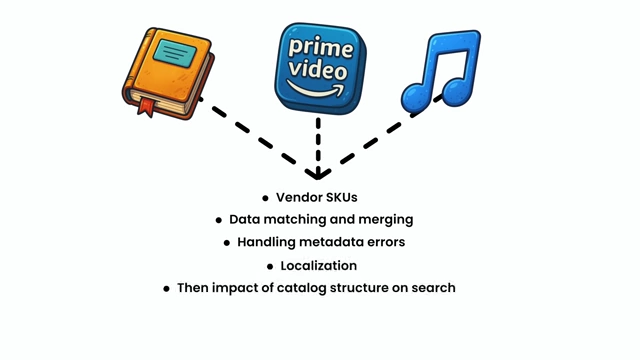
Core catalog concepts like vendor SKUs and metadata handling are applicable across diverse product domains, from books to Prime Video and music. [ 00:03:45 ] - All catalog systems, payment systems, and distributed systems share core patterns and concepts, with only critical subtleties varying.
- Focusing on learning concepts builds a "toolkit that works everywhere," meaning you don't start from zero on every new project or team.
- Concepts are ideas and how those ideas relate to other ideas. This is the "game-changer" for learning.
- How to Learn Concepts: Build a Mental Model [4:19]
- Draw your mental model: place the most central concept in the middle of a page.
- Draw boxes for related ideas around it.
- Label the connections between these boxes with descriptions like "depends on," "activates," "is a type of."
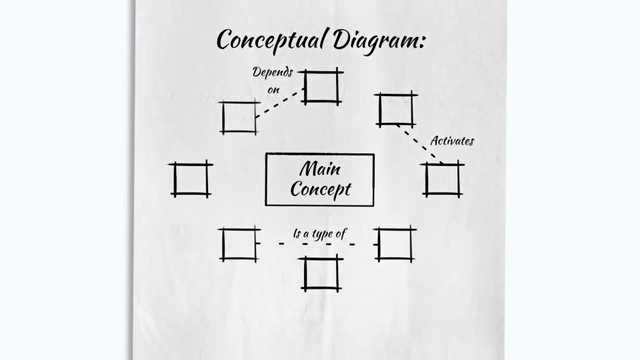
Building a mental model involves drawing a central concept and connecting it to related ideas with descriptive labels. [ 00:04:35 ] - Keep it simple: if you have more than 12 boxes, you're getting too bogged down in details and not thinking conceptually enough. Group things into higher-level abstractions.
- The "killer move": Show your mental model to an expert.
- Experts can immediately spot what's wrong or missing in your understanding.
- This approach is ten times faster than asking them to explain something from scratch, as it leverages their ability to correct and refine your existing framework.

Presenting a mental model to an expert for correction is significantly faster than asking for an explanation from scratch. [ 00:05:00 ]
- The speaker developed this system, categorizing knowledge into four types.
- When you master this meta-skill of learning concepts, everything accelerates.
Principle 2: Velocity Beats Perfection [6:22]
Many people delay sharing their work until it's perfect (e.g., flawless design docs, beautiful code, polished presentations), which hinders learning speed.
- The speaker learned this lesson at Amazon:
- He spent weeks perfecting a design document before sharing it, wanting every detail and edge case covered, every diagram perfected.
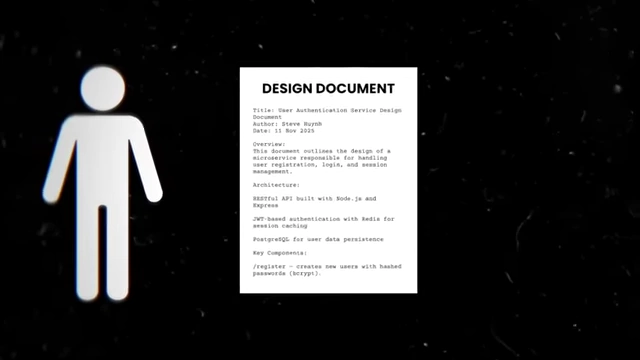
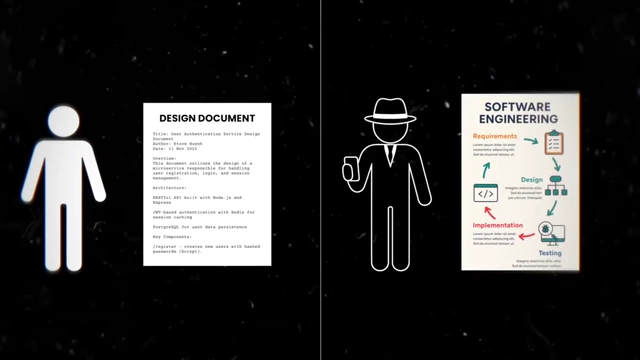
An example of a detailed, perfected design document, often taking weeks to complete. [ 00:06:46 ] - In contrast, a principal engineer would write a rough draft in a few hours (barely more than an outline, often with "TBD" sections or question marks in diagrams) and immediately share it for feedback.

A rough design document with minimal detail, ready for immediate feedback. [ 00:06:59 ] - This principal engineer received immediate feedback, allowing them to iterate quickly, challenge assumptions, and incorporate better approaches. By the time the speaker was still polishing his first draft, the principal engineer was on version three, which was superior to anything the speaker could have produced alone.
Comparing a lengthy, single iteration for perfection versus a rapid, iterative process with immediate feedback leading to superior results. [ 00:07:24 ]
- He spent weeks perfecting a design document before sharing it, wanting every detail and edge case covered, every diagram perfected.
- Version 0.1 that gets feedback beats Version 1.0 that's perfect. [7:28]
- Most people spend months trying to perfect the first version, not realizing that the 50th version will be the best.

An imperfect version of work that has received feedback is more valuable than a "perfect" first version produced in isolation. [ 00:07:34 ]
- Most people spend months trying to perfect the first version, not realizing that the 50th version will be the best.
- How to Apply: Create Fast Feedback Loops [7:40]
- Don't wait until you fully understand something to test your understanding.
- When learning a new codebase, make a small change and see what breaks. Write a test and observe.
- Ask someone to review your understanding after just a few hours, not weeks.
- Every iteration teaches you something; every piece of feedback corrects your mental model.
- The speed of iteration matters far more than the quality of your first attempt.
- In technical work, this means shipping the Minimum Viable Product (MVP), getting code reviews out early, sharing half-baked design docs, and presenting rough understandings to allow others to correct you.
- Reality is your ultimate teacher, but you can't learn from reality if you're still perfecting things in isolation.
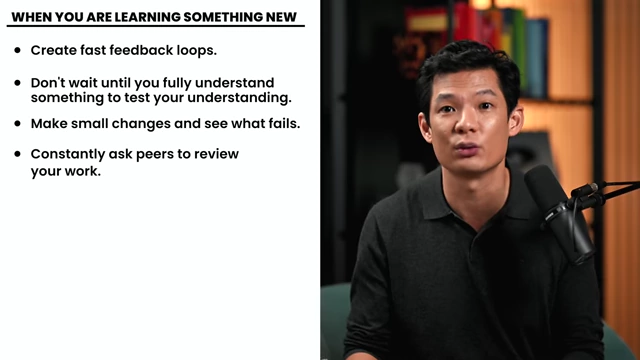
To accelerate learning, create fast feedback loops by making small changes, testing understanding, and seeking peer reviews early. [ 00:07:59 ]
Principle 3: Constraint is Your Best Teacher [8:32]
It is counter-intuitive, but the less time you give yourself to learn something, the faster you actually learn it.
- Parkinson's Law states that work expands to fill the time available.
- If you give yourself three months to learn something, you'll spend three months. If you give yourself two weeks, you'll get it done in two weeks.
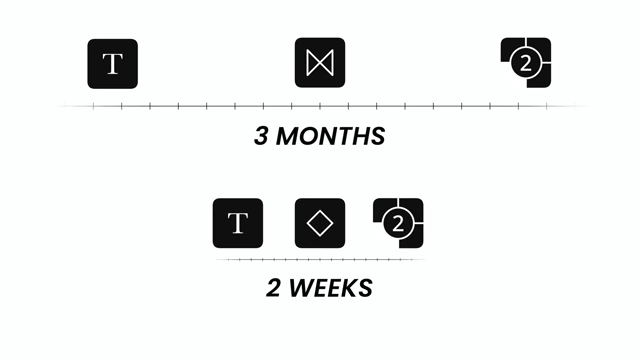
Parkinson's Law illustrated: tasks expand to fill the allocated time, showing how cutting timelines can drastically reduce completion time. [ 00:08:59 ]
- If you give yourself three months to learn something, you'll spend three months. If you give yourself two weeks, you'll get it done in two weeks.
- Example from Amazon:
- New engineers often felt they needed six months to read through all documentation before going on-call.
- The engineers who ramped up fastest joined the on-call rotation early, with supervision. They'd shadow for a week, then become secondary on-call, only being paged if the primary couldn't handle it.

An eager new engineer volunteers to join the on-call rotation immediately to accelerate learning. [ 00:09:19 ] - While not fully prepared or knowing everything, the constraint of the real possibility of being paged forced them to learn what truly mattered, focusing on common problems and critical systems rather than wasting time on unlikely issues.
- How to Apply: Cut Timelines in Half [9:53]
- If you think something will take four weeks, give yourself two. If you think it'll take eight hours, give yourself four.
- This forces ruthless prioritization: you stop polishing things that don't matter and focus only on what moves the needle.
- You make decisions faster and often produce better work because you're not overthinking it.
- Another form of constraint: Take on work just beyond your current ability. [10:19]
- The fastest way to grow is to volunteer for projects that scare you a little bit.
- For example, a mid-level engineer taking on senior-level work, or volunteering for a project using unfamiliar technologies.
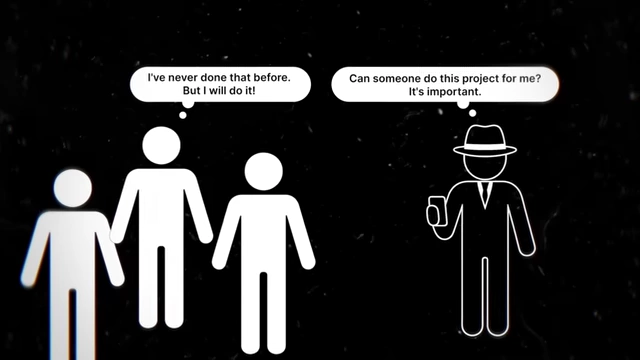
Individuals commit to taking on challenging projects slightly beyond their current skill level to accelerate growth. [ 00:10:24 ] - Crucial Requirement: You need support; a safety net of someone you can ask questions of and who can course-correct you. This prevents you from drowning.
- With this safety net, constraint becomes your accelerator.
- Don't wait until you feel ready; apply for that job before you meet all qualifications, join the on-call rotation early, volunteer for challenging projects.
- Constraint doesn't just create stress; it creates clarity by forcing you to figure out what actually matters, fast.
Principle 4: Your Questions Define Your Frontier [11:13]
Questions are the fourth bucket of knowledge. Many mistakenly believe they are done learning when they stop having questions, but this is backward. The quality of your questions is the best indicator of how much you've learned.
- Keep a running list of all questions (even those that seem obvious or dumb).
- Questions have built-in assumptions and reveal what you already know and what you don't.
- Evolution of Questions:
- Early questions sound like: "What does this system do? Who owns this? What's the deployment process?"
- As you learn more, your mid-range questions evolve: "Why did we choose this architecture? What happens if this component fails? How does this handle specific edge cases?"
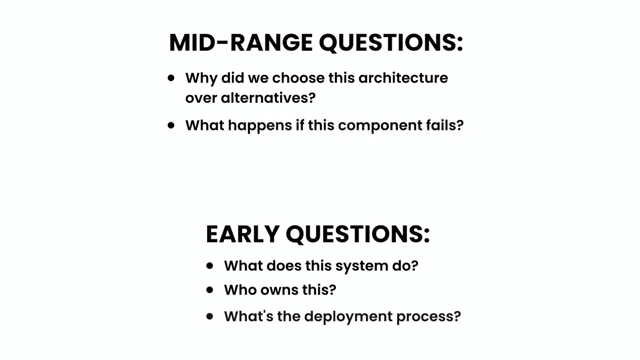
Questions evolve from basic inquiries to more complex, strategic, and "what-if" scenarios as understanding deepens. [ 00:11:59 ] - Eventually, you hit the expert question moment: You ask a question, and the domain expert responds, "That's a great question, we're actually trying to figure that out too."
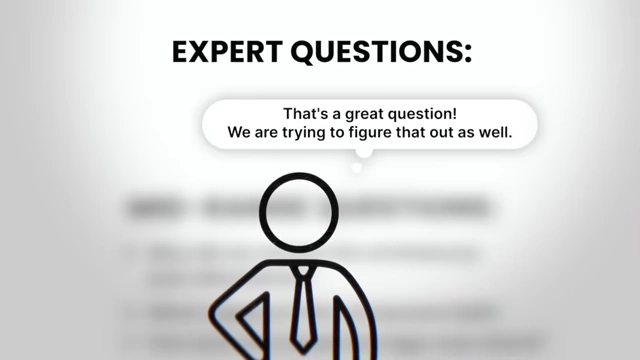
An expert's response to a complex question confirms the questioner has reached the frontier of knowledge. [ 00:12:08 ] - This indicates you've arrived; your question now matches the open questions that experts are grappling with, placing you at the frontier of what the team knows.
- How to Apply: Track Your Questions Deliberately [12:23]
- Maintain a "Questions Document" with four sections:
- Questions I can answer myself.
- Questions I need to research.
- Questions I need to ask someone.
- Questions nobody knows the answer to yet.
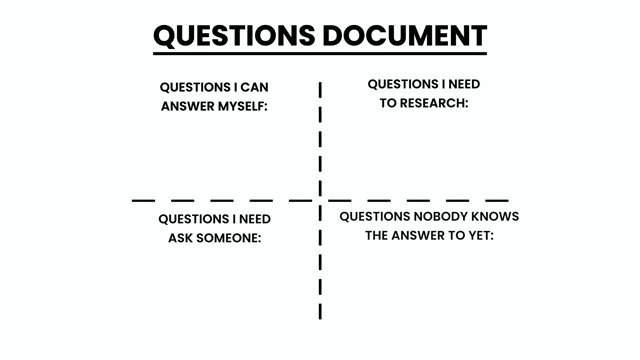
A structured questions document helps track learning progress by categorizing questions based on their answerability. [ 00:12:34 ]
- As you learn, questions migrate down the list. When you start populating the "questions nobody knows" section, you know you're up to speed.
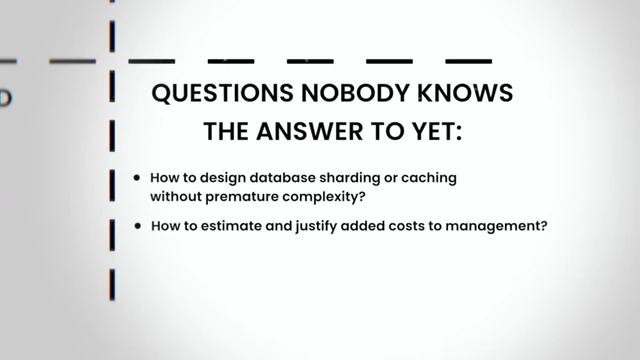
Populating the "Questions Nobody Knows" section of the document signifies reaching the cutting edge of a domain's knowledge. [ 00:12:41 ]
- Maintain a "Questions Document" with four sections:
- Why this Matters:
- Your questions create a breadcrumb trail of your learning, which is invaluable for onboarding new team members by walking them through your question list.
- Your question list can serve as an outline for documents or presentations, allowing you to use the Socratic method to guide others through your thought process.
- Never delete questions; just mark them as answered and keep them visible to track progress and show your learning journey.
- When engaging with an expert, share your understanding first and ask them to correct it, rather than asking for a full explanation. Frame it as "Here's what I think is happening, is this right? What am I missing?"
- Your questions are not a sign of slowness, but a map of your progress. When your questions align with the experts', you've made it.