Building an Effective Personal Brand: Establishing Credibility, Defining Purpose, and Differentiating with a Contrarian Belief
This video identifies three missing elements that cause 99% of personal brands to fail in their first year: credibility, purpose, and differentiation.

- Establish Credibility: Differentiate between being a "student" (learning in public) and an "expert" (teaching in public). Students build an "Interest Bank" of their learning journey, while experts build a "Credibility Bank" of their achievements.

Students build an Interest Bank [ 00:02:59 ] 
Experts build a Credibility Bank [ 00:03:29 ] - Define Your Purpose: Build a brand you genuinely love, not one dictated by algorithms or trends. Optimize for your customers' painful problems, as solving problems builds trust.

Most creators end up building a brand they hate [ 00:07:10 ] 
Cool content gets views, solving problems builds trust [ 00:13:11 ] - Differentiate Your Brand: Stand out using a genuine "contrarian belief" rather than merely being controversial. Use a "Two-Column Approach" to identify your unique beliefs.

Generally Held Opinion vs. Contrarian Belief [ 00:21:49 ] - Craft a Brand Statement: Formulate a concise statement that communicates who you serve, how you serve them, and what makes you different, and consistently pair yourself with this message.

Caleb Ralston's Brand Statement [ 00:55:06 ] - Optimize for Your Audience: Always assume new audiences know nothing about you. Create content to attract and nurture both cold (new) and warm (existing) audiences to avoid a "leaky bucket" scenario.
Introduction: The Three Missing Elements in Personal Branding [0:00]
The video highlights that 99% of people who start a personal brand see zero results in their first year, not due to inherent flaws, but because they are missing three crucial elements: why anyone should listen to you, why you're starting a brand, and how to stand out.

1. Establishing Your Credibility [0:33]
To establish why anyone should listen to you, it's essential to understand your role as either a student or an expert.

- Student vs. Expert [0:37]
- Students: These individuals do not yet have extensive experience or significant achievements. Their role is to be a "guinea pig" or "proxy" for their audience, learning and experimenting in public, documenting their journey of becoming an expert.
- Experts: These individuals have proven experience, multiple achievements, and have accomplished what their audience aspires to do. Their job is to teach in public, sharing accomplishments, mistakes, and lessons learned to help others reach expert levels faster.
- Building Your "Bank" [2:43]
- Interest Bank (for Students) [2:56]: This is a running list of everything you are currently studying, experiencing, experimenting with, learning, and testing, serving as a catalog of your learning journey.
Students build an Interest Bank [ 00:02:59 ] 
An Interest Bank is a catalog of your learning journey [ 00:03:05 ] - Credibility Bank (for Experts) [3:25]: This is an ongoing collection of your achievements, solutions, lessons learned from mistakes, and career successes. It forms the foundation for amplifying your personal brand.
Experts build a Credibility Bank [ 00:03:29 ] 
A Credibility Bank is proof of what you've built and accomplished [ 00:03:37 ] - The more impressive your credibility bank, the better results you are likely to achieve with your personal brand, as it generates audience buy-in and belief in your ability to deliver desired outcomes.
- Caleb Ralston leverages his background working with big names, such as Gary Vaynerchuk, to establish his expertise.

Caleb Ralston's LinkedIn profile showcasing his experience [ 00:04:28 ] 
Caleb Ralston filming Gary Vaynerchuk [ 00:05:05 ] - If your credibility bank isn't impressive, focus on doing "cool stuff" to build it up, as doing more "epic sht" gives you more "epic sht" to talk about.
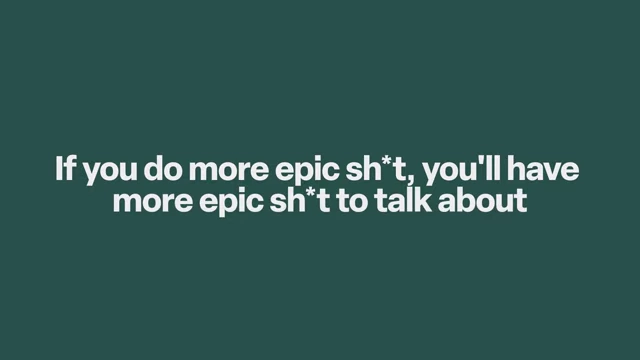
Do more epic stuff to have more to talk about [ 00:05:43 ]
- Interest Bank (for Students) [2:56]: This is a running list of everything you are currently studying, experiencing, experimenting with, learning, and testing, serving as a catalog of your learning journey.
2. Defining Your Purpose and Your Audience's Needs [6:52]
Burnout in content creation often stems from building a brand that the creator dislikes.

- Avoid Building a Brand You Hate [7:05]
- Many creators build brands based on trending topics or what the algorithm suggests, rather than what genuinely interests them, leading to embarrassment and a higher likelihood of quitting.
Most creators end up building a brand they hate [ 00:07:10 ] - It's crucial to be intentional about crafting a brand you are proud of, one that reflects who you are as a human, not a curated caricature designed for the algorithm. Don't build a brand for the algorithm.

Don't build the brand for the algorithm [ 00:07:41 ] - Inject personal interests (e.g., Harley-Davidsons, metal music, favorite sports teams) into your content to make it sustainable and authentic.

Inject elements of your personality into your core subject matter [ 00:09:35 ] 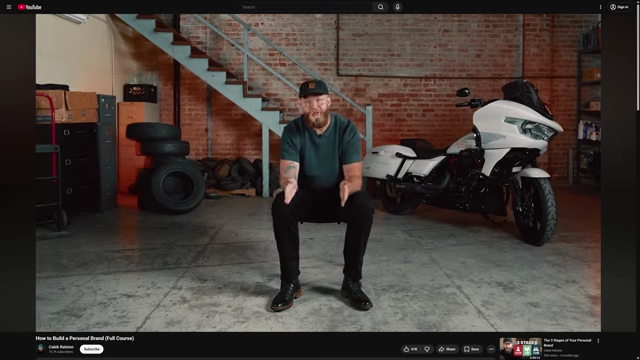
Caleb Ralston filming a motorcycle in his video [ 00:09:44 ] 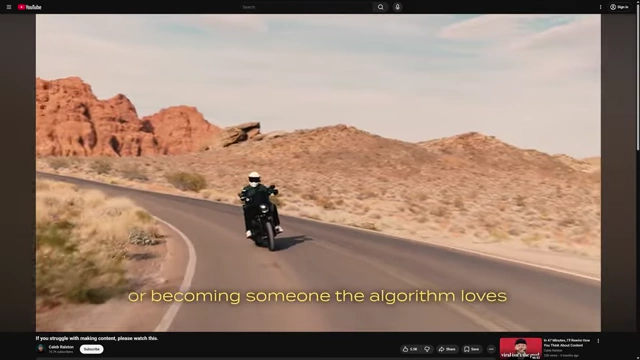
Caleb Ralston riding a motorcycle [ 00:09:46 ] 
Seahawks fans demonstrate passion for their team [ 00:09:55 ] - Take time to reflect on who you are as a human, not an ideal version of yourself that your audience might desire.

Take time to reflect on who you are as a human [ 00:10:40 ]
- Many creators build brands based on trending topics or what the algorithm suggests, rather than what genuinely interests them, leading to embarrassment and a higher likelihood of quitting.
- Optimize for Customers, Not Competitors [11:13]
- A common mistake is optimizing your brand around competitors' actions instead of your customers' actual needs and desires.
- The group you optimize for is the group you will attract more of.

The group you optimize for is the group you'll attract [ 00:11:28 ] - Identify the painful problems your ideal customers face and offer your unique solution. Educational content is consumed to solve problems and find relief from pain.

What is the pain your customers are facing? [ 00:11:45 ] 
We seek educational content to solve painful problems [ 00:11:56 ] - By becoming known for solving your ideal customers' problems, you build trust, which is more valuable than just getting views from "cool content."

Become known for solving your ideal customer's problems [ 00:12:38 ]
Cool content gets views, solving problems builds trust [ 00:13:11 ] - Listing 10-15 painful problems your customers face can provide ample content ideas for the future.

The more painful problems you identify, the more ideas for future content [ 00:13:52 ]
3. Differentiating Through a Contrarian Belief [13:56]
In a saturated content market with millions of hours of content uploaded daily, differentiation is key.

- Contrarian vs. Controversial [15:42]
- Contrarian Belief: This is a genuinely held belief that goes against the dominant opinion in your industry, which you feel compelled to share. It's about genuine conviction.

A contrarian belief is one you can't help voicing when someone expresses the opposite view [ 00:16:09 ] - Controversial Belief: This is taking a position solely to trigger people or elicit a reaction. While it might gain quick attention, it can damage your brand's reputation and limit opportunities for association with established figures.
- Focus on building a contrarian belief, not a controversial one, for sustainable growth and positive associations.

Build a contrarian belief, not a controversial belief [ 00:17:18 ]
- Contrarian Belief: This is a genuinely held belief that goes against the dominant opinion in your industry, which you feel compelled to share. It's about genuine conviction.
- Identifying Your Contrarian Belief [17:22]
- To identify your contrarian belief, think about what people in your niche say that rubs you the wrong way.
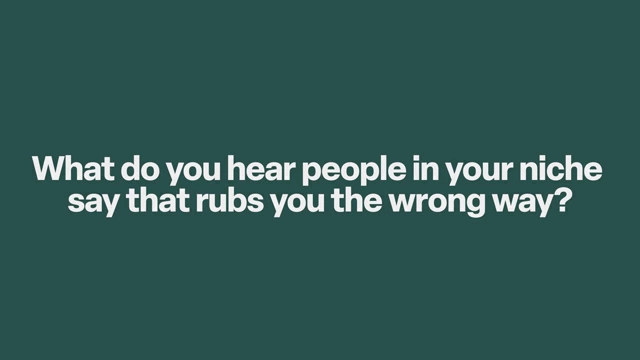
What do you hear people in your niche say that rubs you the wrong way? [ 00:20:55 ] - Examples of Contrarian Beliefs in Business:
- Patagonia's Yvon Chouinard [17:50]: In an industry focused on mass consumption and profits, he prioritized environmental stewardship.

Yvon Chouinard, founder of Patagonia [ 00:17:58 ] - Netflix's Reed Hastings [18:39]: Contrary to the belief that people loved physical video rental stores, Hastings believed people wanted movies delivered to their homes, eventually leading to streaming dominance.

Reed Hastings, co-founder of Netflix [ 00:18:39 ] 
Old video rental stores before streaming became dominant [ 00:18:50 ] 
Modern streaming services like Netflix, Disney+, HBO, and Prime Video [ 00:19:51 ]
- Patagonia's Yvon Chouinard [17:50]: In an industry focused on mass consumption and profits, he prioritized environmental stewardship.
- Two-Column Approach Exercise [21:31]:
- Left Column: Generally Held Opinion / Competitor Actions: List things people in your niche say that you disagree with, or actions competitors take that you dislike or believe customers hate (e.g., "Optimize for virality," "Post on every platform," "Make your media team fear you").
- Right Column: Contrarian Belief / Contrarian Action: Write your opposing view or what you would do differently (e.g., "Optimize for trust," "Create a sustainable system," "Create an environment of psychological safety").
Generally Held Opinion vs. Contrarian Belief example [ 00:21:49 ] 
Caleb Ralston's contrasting opinions and beliefs [ 00:22:54 ]
- This exercise helps generate a list of contrarian takes to test in your content.
- To identify your contrarian belief, think about what people in your niche say that rubs you the wrong way.
- Resonance Indicators [26:06]
- To identify which contrarian belief resonates most with your audience, look for these indicators:
- Audience quoting you: People directly quoting your belief in comments.

Resonance Indicator: Is your audience quoting you in their comments? [ 00:26:29 ] - Direct outreach: More DMs or emails referencing that specific content.
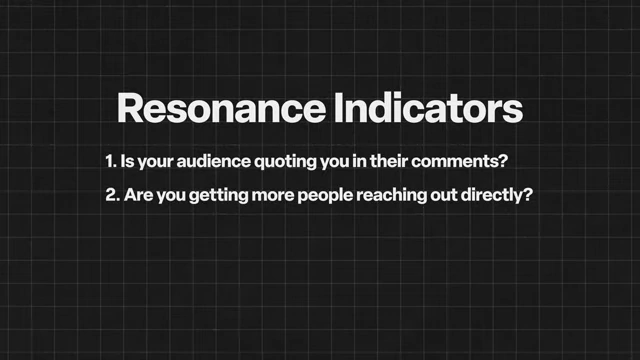
Resonance Indicator: Are you getting more people reaching out directly? [ 00:26:47 ] - Audience creating content: Others creating content about your contrarian take and tagging you.

Resonance Indicator: Are people making content about your contrarian belief and tagging you in it? [ 00:27:03 ]
- Audience quoting you: People directly quoting your belief in comments.
- To identify which contrarian belief resonates most with your audience, look for these indicators:
- Who to Listen To: Audience vs. Customers [27:29]
- Mass market, low-ticket offers: You can listen to general audience comments to guide content.
- Narrow market, high-ticket offers: Optimize around what your ideal customers are saying (e.g., private DMs, questions) rather than public comments, as this group is who you want to attract.

If you have a high ticket offering, listen to what your customers are saying [ 00:28:59 ]
4. Crafting Your Brand Statement and Consistent Messaging [30:51]
Branding is fundamentally about the consistent pairing of yourself with specific ideas, actions, or values, which then leads to audience associations.

- Branding as Consistent Pairing [34:22]
- Formula: Pairing x Consistency = Association.

The formula: Pairing x Consistency [ 00:36:24 ] - Example: Apple consistently paired itself with "design-first" thinking, leading to the association of Apple with design rather than technical specifications.

What you pair yourself with consistently informs the brand your audience sees [ 00:35:58 ] 
Old iPod shown on TV screen [ 00:32:12 ] 
An old Macintosh Portable computer [ 00:32:21 ] - Be intentional with what you consistently pair yourself with, as it shapes the lens through which your audience views your brand.
- Negative associations are just as powerful as positive ones.

Negative associations are just as powerful as positive associations [ 00:38:47 ]
- Formula: Pairing x Consistency = Association.
- Avoiding Brand Threats [41:51]
- Public statements made early in your brand's life can create long-term expectations and potentially limit your future actions.

What you say now influences your ability to act later [ 00:45:55 ] - Consider if you'll still be proud of a stance in 5, 10, or 15 years.

Ask yourself: Is this worth sharing publicly? [ 00:46:57 ] - While changing positions is possible, it often leads to backlash.

You can change your stance, but you'll face backlash [ 00:47:03 ] - Avoid setting expectations that you cannot or do not wish to maintain (e.g., always giving away free content).
- Public statements made early in your brand's life can create long-term expectations and potentially limit your future actions.
- Communicating Your Brand to a Cold Audience [48:30]
- Always assume your audience is encountering you for the first time and knows nothing about your background, values, or interests.

You should assume the audience doesn't know anything about you [ 00:48:38 ] 
The audience is encountering me for the first time [ 00:48:57 ] - Optimize content for a "cold audience" (people who don't know you) to attract new followers.

Cold audience defined as people who don't know you [ 00:49:53 ] - Also nurture your "warm audience" (existing followers) to prevent a "leaky bucket" scenario where new followers are gained, but existing ones leave, resulting in no growth.

If you're missing new audience acquisition, you're not attracting anybody new [ 00:52:59 ] 
If you're missing current audience nurture, you'll be losing loyal followers [ 00:53:04 ] - Caleb's YouTube channel, despite being in its first year, focuses on core brand messages.

Caleb Ralston's YouTube channel showing 9 videos at the time of recording [ 00:51:49 ]
- Always assume your audience is encountering you for the first time and knows nothing about your background, values, or interests.
- The Brand Statement Framework [54:44]
- Take your identified contrarian belief and craft it into a clear, concise brand statement.

Branding is the consistent pairing of things [ 00:54:18 ] - Framework: "I believe [your audience] who want [their core desire] should [your contrarian belief] not [common belief in niche or space]."

Brand Statement Framework with Audience, Core Desire, and Contrarian Belief [ 00:56:18 ] 
Full Brand Statement Framework [ 00:56:22 ] - Example (Caleb Ralston's brand statement): "I believe business owners and entrepreneurs trying to grow their business through their personal brand should optimize for trust, not virality."
Caleb Ralston's Brand Statement example [ 00:55:06 ] 
Caleb Ralston discussing his brand statement on a podcast [ 00:54:49 ] 
Caleb Ralston delivering his brand message at an event [ 00:54:52 ] - This statement clearly communicates: [1] who you serve, [2] how you serve them, and [3] what makes you different from competitors.
- Consistently repeating this statement across all your content (videos, podcasts, events) will build a strong association, making your audience quickly identify you with your core message, differentiating you from others in your space.
- An audience member's comment on one of Caleb's videos demonstrates this understanding: "Bro is building keystone content and brand trust, not views."

Audience comment reflecting understanding of the brand's contrarian belief [ 00:57:55 ]
- Take your identified contrarian belief and craft it into a clear, concise brand statement.