Scaphism: The Ancient Persian Execution Method and the Fate of Mithrites
Scaphism, also known as "the boats," was an alleged ancient Persian execution method considered one of history's most horrific. Its most famous supposed victim was Mithrites, a soldier who killed Cyrus the Younger in battle, saving King Artaxerxes II's throne. Artaxerxes initially rewarded Mithrites but forbade him from taking credit for Cyrus's death, claiming it for himself. When Mithrites drunkenly boasted of his deed, exposing the king's lie, he was sentenced to death by scaphism.

The process involved:
- Being enclosed naked between two boats, with only the head, hands, and feet exposed.
- Force-feeding milk and honey daily to prevent starvation and induce severe diarrhea.
- Smearing milk and honey on the exposed body parts, attracting insects like flies, wasps, and bees.
- Accumulation of excrement within the boats, turning the chamber into a septic tank, which attracted and bred swarms of worms, maggots, ants, and beetles that would consume the victim's flesh.
- The victim would slowly rot and be eaten alive from the inside out and outside in, exacerbated by bacterial infections and internal decay, leading to a prolonged and agonizing death, potentially lasting up to 17 days.
There is historical debate regarding scaphism's authenticity, as the primary Greek sources (Ctesias, Plutarch) are known for exaggeration, and there's a lack of archaeological evidence or Persian records of its use. Some suggest it might be a Greek fabrication or an extreme version of a known Greek torture called siphonism.
The Betrayal and the Sentence [00:00:00]
The video begins by setting the historical context of the Battle of Cunaxa in 401 BC, where Artaxerxes II, the King of Kings, faced off against his rebellious younger brother, Cyrus the Younger.

- Cyrus the Younger's Rebellion [00:00:00]
- Cyrus, at 22, amassed an army of 14,000 Greek mercenaries to overthrow Artaxerxes.
- Artaxerxes countered with a force of potentially 40,000, outnumbering Cyrus.
- Cyrus's Death and Mithrites' Role [00:00:32]
- King Artaxerxes' Deception and Mithrites' Punishment [00:01:16]
- Artaxerxes was initially pleased with Mithrites, showering him with wealth and promotions.

A historical painting depicting King Artaxerxes II amidst his troops. [ 00:01:40 ] - The condition for this favor was that Mithrites was forbidden to claim he killed Cyrus; the king wanted the honor for himself.

A visual representation of King Artaxerxes II's deceptive condition to Mithrites. [ 00:01:45 ] - During a celebratory feast, Mithrites drunkenly boasted of killing Cyrus, exposing the king as a liar.

A visual representation of King Artaxerxes II demanding credit for Cyrus's death. [ 00:02:00 ] 
A visual representation of Mithrites' boast revealing King Artaxerxes II's lie. [ 00:02:13 ] - For this act of disobedience and embarrassing the crown, Mithrites was sentenced to death by scaphism.
- Artaxerxes was initially pleased with Mithrites, showering him with wealth and promotions.


The Horrors of Scaphism: "The Boats" [00:02:32]
Scaphism, also known as "the boats" or "death by milk and honey," was an agonizing execution method, reportedly lasting two and a half weeks (17 days for Mithrites).
- Initial Setup and Confinement [00:03:05]
- The victim was placed inside a small boat, allowing their head, hands, and feet to protrude.
- A second, equally sized boat was placed on top, creating a capsule that enclosed the body, making movement impossible.
An illustration showing a person confined within two wooden boats, with limbs exposed. [ 00:03:20 ]
- Forced Ingestion and External Application of Milk and Honey [00:03:37]
- A mixture of milk and honey was force-fed to the victim daily.

Plutarch's description of the scaphism setup and forced feeding. [ 00:03:51 ] - The rich food kept the victim alive for an extended period, while an abundance of it caused diarrhea and nausea.

A bowl of milk and a jar of honey, the ingredients used in the scaphism torture method. [ 00:04:09 ] - If the victim refused to eat, the mixture was forced down their throat with reeds, causing the belly to swell.

Plutarch's description of forcing food down the victim's throat with reeds. [ 00:04:45 ]
- The rich food kept the victim alive for an extended period, while an abundance of it caused diarrhea and nausea.
- The same mixture was poured over the victim's exposed face, hands, and feet.
- This created a sticky coating that hardened in the punishing heat of the Persian sun, attracting insects.
- Flies, wasps, and bees would settle on and sting the exposed areas.

Zonaras's description of flies, wasps, and bees tormenting the victim's exposed parts. [ 00:05:47 ]
- A mixture of milk and honey was force-fed to the victim daily.
Internal and External Decay [00:06:10]
The unique design and feeding regime of scaphism created a horrific environment for decomposition and infestation.
- Accumulation of Waste and Vermin [00:06:10]
- The victim, unable to move, would excrete abundantly inside the boats, turning the enclosed space into a putrid septic tank.
- The combination of open wounds, exposed flesh, and feces/urine, along with fermenting milk and honey residue, created ideal conditions for insects and infections.
- Plutarch described "creeping things and vermin" springing from the "corruption and rottenness of the excrement," consuming the body.

Plutarch's account of creeping things and vermin emerging from the corruption and rottenness of the excrement. [ 00:06:59 ] 
An unsettling illustration of a decomposed body in a boat, with maggots visible. [ 00:07:19 ] 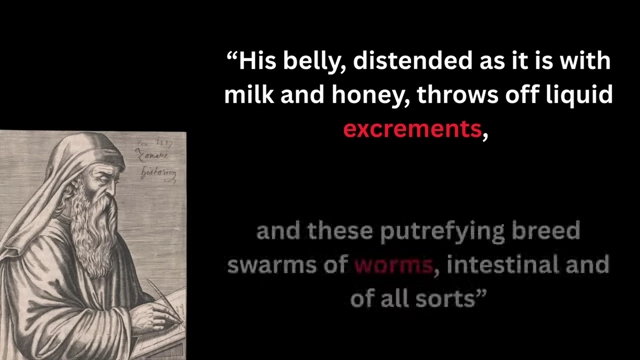
Zonaras's description of the putrefying excrements breeding worms of all sorts. [ 00:08:18 ]
- Stages of Decomposition and Infestation [00:08:39]
- Flies and Maggots: Flesh flies and blowflies, attracted by the smell of rotting flesh and excrement, would lay eggs in open wounds and waste. These eggs would hatch into maggots that would consume skin and muscle, potentially down to the bone, even entering body orifices like the mouth, nose, and ears.

Flesh flies and blowflies on decomposing matter, indicating the presence of insects in scaphism. [ 00:08:44 ] 
A swarm of maggots, representative of the larvae consuming the victim's flesh. [ 00:09:06 ] - Ants and Beetles: Ants and beetles would also be attracted, stripping away cartilage and fat, and entering the body through existing openings or new wounds.

Ants and beetles on decomposing flesh, illustrating their role in the consumption of the body. [ 00:09:34 ] - Bacterial Infection and Sepsis: Modern understanding suggests severe bacterial infections and sepsis would cause internal organs to liquefy and further bloating, creating a vicious cycle of decomposition that ultimately led to death.
- The victim was effectively eaten alive, slowly, both from the inside out and the outside in.

Plutarch's description of the victim's flesh being devoured by noisome creatures. [ 00:11:17 ]
- Flies and Maggots: Flesh flies and blowflies, attracted by the smell of rotting flesh and excrement, would lay eggs in open wounds and waste. These eggs would hatch into maggots that would consume skin and muscle, potentially down to the bone, even entering body orifices like the mouth, nose, and ears.
Historical Accuracy and Debates [00:11:26]
The historical accounts of scaphism and Mithrites' death face significant scrutiny.
- Location of the Boats [00:11:26]
- The video speculates that the boats were likely placed in a ditch or hole on land, rather than floating on water, to prevent the victim from escaping or ending their suffering quickly by drowning.

Various historical illustrations of scaphism, highlighting the different depictions of the two boats. [ 00:11:55 ] - This land-based theory also suggests the possibility of rats and ants joining the insects in preying on the victim.
- The video speculates that the boats were likely placed in a ditch or hole on land, rather than floating on water, to prevent the victim from escaping or ending their suffering quickly by drowning.
- Questioning the Sources [00:12:33]
- The primary sources, Plutarch (writing 500 years later) and Zonaras (whose account is attributed to Ctesias), are known for exaggeration.
- Ctesias, a Greek historian, had a reputation for embellishing or fabricating stories, particularly when portraying groups he disliked, such as the Persians, as cruel.

A historical illustration of Ctesias, a Greek historian whose accounts of Persian practices are debated. [ 00:12:47 ] - There is no archaeological evidence (carvings, illustrations, grave sites) or Persian records of scaphism's use, despite Persians documenting other brutal punishments like crucifixions and impalements.

A historical illustration depicting crucifixion, another brutal punishment known to be practiced by Persians. [ 00:13:29 ]
- Greek Origin Theory [00:13:47]
- The word "scaphism" comes from the Greek word "scaphair" meaning "trough" or "boat."
- A similar Greek torture called siphonism involved tying a victim to a stake, slathering them with honey, and leaving them to be eaten by insects.
- This suggests that scaphism might have been a Greek concept, potentially an exaggerated version of existing Greek torture methods, rather than a factual Persian practice.